

Quando Rubens venne a Roma per copiare i miei affreschi della Sistina
Era l’afoso luglio del 1601 quando Pieter Paul Rubens arrivò per la prima volta a Roma.
All’epoca aveva 24 anni e fino al momento era riuscito a conoscere la città solo mediante incisioni, riproduzioni grafiche e copie di disegni che riproducevano sia le grandi architetture dell’urbe che le stupefacenti opere di pittura e scultura che Roma custodiva.
Il pittore fiammingo aveva avuto modo qualche anno prima di poter ammirare la Punizione di Aman che avevo affrescato nella Sistina attraverso un’incisione realizzata da nel 1590. Quando però varcò le soglie della Sistina e si ritrovò faccia a faccia con quelle pitture rimase sbalordito e se ne innamorò perdutamente.
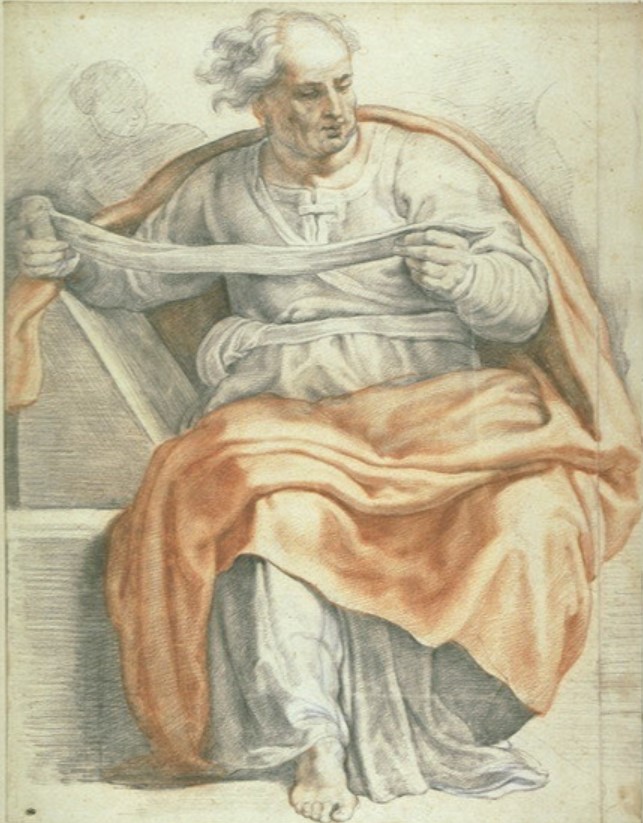
Senza perdere tempo si procurò tutto il materiale necessario e iniziò a copiare la serie veggenti. Alla fine riuscì a studiare e riprodurre nel dettaglio sei profeti e due sibille.
In quei disegni Rubens volle mettere a fuoco solo i protagonisti, senza dare troppa importanza alle architetture o ad altri dettagli.
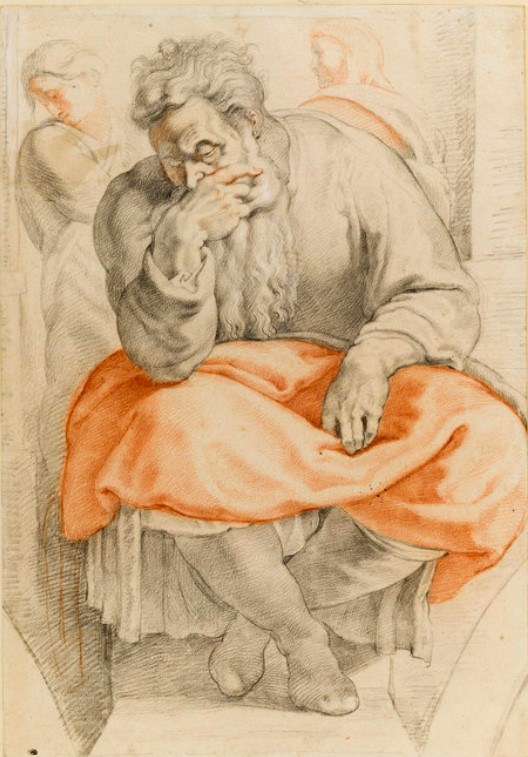
L’artista si impegnò al massimo per riprodusse fedelmente le espressioni, i dettagli degli abiti e gli oggetti dei che completano i veggenti, descrivendo puntualmente le loro azioni.
Pose particolare attenzione alla resa dei muscoli, alle luci e alle ombre che definiscono i volumi.
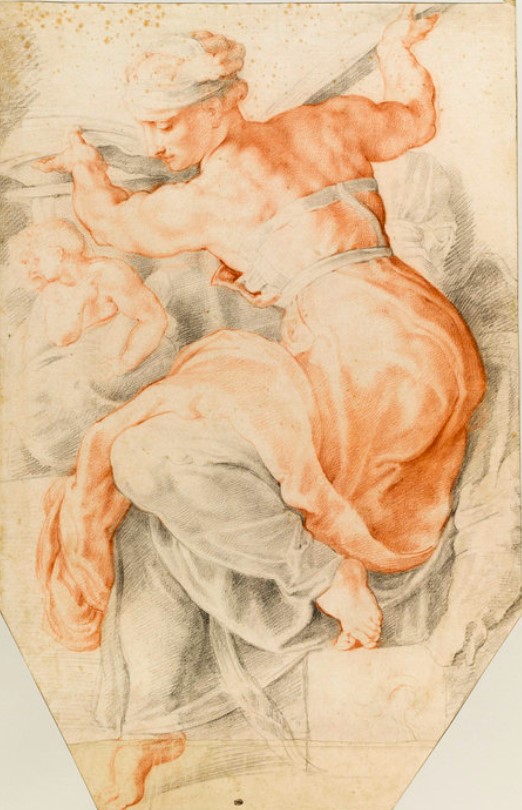
I disegni che Rubens realizzò studiando dal vero i miei veggenti appartengono oggi al Museo del Louvre.
Per il momento il vostro Michelangelo Buonarroti vi saluta dandovi appuntamento ai prossimi post e sui social.
When Rubens came to Rome to copy my Sistine frescoes
It was the sultry July of 1601 when Peter Paul Rubens arrived in Rome for the first time. At the time he was 24 years old and until then he had only managed to get to know the city through engravings, graphic reproductions and copies of drawings that reproduced both the great architecture of the city and the amazing works of painting and sculpture that Rome kept.
The Flemish painter had the opportunity a few years earlier to have his eyes on the Punishment of Aman which I had frescoed in the Sistine through an engraving made by in 1590. However, when he crossed the threshold of the Sistine and found himself face to face with those paintings he was amazed and he fell madly in love with her.
Wasting no time, he got all the necessary material and started copying the seers series. Eventually he managed to study and reproduce in detail six prophets and two sibyls.
In those drawings Rubens wanted to focus only on the protagonists, without giving too much importance to the architecture or other details.
The artist worked hard to faithfully reproduce the expressions, details of the clothes and objects of the seers, punctually describing their actions.
He paid particular attention to the rendering of the muscles, to the lights and shadows that define the volumes.
The drawings that Rubens made by studying my visionaries live today belong to the Louvre Museum.
For the moment, your Michelangelo Buonarroti greets you by making an appointment for the next posts and on social media.

Sostienici – Support Us
Se questo blog ti piace e ti appassiona, puoi aiutarci a farlo crescere sempre più sostenendoci in modo concreto condividendo i post, seguendo le pagine social e con un contributo che ci aiuta ad andare avanti con il nostro lavoro di divulgazione. . ENGLISH: If you like and are passionate about this blog, you can help us make it grow more and more by supporting us in a concrete way by sharing posts, following social pages and with a contribution that helps us to move forward with our dissemination work.
8,00 €
-
Festival La Versiliana 2026: tra musica, teatro e grandi narrazioni
Dal 17 luglio al 23 agosto 2026, la pineta di Marina di Pietrasanta ospiterà la 47ª edizione del Festival La Versiliana. Una kermesse aperta a tutti nella quale linguaggi diversi dialogano tra loro in un equilibrio tra tradizione e contemporaneità.
-
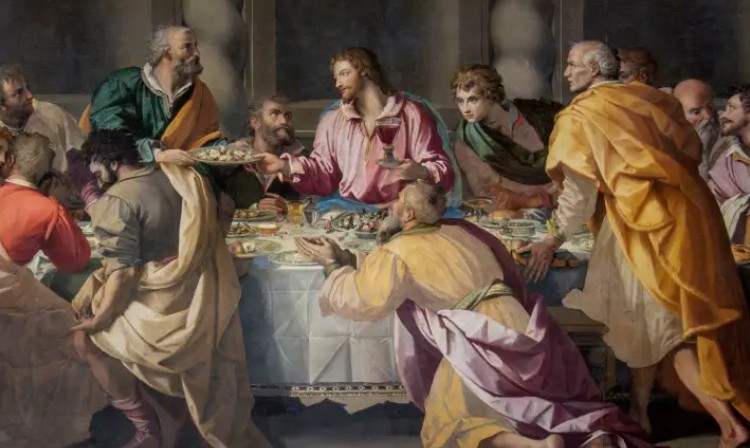
Giovedì Santo: l’Ultima Cena di Allori che pochi conoscono a Firenze
🇮🇹Nel cuore di Museo di Santa Maria Novella, a Firenze, si conserva una delle interpretazioni più affascinanti e meno note dell’Ultima Cena: quella realizzata da Alessandro Allori nel 1584… 🇬🇧In the heart of the Santa Maria Novella Museum in Florence, one of the most fascinating and least-known interpretations of the Last Supper is preserved: the…
-
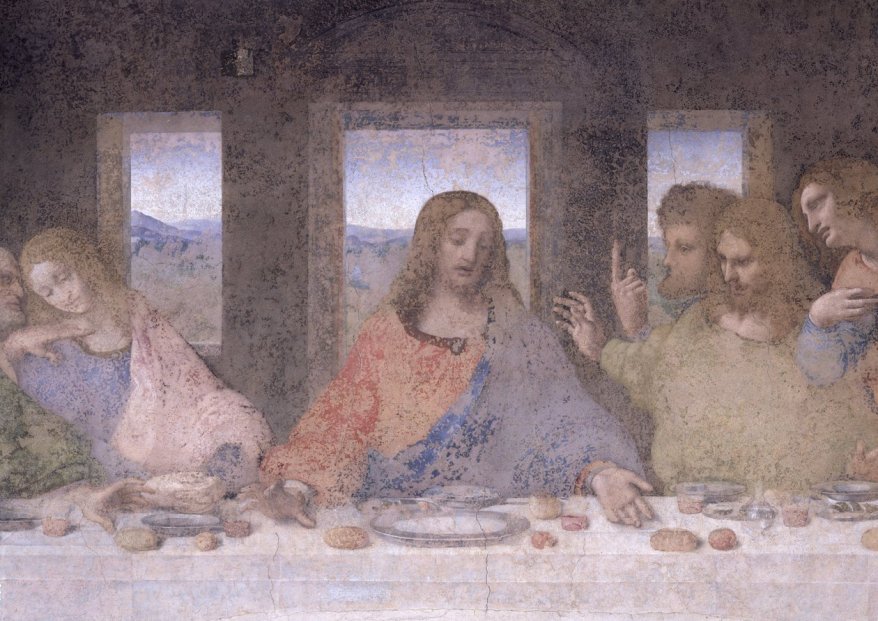
Cenacolo di Leonardo: i dettagli che raccontano il tradimento
🇮🇹Nel Cenacolo di Leonardo da Vinci, custodito a Santa Maria delle Grazie, Cristo annuncia il tradimento e il tempo si ferma… 🇬🇧In Leonardo da Vinci’s Last Supper, housed in Santa Maria delle Grazie, Christ announces the betrayal and time stands still…
Condividi:


Questo sono io





sostienici

Sostienici – Support Us
Se questo blog ti piace e ti appassiona, puoi aiutarci a farlo crescere sempre più sostenendoci in modo concreto condividendo i post, seguendo le pagine social e con un contributo che ci aiuta ad andare avanti con il nostro lavoro di divulgazione. . ENGLISH: If you like and are passionate about this blog, you can help us make it grow more and more by supporting us in a concrete way by sharing posts, following social pages and with a contribution that helps us to move forward with our dissemination work.
€10,00


