

La Vergine annunciata
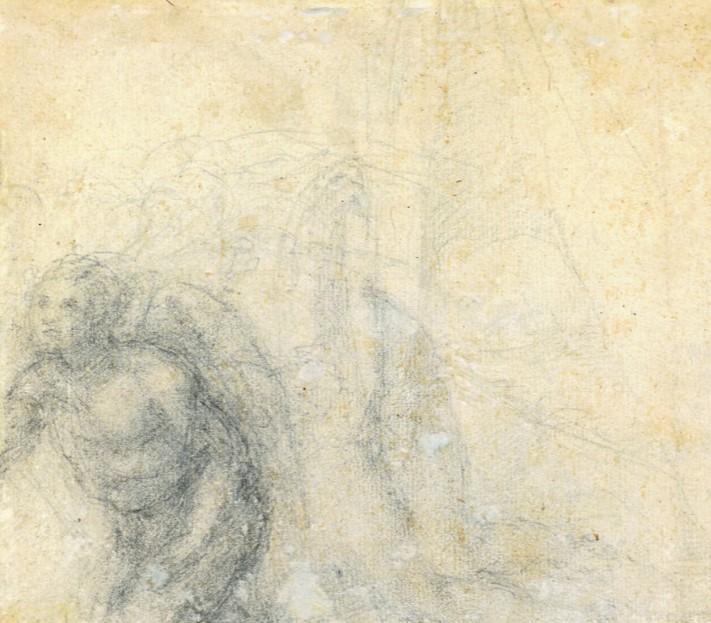
Il disegno che vi propongo oggi raffigura la Vergine annunciata disegnata a matita nera mentre si alza dalla sedia ascoltando le parole dell’Arcangelo Gabriele.
Ha le braccia aperte in segno di accettazione del concepimento di Cristo. La mano dell’Arcangelo è visibile nella zona immediatamente sopra il braccio proteso della Madonna.

Si nota molto bene il fatto che più volte modificai i contorni della figura, uno stile che assunsi in età tarda, fra il 1545 e il 1546, periodo a cui risale il disegno.
Provai infatti a spostare più a destra la figura della Vergine, accentuando lo scurimento della superficie già modellata.
Osservando con attenzione noterete che avevo inizialmente tracciato la Sua mano destra appoggiata al piedistallo, più in basso, e non sul leggio come appare nella posa più marcata.

Sul verso, scritto con inchiostro marrone da una mano successiva alla mia, si legge “Michel Angelo Bona Roti” mentre nell’angolo in alto a destra sul recto qualcuno non identificato appose il numero 63.
E’ evidente sia un disegno rifilato successivamente ma conosciamo la parte mancante con l’Angelo Gabriele che coincide con il foglio W72, appartenente come quello in questione al British Museum.
Non è da escludere avessi tagliato io stesso il foglio in due parti come ipotizza Wilde. Infatti in precedenza lo avevo piegato per tracciare altri studi preparatori per un cartonetto da fornire a Marcello Venusti.
Negli anni Quaranta del Cinquecento infatti il Veusti aveva ricevuto la commissione per una pala dedicata all’Annunciazione per la cappella della famiglia Cesi in Santa Maria della Pace a Roma.
Per il momento il sempre vostro Michelangelo Buonarroti vi saluta dandovi appuntamento ai prossimi post e sui social.

The Virgin announced
The drawing I propose to you today depicts the Virgin of the Annunciation drawn in black pencil while she gets up from the chair listening to the words of the Archangel Gabriel.
She has her arms open in acceptance of Christ’s conception. The Archangel’s hand is visible in the area immediately above the Madonna’s outstretched arm.
It is very clear that I modified the contours of the figure several times, a style that I adopted late in life, between 1545 and 1546, the period to which the drawing dates back.
In fact, I tried to move the figure of the Virgin further to the right, accentuating the darkening of the already modeled surface.
If you look carefully you will notice that I had initially traced her right hand resting on her pedestal, lower down, and not on her lectern as it appears in her more pronounced pose.
On the reverse, written in brown ink by a later hand than mine, we read “Michel Angelo Bona Roti” while in the upper right corner on the recto someone unidentified placed the number 63.
It is evident that it was a drawing trimmed later but we know the missing part with the Angel Gabriel which coincides with sheet W72, belonging like the one in question to the British Museum.
It cannot be ruled out that I had cut the sheet into two parts myself, as Wilde hypothesizes. In fact, I had previously folded it to draw other preparatory studies for a cartoon to be supplied to Marcello Venusti. In the 1540s, in fact, Veusti had received the commission for an altarpiece dedicated to the Annunciation for the Cesi family chapel in Santa Maria della Pace in Rome.
For the moment, your always Michelangelo Buonarroti greets you and will meet you in the next posts and on social media.

Sostienici – Support Us
Se questo blog ti piace e ti appassiona, puoi aiutarci a farlo crescere sempre più sostenendoci in modo concreto condividendo i post, seguendo le pagine social e con un contributo che ci aiuta ad andare avanti con il nostro lavoro di divulgazione. . ENGLISH: If you like and are passionate about this blog, you can help us make it grow more and more by supporting us in a concrete way by sharing posts, following social pages and with a contribution that helps us to move forward with our dissemination work.
10,00 €
-
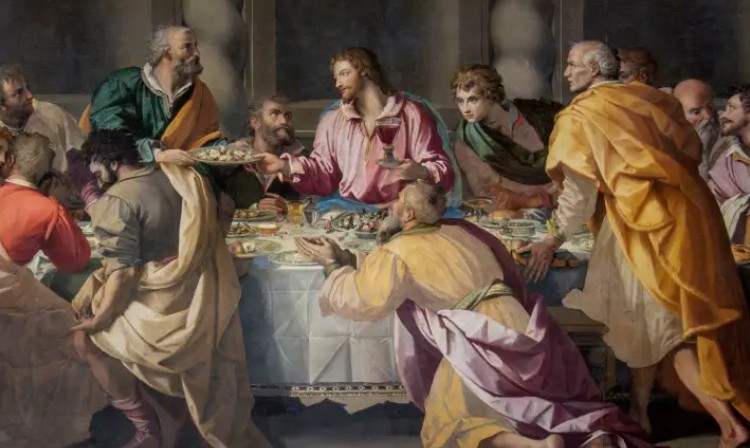
Giovedì Santo: l’Ultima Cena di Allori che pochi conoscono a Firenze
🇮🇹Nel cuore di Museo di Santa Maria Novella, a Firenze, si conserva una delle interpretazioni più affascinanti e meno note dell’Ultima Cena: quella realizzata da Alessandro Allori nel 1584… 🇬🇧In the heart of the Santa Maria Novella Museum in Florence, one of the most fascinating and least-known interpretations of the Last Supper is preserved: the…
-
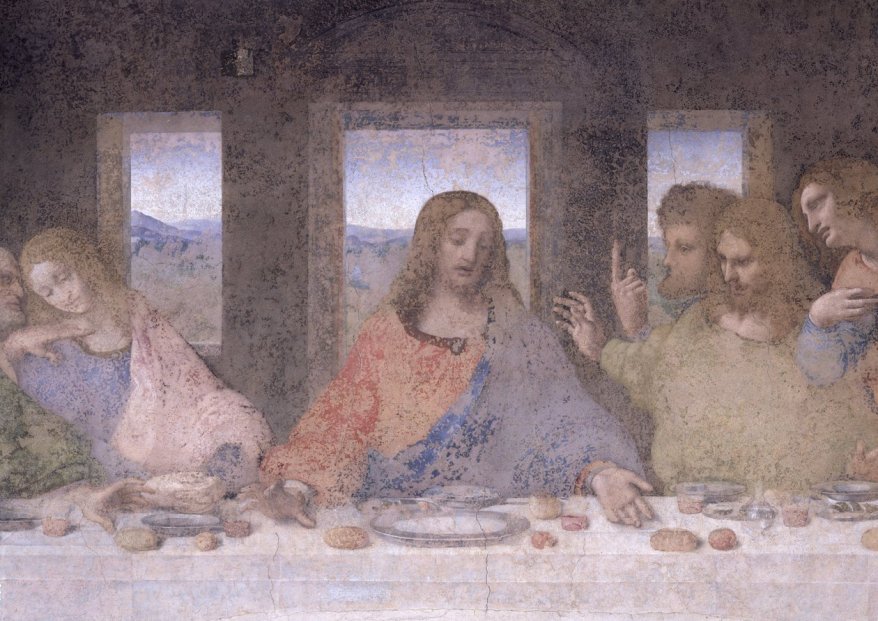
Cenacolo di Leonardo: i dettagli che raccontano il tradimento
🇮🇹Nel Cenacolo di Leonardo da Vinci, custodito a Santa Maria delle Grazie, Cristo annuncia il tradimento e il tempo si ferma… 🇬🇧In Leonardo da Vinci’s Last Supper, housed in Santa Maria delle Grazie, Christ announces the betrayal and time stands still…
-
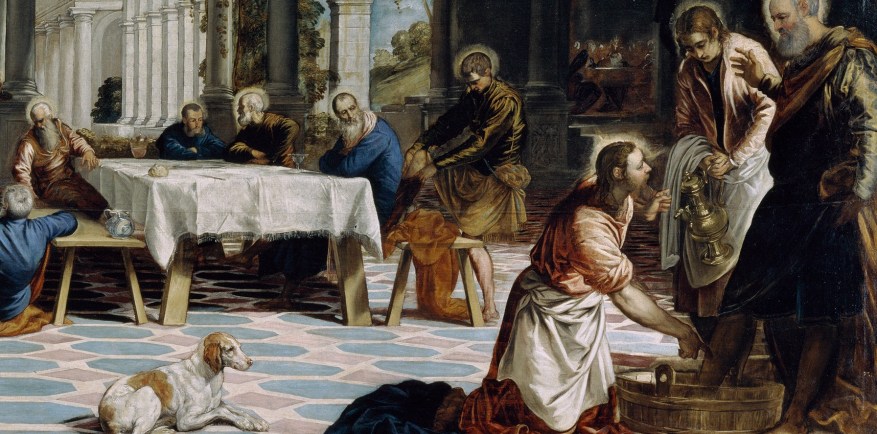
La Lavanda dei Piedi di Tintoretto: Il Capolavoro Veneziano al Prado
🇮🇹Tra i capolavori più affascinanti del Rinascimento veneziano, “La Lavanda dei Piedi” di Jacopo Tintoretto rappresenta un perfetto equilibrio tra spiritualità, innovazione compositiva e straordinaria forza narrativa… 🇬🇧Among the most fascinating masterpieces of the Venetian Renaissance, Jacopo Tintoretto’s “The Washing of the Feet” represents a perfect balance between spirituality, compositional innovation, and extraordinary narrative force…
Condividi:


Questo sono io





sostienici

Sostienici - Support Us
Se questo blog ti piace e ti appassiona, puoi aiutarci a farlo crescere sempre più sostenendoci in modo concreto condividendo i post, seguendo le pagine social e con un contributo che ci aiuta ad andare avanti con il nostro lavoro di divulgazione. . ENGLISH: If you like and are passionate about this blog, you can help us make it grow more and more by supporting us in a concrete way by sharing posts, following social pages and with a contribution that helps us to move forward with our dissemination work.
€10,00


