
Lo studio di un uomo per due miei affreschi
Il disegno che vi propongo appartiene alle collezioni del British Museum e riguarda lo studio di una figura inginocchiata che poi affrescai nella zona mediana sinistra del Giudizio Universale ma non solo.
Tracciai a carboncino l’uomo inginocchiato e chino in avanti, visto di sorcio, mentre protende il braccio destro verso il basso.
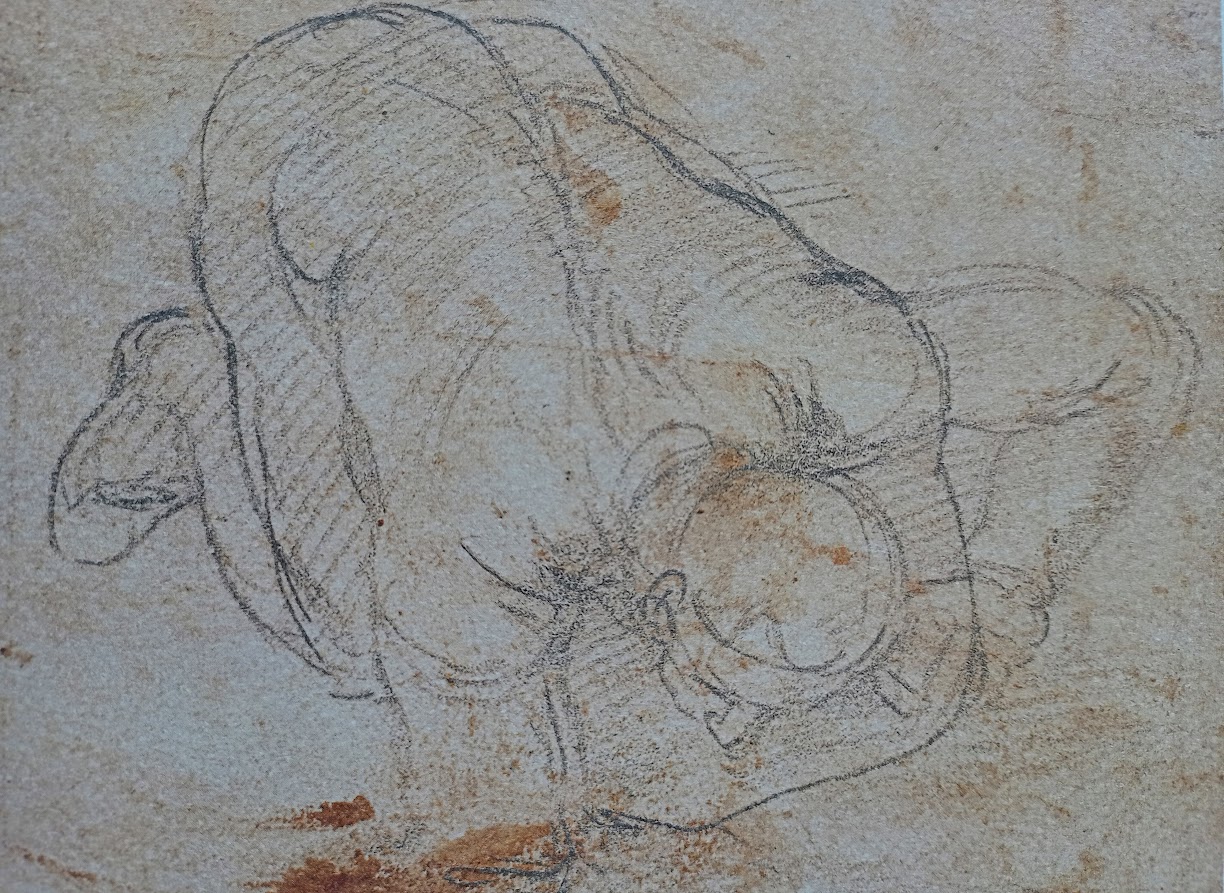
Guardando bene il disegno sembra che prima tracciai i contorni della figura senza marcarli troppo, con un carboncino molto morbido e successivamente ripassai i contorni con un tratto più marcato, correggendo in parte la postura del soggetto.
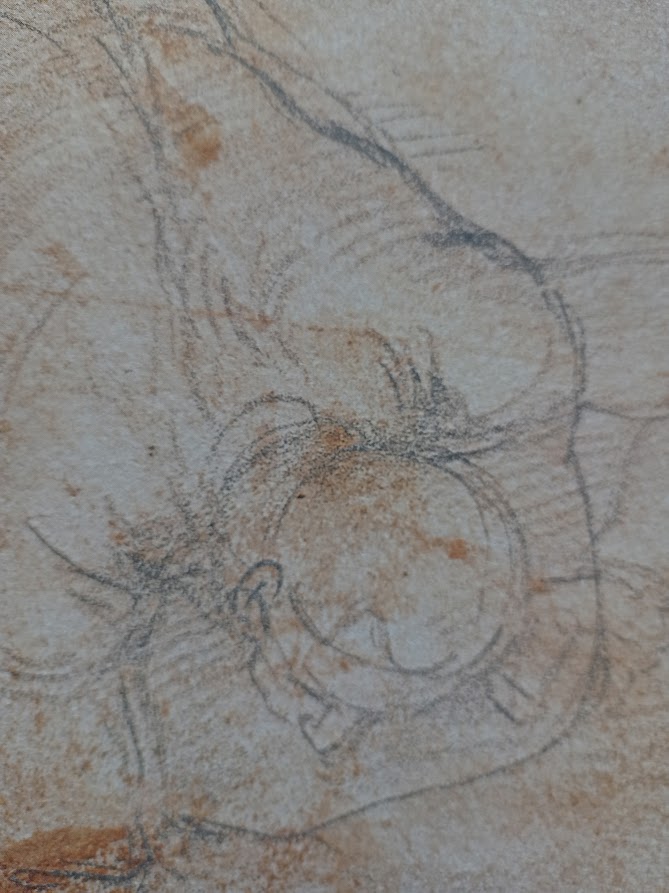
Lo studio corrisponde alla figura del Giudizio che tenta di aiutare un eletto ad ascendere verso il cielo ma non solo.
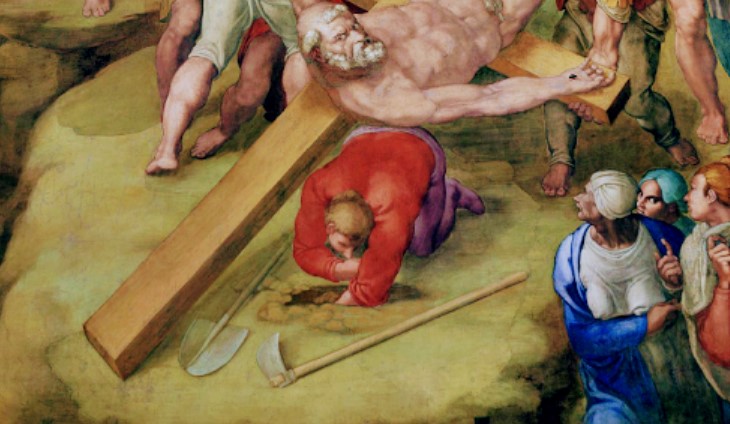
La stessa posa ma specchiata, appartiene alla figura che scava la buca per piantare la a testa in giù la croce su cui già è stato inchiodato san Pietro, nella Cappella Paolina.
Il disegno fu acquistato dal British Museum all’asta da Sotherby’s il 25 giugno del 1856.
Per il momento il vostro Michelangelo Buonarroti vi saluta dandovi appuntamento ai prossimi post e sui social.
A man’s study for two of my frescoes
The drawing I propose belongs to the collections of the British Museum and concerns the study of a kneeling figure which I then frescoed in the left median area of the Last Judgment.
I traced in charcoal the man kneeling and leaning forward, seen from the side, while he extends his right arm downwards.
Looking carefully at the drawing it seems that I first traced the contours of the figure without marking them too much, with a very soft charcoal and then I went over the contours with a more marked line, partially correcting the posture of the subject.
The study corresponds to the figure of Judgment who attempts to help a chosen one ascend towards heaven but not only that. The same pose but mirrored belongs to the figure digging the hole to plant the cross on which Saint Peter has already been nailed upside down, in the Pauline Chapel.
The drawing was purchased by the British Museum at auction at Sotherby’s on 25 June 1856. For the moment your Michelangelo Buonarroti greets you and will meet you in the next posts and on social media.

Sostienici – Support Us
Se questo blog ti piace e ti appassiona, puoi aiutarci a farlo crescere sempre più sostenendoci in modo concreto condividendo i post, seguendo le pagine social e con un contributo che ci aiuta ad andare avanti con il nostro lavoro di divulgazione. . ENGLISH: If you like and are passionate about this blog, you can help us make it grow more and more by supporting us in a concrete way by sharing posts, following social pages and with a contribution that helps us to move forward with our dissemination work.
8,00 €
-
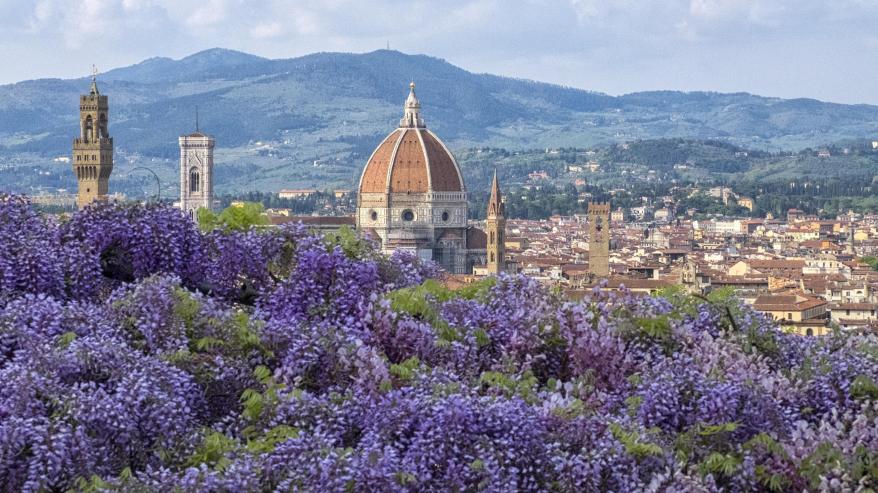
Sotto un cielo di glicine: la magia di Villa Bardini
🇮🇹Per pochi giorni all’anno, il pergolato di Villa Bardini si trasforma in un tunnel lilla lungo 70 metri, dove profumo e bellezza si intrecciano sopra una delle viste più romantiche di Firenze… 🇬🇧For a few days a year, the pergola of Villa Bardini transforms into a 70-meter-long lilac tunnel, where scent and beauty intertwine above…
-
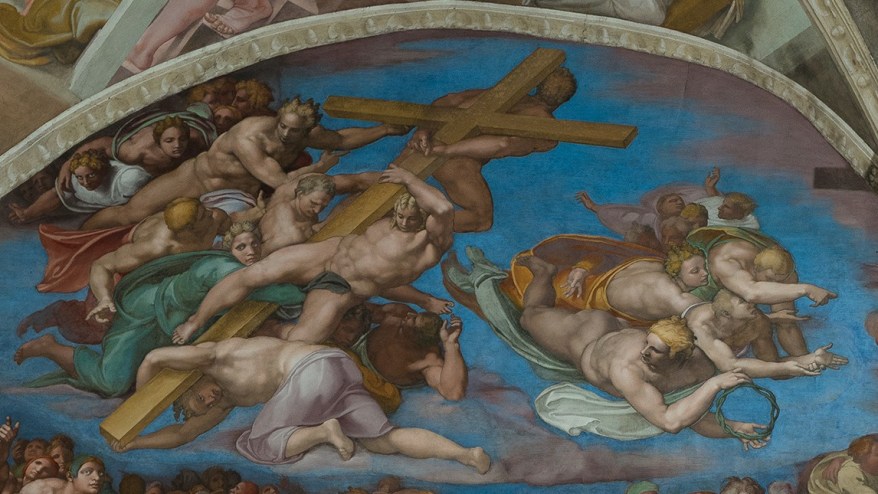
Come se la giustizia negata in vita possa compiersi altrove
🇮🇹Se davvero l’anima, una volta sciolta dal corpo, ritorna sulla terra per vivere ancora, così mi domando, quale sorte attende chi oggi appare tanto bella ai miei occhi, ma così crudele nel cuore? 🇬🇧If the soul, once freed from the body, truly returns to earth to live again, I ask myself, what fate awaits the…
-
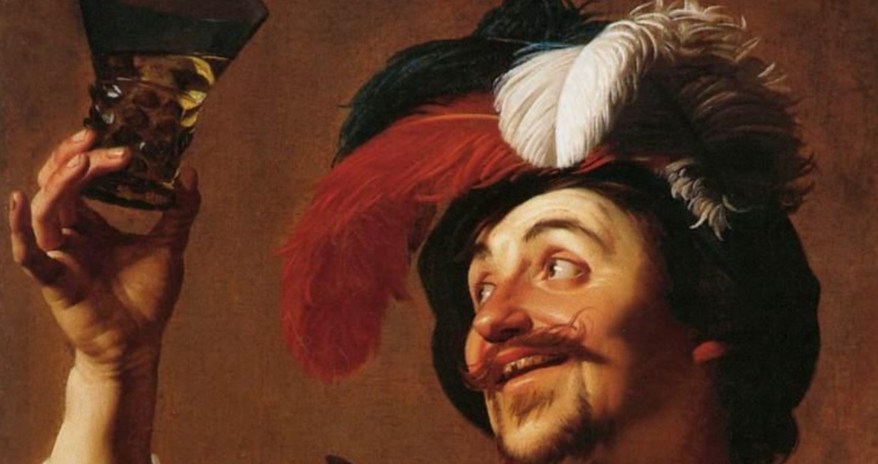
Quel sorriso del violinista felice di Gerrit van Honthorst
🇮🇹Un brindisi, un sorriso, una luce che taglia il buio. Conoscete il dipinto del violinista felice con un bicchiere di vino (1624) di Gerrit van Honthorst?… 🇬🇧A toast, a smile, a light that cuts through the darkness. Are you familiar with the painting of the Happy Violinist with a Glass of Wine (1624) by Gerrit…
Condividi:


Questo sono io





sostienici

Sostienici – Support Us
Se questo blog ti piace e ti appassiona, puoi aiutarci a farlo crescere sempre più sostenendoci in modo concreto condividendo i post, seguendo le pagine social e con un contributo che ci aiuta ad andare avanti con il nostro lavoro di divulgazione. . ENGLISH: If you like and are passionate about this blog, you can help us make it grow more and more by supporting us in a concrete way by sharing posts, following social pages and with a contribution that helps us to move forward with our dissemination work.
€10,00


