
La Scultura del giorno: la Bagnante di Puttinati
La scultura del giorno che vi propongo oggi è la Bagnante di Alessandro Puttinati, scolpita dall’artista nel 1846.
La giovane con i capelli semi raccolti rivolge lo sguardo verso il basso, in direzione delle acque che di lì a poco avvolgeranno il suo corpo.
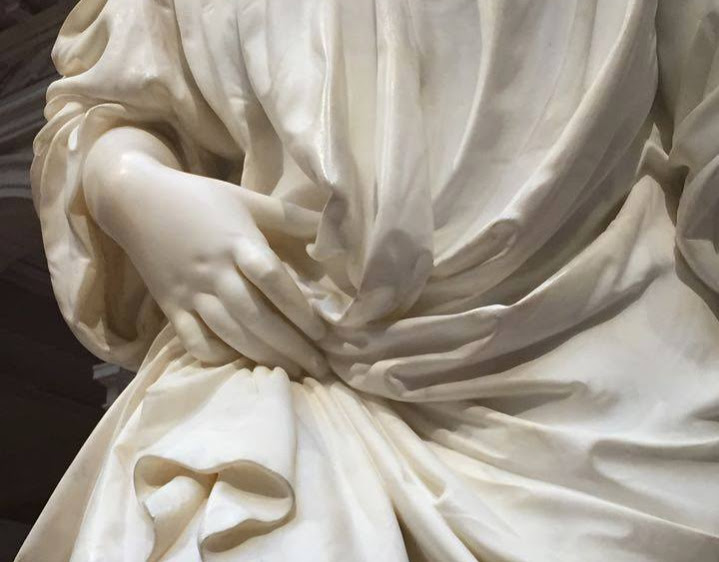
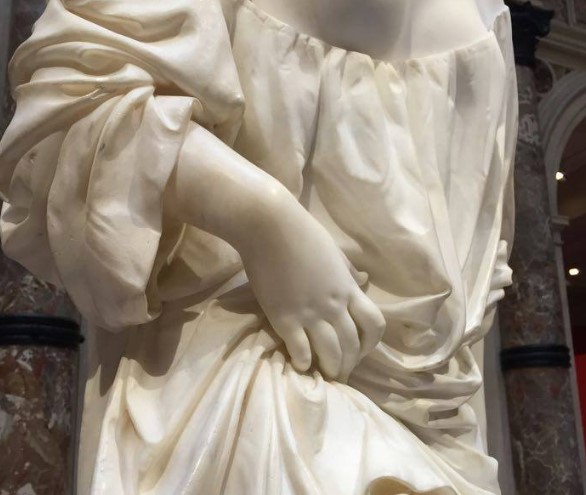
La veste drappeggiata che indossa le sta scivolando dalle spalle, lasciandole scoperto un seno. Con la mano destra trattiene l’abito mettendo in mostra la gamba che avanza, come se stesse per immergere il piede corrispondente nelle acque fresche dinnanzi a lei.
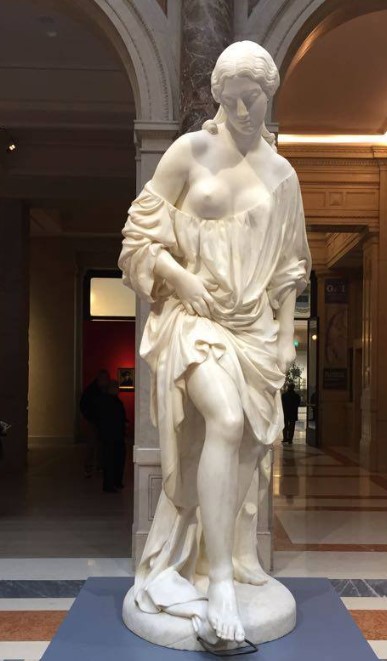
La superficie d’appoggio dell’opera viene aumentata volutamente dall’artista per migliorare la distribuzione del peso mediante l’aggiunta del broncone dietro la bamba sinistra e facendo toccare la base al panneggio.
La Bagnante è una delle opere di maggior successo di Puttinati, lo scultore veronese figlio del celebre incisore e medaglista Francesco Puttinati.
Il su babbo Francesco avrebbe tanto desiderato metterlo a bottega dal più grande scultore di quel tempo a Roma: Antonio Canova. Si impegnò per riuscire nel suo intento ma alla fine dovette arrendersi: non ci riuscì.
Alessandro Puttinati però non smise mai di studiare e perfezionarsi presso l’Accademia di Brera, sotto la guida di Camillo Pacetti.
Era il 1819 quando il giovane artista iniziò a prendere parte ai primi concorsi accademici e riuscì a conquistarsi il primo premio con l’Apollo col Moribondo Giacinto in terracotta, opera che oggi appartiene alla Galleria di Arte Moderna di Milano.
Grazie alla buona mediazione del conte Giovanni Edoardo de’ Pecis, Puttinati riuscì a perfezionarsi nell’atelier romano di Thorvaldsen dal 1827 fino al 1830.
Quegli anni per lui furono decisivi per sviluppare uno stile del tutto personale che lo avrebbe reso ben riconoscibile.
La scultura della Bagnante che scolpì a 45 anni, fu molto apprezzata sia dal pubblico che dalla critica. Oggi appartiene alla raccolta civica di Villa Reale di Monza.
Per il momento il vostro Michelangelo Buonarroti vi saluta dandovi appuntamento ai prossimi post e sui social.

Sculpture of the day: the Bather of Puttinati
The sculpture of the day that I propose to you today is the Bather by Alessandro Puttinati, sculpted by the artist in 1846.
The young woman with her hair half collected turns her gaze downwards, in the direction of the waters that will shortly envelop her body.
The draped robe she wears is slipping off her shoulders, exposing one breast. With her right hand she holds her dress showing her protruding leg of hers, as if she were about to immerse her corresponding foot in the cool waters before her.
The support surface of the work is deliberately increased by the artist to improve the distribution of weight by adding the bronchus behind the left bamba and making the drapery touch the base.
The Bather is one of the most successful works by Puttinati, the Veronese sculptor, son of the famous engraver and medalist Francesco Puttinati.
His father Francesco would have so much wanted to put him in the workshop of the greatest sculptor of that time in Rome: Antonio Canova. He worked hard to succeed in his intent but in the end he had to give up: he didn’t succeed.
Alessandro Puttinati, however, never stopped studying and perfecting himself at the Brera Academy, under the guidance of Camillo Pacetti.
It was 1819 when the young artist began to take part in the first academic competitions and managed to win the first prize with the terracotta Apollo with the Dying Hyacinth, a work that today belongs to the Gallery of Modern Art in Milan.
Thanks to the good mediation of Count Giovanni Edoardo de’ Pecis, Puttinati managed to perfect himself in Thorvaldsen’s Roman atelier from 1827 until 1830.
Those years were decisive for him to develop a completely personal style that would have made him easily recognizable.
The sculpture La Bather that he sculpted at the age of 45 was much appreciated by both the public and critics. Today it belongs to the civic collection of Villa Reale in Monza.
For the moment, your Michelangelo Buonarroti greets you by making an appointment for the next posts and on social media.

Sostienici – Support Us
Se questo blog ti piace e ti appassiona, puoi aiutarci a farlo crescere sempre più sostenendoci in modo concreto condividendo i post, seguendo le pagine social e con un contributo che ci aiuta ad andare avanti con il nostro lavoro di divulgazione. . ENGLISH: If you like and are passionate about this blog, you can help us make it grow more and more by supporting us in a concrete way by sharing posts, following social pages and with a contribution that helps us to move forward with our dissemination work.
8,00 €
-
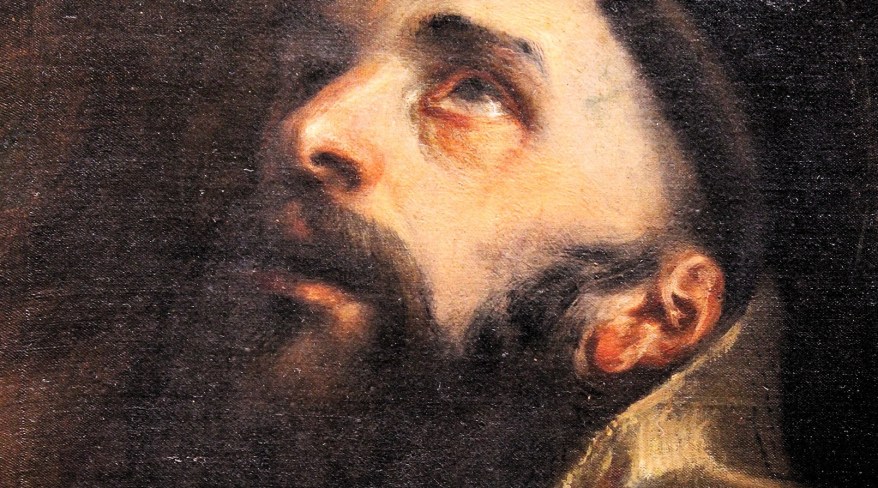
Lo sguardo di San Francesco che emerge dal buio: il dipinto di Annibale Carracci
🇮🇹C’è uno sguardo, nel dipinto di Annibale Carracci, che sembra cercare qualcosa oltre ciò che possiamo vedere: è quello di San Francesco d’Assisi, ritratto con gli occhi rivolti al cielo… 🇬🇧In Annibale Carracci’s painting, there is a gaze that seems to be searching for something beyond what we can see: it is the gaze of…
-
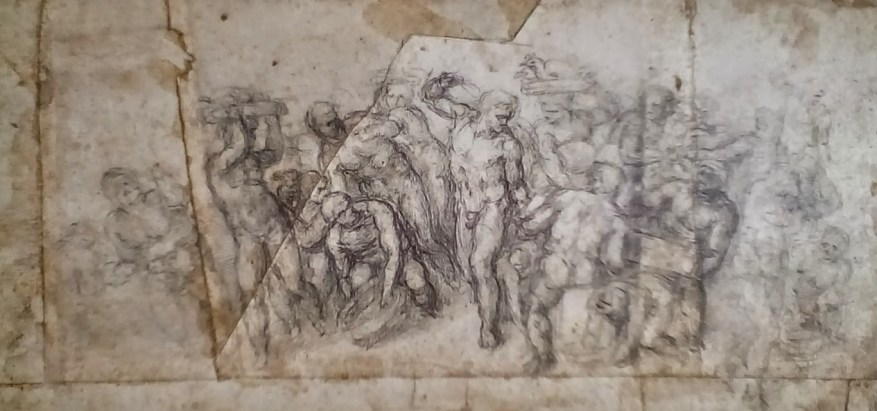
La Cacciata dei mercanti dal Tempio: quel disegno che forse nasconde un progetto incompiuto
🇮🇹Vi porto davanti al mio disegno della Cacciata dei mercanti dal Tempio, conservato al British Museum. Guardate il braccio destro di Cristo: la forza del suo gesto vi ricorda qualcosa? 🇮🇹 I am bringing you before my drawing of the Expulsion of the Money Changers from the Temple, held at the British Museum. Look at…
-

A Pompei ci sono 50 gatti che vivono tra le rovine antiche: ora la loro storia diventa un libro
A Pompei i gatti sono diventati celebri sui social. Ora il libro Gatti di Pompei racconta, con foto e storie, la loro vita tra le antiche rovine romane.
Condividi:


Questo sono io




sostienici

Sostienici – Support Us
Se questo blog ti piace e ti appassiona, puoi aiutarci a farlo crescere sempre più sostenendoci in modo concreto condividendo i post, seguendo le pagine social e con un contributo che ci aiuta ad andare avanti con il nostro lavoro di divulgazione. . ENGLISH: If you like and are passionate about this blog, you can help us make it grow more and more by supporting us in a concrete way by sharing posts, following social pages and with a contribution that helps us to move forward with our dissemination work.
€10,00


1 commento »