

Tutti gli animali della Basilica di San Pietro
All’interno della Basilica di San Pietro c’è un vero e proprio zoo. Uno zoo fatto di pietra, pigmenti e bronzo con tanto di lumache, farfalle, scoiattoli, topi, draghi e anche un unicorno.
Se è facile individuare i due possenti leoni scolpiti dal Canova o avvistare qualche colomba portatrice di pace e simbolo dello Spirito Santo, è un po’ più complicato riuscire a scovare le lumache, le lucertole e il coccodrillo. Si, perché nella basilica di San Pietro la cui costruzione fu fortemente voluta da papa Giulio II si possono scorgere animali un po’ più rari ma bisogna aguzzare la vista.

La loro presenza non è casuale ma ciascun animale è legato a una simbologia ben precisa che fa riferimento a testi biblici o talvolta a vere e proprie leggende. Certo è curioso vedere un unicorno nel bel mezzo della Basilica, trattenuto da una fanciulla con un seno scoperto.

Volete sapere con esattezza quanti e quali animali ci sono nella basilica più grande del mondo? Ebbene, potete divertirvi a trovare una dopo l’altra tutte le 500 api, le 470 colombe, i 100 draghi e i 38 leoni, le 35 aquile, i 24 serpenti e i 15 agnelli, i 7 delfini, i 3 cani e i 3 pipistrelli, le due lucertole, un gatto, un coccodrillo e l’unicorno ma ci sono anche ricci, farfalle e qualche topolino che con i sui denti erode il tempo che passa dell’esistenza umana.

Gli animali presenti hanno simbologie ben precise. Ci sono per esempio le api poste alla base e sui capitelli del baldacchino del Bernini che sono un chiaro riferimento allo stemma di papa Urbano VIII Barberini e poi si vedono le colombe, in particolare quella inserita nel disco di alabastro della Gloria, sempre realizzata dal Bernini.

Per il momento il vostro Michelangelo Buonarroti vi saluta dandovi appuntamento ai prossimi post e sui social.
All the animals of St. Peter’s Basilica
Inside the St. Peter’s Basilica there is a real zoo. A zoo made of stone, pigments and bronze complete with snails, butterflies, squirrels, mice, dragons and even a unicorn.
If it is easy to spot the two mighty lions sculpted by Canova or to spot some pigeons that bring peace and a symbol of the Holy Spirit, it is a little more complicated to be able to find snails, lizards and crocodiles. Yes, because in the basilica of St. Peter, whose construction was strongly desired by Pope Julius II, you can see somewhat rarer animals but you have to sharpen your eyes.

Their presence is not accidental but each animal is linked to a very precise symbolism that refers to biblical texts or sometimes to real legends. It is certainly curious to see a unicorn in the middle of the Basilica, held by a girl with one breast uncovered.
Do you want to know exactly how many and which animals there are in the largest basilica in the world? Well, you can have fun finding one after the other all 500 bees, 470 doves, 100 dragons and 38 lions, 35 eagles, 24 snakes and 15 lambs, 7 dolphins, 3 dogs and 3 bats, two lizards, a cat, a crocodile and the unicorn but there are also hedgehogs, butterflies and some mice that erode the passing time of human existence with their teeth.
The animals present have very specific symbols. There are for example the bees placed at the base and on the capitals of Bernini’s canopy which are a clear reference to the coat of arms of Pope Urban VIII Barberini and then you can see the doves, in particular the one inserted in the alabaster disk of the Glory, also made by Bernini .
For the moment, your Michelangelo Buonarroti greets you by giving you an appointment at the next posts and on social networks.

Sostienici – Support Us
Se questo blog ti piace e ti appassiona, puoi aiutarci a farlo crescere sempre più sostenendoci in modo concreto condividendo i post, seguendo le pagine social e con un contributo che ci aiuta ad andare avanti con il nostro lavoro di divulgazione. . ENGLISH: If you like and are passionate about this blog, you can help us make it grow more and more by supporting us in a concrete way by sharing posts, following social pages and with a contribution that helps us to move forward with our dissemination work.
5,00 €
-
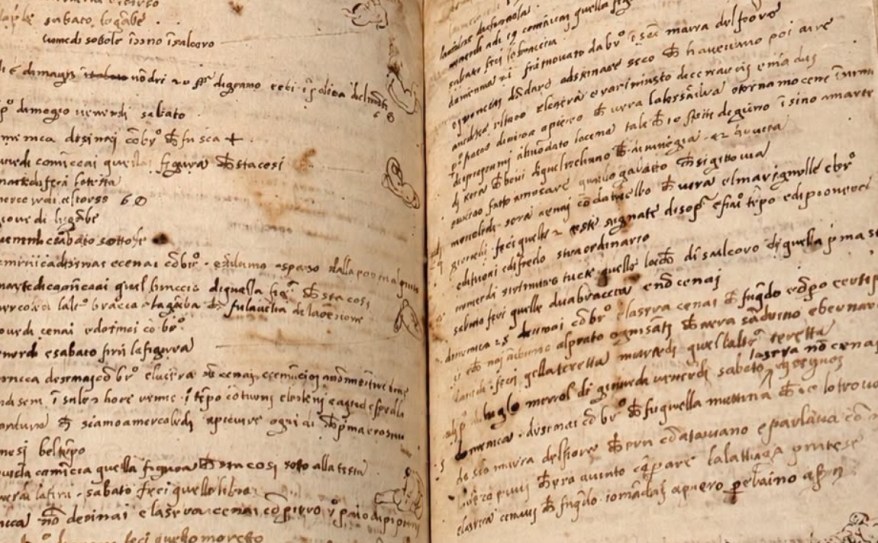
Pontormo, il diario segreto del pittore: malattie, pasti e piccoli disegni che raccontano la sua vita
🇮🇹Il diario di Pontormo: malattie, pasti, amicizie e piccoli disegni raccontano la vita privata del pittore e il lavoro perduto a San Lorenzo… 🇬🇧Pontormo’s diary—with its accounts of illnesses, meals, friendships, and small sketches—reveals the painter’s private life and his lost work at San Lorenzo…
-
25 ottobre 1815: le opere rubate da Napoleone tornarono in Italia, ma 248 rimasero in Francia
🇮🇹Il 25 ottobre 1815 partì da Parigi un convoglio di 41 carri trainati da circa 200 cavalli, con 249 opere d’arte destinate a tornare in Italia… 🇬🇧On October 25, 1815, a convoy of 41 wagons, pulled by approximately 200 horses, departed from Paris, carrying 249 works of art destined to return to Italy…
-

Più forte della morte
🇮🇹Può l’amore superare la morte? In un madrigale sorprendente, il desiderio di chi amo arriva fino all’Inferno e al Paradiso… 🇬🇧Can love transcend death? In a striking madrigal, the longing for the one I love reaches as far as Hell and Paradise…
Condividi:


Questo sono io





sostienici

Sostienici – Support Us
Se questo blog ti piace e ti appassiona, puoi aiutarci a farlo crescere sempre più sostenendoci in modo concreto condividendo i post, seguendo le pagine social e con un contributo che ci aiuta ad andare avanti con il nostro lavoro di divulgazione. . ENGLISH: If you like and are passionate about this blog, you can help us make it grow more and more by supporting us in a concrete way by sharing posts, following social pages and with a contribution that helps us to move forward with our dissemination work.
€10,00


L’ha ripubblicato su Il blog di Mauro Vetriani.
"Mi piace""Mi piace"