

“Perché non parli?”, la domanda al Mosè è una leggenda lunga 500 anni
C’è una storia che da secoli continua a rincorrermi. Forse l’avete sentita raccontare decine di volte, magari davanti alla mia scultura del Mosè. È uno degli aneddoti più celebri legati al mio nome, eppure non esiste alcuna prova storica che sia accaduto.
Secondo la leggenda, quando terminai di scolpire il Mosè, rimasi talmente colpito dalla sua perfezione da credere che fosse vivo. Lo osservai a lungo e, quasi aspettandomi una risposta, gli domandai:
«Perché non parli?»
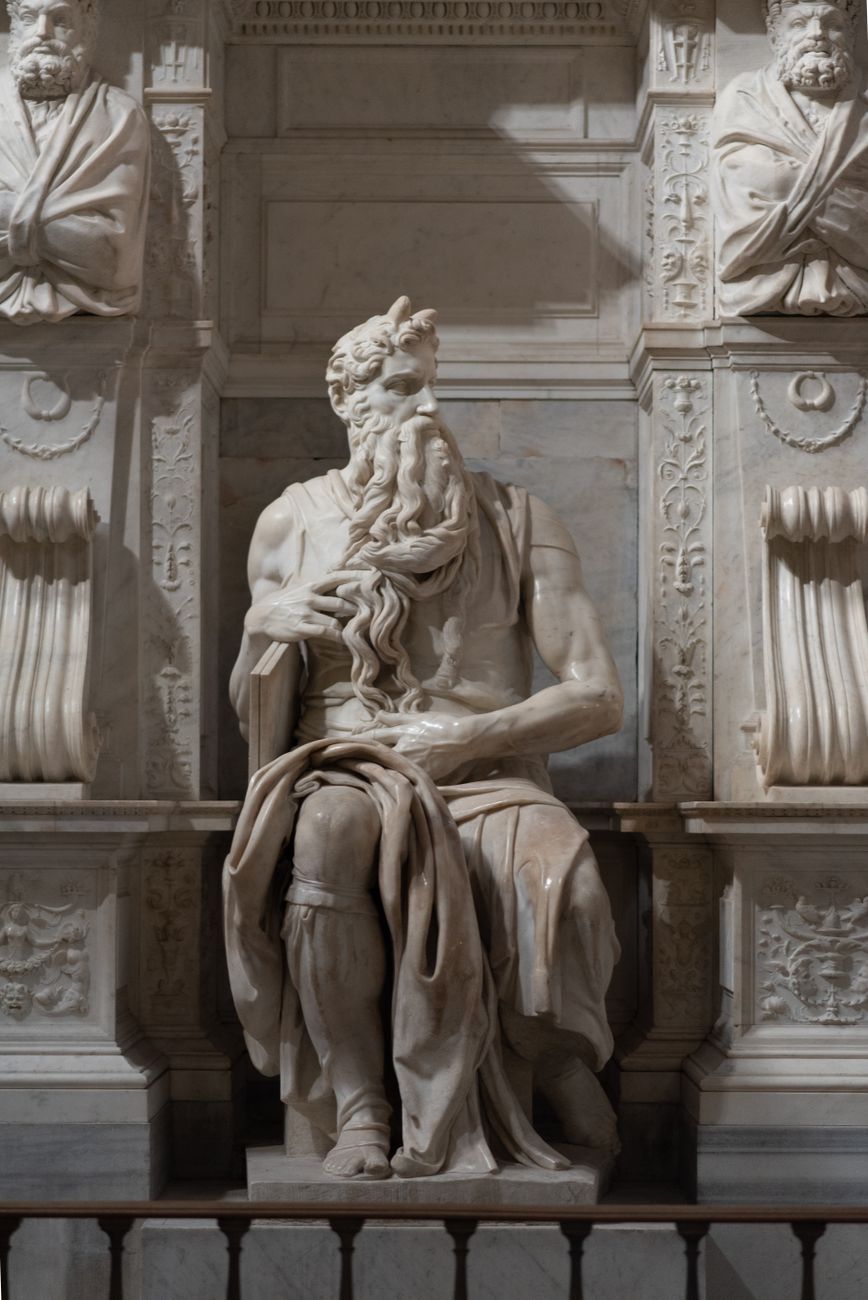
Di fronte al suo silenzio, si racconta che gli assestai una poderosa martellata sul ginocchio, lasciando un segno ancora oggi visibile sul marmo.
Una storia straordinaria. Peccato sia falsa.
Nei documenti del mio tempo non c’è alcuna testimonianza attendibile che possa confermare questo episodio. Nessuna cronaca contemporanea, nessun racconto verificabile, nessuna prova concreta.
E allora da dove nasce questa leggenda?
La risposta potrebbe trovarsi proprio nel ginocchio del Mosè. Osservandolo da vicino, si nota una particolare venatura naturale del marmo che attraversa la superficie. È possibile che qualcuno, vedendo quel segno, abbia immaginato una spiegazione più affascinante della realtà.
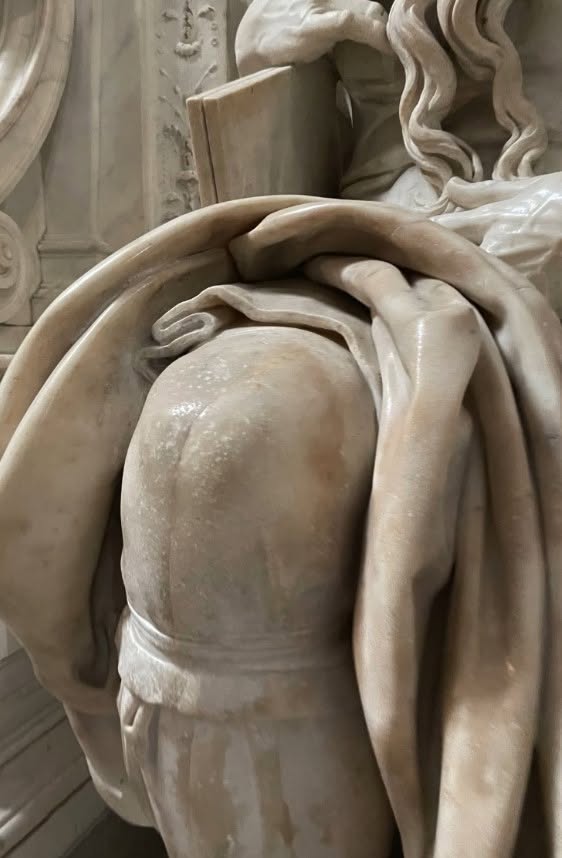
Da lì, forse, è nata la storia del colpo di martello. Un racconto tramandato di bocca in bocca, arricchito nel tempo fino a diventare una delle leggende più famose dell’arte rinascimentale.
Dopotutto, quella vicenda aveva tutti gli ingredienti per conquistare il pubblico: un capolavoro che sembra vivo, un artista dal carattere impetuoso qual ero ma solo in certe occasioni e una scena teatrale capace di impressionare chiunque l’ascolti.
Forse è proprio per questo che il mito è sopravvissuto per secoli. Non perché sia vero, ma perché racconta perfettamente l’immagine che molti hanno costruito di me: quella di uno scultore geniale, passionale e incapace di restare indifferente davanti alla propria creazione.
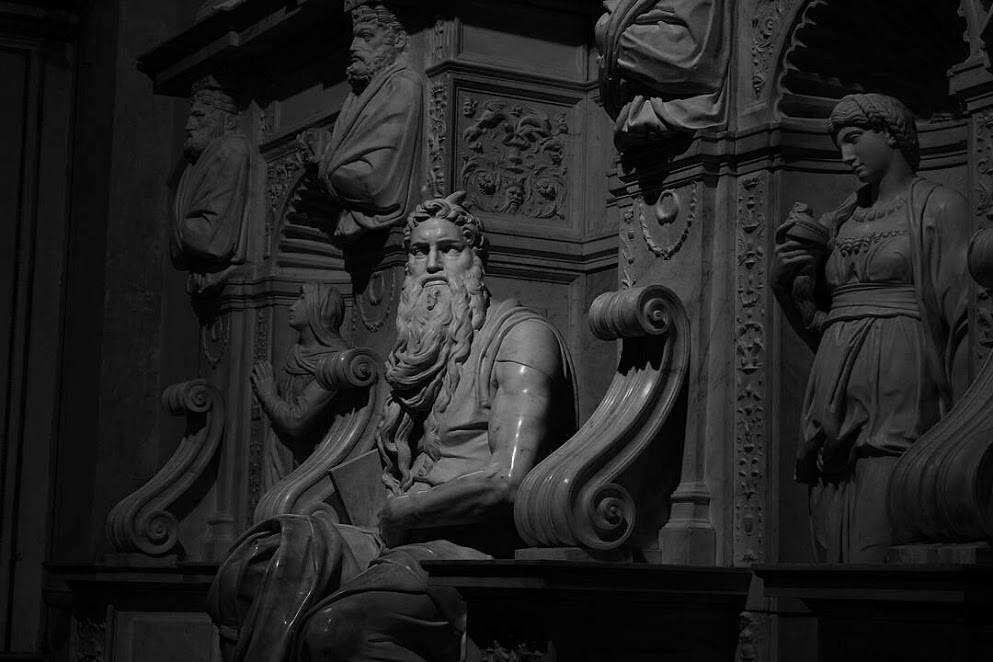
La verità, però, è un’altra. Il Mosè non ha mai parlato. E molto probabilmente io non gli ho mai chiesto di farlo.
Per il momento il sempre vostro Michelangelo Buonarroti vi saluta dandovi appuntamento ai prossimi post e sui social.
“Why don’t you speak?”, the question to Moses is a 500-year-old legend
There’s a story that has haunted me for centuries. You may have heard it dozens of times, perhaps in front of my sculpture of Moses. It’s one of the most famous anecdotes associated with my name, yet there’s no historical proof that it ever happened.
According to legend, when I finished sculpting Moses, I was so struck by his perfection that I believed he was alive. I stared at him for a long time and, almost expecting an answer, asked him:
“Why don’t you speak?”
Faced with his silence, it’s said I struck his knee with a powerful hammer, leaving a mark that’s still visible in the marble today.
An extraordinary story. Too bad it’s false.
There’s no reliable evidence in the documents of my time that can confirm this episode. No contemporary chronicle, no verifiable account, no concrete evidence.
So where does this legend come from?
The answer may lie in Moses’ knee. Looking closely, you can see a distinctive natural veining in the marble that runs across the surface. It’s possible that someone, seeing that mark, imagined a more fascinating explanation than reality.
From there, perhaps, the story of the hammer blow was born. A tale passed down by word of mouth, enriched over time until it became one of the most famous legends of Renaissance art.
After all, that story had all the ingredients to captivate an audience: a masterpiece that seems alive, an artist with the impetuous character that I was—but only on certain occasions—and a theatrical scene capable of impressing anyone who listened.
Perhaps this is precisely why the myth has survived for centuries. Not because it’s true, but because it perfectly captures the image many have constructed of me: that of a brilliant, passionate sculptor incapable of remaining indifferent to his own creation.
The truth, however, is different. Moses never spoke. And most likely I never asked him to.
For now, yours truly, Michelangelo Buonarroti, bids farewell and invites you to join him in future posts and on social media.

Sostienici – Support Us
Se questo blog ti piace e ti appassiona, puoi aiutarci a farlo crescere sempre più sostenendoci in modo concreto condividendo i post, seguendo le pagine social e con un contributo che ci aiuta ad andare avanti con il nostro lavoro di divulgazione. . ENGLISH: If you like and are passionate about this blog, you can help us make it grow more and more by supporting us in a concrete way by sharing posts, following social pages and with a contribution that helps us to move forward with our dissemination work.
10,00 €
Condividi:


Questo sono io




sostienici

Sostienici – Support Us
Se questo blog ti piace e ti appassiona, puoi aiutarci a farlo crescere sempre più sostenendoci in modo concreto condividendo i post, seguendo le pagine social e con un contributo che ci aiuta ad andare avanti con il nostro lavoro di divulgazione. . ENGLISH: If you like and are passionate about this blog, you can help us make it grow more and more by supporting us in a concrete way by sharing posts, following social pages and with a contribution that helps us to move forward with our dissemination work.
€10,00


