
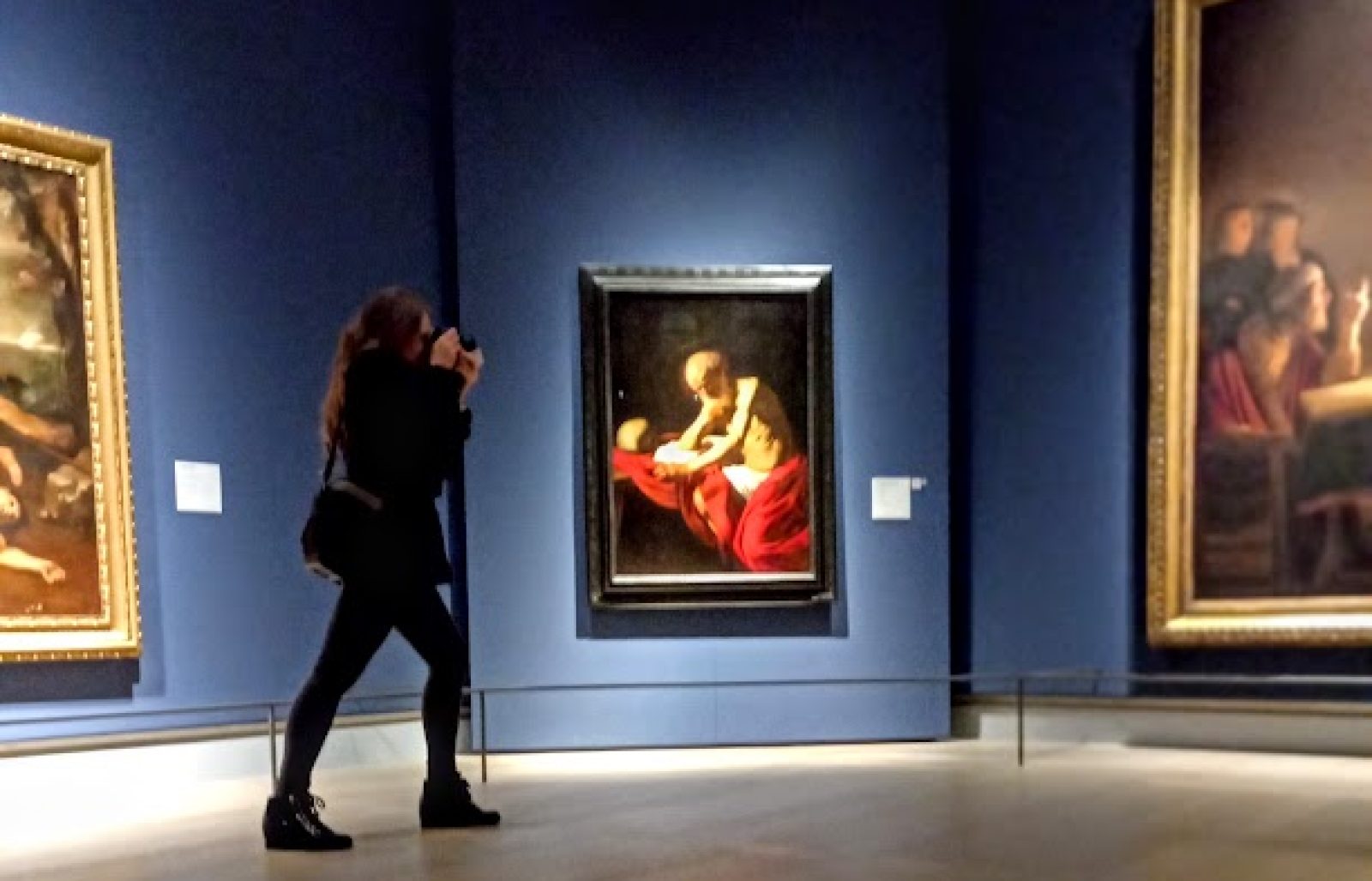
Arezzo: la mostra che racconta come la fotografia ha raccontato le mie opere
Ci fu un tempo in cui il marmo era la mia voce. Oggi, a distanza di secoli, sono la luce e la fotografia a raccontare ciò che le mie mani hanno lasciato al mondo.
Non avrei mai immaginato che il David, la volta della Cappella Sistina, le figure scolpite nelle Cappelle Medicee e le opere nate dalla mia fatica sarebbero sopravvissute non soltanto nella pietra, ma anche nell’occhio di una macchina fotografica.
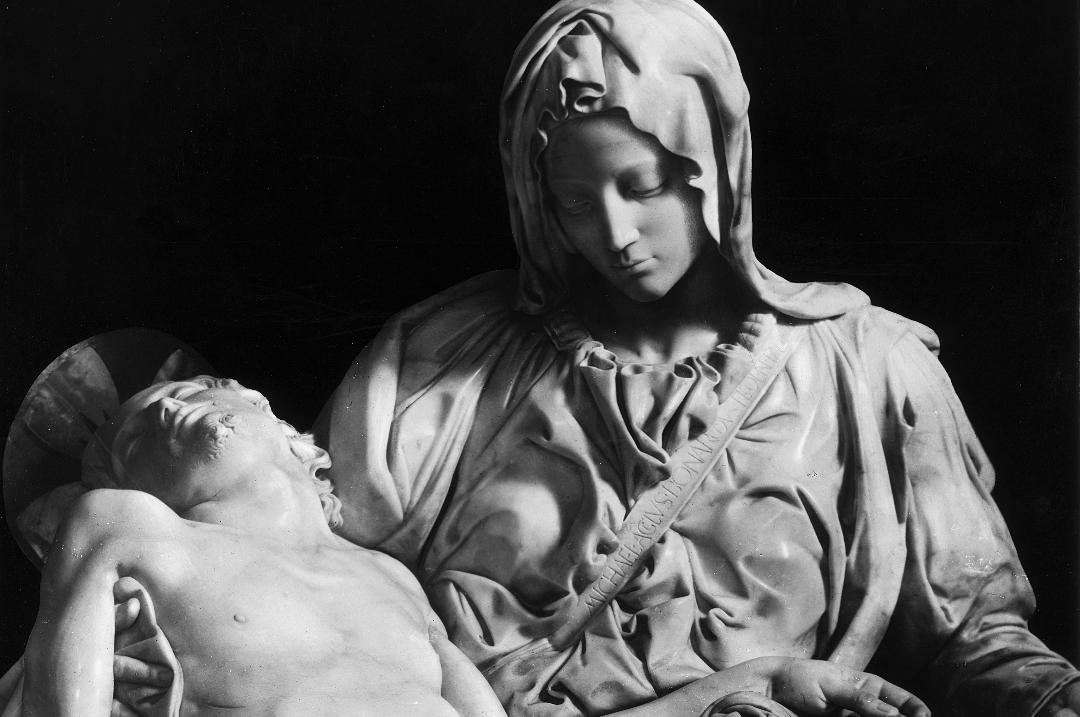
Eppure è proprio questo il cuore della mostra “Da Michelangelo a Rodin nell’obiettivo degli Alinari”, ospitata alla Casa Museo dell’Antiquariato Ivan Bruschi di Arezzo dal 12 giugno al 6 settembre. Un viaggio straordinario che dimostra come la fotografia abbia contribuito a rendere eterna la mia arte, portandola oltre i confini delle città, dei musei e del tempo stesso.
Quando la fotografia diede una nuova vita ai miei capolavori
Per secoli le mie opere furono ammirate da chi poteva raggiungerle. Bisognava camminare fino a Firenze, entrare nelle chiese, alzare lo sguardo verso la Sistina o sostare davanti al David.
Poi arrivò la fotografia.
Gli atelier Alinari, Brogi e Anderson compresero qualcosa che pochi avevano intuito: non stavano semplicemente riproducendo delle opere d’arte. Stavano costruendo una memoria visiva collettiva.
Le 78 fotografie esposte ad Arezzo, realizzate tra la metà dell’Ottocento e la metà del Novecento e conservate negli Archivi Alinari, raccontano proprio questa rivoluzione. Attraverso le loro immagini, i miei lavori raggiunsero studiosi, artisti, collezionisti e appassionati in tutto il mondo.
La fotografia trasformò il capolavoro in conoscenza condivisa.
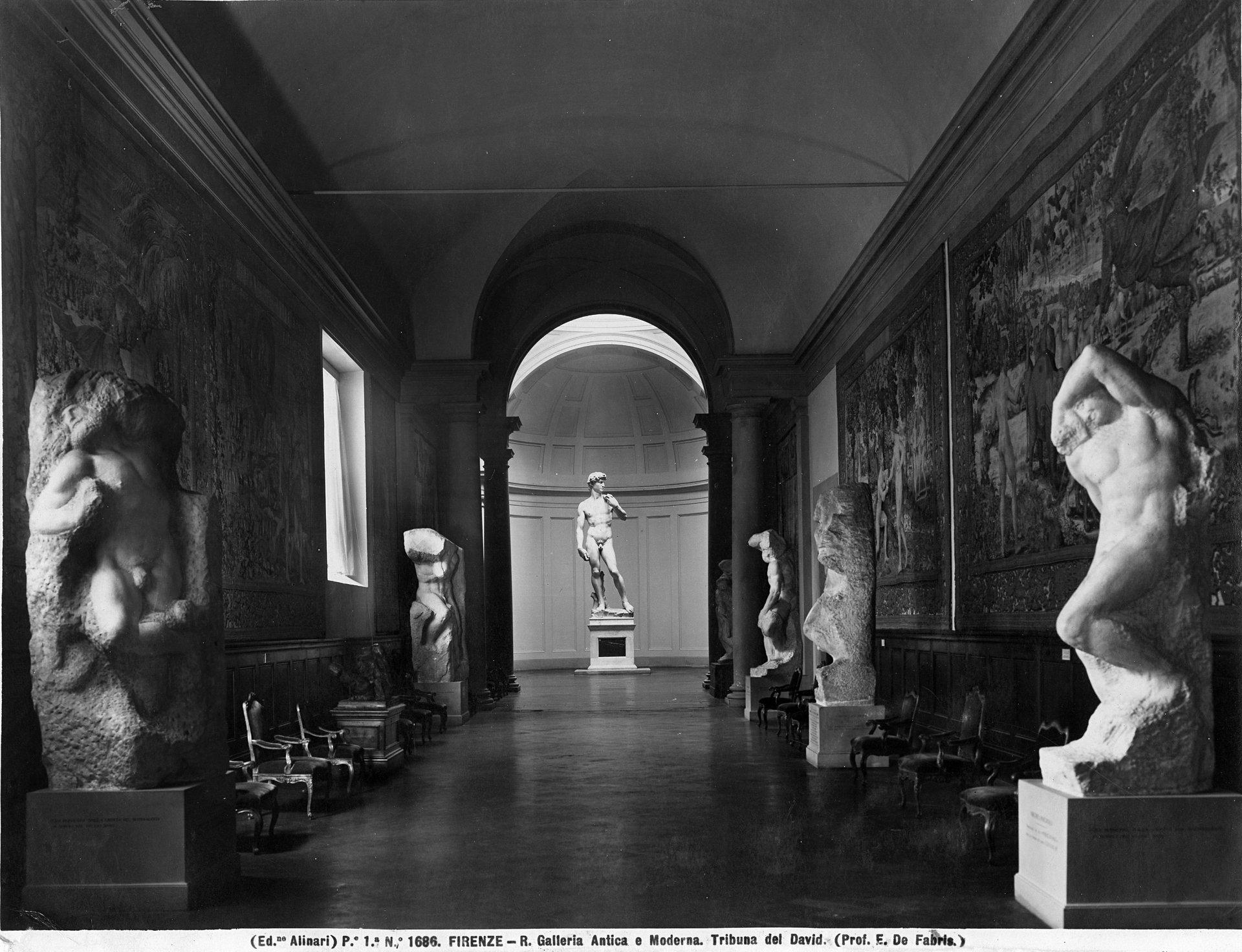
Dal David alla Sistina: la sfida impossibile degli obiettivi fotografici
Fotografare le mie opere non era un’impresa semplice.
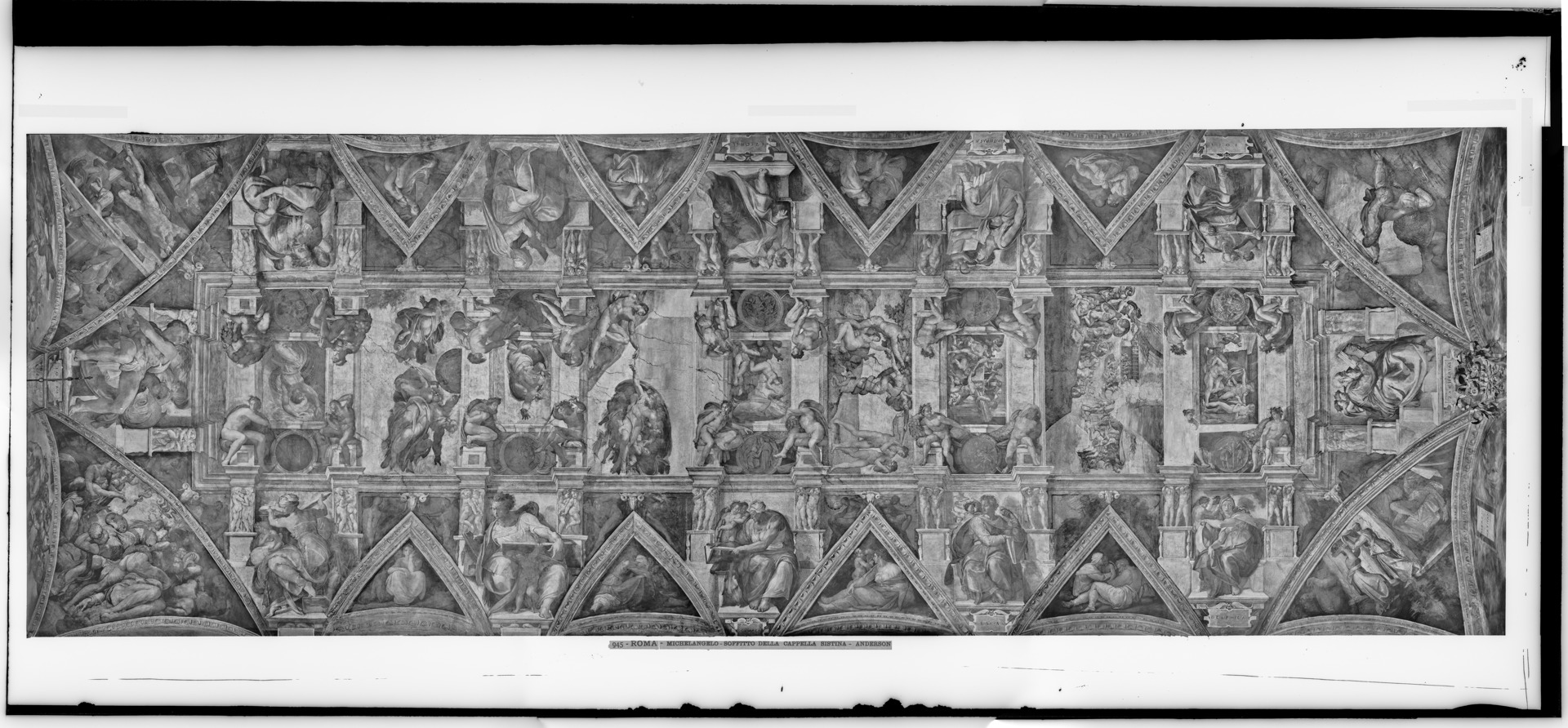
Come racchiudere in una stampa la tensione muscolare del David? Come tradurre in un’immagine piatta la profondità degli affreschi della Cappella Sistina? Come catturare il dialogo tra luce e marmo che anima le Cappelle Medicee?
Eppure quei fotografi riuscirono nell’impresa.
Ogni scatto diventò un nuovo modo di osservare. Un dettaglio ingrandito, una prospettiva insolita, una luce capace di rivelare particolari che spesso sfuggivano persino ai visitatori.
Così la fotografia non fu soltanto una copia dell’opera, ma una nuova interpretazione del mio lavoro.
Rodin e il dialogo che attraversa i secoli
Tra gli aspetti più affascinanti della mostra vi è il rapporto con Auguste Rodin.
Il grande scultore francese guardò alle mie opere non come a reliquie del passato, ma come a una sorgente viva di ispirazione. Studiò la forza dei corpi, il movimento trattenuto nella pietra, la tensione emotiva delle figure.
Come sottolinea la curatrice Rita Scartoni, l’eredità michelangiolesca fu per Rodin il punto di partenza per creare un linguaggio nuovo, moderno, capace di dialogare con il futuro.È la prova che l’arte non appartiene mai a un’epoca soltanto.
Le quattro sezioni che raccontano una riscoperta
Il percorso espositivo si sviluppa attraverso quattro nuclei tematici che accompagnano il visitatore in una vera esplorazione della memoria artistica:
- Gli Alinari e Michelangelo
- Le sculture delle Cappelle Medicee nel 1943
- Gabriele D’Annunzio e la Volta della Cappella Sistina
- Michelangelo e la scultura moderna
Quattro capitoli che mostrano come la fotografia abbia contribuito a costruire il mito moderno della mia figura e delle mie opere.
Le immagini conservate negli Archivi Alinari hanno cambiato il modo in cui generazioni di persone hanno conosciuto la mia arte. Hanno alimentato libri, studi, mostre e nuove creazioni artistiche. Hanno reso accessibile ciò che un tempo apparteneva a pochi.
In fondo, accade ancora oggi.
Ogni fotografia condivisa, ogni immagine osservata su uno schermo continua quel processo iniziato oltre un secolo fa: trasformare l’arte in esperienza collettiva.
La mia vera immortalità è forse racchiusa in questi scatti, nella luce impressa sulla carta fotografica, nella capacità di continuare a parlare a chi non ho mai incontrato.
Perché l’arte vive soltanto quando qualcuno continua a guardarla.
Per il momento il sempre vostro Michelangelo Buonarroti vi saluta dandovi appuntamento ai prossimi post e sui social.
Arezzo: the exhibition that tells how photography has told the story of my works
There was a time when marble was my voice. Today, centuries later, light and photography tell the story of what my hands have left to the world.
I never imagined that David, the Sistine Chapel ceiling, the figures sculpted in the Medici Chapels, and the works born of my labors would survive not only in stone, but also in the eye of a camera.
And yet, this is precisely the heart of the exhibition “From Michelangelo to Rodin in the Alinari Lens,” hosted at the Ivan Bruschi Antiques Museum in Arezzo from June 12th to September 6th. An extraordinary journey that demonstrates how photography has helped perpetuate my art, taking it beyond the confines of cities, museums, and time itself.
When photography gave new life to my masterpieces
For centuries, my works were admired by those who could reach them. You had to walk to Florence, enter the churches, raise your gaze to the Sistine Chapel, or pause before the David.
Then came photography.
The Alinari, Brogi, and Anderson studios understood something that few had realized: they weren’t simply reproducing works of art. They were building a collective visual memory.
The 78 photographs exhibited in Arezzo, taken between the mid-19th and mid-20th centuries and preserved in the Alinari Archives, recount precisely this revolution. Through their images, my works reached scholars, artists, collectors, and enthusiasts around the world.
Photography transformed the masterpiece into shared knowledge.
From the David to the Sistine Chapel: the impossible challenge of photographic lenses
Photographing my works was no easy feat.
How to capture the muscular tension of the David in a print? How to translate the depth of the Sistine Chapel frescoes into a flat image? How to capture the dialogue between light and marble that animates the Medici Chapels?
Yet those photographers succeeded.
Each shot became a new way of observing. An enlarged detail, an unusual perspective, a light capable of revealing details that often escaped even visitors.
Thus, the photograph was not simply a copy of the work, but a new interpretation of my work.
Rodin and the Dialogue Across the Centuries
Among the most fascinating aspects of the exhibition is the relationship with Auguste Rodin.
The great French sculptor looked at my works not as relics of the past, but as a living source of inspiration. He studied the strength of the bodies, the movement captured in stone, the emotional tension of the figures.
As curator Rita Scartoni emphasizes, Michelangelo’s legacy was for Rodin the starting point for creating a new, modern language, capable of dialoguing with the future. It is proof that art never belongs to a single era.
The four sections that tell the story of a rediscovery
The exhibition unfolds through four thematic sections that lead the visitor on a true exploration of artistic memory:
The Alinari and Michelangelo
- The sculptures of the Medici Chapels in 1943
- Gabriele D’Annunzio and the Sistine Chapel Ceiling
- Michelangelo and modern sculptur
Four chapters that show how photography has contributed to building the modern myth of my figure and my works.
The images preserved in the Alinari Archives have changed the way generations of people have experienced my art. They have fueled books, studies, exhibitions, and new artistic creations. They have made accessible what once belonged to the few.
Ultimately, it still happens today.
Every photograph shared, every image observed on a screen continues the process that began over a century ago: transforming art into a collective experience.
My true immortality is perhaps contained in these shots, in the light imprinted on photographic paper, in the ability to continue speaking to those I have never met.
Because art only lives when someone continues to look at it.
For now, yours truly, Michelangelo Buonarroti bids farewell and invites you to join him in future posts and on social media.

Sostienici – Support Us
Se questo blog ti piace e ti appassiona, puoi aiutarci a farlo crescere sempre più sostenendoci in modo concreto condividendo i post, seguendo le pagine social e con un contributo che ci aiuta ad andare avanti con il nostro lavoro di divulgazione. . ENGLISH: If you like and are passionate about this blog, you can help us make it grow more and more by supporting us in a concrete way by sharing posts, following social pages and with a contribution that helps us to move forward with our dissemination work.
10,00 €
Articoli

Condividi:


Questo sono io




sostienici

Sostienici – Support Us
Se questo blog ti piace e ti appassiona, puoi aiutarci a farlo crescere sempre più sostenendoci in modo concreto condividendo i post, seguendo le pagine social e con un contributo che ci aiuta ad andare avanti con il nostro lavoro di divulgazione. . ENGLISH: If you like and are passionate about this blog, you can help us make it grow more and more by supporting us in a concrete way by sharing posts, following social pages and with a contribution that helps us to move forward with our dissemination work.
€10,00


