

La disputa che divise artisti e intellettuali del Rinascimento per oltre un secolo
Quale arte è la più nobile? Pittura o la scultura?
Quella lunga disputa non l’ho letta nei libri ma l’ho vissuta sulla mia pelle. Una domanda che quotidianamente mettevo in pratica, tra mazzuolo e gradine, tra pennelli e mortai per macinare i colori.
Se oggi qualcuno mi chiedesse di scegliere tra una e l’altra, forse rimarrebbe sorpreso dalla mia risposta. La questione per me non è mai stata stabilire quale disciplina dovesse trionfare ma comprendere ciò che le unisce.

Il grande dibattito del Rinascimento tra pittura e scultura
Nel Quattrocento e nel Cinquecento gli artisti erano sì uomini capaci di creare straordinari capolavori ma poco a poco conquistarono qualcosa che fino ad allora era appartenuto solo ai filosofi e agli uomini di lettere: il diritto di essere considerati intellettuali.
Fu proprio in quegli anni che nacque il dibattito sul primato delle arti. Stabilire quale fosse l’arte più nobile significava decidere quale disciplina rappresentasse meglio l’intelligenza dell’uomo, quale fosse più vicina alla conoscenza e quale meritasse il posto più alto tra le arti liberali.
Leon Battista Alberti vedeva nella pittura una disciplina capace di racchiudere matematica, prospettiva, armonia e filosofia.
Lorenzo Ghiberti, invece, rivendicava la grandezza della scultura, capace di dialogare direttamente con la materia e con la luce. Marsilio Ficino e Cristoforo Landino guardavano soprattutto alla pittura, mentre altri continuavano a considerare la scultura un’arte ancora troppo vicina al lavoro manuale.
Erano anni straordinari, nei quali ogni teoria sembrava poter cambiare il destino dell’arte e intanto noi artisti continuavamo a lavorare, come sempre.
La mia risposta a Benedetto Varchi
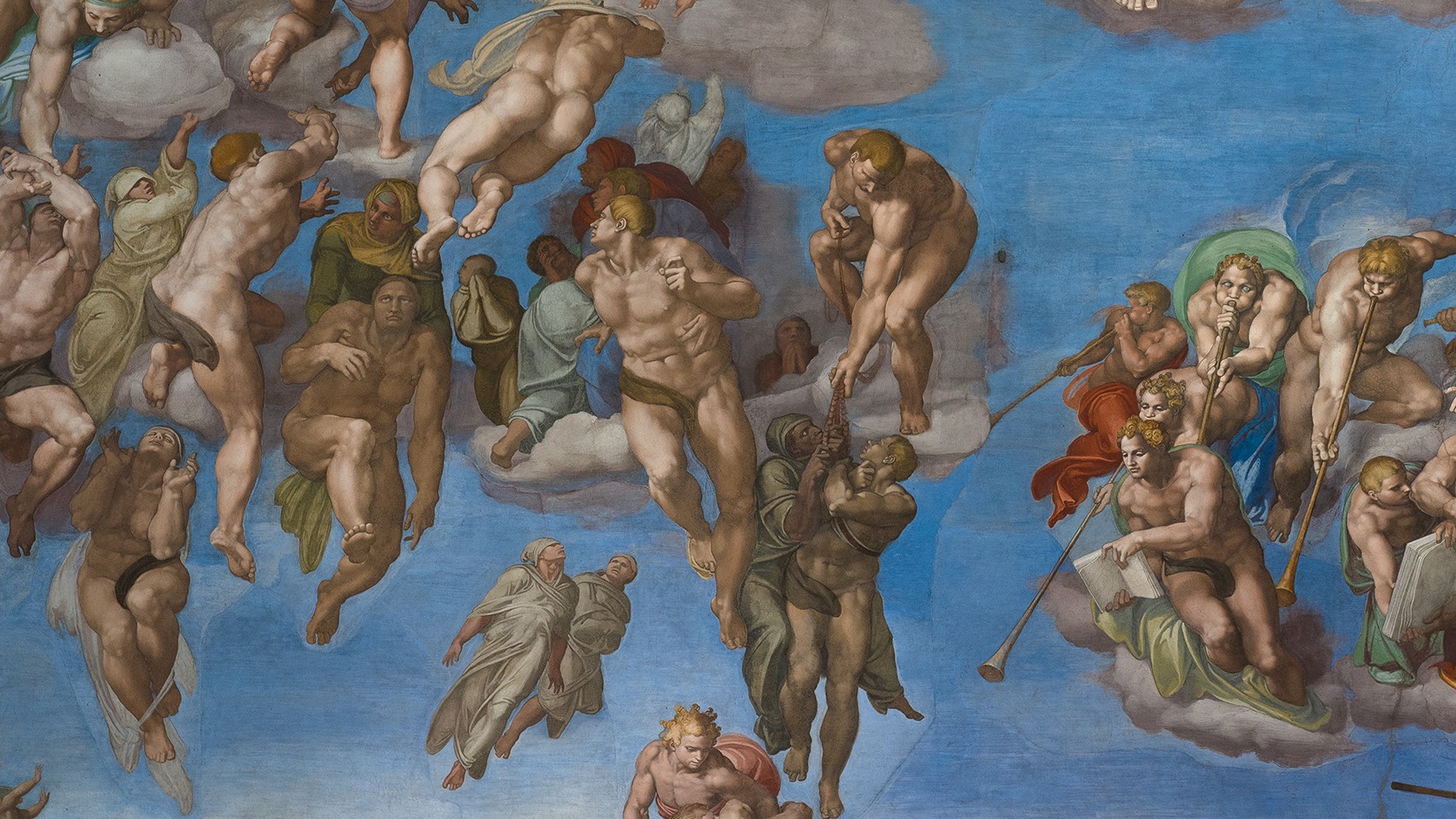
Nel 1547 il letterato Benedetto Varchi decise di porre quella domanda ai più grandi artisti del suo tempo. Voleva sapere quale fosse la disciplina superiore e raccolse le nostre risposte in quella che sarebbe diventata una delle discussioni più importanti del Rinascimento.
Molti si aspettavano che io difendessi la scultura ma invece scrissi che pittura e scultura sono una medesima cosa.
Non intendevo dire che fossero identiche nei mezzi o nelle tecniche. Chi si è approcciato al marmo anche una sola volta sa bene che il oppone una resistenza diversa rispetto all’intonaco fresco di un affresco, così come chi ha dipinto conosce la delicatezza del colore e la rapidità con cui bisogna decidere ogni gesto.
Entrambe le arti nascono però in un posto solo: la mente.
Prima ancora che lo scalpello intacchi il marmo o i pennelli sfiorino la parete, l’opera esiste già come intuizione, come forma ancora invisibile ma ben determinata nel cervello.
Il disegno è il padre di ogni capolavoro
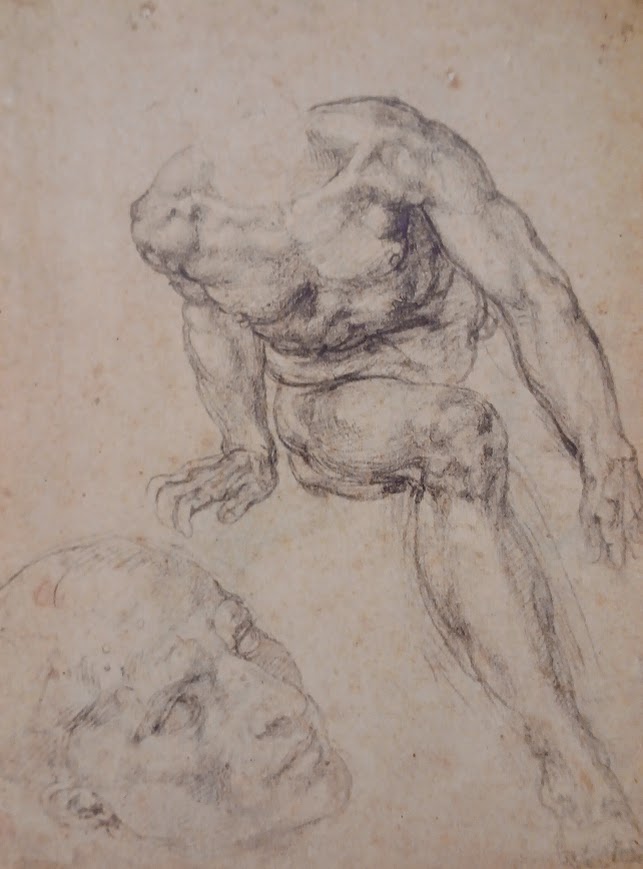
Il disegno è il pensiero dell’artista che si fa carne, struttura, figura: è l’alfa e l’omega.
Era il momento in cui l’intelligenza riesce a dare una forma a quello che ancora nessun altro può vedere. Per questo sostenevo che pittura e scultura derivassero entrambe dal disegno: un’unica capacità creativa che rende possibile trasformare un’idea in realtà.
Il marmo e il colore sono soltanto strumenti: l’opera nasce assai prima, nella mente di chi la crea.
Non sopportavo chi giudicava senza aver mai creato
Confesso di non essere mai stato particolarmente paziente con chi parlava d’arte senza averne conosciuto la fatica.
Molti teorici trascorrevano ore e ore, finanche intere giornate a discutere della superiorità di una disciplina rispetto all’altra. Scrivevano pagine su pagine costruendo argomentazioni eleganti nella forma ma di poca sostanza, citavano filosofi antichi e autori classici.
Quanti di loro però avevano davvero scolpito per giorni senza sosta? Quanti avevano visto un affresco rovinarsi perché l’intonaco si era asciugato prima del previsto o marcito per la troppa umidità dell’intonaco sbagliato come accadde a me?
Nella lettera che scrissi al Varchi lasciai trapelare anche una certa insofferenza verso chi pretendeva di stabilire gerarchie senza conoscere il mestiere dell’artista. Le opinioni sono legittime, certo, ma il loro peso è diverso quando nate dall’esperienza.
L’arte non si comprende soltanto osservandola: bisogna viverla, con i suoi dubbi, la sua disciplina, con gli errori che capita di fare e che si pagano sempre a caro prezzo.
Leonardo da Vinci ed io: due idee diverse, un solo obiettivo
Tra coloro che presero posizione in questo grande dibattito c’era anche Leonardo da Vinci. Su molti aspetti ci dividevano carattere, metodo e visione del mondo, ma sarebbe sciocco negassi la profondità del suo pensiero.
Leonardo difese la pittura con una passione straordinaria. Nel suo Trattato della pittura arrivò a sostenere che il pittore possiede un vantaggio che nessun altro artista può eguagliare: quello di creare un’illusione perfetta della realtà. Attraverso la prospettiva, la luce, le ombre e il colore, il dipinto riesce a ingannare l’occhio umano, trasportandolo oltre i confini della parete.
La scultura, secondo lui, rimaneva invece legata alla materia. Persino la fatica fisica diventava, ai suoi occhi, un elemento di distinzione. Lo scultore lavora tra polvere e sudore, mentre il pittore costruisce immagini affidandosi soprattutto alla mente.
Per me la vera grandezza dell’arte non consisteva nella tecnica utilizzata, ma nella capacità dell’artista di trasformare un’intuizione in qualcosa che potesse parlare agli uomini di ogni tempo.
La pittura e la scultura percorrono strade differenti ma entrambi arrivano dall’intuizione, dall’immaginazione. Solo dopo arriva la tecnica.
Quando la pittura incontrò la poesia: il sogno del Rinascimento
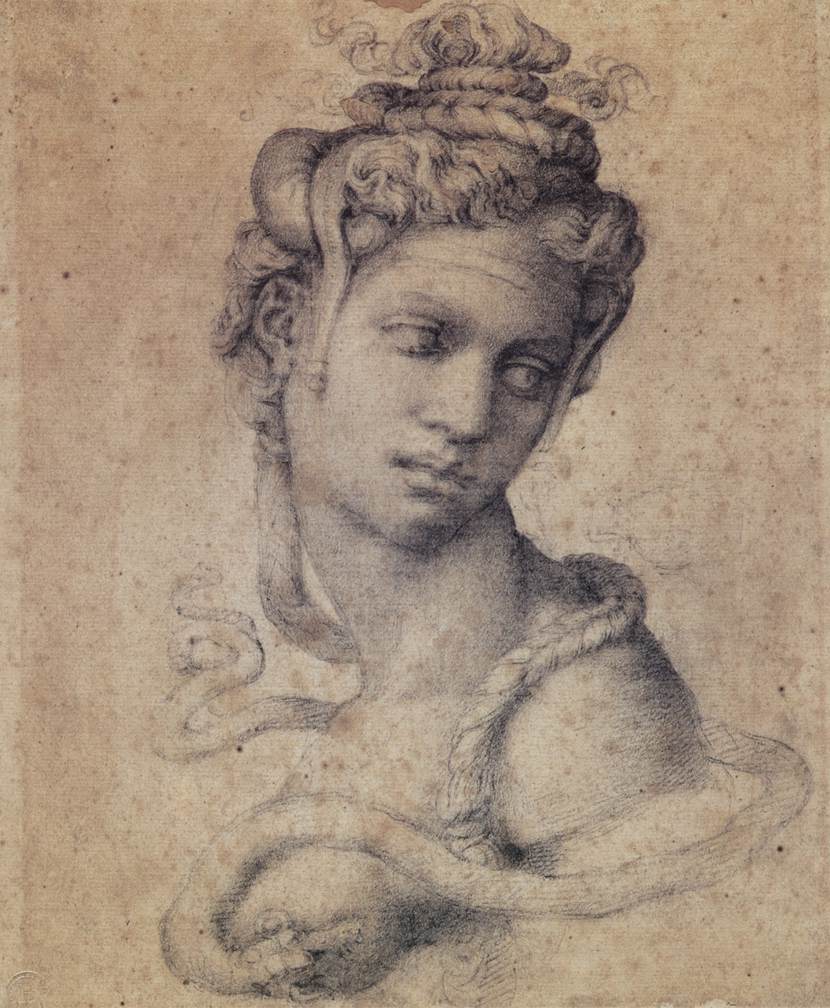
Se oggi guardiamo un dipinto del Rinascimento, spesso ci fermiamo davanti alla bellezza delle forme, alla perfezione delle proporzioni, alla capacità dell’artista di rendere vivo ciò che è soltanto colore e materia.
Ma nel mio tempo un’opera non era soltanto qualcosa da guardare ma un qualcosa da leggere come fosse un racconto per immagini e simbologie.
Per questo nel Rinascimento il confronto non rimase confinato tra pittura e scultura ma si allargò alla poesia. Qualcuno volle comprendere quale fosse il rapporto tra parola e immagine, tra ciò che viene raccontato attraverso la voce e ciò che viene mostrato attraverso gli occhi.
L’arte non copia la natura: la supera attraverso l’idea
Il compito dell’artista d’altro canto non è solo quello di imitare ciò che vedeva davanti ai propri occhi. La natura è il punto di partenza, ma non il punto di arrivo.
L’artista deve cercare ciò che potrebbe esistere andando oltre l’apparenza per raggiungere una forma più alta, più pura, più vicina a quell’idea di perfezione che la mente riesce appena a intravedere.
L’artigiano lavora sulla materia, l’artista dialoga con un’idea.

La grande eredità del Rinascimento: unire tutti i linguaggi della bellezza
Il Rinascimento fu un tempo straordinario in cui non c’era separazione rigida tra i saperi. Un pittore poteva essere anche studioso di matematica, anatomia, poesia e filosofia.
Uno scultore poteva dialogare con letterati e uomini di cultura. L’artista non era più considerato un puro esecutore manuale ma diventava un vero e proprio interprete del mondo.
Univa materia e spirito, conoscenza e immaginazione. La pittura aveva bisogno della poesia per raccontare e la poesia aveva bisogno dell’immagine per rendersi visibile.
La scultura aveva bisogno del pensiero per superare la sola abilità tecnica. Insomma, era un continuo scambio che ha reso possibile la nascita di artisti grandiosi.
Per il momento il sempre vostro Michelangelo Buonarroti vi saluta dandovi appuntamento ai prossimi post e sui social.
The dispute that divided Renaissance artists and intellectuals for over a century
Which art is the nobler? Painting or sculpture?
I didn’t read about that long dispute in books, but I experienced it firsthand. It was a question I put into practice every day, between mallet and chisel, between brushes and mortars to grind paints.
If someone were to ask me today to choose between one and the other, they might be surprised by my answer. For me, the question has never been which discipline should triumph, but rather to understand what unites them.
The great Renaissance debate between painting and sculpture
In the fifteenth and sixteenth centuries, artists were indeed capable of creating extraordinary masterpieces, but little by little they conquered something that until then had belonged only to philosophers and men of letters: the right to be considered intellectuals.
It was precisely in those years that the debate over the primacy of the arts arose. Establishing the noblest art meant deciding which discipline best represented human intelligence, which was closest to knowledge, and which deserved the highest place among the liberal arts.
Leon Battista Alberti saw painting as a discipline capable of encompassing mathematics, perspective, harmony, and philosophy.
Lorenzo Ghiberti, on the other hand, championed the greatness of sculpture, capable of directly engaging with matter and light. Marsilio Ficino and Cristoforo Landino looked primarily to painting, while others continued to consider sculpture an art still too close to manual labor.
They were extraordinary years, in which every theory seemed capable of changing the destiny of art, and meanwhile, we artists continued to work, as always.
My Response to Benedetto Varchi
In 1547, the scholar Benedetto Varchi decided to pose that question to the greatest artists of his time. He wanted to know which was the superior discipline, and he gathered our answers in what would become one of the most important discussions of the Renaissance.
Many expected me to defend sculpture, but instead I wrote that painting and sculpture are one and the same.
I didn’t mean to say they were identical in means or techniques. Anyone who has ever approached marble knows well that it offers a different resistance than the fresh plaster of a fresco, just as anyone who has painted knows the delicacy of color and the speed with which every gesture must be decided.
But both arts originate in one place: the mind.
Before the chisel even carves the marble or the brushes touch the wall, the work already exists as an intuition, as a form still invisible but well-defined in the brain.
Drawing is the father of every masterpiece
Drawing is the artist’s thought that becomes flesh, structure, figure: it is the alpha and the omega.
It was the moment when intelligence manages to give form to what no one else can yet see. This is why I maintained that painting and sculpture both derive from drawing: a single creative ability that makes it possible to transform an idea into reality.
Marble and color are merely tools: the work is born long before, in the mind of the person creating it.
I couldn’t stand those who judged without ever having created
I confess that I’ve never been particularly patient with those who spoke about art without having experienced the effort involved.
Many theorists spent hours and hours, even entire days, debating the superiority of one discipline over the other. They wrote page after page, constructing arguments elegant in form but lacking in substance, quoting ancient philosophers and classical authors.
How many of them, however, had actually sculpted for days without stopping? How many had seen a fresco ruined because the plaster dried prematurely or rotted due to excessive humidity from the wrong plaster, as happened to me?
In the letter I wrote to Varchi, I also revealed a certain impatience with those who attempted to establish hierarchies without understanding the artist’s craft. Opinions are legitimate, of course, but their weight is different when born of experience.
Art isn’t understood merely by observing it: it must be experienced, with its doubts, its discipline, and the mistakes that can happen and which always come at a high price.
Leonardo da Vinci and I: Two Different Ideas, One Goal
Among those who took a stand in this great debate was Leonardo da Vinci. On many aspects, our character, method, and worldview divided us, but it would be foolish to deny the depth of his thought.
Leonardo defended painting with extraordinary passion. In his Treatise on Painting, he argued that the painter possesses an advantage that no other artist can match: that of creating a perfect illusion of reality. Through perspective, light, shadow, and color, the painting can deceive the human eye, transporting it beyond the confines of the wall.
Sculpture, in his view, remained tied to the material. Even physical labor became, in his eyes, a distinguishing feature. The sculptor works amidst dust and sweat, while the painter constructs images relying primarily on the mind.
For me, the true greatness of art lies not in the technique used, but in the artist’s ability to transform an intuition into something that can speak to men of all times.
Painting and sculpture follow different paths, but both arise from intuition and imagination. Only then does technique arrive.
When painting met poetry: the dream of the Renaissance
If we look at a Renaissance painting today, we often pause before the beauty of the forms, the perfection of the proportions, the artist’s ability to bring to life what is merely color and matter.
But in my time, a work was not simply something to be looked at but something to be read, as if it were a story told through images and symbolism.
This is why, during the Renaissance, the comparison was not confined to painting and sculpture but expanded to poetry. Someone wanted to understand the relationship between word and image, between what is told through the voice and what is shown through the eyes.
Art does not copy nature: it surpasses it through the idea
The artist’s task, on the other hand, is not simply to imitate what he sees before his eyes. Nature is the starting point, but not the end point.
The artist must seek what might exist, going beyond appearances to reach a higher, purer form, closer to that idea of perfection that the mind can barely glimpse.
The craftsman works with matter, the artist dialogues with an idea.
The great legacy of the Renaissance: uniting all the languages of beauty
The Renaissance was an extraordinary time when there was no rigid separation between knowledge. A painter could also be a scholar of mathematics, anatomy, poetry, and philosophy.
A sculptor could dialogue with men of letters and men of culture. The artist was no longer considered a mere manual executor but became a true interpreter of the world.
He united matter and spirit, knowledge and imagination. Painting needed poetry to narrate, and poetry needed the image to make itself visible.
Sculpture needed thought to transcend mere technical skill. In short, it was a continuous exchange that made great artists possible.
For now, yours truly, Michelangelo Buonarroti, bids farewell and invites you to join him in future posts and on social media.

Sostienici – Support Us
Se questo blog ti piace e ti appassiona, puoi aiutarci a farlo crescere sempre più sostenendoci in modo concreto condividendo i post, seguendo le pagine social e con un contributo che ci aiuta ad andare avanti con il nostro lavoro di divulgazione. . ENGLISH: If you like and are passionate about this blog, you can help us make it grow more and more by supporting us in a concrete way by sharing posts, following social pages and with a contribution that helps us to move forward with our dissemination work.
10,00 €
Articoli

Condividi:


Questo sono io




sostienici

Sostienici – Support Us
Se questo blog ti piace e ti appassiona, puoi aiutarci a farlo crescere sempre più sostenendoci in modo concreto condividendo i post, seguendo le pagine social e con un contributo che ci aiuta ad andare avanti con il nostro lavoro di divulgazione. . ENGLISH: If you like and are passionate about this blog, you can help us make it grow more and more by supporting us in a concrete way by sharing posts, following social pages and with a contribution that helps us to move forward with our dissemination work.
€10,00


