

A Carrara esiste una stanza che ogni amante dell’arte dovrebbe vedere
Una porta socchiusa, un vicolo silenzioso e il desiderio di rallentare il passo. Io l’ho trovata così la wunderkammer.
Passeggiando tra le antiche vie di Carrara, a pochi passi dalla collegiata-abbazia di Sant’Andrea Apostolo, il mio sguardo è stato catturato da una piccola porta a vetri che si apre sul Vicolo del Duomo. Non un classico museo né un negozio di antiquariato ma una wunderkammer, un’autentica stanza delle meraviglie dove ogni oggetto conserva la memoria di uomini, botteghe, scalpelli, fatiche e sogni scolpiti nel marmo.
Varcando quella soglia ho avuto la sensazione di entrare in una sorta di preghiera silenziosa dedicata all’arte.
Marco Nicoli, il collezionista che salva la memoria degli scultori
Ogni città ha bisogno di qualcuno che custodisca la propria anima, la propria storia sempre più ricca e articolata di quella che si può trovare narrata nei libri.
Per Carrara, quel custode ha il volto e il cuore di Marco Nicoli.
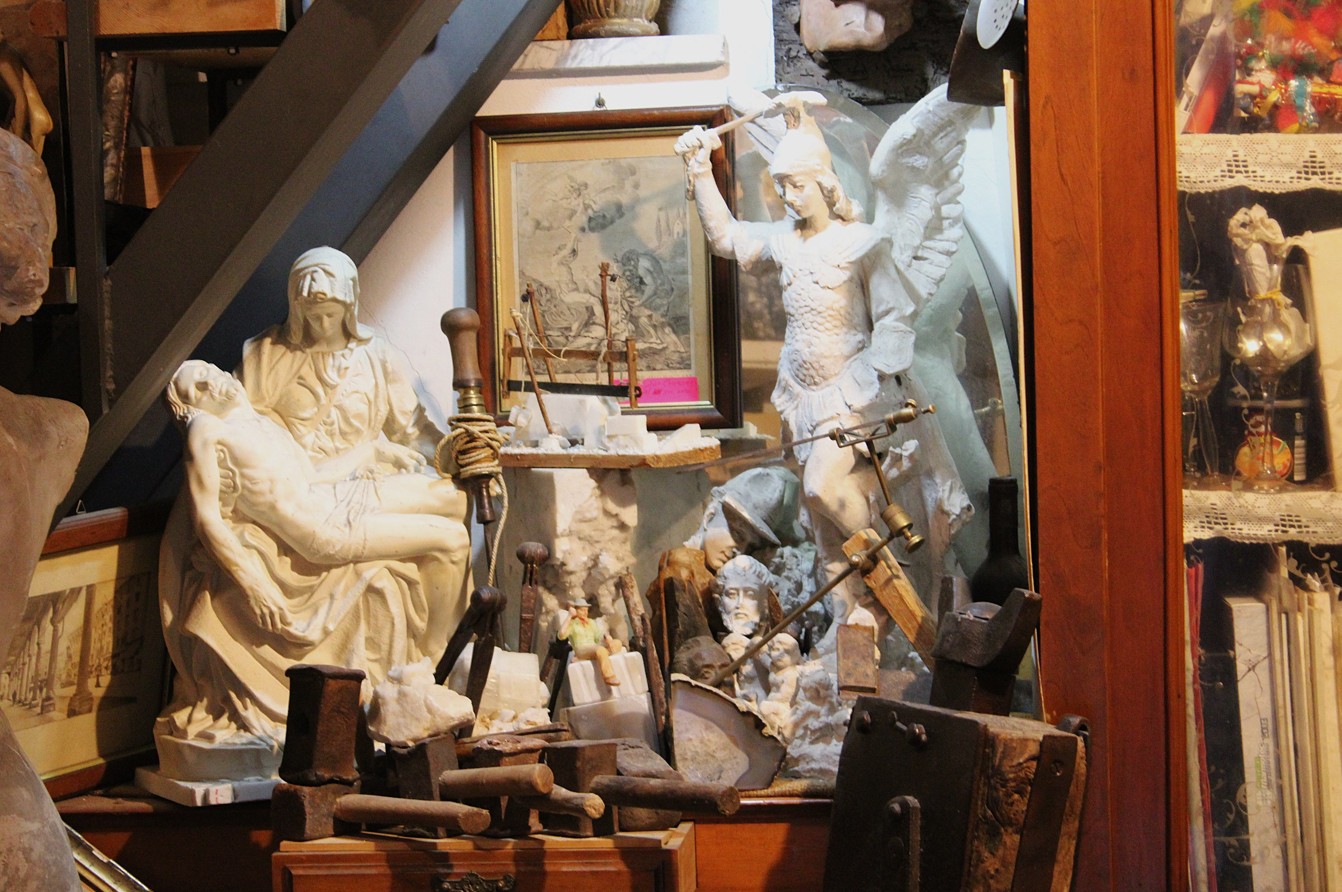
Sarebbe riduttivo definirlo un semplice collezionista. Marco raccoglie memorie. Ha scelto di custodire e rendere fruibile a tutti ciò che altri avrebbero messo da parte, forse dimenticato. Salva strumenti di lavoro, modelli, libri, fotografie, gessi e frammenti di vite che raccontano secoli di scultura.
Con pazienza e amore ha costruito un piccolo universo dove ogni oggetto continua a parlare.
Non accumula cose: accoglie storie. Entrando nel suo spazio non si vede una collezione ma ci si fa strada nella vita degli artisti, tra modelli e libri, bottiglie e mazzuoli di ferro dolce consumati dall’uso.
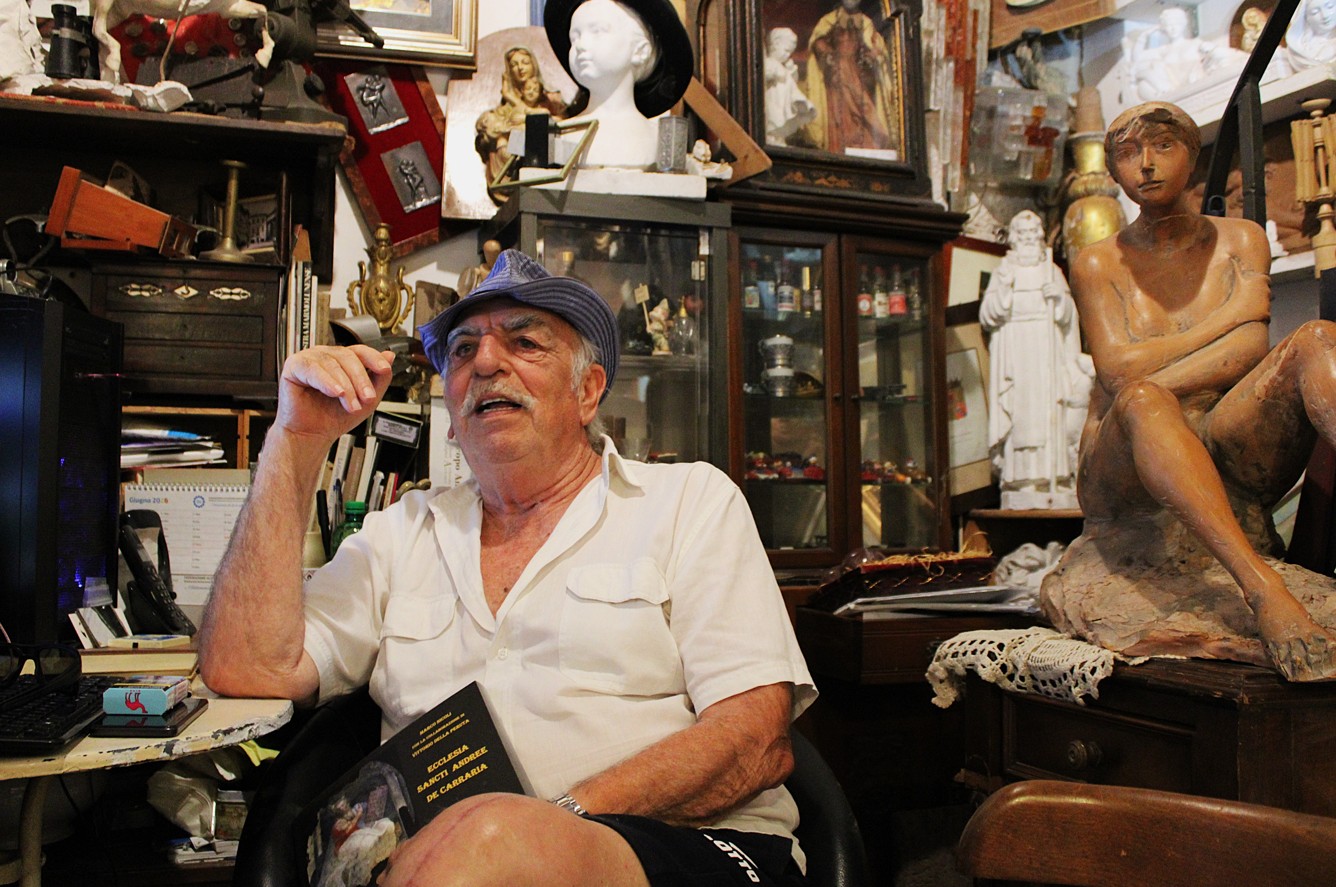
Tra gradine, mazzuoli e gessi rivive il respiro delle antiche botteghe
Oltre la soglia, il tempo si ferma. Sembra di sentire respirare quelle pareti sovraccariche di oggetti.
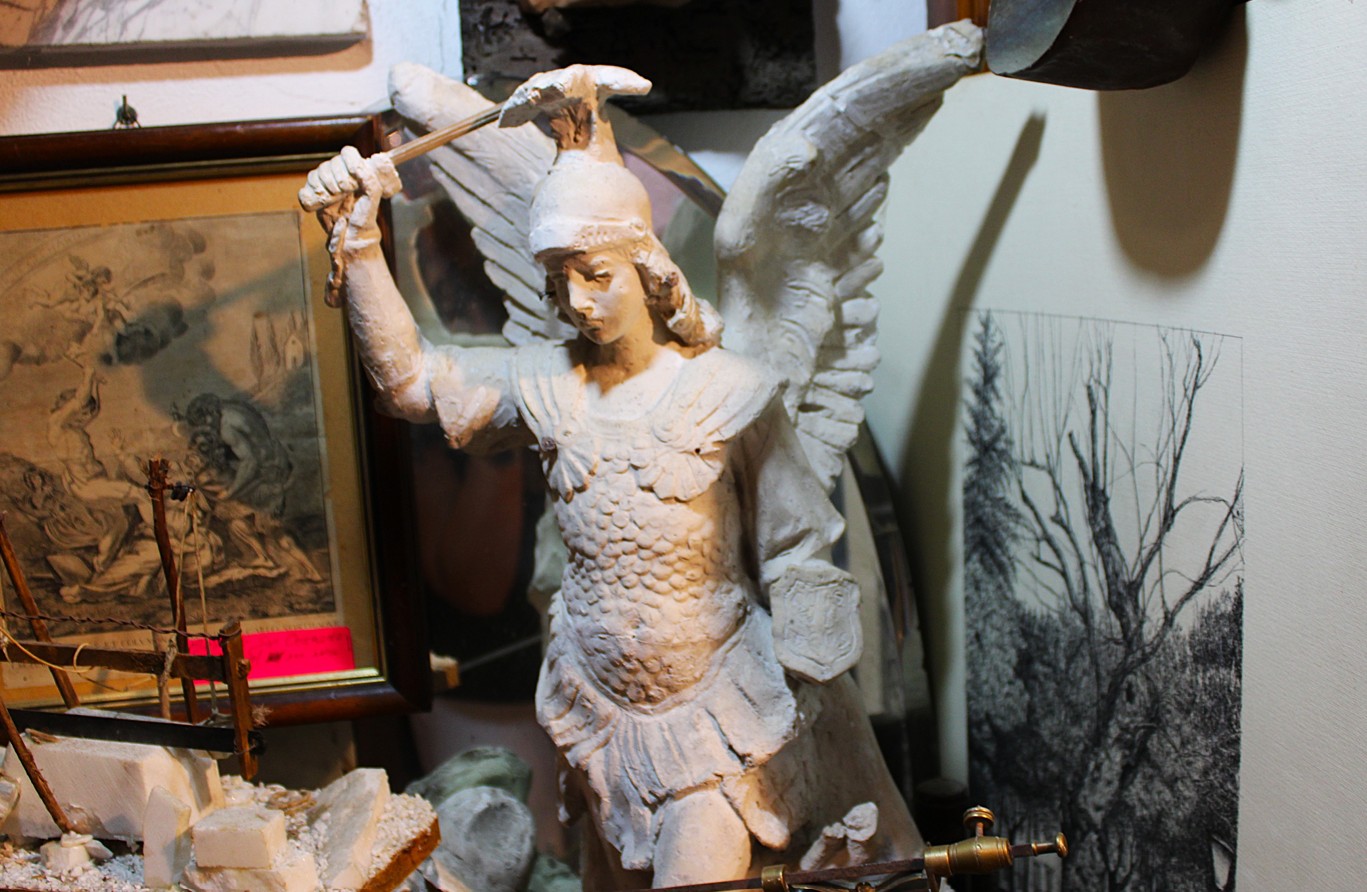
Il mio sguardo si perde tra i calchi in gesso con le repere, adoperati con la tradizionale macchinetta a punti, strumenti che hanno accompagnato generazioni di artisti nel difficile lavoro di trasferire un modello sul marmo.
Li conosco bene anche se sono arrivati assai dopo rispetto a quando ancora scolpivo io. Per secoli quei punti di metallo hanno guidato mani pazienti verso la perfezione. Oggi molti laboratori invece affidano ai robot la sbozzatura delle opere.
È il progresso ma nessuna diavoleria moderna potrà mai conoscere il tremore di una mano e di una mente che cercano la bellezza nel marmo.
Tra quei gessi fanno capolino gradine consumate dall’uso, vecchi mazzuoli di ferro dolce, bottiglie dimenticate dal tempo, dischi di musica classica, libri dedicati a Carrara, cornici decorate, centrini all’uncinetto su cui poggiano le basi dei modelli.
Ogni oggetto richiama un altro in un racconto senza fine.
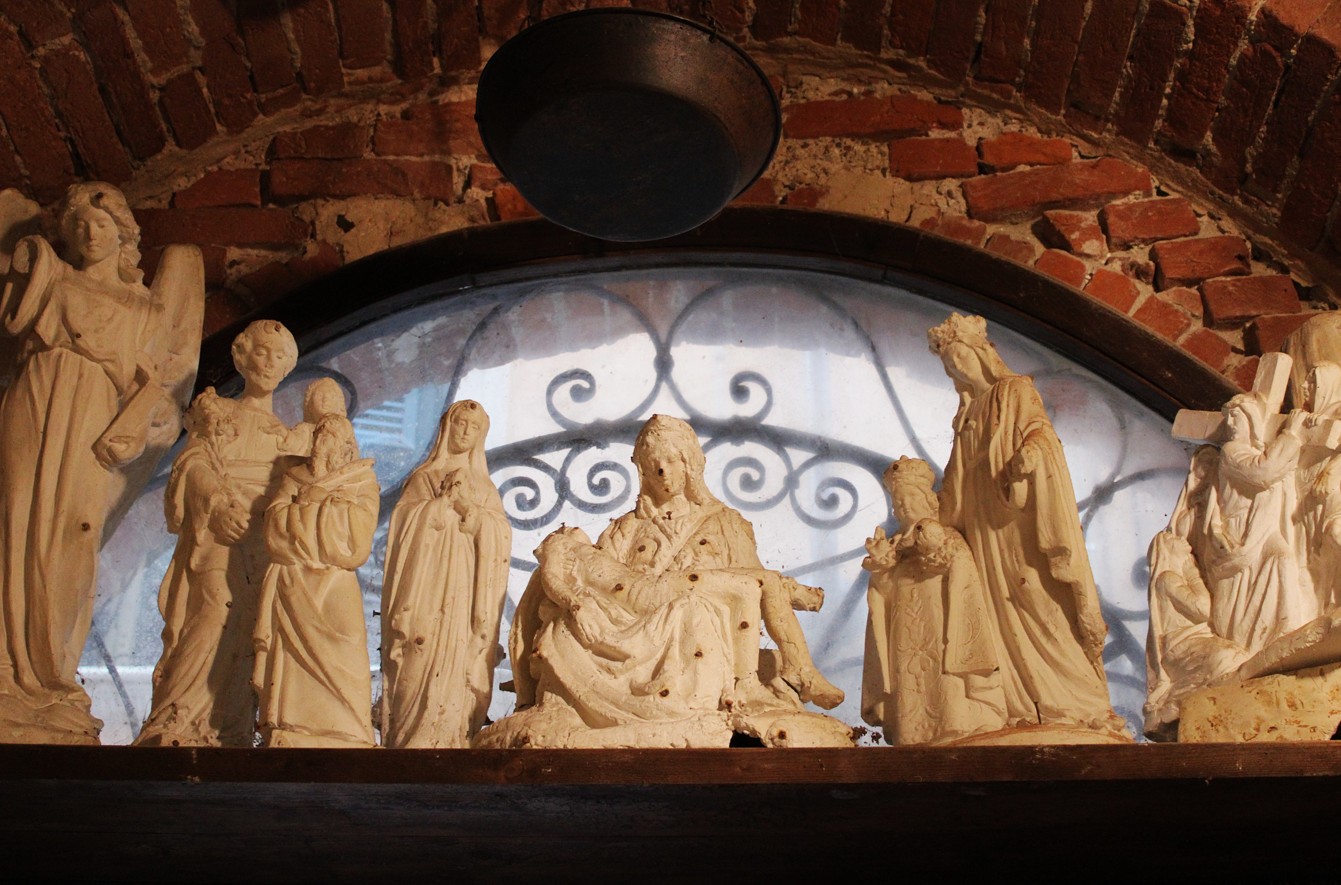
Quando ho ritrovato la mia Pietà Vaticana
Fra le tante presenze che abitano questa stanza, ce n’è una che mi ha particolarmente emozionato: il piccolo gesso della mia Pietà Vaticana.
Vederla lì, circondata dagli strumenti degli scultori carrarini, mi ha riportato con la mente al momento in cui da giovane, venni per la prima volta a carrara, alle cave del Polvaccio, per cercare quel marmo.
Fu quella scultura, realizzata per il cardinale francese Jean Bilhères de Lagraulas, a darmi per prima la fama. Certo avevo già scolpito altre opere ma la Pietà Vaticana portò il mio nome in tutte le corti d’Europa.
Qui entra soltanto chi possiede ancora il dono della curiosità
Sulla porta della wunderkammer non c’è alcun cartello, nessuna scritta a indicarne l’esistenza.
“Qui entra solo chi è curioso.”, mi dice il proprietario Marco Nicoli.
Non occorre acquistare un biglietto. Basta la disponibilità a lasciarsi sorprendere.
Viviamo in un tempo che ci impone continuamente di correre. Corriamo verso il lavoro, dietro alle notifiche, corriamo persino quando ammiriamo un’opera d’arte.
La bellezza non ama la fretta: domanda silenzio, attesa e necessita di occhi capaci di fermarsi. Restituisce meraviglia solo quando le viene concesso il tempo di farlo.
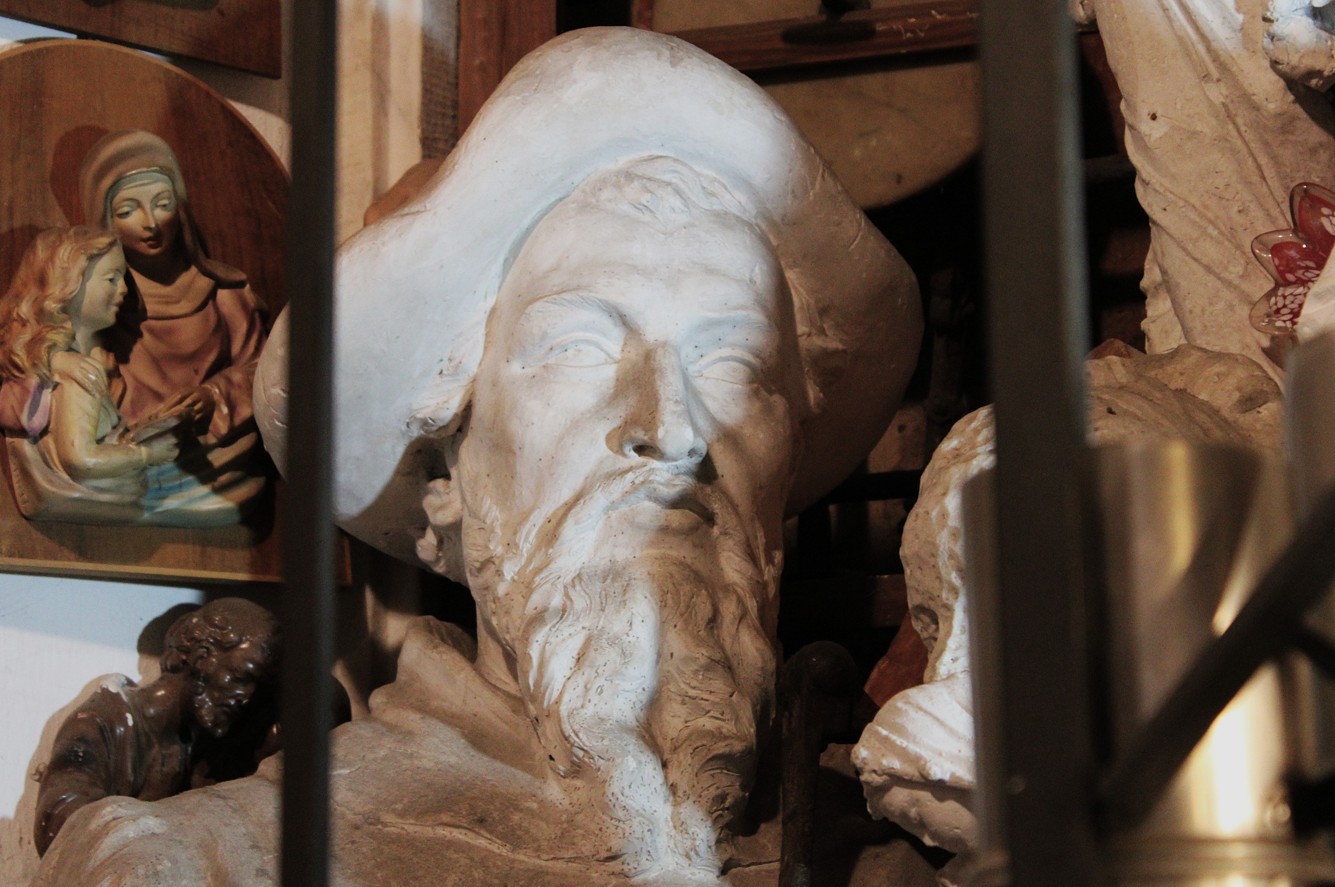
La stanza delle meraviglie dove la bellezza continua a costruire ponti
In questo piccolo spazio il passato non è nostalgia ma presenza costante. Nella stanza delle meraviglie di Marco, la bellezza continua a costruire ponti tra ieri e domani, ricordandoci che il sapere delle mani non appartiene soltanto alla storia, ma può ancora indicare una strada verso il futuro.
Non sempre chi arriva per primo è colui che ha visto di più: a volte basta rallentare per godersi il viaggio e provare a capire da dove veniamo.

Carrara custodisce ancora il miracolo della meraviglia
In questa stanza non c’è posto per il Bianconiglio che corre gridando: “È tardi! È tardi!”. Il tempo smette di inseguirci e diventa alleato.
Questo il più grande dono che Marco Nicoli offre a chi attraversa quella piccola porta: la possibilità di ricordare che la cultura non è fatta soltanto di opere straordinarie, ma anche delle persone che, con infinita generosità, scelgono di custodirle e raccontarle.
Se vi troverete a passeggiare per Carrara, concedetevi questo regalo. Lasciate le strade principali ed entrate nel Vicolo del Duomo.
Varcate quella soglia. Scoprirete che la più preziosa delle collezioni è fatta di memoria.
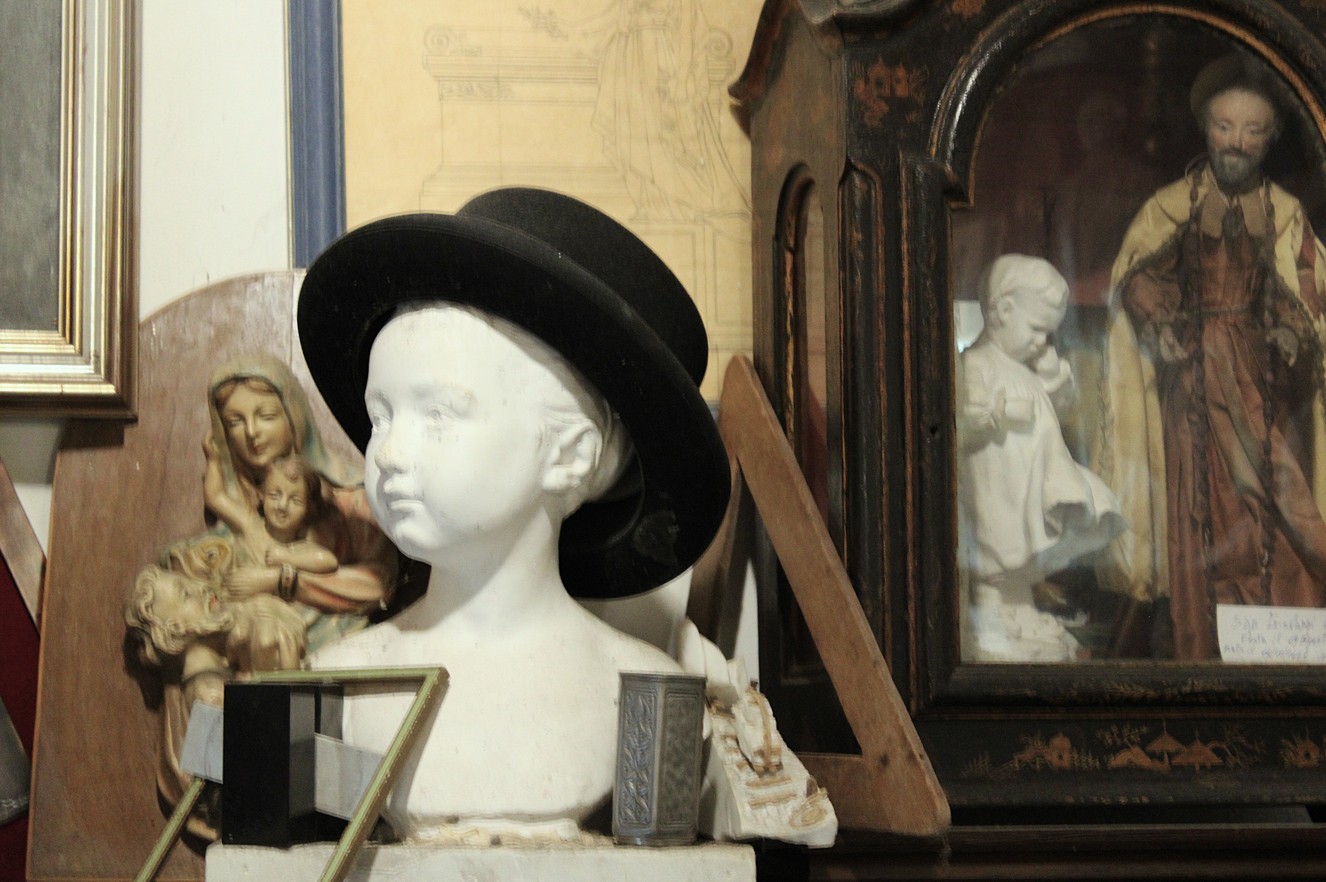
Per il momento il sempre vostro Michelangelo Buonarroti vi saluta dandovi appuntamento ai prossimi post e sui social.
In Carrara, there’s a room every art lover should see
A door ajar, a quiet alley, and the desire to slow down. This is how I found the Wunderkammer.
Walking through the ancient streets of Carrara, a few steps from the Collegiate Church and Abbey of Sant’Andrea Apostolo, my gaze was caught by a small glass door that opens onto Vicolo del Duomo. Not a classic museum or an antique shop, but a Wunderkammer, a true cabinet of wonders where every object preserves the memory of men, workshops, chisels, labors, and dreams carved in marble.
Crossing that threshold, I felt like I was entering a sort of silent prayer dedicated to art.
Marco Nicoli, the collector who saves the memory of sculptors
Every city needs someone to guard its soul, its history, increasingly rich and complex than that which can be found in books.
For Carrara, that custodian has the face and heart of Marco Nicoli.
It would be reductive to call him a simple collector. Marco collects memories. He has chosen to preserve and make accessible to all what others would have set aside, perhaps forgotten. He saves work tools, models, books, photographs, plaster casts, and fragments of lives that tell the story of centuries of sculpture.
With patience and love, he has built a small universe where every object continues to speak.
He doesn’t accumulate things: he welcomes stories. Entering his space, you don’t see a collection, but rather a path into the lives of artists, among models and books, bottles, and soft-iron mallets worn by use.
Among the steps, mallets, and plaster casts, the spirit of the ancient workshops comes alive
Beyond the threshold, time stands still. You almost feel those walls, overloaded with objects, breathing.
My gaze wanders among the plaster casts with the references, used with the traditional dot-machine, tools that have accompanied generations of artists in the arduous task of transferring a model to marble.
I know them well, even though they arrived much later than when I was still sculpting. For centuries, those metal dots guided patient hands toward perfection. Today, many workshops instead entrust the rough-hewing of the works to robots.
It’s progress, but no modern wizardry will ever know the tremor of a hand and a mind seeking beauty in marble.
Peeking out among those plaster casts are steps worn by use, old soft iron mallets, bottles forgotten by time, classical music records, books dedicated to Carrara, decorated frames, crocheted doilies on which the models rest.
Each object recalls another in a never-ending tale.
When I Rediscovered My Vatican Pietà
Among the many presences that inhabit this room, there is one that particularly moved me: the small plaster cast of my Vatican Pietà.
Seeing it there, surrounded by the tools of the Carrara sculptors, brought me back to the moment when, as a young man, I first came to Carrara, to the Polvaccio quarries, to search for that marble.
It was that sculpture, created for the French Cardinal Jean Bilhères de Lagraulas, that first brought me fame. Of course, I had already sculpted other works, but the Vatican Pietà carried my name to every court in Europe.
Only those who still possess the gift of curiosity may enter here
On the door of the curiosities there is no sign, no writing to indicate its existence.
“Only those who are curious may enter here,” owner Marco Nicoli tells me.
You don’t need to buy a ticket. All you need is a willingness to be surprised.
We live in a time that constantly forces us to rush. We rush to work, chasing notifications, even when we admire a work of art.
Beauty doesn’t like haste: it demands silence, waiting, and requires eyes capable of stopping. It only restores wonder when given the time to do so.
The room of wonders where beauty continues to build bridges
In this small space, the past isn’t nostalgia but a constant presence. In Marco’s room of wonders, beauty continues to build bridges between yesterday and tomorrow, reminding us that the knowledge of hands isn’t just a thing of history, but can still point the way to the future.
The first to arrive isn’t always the one who has seen the most: sometimes, all it takes is slowing down to enjoy the journey and try to understand where we come from.
Carrara still preserves the miracle of wonder
In this room, there’s no room for the White Rabbit running, shouting, “It’s late! It’s late!” Time stops chasing us and becomes our ally.
This is the greatest gift Marco Nicoli offers to those who pass through that small door: the chance to remember that culture is not just made up of extraordinary works, but also of the people who, with infinite generosity, choose to preserve and share them.
If you find yourself strolling through Carrara, treat yourself to this gift. Leave the main streets and enter Vicolo del Duomo.
Cross that threshold. You will discover that the most precious of collections is made of memory.
For now, yours truly, Michelangelo Buonarroti bids you farewell, saying he’ll see you in future posts and on social media.

Sostienici – Support Us
Se questo blog ti piace e ti appassiona, puoi aiutarci a farlo crescere sempre più sostenendoci in modo concreto condividendo i post, seguendo le pagine social e con un contributo che ci aiuta ad andare avanti con il nostro lavoro di divulgazione. . ENGLISH: If you like and are passionate about this blog, you can help us make it grow more and more by supporting us in a concrete way by sharing posts, following social pages and with a contribution that helps us to move forward with our dissemination work.
10,00 €
Articoli
Condividi:


Questo sono io




sostienici

Sostienici – Support Us
Se questo blog ti piace e ti appassiona, puoi aiutarci a farlo crescere sempre più sostenendoci in modo concreto condividendo i post, seguendo le pagine social e con un contributo che ci aiuta ad andare avanti con il nostro lavoro di divulgazione. . ENGLISH: If you like and are passionate about this blog, you can help us make it grow more and more by supporting us in a concrete way by sharing posts, following social pages and with a contribution that helps us to move forward with our dissemination work.
€10,00


Che bello questo posto, sono stato a Carrara, ma non conoscevo questo posto 👏👏👏👏👏👍👍👍👍👍👍👍👍
"Mi piace"Piace a 1 persona
un luogo che si affaccia sulla strada ma per vederlo bisogna farci caso. Non ha insegne né altro ma vale la pena visitarlo
"Mi piace"Piace a 1 persona