
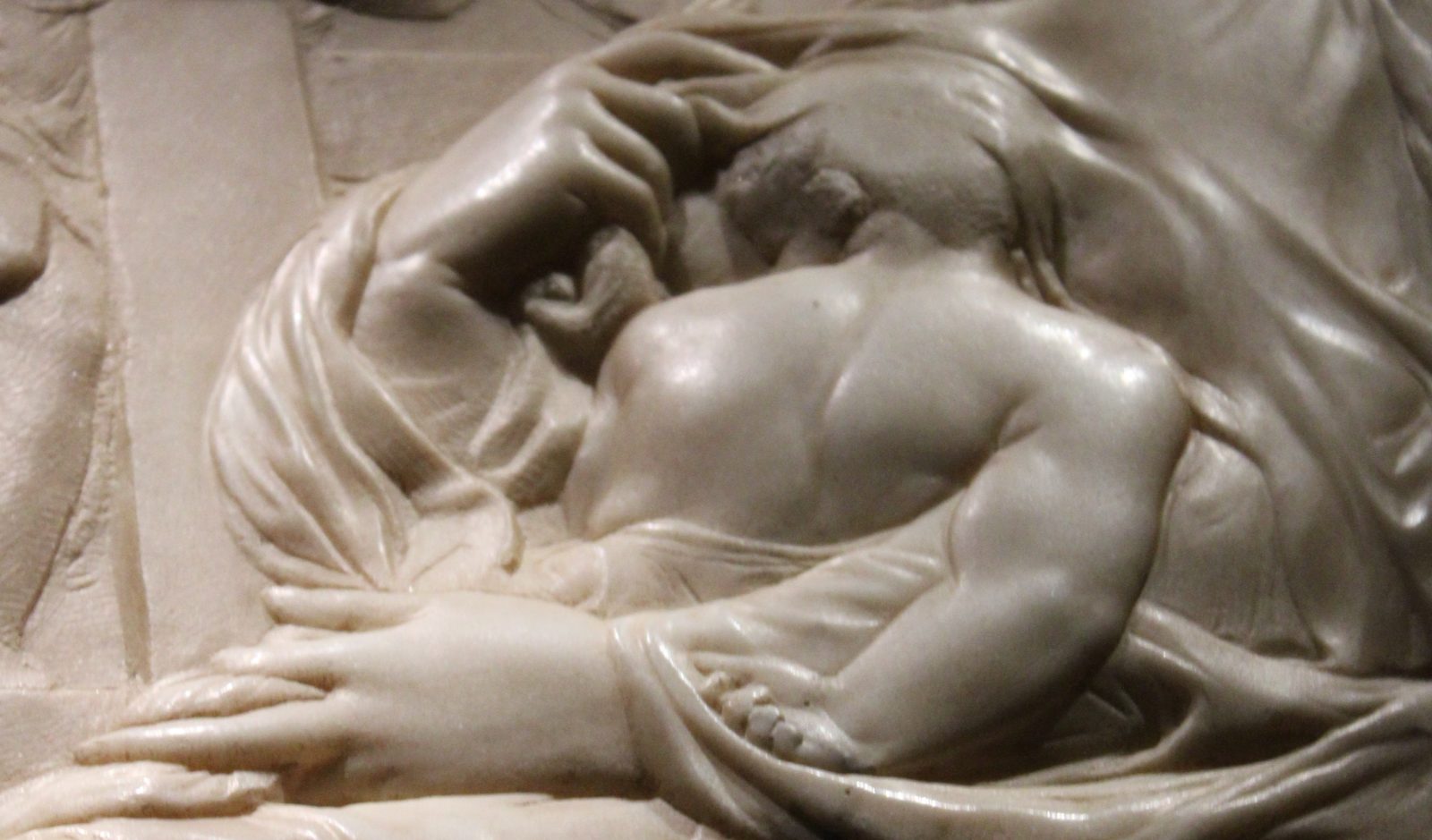
Leonardo e Caravaggio insieme: la mostra dell’autunno a Mantova
“Inventare la natura. Leonardo, Arcimboldo, Caravaggio” è la mostra in programma dal 26 settembre 2026 al 10 gennaio 2027 a Palazzo Te di Mantova.
Dopo il successo delle grandi esposizioni dedicate alle Metamorfosi, Fondazione Palazzo Te conclude l’anno del Cinquecentenario con un progetto destinato a diventare uno degli appuntamenti culturali più importanti della stagione italiana. Il motivo è semplice: riunisce alcuni dei più grandi protagonisti del Rinascimento e del primo Seicento per raccontare una domanda che oggi è più attuale che mai.
Che cos’è davvero la natura?
La risposta prende forma attraverso un percorso immersivo tra dipinti, disegni, sculture, automi, oggetti preziosi, curiosità scientifiche e meraviglie provenienti dalle più importanti istituzioni museali europee, in un dialogo continuo con gli straordinari ambienti affrescati da Giulio Romano.

Una mostra che mette in dialogo Leonardo, Caravaggio e Arcimboldo
Non è frequente poter vedere riuniti nello stesso percorso espositivo artisti come Leonardo da Vinci, Giuseppe Arcimboldo, Caravaggio, Annibale e Agostino Carracci, Jacopo Bassano, Andrea Riccio, Bartolomeo Passerotti, insieme a preziosi manufatti, reperti naturalistici, bronzi rinascimentali e automi destinati alle corti europee.
Il filo conduttore non è soltanto la bellezza delle opere, ma il rapporto profondo tra arte, scienza e osservazione della natura.
Nel Cinquecento la natura era infatti percepita contemporaneamente come creazione divina, laboratorio scientifico, spettacolo meraviglioso, forza distruttrice e inesauribile fonte d’ispirazione artistica. È proprio questa pluralità di significati che la mostra ricostruisce con grande efficacia.
Le curatrici Barbara Furlotti e Guido Rebecchini hanno costruito un racconto capace di coinvolgere tanto gli studiosi quanto il grande pubblico, trasformando Palazzo Te in una gigantesca macchina della meraviglia.
Palazzo Te diventa un’immensa Wunderkammer rinascimentale
L’aspetto forse più affascinante della mostra è il dialogo continuo con Palazzo Te.
Non si tratta di un semplice contenitore di opere d’arte, ma di un protagonista dell’esposizione.
Le decorazioni ideate da Giulio Romano raccontano già da sole un universo popolato da divinità, animali, paesaggi fantastici e trasformazioni continue. Le opere in mostra sembrano quindi nascere naturalmente dagli affreschi, creando un percorso sorprendente in cui architettura, pittura e collezioni dialogano senza soluzione di continuità.

Il viaggio in sette capitoli dentro il mistero della natura
L’esposizione si sviluppa come un grande racconto articolato in sette sezioni, ciascuna dedicata a un diverso modo di interpretare la natura durante il Rinascimento.
Creare apre il percorso celebrando la forza generatrice del mondo naturale attraverso la figura della Dea Natura. Capolavori antichi e rinascimentali dialogano con le raffinate opere contemporanee di Christiane Löhr, dimostrando quanto questo tema continui ancora oggi a ispirare gli artisti.
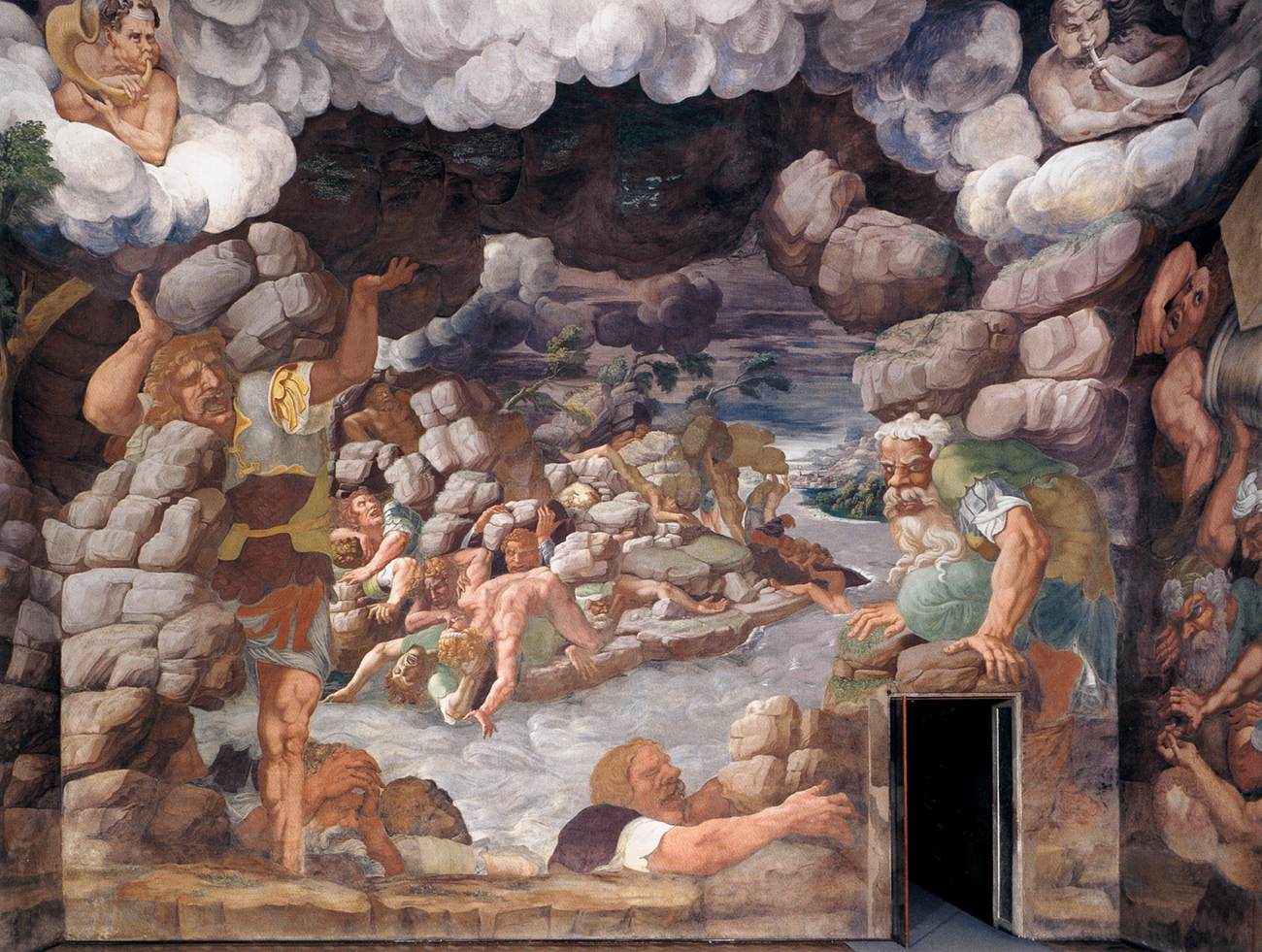
Con Distruggere il visitatore entra invece nella dimensione più inquietante della natura. I celebri disegni di Leonardo da Vinci dedicati alle tempeste e alle frane anticipano la spettacolare esperienza della Camera dei Giganti, dove il crollo del mondo mitologico travolge completamente lo spettatore.
La sezione Sorprendere ricrea invece le suggestioni delle grotte artificiali e dei giardini rinascimentali, luoghi destinati allo svago delle corti e popolati da raffinati bronzi raffiguranti animali.
In Conoscere emerge il volto scientifico del Rinascimento. Disegni botanici, raccolte naturalistiche e magnifiche tele raccontano come artisti e studiosi cercassero di catalogare il mondo vivente con uno spirito che anticipa il metodo scientifico moderno.
La sezione Riprodurre mostra invece come gli artisti riuscissero a imitare perfettamente la natura attraverso bronzi, ceramiche, calchi e oggetti di straordinaria precisione tecnica.
Con Stupire si entra nel cuore della corte rinascimentale. È qui che il visitatore incontra alcuni dei capolavori più celebri dell’intera mostra.

Scherzo di ortaggi (L’Ortolano)
1587-90
Olio su tavola, 36×24 cm
Cremona, Museo Civico Ala Ponzone
Crediti: @Archivio Pinacoteca Ala Ponzone
Cremona
Caravaggio
Tra le opere destinate ad attirare migliaia di visitatori spicca l’Autoritratto in veste di Bacco di Caravaggio, proveniente dalla Galleria Borghese.
Accanto al maestro lombardo saranno esposti gli straordinari dipinti di Giuseppe Arcimboldo, tra cui il celebre Ortolano e Il Cuoco, immagini che ancora oggi sorprendono per la loro capacità di trasformare frutta, ortaggi e alimenti in incredibili volti umani.
La sala sarà completata dalla ricostruzione di una spettacolare Wunderkammer, dove oggetti preziosi, uova di struzzo, corni di narvalo, conchiglie esotiche e rarità provenienti da tutto il mondo ricreeranno l’atmosfera delle collezioni principesche del Rinascimento.
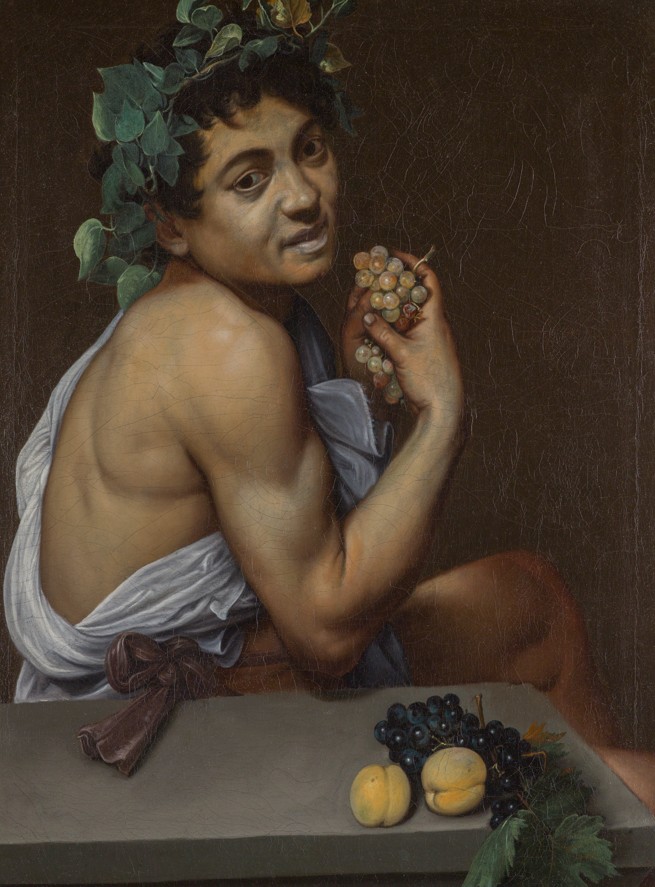
Autoritratto in veste di Bacco (Bacchino malato)
Ca. 1595
Olio su tela, 67×53 cm
Roma, Galleria Borghese
Crediti: © Galleria Borghese / foto Mauro Coe
Leonardo racconta la forza incontrollabile della natura
Tra le presenze più attese figurano anche gli straordinari fogli di Leonardo da Vinci, prestati dalla Royal Collection.
I celebri studi dedicati alle tempeste e alle frane testimoniano l’interesse del genio vinciano per i fenomeni naturali più estremi, osservati con uno sguardo che unisce rigore scientifico e straordinaria sensibilità artistica.
È difficile immaginare un dialogo più efficace con la monumentale Camera dei Giganti, uno degli ambienti più spettacolari dell’arte italiana.
Qui il visitatore vive un’esperienza immersiva che, ancora oggi, lascia senza fiato.

Una tempesta
1512-18
Carboncino, penna, inchiostro, 27×40,8 cm
Windsor, Royal Collection
Crediti: © Royal Collection Enterprises Ltd 2026
| Royal Collection Trust
Gli automi del Rinascimento anticipano la robotica moderna
Il percorso si conclude con una sezione sorprendente dedicata agli automi.
Orologi meccanici, animali semoventi, figure animate e sofisticati dispositivi di precisione raccontano un Rinascimento capace di fondere ingegneria, arte e spettacolo.
Queste incredibili macchine erano pensate per stupire gli ospiti delle corti europee e rappresentano, per certi aspetti, gli antenati della moderna robotica.
Una conclusione perfetta per una mostra che dimostra come la curiosità umana verso la natura abbia sempre alimentato innovazione, ricerca e creatività.
Mantova diventa una città-museo dedicata alla natura
L’esperienza non si limiterà alle sale di Palazzo Te.
Fondazione Palazzo Te ha infatti costruito una rete di collaborazioni con Palazzo Ducale, Palazzo D’Arco, la Biblioteca Teresiana, il Liceo Virgilio e la Riserva Naturale Statale Bosco Fontana, trasformando l’intera città in un grande itinerario dedicato al rapporto tra arte, paesaggio e biodiversità.
Sono inoltre previsti incontri, laboratori, attività educative, eventi performativi e iniziative dedicate alla sostenibilità ambientale, rafforzando il ruolo di Palazzo Te come luogo di produzione culturale e di riflessione sul presente.
Inventare la natura. Leonardo, Arcimboldo, Caravaggio
Mantova, Palazzo Te
26 settembre 2026 – 10 gennaio 2027
Per il momento il sempre vostro Michelangelo Buonarroti vi saluta dandovi appuntamento ai prossimi post e sui social.
Leonardo and Caravaggio Together: The Autumn Exhibition in Mantua
“Inventing Nature. Leonardo, Arcimboldo, Caravaggio” is the exhibition scheduled for September 26, 2026, to January 10, 2027, at Palazzo Te in Mantua.
Following the success of the major exhibitions dedicated to the Metamorphoses, the Palazzo Te Foundation concludes the 500th anniversary year with a project destined to become one of the most important cultural events of the Italian season. The reason is simple: it brings together some of the greatest protagonists of the Renaissance and the early 17th century to explore a question that is more relevant today than ever.
What is nature, really?
The answer takes shape through an immersive journey through paintings, drawings, sculptures, automatons, precious objects, scientific curiosities, and wonders from the most important European museums, in an ongoing dialogue with the extraordinary rooms frescoed by Giulio Romano.
An exhibition that brings Leonardo, Caravaggio, and Arcimboldo into dialogue
It is rare to see artists such as Leonardo da Vinci, Giuseppe Arcimboldo, Caravaggio, Annibale and Agostino Carracci, Jacopo Bassano, Andrea Riccio, and Bartolomeo Passerotti together in the same exhibition, alongside precious artifacts, naturalistic finds, Renaissance bronzes, and automatons destined for the courts of Europe.
The common thread is not only the beauty of the works, but the profound relationship between art, science, and the observation of nature.
In the sixteenth century, nature was perceived simultaneously as a divine creation, a scientific laboratory, a marvelous spectacle, a destructive force, and an inexhaustible source of artistic inspiration. It is precisely this plurality of meanings that the exhibition reconstructs so effectively.
Curators Barbara Furlotti and Guido Rebecchini have constructed a narrative capable of engaging both scholars and the general public, transforming Palazzo Te into a gigantic machine of wonder.
Palazzo Te becomes an immense Renaissance Wunderkammer
Perhaps the most fascinating aspect of the exhibition is its ongoing dialogue with Palazzo Te.
It is not simply a container for works of art, but a protagonist of the exhibition.
The decorations designed by Giulio Romano alone narrate a universe populated by deities, animals, fantastical landscapes, and constant transformations. The works on display thus seem to arise naturally from the frescoes, creating a surprising journey in which architecture, painting, and collections interact seamlessly.
A seven-chapter journey into the mystery of nature
The exhibition unfolds like a grand narrative divided into seven sections, each dedicated to a different interpretation of nature during the Renaissance.
Create opens the exhibition by celebrating the generative force of the natural world through the figure of the Goddess Nature. Ancient and Renaissance masterpieces dialogue with the refined contemporary works of Christiane Löhr, demonstrating how this theme continues to inspire artists today.
With Destroy, visitors enter the most disturbing dimension of nature. Leonardo da Vinci’s famous drawings of storms and landslides anticipate the spectacular experience of the Chamber of Giants, where the collapse of the mythological world completely overwhelms the viewer.
The Surprising section recreates the evocative atmosphere of artificial grottoes and Renaissance gardens, places intended for courtly recreation and populated by refined bronze statues of animals.
In Knowing, the scientific face of the Renaissance emerges. Botanical drawings, natural history collections, and magnificent canvases reveal how artists and scholars sought to catalog the living world with a spirit that anticipated the modern scientific method.
The Reproducing section shows how artists perfectly imitated nature through bronzes, ceramics, casts, and objects of extraordinary technical precision.
With Astonishing, visitors enter the heart of the Renaissance court. It is here that they encounter some of the most celebrated masterpieces in the entire exhibition.
Caravaggio
Among the works sure to attract thousands of visitors, Caravaggio’s Self-Portrait as Bacchus, on loan from the Borghese Gallery, stands out.
Alongside the Lombard master, the extraordinary paintings of Giuseppe Arcimboldo will be on display, including the famous Greengrocer and The Cook, images that still amaze today with their ability to transform fruit, vegetables, and food into incredible human faces.
The room will be completed by a spectacular reconstruction of a Wunderkammer, where precious objects, ostrich eggs, narwhal horns, exotic shells, and rarities from around the world will recreate the atmosphere of the princely collections of the Renaissance.
Leonardo Recounts the Uncontrollable Force of Nature
Among the most anticipated exhibits are Leonardo da Vinci’s extraordinary drawings, on loan from the Royal Collection.
Leonardo’s celebrated studies of storms and landslides demonstrate the genius’s interest in the most extreme natural phenomena, observed with a gaze that combines scientific rigor and extraordinary artistic sensitivity.
It’s hard to imagine a more effective dialogue with the monumental Chamber of the Giants, one of the most spectacular spaces in Italian art.
Here, visitors enjoy an immersive experience that, even today, leaves them breathless.
Renaissance Automatons Foreshadow Modern Robotics
The exhibition concludes with a surprising section dedicated to automatons.
Mechanical clocks, self-propelled animals, animated figures, and sophisticated precision devices recount a Renaissance capable of merging engineering, art, and entertainment.
These incredible machines were designed to amaze guests at European courts and represent, in some ways, the ancestors of modern robotics.
A perfect conclusion to an exhibition that demonstrates how human curiosity about nature has always fueled innovation, research, and creativity.
Mantua becomes a museum-city dedicated to nature
The experience will not be limited to the halls of Palazzo Te.
The Palazzo Te Foundation has built a network of collaborations with Palazzo Ducale, Palazzo D’Arco, the Teresiana Library, the Virgilio High School, and the Bosco Fontana State Nature Reserve, transforming the entire city into a vast itinerary dedicated to the relationship between art, landscape, and biodiversity.
Meetings, workshops, educational activities, performances, and initiatives dedicated to environmental sustainability are also planned, strengthening Palazzo Te’s role as a place of cultural production and reflection on the present.
Inventing Nature. Leonardo, Arcimboldo, Caravaggio
Mantua, Palazzo Te
September 26, 2026 – January 10, 2027
For now, yours truly, Michelangelo Buonarroti bids farewell and invites you to join him in future posts and on social media.

Sostienici – Support Us
Se questo blog ti piace e ti appassiona, puoi aiutarci a farlo crescere sempre più sostenendoci in modo concreto condividendo i post, seguendo le pagine social e con un contributo che ci aiuta ad andare avanti con il nostro lavoro di divulgazione. . ENGLISH: If you like and are passionate about this blog, you can help us make it grow more and more by supporting us in a concrete way by sharing posts, following social pages and with a contribution that helps us to move forward with our dissemination work.
10,00 €

Condividi:


Questo sono io




sostienici

Sostienici – Support Us
Se questo blog ti piace e ti appassiona, puoi aiutarci a farlo crescere sempre più sostenendoci in modo concreto condividendo i post, seguendo le pagine social e con un contributo che ci aiuta ad andare avanti con il nostro lavoro di divulgazione. . ENGLISH: If you like and are passionate about this blog, you can help us make it grow more and more by supporting us in a concrete way by sharing posts, following social pages and with a contribution that helps us to move forward with our dissemination work.
€10,00


1 commento »