
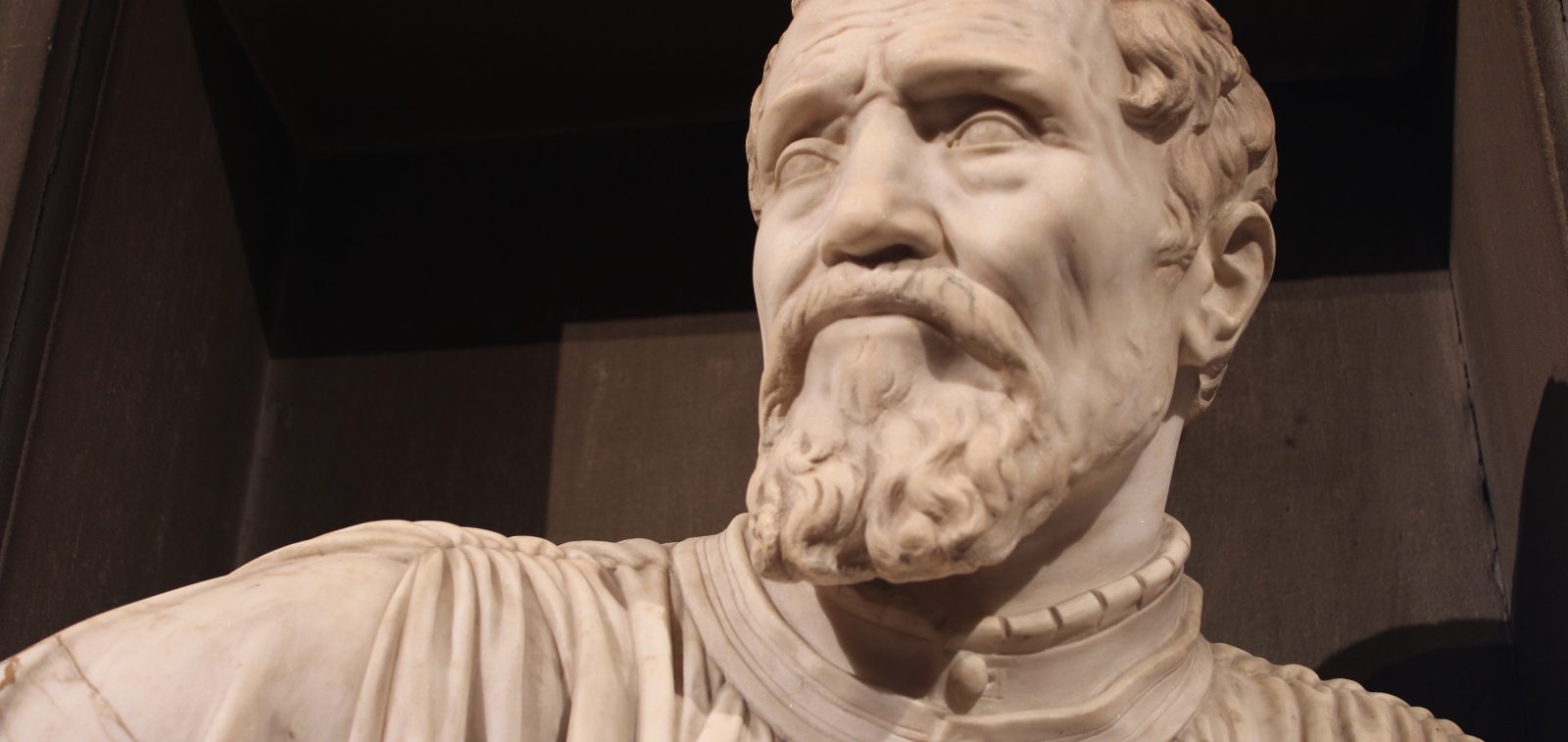
La Scultura del giorno: la Giovane con le Margherite di Carrier Belleuse
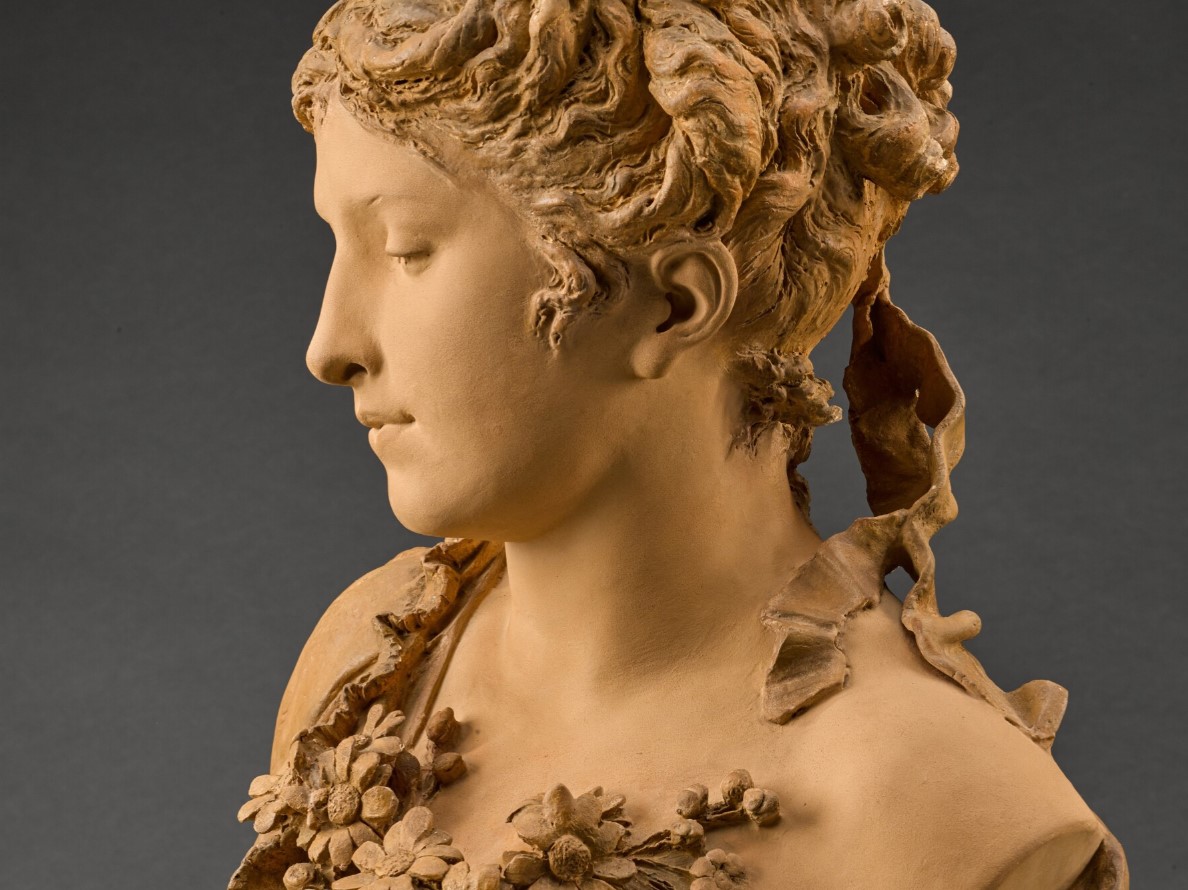
L’opera del giorno che vi propongo oggi è il busto della Giovane con le Margherite, realizzata dallo scultore francese Albert Ernest Carrier Belleuse.
Si tratta di una raffinata scultura modellata in terracotta e alta 56 centimetri, collocata al di sopra di una base di ebano.

Il busto appartiene a una collezione privata e non è certa la data di esecuzione. Fu però realizzata sicuramente tra il 1824 e il 1887, anno di nascita e di morte di Carrier.
La Giovane con le Margherite è firmata dall’artista con l’iniziale del nome e il cognome: A. Carrier.

Carrier diede prova della sua maestria nel modellare la terracotta realizzando questo busto di ragazza, caratterizzato da un volto dolce e quasi sognante, incorniciato da una complessa pettinatura che culmina con una delicata corona di margherite.
La camicia che la giovane indossa, maliziosamente le scivola da una spalla lasciandole scoperto un seno e c’è il posto per collocare un mazzolino delle stesse margherite che porta in capo.
Lo scultore Carrier Belleuse nacque il 12 giugno del 1824 in Francia, ad Anizi-le-Château. Per la prima volta propose le sue opere al Salon del 1851 dove riuscì a conquistare due medaglie di bronzo.
Da quel momento in poi la sua carriera iniziò una rapida ascesa anche se l’opera che gli diede il maggior successo e riconoscimento in ambito internazionale fu “La morte del generale Desaix“, esposta al Salon del 1859.

Dotato di innegabile virtuosismo tecnico abbinato alla sua sensibilità, fu capace di realizzare opere sensuali e affascinanti.
Negli ultimi anni della sua esistenza diresse la sezione artistica della manifattura di Sèvres, dandogli un forte impulso creativo.
Gli fornì i propri modelli e collaborò con diversi giovani talentuosi della sua epoca come per esempio Rodin.

Per il momento il sempre vostro Michelangelo Buonarroti vi saluta dandovi appuntamento ai prossimi post e sui social.

Sculpture of the day: Young Woman with Daisies by Carrier Belleuse
The work of the day that I propose to you today is the bust of Young Woman with Daisies, created by the French sculptor Albert Ernest Carrier Belleuse.
It is a refined sculpture modeled in terracotta and 56 centimeters high, placed on an ebony base
The bust belongs to a private collection and the date of execution is not certain. However, it was certainly created between 1824 and 1887, the year of Carrier’s birth and death.
Young Woman with Daisies is signed by the artist with the initial of her name and surname: A. Carrier.
Carrier demonstrated his mastery in modeling terracotta by creating this bust of a girl, characterized by a sweet and almost dreamy face, framed by a complex hairstyle that culminates with a delicate crown of daisies.
The shirt that the young woman wears mischievously slips from one shoulder, leaving one breast uncovered, and there is room to place a bouquet of the same daisies that she wears on her head.
The sculptor Carrier Belleuse was born on June 12, 1824 in France, in Anizi-le-Château. He first exhibited his works at the Salon of 1851, where he managed to win two bronze medals.
From that moment on, his career began a rapid ascent, although the work that gave him the greatest success and recognition on an international level was “The Death of General Desaix,” exhibited at the Salon of 1859.
Gifted with undeniable technical virtuosity combined with his sensitivity, he was able to create sensual and fascinating works.
In the last years of his life, he directed the artistic section of the Sèvres factory, giving it a strong creative impulse.
He provided him with his models and collaborated with several talented young artists of his time such as Rodin.
For the moment, yours ever Michelangelo Buonarroti bids you farewell and will see you in the next posts and on social media.

Sostienici – Support Us
Se questo blog ti piace e ti appassiona, puoi aiutarci a farlo crescere sempre più sostenendoci in modo concreto condividendo i post, seguendo le pagine social e con un contributo che ci aiuta ad andare avanti con il nostro lavoro di divulgazione. . ENGLISH: If you like and are passionate about this blog, you can help us make it grow more and more by supporting us in a concrete way by sharing posts, following social pages and with a contribution that helps us to move forward with our dissemination work.
10,00 €
-

Il mosaico a partire dal Rinascimento in poi
🇮🇹Il Vasari considera il mosaico una “pittura eterna” mettendo in luce la durata nel corso del tempo, l’inalterabilità dei colori e la resistenza alle intemperie… 🇬🇧Vasari considered the mosaic an “eternal painting” and highlighted its long duration over time, the inalterability of the colors and the resistance to bad weather…
-

Sala delle Carte Geografiche di Palazzo Vecchio: riapre restaurata
🇮🇹Dopo un anno di restauri, riapre al pubblico la Sala della Guardaroba di Palazzo Vecchio, nota come la Sala delle Carte Geografiche. 🇮🇹After a year of restorations, the Hall of the Wardrobe of Palazzo Vecchio, known as the Hall of Geographic Maps, reopens to the public.
-
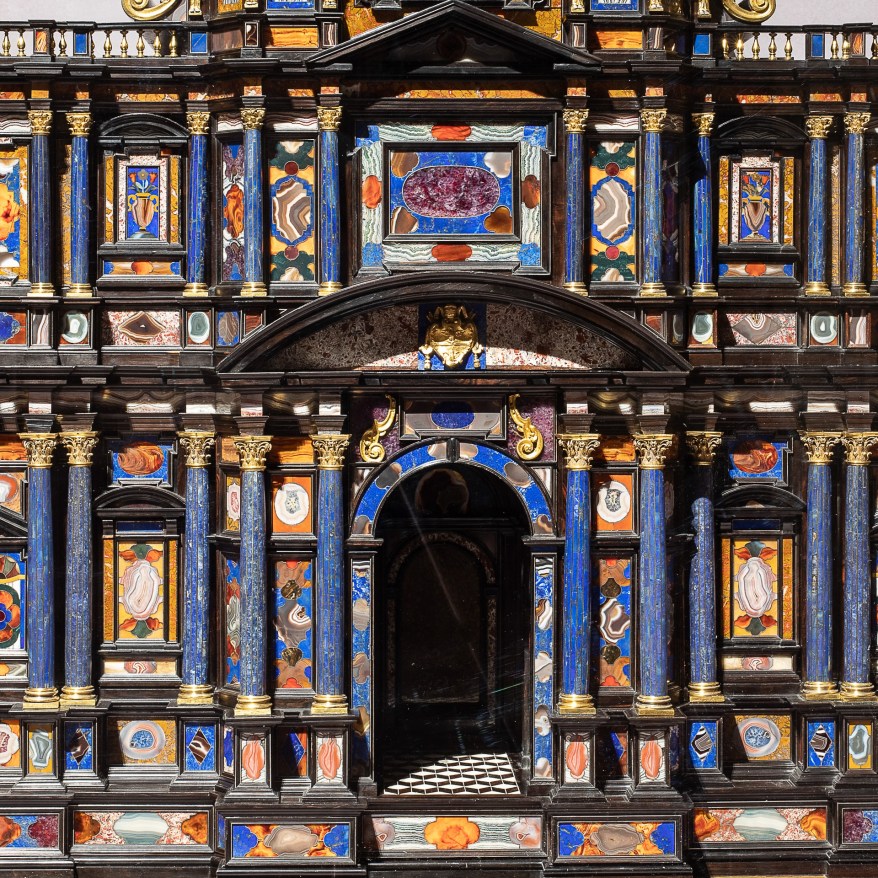
Il fascino della pittura su pietra a Galleria Borghese
🇮🇹Sebastiano del Piombo, sconvolto dal Sacco di Roma, cominciò a pensare di dipingere le sue opere su supporti più resistenti nel tentativo di rendere quei capolavori meno vulnerabili: venne riportata in auge così la pittura su pietra, nominata anche da Plinio. 🇬🇧Sebastiano del Piombo, shocked by the Sack of Rome, began to think of painting…
-
25 ottobre 1815: tornano in Italia le opere rubate da Napoleone, ma non tutte
🇮🇹Il 25 ottobre 1815 da Parigi partì un enorme convoglio formato da 41 carri trainati da 200 cavalli. Su quei carri erano state caricate 249 opere che le truppe di Napoleone avevano sottratto all’Italia. 🇬🇧On 25 October 1815 an enormous convoy made up of 41 wagons pulled by 200 horses left Paris. On those wagons…
-
I molteplici utilizzi del Giardino di San Marco
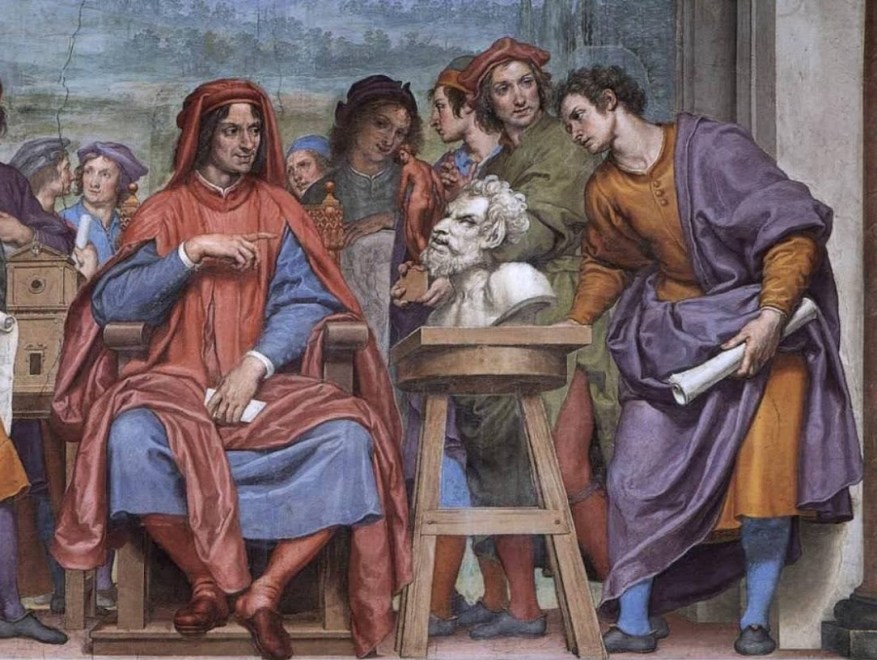
🇮🇹Le prime tracce documentarie che si hanno in merito al Giardino di San Marco risalgono agli anni ’60 del Quattrocento mentre venti anni dopo, nel 1480, già era un luogo celebre e noto in tutti le corti d’Europa. 🇬🇧The first documentary traces that we have about the Garden of San Marco date back to the…
Condividi:


Questo sono io





sostienici

Sostienici – Support Us
Se questo blog ti piace e ti appassiona, puoi aiutarci a farlo crescere sempre più sostenendoci in modo concreto condividendo i post, seguendo le pagine social e con un contributo che ci aiuta ad andare avanti con il nostro lavoro di divulgazione. . ENGLISH: If you like and are passionate about this blog, you can help us make it grow more and more by supporting us in a concrete way by sharing posts, following social pages and with a contribution that helps us to move forward with our dissemination work.
€10,00


SALVE
PURE IO HO UNA DONNA DI CARTIER BELLEUSE
PIU O MENO UGUALE A QUELLA CHE MOSTRATE QUI
I FIORI SONO DIFFERENTI
LAMBRO VASSILIADIS
lambro.vassiliadis@gmail.com
"Mi piace"Piace a 1 persona