

Matisse, il mondo intero dentro una stanza: al MUDEC la mostra che racconta la sua arte
E se Henri Matisse non fosse stato soltanto il grande maestro del colore che conosciamo?
E se dietro quelle figure, quegli interni, quelle linee apparentemente semplici e quei colori esplosivi ci fosse un mondo molto più vasto, costruito attraverso incontri, viaggi, oggetti, tessuti, icone, maschere e culture lontane?
Sono queste le domande dalla quale parte Matisse. Il mondo in una stanza, la grande mostra del MUDEC – Museo delle Culture di Milano, curata da Ellen McBreen e Chiara Gatti.
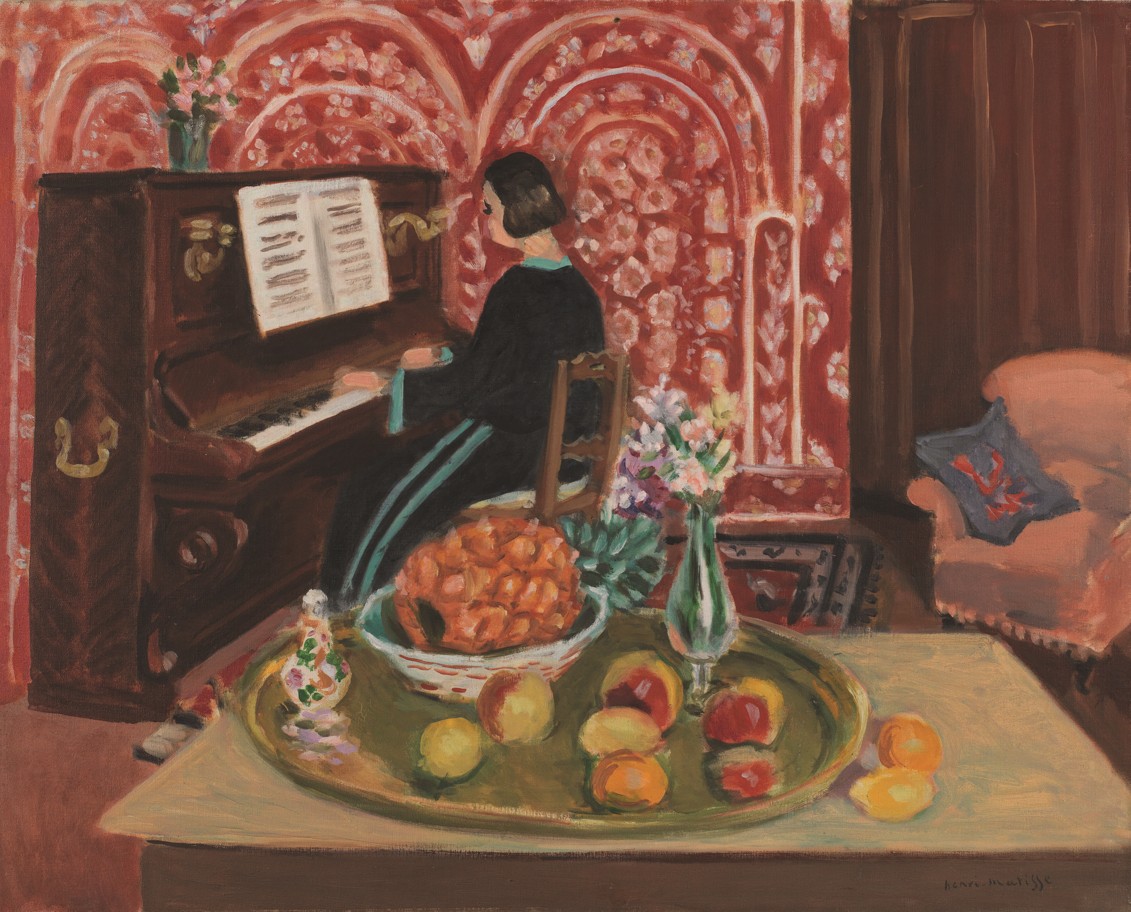
Circa 100 opere tra dipinti, disegni, sculture e fotografie, provenienti da importanti istituzioni internazionali, raccontano un Henri Matisse diverso da quello che spesso abbiamo imparato a conoscere. Non soltanto il pittore della luce, del colore e delle odalische, ma un artista profondamente curioso, capace di guardare oltre i confini dell’Europa e di trasformare ciò che incontrava in un linguaggio completamente nuovo.
E soprattutto emerge una storia affascinante: Matisse costruì una parte fondamentale della propria modernità attraverso il dialogo con culture africane, islamiche, cinesi, russe, oceaniche e mediterranee.
Matisse e il mondo: la sua modernità nasce dall’incontro
C’è una frase di Matisse che sembra quasi una dichiarazione programmatica: nel 1907 confessò ad Apollinaire di non aver “mai evitato l’influenza degli altri”.
È una frase fondamentale per comprendere il progetto del MUDEC.
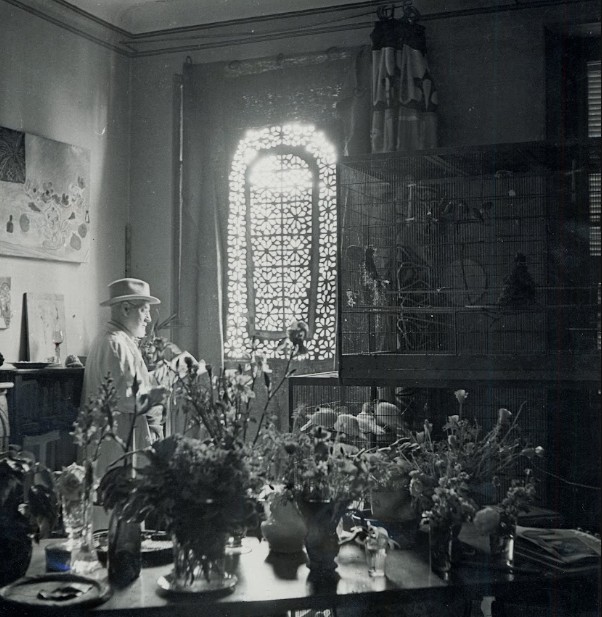
Perché l’artista non sviluppò il proprio linguaggio in isolamento. Al contrario, osservò, raccolse, studiò, acquistò e portò nel proprio atelier oggetti provenienti da mondi lontani. Sculture africane, tessuti, ceramiche, mobili nordafricani, manufatti islamici, pannelli cinesi, icone russe e oggetti dell’Oceania entrarono progressivamente nella sua quotidianità.
Quegli oggetti diventarono strumenti di lavoro.
Matisse li disponeva intorno a sé, li osservava, li fotografava, li utilizzava come modelli e li trasformava in stimoli per una ricerca che lo avrebbe portato a mettere in discussione la prospettiva, la rappresentazione del corpo, lo spazio pittorico e persino il rapporto fra linea e colore.
È proprio questo il cuore di Matisse. Il mondo in una stanza: ricostruire la trama di incontri che si nasconde dietro la superficie apparentemente semplice delle sue opere.
Dalle sculture africane ai nudi di Matisse
All’inizio del Novecento l’artista cominciò a collezionare sculture provenienti da diverse tradizioni africane, comprese opere Fang, Bembe, Senufo e Kuba. Il loro impatto sulla sua ricerca fu profondo.
Matisse scoprì nelle anatomie africane possibilità completamente diverse di rappresentare il corpo umano. Le figure potevano essere semplificate, deformate, rese più monumentali e liberate dalla necessità di aderire fedelmente alla realtà.
La scultura La Serpentine, del 1909, rappresenta perfettamente questo processo. Alla base c’è la fotografia di una modella in posa accademica, ma la forma della scultura dialoga anche con una coppia di sculture regali Bamana del Mali.
Due mondi apparentemente lontanissimi finiscono così dentro la stessa figura.
Le icone russe che cambiarono lo spazio di Matisse
Nel 1911 Matisse arrivò a Mosca. L’incontro con l’arte russa e bizantina rappresentò una svolta fondamentale. L’artista ebbe accesso alla Galleria Tret’jakov e alle chiese dei Vecchi Credenti, dove poté studiare le icone medievali.
Ne rimase profondamente colpito: “Ho trascorso dieci anni alla ricerca di qualcosa che i vostri artisti avevano già scoperto nel XIV secolo”.
La frase racconta molto bene la sua scoperta: la forza della frontalità, della monumentalità e di uno spazio che non obbedisce alle regole tradizionali della prospettiva.
Le icone gli mostrarono una possibilità diversa di costruire la figura. Quell’esperienza sarebbe tornata anche molto più avanti nella sua carriera, fino alla Cappella del Rosario di Vence, dove la sintesi estrema della linea e della figura sembra raccogliere molte delle ricerche che avevano attraversato la sua vita.
“L’Oriente ci ha salvati”: Matisse e l’arte islamica
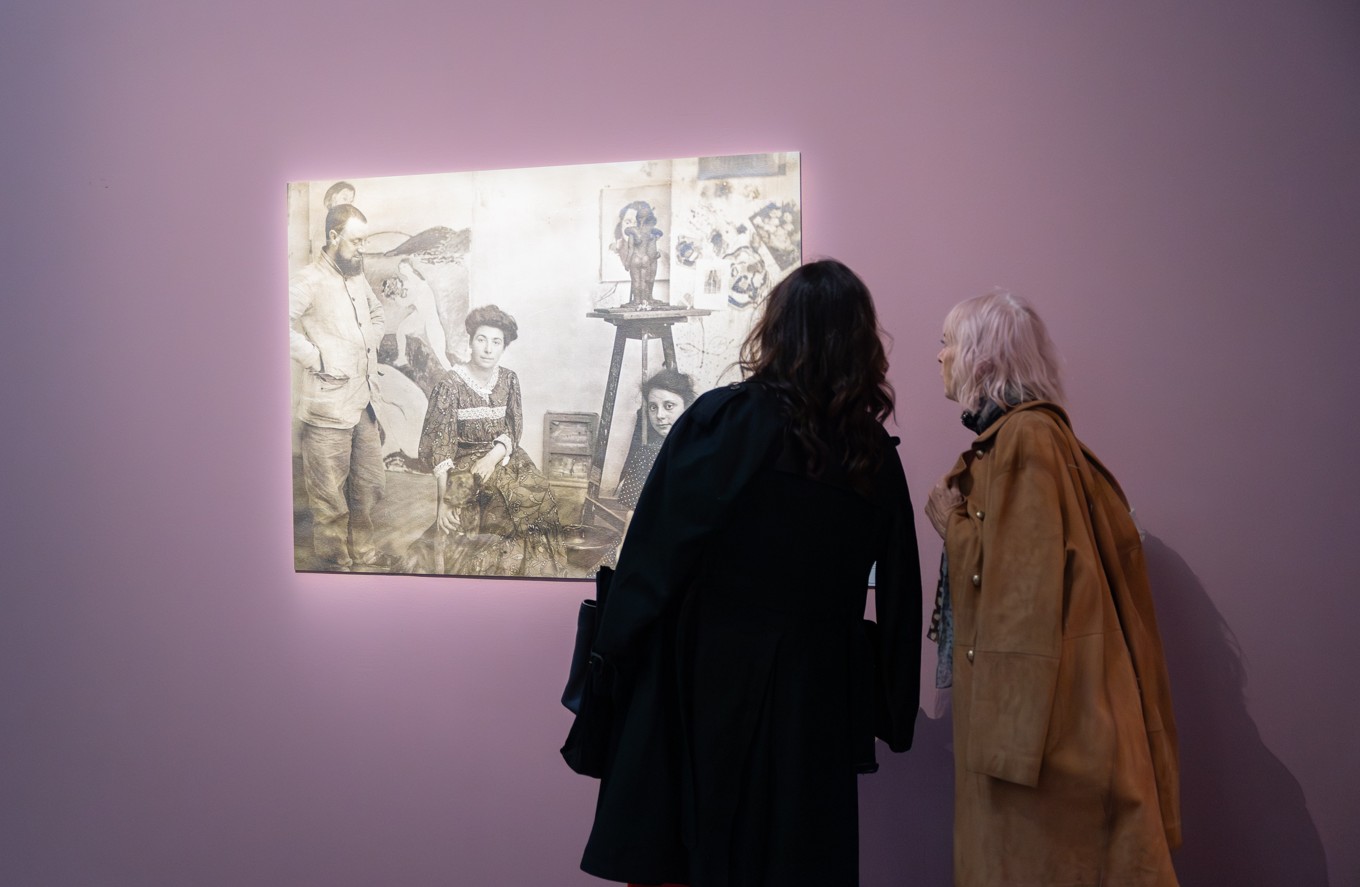
Uno dei nuclei più interessanti della mostra riguarda il rapporto di Matisse con l’arte islamica.
Nel 1910 visitò a Monaco una grande esposizione dedicata all’arte islamica e successivamente viaggiò in Spagna, arrivando all’Alhambra e visitando Cordova e Siviglia.
Matisse rimase affascinato dalla decorazione, dalla bidimensionalità, dai motivi geometrici, dalla relazione fra linea e superficie e da una concezione dello spazio completamente diversa da quella costruita dalla tradizione prospettica occidentale.
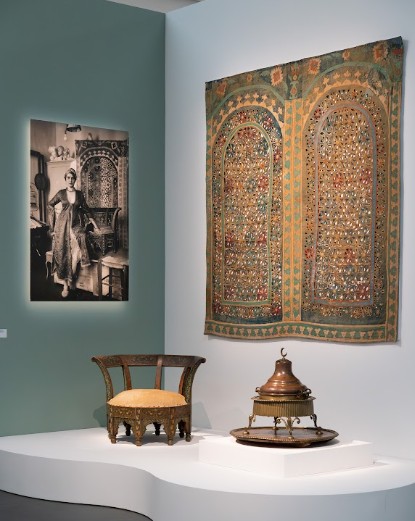
Nei suoi ambienti di Nizza comparvero mobili nordafricani, tessuti, tappeti e oggetti provenienti dal mondo islamico.
Matisse si confrontò con quelle culture e con quell’immaginario, ma nel farlo trasformò ciò che vedeva per rispondere a problemi artistici molto precisi: come liberare lo spazio, come usare la decorazione, come far dialogare linea e colore, come superare la prospettiva tradizionale.
Le donne di Matisse: un cast internazionale dimenticato
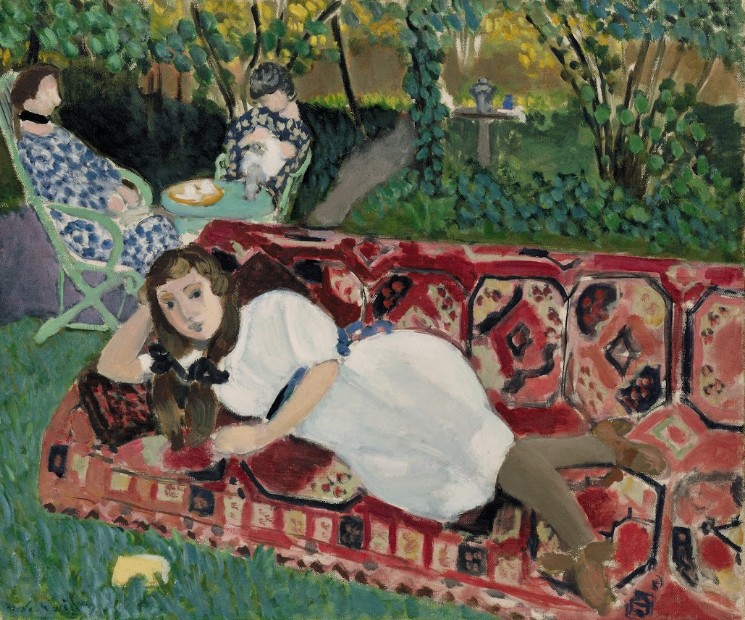
Lo studio di Matisse appare come un vero crocevia internazionale.
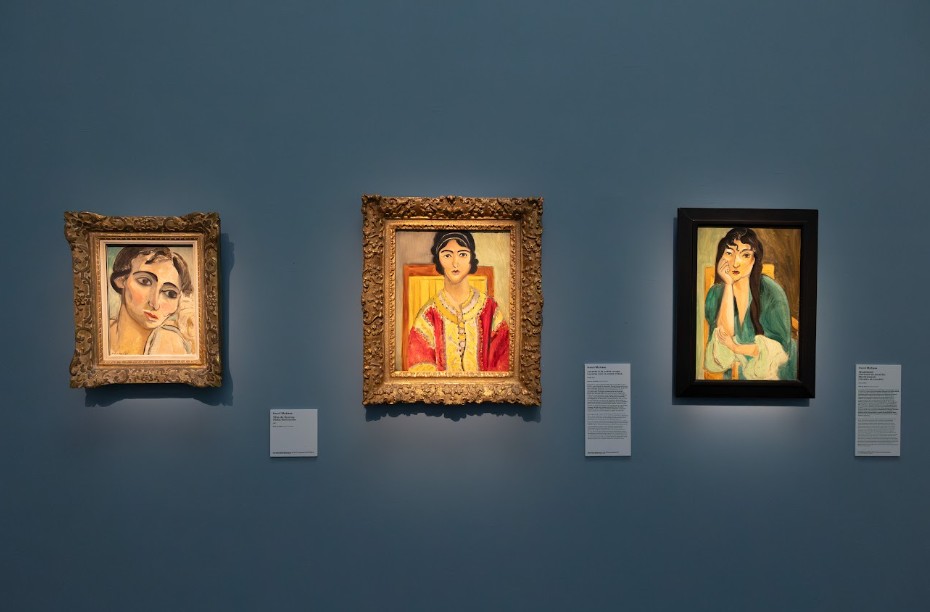
Tra le figure che posarono per lui troviamo Lydia Delectorskaya, russa e anche assistente dell’artista, ma anche Aïcha Goblet, l’artista haitiana Carmen Lahens-Hélouis e altre modelle i cui nomi sono rimasti parzialmente o completamente nell’ombra.
Le loro identità venivano spesso filtrate attraverso abiti regionali, costumi folcloristici o abiti alla moda. Erano presenze che contribuirono alla costruzione dell’immaginario cosmopolita dell’artista.
Opere come Joacquina e The Bulgarian Blouse, insieme ai disegni dedicati a Lahens-Hélouis, permettono di seguire le continue variazioni di Matisse sul corpo, sul volto, sull’abito e sulla posa.
Il mondo di Matisse non era soltanto europeo
Tessuti Kuba del Congo, un panno Tapa proveniente da Wallis e Futuna, un grande pannello cinese in legno laccato nero con ideogrammi dorati, oggetti islamici e manufatti provenienti da diverse aree del mondo permettono di ricostruire concretamente l’ambiente nel quale Matisse lavorava.
Sono oggetti-interlocutori e Matisse amava circondarsene. Li faceva entrare nei suoi atelier e li trasformava in una sorta di archivio visivo personale.
Tahiti: quando Matisse inseguì una nuova luce
Nel 1930 Matisse affrontò uno dei viaggi più importanti della sua vita: partì per Tahiti. Aveva sessant’anni e attraversava una fase di crisi creativa.
Il viaggio lo portò attraverso New York e San Francisco, mentre il ritorno comprese tappe a Panama, Martinica e Guadalupa. Tahiti avrebbe lasciato dentro di lui una traccia destinata a riemergere per anni.
Fiori di tiaré, uccelli, alghe, meduse, piante e forme della vita lagunare entrarono nel suo immaginario.
Ma più ancora degli elementi riconoscibili, Matisse cercò di catturare una sensazione: la luce. Una luce diversa da quella europea, capace di modificare la percezione dello spazio e di spingere l’artista verso una pittura sempre più libera.
Lo scrittore e poeta Louis Aragon ricordò che l’ossessione per Tahiti non lo abbandonò mai.
Jazz: quando Matisse trasforma la carta in colore
La mostra dedica inoltre grande attenzione ai progetti decorativi e ai libri d’artista. Tra questi spiccano le celebri tavole di Jazz, pubblicato da Tériade e considerato uno dei grandi capolavori editoriali del Novecento.
Qui Matisse porta avanti una delle sue rivoluzioni più radicali: la forma non deve necessariamente essere disegnata con il pennello.
Questa ricerca troverà una delle sue espressioni più alte nei papiers découpés, attraverso i quali l’artista, ormai anziano, riuscirà a trasformare il gesto creativo in qualcosa di sorprendentemente libero e contemporaneo.
La Cappella di Vence: l’ultima grande sintesi
Il percorso conduce infine alla Cappella del Rosario di Vence, uno dei progetti più importanti e personali dell’ultima fase di Matisse. Nel 1947 l’artista accettò di lavorare alla decorazione della cappella delle suore domenicane.
Vetrate colorate, ceramiche bianche, disegni essenziali, figure dai profili neri e decorazioni dialogano fra loro per creare uno spazio unitario.
La figura di San Domenico, studiata attraverso i disegni preparatori, mostra quanto la ricerca di Matisse si fosse ormai spinta verso una sintesi estrema.
La linea non descrive più: la linea evoca.
Océanie: quando il mare diventa spazio infinito
La mostra si chiude con una delle conseguenze più sorprendenti del viaggio a Tahiti: l’espansione dello spazio pittorico.
In Océanie: la mer e Océanie: le ciel, realizzati tra il 1946 e il 1949, Matisse sembra dissolvere i confini tradizionali fra cielo, mare, corpo e natura. Spazi sospesi, quasi senza gravità.
Il ricordo delle immersioni nei mari del Sud sembra trasformarsi in una superficie nella quale non è più facile distinguere ciò che è vicino da ciò che è lontano
Dall’Africa alla Russia, dall’Islam alla Cina, da Tahiti alla Costa Azzurra, Matisse non ha smesso di raccogliere frammenti del mondo per trasformarli in un linguaggio personale.
L’ultima opera di Matisse al MUDEC
A chiudere il percorso è Femme à la gandoura bleue, l’ultimo dipinto realizzato da Matisse. Accanto compare il bronzo dedicato a Katia, posto in dialogo con L’allée à la rivière, opera giovanile.
Il confronto è potentissimo. Il giovane Matisse e il Matisse dell’ultima stagione sembrano guardarsi attraverso decenni di ricerca.
In Katia, con le braccia sollevate, il corpo sembra quasi trasformarsi in un albero. È un’altra ibridazione, un’altra metamorfosi.
La forma umana e quella vegetale finiscono per diventare una cosa sola.
E torna così una delle lezioni che l’artista aveva ricevuto dall’arte cinese: l’albero e il corpo possono appartenere alla stessa forma vitale.
Il percorso espositivo permette di seguire l’intera evoluzione di Matisse, dagli studi sul corpo e dalle influenze dell’arte africana fino alle ultime opere, passando attraverso Russia, mondo islamico, Cina, Oceania, libri d’artista, papiers découpés e Cappella di Vence.
Per il momento il sempre vostro Michelangelo Buonarroti vi saluta dandovi appuntamento ai prossimi post e sui social.

Matisse, the whole world in a room: the MUDEC exhibition telling the story of his art
What if Henri Matisse was not merely the great master of color we know?
What if, behind those figures, interiors, seemingly simple lines, and explosive colors, there lay a much vaster world—one built through encounters, travels, objects, textiles, icons, masks, and distant cultures?
These are the questions at the heart of Matisse: The World in a Room, the major exhibition at MUDEC (Museum of Cultures) in Milan, curated by Ellen McBreen and Chiara Gatti.
Featuring around 100 works—including paintings, drawings, sculptures, and photographs—on loan from major international institutions, the exhibition reveals a side of Henri Matisse different from the one we often know. He appears not just as the painter of light, color, and odalisques, but as an artist of profound curiosity, capable of looking beyond Europe’s borders and transforming his encounters into a completely new visual language.
Above all, a fascinating story emerges: Matisse forged a fundamental part of his modern style through a dialogue with African, Islamic, Chinese, Russian, Oceanian, and Mediterranean cultures.
Matisse and the world: his modernity born of encounter
There is a quote by Matisse that reads almost like a manifesto: in 1907, he confessed to Apollinaire that he had “never avoided the influence of others.”
This statement is key to understanding the MUDEC exhibition.
For the artist did not develop his visual language in isolation. On the contrary, he observed, collected, studied, purchased, and brought objects from distant worlds into his studio. African sculptures, textiles, ceramics, North African furniture, Islamic artifacts, Chinese panels, Russian icons, and objects from Oceania gradually became part of his daily life.
Those objects became tools of his craft. Matisse arranged them around himself, observed them, photographed them, used them as models, and transformed them into catalysts for an artistic inquiry that would lead him to challenge perspective, the representation of the human body, pictorial space, and even the relationship between line and color.
This lies at the very heart of Matisse’s work: the world within a single room—reconstructing the web of encounters hidden beneath the seemingly simple surface of his art.
From African sculptures to Matisse’s nudes
In the early 20th century, the artist began collecting sculptures from various African traditions, including works by the Fang, Bembe, Senufo, and Kuba peoples. Their impact on his artistic practice was profound.
In African anatomical forms, Matisse discovered entirely new possibilities for representing the human body. Figures could be simplified, distorted, rendered more monumental, and liberated from the need to adhere faithfully to reality.
The sculpture La Serpentine (1909) perfectly embodies this process. While based on a photograph of a model in an academic pose, the sculpture’s form also engages in a dialogue with a pair of royal Bamana sculptures from Mali.
Thus, two seemingly worlds-apart traditions converge within a single figure.
The Russian icons that transformed Matisse’s approach to space
Matisse arrived in Moscow in 1911. His encounter with Russian and Byzantine art marked a pivotal turning point. The artist gained access to the Tretyakov Gallery and Old Believer churches, where he was able to study medieval icons.
He was deeply struck by them: “I spent ten years searching for something your artists had already discovered in the 14th century.”
This statement eloquently captures his discovery: the power of frontality, monumentality, and a spatial approach that defies the traditional rules of perspective. The icons revealed to him a different way of constructing the figure. That experience would resurface much later in his career—culminating in the Chapel of the Rosary in Vence—where the extreme synthesis of line and figure seems to bring together many of the lines of inquiry that had spanned his life.
“The East Saved Us”: Matisse and Islamic Art
One of the exhibition’s most compelling sections focuses on Matisse’s relationship with Islamic art.
In 1910, he visited a major exhibition of Islamic art in Munich; subsequently, he traveled to Spain, visiting the Alhambra, Córdoba, and Seville.
Matisse was captivated by the ornamentation, the two-dimensionality, the geometric patterns, the interplay between line and surface, and a conception of space entirely different from that established by the Western tradition of perspective.
North African furniture, textiles, carpets, and objects from the Islamic world began to appear in his interiors in Nice.
Matisse engaged with these cultures and their imagery, yet in doing so, he transformed what he saw to address specific artistic challenges: how to liberate space, how to employ ornamentation, how to create a dialogue between line and color, and how to move beyond traditional perspective.
Matisse’s Women: A Forgotten International Cast
Matisse’s studio was a true international crossroads.
Among the figures who posed for him were Lydia Delectorskaya—a Russian woman who also served as the artist’s assistant—as well as Aïcha Goblet, the Haitian artist Carmen Lahens-Hélouis, and other models whose names have remained partially or entirely in the shadows.
Their identities were often filtered through regional attire, folk costumes, or fashionable clothing. They were presences that contributed to shaping the artist’s cosmopolitan imagery.
Works such as Joacquina and The Bulgarian Blouse, along with drawings dedicated to Lahens-Hélouis, allow us to trace Matisse’s ongoing variations regarding the body, the face, clothing, and pose.
Matisse’s World Was Not Merely European
Kuba textiles from the Congo, a tapa cloth from Wallis and Futuna, a large black lacquered Chinese panel featuring gold characters, Islamic objects, and artifacts from various parts of the globe allow us to tangibly reconstruct the environment in which Matisse worked.
These objects served as interlocutors, and Matisse loved to surround himself with them. He brought them into his studios and transformed them into a sort of personal visual archive.
Tahiti: When Matisse Chased a New Light
In 1930, Matisse undertook one of the most significant journeys of his life: a trip to Tahiti. He was sixty years old and going through a creative crisis.
The journey took him through New York and San Francisco, while the return trip included stops in Panama, Martinique, and Guadeloupe. Tahiti would leave a mark on him that was destined to resurface for years to come. Tiaré flowers, birds, seaweed, jellyfish, plants, and forms of lagoon life entered his imagination.
But even more than these recognizable elements, Matisse sought to capture a sensation: light. It was a light unlike that of Europe—one capable of altering the perception of space and driving the artist toward an increasingly liberated style of painting.
The writer and poet Louis Aragon recalled that the obsession with Tahiti never left him.
Jazz: when Matisse transforms paper into color
The exhibition also devotes significant attention to decorative projects and artist’s books. Prominent among these are the celebrated plates from Jazz, published by Tériade and considered one of the great publishing masterpieces of the twentieth century.
Here, Matisse advances one of his most radical revolutions: form need not necessarily be drawn with a brush.
This exploration would find one of its highest expressions in the papiers découpés (paper cut-outs), through which the artist—by then elderly—managed to transform the creative act into something strikingly free and contemporary.
The Vence Chapel: the final great synthesis
The journey concludes at the Chapel of the Rosary in Vence, one of the most important and personal projects of Matisse’s final period. In 1947, the artist agreed to work on the decoration of the Dominican nuns’ chapel.
Stained-glass windows, white ceramics, minimalist drawings, figures with black outlines, and decorative motifs interact to create a unified space.
The figure of Saint Dominic, explored through preparatory drawings, reveals just how far Matisse’s artistic inquiry had moved toward extreme synthesis.
Line no longer describes; line evokes.
Océanie: when the sea becomes infinite space
The exhibition closes with one of the most surprising consequences of the trip to Tahiti: the expansion of pictorial space. In Océanie: la mer and Océanie: le ciel, created between 1946 and 1949, Matisse seems to dissolve the traditional boundaries between sky, sea, body, and nature. These are suspended spaces, seemingly devoid of gravity.
The memory of diving in the South Seas appears to transform into a surface where it is no longer easy to distinguish the near from the far.
From Africa to Russia, from Islam to China, from Tahiti to the French Riviera, Matisse never ceased gathering fragments of the world to transform them into a personal language.
Matisse’s final work at MUDEC
The exhibition concludes with Femme à la gandoura bleue, the last painting Matisse ever created. Beside it stands the bronze sculpture dedicated to Katia, placed in dialogue with L’allée à la rivière, an early work.
The juxtaposition is incredibly powerful. The young Matisse and the Matisse of his final period seem to gaze at one another across decades of artistic exploration.
In Katia, with her arms raised, the body seems almost to transform into a tree. It is another instance of hybridization, another metamorphosis.
Human form and plant form ultimately merge into one.
Thus, a lesson the artist had learned from Chinese art resurfaces: the tree and the body can belong to the same vital form.
The exhibition allows visitors to trace Matisse’s entire evolution, from his studies of the human body and the influences of African art right up to the final works, taking in Russia, the Islamic world, China, Oceania, artist’s books, paper cut-outs, and the Vence Chapel.
For now, your ever-faithful Michelangelo Buonarroti bids you farewell and looks forward to seeing you in future posts and on social media.

Sostienici – Support Us
Se questo blog ti piace e ti appassiona, puoi aiutarci a farlo crescere sempre più sostenendoci in modo concreto condividendo i post, seguendo le pagine social e con un contributo che ci aiuta ad andare avanti con il nostro lavoro di divulgazione. . ENGLISH: If you like and are passionate about this blog, you can help us make it grow more and more by supporting us in a concrete way by sharing posts, following social pages and with a contribution that helps us to move forward with our dissemination work.
10,00 €
Condividi:


Questo sono io




sostienici

Sostienici - Support Us
Se questo blog ti piace e ti appassiona, puoi aiutarci a farlo crescere sempre più sostenendoci in modo concreto condividendo i post, seguendo le pagine social e con un contributo che ci aiuta ad andare avanti con il nostro lavoro di divulgazione. . ENGLISH: If you like and are passionate about this blog, you can help us make it grow more and more by supporting us in a concrete way by sharing posts, following social pages and with a contribution that helps us to move forward with our dissemination work.
€10,00


