

Giovanni Battista Piazzetta, il vecchio che sembra vivo: la poesia in un disegno
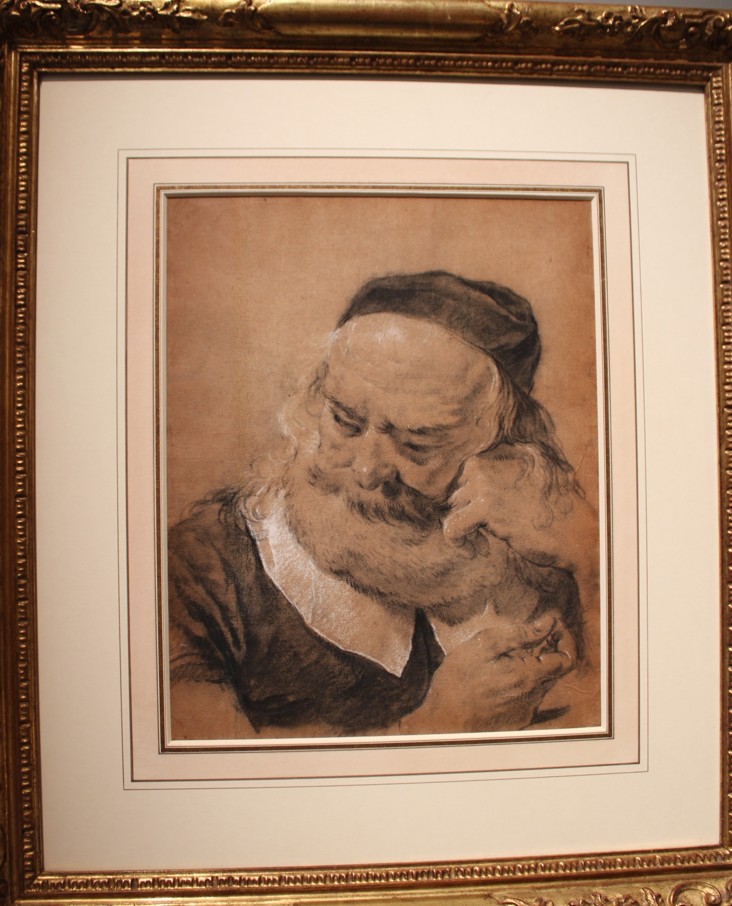
Un volto segnato dal tempo, lo sguardo abbassato, una folta barba che emerge dalla penombra. Bastano il gesso bianco e nero e una carta bruna a Giovanni Battista Piazzetta per dare corpo a una presenza così intensa.
La Testa di vecchio di Giovanni Battista Piazzetta, realizzata intorno al 1750, mostra tutta la sua espressività attraverso un volto che cattura immediatamente lo sguardo di chi ha la buona sorte di osservarlo.
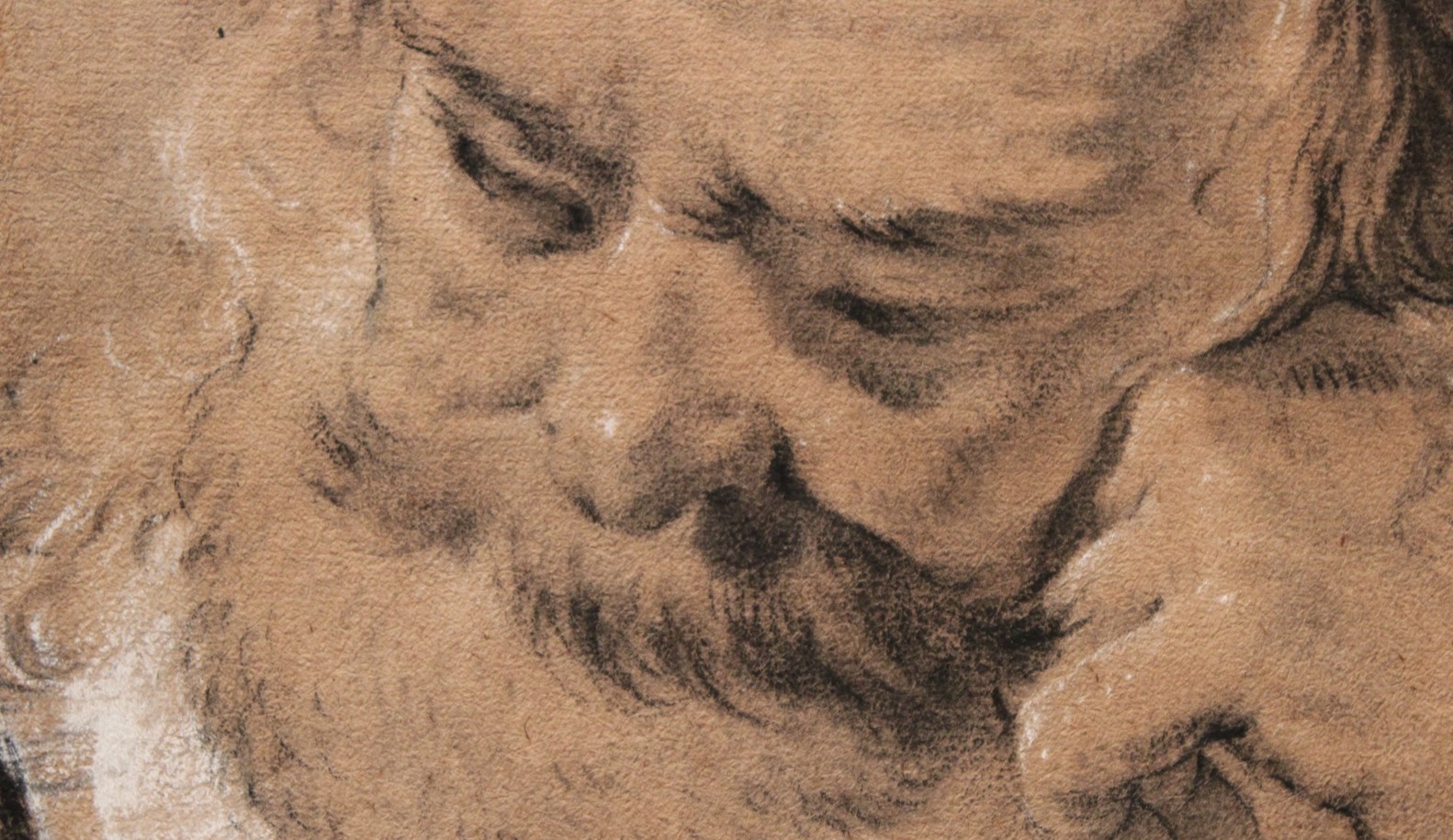
Il capo leggermente inclinato, gli occhi abbassati, la barba folta, le mani raccolte e quel gioco raffinatissimo di luci e ombre restituiscono l’immagine di un uomo che sembra essere stato colto in un momento di silenziosa riflessione.
Piazzetta lavora su un supporto di carta bruna, utilizzando gesso bianco e nero, e con questi pochi strumenti riesce a suggerire volume, materia, profondità e soprattutto carattere.
Le dimensioni sono contenute, solo 38,5 × 30,8 centimetri, ma l’impressione che produce è tutt’altro che trascurabile.
Davanti a questo foglio il volto sembra quasi oltrepassare i confini della carta: non abbiamo più l’impressione di guardare un disegno antico, ma di trovarci davanti a una persona che potrebbe da un momento all’altro sollevare gli occhi e parlarci.
Quell’uomo non posa: sembra colto mentre pensa
L’uomo non guarda lo spettatore. Ha il capo leggermente chino, gli occhi abbassati e una mano accostata al volto, quasi fosse immerso in un pensiero dal quale non vuole essere disturbato.
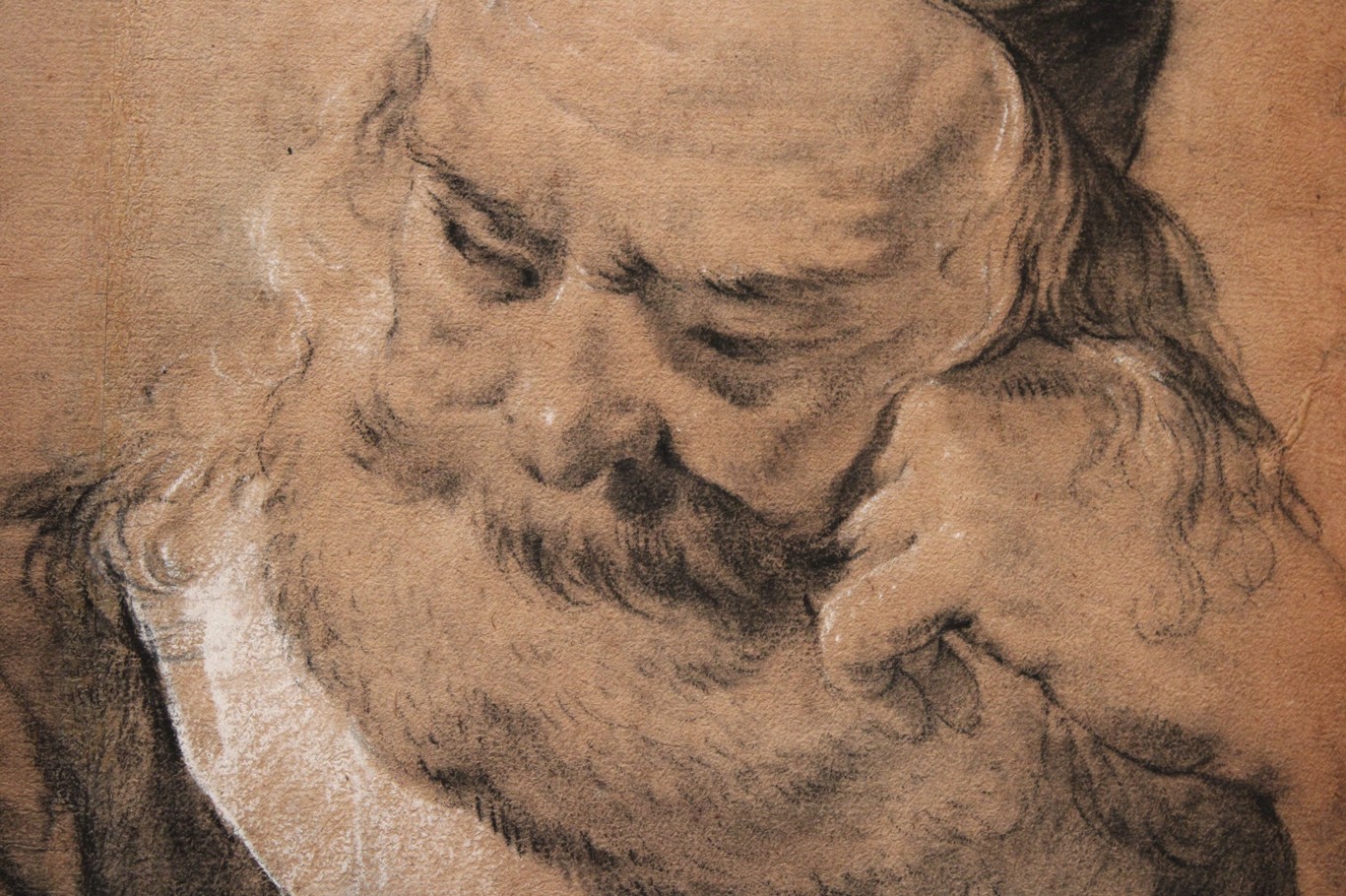
La lunga barba incornicia il viso e diventa quasi una seconda materia da modellare. Piazzetta non ha bisogno di descrivere ogni singolo pelo: gli bastano pochi segni scuri, sapientemente interrotti dalla luce, per suggerirne la consistenza.
Non siamo davanti a un esercizio accademico. Piazzetta usa il segno per dare peso, volume e carattere a una persona.
Il vecchio non è idealizzato. Non ha un volto perfetto, né una bellezza costruita secondo modelli convenzionali. È un uomo anziano, segnato dal tempo, con la fronte ampia, la barba importante, le palpebre pesanti e un’espressione raccolta.
È la sua umanità a diventare il vero soggetto del disegno.
La barba e le mani
Piazzetta non è alla ricerca di una descrizione fotografica. Il segno diventa ora più fitto, ora più leggero; il bianco compare improvvisamente e si spegne poco dopo; alcune parti vengono appena suggerite.
La barba non è disegnata pelo per pelo: è fatta di luce e ombra. Piazzetta lascia che sia l’occhio dello spettatore a completare ciò che il disegno soltanto suggerisce.
Una mano è accostata al viso, quasi a sostenerlo o accompagnarne il pensiero; l’altra compare più in basso, raccolta vicino al corpo. Sono mani di un uomo anziano che l’artista usa per rinforzarne la postura e, soprattutto, per raccontare lo stato d’animo del personaggio.
Per il momento il sempre vostro Michelangelo Buonarroti vi saluta dandovi appuntamento ai prossimi post e sui social.
Giovanni Battista Piazzetta, the old man who seems alive: poetry in a drawing
A face etched by time, a downcast gaze, a thick beard emerging from the semi-darkness. Black and white chalk on brown paper are all Giovanni Battista Piazzetta needs to give substance to such an intense presence.
Giovanni Battista Piazzetta’s Head of an Old Man, created around 1750, reveals its full expressiveness through a face that instantly captures the gaze of anyone fortunate enough to view it.
The slightly tilted head, downcast eyes, thick beard, clasped hands, and that exquisitely refined interplay of light and shadow create the image of a man seemingly caught in a moment of quiet reflection.
Piazzetta works on brown paper using black and white chalk; with these few tools, he manages to convey volume, texture, depth, and—above all—character.
The dimensions are modest—just 38.5 × 30.8 centimeters—yet the impression it creates is anything but insignificant.
Before this sheet of paper, the face seems almost to transcend the boundaries of the page: we no longer feel we are looking at an old drawing, but rather standing before a person who might, at any moment, lift his eyes and speak to us.
The man is not posing; he appears caught in thought
The man does not look at the viewer. His head is slightly bowed, his eyes lowered, and one hand rests near his face, as if he were immersed in a train of thought he does not wish to have interrupted.
His long beard frames his face, becoming almost a second material to be sculpted. Piazzetta does not need to depict every single hair; a few dark strokes, skillfully broken by light, suffice to suggest its texture.
This is no mere academic exercise. Piazzetta uses his line work to lend weight, volume, and character to the figure.
The old man is not idealized. He possesses neither a perfect face nor a beauty modeled on conventional standards. He is an elderly man, weathered by time, with a broad forehead, a substantial beard, heavy eyelids, and a contemplative expression.
It is his humanity that becomes the true subject of the drawing.
The beard and the hands
Piazzetta does not aim for a photographic depiction. His strokes vary in density—sometimes thick, sometimes light; areas of white emerge suddenly only to fade away moments later, while some parts are merely hinted at.
The beard is not drawn hair by hair; instead, it is composed of light and shadow. Piazzetta allows the viewer’s eye to complete what the drawing merely suggests.
One hand is positioned near the face, as if supporting it or accompanying a train of thought; the other appears lower down, held close to the body. These are the hands of an elderly man—hands the artist uses to reinforce the figure’s posture and, above all, to convey the character’s state of mind.
For now, your ever-faithful Michelangelo Buonarroti bids you farewell, looking forward to seeing you in future posts and on social media.

Sostienici – Support Us
Se questo blog ti piace e ti appassiona, puoi aiutarci a farlo crescere sempre più sostenendoci in modo concreto condividendo i post, seguendo le pagine social e con un contributo che ci aiuta ad andare avanti con il nostro lavoro di divulgazione. . ENGLISH: If you like and are passionate about this blog, you can help us make it grow more and more by supporting us in a concrete way by sharing posts, following social pages and with a contribution that helps us to move forward with our dissemination work.
10,00 €
Condividi:


Questo sono io




sostienici

Sostienici - Support Us
Se questo blog ti piace e ti appassiona, puoi aiutarci a farlo crescere sempre più sostenendoci in modo concreto condividendo i post, seguendo le pagine social e con un contributo che ci aiuta ad andare avanti con il nostro lavoro di divulgazione. . ENGLISH: If you like and are passionate about this blog, you can help us make it grow more and more by supporting us in a concrete way by sharing posts, following social pages and with a contribution that helps us to move forward with our dissemination work.
€10,00


