
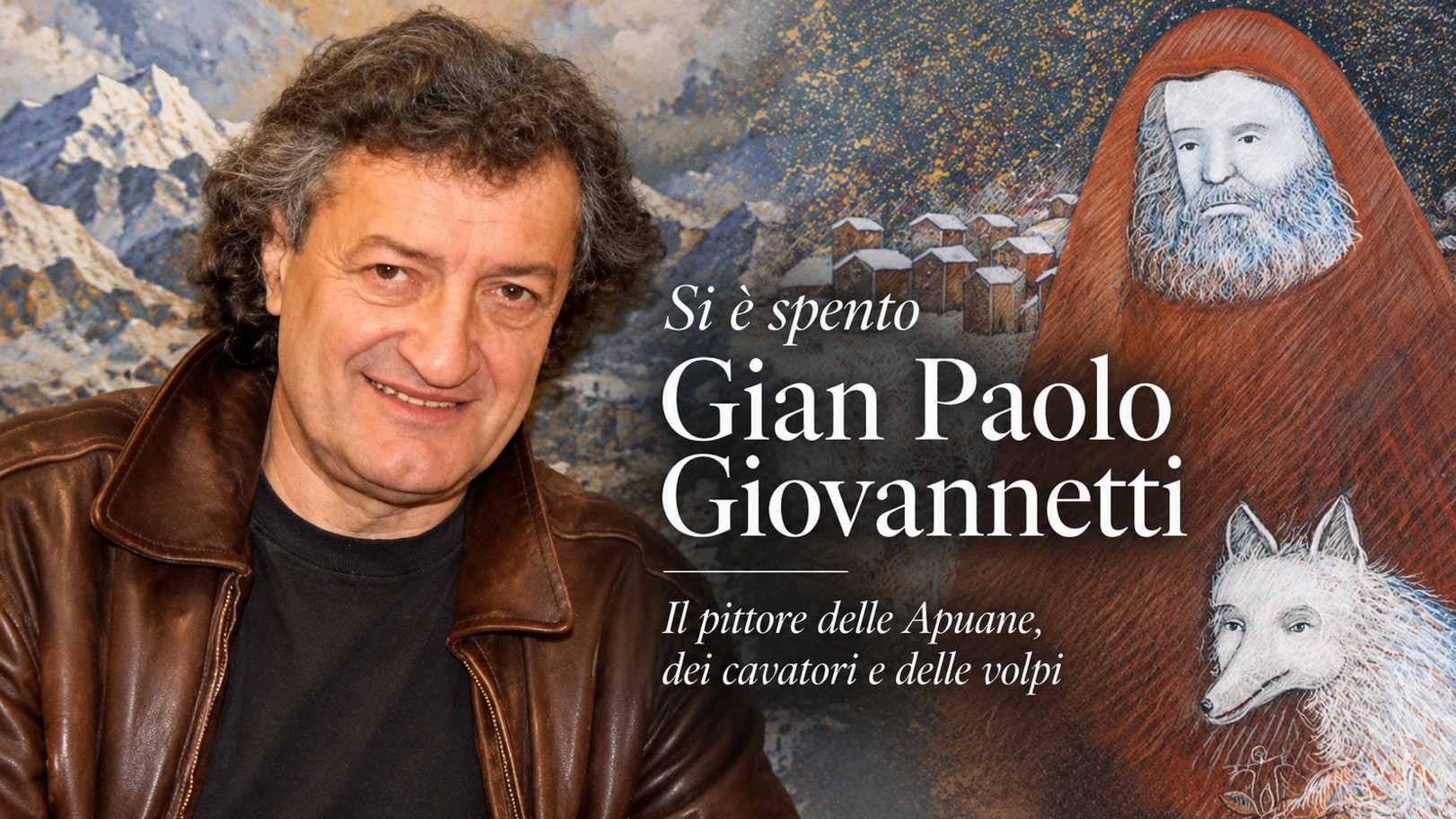
Si è spento Gian Paolo Giovannetti, il pittore delle Apuane, dei cavatori e delle volpi
Quando se ne va un artista, al mondo manca un po’ di bellezza. Manca uno sguardo diverso sulle cose, un modo unico di fermare il tempo, di raccontare la propria terra e manca il lasciare dietro di sé quella scia colorata che è stata la strada percorsa per tutta una vita.
Oggi, 8 ottobre 2026, in questa giornata di pioggia battente, è passato a miglior vita Gian Paolo Giovannetti, pittore e scultore nato a Giustagnana, piccolo paese di collina dell’Alta Versilia, nel comune di Seravezza.
La notizia mi ha colto impreparato.
Ci sono persone che, anche quando non le frequenti assiduamente, finiscono per appartenere al paesaggio della tua memoria. Gian Paolo apparteneva a quello della mia.
È passato a miglior vita nel mese delle castagne e delle foglie colorate, dei boschi che cambiano livrea, delle giornate che si accorciano e di quei toni bruni, rossastri, ocra e dorati che tante volte hanno scaldato le sue opere.
Oggi piove. Chissà come avrebbe dipinto lui quest’acqua che viene giù dal cielo. Forse l’avrebbe portata dentro un bosco, tra alberi e foglie gialle e rosse mentre una bella volpe, con quell’aria un po’ fiabesca che apparteneva al suo immaginario, cerca riparo.
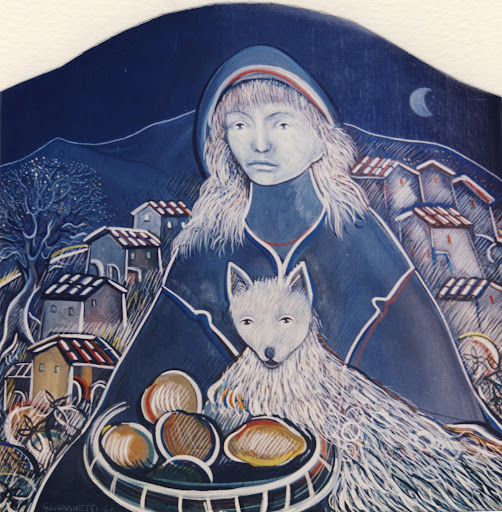
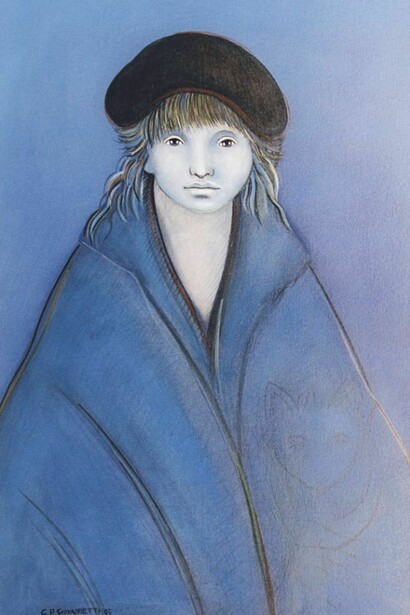
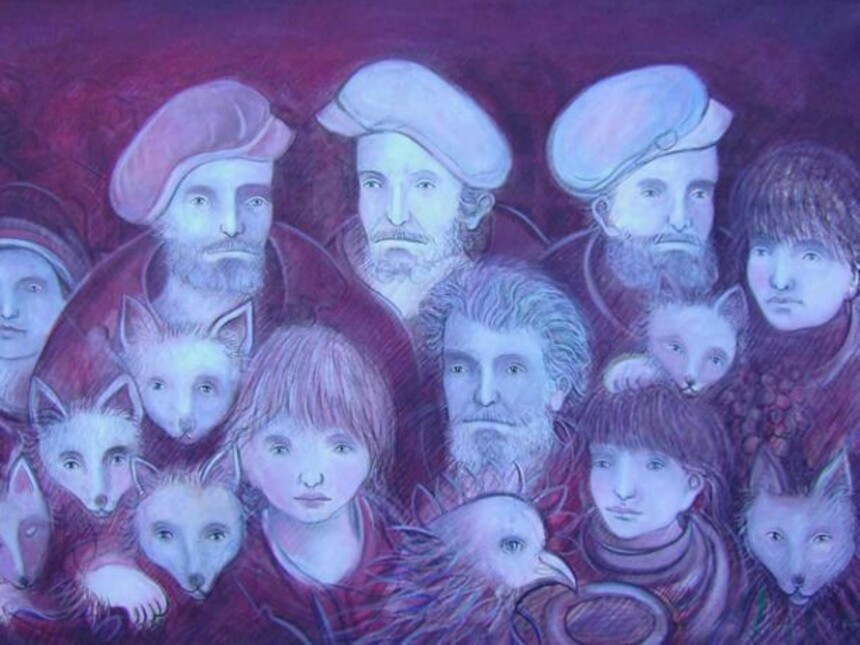
Nelle opere di Giovannetti c’era la terra, gli uomini, gli animali, la memoria e una specie di fiaba malinconica. Mi ricordo i cavatori con i loro volti stanchi ma forti e quelle mani grandi, i paesi di Giustagnana e Fabbiano, le Apuane, le cave, le donne, i vecchi volti barbuti e quelle volpi che, negli anni, sono diventate una sua firma poetica.
Una vita per la pittura
Gian Paolo Giovannetti era nato a Giustagnana di Seravezza il 14 aprile 1948, figlio di Ezio Giovannetti e Matilde Lorenzoni. Nato in una terra che avrebbe finito per diventare protagonista delle sue opere.
Giustagnana era un antico paese di cavatori e proprio qui, già da bambino, Giovannetti cominciò a mostrare la sua inclinazione per l’arte. Nel 1957, alle scuole elementari del paese, vinse il suo primo premio a un concorso di pittura. Aveva 9 anni ma il talento c’è o non c’è e si vede fin da bimbetti. Poi c’è da coltivarlo, certo, ma la sua presenza non passa mai inosservata.
Nel 1964 arrivò il primo importante riconoscimento nella scultura, il Premio Cav. Ferdinando Palla, assegnato dall’Istituto Statale d’Arte “Stagio Stagi” di Pietrasanta, scuola nella quale si diplomò Maestro d’Arte nel 1965. Tra i suoi insegnanti ci furono artisti e maestri come Franco Miozzo, Alfredo Catarsini, Uberto Bonetti, Lido Bovecchi, Guido Renai, Giuseppe Flora ed Emilio Paoli.
La sua formazione proseguì poi all’Accademia di Belle Arti di Carrara, dove nel 1978 conseguì il diploma nella sezione di scultura con il massimo dei voti.
Gian Paolo è stato anche insegnante, organizzatore culturale, animatore della vita artistica dell’Alta Versilia e uomo profondamente legato alla propria comunità. Per molti anni insegnò Storia dell’Arte, Disegno e Scultura nei corsi di formazione professionale organizzati prima dal Comune di Pietrasanta e successivamente dalla Regione Toscana e dalla Provincia di Lucca.
Tantissime le mostre che hanno accolto le sue opere.
La prima personale arrivò nel 1970 proprio a Giustagnana, con Figure e paesaggi. Da allora il suo percorso espositivo lo avrebbe portato in numerose città italiane e anche all’estero: da Genova a Torino, da Milano a Firenze, da Roma a Parigi, fino a New York.
Ma c’è un luogo che più di ogni altro accompagna la sua storia: Fabiano. Vi confesso una cosa: Fabbiano è anche il paese natale del mio alter ego.
Dal 1975 le sue mostre annuali nella frazione montana di Seravezza diventarono un appuntamento importante e quasi rituale. Per decenni Giovannetti tornò a esporre lì, costruendo attraverso i suoi dipinti una sorta di diario visivo della montagna versiliese.
Ma sapete perché spesso dipingeva volpi? Se n’era innamorato in una notte del 1987 quando vide diverse volpi e volpacchiotti uscire dalle tane vicino alle cave dismesse e iniziare a giocare tra di loro.
Le sue opere entrarono anche in collezioni e istituzioni pubbliche, tra cui il Museo Storico della Resistenza di Sant’Anna di Stazzema e il Museo della Carta di Pescia.
Nel 2003 il Palazzo Mediceo di Seravezza gli dedicò una grande antologica con novantacinque dipinti e cinque disegni, una delle tappe più importanti della sua lunga vicenda artistica.
Quel ricordo di bambina
L’ultima volta l’ho incontrato quest’estate, in una pasticceria a Querceta, seduto tra i suoi dipinti, perché lì, sono esposte diverse opere sue.
Se chiudo gli occhi lo rivedo lì. E insieme a lui rivedo quei quadri che ho incontrato tante volte nel corso della mia vita. In qualche modo ha accompagnato parte della infanzia e non solo, o meglio, quella della mia alter ego.
Da bimbetta, la mia alter ego e una sua amica erano assidue frequentatrici delle mostre che ogni anno organizzava alla Pubblica Assistenza di Fabiano. Era quasi un appuntamento. Andavamo a vedere quei quadri, quei personaggi, quei paesaggi che allora osservavo con gli occhi semplici e spietatamente sinceri di una bambina.
Ricordo persino che, in quel periodo, venni intervistata da una televisione locale. E diciamo che, con la spontaneità assoluta di una bambina di otto o nove anni, non espressi esattamente un commento lusinghiero sulle opere di Giovannetti.
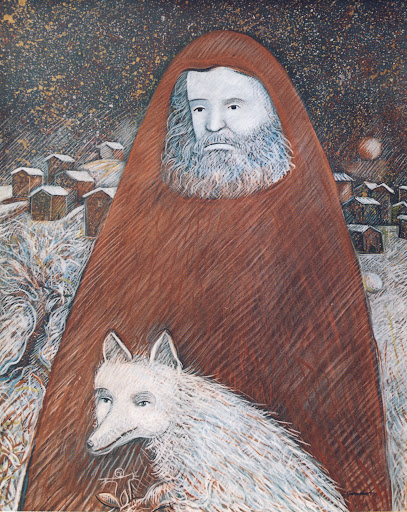
Oggi, da adulta, non posso non riconoscere a Gian Paolo Giovannetti un uso sapiente e personalissimo del colore, insieme alla capacità di trasformare la quotidianità della sua terra in una sorta di racconto sospeso fra realtà e memoria.
La sua pittura nasceva dall’osservazione di ciò che aveva intorno e dalla necessità di restituirlo secondo un linguaggio soltanto suo.
Giovannetti aveva scelto di raccontare una terra che conosceva intimamente, una terra aspra e generosa.
Gian Paolo Giovannetti non ha avuto bisogno di inventarsi un mondo: quello che gli serviva era già lì, a portata di mano. Ha saputo guardare e ricordare.
Oggi, mentre fuori continua a piovere e l’autunno comincia a stendere i suoi colori sulla Versilia, penso che Gian Paolo è volato come quelle foglie che si staccano dai castagni per appiccicarsi sui suoi dipinti.
Buon viaggio, Gian Paolo.
Per il momento il sempre vostro Michelangelo Buonarroti vi saluta dandovi appuntamento ai prossimi post e sui social.
Gian Paolo Giovannetti, the painter of the Apuan Alps, quarrymen, and foxes, has passed away.
When an artist leaves us, the world loses a bit of beauty. It loses a different perspective on things, a unique way of capturing time and telling the story of one’s homeland; it loses that colorful trail left behind—the path traveled over the course of a lifetime.
Today, October 8, 2026—on a day of driving rain—Gian Paolo Giovannetti has passed away. He was a painter and sculptor born in Giustagnana, a small hillside village in the Upper Versilia area, within the municipality of Seravezza.
The news caught me off guard.
There are people who, even if you do not see them regularly, come to belong to the landscape of your memory. Gian Paolo belonged to mine.
He passed away during the month of chestnuts and colorful leaves, of woods changing their attire, of shortening days, and of those brown, reddish, ochre, and golden tones that so often warmed his artworks.
It is raining today. I wonder how he would have painted this water pouring down from the sky. Perhaps he would have brought it into the woods, amidst trees and yellow and red leaves, while a beautiful fox—possessing that slightly fairytale quality characteristic of his imagination—sought shelter.
In Giovannetti’s works, there was the earth, the people, the animals, memory, and a kind of melancholic fairytale. I remember the quarrymen with their weary yet strong faces and large hands, the villages of Giustagnana and Fabbiano, the Apuan Alps, the quarries, the women, the old bearded faces, and those foxes that, over the years, became his poetic signature.
A Life Dedicated to Painting
Gian Paolo Giovannetti was born in Giustagnana di Seravezza on April 14, 1948, the son of Ezio Giovannetti and Matilde Lorenzoni. He was born in a land that would eventually become the central subject of his works.
Giustagnana was an ancient village of quarrymen, and it was here that Giovannetti began to show his artistic inclination while still a child. In 1957, at the local elementary school, he won his first prize in a painting competition. He was only nine years old; yet talent is something that—whether present or not—shows itself even in early childhood. Of course, it must be cultivated, but its presence never goes unnoticed.
In 1964, he received his first major recognition in sculpture: the Premio Cav. Ferdinando Palla, awarded by the “Stagio Stagi” State Art Institute in Pietrasanta—the school where he would graduate as a Master of Art in 1965. His teachers included artists and masters such as Franco Miozzo, Alfredo Catarsini, Uberto Bonetti, Lido Bovecchi, Guido Renai, Giuseppe Flora, and Emilio Paoli.
He continued his training at the Academy of Fine Arts in Carrara, where, in 1978, he earned his diploma in sculpture with top honors.
Gian Paolo was also a teacher, a cultural organizer, a driving force behind the artistic life of Alta Versilia, and a man deeply connected to his community. For many years, he taught Art History, Drawing, and Sculpture in vocational training courses organized first by the Municipality of Pietrasanta and later by the Tuscany Region and the Province of Lucca.
Countless exhibitions have showcased his work. His first solo exhibition took place in 1970 right there in Giustagnana, titled Figure e paesaggi (Figures and Landscapes). From then on, his exhibition journey took him to numerous Italian cities and abroad—from Genoa to Turin, Milan to Florence, Rome to Paris, and even as far as New York.
Yet, one place is more deeply intertwined with his story than any other: Fabbiano. I’ll let you in on a secret: Fabbiano is also the birthplace of my own alter ego.
Starting in 1975, his annual exhibitions in this mountain hamlet of Seravezza became a significant, almost ritual event. For decades, Giovannetti returned to exhibit there, creating—through his paintings—a sort of visual diary of the Versilia mountains.
But do you know why he often painted foxes? He fell in love with them one night in 1987, when he saw several foxes and cubs emerging from their dens near the abandoned quarries and beginning to play together.
His works also found their way into public collections and institutions, including the Historical Museum of the Resistance in Sant’Anna di Stazzema and the Paper Museum in Pescia.
In 2003, the Palazzo Mediceo in Seravezza dedicated a major retrospective to him, featuring ninety-five paintings and five drawings—a pivotal moment in his long artistic career.
That childhood memory
The last time I met him was this summer, in a pastry shop in Querceta; he was sitting amidst his own paintings, as several of his works are on display there.
If I close my eyes, I can see him there again. And with him, I revisit those paintings I have encountered so many times throughout my life. In a way, he was part of my childhood—or rather, my alter ego’s childhood.
As a young girl, my alter ego and a friend of hers were regulars at the exhibitions he organized every year at the Pubblica Assistenza in Fabiano. It was almost like a standing appointment. We would go to see those paintings—those figures and landscapes—which I viewed back then with the simple, ruthlessly honest eyes of a child.
I even remember being interviewed by a local TV station during that time. And let’s just say that, with the absolute spontaneity of an eight- or nine-year-old, I didn’t exactly offer a flattering comment on Giovannetti’s work.
Today, as an adult, I cannot help but acknowledge Gian Paolo Giovannetti’s masterful and highly personal use of color, as well as his ability to transform the everyday life of his homeland into a kind of story suspended between reality and memory.
His painting sprang from observing his surroundings and the need to render them through a language that was uniquely his own.
Giovannetti chose to tell the story of a land he knew intimately—a land that was both rugged and generous.
Gian Paolo Giovannetti didn’t need to invent a world; what he needed was already there, right at hand. He knew how to look and how to remember.
Today, as the rain continues to fall outside and autumn begins to spread its colors across Versilia, I think of Gian Paolo drifting away like the leaves that detach from the chestnut trees to cling to his paintings.
Safe travels, Gian Paolo.
For now, your ever-faithful Michelangelo Buonarroti bids you farewell, looking forward to seeing you in future posts and on social media.
Condividi:


Questo sono io





sostienici

Sostienici - Support Us
Se questo blog ti piace e ti appassiona, puoi aiutarci a farlo crescere sempre più sostenendoci in modo concreto condividendo i post, seguendo le pagine social e con un contributo che ci aiuta ad andare avanti con il nostro lavoro di divulgazione. . ENGLISH: If you like and are passionate about this blog, you can help us make it grow more and more by supporting us in a concrete way by sharing posts, following social pages and with a contribution that helps us to move forward with our dissemination work.
€10,00


