
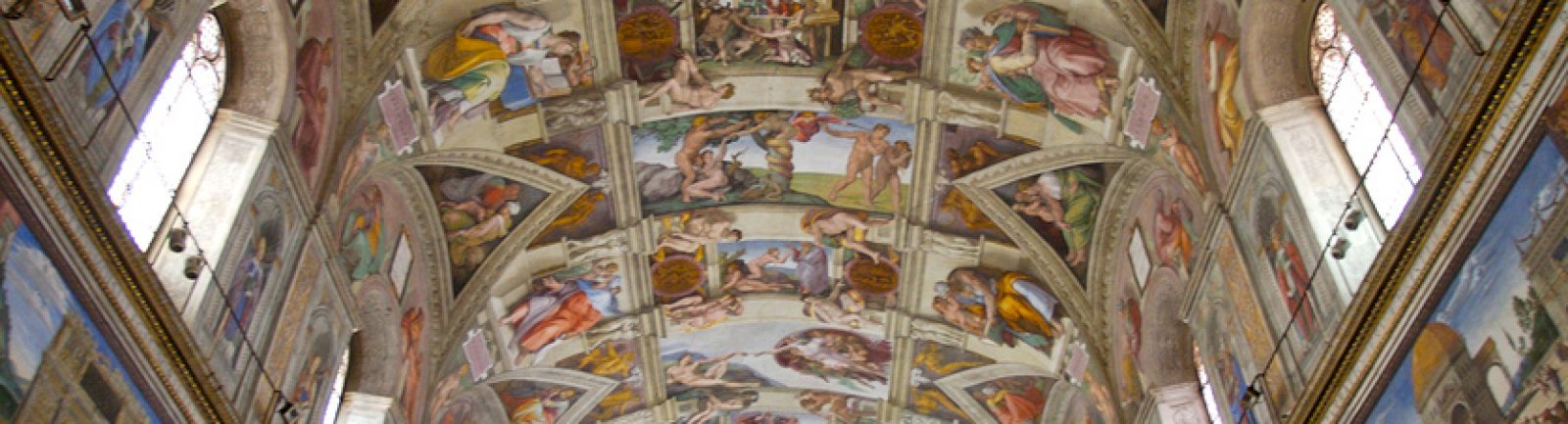
Stanza Segreta: lo studio per le gambe di Giuliano de’ Medici
La Stanza Segreta al di sotto della Sagrestia Nuova è ricca di disegni, alcuni riconducibili a opere mie che realizzai prima o dopo il 1530, anno in cui mi trovai a passar lì dentro un po’ di tempo in attesa che le acque a Firenze si calmassero.
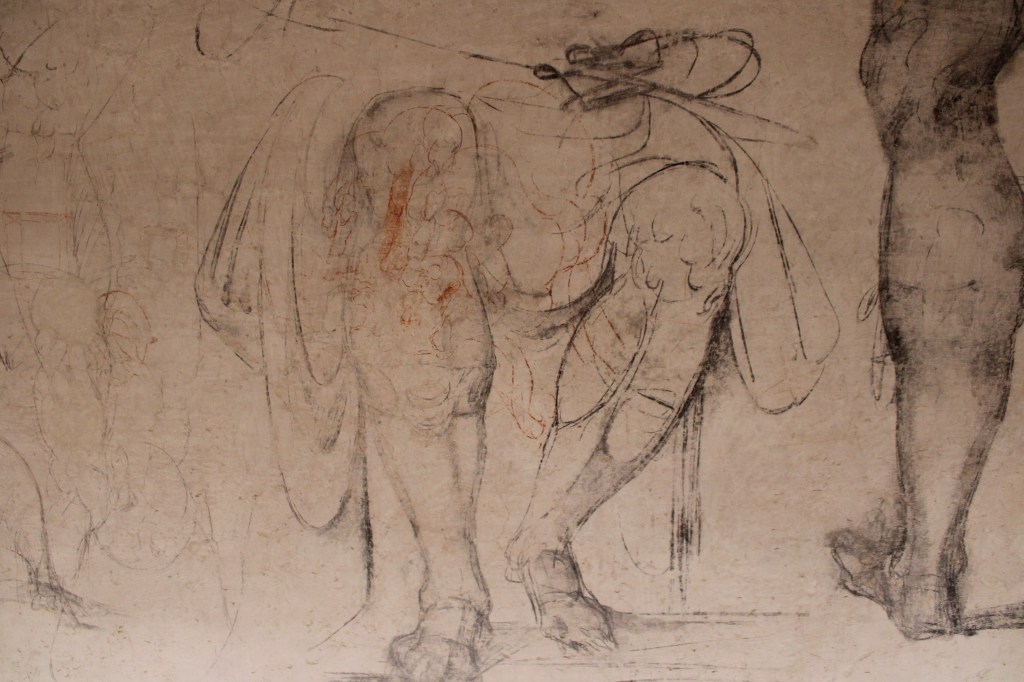
Fra i vari disegni eseguiti a carbone ce n’è uno sulla parete destra più grande del naturale che riconduce subito la mente alle ginocchia e alla posa delle gambe della scultura di Giuliano de’ Medici, duca di Nemours.

Osservando con attenzione questo studio si può comprendere che non è un disegno fatto dell’opera già realizzata ma, al contrario, è lo studio della posa delle gambe che poi avrei tradotto in scultura successivamente.
Le gambe disegnate sul muro infatti hanno un’inclinazione diversa e mentre nello studio è presente la spada, nella realizzazione dell’opera poi preferii sostituirla con il bastone del comando.
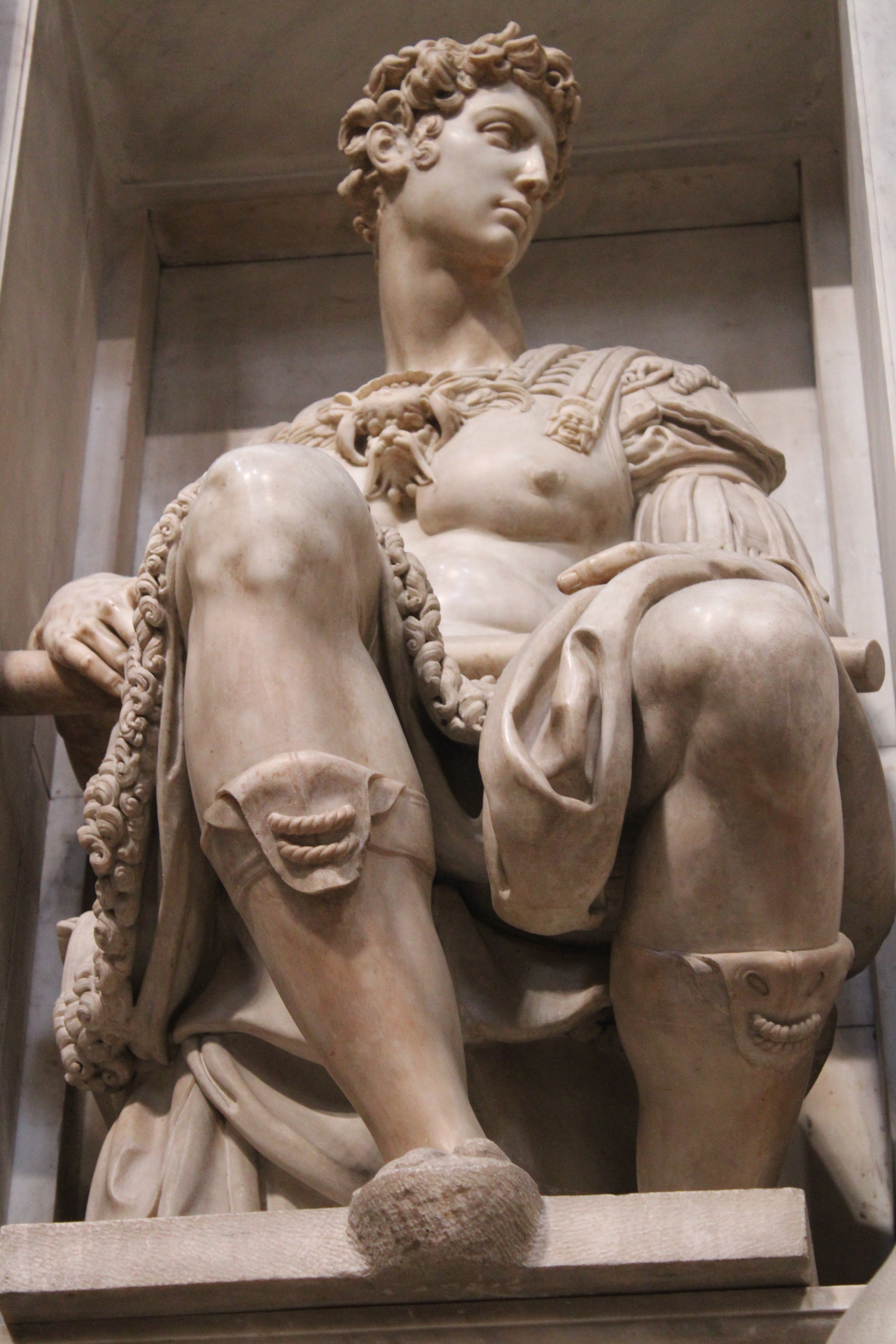
Sul disegno inoltre sono presenti varie correzioni e ripensamenti che non sarebbero stati necessari se fosse stato tratto dall’opera già scolpita.
Dando una rispolverata ai vari documenti, si evince che la scultura di Lorenzo de’ Medici la realizzai prima dell’altro capitano.
Come scrissi in una lettera risalente al giugno del 1526, all’epoca avevo cominciato a scolpire sei delle opere che volevo fare di mia mano: le quattro allegorie del giorno, la Madonna e per l’appunto Lorenzo.
Successivamente, in una lettera che il Mini scrisse a Bartolomeo Valori nel settembre del 1531, sta scritto che in quel mese stavo portando a termine il Crepuscolo e il Giorno, la Madonna e Lorenzo già quasi ultimato.
Mi rimaneva ancora da cominciare il duca Giuliano che portai a buon punto solo prima di lasciare Firenze per Roma, nel 1534, affidando le rifiniture a Giovan Angelo Montorsoli.
Per il momento il vostro Michelangelo Buonarroti vi saluta dandovi appuntamento ai prossimi post e sui social.

Sostienici – Support Us
Se questo blog ti piace e ti appassiona, puoi aiutarci a farlo crescere sempre più sostenendoci in modo concreto condividendo i post, seguendo le pagine social e con un contributo che ci aiuta ad andare avanti con il nostro lavoro di divulgazione. . ENGLISH: If you like and are passionate about this blog, you can help us make it grow more and more by supporting us in a concrete way by sharing posts, following social pages and with a contribution that helps us to move forward with our dissemination work.
8,00 €
Secret Room: the study for Giuliano de’ Medici’s legs
The Secret Room underneath the New Sacristy is full of drawings, some of which can be traced back to works of mine that I created before or after 1530, the year in which I found myself spending some time in there waiting for the waters in Florence to calm down .
Among the various charcoal drawings there is one on the right wall which is larger than life and immediately brings the mind back to the knees and the pose of the legs of the sculpture of Giuliano de’ Medici, Duke of Nemours.
By carefully observing this study of legs one can understand that it is not a drawing made of the work already created but on the contrary it is the study of the pose of the legs which I would then translate into sculpture.
The legs drawn on the wall in fact have a different inclination and while the sword is present in the study, in the creation of the work I then preferred to replace it with the command stick.
Furthermore, there are various corrections and changes to the drawing that would not have been necessary if it had been taken from the already sculpted work.
Furthermore, by dusting off the various documents, it is clear that I created the sculpture of Lorenzo de’ Medici before the other captain. As I wrote in a letter dating back to June 1526, at the time I had begun to sculpt six of the works that I wanted to do with my own hand: the four allegories of the day, the Madonna and Lorenzo.
Subsequently, in a letter that Mini wrote to Bartolomeo Valori in September 1531, it is written that in that month I was completing the Twilight and the Day, the Madonna and Lorenzo already almost completed.
I still had to start Duke Giuliano, which I brought to a good point only before leaving Florence for Rome in 1534, entrusting the finishing touches to Giovan Angelo Montorsoli.
For the moment, your Michelangelo Buonarroti greets you and will meet you in future posts and on social media.
Sostienici – Support Us
Se questo blog ti piace e ti appassiona, puoi aiutarci a farlo crescere sempre più sostenendoci in modo concreto condividendo i post, seguendo le pagine social e con un contributo che ci aiuta ad andare avanti con il nostro lavoro di divulgazione. . ENGLISH: If you like and are passionate about this blog, you can help us make it grow more and more by supporting us in a concrete way by sharing posts, following social pages and with a contribution that helps us to move forward with our dissemination work.
8,00 €
-
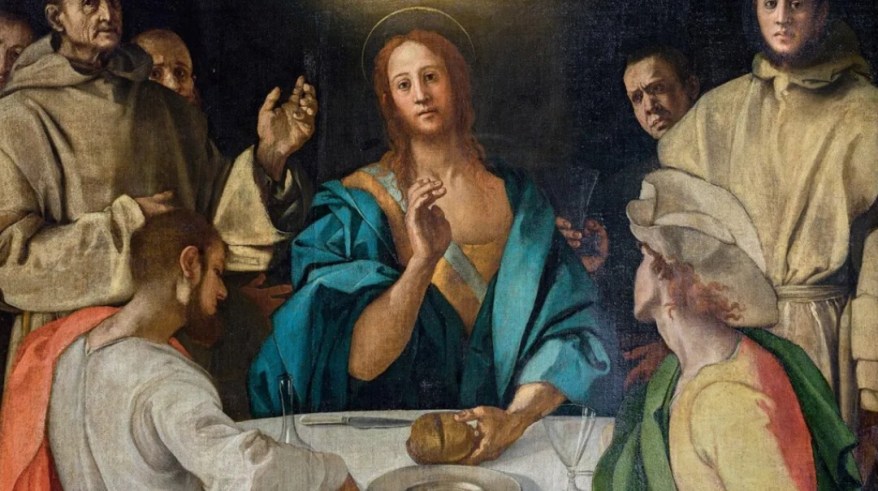
Cena in Emmaus di Pontormo: il pane, il gatto e il cane alle Scuderie del Quirinale
La Cena in Emmaus di Pontormo nasconde dettagli sorprendenti: il significato del pane, i simboli e il mistero della Resurrezione. Scopri il capolavoro del 1525 in mostra alle Scuderie del Quirinale a Roma… 🇬🇧Pontormo’s *Supper at Emmaus* conceals surprising details: the significance of the bread, various symbols, and the mystery of the Resurrection. Discover this…
-
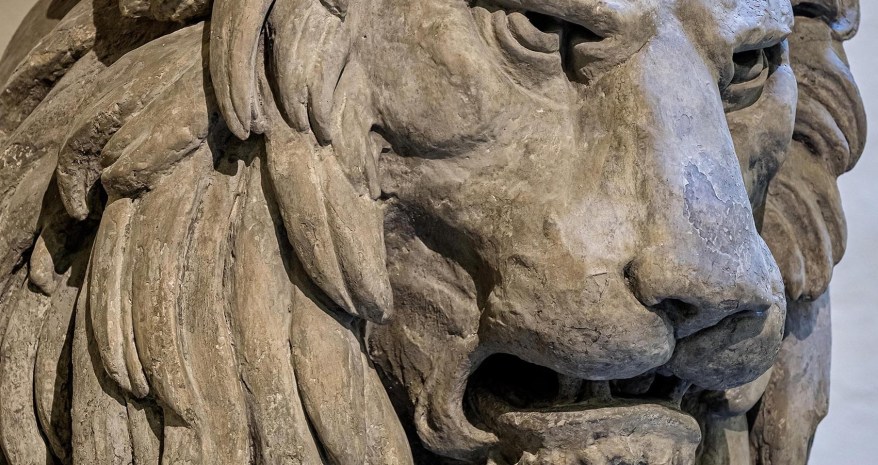
Palazzo Vecchio, il restauro svela la vera natura dei quattro leoni e il mistero della fontana greca
🇮🇹Restaurato il Cortile della Dogana di Palazzo Vecchio a Firenze: i quattro leoni sono calchi, una fontana conserva un’iscrizione greca da studiare e tornano a funzionare entrambe le fontane… 🇬🇧The Cortile della Dogana (Customs Courtyard) at Palazzo Vecchio in Florence has been restored: the four lions are casts, one fountain features a Greek inscription that…
-
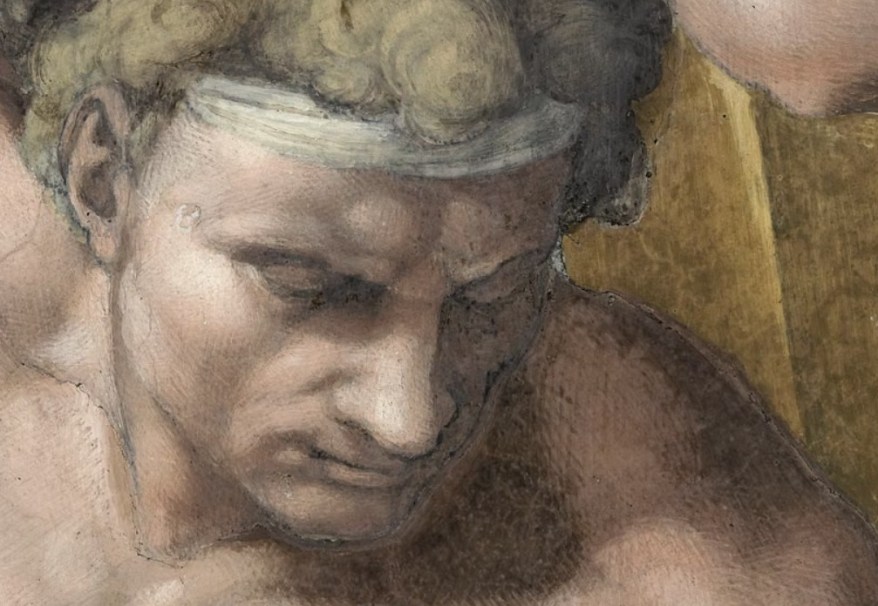
Disma, il buon ladrone nel Giudizio Universale: la misericordia e la giustizia divina
Nel Giudizio Universale della Cappella Sistina ci sono particolari che rischiano di passare inosservati, anche a chi ha avuto la fortuna di alzare gli occhi verso la mia grande parete. Tra i corpi che si sollevano, gli angeli che suonano le trombe e le anime che cercano di raggiungere il cielo, ci sono figure che…
Condividi:


Questo sono io




sostienici

Sostienici – Support Us
Se questo blog ti piace e ti appassiona, puoi aiutarci a farlo crescere sempre più sostenendoci in modo concreto condividendo i post, seguendo le pagine social e con un contributo che ci aiuta ad andare avanti con il nostro lavoro di divulgazione. . ENGLISH: If you like and are passionate about this blog, you can help us make it grow more and more by supporting us in a concrete way by sharing posts, following social pages and with a contribution that helps us to move forward with our dissemination work.
€10,00


1 commento »