

I Brueghel e i paesaggi invernali: la poesia della neve nei dipinti della grande famiglia fiamminga
Nei paesaggi invernali dipinti dai Brueghel la neve ricopre i tetti delle case, gli alberi sembrano disegnati con pochi tratti scuri contro il cielo pallido, i corsi d’acqua diventano grandi superfici ghiacciate sulle quali si muovono pattinatori, bambini e intere famiglie.
Osservando questi dipinti si ha quasi la sensazione di sentire il freddo sulla pelle, il rumore delle lame sul ghiaccio e le voci delle persone che si ritrovano all’aperto nonostante le temperature rigide.
La famiglia Brueghel, una delle più importanti dinastie artistiche delle Fiandre, ha lasciato alcune delle immagini più riconoscibili dell’inverno nella storia della pittura europea. I suoi artisti hanno saputo trasformare la stagione fredda in un soggetto pittorico ricco di vita, dettagli e significati, andando ben oltre la semplice rappresentazione della natura.
Sono finestre aperte su un mondo che non esiste più, ma che continua a parlarci attraverso la pittura.
Pieter Bruegel il Vecchio: l’inverno diventa protagonista
Quando si parla di paesaggi invernali nella pittura fiamminga, il primo nome da ricordare è quello di Pieter Bruegel il Vecchio (1526/1530 circa – 1569).
Fu lui a dare all’inverno una dignità pittorica nuova, trasformandolo in un soggetto autonomo, capace di raccontare la natura e, soprattutto, le persone che la abitano.
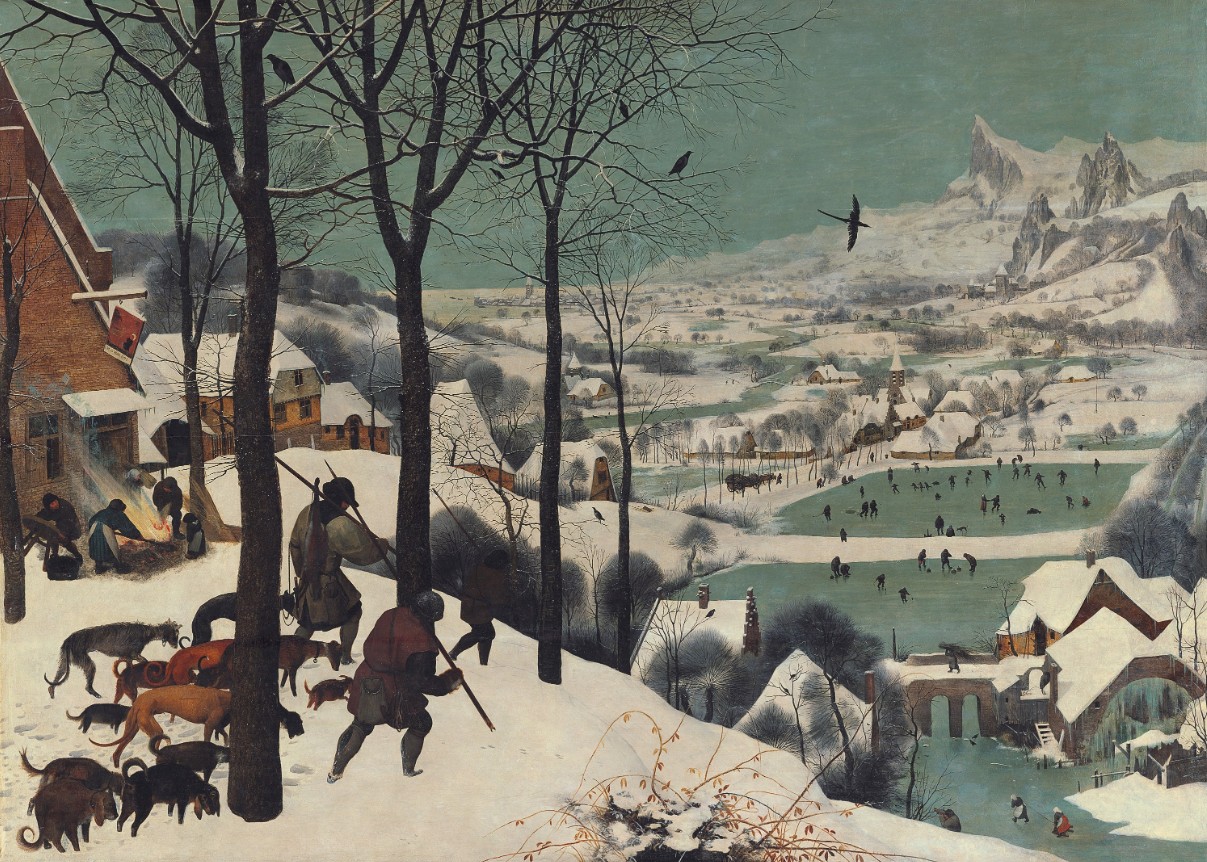
Uno dei suoi dipinti più celebri è Cacciatori nella neve, realizzato nel 1565 e conservato al Kunsthistorisches Museum di Vienna.
L’opera appartiene a un ciclo dedicato alle stagioni, commissionato dal mercante e collezionista anversano Niclaes Jongelinck. Il progetto comprendeva sei dipinti, dei quali cinque sono giunti fino a noi.
In questa composizione, tre cacciatori accompagnati dai loro cani rientrano verso il villaggio dopo una battuta di caccia che non sembra essere stata particolarmente fortunata. Dalle loro spalle vediamo aprirsi un paesaggio immenso, dominato da alberi spogli, tetti innevati, montagne lontane e corsi d’acqua ormai ghiacciati.
In basso, la vita continua. Alcune persone pattinano, altre giocano sul ghiaccio, mentre dal villaggio arrivano piccoli segnali di attività quotidiana.
A Bruegel gli bastano una distesa bianca, qualche figura umana e una straordinaria capacità di osservazione.
La gamma cromatica è essenziale: bianchi, bruni e verdi freddi costruiscono un’atmosfera nella quale sembra davvero di percepire la temperatura rigida della stagione.
Pattinatori, bambini e villaggi: la vita sul ghiaccio
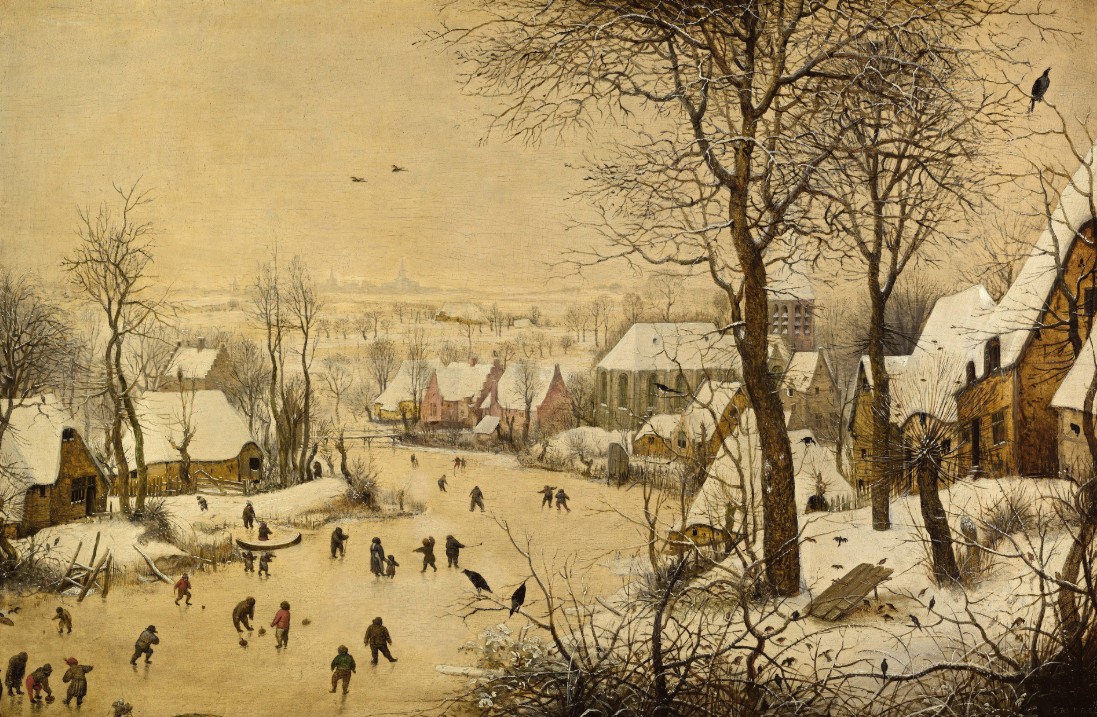
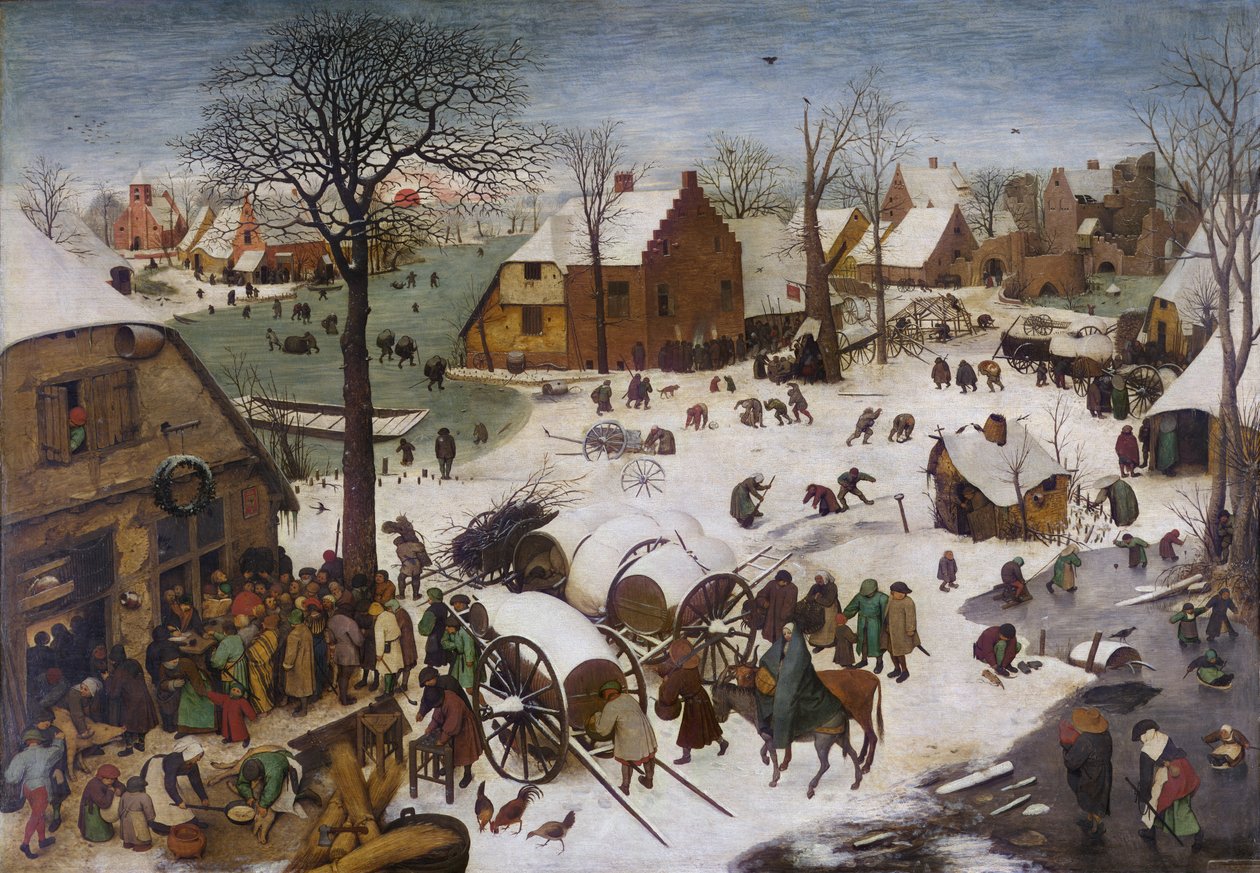
Un altro dipinto fondamentale è Paesaggio invernale con pattinatori e trappola per uccelli, datato 1565 e conservato ai Musei Reali di Belle Arti del Belgio.
È una delle immagini più amate dell’intera produzione di Bruegel.
Davanti ai nostri occhi si apre un villaggio fiammingo ricoperto di neve. Il corso d’acqua è completamente ghiacciato e diventa uno spazio di incontro e divertimento. Uomini, donne e bambini pattinano, scivolano e si muovono sulla superficie gelata, trasformando il paesaggio in una grande scena collettiva.
C’è chi pattina con sicurezza, chi sembra ancora alle prime armi e chi si dedica ad altri giochi. Le abitazioni, gli alberi e i ponticelli completano una composizione nella quale ogni particolare merita attenzione.
Ma il titolo dell’opera richiama anche un dettaglio meno evidente: una piccola trappola per uccelli.
Non è un elemento casuale. La scena può essere letta anche come una riflessione sulla fragilità dell’esistenza. Come gli uccelli rischiano di cadere nella trappola senza accorgersene, così le persone che giocano sul ghiaccio possono perdere l’equilibrio da un momento all’altro.
La superficie gelata, apparentemente sicura e divertente, nasconde un pericolo.
L’inverno nella piccola era glaciale
Per comprendere meglio questi dipinti bisogna ricordare anche il contesto climatico nel quale furono realizzati.
Tra il XVI e il XVII secolo l’Europa attraversò una fase particolarmente fredda, conosciuta come Piccola era glaciale. Nei Paesi Bassi si verificarono inverni rigidi, con corsi d’acqua che gelavano e condizioni climatiche capaci di modificare le abitudini quotidiane.
Non sorprende quindi che il ghiaccio e la neve abbiano assunto un ruolo così importante nell’immaginario pittorico fiammingo.
Bruegel osservava il mondo che lo circondava e ne registrava gesti, attività e consuetudini. Le sue scene invernali restituiscono un’immagine preziosa della vita nelle Fiandre del Cinquecento, senza idealizzare completamente la realtà.
I suoi personaggi non sono figure immobili inserite in un paesaggio decorativo: lavorano, giocano, si incontrano, cadono e si divertono.
Pieter Brueghel il Giovane: il successo dei paesaggi innevati
La fortuna delle composizioni invernali di Bruegel fu enorme e continuò anche dopo la sua morte. A raccoglierne l’eredità fu soprattutto il figlio maggiore, Pieter Brueghel il Giovane, nato nel 1564 circa.
La sua attività è particolarmente interessante perché realizzò numerose versioni di composizioni del padre, contribuendo a diffonderne lo stile e i soggetti presso un pubblico sempre più ampio.
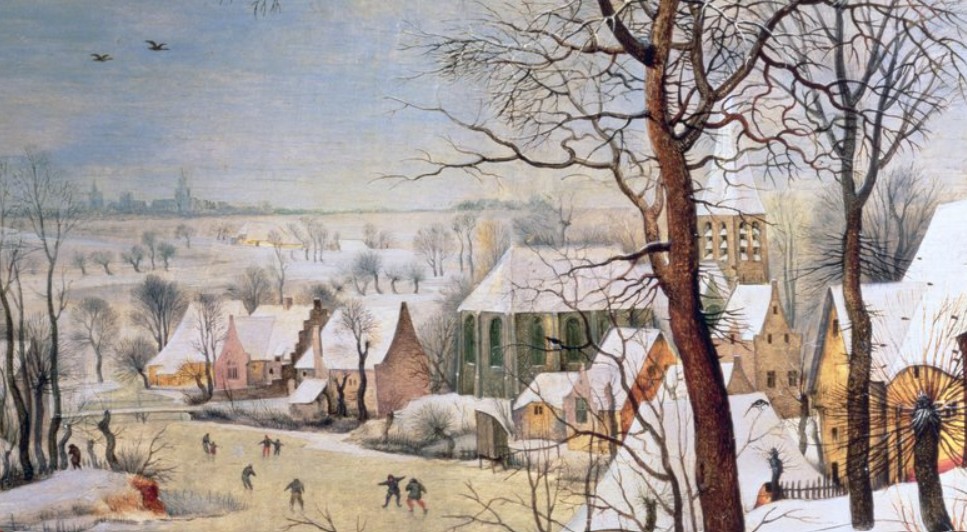
Tra le immagini più riprodotte figura proprio il Paesaggio invernale con la trappola per uccelli. Ne esistono moltissime versioni, testimonianza della popolarità raggiunta da questa composizione.
Il pittore riprese anche Cacciatori nella neve, reinterpretando il celebre modello paterno. Non si trattava soltanto di ripetere una formula vincente: queste opere permettevano di mantenere viva una tradizione figurativa che aveva conquistato collezionisti e appassionati.
Ancora oggi, confrontando le diverse versioni, è possibile osservare le differenze nella resa dei colori, nella disposizione delle figure e nella descrizione dei particolari.
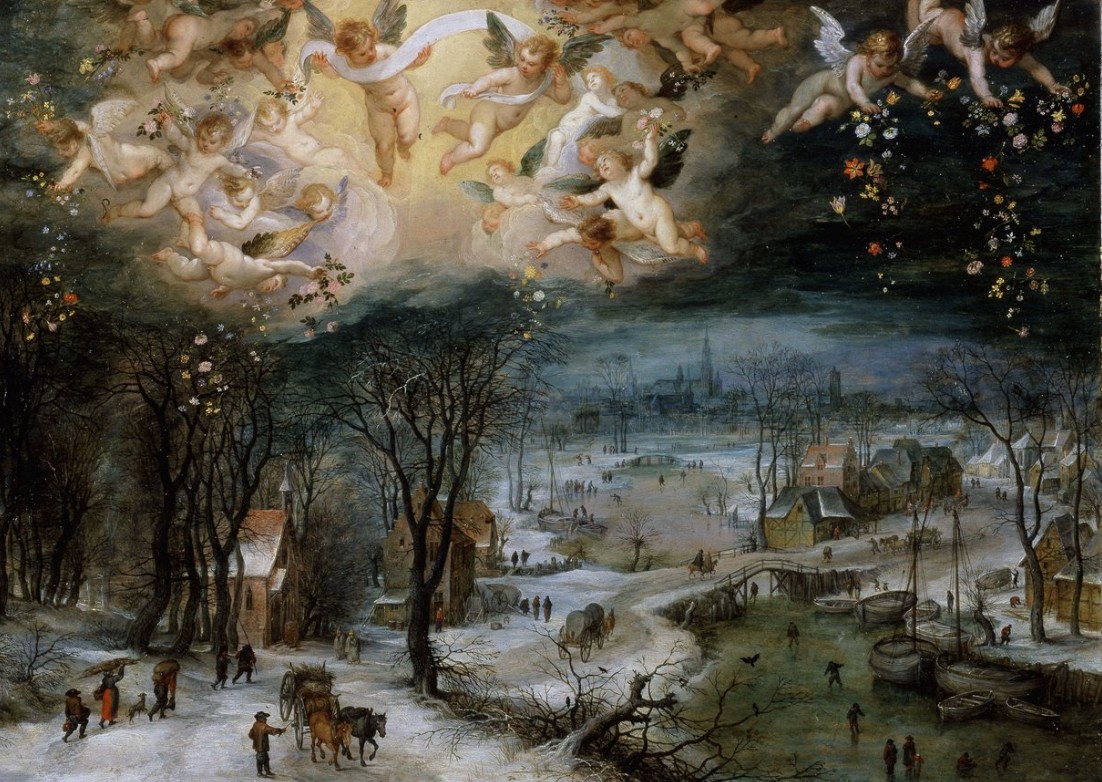
Jan Brueghel il Vecchio e la tradizione del paesaggio fiammingo
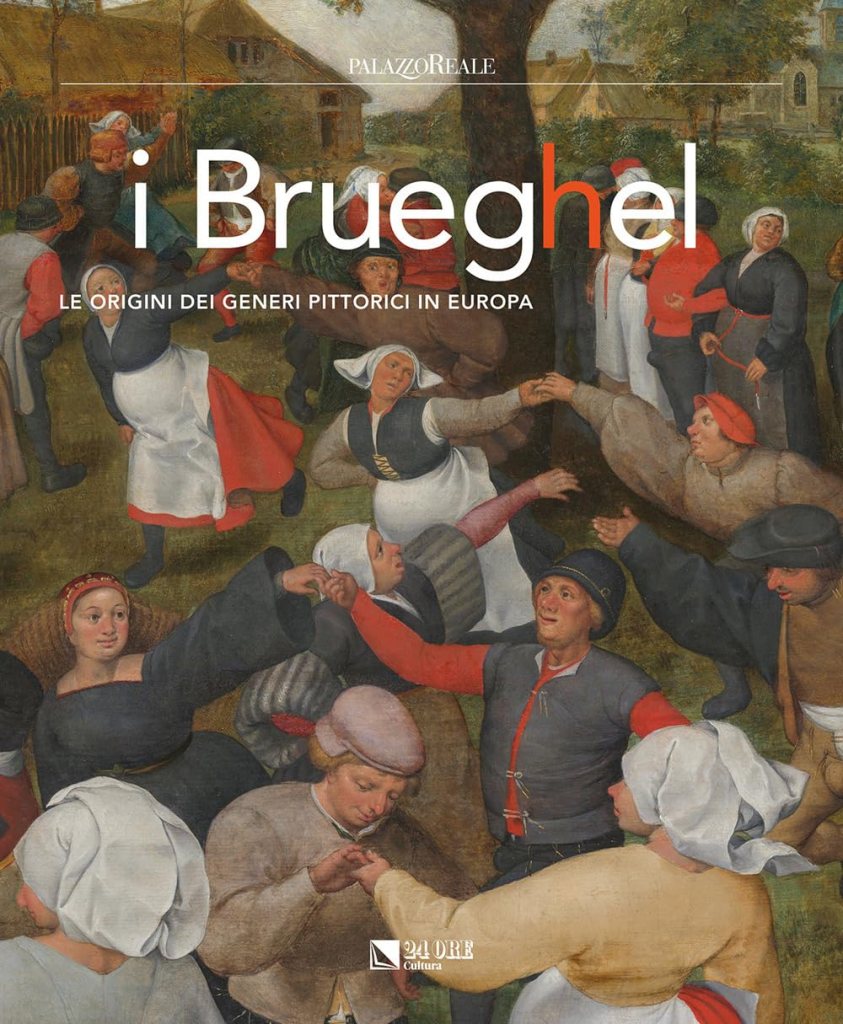
Accanto a Pieter Brueghel il Giovane merita attenzione anche il fratello Jan Brueghel il Vecchio (1568-1625), soprannominato Brueghel dei Velluti per la delicatezza e la raffinatezza della sua pittura.
Jan sviluppò un linguaggio personale, dedicandosi soprattutto ai paesaggi, alle composizioni floreali e alle scene ricche di particolari.
Non ebbe modo di conoscere artisticamente il padre, morto quando era ancora molto piccolo, ma seppe raccoglierne l’eredità sviluppando una sensibilità diversa, caratterizzata da una grande attenzione alla natura e alla qualità della superficie pittorica.
Insieme a Pieter il Giovane, contribuì a consolidare il prestigio di una famiglia che avrebbe lasciato un’impronta profonda nella pittura europea.
Un mondo lontano nel tempo, ma ancora incredibilmente vicino alla nostra sensibilità.
Per il momento il sempre vostro Michelangelo Buonarroti vi saluta dandovi appuntamento ai prossimi post e sui social.
The Brueghels and Winter Landscapes: The Poetry of Snow in the Paintings of the Great Flemish Family
In the winter landscapes painted by the Brueghels, snow blankets the rooftops, trees appear as if sketched with a few dark strokes against a pale sky, and waterways transform into vast, frozen surfaces traversed by ice skaters, children, and entire families.
Looking at these paintings, one can almost feel the chill on one’s skin, hear the sound of blades cutting across the ice, and catch the voices of people gathered outdoors, undeterred by the freezing temperatures.
The Brueghel family—one of the most significant artistic dynasties in Flanders—left behind some of the most recognizable images of winter in the history of European painting. Their artists succeeded in turning the cold season into a subject rich with life, detail, and meaning, reaching far beyond a mere depiction of nature.
These works serve as windows opening onto a world that no longer exists, yet one that continues to speak to us through the medium of painting.
Pieter Bruegel the Elder: Winter Takes Center Stage
When discussing winter landscapes in Flemish painting, the first name that comes to mind is Pieter Bruegel the Elder (c. 1526/1530–1569).
It was he who bestowed a new artistic dignity upon winter, transforming it into an independent subject—one capable of depicting both the natural world and, above all, the people who inhabit it.
One of his most renowned paintings is Hunters in the Snow, created in 1565 and housed at the Kunsthistorisches Museum in Vienna.
The work is part of a cycle dedicated to the seasons, commissioned by the Antwerp merchant and collector Niclaes Jongelinck. The project originally consisted of six paintings, five of which have survived to the present day.
In this composition, three hunters, accompanied by their dogs, return toward a village following a hunt that does not appear to have been particularly successful. Behind them unfolds an immense landscape, dominated by bare trees, snow-covered rooftops, distant mountains, and frozen waterways.
Down below, life goes on. Some people are ice skating, others are playing on the ice, while small signs of daily activity emerge from the village.
Bruegel achieves this with nothing more than a vast white expanse, a few human figures, and an extraordinary capacity for observation.
The color palette is restrained—whites, browns, and cool greens—creating an atmosphere in which one can almost physically sense the biting cold of the season.
Skaters, children, and villages: life on the ice
Another fundamental painting is Winter Landscape with Skaters and a Bird Trap, dated 1565 and housed at the Royal Museums of Fine Arts of Belgium.
It is one of the most beloved images in Bruegel’s entire body of work.
Before our eyes unfolds a snow-covered Flemish village. The waterway is completely frozen, becoming a space for gathering and amusement. Men, women, and children skate, slide, and move across the icy surface, transforming the landscape into a grand, collective scene.
Some skate with confidence, others appear to be beginners, and some engage in different games. Houses, trees, and small bridges complete a composition in which every detail deserves attention.
Yet, the title of the work also points to a less obvious detail: a small bird trap.
This is no random element. The scene can also be interpreted as a reflection on the fragility of existence. Just as birds might fall into a trap without even noticing, people playing on the ice could lose their balance at any moment.
The frozen surface—seemingly safe and full of fun—conceals a hidden danger.
Winter During the Little Ice Age
To better understand these paintings, one must also consider the climatic context in which they were created.
Between the 16th and 17th centuries, Europe experienced a particularly cold period known as the Little Ice Age. In the Low Countries, this brought harsh winters, with frozen waterways and weather conditions that altered daily life.
It is therefore no surprise that ice and snow played such a significant role in the visual imagination of Flemish art.
Bruegel observed the world around him, documenting its actions, activities, and customs. His winter scenes offer a valuable glimpse into life in 16th-century Flanders, without entirely idealizing reality.
His characters are not static figures placed within a decorative landscape; they work, play, meet one another, fall, and enjoy themselves.
Pieter Brueghel the Younger: The Success of Snowy Landscapes
The success of Bruegel’s winter compositions was immense and persisted even after his death. It was primarily his eldest son, Pieter Brueghel the Younger—born around 1564—who inherited this legacy.
His body of work is particularly noteworthy because he produced numerous versions of his father’s compositions, helping to disseminate his style and subject matter to an ever-widening audience.
Among the most frequently reproduced images is Winter Landscape with a Bird Trap. A great many versions of this work exist, serving as a testament to the immense popularity it achieved.
The painter also revisited Hunters in the Snow, reinterpreting his father’s celebrated original. This was more than just the repetition of a successful formula; such works helped keep alive a figurative tradition that had captivated collectors and enthusiasts alike.
Even today, by comparing the various versions, one can observe differences in the rendering of color, the placement of figures, and the depiction of specific details.
Jan Brueghel the Elder and the Tradition of Flemish Landscape Painting
Alongside Pieter Brueghel the Younger, his brother Jan Brueghel the Elder (1568–1625)—nicknamed “Velvet Brueghel” for the delicacy and refinement of his painting style—also deserves attention.
Jan developed a distinct artistic language, focusing primarily on landscapes, floral compositions, and scenes rich in intricate detail.
He never had the chance to get to know his father’s artistic side—his father having passed away when he was still very young—yet he managed to embrace that legacy, developing a distinct sensibility marked by a profound attentiveness to nature and the quality of the painted surface.
Together with Pieter the Younger, he helped cement the prestige of a family that would leave an indelible mark on European painting.
A world distant in time, yet one that remains remarkably resonant with our own sensibilities.
For now, yours truly, Michelangelo Buonarroti, bids you farewell—until the next posts and over on social media.
Sostienici – Support Us
Se questo blog ti piace e ti appassiona, puoi aiutarci a farlo crescere sempre più sostenendoci in modo concreto condividendo i post, seguendo le pagine social e con un contributo che ci aiuta ad andare avanti con il nostro lavoro di divulgazione. . ENGLISH: If you like and are passionate about this blog, you can help us make it grow more and more by supporting us in a concrete way by sharing posts, following social pages and with a contribution that helps us to move forward with our dissemination work.
10,00 €

Condividi:


Questo sono io



sostienici

Sostienici - Support Us
Se questo blog ti piace e ti appassiona, puoi aiutarci a farlo crescere sempre più sostenendoci in modo concreto condividendo i post, seguendo le pagine social e con un contributo che ci aiuta ad andare avanti con il nostro lavoro di divulgazione. . ENGLISH: If you like and are passionate about this blog, you can help us make it grow more and more by supporting us in a concrete way by sharing posts, following social pages and with a contribution that helps us to move forward with our dissemination work.
€10,00


Bello
"Mi piace""Mi piace"