

La stella di Betlemme nei dipinti: com’era rappresentata la luce che guidò i Magi
Nella Natività e dell’Adorazione dei Magi, c’è un dettaglio che spesso attrae lo sguardo: è la stella di Betlemme, il segno celeste che, secondo il racconto del Vangelo di Matteo, guidò i Magi fino al luogo in cui si trovava Gesù Bambino.
Nella storia dell’arte questo particolare ha assunto forme diverse. A volte appare come una stella luminosa dalla quale partono raggi dorati, altre come una vera e propria cometa dalla lunga coda, altre ancora come una luce soprannaturale che scende dall’alto e sembra collegare il cielo alla terra.
Ma come hanno rappresentato i pittori la stella di Betlemme? E perché, in alcune opere, la sua immagine ricorda così tanto una cometa?
La risposta si trova nei dipinti, nelle tradizioni religiose e anche nella storia dell’osservazione del cielo.
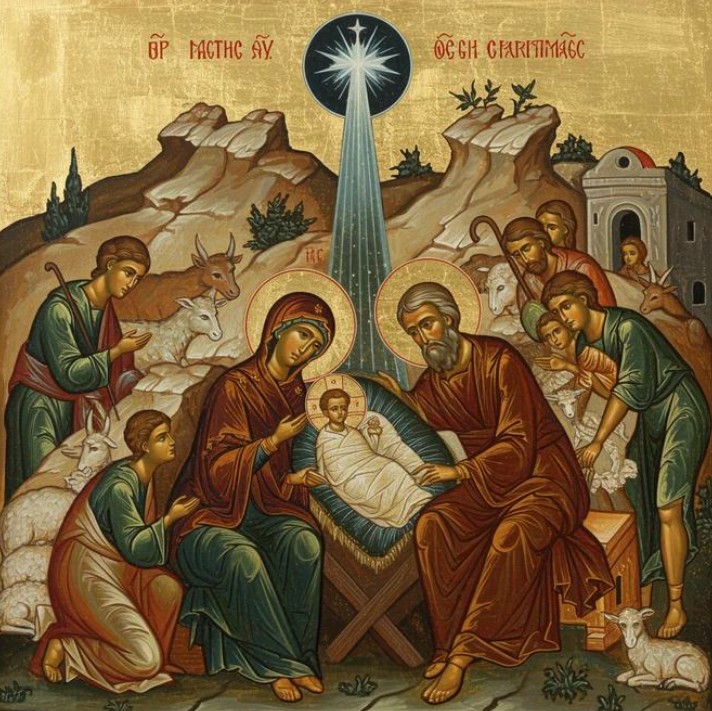
La stella di Betlemme nel Vangelo di Matteo
Il riferimento alla stella si trova nel Vangelo secondo Matteo, l’unico dei quattro Vangeli canonici a raccontare l’arrivo dei Magi.
I sapienti venuti dall’Oriente arrivano a Gerusalemme chiedendo dove sia nato il re dei Giudei. Hanno visto sorgere la sua stella e sono partiti per rendergli omaggio.
Il testo evangelico non descrive con precisione la forma dell’astro, non dice che fosse una cometa e non fornisce indicazioni astronomiche sufficienti per identificarlo con certezza.
Racconta però un particolare straordinario: la stella precede i Magi e si ferma sopra il luogo in cui si trova il Bambino.
È proprio questa immagine a offrire agli artisti un’enorme possibilità interpretativa. La stella diventa il segno visibile di una manifestazione divina. È la luce che orienta il cammino, annuncia una nascita destinata a cambiare la storia e mette in comunicazione il mondo celeste con quello terreno.
Giotto e la stella cometa: la rivoluzione nell’Adorazione dei Magi
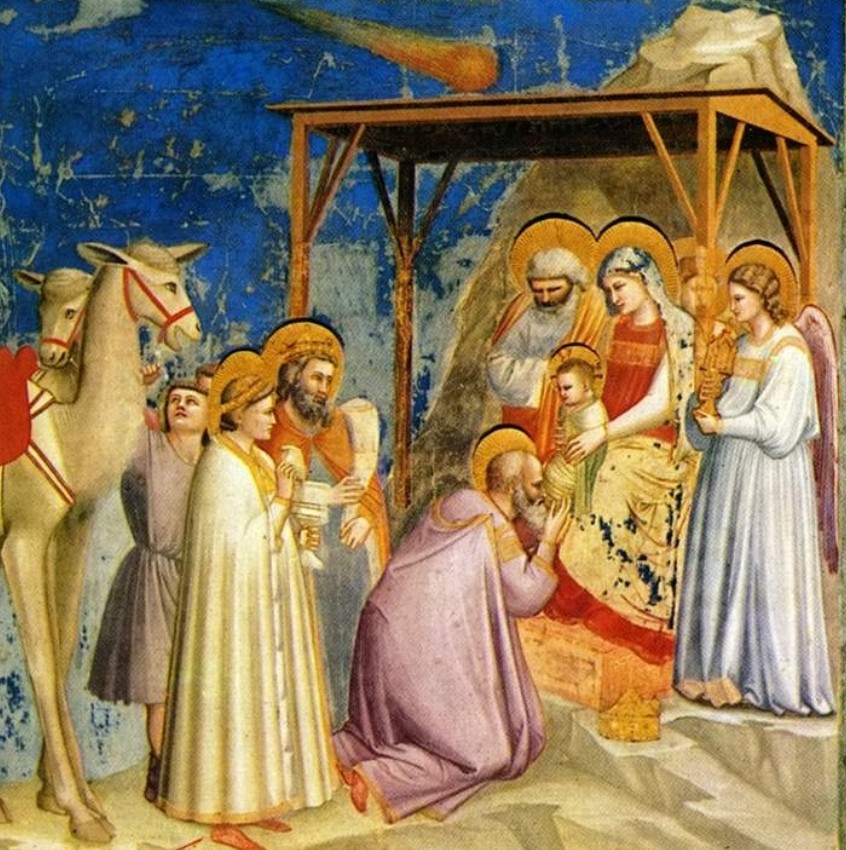
Una delle rappresentazioni più celebri della stella di Betlemme si trova nella Cappella degli Scrovegni a Padova, nel ciclo di affreschi realizzato da Giotto di Bondone tra il 1303 e il 1305.
Nella scena dell’Adorazione dei Magi, sopra la capanna, compare un astro dalla lunga coda luminosa. Non è la classica stella a punte che siamo abituati a vedere nei presepi, ma una cometa dalla forma riconoscibile, dipinta con una sensibilità naturalistica sorprendente per l’epoca.
Perché Giotto scelse proprio questa forma?
Secondo una spiegazione tradizionale, il pittore si sarebbe ispirato alla cometa di Halley, apparsa nei cieli nel 1301, pochi anni prima della realizzazione degli affreschi. L’artista avrebbe dunque trasformato un fenomeno astronomico realmente osservato in un’immagine carica di significato religioso.
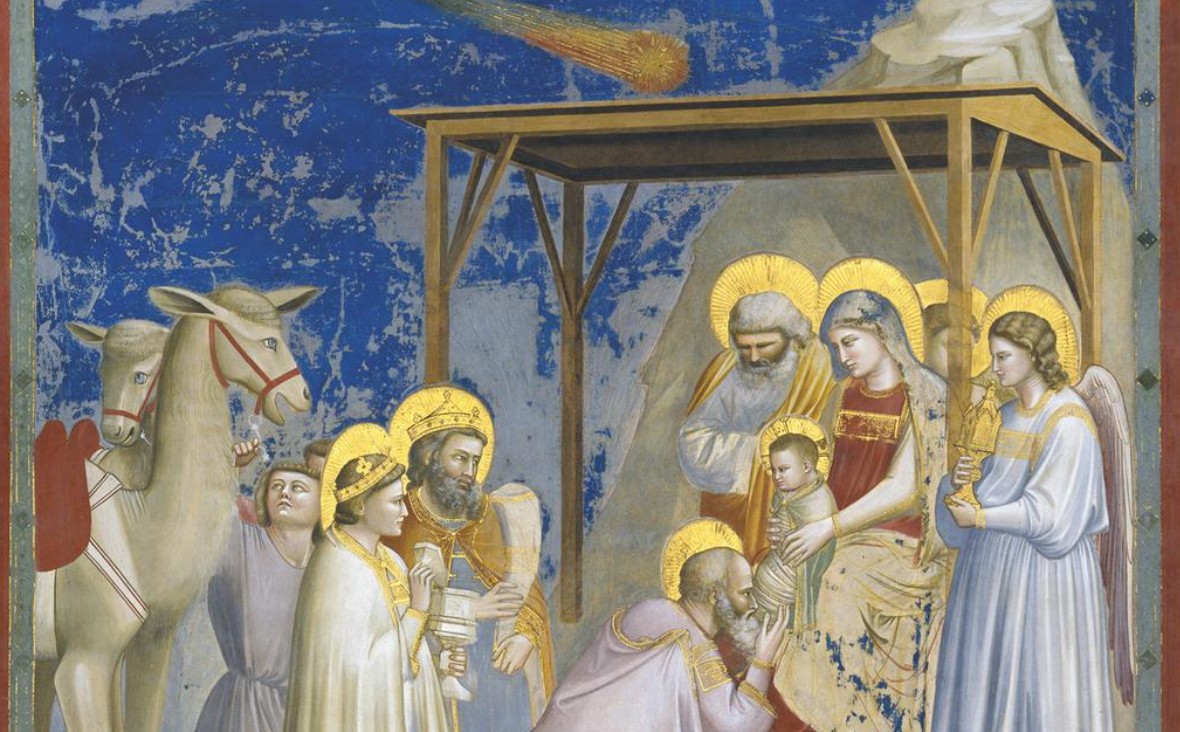
È un passaggio importante nella storia dell’iconografia cristiana: la stella non viene più rappresentata soltanto come un simbolo convenzionale, ma assume le sembianze di un fenomeno celeste che gli uomini potevano effettivamente osservare.
Non è un caso che la missione spaziale europea inviata a studiare la cometa di Halley nel 1986 sia stata chiamata proprio Giotto, in omaggio al pittore che l’aveva immortalata nella sua opera.
La stella di Giotto era davvero la cometa di Halley?
L’identificazione con la cometa di Halley è molto conosciuta, ma merita una precisazione. Uno studio pubblicato nel 2026 sul Journal of the British Astronomical Association ha riesaminato l’identità dell’astro dipinto da Giotto, mettendo in discussione l’attribuzione tradizionale al passaggio del 1301.
L’astronomo Mark Kidger ha preso in considerazione anche altre comete osservate nel 1304, tra cui una apparsa proprio nel periodo natalizio. Quest’ultima potrebbe essere una possibile fonte d’ispirazione per il pittore.
Non esiste, al momento, una certezza definitiva sull’identità del fenomeno celeste che Giotto volle rappresentare. Rimane però straordinario il modo in cui l’artista riuscì a trasformare un astro in un elemento fondamentale della narrazione sacra.
Prima di Giotto: la stella senza coda nell’arte cristiana
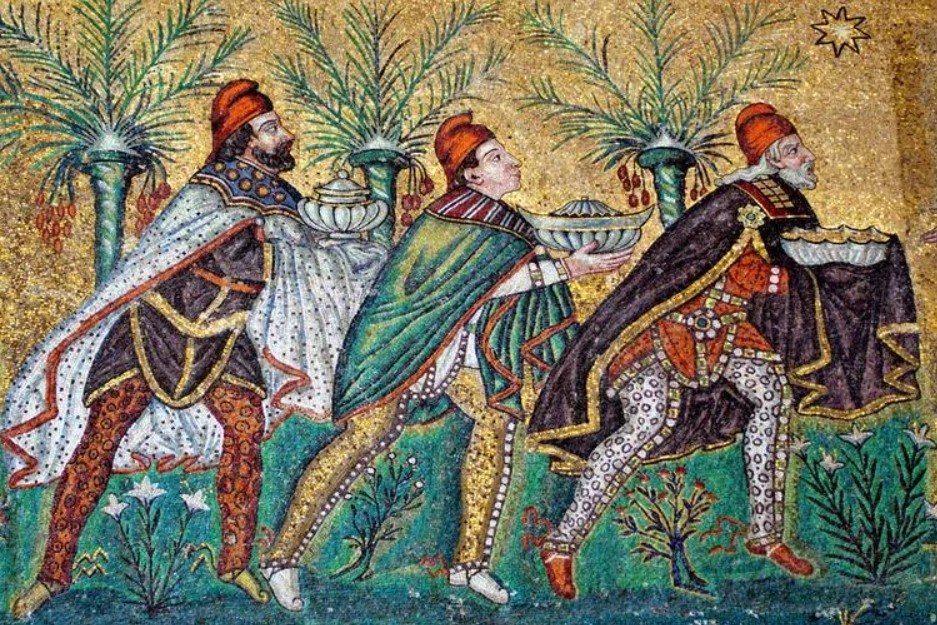
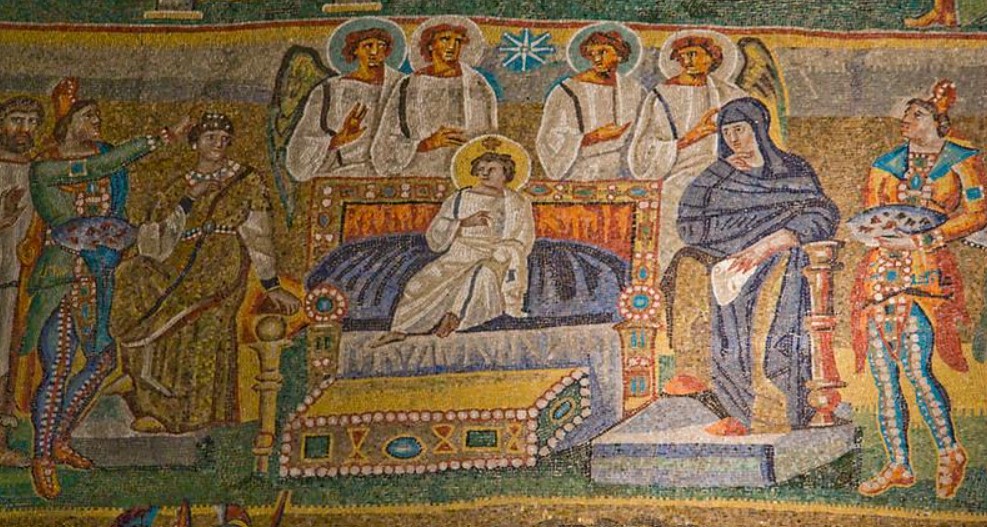
La stella di Betlemme era già presente nell’arte cristiana molti secoli prima di Giotto. Nei mosaici paleocristiani e nelle rappresentazioni bizantine, l’astro compare generalmente come una stella vera e propria, spesso con più punte, senza la caratteristica coda che oggi associamo alla cometa natalizia.
Un esempio interessante si trova nella basilica di Sant’Apollinare Nuovo a Ravenna, dove il corteo dei Magi è inserito in una composizione musiva di grande valore storico e religioso.
Nella tradizione bizantina la luce che guida i Magi può essere rappresentata anche attraverso fasci di raggi orientati verso il basso. Non si tratta necessariamente di una cometa, ma di un modo simbolico per esprimere la discesa della luce divina nel mondo.
Questa differenza è importante: gli artisti medievali non avevano tutti lo stesso intento. Alcuni cercavano di raccontare visivamente un episodio evangelico, altri privilegiavano il significato teologico della manifestazione celeste.
Perché la stella di Betlemme viene rappresentata come una cometa?
L’immagine della cometa si è progressivamente affermata nell’immaginario cristiano occidentale, anche grazie alla diffusione della rappresentazione di Giotto.
La sua forma era particolarmente efficace per raccontare un fenomeno eccezionale: un astro luminoso che attraversa il cielo e indica ai viaggiatori una meta.
Nel Medioevo le comete non avevano sempre una connotazione positiva. Spesso erano considerate presagi di guerre, calamità e cambiamenti politici. La loro apparizione suscitava meraviglia, ma anche timore.
Nella storia dei Magi, invece, quella luce assume un significato completamente diverso: annuncia una nascita. Non invita a temere il cielo, ma a seguirne il segno.
La cometa diventa così un’immagine potente, capace di rendere visibile l’eccezionalità dell’evento narrato dal Vangelo.

La stella nell’Adorazione dei Magi del Rinascimento
Con il passaggio al Rinascimento, le rappresentazioni dell’Adorazione dei Magi diventano sempre più ricche di particolari. I pittori dedicano grande attenzione ai paesaggi, agli abiti preziosi, agli animali esotici e ai doni portati dai sapienti venuti dall’Oriente.
Nell’Adorazione dei Magi di Gentile da Fabriano, realizzata nel 1423 e conservata agli Uffizi di Firenze, l’intera scena si trasforma in uno spettacolo di colori, ori e dettagli minuziosi.
La luce celeste appartiene a un racconto in cui ogni elemento contribuisce a celebrare la manifestazione divina. Il viaggio dei Magi, i loro abiti sontuosi e la presenza del Bambino costruiscono una narrazione solenne, nella quale il cielo e la terra sembrano incontrarsi.
Anche nelle opere di Sandro Botticelli, il tema dell’Adorazione assume un significato particolare. Nelle sue composizioni fiorentine, la nascita di Cristo diventa occasione per rappresentare una folla di personaggi, gesti di devozione e un mondo contemporaneo che si raccoglie simbolicamente attorno al Bambino.
La stella di Betlemme, anche quando non domina visivamente la composizione, rimane parte di quel racconto che ha attraversato secoli di pittura.
Indica una strada e invita a mettersi in cammino verso quella nascita straordinaria.
Per il momento il sempre vostro Michelangelo Buonarroti vi saluta dandovi appuntamento ai prossimi post e sui social.
The Star of Bethlehem in Paintings: How the Light That Guided the Magi Was Depicted
In depictions of the Nativity and the Adoration of the Magi, one detail often catches the eye: the Star of Bethlehem—the celestial sign that, according to the Gospel of Matthew, led the Magi to the place where the infant Jesus lay.
Throughout the history of art, this element has taken on various forms. At times, it appears as a radiant star emitting golden rays; at others, as a full-fledged comet with a long tail; and in some instances, as a supernatural light descending from above, seemingly bridging heaven and earth.
But how have painters represented the Star of Bethlehem? And why, in certain works, does its appearance so closely resemble a comet?
The answer lies within the paintings themselves, religious traditions, and the history of celestial observation.
The Star of Bethlehem in the Gospel of Matthew
The reference to the star is found in the Gospel according to Matthew—the only one of the four canonical Gospels to recount the arrival of the Magi.
The wise men from the East arrive in Jerusalem, asking where the King of the Jews has been born. They have seen His star rise and have set out to pay Him homage.
The Gospel text does not provide a precise description of the star’s form; it does not state that it was a comet, nor does it offer sufficient astronomical detail to identify it with certainty.
It does, however, recount an extraordinary detail: the star moves ahead of the Magi and comes to a halt directly above the place where the Child is located.
It is precisely this image that offers artists vast interpretive possibilities. The star becomes a visible sign of a divine manifestation—a light that guides the journey, heralds a birth destined to change history, and serves as a link between the celestial and earthly realms.
Giotto and the Comet: A Revolution in the Adoration of the Magi
One of the most famous depictions of the Star of Bethlehem can be found in the Scrovegni Chapel in Padua, within a cycle of frescoes created by Giotto di Bondone between 1303 and 1305.
In the scene of the Adoration of the Magi, a celestial body with a long, luminous tail appears above the stable. It is not the classic, multi-pointed star we are accustomed to seeing in nativity scenes, but rather a recognizable comet, painted with a naturalistic sensibility that was striking for the time.
Why did Giotto choose this particular form?
According to a traditional explanation, the painter was inspired by Halley’s Comet, which appeared in the sky in 1301—just a few years before the frescoes were executed. The artist thus transformed an astronomical phenomenon that had actually been observed into an image imbued with deep religious significance.
This marks an important shift in the history of Christian iconography: the star is no longer represented merely as a conventional symbol; instead, it takes on the appearance of a celestial phenomenon that people could have witnessed in reality.
It is no coincidence that the European space mission sent to study Halley’s Comet in 1986 was named “Giotto,” in honor of the painter who had immortalized it in his work.
Was Giotto’s star truly Halley’s Comet?
While the identification with Halley’s Comet is widely known, it warrants further clarification. A study published in 2026 in the Journal of the British Astronomical Association re-examined the identity of the celestial body depicted by Giotto, calling into question the traditional attribution to the comet’s passage in 1301.
Astronomer Mark Kidger also considered other comets observed in 1304, including one that appeared around Christmastime—a potential source of inspiration for the painter.
At present, there is no definitive certainty regarding the identity of the celestial phenomenon Giotto intended to represent. Nevertheless, it remains extraordinary how the artist managed to transform a celestial body into a fundamental element of the sacred narrative.
Before Giotto: The Star Without a Tail in Christian Art
The Star of Bethlehem appeared in Christian art centuries before Giotto. In early Christian mosaics and Byzantine depictions, the star generally takes the form of a conventional star—often with multiple points—lacking the characteristic tail that we associate with the Christmas comet today.
An interesting example can be found in the Basilica of Sant’Apollinare Nuovo in Ravenna, where the procession of the Magi is featured within a mosaic composition of great historical and religious significance.
In the Byzantine tradition, the light guiding the Magi is sometimes represented by beams of light directed downward. This does not necessarily signify a comet; rather, it serves as a symbolic expression of the descent of divine light into the world.
This distinction is significant: medieval artists did not all share the same intent. Some sought to provide a visual account of an evangelical episode, while others prioritized the theological meaning the celestial manifestation.
Why is the Star of Bethlehem depicted as a comet?
The image of a comet gradually took hold in the Western Christian imagination, partly due to the widespread influence of Giotto’s depiction.
Its form was particularly effective for conveying an extraordinary phenomenon: a luminous celestial body traversing the sky and guiding travelers toward a destination.
In the Middle Ages, comets were not always viewed in a positive light; they were often considered omens of war, calamity, or political upheaval. Their appearance inspired both wonder and fear.
In the story of the Magi, however, this light takes on an entirely different meaning: it heralds a birth. It is not an invitation to fear the heavens, but rather to follow the sign they provide.
Thus, the comet becomes a powerful image, capable of making the exceptional nature of the event recounted in the Gospel visible.
The Star in Renaissance Depictions of the Adoration of the Magi
As the Renaissance dawned, depictions of the Adoration of the Magi grew increasingly rich in detail. Painters devoted great attention to landscapes, sumptuous garments, exotic animals, and the gifts brought by the wise men from the East.
In Gentile da Fabriano’s Adoration of the Magi—painted in 1423 and housed in the Uffizi Gallery in Florence—the entire scene transforms into a spectacle of color, gold, and meticulous detail.
The celestial light is part of a narrative in which every element contributes to celebrating a divine manifestation. The journey of the Magi, their lavish attire, and the presence of the Christ Child create a solemn narrative—one in which heaven and earth appear to meet.
In the works of Sandro Botticelli, too, the theme of the Adoration takes on a distinct significance. In his Florentine compositions, the birth of Christ becomes an opportunity to depict a multitude of figures, gestures of devotion, and a contemporary world that gathers—symbolically—around the Child.
The Star of Bethlehem, even when it does not visually dominate the composition, remains an integral part of a narrative that has spanned centuries of painting.
It points the way and invites us to set out on a journey toward that extraordinary birth.
For now, your ever-faithful Michelangelo Buonarroti bids you farewell—until the next posts and our continued connection on social media.

Sostienici – Support Us
Se questo blog ti piace e ti appassiona, puoi aiutarci a farlo crescere sempre più sostenendoci in modo concreto condividendo i post, seguendo le pagine social e con un contributo che ci aiuta ad andare avanti con il nostro lavoro di divulgazione. . ENGLISH: If you like and are passionate about this blog, you can help us make it grow more and more by supporting us in a concrete way by sharing posts, following social pages and with a contribution that helps us to move forward with our dissemination work.
10,00 €

Condividi:


Questo sono io





sostienici

Sostienici - Support Us
Se questo blog ti piace e ti appassiona, puoi aiutarci a farlo crescere sempre più sostenendoci in modo concreto condividendo i post, seguendo le pagine social e con un contributo che ci aiuta ad andare avanti con il nostro lavoro di divulgazione. . ENGLISH: If you like and are passionate about this blog, you can help us make it grow more and more by supporting us in a concrete way by sharing posts, following social pages and with a contribution that helps us to move forward with our dissemination work.
€10,00


