
Prima dei musei esistevano le Wunderkammer: le stanze delle meraviglie dove si collezionava il mondo intero
Prima che nascessero i musei come li conosciamo oggi, esistevano stanze in cui si poteva trovare praticamente di tutto: conchiglie rare, animali imbalsamati, fossili, pietre preziose, strumenti scientifici, reperti archeologici e oggetti provenienti da terre lontane. Erano le Wunderkammer, letteralmente le camere delle meraviglie, luoghi straordinari nei quali il desiderio di conoscere si mescolava al gusto per il meraviglioso.
Immaginate di entrare in una stanza e trovare, uno accanto all’altro, un corallo dalle forme insolite, un coccodrillo appeso al soffitto, una coppa ricavata da una conchiglia, un minerale rarissimo e un piccolo oggetto proveniente dall’altra parte del mondo.
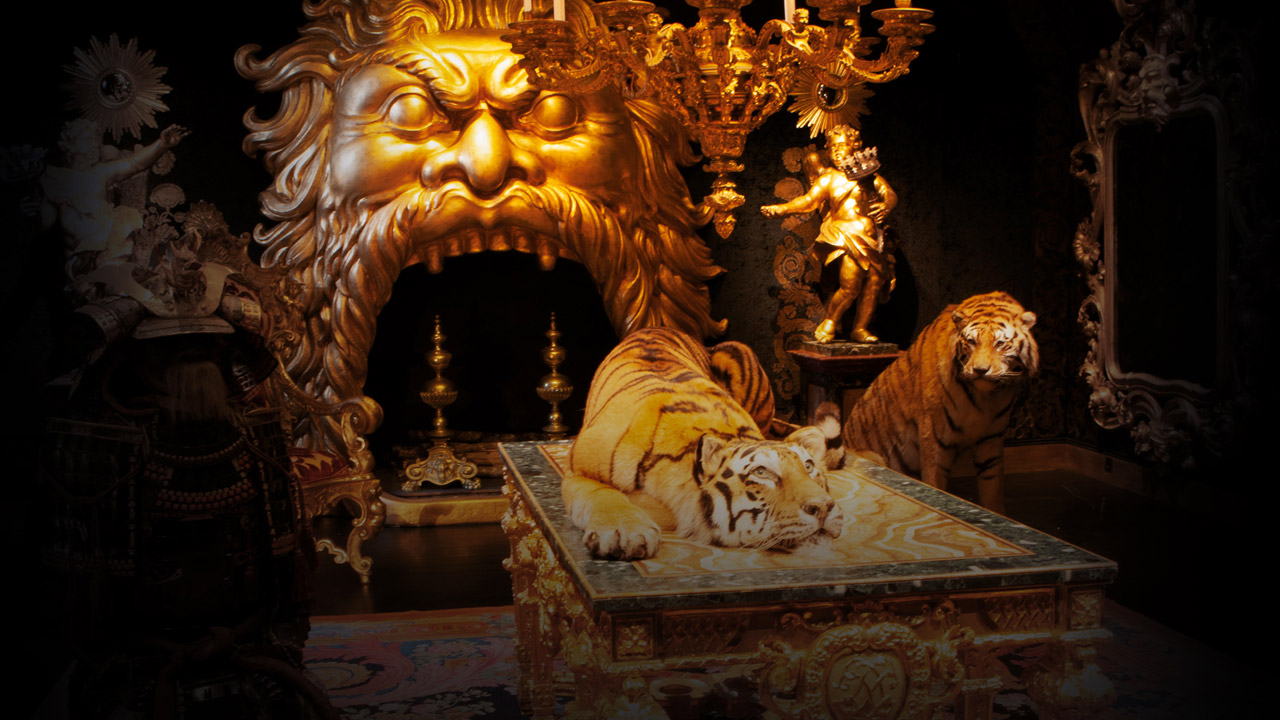
Non è la scenografia di un film fantastico e nemmeno l’allestimento di un museo contemporaneo. È più o meno quello che poteva accadere entrando in una Wunderkammer tra Cinquecento e Seicento.
Molto prima che i musei pubblici diventassero luoghi destinati alla conservazione e alla fruizione delle opere d’arte, principi, sovrani, studiosi e collezionisti allestivano nelle proprie residenze ambienti dedicati alla raccolta di oggetti rari, curiosi e sorprendenti.
Le Wunderkammer rappresentano una delle esperienze più affascinanti nella storia del collezionismo europeo e costituiscono un importante capitolo nella formazione dei musei moderni.
Che cosa significa Wunderkammer e perché erano chiamate camere delle meraviglie?
Il termine Wunderkammer deriva dal tedesco e si può tradurre con l’espressione camera delle meraviglie. Questi ambienti si diffusero soprattutto nell’Europa del XVI e XVII secolo, in un periodo nel quale le grandi esplorazioni geografiche, lo sviluppo delle scienze naturali e la circolazione di oggetti provenienti da continenti lontani stavano trasformando il modo di guardare il mondo.

Le Wunderkammer erano vere e proprie raccolte enciclopediche in miniatura, concepite per rappresentare, attraverso una selezione di reperti, la varietà e la complessità della natura e dell’ingegno umano.
Il proprietario poteva raccogliere oggetti per ragioni scientifiche, per il loro valore economico, per la rarità oppure semplicemente perché capaci di suscitare stupore.
Possedere una raccolta di questo genere significava anche dimostrare cultura, prestigio e potere.
Naturalia, artificialia ed exotica: cosa si trovava nelle Wunderkammer?
Una delle caratteristiche più interessanti delle camere delle meraviglie era la varietà delle collezioni. Non esisteva una separazione rigida tra arte, scienza, storia naturale e curiosità.
Gli oggetti venivano spesso organizzati secondo alcune grandi categorie.
Naturalia
Comprendevano tutto ciò che proveniva dal mondo naturale, come fossili, conchiglie, minerali, coralli, animali imbalsamati, scheletri e piante essiccate.
Artificialia
Erano gli oggetti realizzati dall’uomo, tra cui dipinti, sculture, automi, gioielli, manufatti preziosi e opere di straordinaria abilità artigianale.
Exotica
Raccoglievano oggetti provenienti da terre lontane, spesso sconosciute ai visitatori europei, come piume, armi, manufatti e materiali esotici.
Scientifica
Comprendevano strumenti scientifici e meccanici, orologi, globi, astrolabi e dispositivi utilizzati per studiare e misurare il mondo.
Questa classificazione non era sempre presente in forma rigorosa e le raccolte potevano seguire criteri molto diversi. Il risultato era un universo nel quale una piccola scultura poteva convivere con un animale raro e uno strumento astronomico poteva essere esposto accanto a una pietra dalle forme insolite.
La meraviglia era parte integrante dell’esperienza, ma dietro quella meraviglia c’era anche il desiderio di comprendere e classificare la realtà.
Le Wunderkammer più famose d’Europa
Tra le raccolte che hanno lasciato una traccia importante nella storia del collezionismo europeo ce ne sono alcune particolarmente significative.
La collezione del castello di Ambras, in Austria
Una delle testimonianze più importanti è quella custodita nel castello di Ambras, vicino a Innsbruck. L’arciduca Ferdinando II del Tirolo (1529-1595) fu un grande collezionista e promosse la realizzazione di ambienti destinati a ospitare armi, armature, ritratti, oggetti preziosi e rarità.
La sua raccolta è considerata una delle prime collezioni sistematicamente organizzate in Europa e rappresenta una testimonianza straordinaria del gusto collezionistico del Rinascimento.
Il Museum Wormianum di Ole Worm
Un’altra figura fondamentale fu il medico e naturalista danese Ole Worm (1588-1654), che riunì a Copenaghen una collezione di reperti naturali, oggetti etnografici, animali, strumenti e curiosità.
Dopo la sua morte, la raccolta venne illustrata e pubblicata nel 1655 nel volume Museum Wormianum, un documento prezioso per comprendere come fossero organizzate queste camere delle meraviglie.
L’incisione che accompagna il volume mostra un ambiente letteralmente riempito di oggetti, disposti sulle pareti, appesi al soffitto e sistemati negli armadi.
La raccolta di Ferrante Imperato a Napoli
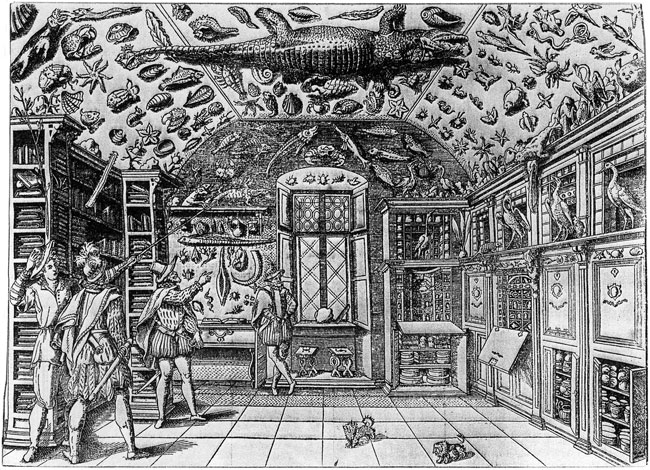
Anche in Italia si svilupparono importanti esperienze di collezionismo naturalistico. Una delle più celebri fu quella di Ferrante Imperato, farmacista e naturalista napoletano.
Nel 1599 pubblicò Dell’Historia Naturale, un’opera che contiene una celebre incisione raffigurante la sua raccolta.
L’immagine è particolarmente interessante: mostra una stanza con scaffali pieni di reperti, animali, conchiglie e oggetti naturali. Al centro della composizione, appeso al soffitto, compare un grande coccodrillo.
È una delle rappresentazioni più conosciute di una Wunderkammer e permette di farsi un’idea concreta di come potessero apparire questi ambienti.
Dalle camere delle meraviglie alla nascita dei musei
Le Wunderkammer erano collezioni private, spesso accessibili soltanto a una cerchia ristretta di ospiti, studiosi e visitatori selezionati. Da queste raccolte si svilupparono alcune delle esperienze che avrebbero contribuito alla nascita dei musei europei.
Nel corso del Seicento e soprattutto del Settecento, con l’affermarsi dell’Illuminismo e di nuovi criteri scientifici, il collezionismo iniziò a trasformarsi. Gli oggetti vennero progressivamente classificati secondo criteri più rigorosi e le raccolte cominciarono ad assumere una funzione educativa e scientifica sempre più definita.
Un passaggio importante fu quello dalla collezione privata all’istituzione aperta al pubblico.
Tra gli esempi più significativi c’è l’Ashmolean Museum di Oxford, inaugurato nel 1683 e considerato uno dei primi musei universitari pubblici del mondo.
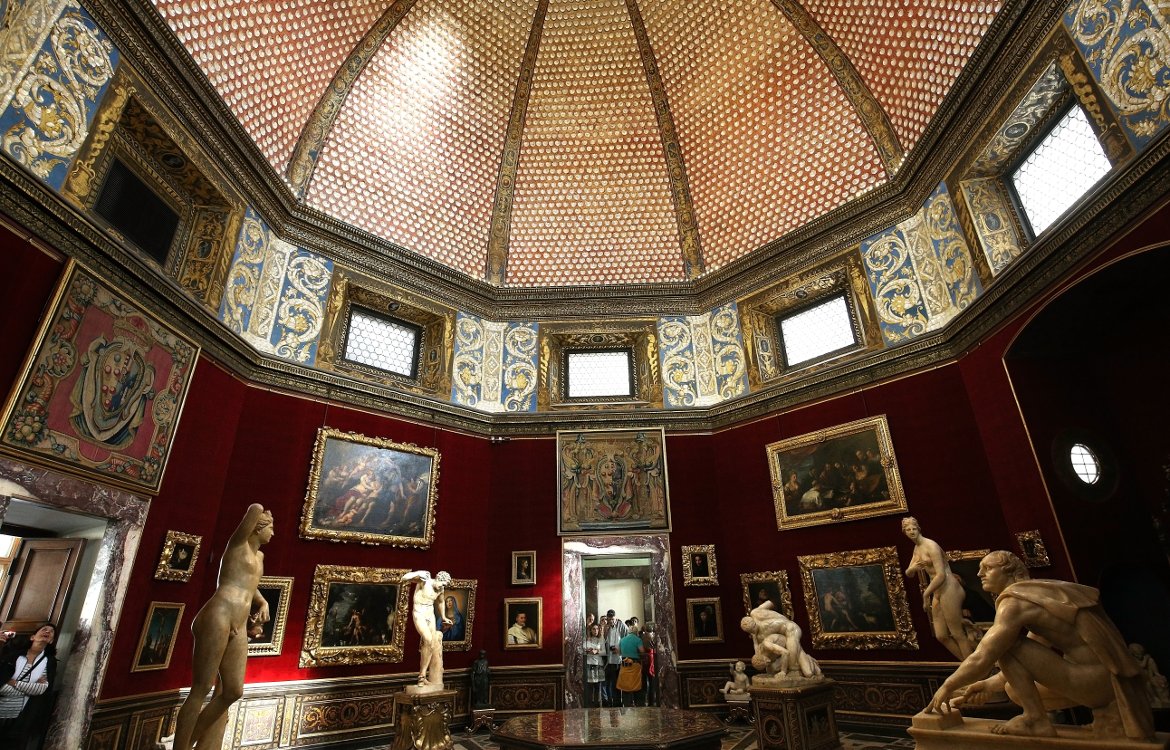
Anche gli Uffizi di Firenze, con la loro lunga storia di raccolta e organizzazione delle collezioni medicee, rappresentano un capitolo fondamentale di questa trasformazione, pur avendo una vicenda storica autonoma e più complessa.
Le camere delle meraviglie non scomparvero semplicemente da un giorno all’altro. Molte raccolte vennero smembrate, trasferite o trasformate, mentre altre contribuirono alla formazione di musei e istituzioni scientifiche.
Per il momento il sempre vostro Michelangelo Buonarroti vi saluta dandovi appuntamento ai prossimi post e sui social.
Before museums, there were Wunderkammer: “cabinets of curiosities” where the entire world was collected.
Long before the advent of museums as we know them today, there existed rooms containing virtually everything imaginable: rare seashells, taxidermied animals, fossils, precious stones, scientific instruments, archaeological artifacts, and objects from distant lands. These were the Wunderkammer—literally “chambers of wonders”—extraordinary spaces where the desire for knowledge blended with a fascination for the marvelous.
Imagine entering a room and finding, side by side, a coral with an unusual shape, a crocodile hanging from the ceiling, a goblet fashioned from a seashell, an exceptionally rare mineral, and a small object brought from the other side of the globe.
This is not the set design for a fantasy film, nor is it an exhibit in a contemporary museum. It is, more or less, what one might have encountered upon stepping into a Wunderkammer during the 16th or 17th century.
Long before public museums became institutions dedicated to the preservation and display of works of art, princes, sovereigns, scholars, and collectors would set aside spaces within their own residences to house collections of rare, curious, and astonishing objects.
Wunderkammer represent one of the most captivating phenomena in the history of European collecting and constitute an essential chapter in the development of the modern museum.
What does Wunderkammer mean, and why were they called “chambers of wonders”?
The term Wunderkammer is of German origin and translates to “chamber of wonders” (or “cabinet of curiosities”). These spaces became widespread, particularly in 16th- and 17th-century Europe—a period when great geographical explorations, the development of the natural sciences, and the circulation of objects from distant continents were transforming the way the world was perceived.
Wunderkammer (cabinets of curiosities) were, in effect, miniature encyclopedic collections, designed to represent the variety and complexity of both nature and human ingenuity through a curated selection of specimens.
Owners might collect objects for scientific reasons, for their economic value, for their rarity, or simply because they had the power to evoke wonder.
Possessing a collection of this kind was also a way to demonstrate one’s culture, prestige, and power.
Naturalia, artificialia, and exotica: what could be found in a Wunderkammer?
One of the most compelling features of these “chambers of wonders” was the diversity of their collections. There was no rigid separation between art, science, natural history, and curiosities.
Objects were often organized into several broad categories:
Naturalia
This category encompassed everything from the natural world, such as fossils, shells, minerals, corals, taxidermied animals, skeletons, and dried plants.
Artificialia
These were man-made objects, including paintings, sculptures, automata, jewelry, precious artifacts, and works demonstrating extraordinary craftsmanship.
Exotica
This category consisted of objects from distant lands—often unknown to European visitors—such as feathers, weapons, artifacts, and exotic materials.
Scientifica
This included scientific and mechanical instruments, clocks, globes, astrolabes, and various devices used to study and measure the world.
This classification was not always strictly applied, and collections could follow a wide variety of different organizational criteria. The result was a universe in which a small sculpture could coexist with a rare animal, and an astronomical instrument could be displayed alongside a stone of unusual shape.
Wonder was an integral part of the experience, yet behind that wonder lay a desire to understand and classify reality.
Europe’s Most Famous Wunderkammer (Cabinets of Curiosities)
Among the collections that have left a significant mark on the history of European collecting, some stand out as particularly noteworthy.
The Collection at Ambras Castle, Austria
One of the most important examples is housed at Ambras Castle, near Innsbruck. Archduke Ferdinand II of Tyrol (1529–1595) was an avid collector who commissioned spaces specifically designed to hold weapons, armor, portraits, precious objects, and rarities.
His collection is considered one of the first systematically organized collections in Europe and serves as an extraordinary testament to the collecting tastes of the Renaissance.
Ole Worm’s Museum Wormianum
Another key figure was the Danish physician and naturalist Ole Worm (1588–1654), who assembled a collection in Copenhagen comprising natural specimens, ethnographic artifacts, animals, instruments, and various curiosities.
Following his death, the collection was documented and illustrated in the 1655 volume Museum Wormianum—a vital resource for understanding how these “cabinets of curiosities” were organized.
The engraving that accompanies the volume shows an environment literally filled with objects, arranged on the walls, hanging from the ceiling, and placed inside cabinets.
The collection of Ferrante Imperato in Naples
Significant instances of natural history collecting also developed in Italy. One of the most famous was that of Ferrante Imperato, a Neapolitan pharmacist and naturalist.
In 1599, he published Dell’Historia Naturale, a work that contains a well-known engraving depicting his collection.
The image is particularly interesting: it shows a room with shelves full of specimens, animals, shells, and natural objects. In the center of the composition, hanging from the ceiling, is a large crocodile.
It is one of the best-known representations of a Wunderkammer (cabinet of curiosities) and provides a concrete idea of what such spaces might have looked like.
From cabinets of curiosities to the birth of museums
Wunderkammer were private collections, often accessible only to a select circle of guests, scholars, and chosen visitors. These collections gave rise to some of the developments that would contribute to the birth of European museums.
During the 17th century, and especially the 18th century—with the rise of the Enlightenment and new scientific criteria—collecting began to transform. Objects were increasingly classified according to more rigorous standards, and the collections began to take on a more clearly defined educational and scientific function.
An important transition occurred as private collections evolved into institutions open to the public.
Among the most significant examples is the Ashmolean Museum in Oxford, inaugurated in 1683 and considered one of the first public university museums in the world.
The Uffizi in Florence, with its long history of gathering and organizing the Medici collections, also represents a fundamental chapter in this transformation, even though its own historical trajectory is distinct and more complex. Cabinets of curiosities did not simply vanish overnight. Many collections were broken up, relocated, or transformed, while others contributed to the formation of museums and scientific institutions.
For now, yours truly, Michelangelo Buonarroti, bids you farewell—until the next posts and over on social media.
Sostienici – Support Us
Se questo blog ti piace e ti appassiona, puoi aiutarci a farlo crescere sempre più sostenendoci in modo concreto condividendo i post, seguendo le pagine social e con un contributo che ci aiuta ad andare avanti con il nostro lavoro di divulgazione. . ENGLISH: If you like and are passionate about this blog, you can help us make it grow more and more by supporting us in a concrete way by sharing posts, following social pages and with a contribution that helps us to move forward with our dissemination work.
10,00 €

Condividi:


Questo sono io



sostienici

Sostienici - Support Us
Se questo blog ti piace e ti appassiona, puoi aiutarci a farlo crescere sempre più sostenendoci in modo concreto condividendo i post, seguendo le pagine social e con un contributo che ci aiuta ad andare avanti con il nostro lavoro di divulgazione. . ENGLISH: If you like and are passionate about this blog, you can help us make it grow more and more by supporting us in a concrete way by sharing posts, following social pages and with a contribution that helps us to move forward with our dissemination work.
€10,00


