
Uffizi, 140mila euro di multe a Ultima Generazione: nel mirino le proteste davanti ai capolavori di Botticelli
Sette attivisti sanzionati con 20mila euro ciascuno per aver attaccato fotografie dell’alluvione sui vetri protettivi della Nascita di Venere e della Primavera.
Il movimento annuncia ricorso e solleva la questione della legittimità costituzionale della legge sugli «eco-vandali».
Cent quarantamila euro di sanzioni per sette attivisti che avevano scelto le sale degli Uffizi e due dei dipinti più celebri di Sandro Botticelli per portare all’attenzione del pubblico il tema delle emergenze climatiche. È il conto presentato a Ultima Generazione per le azioni di protesta compiute nel febbraio e nel marzo 2024 davanti alla Nascita di Venere e alla Primavera.
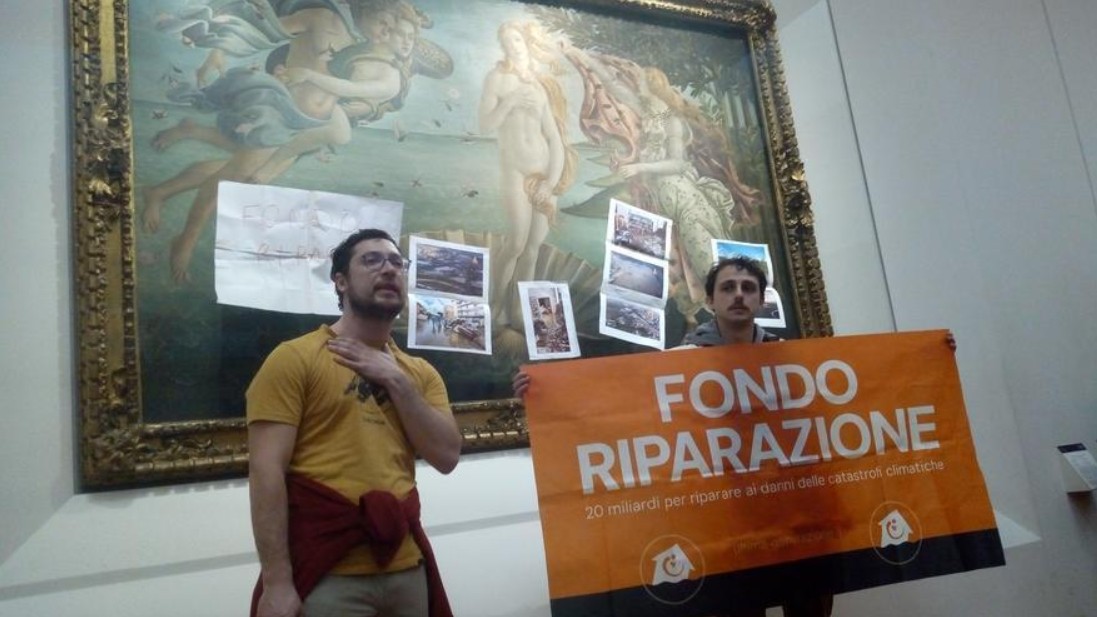
Ventimila euro a testa: questa la somma che ciascuno dei sette partecipanti dovrà affrontare dopo aver applicato con del nastro adesivo di carta alcune fotografie sui vetri protettivi delle opere. Immagini che documentavano gli effetti dell’alluvione che nel novembre 2023 aveva colpito Campi Bisenzio, con abitazioni e strade sommerse dall’acqua.
Il movimento ambientalista non intende accettare le sanzioni senza contestarle. Gli attivisti hanno annunciato un ricorso e la volontà di chiedere che venga sollevata una questione di legittimità costituzionale della norma in base alla quale sono state comminate le multe.
Le proteste agli Uffizi davanti alla Nascita di Venere e alla Primavera
Per capire come si è arrivati a questa vicenda bisogna tornare al 13 febbraio e al 3 marzo 2024. In quelle due occasioni alcuni attivisti di Ultima Generazione entrarono nelle sale degli Uffizi e applicarono sui vetri che proteggono due celebri dipinti di Botticelli fotografie dell’alluvione che aveva devastato parte della Toscana pochi mesi prima.
Le immagini delle abitazioni invase dall’acqua e delle strade trasformate in corsi d’acqua erano state utilizzate per richiamare l’attenzione sulle conseguenze degli eventi climatici estremi e sulla necessità di sostenere economicamente le persone colpite.
Le iniziative rientravano nella campagna Fondo Riparazione, attraverso la quale il movimento chiedeva l’istituzione di un fondo da 20 miliardi di euro destinato ad aiutare chi aveva subito danni a causa di alluvioni e siccità.
Da una parte la volontà degli attivisti di utilizzare luoghi simbolici della cultura per rendere visibile una questione ambientale; dall’altra la necessità di proteggere opere d’arte di valore storico e artistico inestimabile, evitando che le sale museali diventino teatro di azioni che possano comprometterne la sicurezza.
La legge sugli «eco-vandali» e le multe da 20mila euro
Le sanzioni sono state notificate sulla base della legge 6 del 2024, entrata in vigore pochi giorni prima della prima protesta e conosciuta nel dibattito pubblico come legge contro gli «eco-vandali».
La normativa ha introdotto sanzioni amministrative per determinate condotte realizzate contro beni culturali o paesaggistici, con importi che nei casi più gravi possono arrivare fino a 60mila euro. L’applicazione delle sanzioni amministrative è affidata al prefetto.
Per i sette attivisti coinvolti nelle iniziative agli Uffizi è stata stabilita una multa di 20mila euro ciascuno, per un totale di 140mila euro.
Giacomo, 32 anni, informatico e tra le persone sanzionate, ha contestato l’importo: «È vergognoso: ventimila euro per dello scotch di carta». L’attivista sostiene inoltre che sui vetri protettivi non sarebbe rimasta alcuna traccia di colla e che non si sarebbe verificato un danno materiale. Da qui la sua interpretazione della vicenda: «Questa multa non punisce un danno, perché un danno non c’è. Punisce il dissenso».
L’assoluzione di tre attivisti non cancella le multe
Nella vicenda c’è anche un precedente giudiziario che merita attenzione. Lo scorso maggio il Tribunale di Firenze ha assolto tre attivisti per il blitz del 13 febbraio 2024 davanti alla Nascita di Venere.
La decisione riguarda il procedimento penale e non comporta automaticamente l’annullamento delle sanzioni amministrative. Si tratta infatti di due percorsi distinti, con presupposti e conseguenze differenti.
L’assoluzione, dunque, non chiude la questione delle multe da 20mila euro, che i sette destinatari intendono impugnare nelle sedi competenti.
Gli attivisti hanno dichiarato di non voler pagare le multe e di essere pronti a proseguire la mobilitazione, anche attraverso le vie giudiziarie.
La vicenda degli Uffizi riporta così al centro una questione tutt’altro che semplice: dove si trova il confine tra il diritto di manifestare il proprio dissenso e la tutela del patrimonio culturale?
E voi cosa ne pensate? È giusto applicare multe così elevate per un’azione di protesta che, secondo gli attivisti, non avrebbe provocato danni ai vetri protettivi? Oppure intervenire davanti a capolavori come la Nascita di Venere e la Primavera è un limite che non dovrebbe essere superato, qualunque sia la causa sostenuta?
Per il momento il sempre vostro Michelangelo Buonarroti vi saluta dandovi appuntamento ai prossimi post e sui social.

Uffizi: 140,000 euros in fines for ‘Ultima Generazione’ following protests in front of Botticelli masterpieces
Seven activists have been fined 20,000 euros each for attaching photographs of flood damage to the protective glass covering The Birth of Venus and Primavera.
The movement has announced it will appeal and is raising questions regarding the constitutional legitimacy of the law targeting so-called “eco-vandals.”
A total of 140,000 euros in fines has been issued to seven activists who chose the galleries of the Uffizi—and two of Sandro Botticelli’s most famous paintings—to draw public attention to the climate emergency. This is the bill presented to the group ‘Ultima Generazione’ (‘Last Generation’) for protest actions carried out in February and March 2024 in front of The Birth of Venus and Primavera.
Twenty thousand euros each: this is the sum that each of the seven participants will have to pay after using paper masking tape to attach photographs to the protective glass covering several artworks. The images documented the effects of the flood that struck Campi Bisenzio in November 2023, leaving homes and streets submerged in water.
The environmental movement does not intend to accept these penalties without a challenge. The activists have announced their intention to file an appeal and to request that the constitutionality of the law under which the fines were imposed be brought into question.
Protests at the Uffizi: in front of The Birth of Venus and Primavera
To understand how this situation came about, one must look back at February 13 and March 3, 2024. On those two occasions, activists from the group Ultima Generazione (Last Generation) entered the Uffizi galleries and attached photographs of the flood—which had devastated parts of Tuscany just months earlier—onto the glass protecting two famous paintings by Botticelli.
The images, showing homes inundated by water and streets transformed into waterways, were used to draw attention to the consequences of extreme climate events and the need for financial support for those affected.
These actions were part of the “Repair Fund” (Fondo Riparazione) campaign, through which the movement called for the creation of a 20-billion-euro fund to assist those who had suffered damage due to floods and droughts.
On one side, there is the activists’ desire to use iconic cultural sites to bring visibility to an environmental issue; on the other, the necessity of protecting artworks of inestimable historical and artistic value, ensuring that museum galleries do not become the setting for actions that could compromise their safety. The law on “eco-vandals” and the 20,000-euro fines
The penalties were issued under Law 6 of 2024, which came into effect just days before the initial protest and is known in public discourse as the law against “eco-vandals.”
The legislation introduced administrative penalties for specific actions taken against cultural or landscape assets, with fines that, in the most serious cases, can reach as much as 60,000 euros. The enforcement of these administrative penalties is entrusted to the prefect.
The seven activists involved in the actions at the Uffizi Gallery have each been fined 20,000 euros, totaling 140,000 euros.
Giacomo, a 32-year-old IT specialist and one of those fined, has challenged the amount: “It’s shameful—twenty thousand euros for some masking tape.” The activist further maintains that no glue residue was left on the protective glass and that no material damage occurred. He interprets the situation as follows: “This fine isn’t punishing damage, because there is no damage. It’s punishing dissent.”
The acquittal of three activists does not nullify the fines
There is also a judicial precedent in this case that warrants attention. Last May, the Court of Florence acquitted three activists in connection with a protest on February 13, 2024, in front of The Birth of Venus.
That decision concerns criminal proceedings and does not automatically result in the cancellation of the administrative penalties. The two matters follow separate paths, with different legal grounds and consequences.
Consequently, the acquittal does not resolve the issue of the 20,000-euro fines, which the seven individuals intend to challenge through the appropriate legal channels. The activists have stated that they do not intend to pay the fines and are prepared to continue their mobilization, including through legal channels.
The incident at the Uffizi brings a complex issue back to the forefront: where does the line lie between the right to express dissent and the protection of cultural heritage?
What do you think? Is it fair to impose such heavy fines for a protest action that—according to the activists—did not cause any damage to the protective glass? Or is taking action in front of masterpieces like The Birth of Venus and Primavera a line that should never be crossed, regardless of the cause being championed?
For now, yours truly, Michelangelo Buonarroti, bids you farewell—see you in future posts and on social media.

Sostienici – Support Us
Se questo blog ti piace e ti appassiona, puoi aiutarci a farlo crescere sempre più sostenendoci in modo concreto condividendo i post, seguendo le pagine social e con un contributo che ci aiuta ad andare avanti con il nostro lavoro di divulgazione. . ENGLISH: If you like and are passionate about this blog, you can help us make it grow more and more by supporting us in a concrete way by sharing posts, following social pages and with a contribution that helps us to move forward with our dissemination work.
10,00 €


Condividi:


Questo sono io





sostienici

Sostienici - Support Us
Se questo blog ti piace e ti appassiona, puoi aiutarci a farlo crescere sempre più sostenendoci in modo concreto condividendo i post, seguendo le pagine social e con un contributo che ci aiuta ad andare avanti con il nostro lavoro di divulgazione. . ENGLISH: If you like and are passionate about this blog, you can help us make it grow more and more by supporting us in a concrete way by sharing posts, following social pages and with a contribution that helps us to move forward with our dissemination work.
€10,00


