
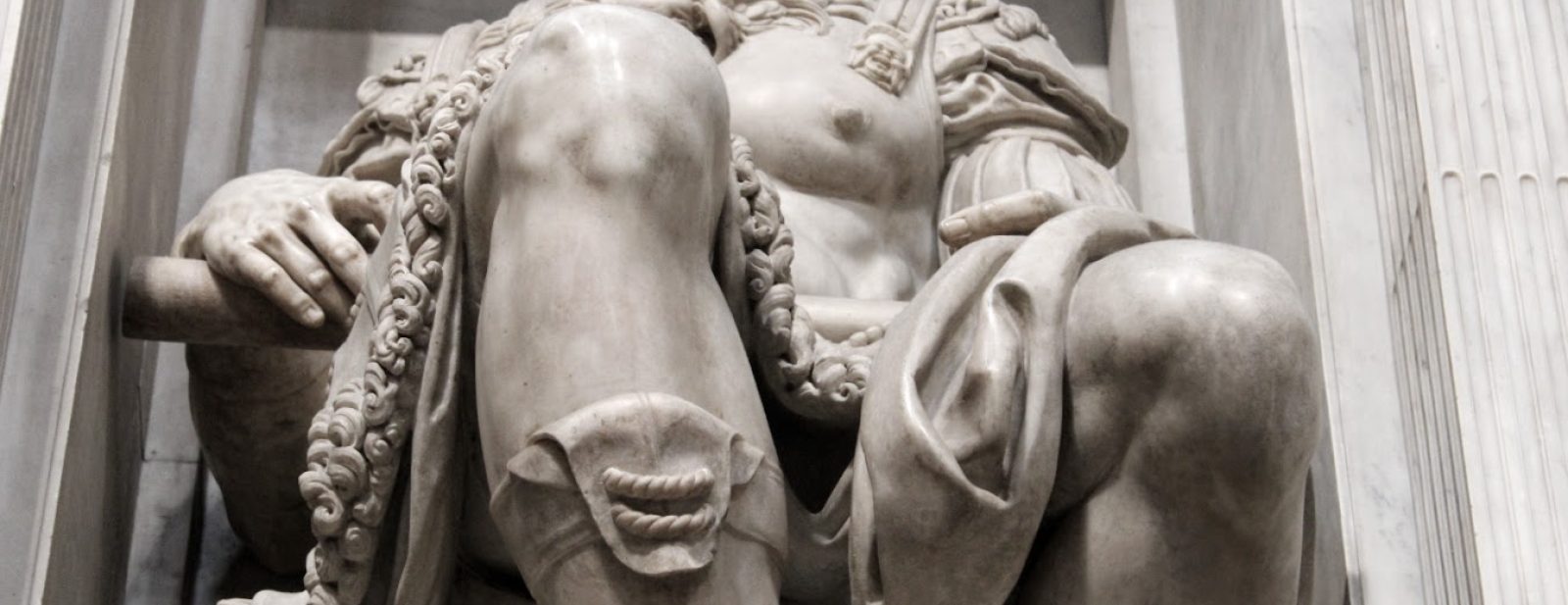
18 novembre 1626: 400 anni fa la consacrazione della Basilica di San Pietro
Il 18 novembre 1626 è una data fondamentale nella storia dell’arte e della cristianità. Quel giorno papa Urbano VIII Barberini consacrò solennemente la nuova Basilica di San Pietro in Vaticano, portando a compimento una vicenda architettonica iniziata oltre un secolo prima.
Nel 2026 ricorre il quarto centenario della consacrazione di uno degli edifici religiosi più celebri al mondo, un luogo nel quale si sono intrecciati i progetti, le ambizioni e il talento di alcuni fra i più grandi artisti della storia.
Come si arrivò alla consacrazione del 1626? E quanti artisti contribuirono a dare alla Basilica quell’aspetto monumentale che ancora oggi lascia senza parole milioni di visitatori?
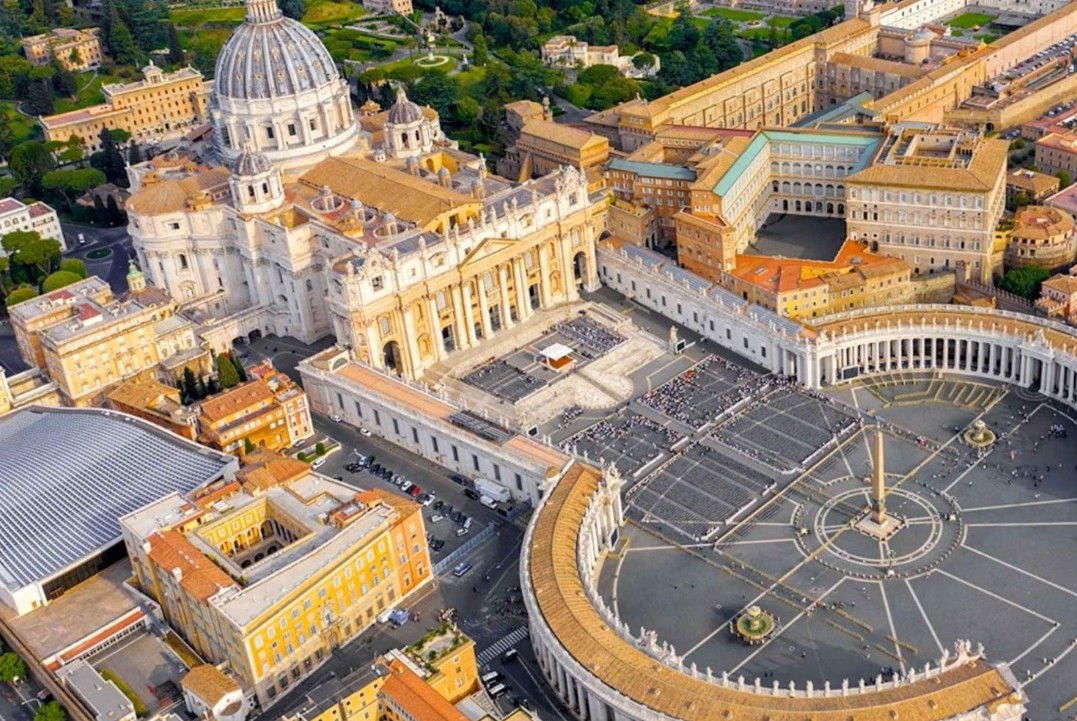
Da Giulio II a Urbano VIII: 120 anni per costruire San Pietro
La storia della nuova Basilica di San Pietro cominciò nel 1506, quando papa Giulio II della Rovere decise di sostituire l’antica basilica costantiniana, ormai segnata dal trascorrere dei secoli, con un edificio più consono alle ambizioni della Roma papale.
Il progetto fu messo nelle mani di Donato Bramante. Lui immaginò una costruzione monumentale a pianta centrale, con una grande cupola e una struttura ispirata all’architettura classica.
La prima pietra venne posata il 18 aprile 1506. Da quel momento si susseguirono progetti, modifiche, ripensamenti e cambi di direzione. La costruzione sarebbe proseguita per generazioni, coinvolgendo alcuni dei nomi più importanti del Rinascimento e del Barocco.
Quando Urbano VIII consacrò la Basilica, nel 1626, erano trascorsi esattamente 120 anni dall’avvio dei lavori.

Bramante, Raffaello e me: i grandi architetti di San Pietro
Dopo la morte di Bramante, avvenuta nel 1514, la responsabilità del progetto passò attraverso diversi architetti. Fra questi ci fu Raffaello Sanzio, che propose una nuova soluzione architettonica, senza però riuscire a vedere realizzato il proprio progetto.
La svolta arrivò nel 1546, quando papa Paolo III Farnese affidò l’incarico a me che all’epoca avevo 72 anni. A papa Paolo III non potevo dire di no così accettai riprendendo l’idea della pianta centrale. Al progetto della Basilica di San Pietro ci lavorai durante gli ultimi 17 anni della mia vita. Dal 1547 fino al 18 febbraio del 1564 la costruzione del grandioso edificio mi tenne in scacco.

Ci furono momenti di gran fatica intervallati ad altri in cui la salute non mi concedeva tregue per pensare a quel progetto. Non mancarono poi le giornate in cui la delusione fu talmente forte da stringermi la gola in un nodo ma anche giorni lieti, difficili ma fruttuosi.
Volli semplificare l’impianto architettonico perché tutti quegli ambulacri ideati in precedenza mi spaventavano e dedicai giorni e giorni alla grande cupola, destinata a diventare uno dei simboli più riconoscibili di Roma.
Purtroppo non ebbi modo di vedere San Pietro ultimata. Come vi dicevo prima passai a miglior vita nel 1564 e furono i miei successori a portare avanti la sua realizzazione. Giacomo della Porta, insieme a Domenico Fontana, portarono a termine la cupola nel 1590, modificando parzialmente l’idea iniziale.
Nel 1606, durante il pontificato di Paolo V Borghese, si decise di allungare l’edificio trasformandone la pianta da croce greca a croce latina. L’intervento venne affidato a Carlo Maderno, che realizzò anche la monumentale facciata, completata nel 1612.
Fu così che la Basilica assunse una configurazione sempre più vicina a quella che possiamo ammirare oggi.

Bernini e il Barocco: il Baldacchino, la Cattedra e il colonnato
La consacrazione del 1626 non segnò la fine delle trasformazioni artistiche della Basilica. Anzi, il Seicento avrebbe portato a San Pietro alcuni dei suoi capolavori più spettacolari grazie soprattutto a Gian Lorenzo Bernini.
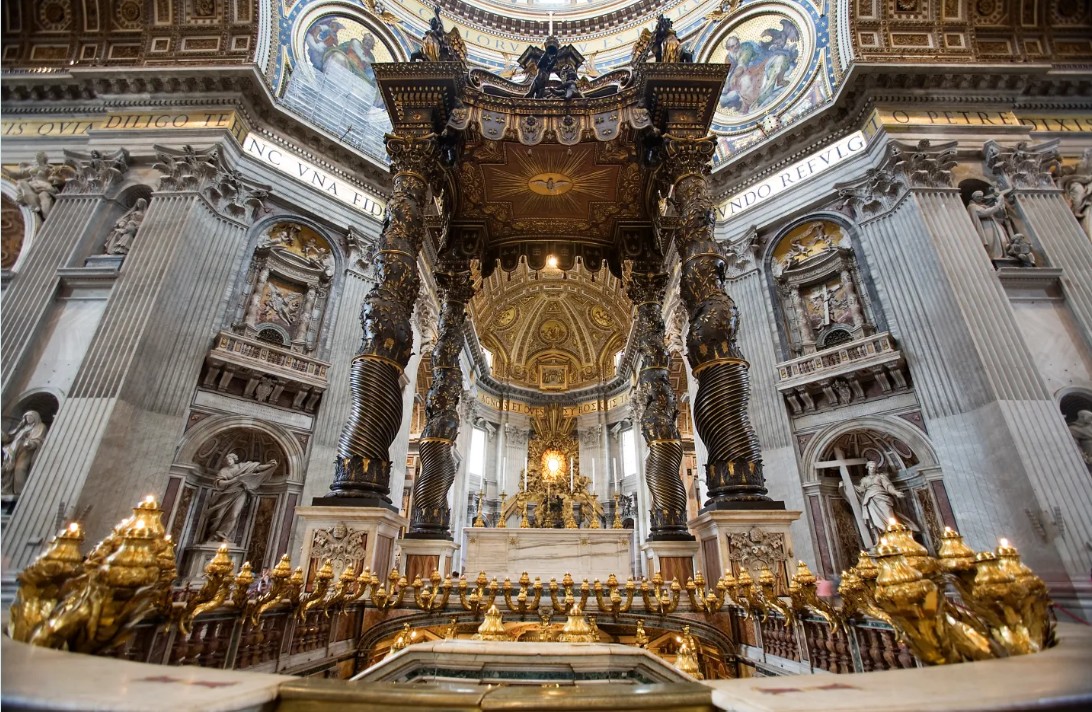
Fu proprio Urbano VIII a commissionargli il celebre Baldacchino, collocato sopra l’altare papale e la tomba dell’apostolo Pietro.
Bernini cominciò a lavorarci nel 1624, quando aveva appena ventisei anni. Per realizzare questa straordinaria opera coinvolse anche Francesco Borromini e numerose maestranze specializzate.
Le gigantesche colonne tortili, le decorazioni in bronzo e la struttura monumentale creano un dialogo visivo con la mia cupola, stabilendo un asse prospettico che accompagna lo sguardo verso l’alto.
Il contributo di Bernini non si fermò al Baldacchino. A lui dobbiamo anche la spettacolare Cattedra di San Pietro, con la Gloria e la celebre vetrata dello Spirito Santo, oltre al progetto del colonnato di Piazza San Pietro, concepito come un grande abbraccio capace di accogliere i fedeli provenienti da ogni parte del mondo.
Tra le sue opere scultoree all’interno della Basilica meritano particolare attenzione anche la Tomba di Urbano VIII e la scultura del San Longino ubicata in una delle nicchie dei piloni che sostengono la cupola.
Una Basilica che custodisce capolavori di Canova, Algardi e Thorvaldsen
Nei secoli, la Basilica si è arricchita di monumenti funebri, sculture, mosaici e decorazioni realizzati da artisti straordinari.
Tra i protagonisti troviamo Antonio Canova, autore del monumento funebre a Clemente XIII, uno dei più raffinati esempi di scultura neoclassica custoditi in Vaticano.
C’è poi Alessandro Algardi, con il grande rilievo marmoreo dell‘Incontro di Leone Magno con Attila, e Camillo Rusconi, autore di importanti statue degli apostoli.
Anche Bertel Thorvaldsen, scultore danese tra i maggiori interpreti del Neoclassicismo, lasciò la propria impronta nella Basilica con il monumento funebre a Pio VII.
Poi c’è anche un’opera che per ovvie ragioni mi sta molto a cuore: la mia Pietà Vaticana che avevo scolpito per la Cappella di Santa Petronilla della vecchia basilica costantiniana. M’era stata commissionata da era Jean de Bilhères de Lagraulas, cardinale di San Dionigi e ambasciatore del re di Francia presso papa Alessandro VI, Rodrigo Borgia.
Venne inaugurata alle soglie del Giubileo del 1500 ma il cardinale era passato a miglior vita nell’agosto del 1499 e non poté vederla ultimata.

La cupola di San Pietro e le stelle dorate sul pavimento: cosa indicano?
Uno degli elementi che più colpiscono entrando nella Basilica è senza dubbio la monumentale cupola, un mio progetto ultimato poi da Giacomo della Porta.
Il diametro interno è di circa 42 metri, mentre l’altezza complessiva dell’edificio, fino alla sommità della croce, raggiunge circa 136 metri. La cupola domina lo spazio interno e rappresenta uno dei più importanti risultati dell’architettura rinascimentale, oltre a essere diventata un punto di riferimento inconfondibile nel panorama romano.
Vi faccio però notare una cosa che sfugge alla maggior parte dei visitatori.
Se osservate attentamente il pavimento della navata centrale, noterete alcune marcature in ottone e indicazioni delle dimensioni di altre grandi chiese del mondo. Servono a confrontare la lunghezza di San Pietro con quella di altri importanti edifici religiosi, mostrando visivamente quanto sia imponente la Basilica vaticana.

Dal 1506 al 2026: quattro secoli di storia e bellezza
La Basilica di San Pietro è il risultato di oltre un secolo di lavoro, di idee che si sono trasformate e di generazioni di artisti che hanno lasciato un segno indelebile nella storia dell’arte.
Anche dopo la consacrazione del 1626, la sua storia è continuata. Nel corso dei secoli sono stati aggiunti nuovi monumenti, decorazioni e opere, fino agli interventi più recenti. Basti pensare alla Porta dei Sacramenti, realizzata dallo scultore Venanzo Crocetti e inaugurata il 12 settembre 1965 durante il pontificato di Paolo VI.
Il 18 novembre 2026, a quattrocento anni esatti dalla consacrazione, la Basilica torna al centro delle celebrazioni. Papa Leone XIV presiederò oggi, alle ore 17, la celebrazione eucaristica per il IV centenario della Dedicazione, rinnovando il legame tra la memoria storica dell’edificio e la sua funzione spirituale.
Per il momento il sempre vostro Michelangelo Buonarroti vi saluta dandovi appuntamento ai prossimi post e sui social.
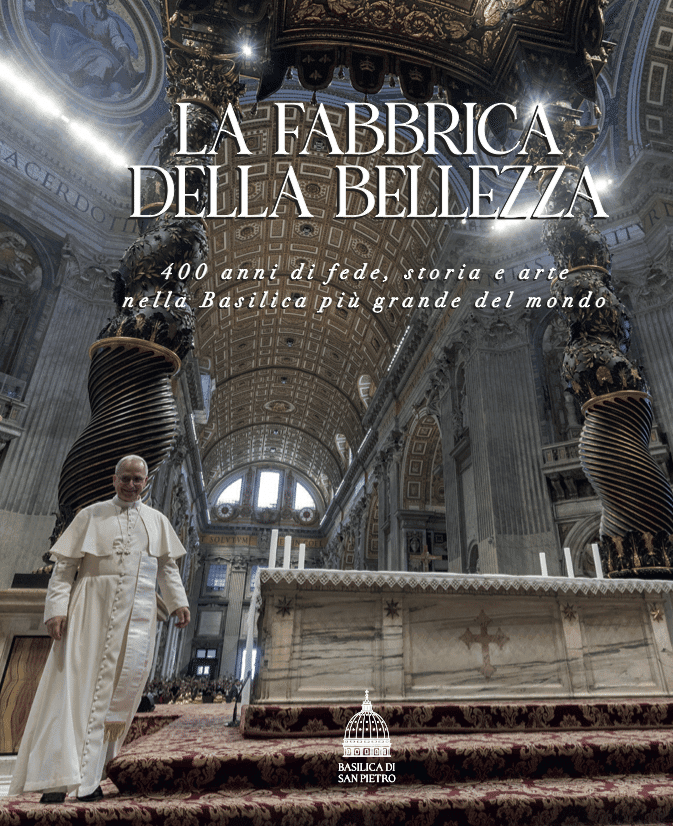
November 18, 1626: The Consecration of St. Peter’s Basilica 400 Years Ago
November 18, 1626, stands as a pivotal date in the history of art and Christianity. On that day, Pope Urban VIII Barberini solemnly consecrated the new St. Peter’s Basilica in the Vatican, bringing to completion an architectural undertaking that had begun more than a century earlier.
The year 2026 marks the fourth centenary of the consecration of one of the world’s most renowned religious edifices—a site where the visions, ambitions, and talents of some of history’s greatest artists have converged.
How did the consecration of 1626 come to pass? And how many artists contributed to giving the Basilica the monumental appearance that still leaves millions of visitors speechless today?
From Julius II to Urban VIII: 120 Years to Build St. Peter’s
The story of the new St. Peter’s Basilica began in 1506, when Pope Julius II della Rovere decided to replace the ancient Constantinian basilica—by then worn by the passage of centuries—with a structure more befitting the ambitions of papal Rome.
The project was entrusted to Donato Bramante, who envisioned a monumental building with a central plan, a grand dome, and a design inspired by classical architecture.
The foundation stone was laid on April 18, 1506. From that moment on, the project saw a succession of designs, modifications, reconsiderations, and shifts in direction. Construction would continue for generations, involving some of the most significant figures of the Renaissance and the Baroque periods.
By the time Urban VIII consecrated the Basilica in 1626, exactly 120 years had passed since work first began. Bramante, Raphael, and I: The Great Architects of St. Peter’s
Following the death of Bramante in 1514, responsibility for the project passed through the hands of several architects. Among them was Raphael Sanzio, who proposed a new architectural solution, though he did not live to see his design realized.
The turning point came in 1546, when Pope Paul III Farnese entrusted the task to me—I was 72 years old at the time. I could not refuse Pope Paul III, so I accepted, returning to the concept of a central-plan structure. I worked on the design of St. Peter’s Basilica for the final 17 years of my life; from 1547 until February 18, 1564, the construction of this magnificent edifice consumed my every waking moment.
There were periods of immense exhaustion, interspersed with times when my failing health offered no respite, making it difficult to focus on the project. There were days when disappointment weighed so heavily upon me that it felt like a knot tightening in my throat—yet there were also happier times: challenging, to be sure, but ultimately fruitful.
I sought to simplify the architectural layout, as the complex network of ambulatories conceived by my predecessors was daunting to me. I devoted countless days to the great dome—a feature destined to become one of the most iconic symbols of Rome.
Regrettably, I did not live to see St. Peter’s completed. As I mentioned, I passed away in 1564, and it fell to my successors to carry the work forward. Giacomo della Porta, working alongside Domenico Fontana, finished the dome in 1590, though they partially altered the original design.
In 1606, during the pontificate of Paul V Borghese, it was decided to extend the structure, transforming its ground plan from a Greek cross into a Latin cross. The project was entrusted to Carlo Maderno, who also created the monumental façade, completed in 1612.
In this way, the Basilica took on a configuration increasingly similar to the one we can admire today.
Bernini and the Baroque: The Baldacchino, the Cathedra, and the Colonnade
The consecration of 1626 did not mark the end of the artistic transformations of the Basilica. On the contrary, the 17th century would bring some of St. Peter’s most spectacular masterpieces to the Basilica, thanks primarily to Gian Lorenzo Bernini.
It was Pope Urban VIII who commissioned the famous Baldacchino, positioned above the papal altar and the tomb of the Apostle Peter.
Bernini began work on it in 1624, when he was just twenty-six years old. To create this extraordinary piece, he enlisted the help of Francesco Borromini and numerous skilled craftsmen.
The gigantic twisted columns, the bronze decorations, and the monumental structure engage in a visual dialogue with the dome, establishing a perspective axis that draws the eye upward.
Bernini’s contribution did not end with the Baldacchino. We also owe to him the spectacular Cathedra of St. Peter—complete with its “Glory” and the famous stained-glass window of the Holy Spirit—as well as the design for the colonnade in St. Peter’s Square, conceived as a grand embrace meant to welcome the faithful from every corner of the globe.
Among his sculptural works within the Basilica, the Tomb of Urban VIII and the statue of Saint Longinus—housed in one of the niches of the piers that support the dome—also deserve special attention.
A Basilica housing masterpieces by Canova, Algardi, and Thorvaldsen
Over the centuries, the Basilica has been enriched by funerary monuments, sculptures, mosaics, and decorations created by extraordinary artists.
Among these key figures is Antonio Canova, creator of the funerary monument to Clement XIII—one of the most refined examples of Neoclassical sculpture to be found in the Vatican. Then there is Alessandro Algardi, with his large marble relief, The Meeting of Leo the Great and Attila, and Camillo Rusconi, who created significant statues of the apostles.
Bertel Thorvaldsen, a Danish sculptor and one of the foremost figures of Neoclassicism, also left his mark on the Basilica with the funerary monument to Pius VII.
And then there is a work that, for obvious reasons, is very dear to me: my Vatican Pietà, which I sculpted for the Chapel of Saint Petronilla in the old Constantinian basilica. It was commissioned by Jean de Bilhères de Lagraulas, Cardinal of Saint-Denis and ambassador of the King of France to Pope Alexander VI—Rodrigo Borgia.
It was unveiled on the eve of the Jubilee of 1500, but the Cardinal had passed away in August 1499 and did not live to see it completed.
What about the dome of St. Peter’s and the golden stars on the floor—what do they signify?
One of the most striking features upon entering the Basilica is undoubtedly the monumental dome—a design of mine, later completed by Giacomo della Porta.
Its internal diameter is approximately 42 meters, while the total height of the structure, reaching the top of the cross, is about 136 meters. The dome dominates the interior space and stands as one of the greatest achievements of Renaissance architecture, while also serving as an unmistakable landmark in the Roman skyline.
However, I would like to point out something that most visitors overlook.
If you look closely at the floor of the central nave, you will notice brass markings indicating the dimensions of other great churches around the world. These serve to compare the length of St. Peter’s with that of other major religious edifices, visually demonstrating just how immense the Vatican Basilica truly is. From 1506 to 2026: Four Centuries of History and Beauty
St. Peter’s Basilica is the result of over a century of labor, of evolving ideas, and of generations of artists who have left an indelible mark on the history of art.
Even after its consecration in 1626, its story continued. Over the centuries, new monuments, decorations, and works were added—right up to the most recent interventions. One need only consider the Door of the Sacraments, created by the sculptor Venanzo Crocetti and inaugurated on September 12, 1965, during the pontificate of Paul VI.
On November 18, 2026—exactly four hundred years after its consecration—the Basilica once again takes center stage in the celebrations. Today, at 5:00 PM, Pope Leo XIV will preside over the Eucharistic celebration for the fourth centenary of the Dedication, renewing the bond between the building’s historical legacy and its spiritual purpose.
For now, yours truly, Michelangelo Buonarroti, bids you farewell—until the next posts and our continued connection on social media.
Sostienici – Support Us
Se questo blog ti piace e ti appassiona, puoi aiutarci a farlo crescere sempre più sostenendoci in modo concreto condividendo i post, seguendo le pagine social e con un contributo che ci aiuta ad andare avanti con il nostro lavoro di divulgazione. . ENGLISH: If you like and are passionate about this blog, you can help us make it grow more and more by supporting us in a concrete way by sharing posts, following social pages and with a contribution that helps us to move forward with our dissemination work.
10,00 €

Condividi:


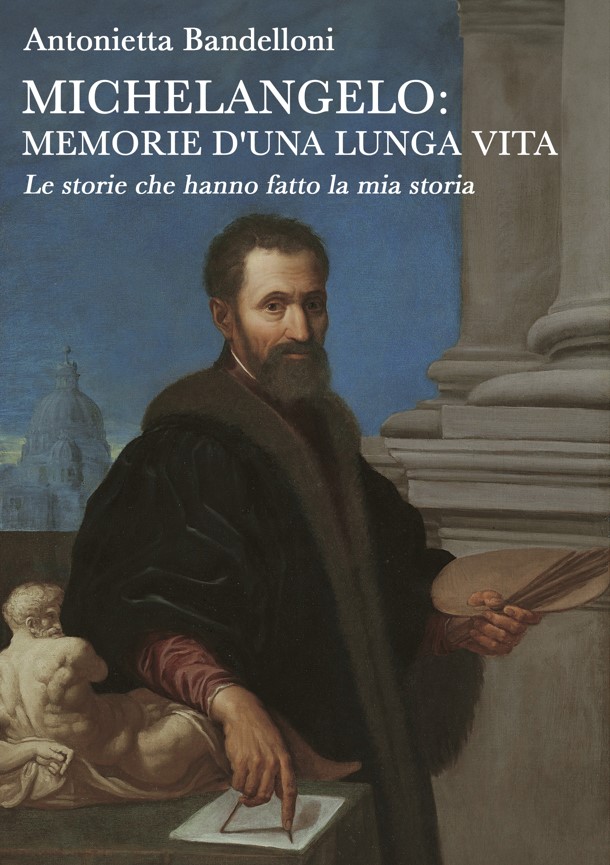
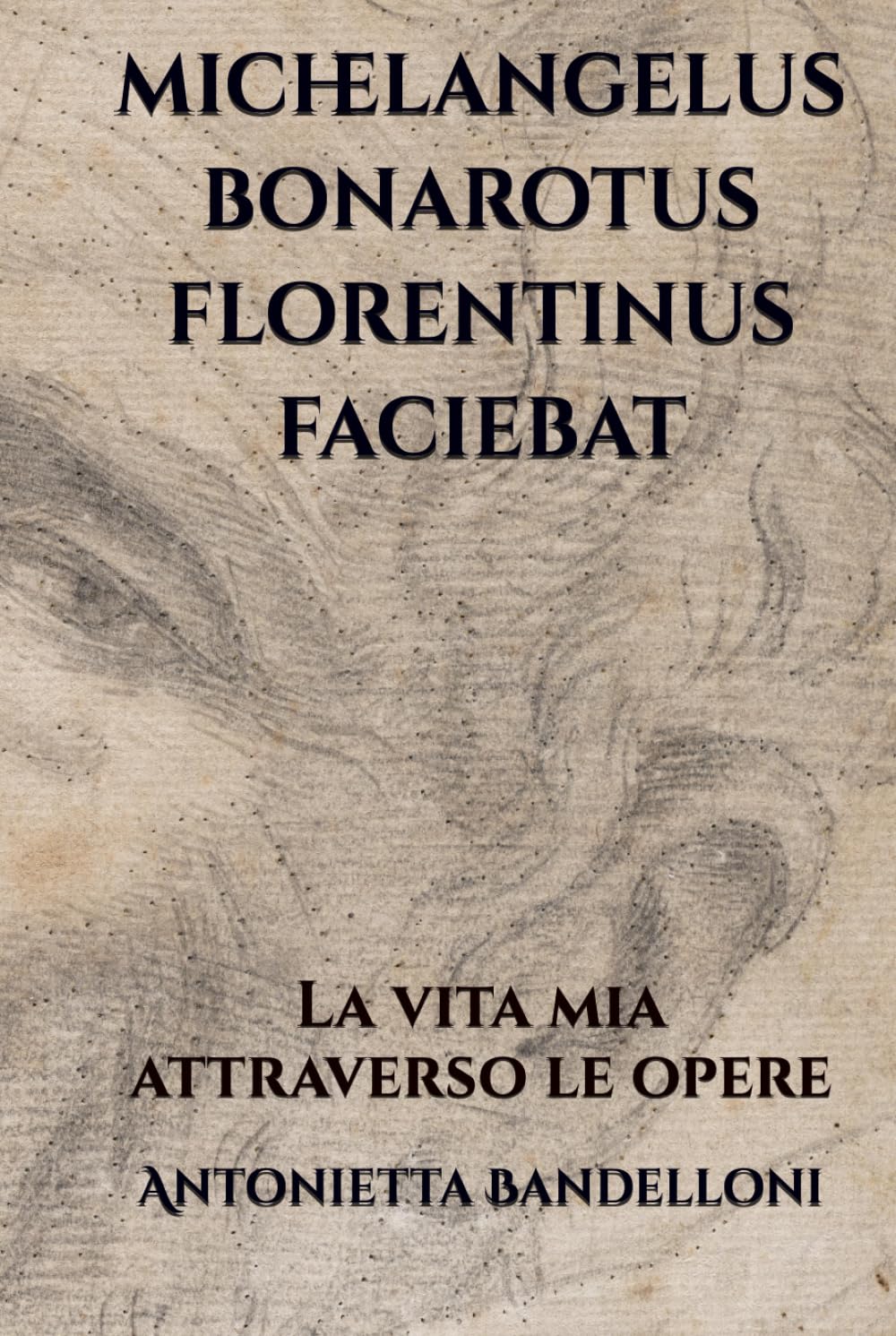
Questo sono io



sostienici

Sostienici - Support Us
Se questo blog ti piace e ti appassiona, puoi aiutarci a farlo crescere sempre più sostenendoci in modo concreto condividendo i post, seguendo le pagine social e con un contributo che ci aiuta ad andare avanti con il nostro lavoro di divulgazione. . ENGLISH: If you like and are passionate about this blog, you can help us make it grow more and more by supporting us in a concrete way by sharing posts, following social pages and with a contribution that helps us to move forward with our dissemination work.
€10,00


