
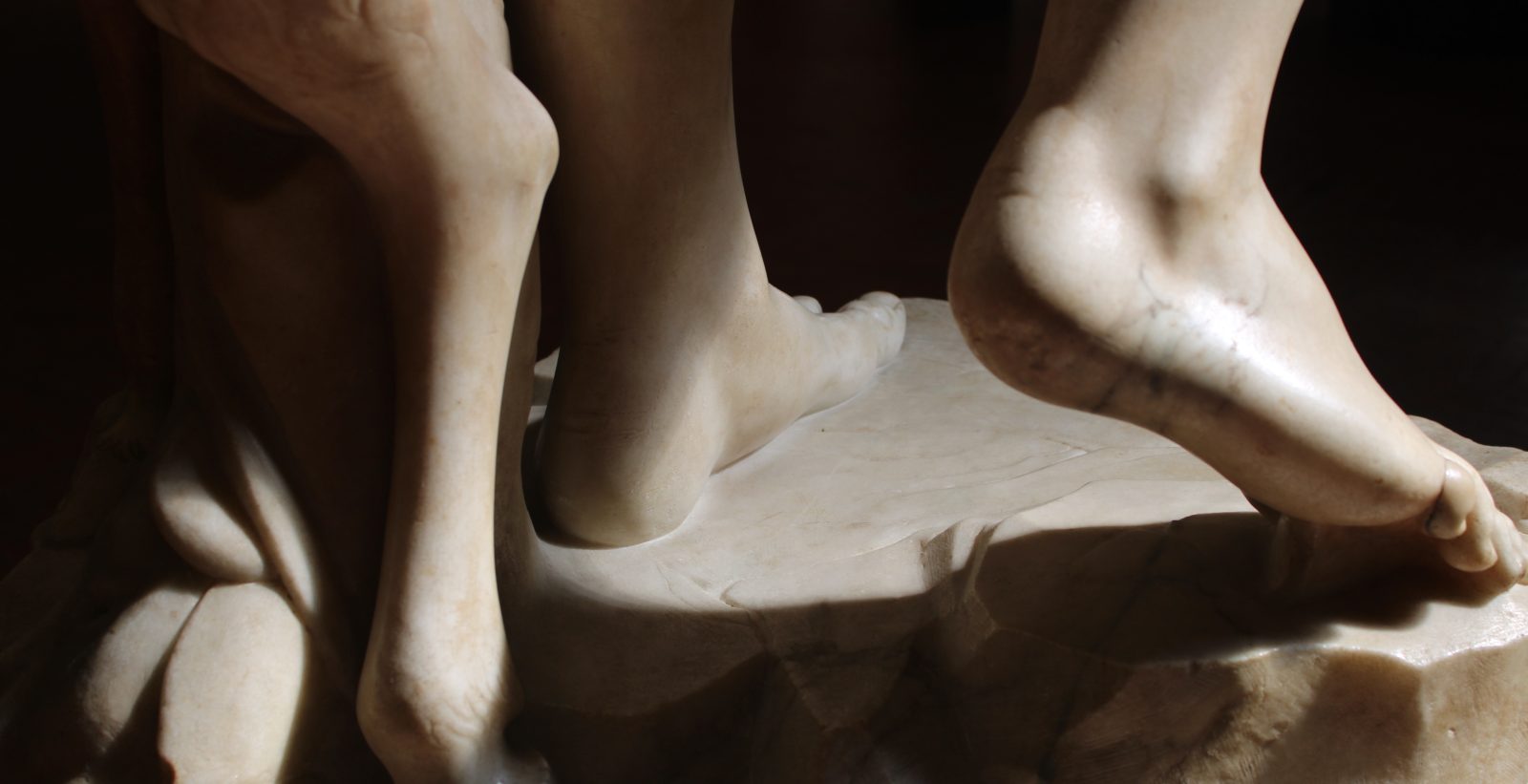
Il Natale nell’arte fiamminga: i dettagli nascosti nei dipinti che raccontano la magia della Natività
Nella pittura fiamminga il racconto della Natività diventa un mondo da esplorare. Gli artisti costruiscono composizioni ricchissime, nelle quali ogni elemento può avere un significato religioso, simbolico oppure semplicemente raccontare la vita quotidiana del loro tempo.
È questa una delle caratteristiche più affascinanti dell’arte dei Paesi Bassi tra Quattrocento e Cinquecento: la capacità di trasformare anche gli elementi più ordinari in piccoli tesori da scoprire. Il Natale diviene così una storia che si svela attraverso la luce, i colori, gli oggetti e i gesti dei protagonisti.
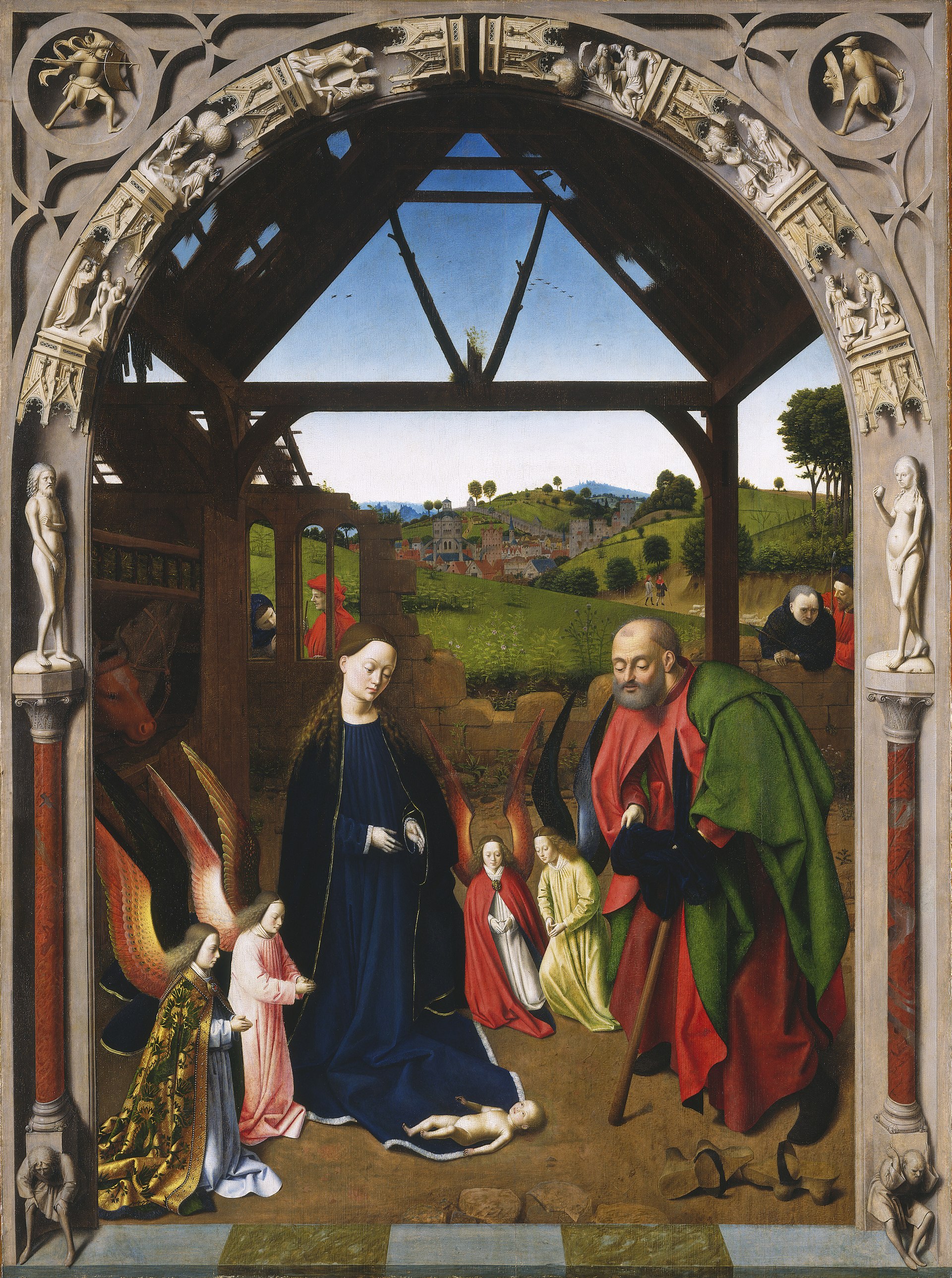
La Natività di Petrus Christus: una storia sacra racchiusa in una cornice
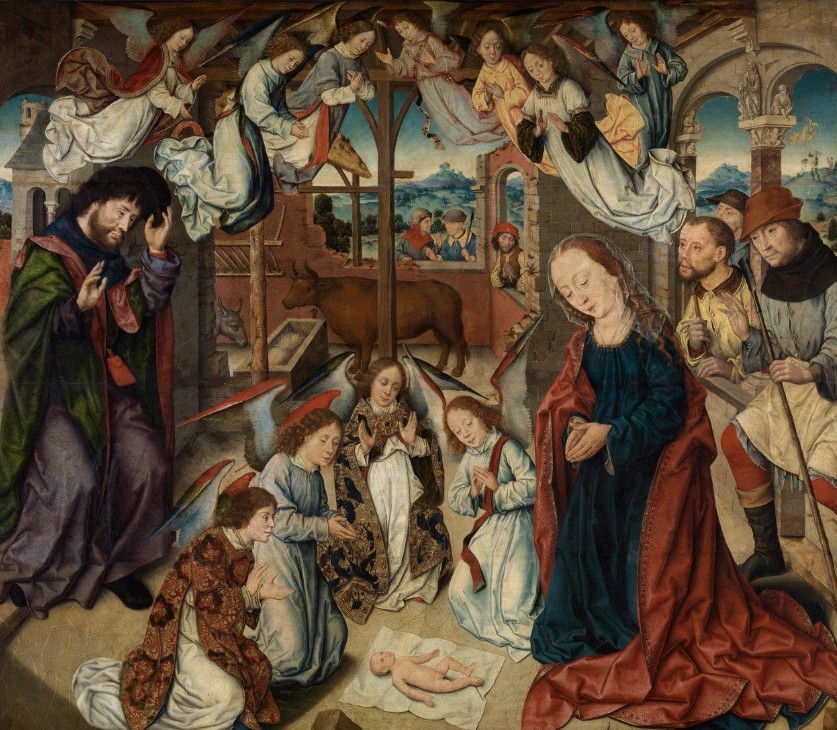
Uno degli esempi più interessanti è la Natività di Petrus Christus, conservata alla National Gallery of Art di Washington.
A prima vista vediamo la consueta scena della nascita di Gesù: Maria, il Bambino, Giuseppe e gli angeli. Basta però guardare la struttura architettonica che incornicia la composizione per accorgersi che il dipinto racconta molto di più.
L’arco in primo piano è decorato con episodi legati alla caduta di Adamo ed Eva. L’artista mette in relazione il peccato originale con la nascita di Cristo, presentata come l’inizio della redenzione dell’umanità.
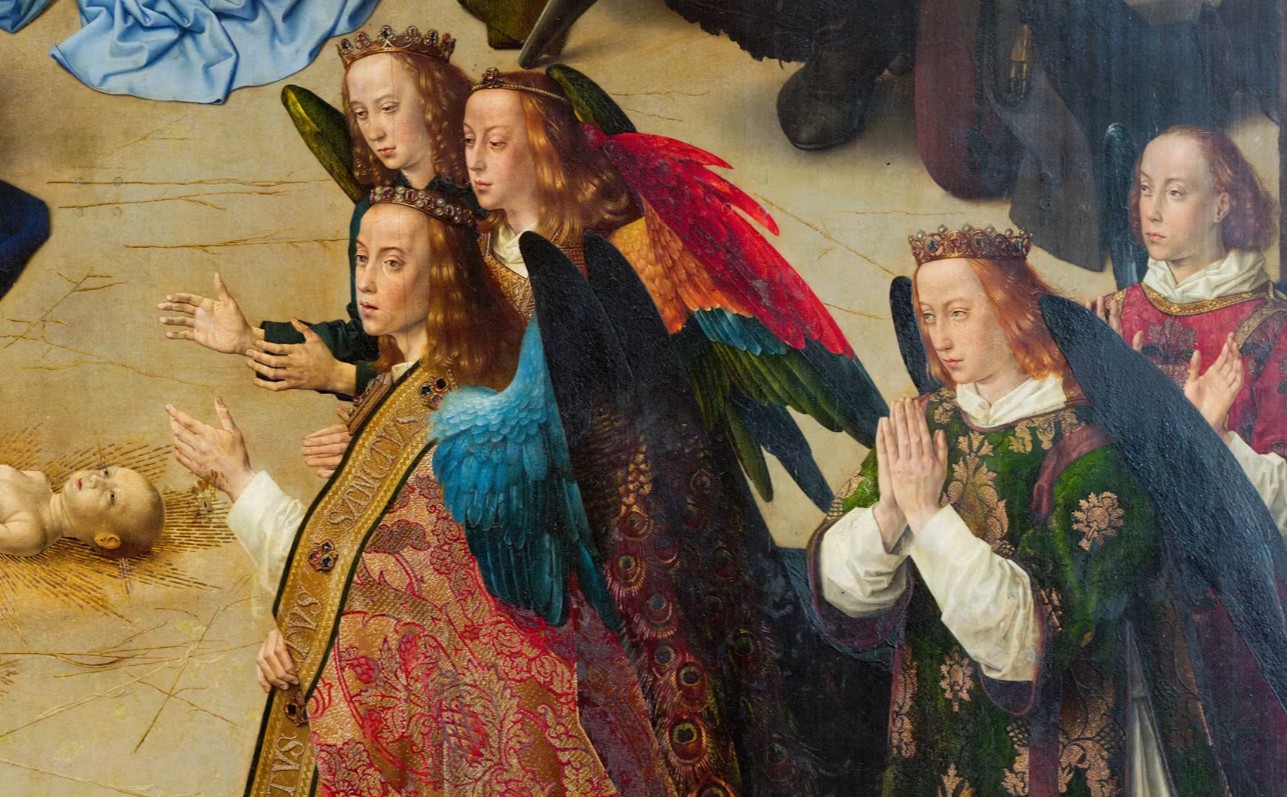
La mangiatoia e il Bambino diventano il centro di un racconto teologico che attraversa tutta la storia cristiana. Anche gli angeli, vestiti con paramenti liturgici, richiamano il sacrificio eucaristico: la nascita di Gesù contiene già il significato della sua futura Passione.
I Re Magi: oro, incenso e mirra non sono semplici doni
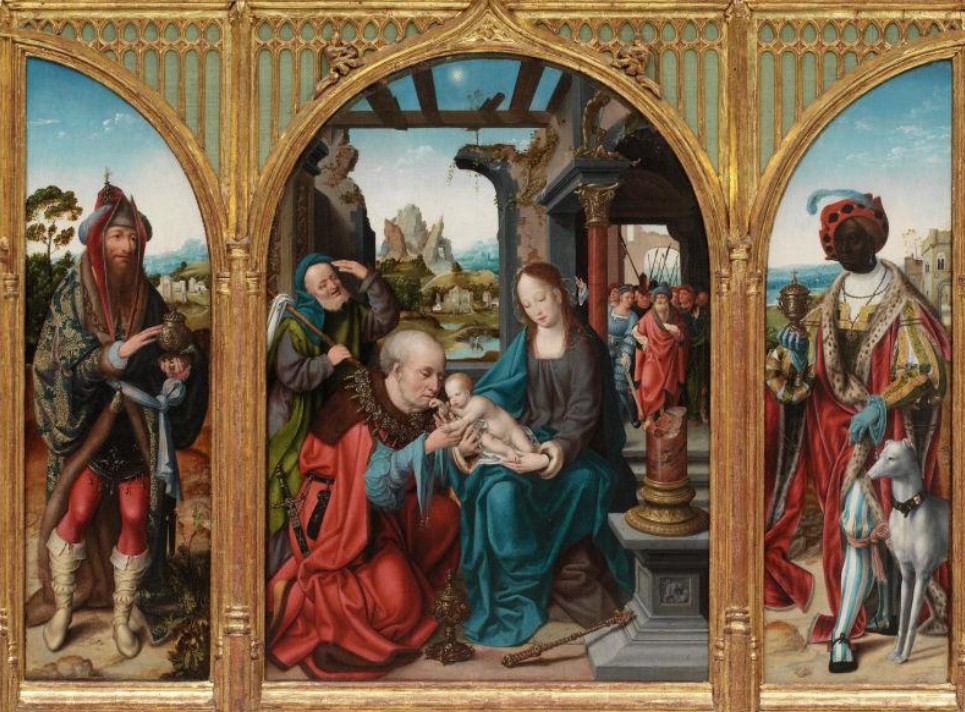
Fra i soggetti natalizi più amati dai pittori fiamminghi c’è naturalmente l’Adorazione dei Magi. La visita dei tre sapienti provenienti dall’Oriente offriva agli artisti un’occasione straordinaria per dipingere tessuti preziosi, corone, gioielli, recipienti elaborati e abiti ricamati.
In queste opere la ricchezza dei particolari non è mai soltanto un esercizio di bravura. Anche i doni portati al Bambino hanno un significato preciso.
L’oro allude alla regalità di Cristo, l’incenso alla sua natura divina e la mirra alla sua umanità e alla sua futura morte. Tre oggetti diversi che racchiudono, in pochi centimetri di pittura, l’intero destino di Gesù.
I pittori fiamminghi amavano indugiare proprio su questi elementi: il riflesso del metallo prezioso, la superficie di un calice, le decorazioni di un mantello, le pietre incastonate nelle corone. Guardandoli da vicino, sembra quasi di poter toccare quei tessuti e quei materiali.
Un esempio interessante è l’Adorazione dei Magi di Joos van Cleve, nella quale il lusso degli abiti e la cura dei particolari contribuiscono a trasformare l’episodio evangelico in una scena di grande ricchezza visiva.
La neve, il villaggio e l’arrivo a Betlemme: il Natale secondo Bruegel
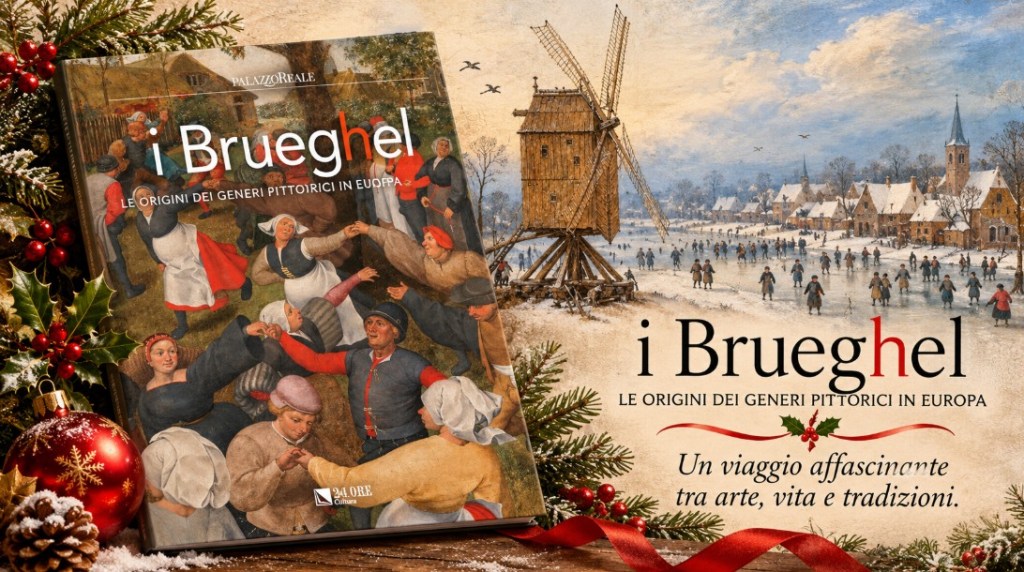
Un modo completamente diverso di raccontare il Natale è quello di Pieter Bruegel il Vecchio.
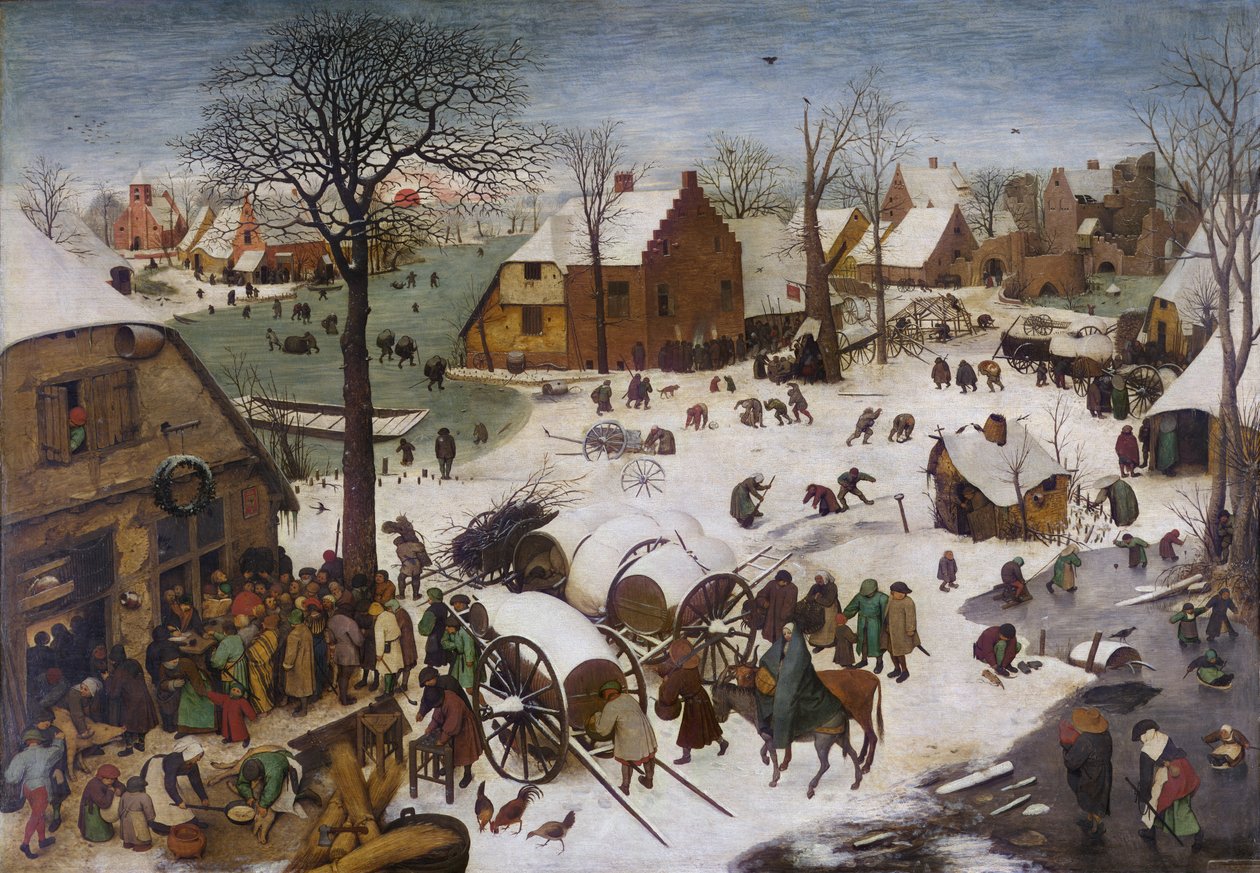
Nel 1566 l’artista dipinge il celebre Censimento di Betlemme, oggi conservato ai Musei Reali di Belle Arti del Belgio a Bruxelles.
Non troviamo una Natività tradizionale, con il Bambino al centro della composizione e gli angeli raccolti intorno alla mangiatoia. Bruegel sceglie invece di ambientare l’episodio biblico in un villaggio fiammingo coperto di neve.
La scena è animatissima. Ci sono persone che camminano, bambini che giocano sul ghiaccio, animali, carri, abitanti impegnati nelle loro faccende quotidiane. Sembra quasi di osservare una giornata d’inverno in un piccolo paese dei Paesi Bassi del Cinquecento.
In mezzo a tutta questa confusione, si nascondono Maria e Giuseppe. Lei è seduta su un asino, avvolta in un grande mantello blu, mentre Giuseppe cammina accanto a lei con gli attrezzi del suo mestiere.
La Sacra Famiglia bisogna cercarla, proprio come accade quando si visita un museo e ci si lascia attirare prima dai particolari più appariscenti.
Bruegel trasferisce Betlemme nel proprio tempo e nel proprio territorio. La storia evangelica diventa contemporanea alla vita delle persone che abitano quel paesaggio.
Anche la neve assume un ruolo importante: avvolge case e strade, ricopre i tetti e trasforma il villaggio in un grande scenario invernale. Ma dietro la bellezza del paesaggio si nasconde anche una riflessione sulla società, sulle autorità e sulle difficoltà della vita quotidiana.
Gli animali nella Natività: il bue e l’asino non sono semplici comparse
Nelle rappresentazioni fiamminghe della Natività il bue e l’asino sono spesso presenti accanto alla mangiatoia. La loro presenza deriva da una tradizione iconografica cristiana consolidata, più che da un’indicazione esplicita dei Vangeli canonici.
Questi animali sono diventati nel tempo parte integrante dell’immaginario natalizio e sono stati interpretati attraverso diversi riferimenti simbolici.
Nella tradizione cristiana il bue e l’asino richiamano anche il riconoscimento di Cristo da parte dell’umanità e il rapporto fra il popolo e il suo Salvatore. La loro presenza contribuisce inoltre a sottolineare l’umiltà del luogo scelto per la nascita di Gesù.
I pittori fiamminghi prestavano grande attenzione alla resa degli animali: il pelo, le orecchie, gli occhi, la posizione del muso e persino il modo in cui la luce si posa sul loro corpo.
Non sono elementi secondari. In una pittura nella quale ogni cosa sembra avere una consistenza fisica, anche gli animali partecipano alla costruzione di un ambiente credibile e familiare.
I piccoli oggetti che raccontano il Natale: fiori, tessuti e luce
Una delle cose che amo maggiormente della pittura fiamminga è la capacità di dare importanza anche agli elementi apparentemente più insignificanti.
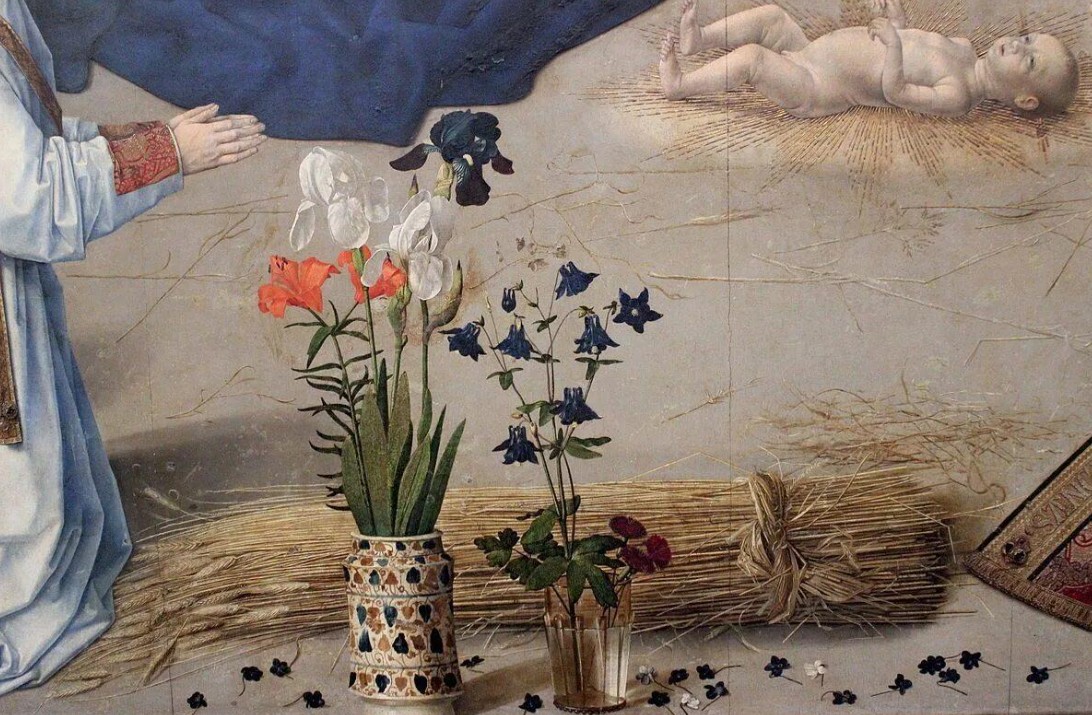
Un fiore, un recipiente, una brocca, un lembo di stoffa oppure un piccolo oggetto appoggiato vicino alla mangiatoia possono contribuire a costruire l’atmosfera della scena.
I pittori del Nord Europa erano straordinari nell’osservare e riprodurre la realtà. Le superfici metalliche riflettono la luce, i tessuti sembrano avere un peso, il legno conserva le proprie venature e persino gli oggetti più umili acquistano una presenza quasi tangibile.
Anche la luce ha un ruolo fondamentale: diventa uno strumento per guidare lo sguardo e suggerire una dimensione spirituale.
È proprio questa attenzione al mondo materiale che rende così affascinanti le opere fiamminghe: il sacro non appare lontano dalla vita quotidiana, ma entra nelle case, nelle strade e negli oggetti che accompagnano l’esistenza delle persone.
I paesaggi fiamminghi e il miracolo della nascita di Gesù
Nei dipinti fiamminghi il paesaggio non è quasi mai solo sfondo. Montagne, sentieri, città lontane, alberi spogli, edifici e piccoli villaggi contribuiscono a dare profondità alla composizione. A volte il racconto sacro si svolge in primo piano, mentre sullo sfondo si apre un mondo intero.
È una caratteristica che rende queste opere particolarmente interessanti da osservare durante il periodo natalizio.
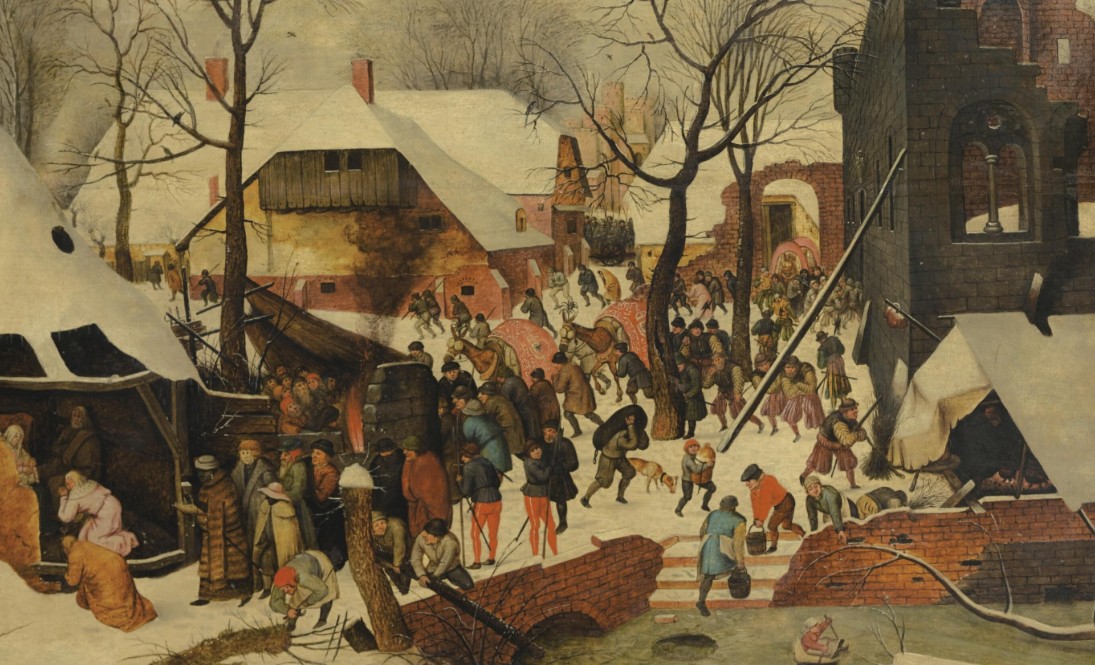
Il paesaggio invernale, con i suoi colori freddi e la luce delicata, crea un’atmosfera raccolta. Le strade sembrano più silenziose, i villaggi si stringono intorno alle proprie abitazioni e la natura diventa parte integrante del racconto.
In Bruegel questa attenzione raggiunge risultati straordinari: la vita degli uomini, gli animali e il paesaggio convivono in composizioni nelle quali l’episodio religioso può essere quasi nascosto fra le tante attività quotidiane.
Il Natale dipinto dagli artisti fiamminghi è un Natale fatto di grandi storie e piccole cose.
Per il momento il sempre vostro Michelangelo Buonarroti vi saluta dandovi appuntamento ai prossimi post e sui social.

Christmas in Flemish Art: Hidden Details in Paintings That Reveal the Magic of the Nativity
In Flemish painting, the story of the Nativity becomes a world to explore. Artists crafted incredibly rich compositions, in which every element might carry a religious or symbolic meaning, or simply offer a glimpse into the daily life of the era.
This is one of the most fascinating characteristics of art from the Low Countries during the 15th and 16th centuries: the ability to transform even the most ordinary elements into little treasures waiting to be discovered. Christmas thus becomes a narrative that unfolds through light, color, objects, and the gestures of the figures depicted.
The Nativity by Petrus Christus: A Sacred Story Within a Frame
One of the most compelling examples is the Nativity by Petrus Christus, held at the National Gallery of Art in Washington.
At first glance, we see the familiar scene of the birth of Jesus: Mary, the Christ Child, Joseph, and the angels. Yet, a closer look at the architectural structure framing the composition reveals that the painting tells a much deeper story.
The arch in the foreground is decorated with episodes concerning the Fall of Adam and Eve. The artist links Original Sin to the birth of Christ, presenting the latter as the beginning of humanity’s redemption.
The manger and the Christ Child become the focal point of a theological narrative that spans the entirety of Christian history. Even the angels—dressed in liturgical vestments—allude to the Eucharistic sacrifice; the birth of Jesus already contains the significance of His future Passion.
The Magi: Gold, Frankincense, and Myrrh Are More Than Just Gifts
Among the Christmas-themed subjects most beloved by Flemish painters is, naturally, the Adoration of the Magi. The visit of the three wise men from the East offered artists an extraordinary opportunity to depict precious fabrics, crowns, jewels, elaborate vessels, and embroidered garments.
In these works, the richness of detail is never merely an exercise in technical skill. Even the gifts brought to the Child carry a specific meaning.
Gold alludes to Christ’s kingship, frankincense to his divine nature, and myrrh to his humanity and his future death. These three distinct objects encapsulate, within just a few centimeters of paint, the entire destiny of Jesus.
Flemish painters particularly delighted in focusing on such elements: the gleam of precious metal, the surface of a chalice, the ornamentation on a cloak, or the gemstones set into crowns. When viewed up close, one feels as though one could almost touch these fabrics and materials.
An interesting example is the Adoration of the Magi by Joos van Cleve, in which the luxurious attire and meticulous attention to detail transform the Gospel account into a scene of great visual richness.
Snow, a Village, and the Arrival in Bethlehem: Christmas According to Bruegel
Pieter Bruegel the Elder offers a completely different way of telling the Christmas story.
In 1566, the artist painted the celebrated Census at Bethlehem, now held at the Royal Museums of Fine Arts of Belgium in Brussels.
There is no traditional Nativity scene here—no Christ Child at the center of the composition, surrounded by angels gathered around a manger. Instead, Bruegel chooses to set the biblical episode in a snow-covered Flemish village.
The scene is incredibly lively. People walk about, children play on the ice, and there are animals, carts, and villagers attending to their daily chores. It is as if one were observing a winter day in a small 16th-century town in the Low Countries.
Amidst all this commotion, Mary and Joseph are hidden from view. She sits upon a donkey, wrapped in a large blue cloak, while Joseph walks beside her, carrying the tools of his trade.
One must actively search for the Holy Family—much like visiting a museum, where one’s eye is often drawn first to the most striking or conspicuous details.
Bruegel transports Bethlehem into his own time and his own land. The Gospel narrative becomes contemporary to the lives of the people inhabiting that landscape.
The snow, too, plays a significant role: it envelops houses and streets, blankets the rooftops, and transforms the village into a vast winter tableau. Yet, beneath the beauty of the landscape lies a deeper reflection on society, the authorities, and the hardships of everyday life.
Animals in the Nativity: the ox and the donkey are more than mere extras
In Flemish depictions of the Nativity, the ox and the donkey are frequently shown beside the manger. Their presence stems from an established Christian iconographic tradition, rather than from any explicit mention in the canonical Gospels.
Over time, these animals have become an integral part of the Christmas imagery and have been interpreted through various symbolic references.
In the Christian tradition, the ox and the donkey also signify humanity’s recognition of Christ, as well as the relationship between the people and their Savior. Furthermore, their presence helps to underscore the humility of the setting chosen for the birth of Jesus.
Flemish painters paid meticulous attention to the rendering of these animals—their fur, ears, and eyes, the positioning of their muzzles, and even the way light falls upon their bodies.
They are not secondary elements. In a style of painting where everything possesses a tangible, physical quality, these animals contribute to the creation of a believable and familiar environment.
Small details that tell the story of Christmas: flowers, fabrics, and light
One of the aspects I admire most about Flemish painting is its ability to bestow significance upon even the most seemingly trivial elements.
A flower, a vessel, a pitcher, a fold of fabric, or a small object placed near the manger—all help to shape the atmosphere of the scene.
Painters from Northern Europe possessed an extraordinary gift for observing and reproducing reality. Metallic surfaces catch the light, fabrics appear to have weight, wood retains its natural grain, and even the humblest objects take on an almost palpable presence.
Light, too, plays a fundamental role: it serves as a tool to guide the viewer’s gaze and evoke a spiritual dimension. It is precisely this attention to the material world that makes Flemish works so fascinating: the sacred does not appear distant from daily life; rather, it enters homes, streets, and the very objects that accompany people’s existence.
Flemish landscapes and the miracle of the birth of Jesus
In Flemish paintings, the landscape is almost never merely a backdrop. Mountains, paths, distant cities, bare trees, buildings, and small villages all contribute to giving depth to the composition. At times, the sacred narrative unfolds in the foreground, while an entire world opens up in the background.
This is a characteristic that makes these works particularly compelling to observe during the Christmas season.
The winter landscape, with its cool colors and delicate light, creates an intimate atmosphere. The streets seem quieter, the villages huddle around their dwellings, and nature becomes an integral part of the story.
In the work of Bruegel, this focus achieves extraordinary results: human life, animals, and the landscape coexist in compositions where the religious episode may be almost hidden amidst the many activities of daily life.
The Christmas depicted by Flemish artists is one composed of grand stories and small, everyday things.
For now, yours truly, Michelangelo Buonarroti, bids you farewell—until the next posts and over on social media.

Sostienici – Support Us
Se questo blog ti piace e ti appassiona, puoi aiutarci a farlo crescere sempre più sostenendoci in modo concreto condividendo i post, seguendo le pagine social e con un contributo che ci aiuta ad andare avanti con il nostro lavoro di divulgazione. . ENGLISH: If you like and are passionate about this blog, you can help us make it grow more and more by supporting us in a concrete way by sharing posts, following social pages and with a contribution that helps us to move forward with our dissemination work.
10,00 €

Condividi:


Questo sono io





sostienici

Sostienici - Support Us
Se questo blog ti piace e ti appassiona, puoi aiutarci a farlo crescere sempre più sostenendoci in modo concreto condividendo i post, seguendo le pagine social e con un contributo che ci aiuta ad andare avanti con il nostro lavoro di divulgazione. . ENGLISH: If you like and are passionate about this blog, you can help us make it grow more and more by supporting us in a concrete way by sharing posts, following social pages and with a contribution that helps us to move forward with our dissemination work.
€10,00


