

I dolci delle feste nei dipinti antichi: panettoni, torte, frutta candita e pasticcini raccontano la storia del Natale
Dai banchetti rinascimentali alle raffinate nature morte del Seicento, i dolci delle feste hanno conquistato anche la pittura. Torte, frutta candita, biscotti, mandorle e altre golosità diventano protagonisti di dipinti che raccontano usanze, ricchezza, convivialità e piaceri della tavola.
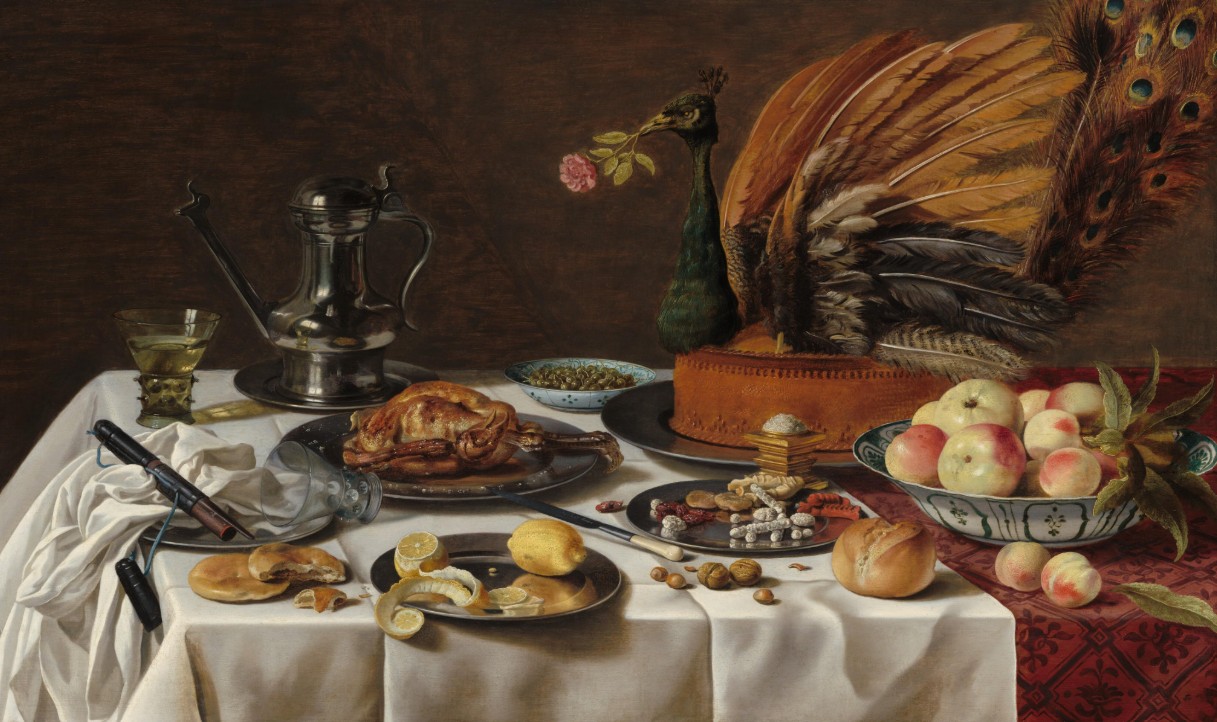
Nei dipinti antichi il cibo non è quasi mai un semplice elemento decorativo. Può rappresentare l’abbondanza, la prosperità, la generosità di chi ospita, ma anche la caducità delle cose e il trascorrere del tempo. Quando arrivano le feste, la tavola diventa uno dei luoghi più interessanti da esplorare.
Il Natale, con i suoi dolci tradizionali e le preparazioni speciali, offre l’occasione perfetta per compiere questo viaggio tra le opere d’arte.
Quando i dolci diventano protagonisti della pittura
Tra Cinquecento e Seicento la rappresentazione del cibo conosce una stagione straordinaria. In particolare, nei Paesi Bassi, nelle Fiandre e in Spagna si afferma un genere pittorico destinato a conquistare collezionisti e appassionati: la natura morta.
Gli artisti cominciano a dedicare intere tele a composizioni di frutta, dolci, pane, formaggi, recipienti preziosi e bicchieri di cristallo. Ogni elemento viene studiato con grande attenzione: la superficie lucida di una mandorla, lo zucchero che ricopre un pasticcino, la trasparenza di una coppa o la consistenza di un frutto maturo.
Non si tratta soltanto di dimostrare abilità tecnica. Questi dipinti restituiscono anche un’immagine della società del tempo, dei suoi consumi e del valore attribuito ai prodotti alimentari più ricercati.
Juan van der Hamen: i dolci del Seicento sembrano uscire dalla tela
Una delle testimonianze più affascinanti di questa passione per i dolci si trova nella pittura di Juan van der Hamen y León (1596-1631).
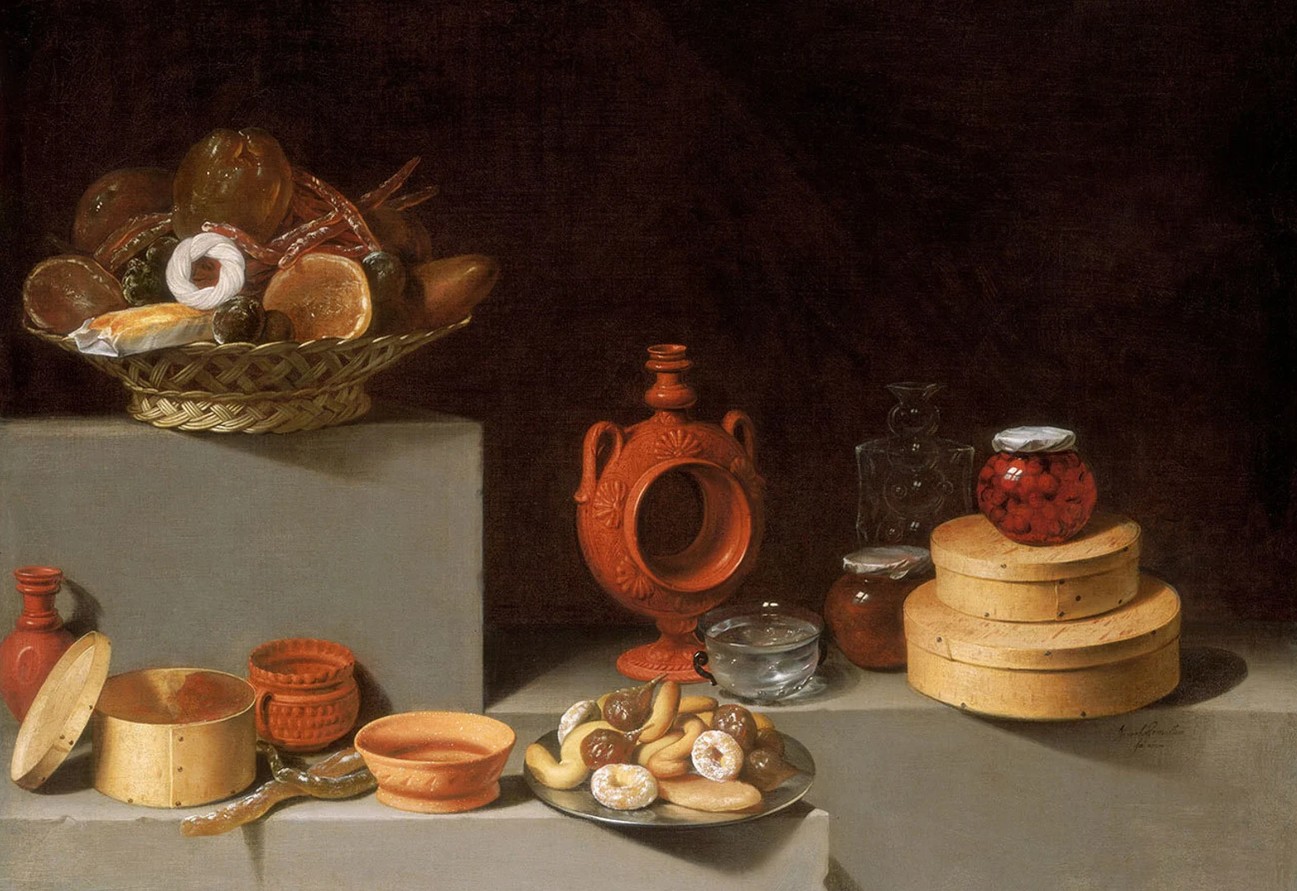
Nel 1627 realizza Still Life with Sweets and Pottery, oggi conservato alla National Gallery of Art di Washington.
La composizione è una vera festa per gli occhi. Su ripiani di pietra disposti a differenti altezze troviamo recipienti di terracotta, contenitori di legno, bicchieri, frutta, conserve e un piatto colmo di dolci. Alcuni hanno forme tondeggianti, altri sono allungati e ricoperti da una spolverata di zucchero.
L’artista dipinge ogni particolare con una precisione sorprendente. La luce accarezza gli oggetti, mettendo in risalto le superfici e creando un contrasto suggestivo con lo sfondo scuro. I dolci non sono semplicemente appoggiati su un tavolo: sembrano quasi offerti allo spettatore.
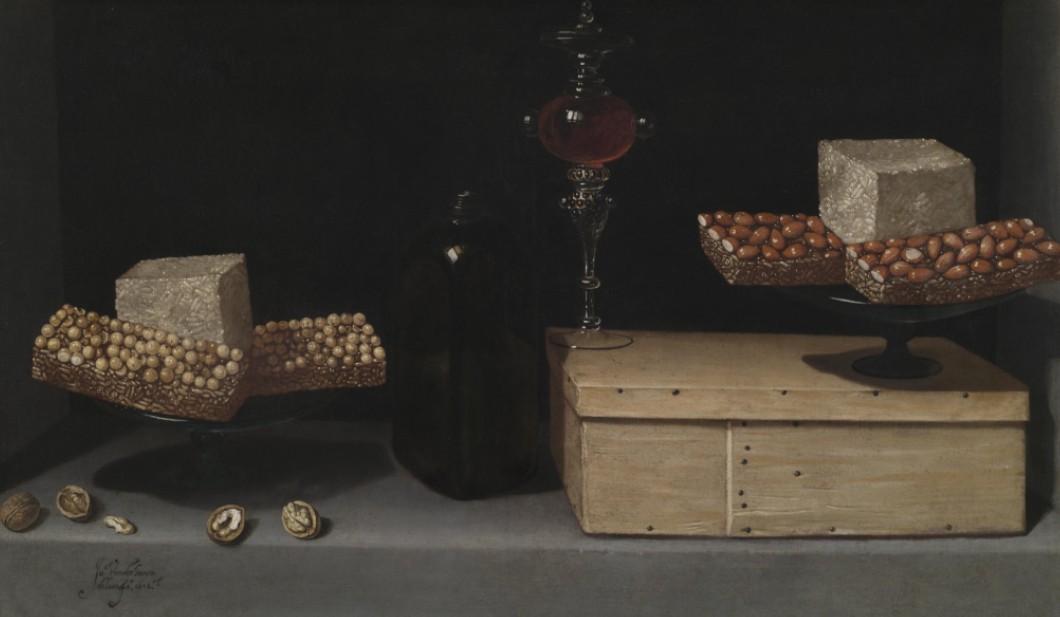
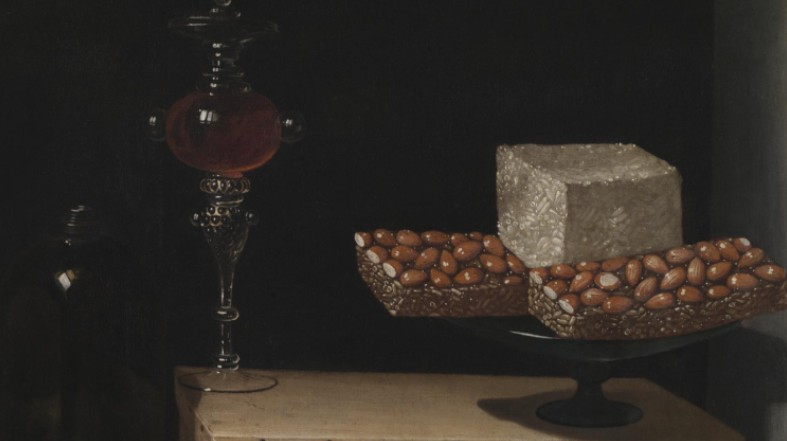
Un’altra opera dello stesso pittore, Still Life with Sweets, del 1622, conservata al Cleveland Museum of Art, presenta i turrones, specialità dolciarie spagnole preparate con miele, mandorle, pinoli e nocciole. Una testimonianza preziosa di quanto la frutta secca e il miele fossero importanti nella tradizione della pasticceria.
Queste preparazioni ricordano da vicino alcune delle golosità che ancora oggi associamo alle feste natalizie.
Osias Beert e le tavole imbandite delle Fiandre
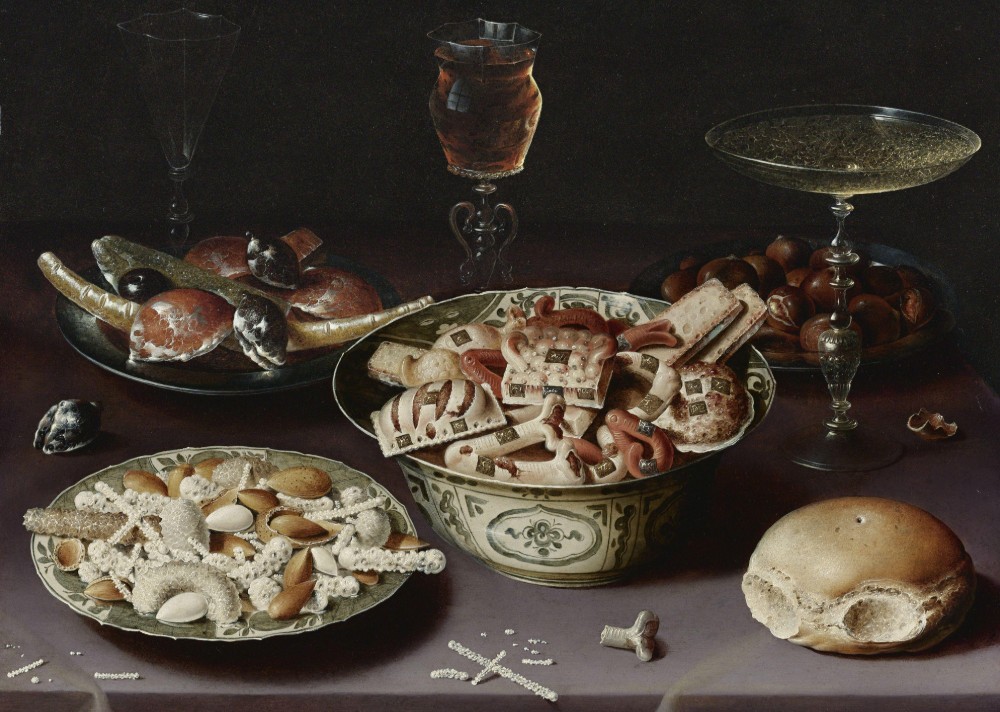
Nelle sue composizioni troviamo piatti colmi di frutta, dolci, mandorle, uva passa, fichi, prugne e altre prelibatezze. Insieme ai cibi compaiono coppe, bicchieri e recipienti raffinati, oggetti che raccontano il gusto delle tavole benestanti del tempo.
Ogni piatto occupa il proprio spazio, ogni superficie riflette la luce in maniera diversa e ogni alimento viene rappresentato con una cura quasi meticolosa.
Osservando queste tavole viene spontaneo immaginare le occasioni nelle quali simili pietanze potevano essere servite: banchetti, incontri familiari e celebrazioni nelle quali il cibo rappresentava anche un segno di ospitalità e prestigio.
Mandorle, miele e frutta candita: i sapori delle feste di un tempo
Se guardiamo attentamente queste opere, ci accorgiamo che molti ingredienti ritornano continuamente. Mandorle, nocciole, pinoli, miele, fichi, uvetta e frutta conservata occupano un posto importante nelle composizioni.
Non è un caso. Prima della diffusione dello zucchero a prezzi accessibili, il miele e la frutta naturalmente dolce erano ingredienti preziosi. Anche lo zucchero, soprattutto nelle epoche in cui era costoso e legato ai commerci a lunga distanza, rappresentava un prodotto di lusso.
La frutta candita, le paste di mandorle e i dolci preparati con miele e frutta secca erano particolarmente adatti alle occasioni importanti. Non mancavano sulle tavole aristocratiche e nei banchetti organizzati per celebrare ricorrenze e festività.
Il turrón spagnolo, per esempio, è una preparazione che ha attraversato i secoli e che ancora oggi occupa un posto importante nelle celebrazioni natalizie della Spagna.
La tavola delle feste: quando il cibo racconta la ricchezza
Nel Seicento le nature morte diventano anche uno strumento per raccontare il benessere economico e sociale di chi commissiona o possiede un dipinto.
Una tavola riccamente imbandita, con dolci, frutti esotici, recipienti preziosi e stoviglie raffinate, comunica immediatamente un’idea di abbondanza. Alcuni alimenti, difficili da reperire o particolarmente costosi, diventano veri e propri simboli di prestigio.
Ma queste composizioni possono nascondere anche un significato più profondo. Nella tradizione della natura morta, il cibo e gli oggetti preziosi sono spesso associati alla riflessione sul tempo, sulla fragilità della vita e sulla caducità dei piaceri terreni.
Un dolce appena preparato, un frutto maturo o un bicchiere di vino possono sembrare eterni sulla tela, mentre nella realtà sono destinati a essere consumati e a scomparire.
Dal Seicento al Natale di oggi: i dolci continuano a raccontare storie
Oggi, quando prepariamo la tavola di Natale, ritroviamo ancora molti degli ingredienti che gli artisti del passato hanno immortalato nei loro dipinti.
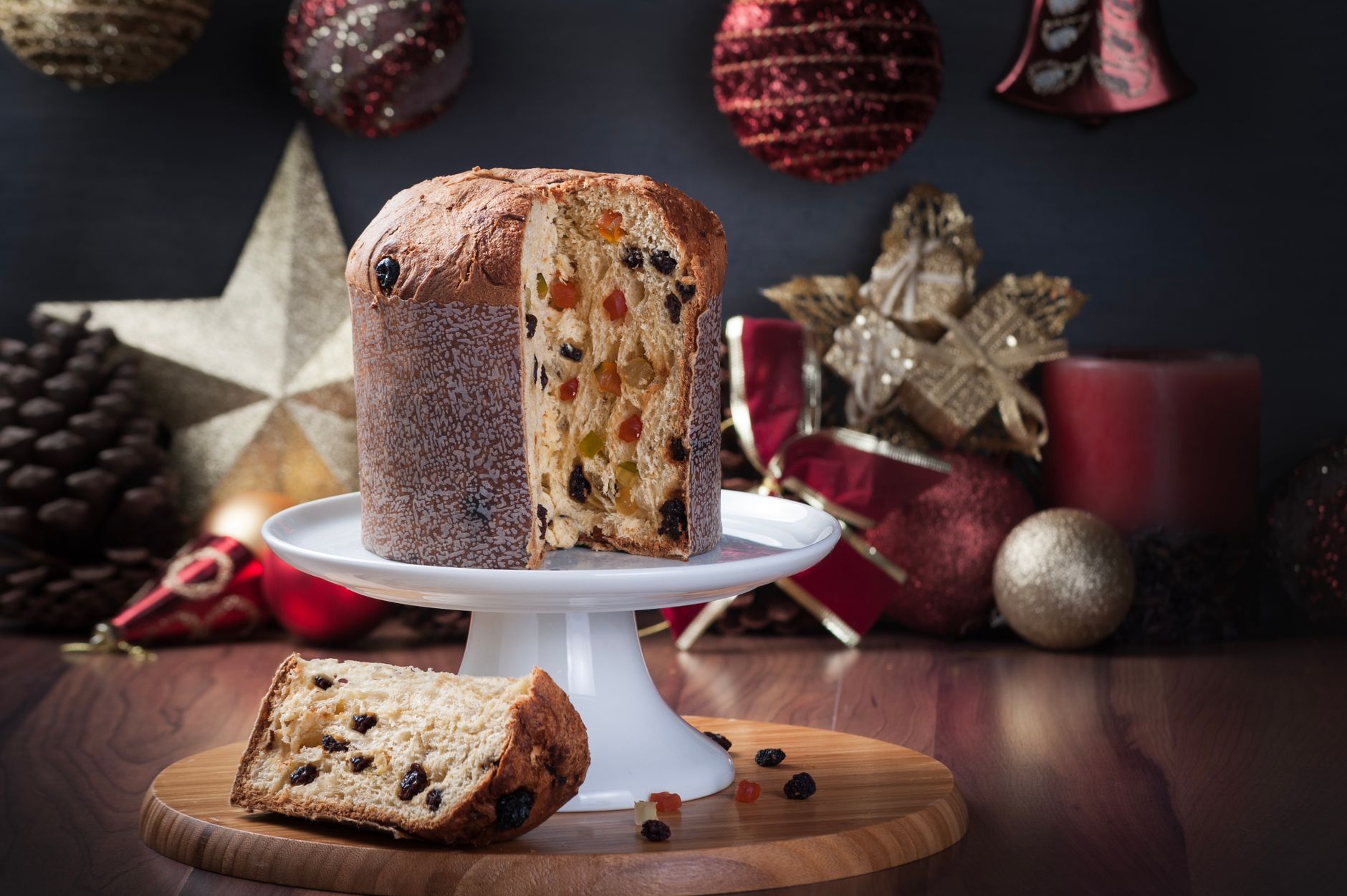
Le mandorle dei ricciarelli, il miele del torrone, la frutta candita del panettone, la frutta secca e i biscotti speziati appartengono a una tradizione gastronomica che attraversa territori e generazioni.
Naturalmente, non possiamo immaginare che i panettoni e i pandori che acquistiamo oggi fossero già presenti nelle stesse forme sulle tavole dipinte del Seicento. Le ricette, le tecniche di preparazione e le abitudini alimentari sono cambiate nel corso dei secoli.
Eppure, qualcosa è rimasto. Il desiderio di condividere un dolce, di preparare qualcosa di speciale per gli ospiti e di rendere una festa diversa da tutti gli altri giorni.
È proprio questo che rende così affascinanti le nature morte antiche: attraverso un piatto di dolci e una manciata di mandorle possiamo ritrovare gesti, desideri e piaceri che appartengono ancora alla nostra quotidianità.
L’importanza di questi dipinti per la storia della cucina
Le nature morte dedicate al cibo sono documenti preziosi anche per chi studia la storia dell’alimentazione. Attraverso la pittura possiamo conoscere ingredienti, recipienti, tecniche di conservazione e abitudini gastronomiche che altrimenti rischierebbero di rimanere poco documentati.
Gli artisti hanno conservato sulla tela ciò che il tempo avrebbe inevitabilmente cancellato: una tavola apparecchiata, un dolce appena preparato, una coppa colma di frutta secca o un piatto di pasticcini destinato agli ospiti.
Allora, come oggi, le feste avevano un sapore speciale e spesso quel sapore era dolce. Per il momento il sempre vostro Michelangelo Buonarroti vi saluta dandovi appuntamento ai prossimi post e sui social.

Holiday Sweets in Old Master Paintings: Panettone, Cakes, Candied Fruit, and Pastries Tell the Story of Christmas
From Renaissance banquets to the refined still lifes of the 17th century, holiday sweets have also found their place in painting. Cakes, candied fruit, biscuits, almonds, and other delicacies take center stage in works that reveal the customs, wealth, conviviality, and culinary pleasures of the past.
In Old Master paintings, food is rarely merely decorative. It may signify abundance, prosperity, or the generosity of a host—while also alluding to the transience of worldly things and the passage of time. During the holiday season, the dining table becomes a particularly compelling subject to explore.
Christmas, with its traditional sweets and special festive preparations, offers the perfect opportunity for a journey through these works of art.
When Sweets Become the Protagonists of Painting
Between the 16th and 17th centuries, the depiction of food experienced an extraordinary golden age. In the Netherlands, Flanders, and Spain, in particular, a genre emerged that would captivate collectors and art enthusiasts alike: the still life.
Artists began dedicating entire canvases to compositions featuring fruit, sweets, bread, cheese, precious vessels, and crystal glassware. Every element was rendered with meticulous attention: the glossy surface of an almond, the sugar coating on a pastry, the transparency of a goblet, or the texture of a ripe piece of fruit.
These works represent more than just a display of technical skill; they also offer a window into the society of the time—its consumption habits and the value placed on the most sought-after food items. Juan van der Hamen: 17th-century sweets that seem to leap off the canvas
One of the most fascinating testaments to this passion for sweets can be found in the paintings of Juan van der Hamen y León (1596–1631).
In 1627, he created Still Life with Sweets and Pottery, now held at the National Gallery of Art in Washington.
The composition is a true feast for the eyes. On stone shelves arranged at varying heights, we see earthenware vessels, wooden containers, glassware, fruit, preserves, and a platter piled high with sweets—some round, others elongated, all dusted with sugar.
The artist renders every detail with striking precision. Light caresses the objects, highlighting their surfaces and creating a compelling contrast against the dark background. The sweets are not merely resting on a table; they appear almost as if offered to the viewer.
Another work by the same painter, Still Life with Sweets (1622)—housed at the Cleveland Museum of Art—features turrones, a Spanish confection made from honey, almonds, pine nuts, and hazelnuts. It serves as a valuable record of the significant role that nuts and honey played in the confectionery tradition.
These treats bear a striking resemblance to the delicacies we still associate with the Christmas season today.
Osias Beert and the lavishly set tables of Flanders
In his compositions, we find platters overflowing with fruit, sweets, almonds, raisins, figs, plums, and other delicacies. Alongside the food, there are elegant goblets, glasses, and vessels—objects that reveal the refined tastes of the affluent households of the era. Each dish occupies its own space, every surface reflects light in a unique way, and every food item is depicted with almost meticulous care.
Looking at these table settings, one naturally imagines the occasions for which such dishes might have been served: banquets, family gatherings, and celebrations where food also served as a sign of hospitality and prestige.
Almonds, honey, and candied fruit: the flavors of celebrations past
If we examine these works closely, we notice that many ingredients appear repeatedly. Almonds, hazelnuts, pine nuts, honey, figs, raisins, and preserved fruits hold a prominent place in these compositions.
This is no coincidence. Before sugar became widely available at an affordable price, honey and naturally sweet fruits were precious ingredients. Sugar itself—especially in eras when it was expensive and tied to long-distance trade—was considered a luxury product.
Candied fruit, almond pastes, and sweets made with honey and dried fruit were particularly well-suited for significant occasions. They were staples on aristocratic tables and at banquets held to mark special events and holidays.
Spanish turrón, for example, is a confection that has endured through the centuries and still holds an important place in Christmas celebrations in Spain today.
The festive table: when food speaks of wealth
In the seventeenth century, still-life paintings also became a means of conveying the economic and social prosperity of those who commissioned or owned them.
A lavishly set table with sweets, exotic fruits, precious vessels, and refined tableware, it immediately conveys an impression of abundance. Certain foods—difficult to obtain or particularly expensive—become true symbols of prestige.
Yet, these compositions may also harbor a deeper meaning. In the tradition of the still life, food and precious objects are often linked to reflections on time, the fragility of life, and the fleeting nature of earthly pleasures.
A freshly prepared pastry, a ripe piece of fruit, or a glass of wine may appear eternal on canvas, even though, in reality, they are destined to be consumed and to vanish.
From the seventeenth century to today’s Christmas: sweets continue to tell stories.
Today, as we set our Christmas tables, we still encounter many of the same ingredients that artists of the past immortalized in their paintings.
The almonds in ricciarelli (almond cookies), the honey in torrone (nougat), the candied fruit in panettone, the dried nuts, and the spiced biscuits all belong to a culinary tradition that spans both geography and generations.
Naturally, we cannot assume that the panettone or pandoro we buy today existed in the same form on the tables depicted in seventeenth-century paintings. Recipes, preparation techniques, and dietary habits have evolved over the centuries.
And yet, something has endured: the desire to share a sweet treat, to prepare something special for guests, and to make a holiday stand apart from any other day.
This is precisely what makes antique still-life paintings so fascinating: through a platter of sweets and a handful of almonds, we can rediscover gestures, desires, and pleasures that remain a part of our own daily lives.
The Importance of These Paintings for the History of Cuisine
Still-life paintings depicting food serve as invaluable documents for those who study the history of gastronomy. Through art, we gain insight into ingredients, vessels, preservation techniques, and culinary customs that might otherwise have remained poorly documented.
Artists captured on canvas what the passage of time would have inevitably erased: a table set for a meal, a freshly prepared dessert, a bowl brimming with dried fruit, or a platter of pastries intended for guests.
Then, just as today, celebrations held a special flavor—and often, that flavor was sweet. For now, yours truly, Michelangelo Buonarroti, bids you farewell; I look forward to seeing you in future posts and on social media.

Sostienici – Support Us
Se questo blog ti piace e ti appassiona, puoi aiutarci a farlo crescere sempre più sostenendoci in modo concreto condividendo i post, seguendo le pagine social e con un contributo che ci aiuta ad andare avanti con il nostro lavoro di divulgazione. . ENGLISH: If you like and are passionate about this blog, you can help us make it grow more and more by supporting us in a concrete way by sharing posts, following social pages and with a contribution that helps us to move forward with our dissemination work.
10,00 €

Condividi:


Questo sono io





sostienici

Sostienici - Support Us
Se questo blog ti piace e ti appassiona, puoi aiutarci a farlo crescere sempre più sostenendoci in modo concreto condividendo i post, seguendo le pagine social e con un contributo che ci aiuta ad andare avanti con il nostro lavoro di divulgazione. . ENGLISH: If you like and are passionate about this blog, you can help us make it grow more and more by supporting us in a concrete way by sharing posts, following social pages and with a contribution that helps us to move forward with our dissemination work.
€10,00


