
La mano che disegna la mano: il disegno del Louvre che ha fatto discutere gli studiosi
Disegnare una mano mentre ne disegna un’altra. Sembra un gioco, eppure dietro questo esercizio si nasconde una storia che ha fatto discutere gli studiosi per secoli.
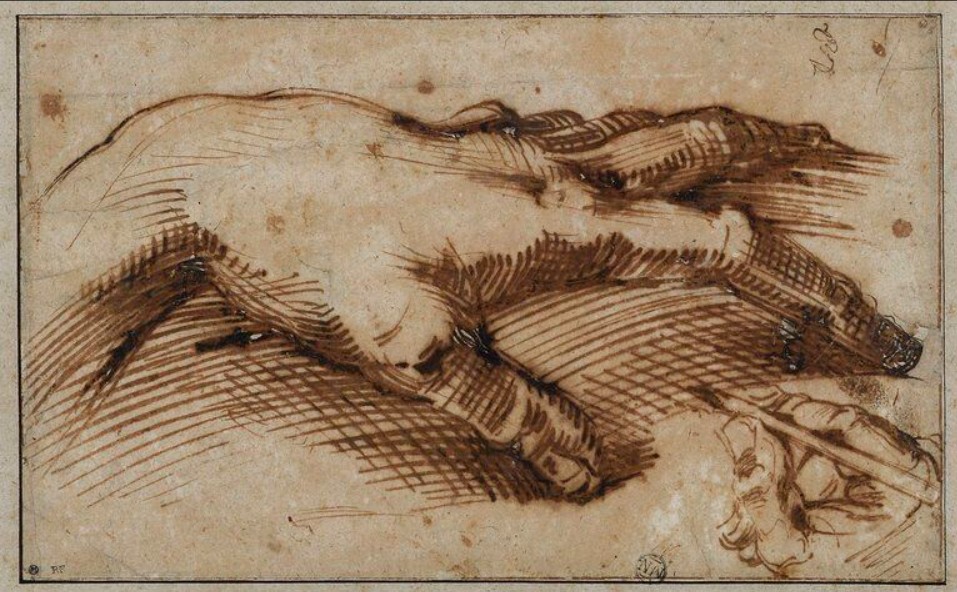
Oggi voglio portarvi davanti a un disegno davvero particolare, conservato nelle collezioni del Museo del Louvre a Parigi. Il soggetto sembra semplice: una mano appoggiata sul foglio, un’altra intenta a tracciarne le forme e un intrico di linee scure che restituisce il volume delle dita, delle pieghe e delle ombre.
Per molto tempo questo foglio è stato considerato un mio disegno ma la sua storia è più complicata di quanto si possa immaginare e, se volete capire perché, dovete osservare bene non soltanto ciò che è rappresentato, ma anche il modo in cui è stato disegnato.
Un disegno che sembra quasi un piccolo gioco di prestigio
Guardate il foglio. La mano è distesa, le dita si allungano sul piano e le ombre vengono costruite attraverso una fitta trama di tratti incrociati. In alto, un’altra mano sembra entrare in scena, come se l’artista avesse voluto mostrarci non soltanto il risultato del proprio lavoro, ma anche il gesto che lo rende possibile.
Il disegno diventa una dimostrazione pratica della capacità di osservare e riprodurre il corpo umano.
Disegnare una mano non facile e chiunque abbia provato a disegnare lo sa bene. Le dita devono mantenere sempre proporzioni credibili, le articolazioni devono suggerire il movimento e le ombre devono dare profondità a una superficie che, in caso contrario, rimarrebbe piatta.
Nel foglio del Louvre tutto questo viene affidato alle linee. Non ci sono infatti i colori che potrebbero distrarre e ingannare lo sguardo. Solo il tratto, con le sue variazioni di spessore e intensità, costruisce la forma.
La tecnica è quella della penna con inchiostro bruno su carta.
È un mio disegno?
Per molto tempo il disegno della mano che disegna la mano è stato attribuito a me e compare nelle remote raccolte a mio nome. La vicenda attributiva però è stata tutt’altro che lineare nel corso dei secoli.
Nel Settecento il disegno faceva parte della celebre collezione di Pierre Crozat, uno dei grandi collezionisti francesi dell’epoca. In seguito, diversi studiosi hanno proposto nomi differenti per la sua paternità.
Nel corso dell’Ottocento Philippe de Chennevières lo attribuì ad Annibale Carracci, il pittore bolognese nato nel 1560, quasi un secolo dopo di me. Altri studiosi chiamarono in causa artisti come Baccio Bandinelli e Bartolomeo Passerotti.
Nel Novecento Charles de Tolnay tornò a proporre l’attribuzione a me, riaprendo una questione che sembrava tutt’altro che risolta.
La proposta più recente? Nel 2022 Roberta Serra ha pubblicato il foglio tra le opere originali di Bartolomeo Passerotti.
La paternità del disegno rimane dunque una questione da affrontare con cautela. Non sarebbe corretto presentarlo come un’opera sicuramente autografa mia: la sua attribuzione è tutt’oggi discussa e la ricerca storico-artistica continua.
Le mani, una delle grandi ossessioni del Rinascimento
Che il disegno sia mio o di altri artisti, resta un documento affascinante per comprendere quanto lo studio della mano fosse importante nella pratica artistica rinascimentale.
Le mani possono esprimere forza, esitazione, dolore, tensione e tenerezza. In un dipinto o in una scultura, spesso basta la posizione delle dita per suggerire ciò che il volto non racconta.
Quando penso al corpo umano, non riesco a separare la forma dal movimento. Una mano chiusa non racconta la stessa cosa di una mano aperta: dita tese o rilassate possono cambiare completamente il significato di un gesto.
Ecco perché gli artisti dedicavano tanto tempo allo studio delle mani e degli avambracci, osservandoli da diverse angolazioni e cercando di comprendere come ossa, muscoli e tendini collaborassero per produrre ogni movimento.
Per il momento il sempre vostro Michelangelo Buonarroti vi saluta dandovi appuntamento ai prossimi post e sui social.
The hand drawing a hand: a Louvre drawing that has sparked debate among scholars
Drawing one hand while it draws another—it might seem like a game, yet behind this exercise lies a story that has kept scholars debating for centuries.
Today, I want to draw your attention to a truly unique sketch, held in the collections of the Louvre Museum in Paris. The subject appears simple: one hand resting on the page, another in the act of tracing its contours, and a complex web of dark lines that define the volume of the fingers, the folds of the skin, and the shadows.
For a long time, this sheet was attributed to me, but its history is more complicated than one might imagine. To understand why, you must look closely—not just at what is depicted, but at the very way it has been drawn.
A drawing that feels almost like a little magic trick
Look at the page. The hand lies outstretched, its fingers extended across the surface, with shadows built up through a dense network of cross-hatched lines. From above, a second hand enters the scene—as if the artist intended to show us not only the final result of their work but also the gesture that made it possible.
The drawing becomes a practical demonstration of the ability to observe and render the human body.
Drawing a hand is no easy task—anyone who has ever tried knows this well. The fingers must maintain believable proportions, the joints must suggest movement, and the shadows must lend depth to a surface that would otherwise remain flat.
In this Louvre sketch, everything is achieved through lines alone. There is no color to distract or deceive the eye; the stroke—varying in thickness and intensity—is the sole element that constructs the form.
The technique employed is pen and brown ink on paper. Is this a drawing of mine?
For a long time, the drawing of a hand drawing another hand has been attributed to me, and it appears in older collections under my name. However, the history of its attribution has been anything but straightforward over the centuries.
In the eighteenth century, the drawing was part of the renowned collection of Pierre Crozat, one of the great French collectors of the era. Subsequently, various scholars have proposed different names regarding its authorship.
During the nineteenth century, Philippe de Chennevières attributed it to Annibale Carracci—a Bolognese painter born in 1560, nearly a century after me. Other scholars have suggested artists such as Baccio Bandinelli and Bartolomeo Passerotti.
In the twentieth century, Charles de Tolnay once again proposed that it was my work, reopening a debate that was far from settled.
The most recent proposal? In 2022, Roberta Serra included the sheet among the original works of Bartolomeo Passerotti.
The authorship of the drawing, therefore, remains a matter to be approached with caution. It would be incorrect to present it definitively as my own work; its attribution is still a subject of discussion, and art-historical research continues.
Hands: one of the great obsessions of the Renaissance
Whether the drawing is mine or by another artist, it remains a fascinating document for understanding just how important the study of the hand was to artistic practice during the Renaissance.
Hands can express strength, hesitation, pain, tension, and tenderness. In a painting or a sculpture, the position of the fingers is often enough to convey what the face does not reveal.
When I think of the human body, I cannot separate form from movement. A closed hand tells a different story than an open one; fingers that are tense or relaxed can completely alter the meaning of a gesture. This is why artists devoted so much time to studying hands and forearms—observing them from various angles and seeking to understand how bones, muscles, and tendons worked together to produce every movement.
For now, yours truly, Michelangelo Buonarroti, bids you farewell—until the next posts and over on social media.
Sostienici – Support Us
Se questo blog ti piace e ti appassiona, puoi aiutarci a farlo crescere sempre più sostenendoci in modo concreto condividendo i post, seguendo le pagine social e con un contributo che ci aiuta ad andare avanti con il nostro lavoro di divulgazione. . ENGLISH: If you like and are passionate about this blog, you can help us make it grow more and more by supporting us in a concrete way by sharing posts, following social pages and with a contribution that helps us to move forward with our dissemination work.
10,00 €

Condividi:


Questo sono io



sostienici

Sostienici - Support Us
Se questo blog ti piace e ti appassiona, puoi aiutarci a farlo crescere sempre più sostenendoci in modo concreto condividendo i post, seguendo le pagine social e con un contributo che ci aiuta ad andare avanti con il nostro lavoro di divulgazione. . ENGLISH: If you like and are passionate about this blog, you can help us make it grow more and more by supporting us in a concrete way by sharing posts, following social pages and with a contribution that helps us to move forward with our dissemination work.
€10,00


