

Il maestro di Caravaggio e il suo straordinario disegno di Sisara addormentato
Prima che Caravaggio diventasse uno dei pittori più rivoluzionari della storia dell’arte, nella Roma di fine Cinquecento ebbe modo di frequentare la bottega di un artista già celebre e particolarmente influente: Giuseppe Cesari, conosciuto come il Cavalier d’Arpino.
Fu proprio lui ad accogliere il giovane Michelangelo Merisi nel proprio atelier, offrendogli un’importante occasione per entrare nel vivace ambiente artistico della capitale pontificia.
Il Cavalier d’Arpino, nato ad Arpino nel 1568, era un pittore affermato, apprezzato da importanti committenti e particolarmente vicino agli ambienti della corte papale. La sua bottega era uno dei luoghi di riferimento per la formazione e il lavoro di numerosi artisti.
Oggi voglio soffermarmi su un suo interessante disegno a sanguigna, conservato al Museo di Belle Arti di Lione, in Francia.
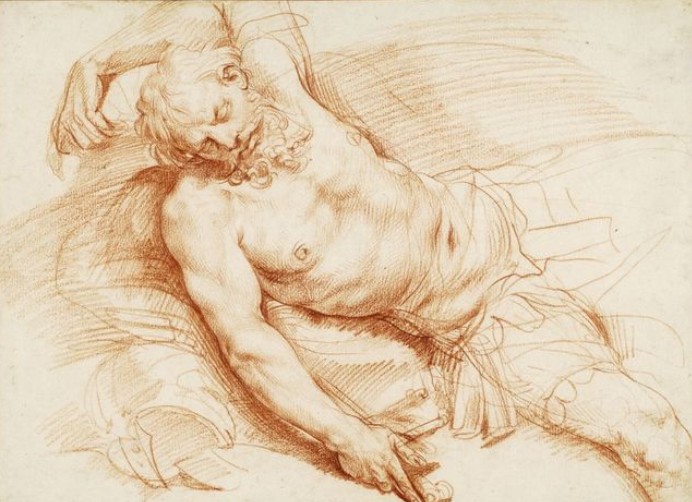

Sisara addormentato del Cavalier d’Arpino
Il foglio raffigura Sisara addormentato, il comandante dell’esercito cananeo protagonista di un episodio raccontato nel Libro dei Giudici dell’Antico Testamento. Un uomo disteso, apparentemente tranquillo, con il capo reclinato e un braccio ripiegato sopra la testa. Una posa naturale, studiata con grande attenzione anatomica, dietro la quale si nasconde però una storia tutt’altro che pacifica.
Il sonno di Sisara infatti precede un tragico epilogo, quando Giaele lo ucciderà nella propria tenda.
Il contrasto tra la serenità apparente della figura e il destino che la attende a rendere ancor più interessante lo studio del Cavalier d’Arpino.
La naturalezza della posa
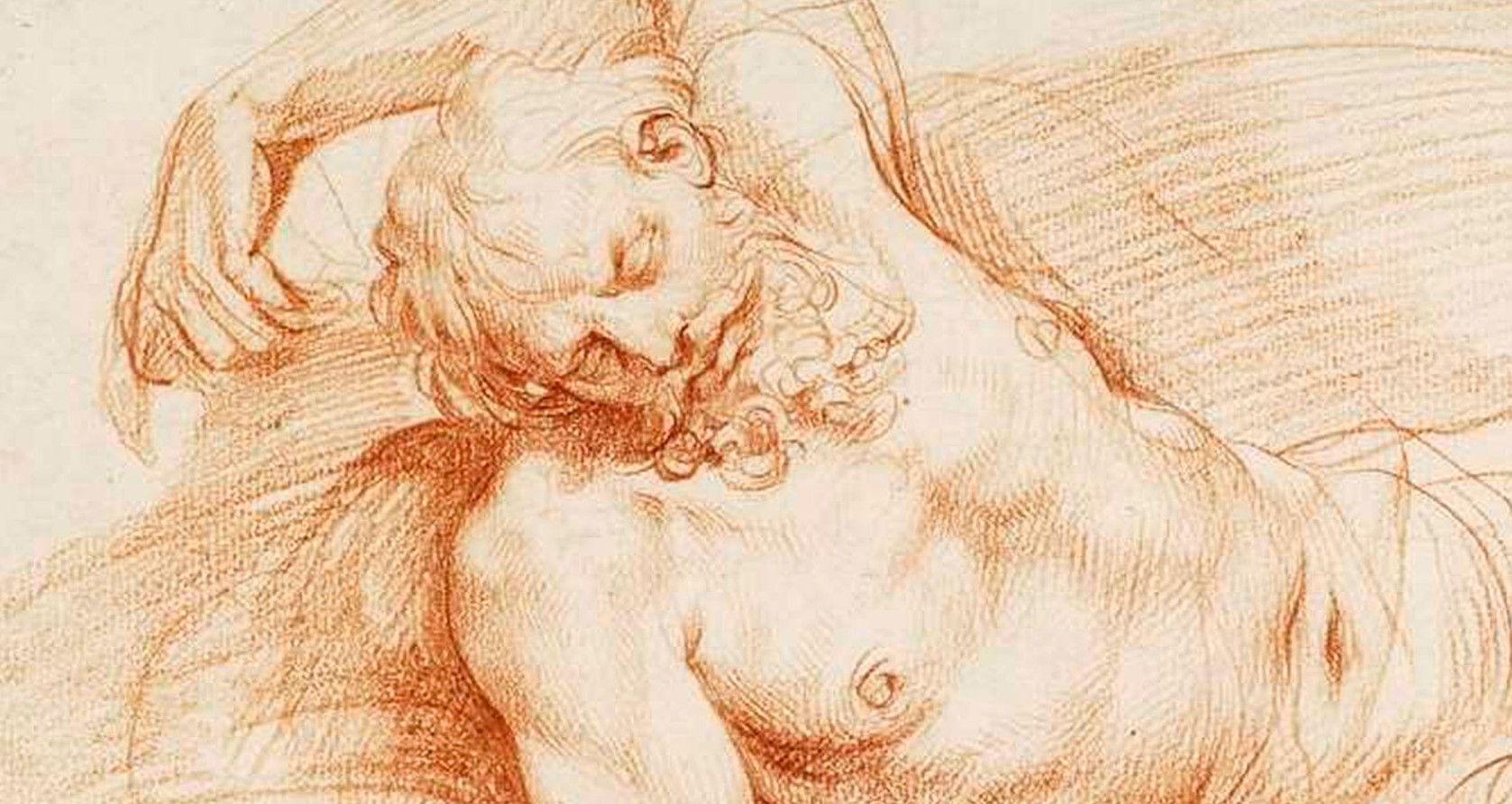
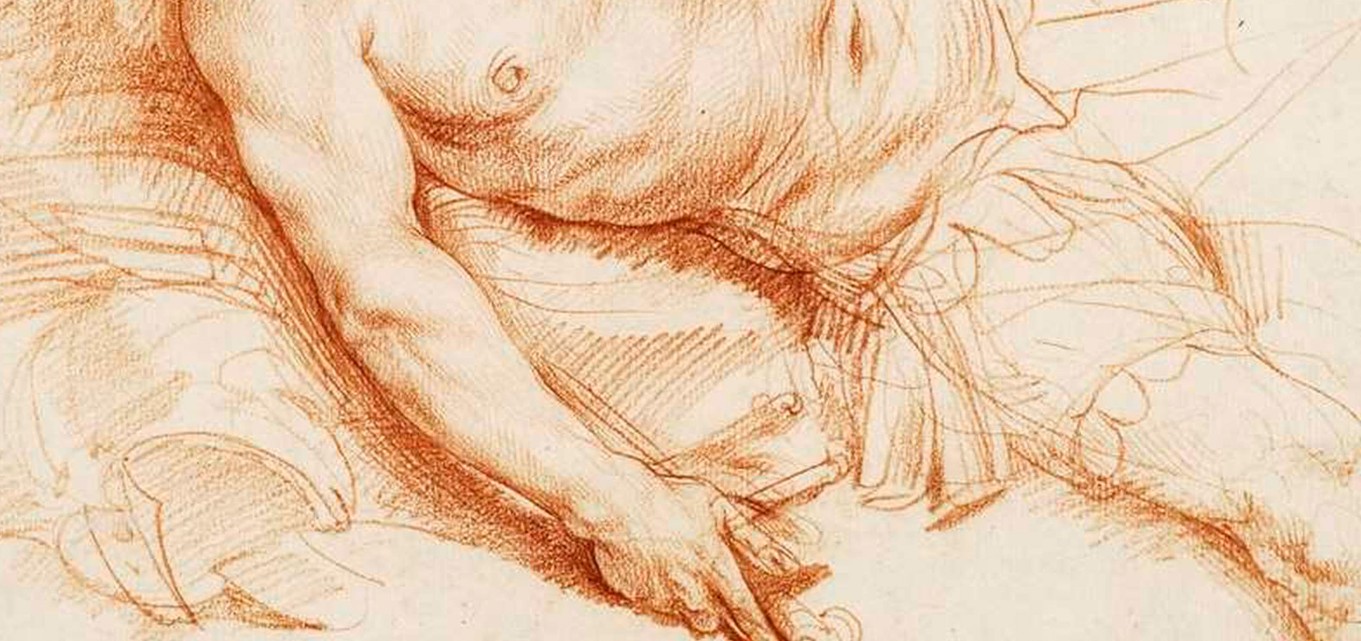
Osservando il foglio, colpisce innanzitutto la naturalezza della posa. Il corpo maschile è disteso, il capo abbandonato su un fianco, un braccio piegato sopra la testa e l’altro lasciato scendere lungo il giaciglio. La muscolatura è descritta con attenzione, attraverso un continuo alternarsi di segni più decisi e passaggi delicati.
La sanguigna, con il suo colore caldo rossastro, permette all’artista di restituire la consistenza della carne, i volumi e le ombre. Cesari studia il corpo in una posizione precisa, cercando di coglierne il peso e l’abbandono.
Perché Sisara dorme? La storia raccontata nel Libro dei Giudici
La storia di Sisara viene raccontata nelle all’Antico Testamento, precisamente al Libro dei Giudici, capitoli 4 e 5.
Sisara era il comandante dell’esercito di Iabin, re di Canaan, che dominava sugli Israeliti. Disponeva di un esercito potente, dotato anche di novecento carri da guerra di ferro, e per vent’anni aveva oppresso duramente il popolo d’Israele.
A quel punto interviene Debora, profetessa e giudice d’Israele, che chiama Barak e gli affida il compito di affrontare l’esercito nemico. Gli Israeliti riescono a sconfiggere le truppe di Sisara, che è costretto a fuggire a piedi per salvarsi.
Durante la fuga trova rifugio nella tenda di Giaele, moglie di Eber il Kenita. La donna lo accoglie e gli offre ospitalità. Sisara, stremato dalla fuga e dalla battaglia, le chiede dell’acqua. Giaele gli dà invece del latte, lo copre con una coperta e lo lascia riposare.
Il comandante, convinto di essere finalmente al sicuro, si addormenta profondamente. Quando è ormai immerso nel sonno, Giaele prende un picchetto della tenda e un martello e glielo conficca nella tempia, uccidendolo. Poco dopo arriva Barak, che trova il comandante sconfitto e senza vita.
La morte di Sisara per mano di una donna diventa così uno degli episodi più memorabili del racconto biblico. Nel successivo Cantico di Debora, contenuto nel quinto capitolo del Libro dei Giudici, Giaele viene celebrata per la sua azione.
Il Cavalier d’Arpino: il maestro di Caravaggio
Giuseppe Cesari era figlio di un pittore e si trasferì giovanissimo a Roma, dove iniziò a lavorare nelle grandi imprese decorative della città. La sua carriera fu particolarmente fortunata durante il pontificato di Clemente VIII, quando divenne uno dei pittori più richiesti e influenti dell’ambiente romano.
La sua bottega ebbe un ruolo importante nella formazione di numerosi artisti. Tra coloro che vi lavorarono ci fu anche il giovane Caravaggio, che frequentò l’ambiente del Cavalier d’Arpino durante i suoi primi anni romani.
La sua pittura si colloca in un momento di passaggio tra la cultura manierista e le nuove sensibilità che avrebbero preparato il Barocco. Nei suoi disegni si riconoscono l’interesse per l’anatomia, la costruzione delle figure e la ricerca di pose capaci di trasmettere movimento ed espressività. Treccani+1
Per il momento il sempre vostro Michelangelo Buonarroti vi saluta dandovi appuntamento ai prossimi post e sui social.

Caravaggio’s Master and His Extraordinary Drawing of a Sleeping Sisera
Before Caravaggio became one of the most revolutionary painters in the history of art, he spent time in late 16th-century Rome in the workshop of an already famous and highly influential artist: Giuseppe Cesari, known as Cavalier d’Arpino.
It was he who welcomed the young Michelangelo Merisi into his studio, providing him with a significant opportunity to enter the vibrant artistic milieu of the papal capital.
Born in Arpino in 1568, Cavalier d’Arpino was an established painter, favored by prominent patrons and closely connected to the papal court. His workshop served as a key hub for the training and professional activity of numerous artists.
Today, I would like to focus on one of his compelling red-chalk drawings, currently held at the Museum of Fine Arts in Lyon, France.
Sleeping Sisera by Cavalier d’Arpino
The sheet depicts Sisera—the commander of the Canaanite army and a central figure in an episode recounted in the Old Testament’s Book of Judges—in a state of sleep. He lies stretched out, appearing tranquil, with his head tilted and one arm folded over his head. It is a natural pose, rendered with great anatomical precision, yet it conceals a story that is anything but peaceful.
In fact, Sisera’s slumber precedes a tragic conclusion: he will soon be killed by Jael inside her tent.
The contrast between the figure’s apparent serenity and the fate that awaits him makes this study by Cavalier d’Arpino all the more intriguing.
The Naturalism of the Pose
Upon observing the drawing, one is immediately struck by the natural quality of the pose. The male body lies outstretched, the head slumped to one side; one arm is bent above the head, while the other hangs down along the resting place. The musculature is rendered with great care, through a constant interplay of bold, decisive strokes and more delicate passages.
The red chalk—with its warm, reddish hue—allows the artist to convey the texture of flesh, as well as its volume and the shadows upon it. Cesari examines the body in a specific pose, seeking to capture its weight and the sense of total abandonment.
Why is Sisera asleep? The story as told in the Book of Judges
The story of Sisera is recounted in the Old Testament, specifically in the Book of Judges, chapters 4 and 5.
Sisera was the commander of the army of Jabin, King of Canaan, who held dominion over the Israelites. He commanded a powerful force—which included nine hundred iron war chariots—and had harshly oppressed the people of Israel for twenty years.
At this juncture, Deborah—a prophetess and judge of Israel—intervenes; she summons Barak and entrusts him with the task of confronting the enemy army. The Israelites succeed in defeating Sisera’s troops, forcing him to flee on foot to save his life.
During his flight, he finds refuge in the tent of Jael, the wife of Heber the Kenite. She welcomes him and offers him hospitality. Exhausted from his escape and the battle, Sisera asks her for water; instead, Jael gives him milk, covers him with a blanket, and lets him rest.
Believing he is finally safe, the commander falls into a deep sleep. Once he is sound asleep, Jael takes a tent peg and a hammer, driving the peg into his temple and killing him. Shortly thereafter, Barak arrives, only to find the commander defeated and lifeless.
The death of Sisera at the hands of a woman thus becomes one of the most memorable episodes in the biblical narrative. In the subsequent Song of Deborah, found in the fifth chapter of the Book of Judges, Jael is celebrated for her deed.
Cavalier d’Arpino: Caravaggio’s Master
Giuseppe Cesari was the son of a painter and moved to Rome at a very young age, where he began working on the city’s major decorative projects. His career flourished particularly during the pontificate of Clement VIII, a time when he became one of the most sought-after and influential painters in Rome.
His workshop played a significant role in the training of numerous artists. Among those who worked there was the young Caravaggio, who spent time in Cavalier d’Arpino’s circle during his early years in Rome.
His style of painting belongs to a transitional period between Mannerism and the new sensibilities that would pave the way for the Baroque. His drawings reveal a keen interest in anatomy, the structural composition of figures, and the pursuit of poses capable of conveying both movement and expressiveness.
For now, yours truly, Michelangelo Buonarroti, bids you farewell—until the next posts and over on social media.
Sostienici – Support Us
Se questo blog ti piace e ti appassiona, puoi aiutarci a farlo crescere sempre più sostenendoci in modo concreto condividendo i post, seguendo le pagine social e con un contributo che ci aiuta ad andare avanti con il nostro lavoro di divulgazione. . ENGLISH: If you like and are passionate about this blog, you can help us make it grow more and more by supporting us in a concrete way by sharing posts, following social pages and with a contribution that helps us to move forward with our dissemination work.
10,00 €
Condividi:


Questo sono io



sostienici

Sostienici - Support Us
Se questo blog ti piace e ti appassiona, puoi aiutarci a farlo crescere sempre più sostenendoci in modo concreto condividendo i post, seguendo le pagine social e con un contributo che ci aiuta ad andare avanti con il nostro lavoro di divulgazione. . ENGLISH: If you like and are passionate about this blog, you can help us make it grow more and more by supporting us in a concrete way by sharing posts, following social pages and with a contribution that helps us to move forward with our dissemination work.
€10,00


