Palazzo Zuccari a Roma: la casa dei mostri con le bocche spalancate
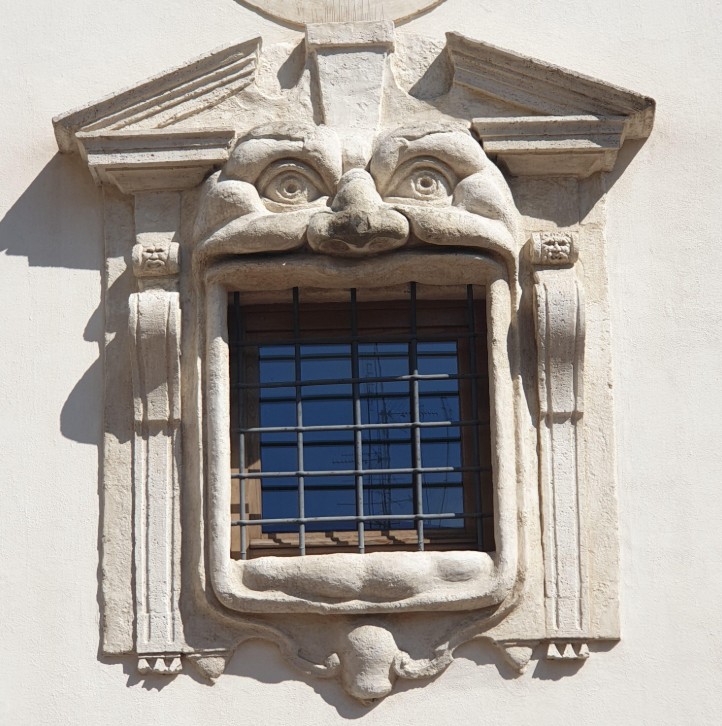
A Roma c’è una casa che sembra uscita da una fiaba gotica, con mostri dalle fauci spalancate al posto delle porte e delle finestre. Basta arrivare all’incrocio tra via Gregoriana e via Sistina per trovarsi davanti a una delle facciate più sorprendenti e insolite della città: quella di Palazzo Zuccari, conosciuto anche come la Casa dei Mostri.
Dietro quelle bocche gigantesche si nasconde una storia fatta di ambizioni artistiche, capricci architettonici, personaggi illustri e una biblioteca che ancora oggi rappresenta un punto di riferimento internazionale per gli studi sulla storia dell’arte.

Palazzo Zuccari, la casa dei mostri nel cuore di Roma
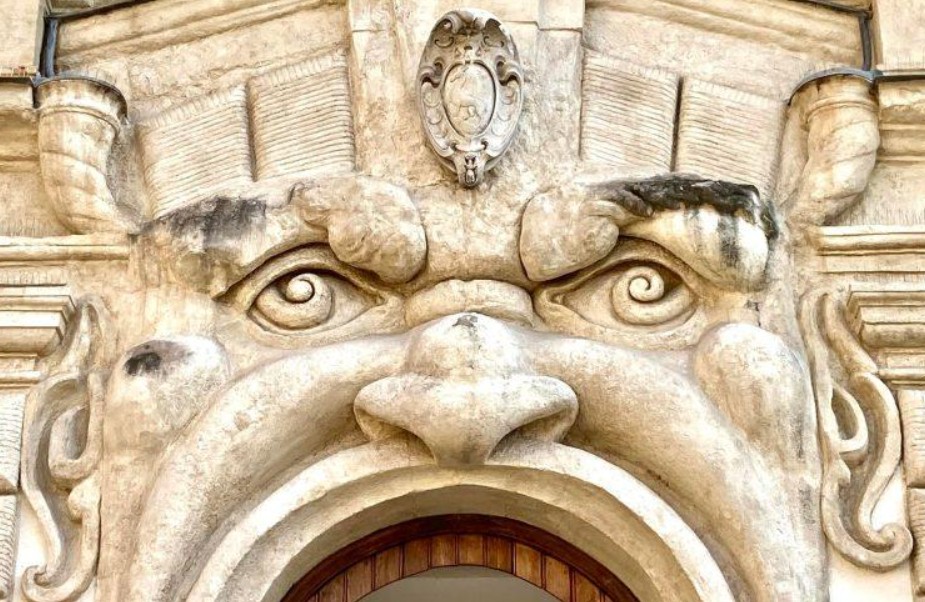
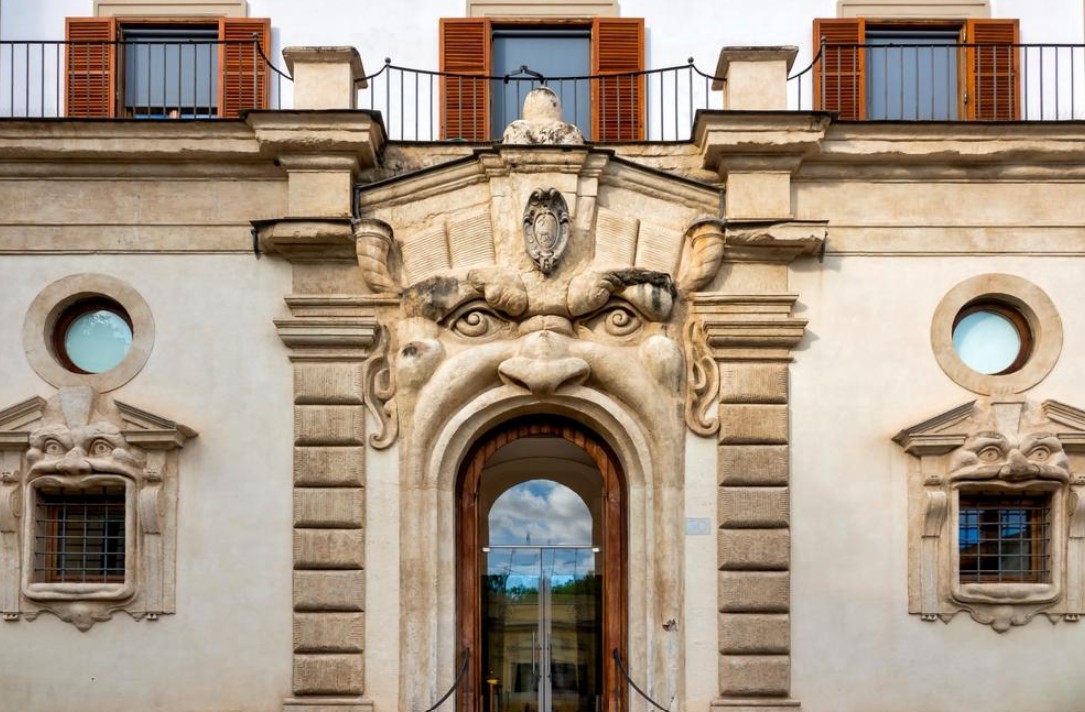
La prima cosa che colpisce osservando Palazzo Zuccari è proprio la sua facciata. Le cornici del portone e delle finestre non hanno le consuete forme geometriche, ma riproducono enormi volti mostruosi, con bocche spalancate, denti e fauci pronte a inghiottire chiunque osi avvicinarsi.
Un’immagine insolita per una città ricca di raffinati palazzi rinascimentali, chiese monumentali e facciate barocche.
Il palazzo occupa un’area compresa fra l’ultimo tratto di via Sistina e via Gregoriana, non lontano da Trinità dei Monti e da Piazza di Spagna.
Questa singolare architettura è legata alla fantasia di Federico Zuccari che nel 1590 acquistò il terreno con l’intenzione di realizzare una dimora per sé e per i propri figli, destinandola anche ad accogliere il suo studio.
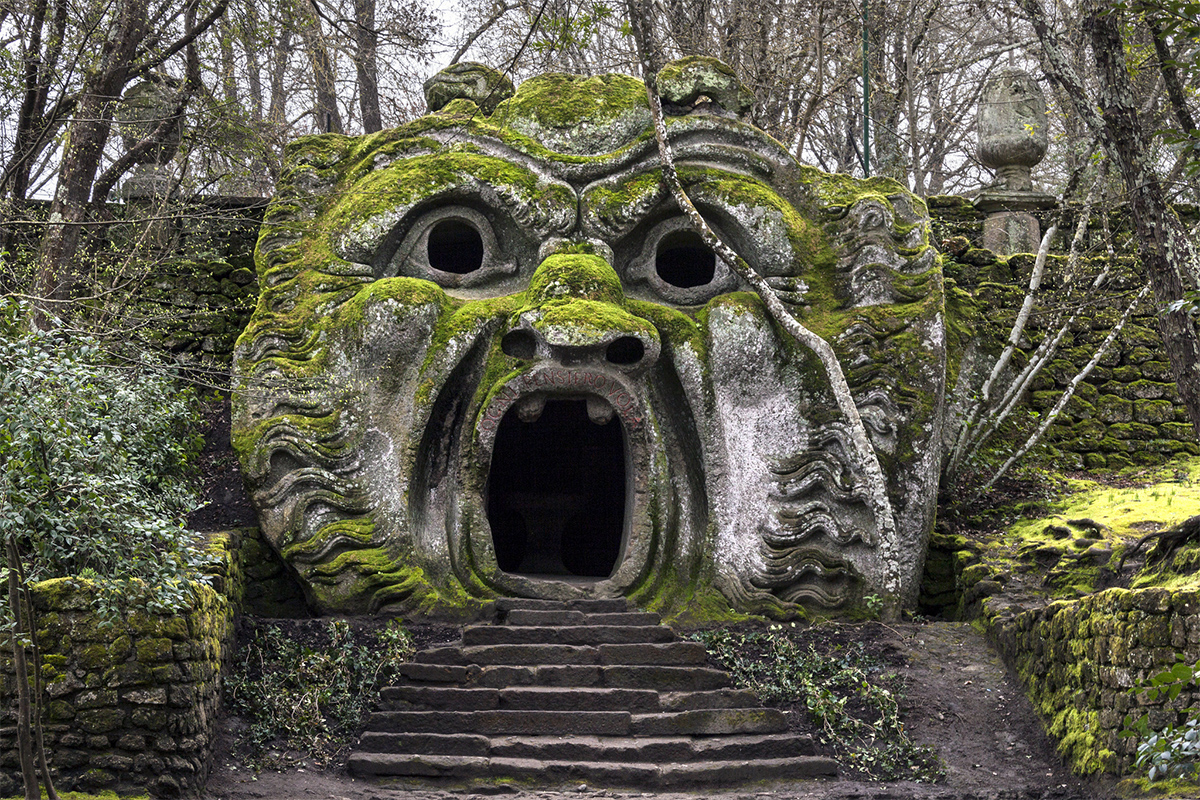
Zuccari volle qualcosa che non passasse inosservato. Per la facciata si ispirò al gusto fantastico e mostruoso che aveva trovato una delle sue espressioni più celebri nel Parco dei Mostri di Bomarzo, vicino a Viterbo.
Il risultato fu un edificio fuori dagli schemi, nel quale l’architettura sembra trasformarsi in una creatura fantastica.
L’ispirazione ai mostri di Bomarzo e il capriccio di Federico Zuccari
Tra Cinquecento e Seicento si diffuse il gusto per le grottesche, le invenzioni fantastiche, le figure bizzarre e architetture in grado di stupire e inquietare. Il meraviglioso, il mostruoso e il paradossale diventavano strumenti per stimolare la curiosità e mettere alla prova lo sguardo di chi osservava.
Zuccari trasformò questo gusto nella facciata della sua abitazione romana.
Le grandi bocche che incorniciano ingressi e finestre sembrano quasi invitare il visitatore a entrare in un mondo capovolto, dove niente è come appare.
Da dimora privata a locanda degli artisti: i personaggi illustri che vi soggiornarono
Federico Zuccari aveva immaginato per la propria casa un destino particolare. Attraverso l’Accademia di San Luca, infatti, dispose che la dimora fosse destinata agli artisti stranieri.
La sua volontà, tuttavia, non venne rispettata subito. Alla morte del pittore il palazzo passò ad altri proprietari e nel corso del tempo cambiò più volte destinazione.
Nel 1702 vi abitò anche la regina di Polonia, che contribuì a trasformare la dimora in uno dei luoghi frequentati dalla società mondana romana.
Soltanto in seguito il progetto originario di Zuccari trovò finalmente una realizzazione. Il palazzo divenne infatti una locanda destinata agli artisti stranieri che arrivavano a Roma per studiare l’arte antica e ammirare i capolavori della città.
Tra coloro che vi soggiornarono figurano personalità di grande rilievo come Johann Joachim Winckelmann, Joshua Reynolds e Jacques-Louis David.
Anche i pittori Nazareni frequentarono questi ambienti, lasciando tracce importanti della loro presenza nella storia artistica della città. Palazzo Zuccari era diventato proprio ciò che il suo ideatore aveva desiderato: un luogo d’incontro e di accoglienza per chi faceva dell’arte la propria ragione di vita.
Il Palazzo dei Mostri nel romanzo Il Piacere di D’Annunzio
La fama di Palazzo Zuccari non rimase confinata agli ambienti artistici. La sua facciata bizzarra e inquietante colpì anche Gabriele D’Annunzio, che lo immortalò nel romanzo Il Piacere.
Pubblicato nel 1889, il libro racconta la vita dell’aristocratico Andrea Sperelli e restituisce un’immagine della Roma elegante, mondana e raffinata di fine Ottocento.
In questo scenario, Palazzo Zuccari diventa uno degli elementi di quell’atmosfera particolare che D’Annunzio seppe costruire attraverso luoghi, ambienti e suggestioni artistiche. Non poteva esserci edificio più adatto a entrare nell’immaginario di un romanzo nel quale bellezza, eccentricità e decadenza si intrecciano continuamente.
Enrichetta Hertz e la nascita della Biblioteca Hertziana
Un altro capitolo fondamentale della storia del palazzo è legato a Enrichetta Hertz, ultima proprietaria dell’edificio.
Nel 1900 Hertz decise di lasciare la propria raccolta di dipinti allo Stato italiano e il palazzo, insieme alla biblioteca, alla Germania.
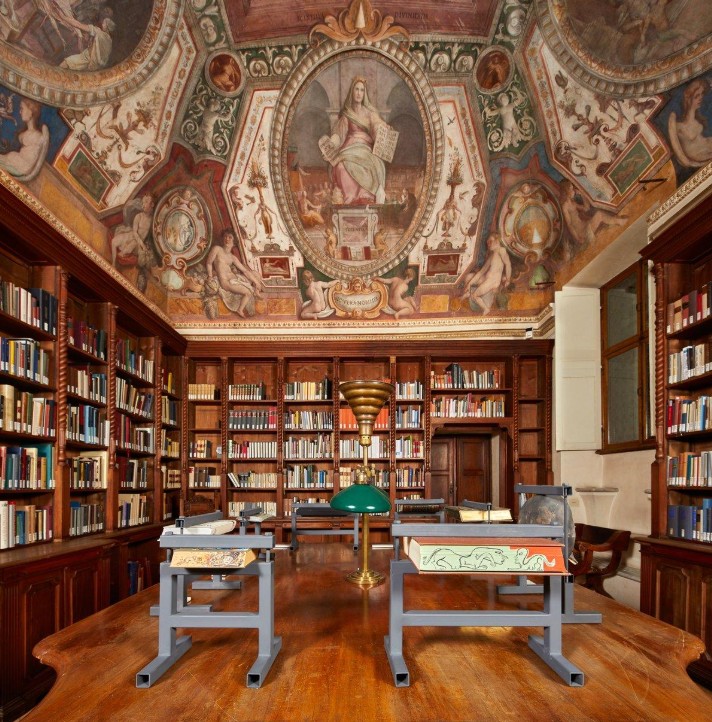
Da questa disposizione nacque la Biblioteca Hertziana, istituzione specializzata nella storia dell’arte italiana, con particolare attenzione all’arte di Roma e del Rinascimento.
La biblioteca è tuttora attiva e rappresenta uno dei più importanti centri internazionali di ricerca storico-artistica. I suoi fondi librari e fotografici sono una risorsa preziosa per studiosi e ricercatori provenienti da tutto il mondo.
L’accesso è regolamentato e riservato agli studiosi secondo le modalità previste dall’istituzione. Quella che era nata come dimora privata di un artista visionario è diventata una casa della conoscenza, frequentata da generazioni di storici dell’arte.
Gli affreschi di Giulio Romano e i resti della Villa di Lucullo
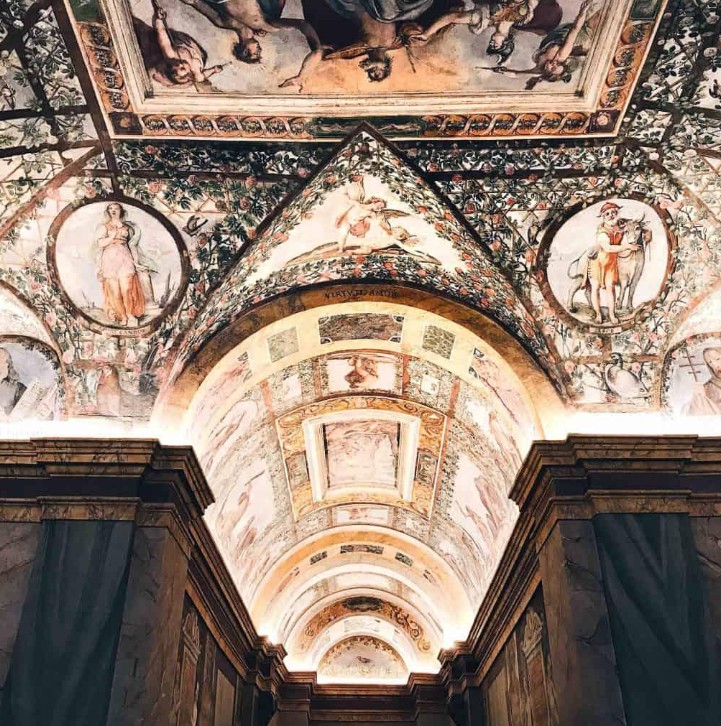
Le sorprese di Palazzo Zuccari non si fermano alla facciata. L’edificio conserva importanti testimonianze artistiche, tra cui affreschi attribuiti a Giulio Romano, uno dei protagonisti della cultura figurativa del Cinquecento e allievo di Raffaello.
Nei sotterranei invece si trovano resti archeologici riconducibili alla Villa di Lucullo, complesso residenziale che risale alla fine dell’età repubblicana romana.
La prossima volta che vi troverete a passeggiare tra via Sistina e via Gregoriana, alzate lo sguardo. Quelle bocche spalancate sembrano ancora custodire qualche segreto
Per il momento il sempre vostro Michelangelo Buonarroti vi saluta dandovi appuntamento ai prossimi post e sui social.
Palazzo Zuccari in Rome: The House of Monsters with Wide-Open Maws
In Rome, there stands a house that looks as if it were plucked from a Gothic fairy tale—a building where, in place of standard doors and windows, one finds monsters with gaping, cavernous mouths. At the intersection of Via Gregoriana and Via Sistina, visitors encounter one of the city’s most striking and unusual façades: that of Palazzo Zuccari, also known as the “House of Monsters.”
Behind these colossal maws lies a history woven with artistic ambition, architectural whimsy, and a roster of illustrious figures—not to mention a library that remains, to this day, an internationally renowned hub for the study of art history.
Palazzo Zuccari: The House of Monsters in the Heart of Rome
The first thing that strikes anyone observing Palazzo Zuccari is its façade. The frames surrounding the entrance and windows eschew conventional geometric shapes; instead, they take the form of enormous, monstrous faces—complete with wide-open mouths, teeth, and gaping jaws that seem poised to swallow anyone who dares to draw near.
It is a highly unconventional sight in a city otherwise defined by elegant Renaissance palazzi, monumental churches, and Baroque façades.
The palazzo occupies a site between the final stretch of Via Sistina and Via Gregoriana, not far from Trinità dei Monti and the Spanish Steps.
This singular architectural creation is the product of Federico Zuccari’s imagination. In 1590, he purchased the land with the intention of building a home for himself and his children, while also incorporating a studio for his own work.
Zuccari sought to create something that would be impossible to overlook. For the façade, he drew inspiration from the fantastical, monstrous aesthetic—a style famously exemplified by the “Park of the Monsters” (Parco dei Mostri) in Bomarzo, near Viterbo. The result was an unconventional building, in which architecture seems to transform into a fantastical creature.
Inspired by the monsters of Bomarzo and the whimsical imagination of Federico Zuccari
Between the 16th and 17th centuries, there was a growing taste for the “grotesque”—fantastical inventions, bizarre figures, and architecture designed to both astonish and unsettle. The marvelous, the monstrous, and the paradoxical served as tools to spark curiosity and challenge the observer’s gaze.
Zuccari channeled this aesthetic into the façade of his Roman residence.
The large, gaping mouths that frame the entrances and windows seem to invite the visitor into an inverted world, where nothing is quite what it appears to be.
From private residence to an inn for artists: the illustrious figures who stayed there
Federico Zuccari envisioned a unique destiny for his home. Through the Accademia di San Luca, he stipulated that the residence should be set aside for foreign artists.
However, his wishes were not immediately honored. Following the painter’s death, the palazzo passed to other owners and served various purposes over time.
In 1702, the Queen of Poland even resided there, helping to turn the house into a hub for Rome’s high society.
It was only later that Zuccari’s original vision was finally realized. The palazzo became an inn for foreign artists arriving in Rome to study ancient art and admire the city’s masterpieces.
Among those who stayed there were prominent figures such as Johann Joachim Winckelmann, Joshua Reynolds, and Jacques-Louis David.
The Nazarene painters also frequented these spaces, leaving a significant mark of their presence on the city’s artistic history. Palazzo Zuccari had become exactly what its creator had envisioned: a meeting place and a welcoming space for those who made art the very purpose of their lives.
The “Palace of Monsters” in D’Annunzio’s novel The Child of Pleasure (Il Piacere)
The fame of Palazzo Zuccari was not confined to artistic circles. Its bizarre and unsettling façade also caught the attention of Gabriele D’Annunzio, who immortalized it in his novel The Child of Pleasure (Il Piacere).
Published in 1889, the book chronicles the life of the aristocrat Andrea Sperelli and presents a vivid portrait of the elegant, worldly, and refined Rome of the late 19th century.
Within this setting, Palazzo Zuccari becomes a key element of the distinctive atmosphere that D’Annunzio crafted through various locations, settings, and artistic evocations. There could hardly have been a more fitting building to inhabit the world of a novel in which beauty, eccentricity, and decadence are constantly intertwined.
Enrichetta Hertz and the Birth of the Bibliotheca Hertziana
Another pivotal chapter in the history of the palazzo is linked to Enrichetta Hertz, its final private owner.
In 1900, Hertz decided to bequeath her collection of paintings to the Italian State, and the palazzo—along with her library—to Germany.
This bequest led to the founding of the Bibliotheca Hertziana, an institution specializing in the history of Italian art, with a particular focus on the art of Rome and the Renaissance.
The library remains active today and stands as one of the most significant international centers for research in art history. Its library and photographic collections serve as an invaluable resource for scholars and researchers from across the globe.
Access is regulated and reserved for scholars, in accordance with the institution’s established procedures. What began as the private residence of a visionary artist has evolved into a house of knowledge, frequented by generations of art historians.
The frescoes by Giulio Romano and the remains of the Villa of Lucullus
The surprises of Palazzo Zuccari extend well beyond its façade. The building houses important artistic treasures, including frescoes attributed to Giulio Romano—a key figure in the visual culture of the 16th century and a pupil of Raphael.
Deep underground, one can find archaeological remains linked to the Villa of Lucullus, a residential complex dating back to the late Roman Republican era.
The next time you find yourself strolling between Via Sistina and Via Gregoriana, look up. Those wide-open mouths seem as though they might still be guarding a secret or two.
For now, yours truly, Michelangelo Buonarroti, bids you farewell—until the next post, or perhaps over on social media.
Sostienici – Support Us
Se questo blog ti piace e ti appassiona, puoi aiutarci a farlo crescere sempre più sostenendoci in modo concreto condividendo i post, seguendo le pagine social e con un contributo che ci aiuta ad andare avanti con il nostro lavoro di divulgazione. . ENGLISH: If you like and are passionate about this blog, you can help us make it grow more and more by supporting us in a concrete way by sharing posts, following social pages and with a contribution that helps us to move forward with our dissemination work.
10,00 €
Condividi:


Questo sono io



sostienici

Sostienici - Support Us
Se questo blog ti piace e ti appassiona, puoi aiutarci a farlo crescere sempre più sostenendoci in modo concreto condividendo i post, seguendo le pagine social e con un contributo che ci aiuta ad andare avanti con il nostro lavoro di divulgazione. . ENGLISH: If you like and are passionate about this blog, you can help us make it grow more and more by supporting us in a concrete way by sharing posts, following social pages and with a contribution that helps us to move forward with our dissemination work.
€10,00