
Il Natale di Rubens: quando la Natività diventa uno spettacolo di luce, colore e meraviglia
Nei dipinti dedicati alla Natività di Peter Paul Rubens, il Natale è un’esplosione di luce, colore, movimento e meraviglia.
Davanti alle sue tele si viene trascinati dentro una rappresentazione grandiosa, ricca di figure monumentali, gesti intensi, stoffe preziose e corpi in movimento che sembra possano uscire dalle opere da un momento all’altro.
Il pittore fiammingo interpreta la nascita di Cristo in chiave barocca, aggiungendo una vitalità fuori dal comune. La sua pittura è generosa, teatrale, sensuale nel trattamento della materia e capace di trasformare un episodio della tradizione cristiana in un’esperienza visiva ed emotiva.
Per raccontare il Natale attraverso i suoi occhi voglio cominciare da due sue capolavori: l’Adorazione dei pastori e l’Adorazione dei Magi. Due opere diverse per atmosfera e composizione, ma unite dalla stessa capacità di rendere straordinario il racconto della nascita di Gesù.
L’Adorazione dei pastori: il Bambino che illumina la notte
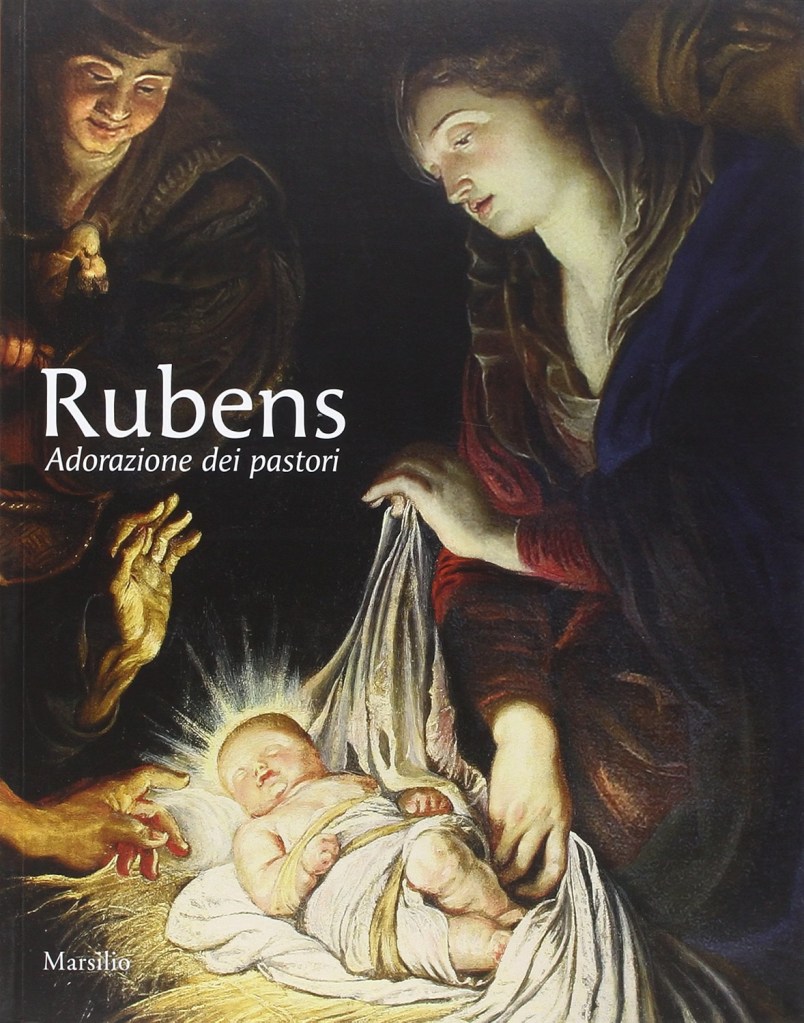
Tra le interpretazioni più suggestive della Natività realizzate da Rubens c’è l’Adorazione dei pastori, dipinta nel 1608 e oggi conservata nella Pinacoteca Civica di Fermo.
È una tela che riassume molte delle caratteristiche più affascinanti della sua pittura e rappresenta uno dei momenti conclusivi della sua esperienza italiana.
La scena è immersa nell’oscurità della notte. Dalla mangiatoia si sprigiona una luce chiarissima, quasi abbagliante, che nasce dal corpo del Bambino e investe progressivamente le figure che gli stanno intorno.
Gesù è la sorgente luminosa della composizione.
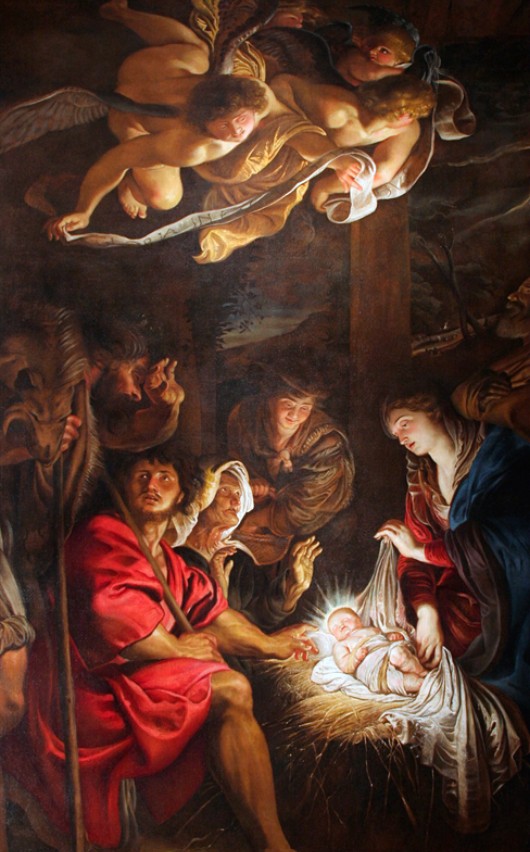

La Vergine, monumentale e raccolta, si china dolcemente verso il figlio. Accanto a lei i pastori si avvicinano con gesti pieni di stupore e devozione. I loro corpi modellati con una fisicità che richiama la scultura classica, conferiscono alla scena una presenza tangibile.
Rubens conosce profondamente l’arte dell’antichità e durante il soggiorno italiano ha studiato i grandi maestri del Rinascimento. In questo dipinto quelle esperienze vengono rielaborate in un linguaggio personalissimo, nel quale la monumentalità delle figure si accompagna a una sensibilità luministica.
I personaggi si piegano, si avvicinano, si protendono verso il Bambino. Ogni gesto sembra nascere da un’emozione autentica.
E’ luce a tenere assieme l‘intera rappresentazione. Si tratta di una luce spirituale, ma anche pittorica, che consente all’artista di costruire una scena emozionante e ricca.
L’Adorazione dei Magi del Prado: il Natale è una grande celebrazione
Se nell’Adorazione dei pastori Rubens concentra l’attenzione sulla luce che emana dal Bambino, nell’Adorazione dei Magi, conservata al Museo del Prado di Madrid, il racconto della Natività assume proporzioni spettacolari.
Realizzata inizialmente nel 1609 e successivamente ampliata dall’artista nel 1628-1629, la grande composizione è una delle testimonianze più significative della sua pittura.
Qui il Natale non è soltanto un momento di raccoglimento familiare e religioso. È un avvenimento solenne, al quale partecipano personaggi provenienti da mondi lontani, accompagnati da un seguito imponente.
I Magi arrivano per rendere omaggio a Gesù e portano con sé i loro doni: oro, incenso e mirra. La scena si sviluppa attraverso una moltitudine di figure, animali, abiti sontuosi e gesti che costruiscono un movimento continuo.
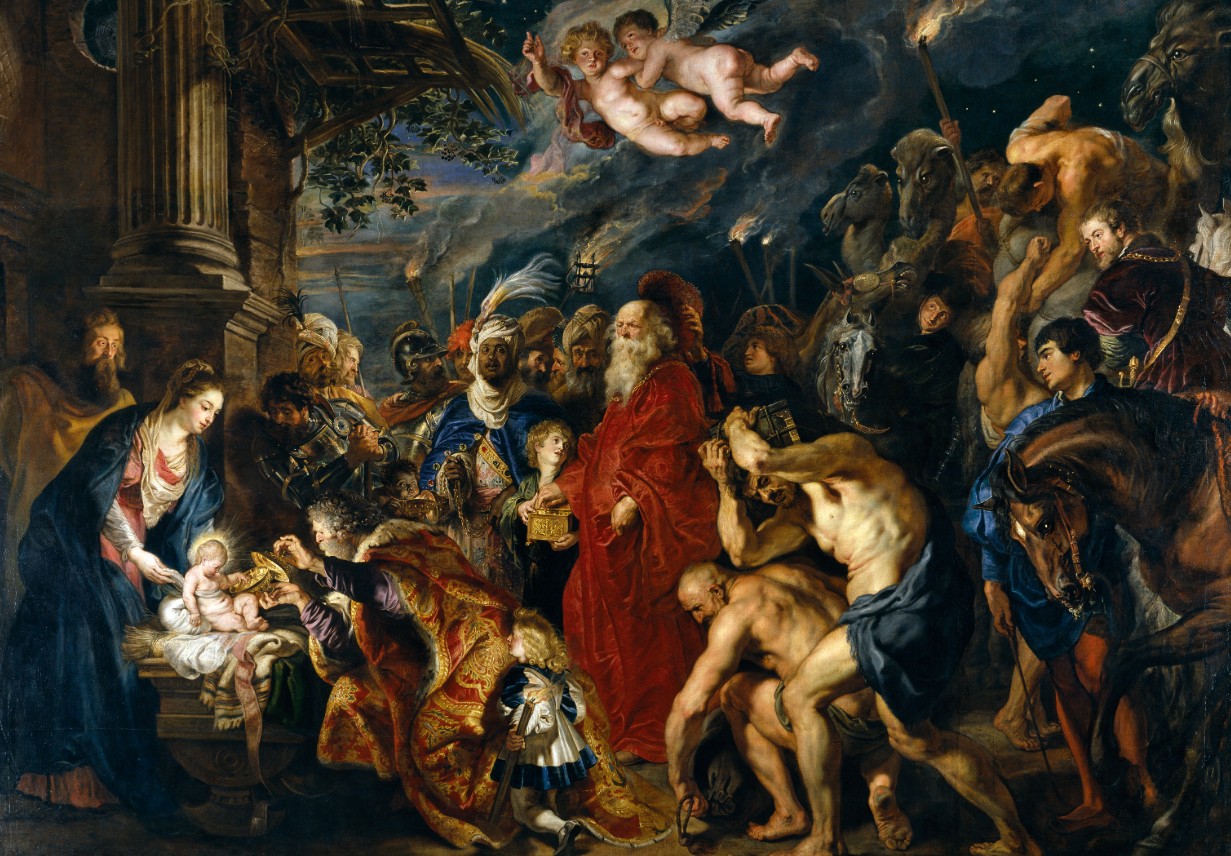
Rubens ama le composizioni affollate, ma riesce a governarle con una straordinaria capacità narrativa. Lo sguardo passa da un personaggio all’altro, si sofferma sui doni, sui volti, sulle mani e sulle stoffe, fino a ritrovare il centro spirituale dell’intera rappresentazione: Maria col Bambino.
Il colore ha un ruolo fondamentale. Rossi intensi, ori, bianchi luminosi e tonalità profonde si alternano creando un insieme ricchissimo, nel quale ogni figura contribuisce alla magnificenza dell’evento.
Come vi ho accennato prima, Rubens tornò su questa tela molti anni dopo la sua prima esecuzione, rendendola più grande e trasformandola. Il risultato è una composizione che molto racconta sull’evoluzione della sua ricerca artistica.
Quando tornò a Madrid nel 1628-1629, Rubens intervenne anche sulle figure e sul linguaggio pittorico, aggiornando il dipinto alla propria maniera più matura. Nella parte aggiunta inserì persino un autoritratto a cavallo, riconoscibile dalla catena d’oro e dalla spada.

Un’altra Adorazione dei Magi: la versione del Museo di Belle Arti di Lione
Rubens tornò più volte sul tema dell’Adorazione dei Magi. Fu un tema al quale dedicò diverse interpretazioni, sperimentando soluzioni compositive e narrative differenti.
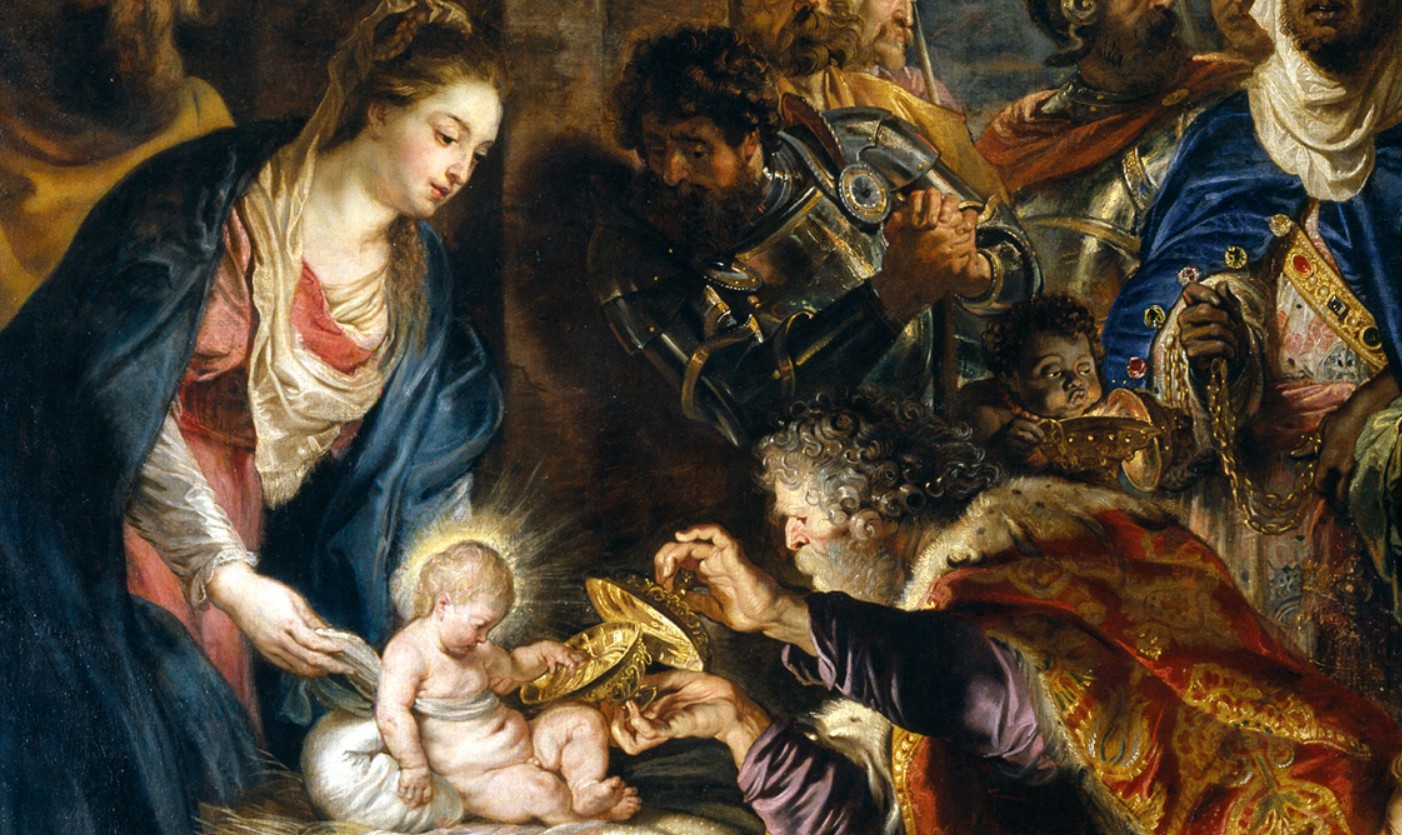
Una versione particolarmente interessante è quella conservata al Museo di Belle Arti di Lione e datata intorno al 1617-1618.
Qui la scena è più raccolta e intima rispetto alla monumentale tela del Prado. Maria sostiene il Bambino mentre uno dei Magi, inginocchiato davanti a lui, si avvicina con un gesto di profonda venerazione.
Il contrasto tra la semplicità della mangiatoia e lo splendore degli abiti dei visitatori è particolarmente efficace. I mantelli preziosi, i ricami, le pellicce e i riflessi dorati raccontano la ricchezza dei personaggi, ma è sempre il Bambino a costituire il fulcro emotivo della composizione.
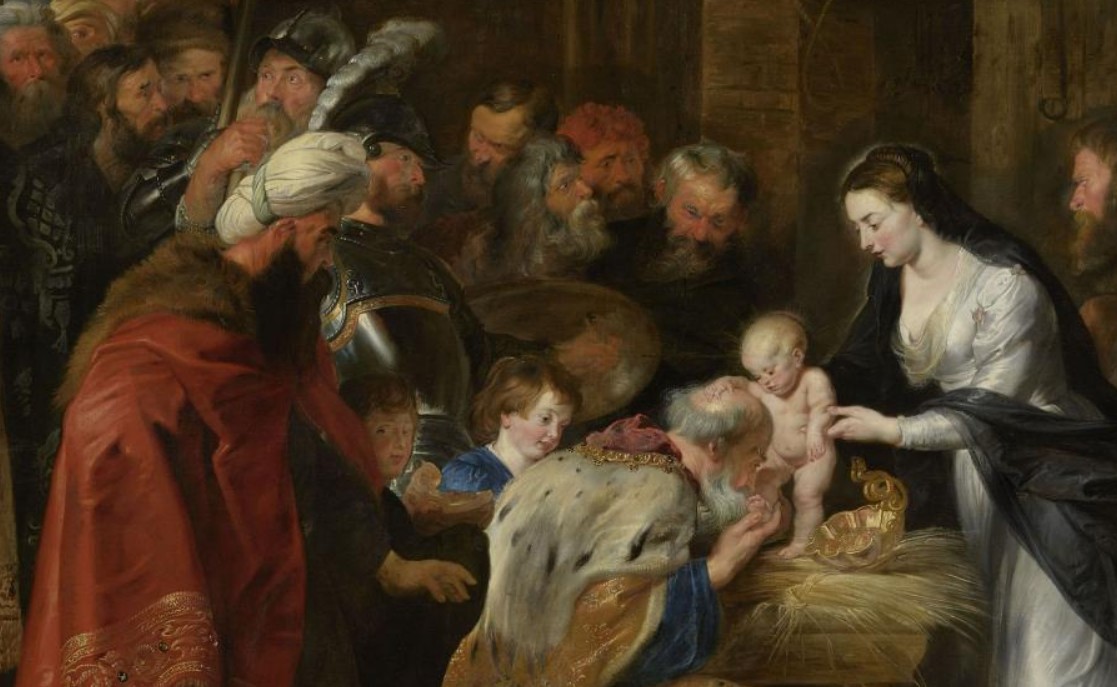
Rubens costruisce la scena attraverso diagonali, movimenti e una successione di figure che sembrano intrecciarsi in un unico racconto. La pittura diventa materia viva.
Le figure dell’artista sembrano appartenere a un mondo reale, fatto di carne, gesti e sentimenti ma è attraverso la luce che meglio descrive i personaggi che si muovono sulla scena.
Per il momento il sempre vostro Michelangelo Buonarroti vi saluta dandovi appuntamento ai prossimi post e sui social.
Rubens’s Christmas: When the Nativity Becomes a Spectacle of Light, Color, and Wonder
In the paintings dedicated to the Nativity by Peter Paul Rubens, Christmas is an explosion of light, color, movement, and wonder.
Standing before his canvases, one is drawn into a grand spectacle, rich with monumental figures, intense gestures, sumptuous fabrics, and bodies in motion—so lifelike they seem as though they might step right out of the paintings at any moment.
The Flemish master interprets the birth of Christ through a Baroque lens, imbuing it with an extraordinary vitality. His style is generous, theatrical, and sensual in its handling of material, capable of transforming an episode from the Christian tradition into a vivid visual and emotional experience.
To explore Christmas through his eyes, I will begin with two of his masterpieces: The Adoration of the Shepherds and The Adoration of the Magi. Though distinct in atmosphere and composition, both works share the same remarkable ability to elevate the story of Jesus’s birth into something truly extraordinary.
The Adoration of the Shepherds: The Child Who Illuminates the Night
Among Rubens’s most evocative interpretations of the Nativity is The Adoration of the Shepherds, painted in 1608 and now housed in the Pinacoteca Civica in Fermo.
This canvas encapsulates many of the most compelling qualities of his painting and marks one of the final chapters of his time in Italy.
The scene is steeped in the darkness of night. A brilliant, almost blinding light radiates from the manger—emanating from the body of the Christ Child—and gradually washes over the figures gathered around Him.
Jesus serves as the composition’s source of light.
The Virgin, monumental yet composed, leans tenderly toward her Son. Beside her, the shepherds draw near with gestures full of wonder and devotion. Their bodies—modeled with a physicality reminiscent of classical sculpture—lend a tangible presence to the scene.
Rubens possessed a profound knowledge of ancient art, and during his time in Italy, he studied the great masters of the Renaissance. In this painting, those experiences are transformed into a highly personal visual language, in which the monumental scale of the figures is balanced by a keen sensitivity to light.
The figures lean, approach, and reach out toward the Child. Every gesture seems to spring from a genuine emotion.
It is light that binds the entire composition together. This light is both spiritual and painterly, enabling the artist to construct a scene that is as emotionally resonant as it is rich in detail.
The Adoration of the Magi at the Prado: Christmas as a Grand Celebration
While in the Adoration of the Shepherds Rubens focuses on the light emanating from the Child, in the Adoration of the Magi—housed at the Prado Museum in Madrid—the narrative of the Nativity takes on spectacular proportions.
Initially created in 1609 and later expanded by the artist between 1628 and 1629, this grand composition stands as one of the most significant examples of his work.
Here, Christmas is more than just a moment of intimate family or religious reflection; it is a solemn event, attended by figures from distant lands, accompanied by an imposing entourage.
The Magi arrive to pay homage to Jesus, bringing with them their gifts: gold, frankincense, and myrrh. The scene unfolds through a multitude of figures, animals, and sumptuous garments, with gestures that create a sense of continuous movement.
Rubens favored crowded compositions, yet he possessed an extraordinary narrative ability that allowed him to masterfully orchestrate them. The gaze shifts from one figure to another, lingering on the gifts, the faces, the hands, and the fabrics, until it finds the spiritual center of the entire composition: Mary with the Child.
Color plays a fundamental role. Rich reds, golds, luminous whites, and deep tones alternate, creating an incredibly opulent scene in which every figure contributes to the magnificence of the event.
As I mentioned earlier, Rubens returned to this canvas many years after its initial execution, enlarging and transforming it. The result is a composition that reveals a great deal about the evolution of his artistic vision.
When he returned to Madrid in 1628–1629, Rubens reworked the figures and the pictorial language, bringing the painting into line with his more mature style. In the added section, he even included a self-portrait on horseback, identifiable by the gold chain and the sword.
Another Adoration of the Magi: the version at the Museum of Fine Arts in Lyon
Rubens revisited the theme of the Adoration of the Magi several times. It was a subject to which he devoted various interpretations, experimenting with different compositional and narrative approaches.
A particularly interesting version is the one held at the Museum of Fine Arts in Lyon, dating to around 1617–1618.
Here, the scene is more contained and intimate compared to the monumental canvas in the Prado. Mary holds the Child, while one of the Magi, kneeling before Him, approaches with a…
Sostienici – Support Us
Se questo blog ti piace e ti appassiona, puoi aiutarci a farlo crescere sempre più sostenendoci in modo concreto condividendo i post, seguendo le pagine social e con un contributo che ci aiuta ad andare avanti con il nostro lavoro di divulgazione. . ENGLISH: If you like and are passionate about this blog, you can help us make it grow more and more by supporting us in a concrete way by sharing posts, following social pages and with a contribution that helps us to move forward with our dissemination work.
10,00 €
Condividi:


Questo sono io



sostienici

Sostienici - Support Us
Se questo blog ti piace e ti appassiona, puoi aiutarci a farlo crescere sempre più sostenendoci in modo concreto condividendo i post, seguendo le pagine social e con un contributo che ci aiuta ad andare avanti con il nostro lavoro di divulgazione. . ENGLISH: If you like and are passionate about this blog, you can help us make it grow more and more by supporting us in a concrete way by sharing posts, following social pages and with a contribution that helps us to move forward with our dissemination work.
€10,00


