Il Natale nell’arte preraffaellita: la Natività, i Re Magi e la poesia della luce nei dipinti dell’Ottocento
Il Natale raccontato dai Preraffaelliti è fatto di luce, simboli, colori intensi e atmosfere sospese nel tempo. Nei loro dipinti la nascita di Cristo diventa un’occasione per indagare la bellezza, la spiritualità e i sentimenti più profondi dell’animo umano.
La confraternita preraffaellita, nata in Inghilterra nel 1848, rivoluzionò il modo di guardare alla pittura. I suoi artisti cercavano una bellezza autentica, ispirata all’arte italiana del Quattrocento, alla natura, alla letteratura e alla tradizione religiosa. Nei soggetti legati alla storia sacra ritroviamo alcune delle immagini più suggestive per avvicinarci al significato artistico e spirituale del Natale.
Ecco alcune opere che permettono di riscoprire questa festa attraverso gli occhi di William Holman Hunt, Edward Burne-Jones, John Everett Millais e degli artisti vicini al movimento.
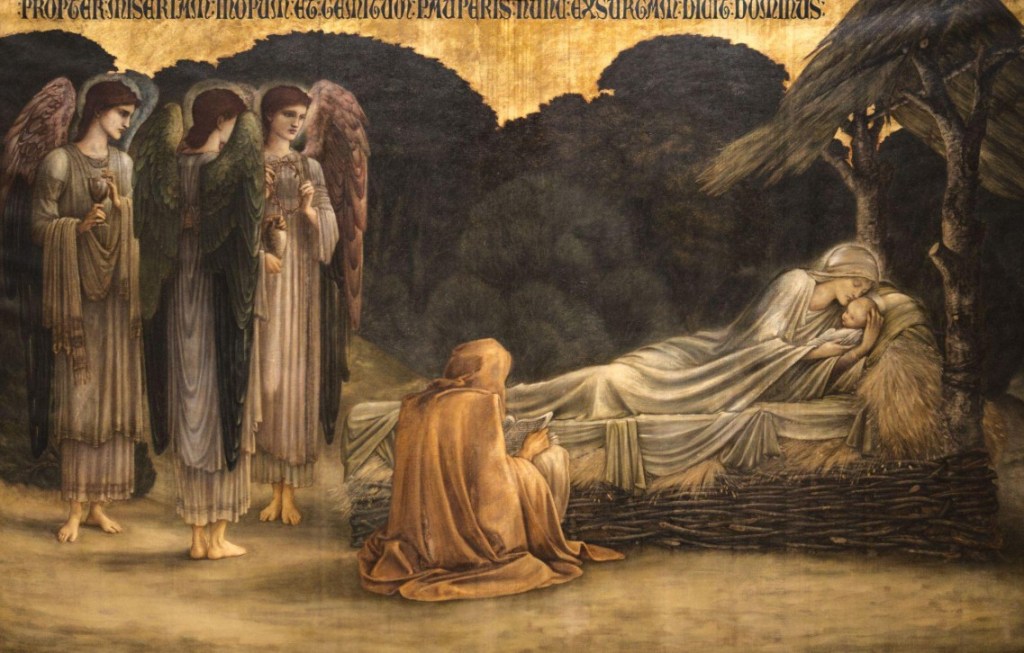
Edward Burne-Jones e la stella che annuncia la nascita di Cristo
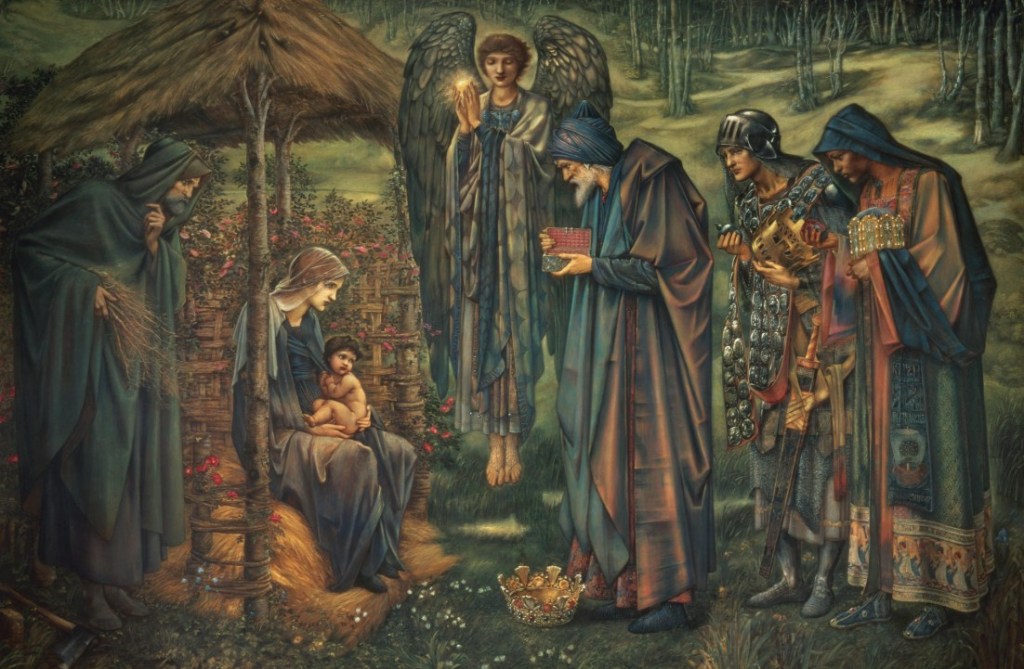
Se c’è un’opera capace di racchiudere tutta la magia del Natale preraffaellita, è senza dubbio The Star of Bethlehem (La stella di Betlemme) di Edward Burne-Jones.
Realizzata tra il 1887 e il 1891 e oggi conservata al Birmingham Museum and Art Gallery, è una delle più grandi acquerellature mai realizzate. Le sue dimensioni monumentali, circa 2,56 metri di altezza per 3,87 di larghezza, permettono di immergersi completamente nella scena dell’Adorazione dei Magi.
Al centro della composizione troviamo Maria con il Bambino, mentre Giuseppe veglia su di loro. Davanti alla Sacra Famiglia si presentano i tre Re Magi, giunti da lontano per rendere omaggio al piccolo Gesù e offrirgli i loro doni. Ma è soprattutto la figura dell’angelo a catturare lo sguardo: tiene fra le mani la stella luminosa che ha guidato i viaggiatori fino a Betlemme.
Burne-Jones trasforma così un episodio evangelico in una visione quasi fiabesca. Le figure sembrano appartenere a un mondo fuori dal tempo, con i loro abiti preziosi, le posture solenni e i colori profondi. La spiritualità non è affidata soltanto alla narrazione, ma alla bellezza stessa della composizione.

L’Adorazione dei Magi: il viaggio verso la luce
La storia della grande opera di Burne-Jones è legata anche alla collaborazione con William Morris e alla riscoperta delle antiche tecniche decorative medievali.
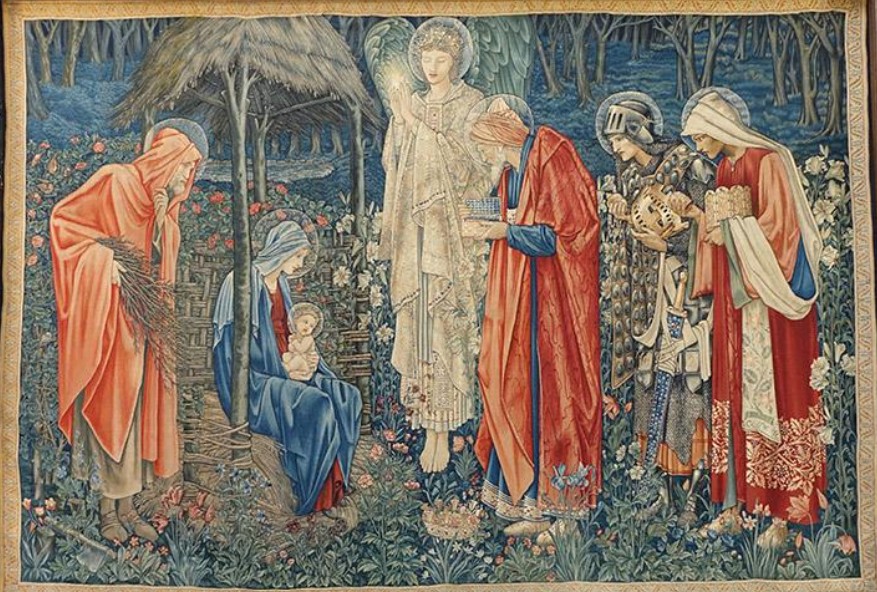
Nel 1886 il rettore dell’Exeter College di Oxford commissionò a Morris un arazzo destinato alla cappella del college. Il soggetto scelto fu proprio l’Adorazione dei Magi e Burne-Jones si occupò del disegno delle figure e della composizione.
L’arazzo, realizzato nei laboratori di Merton Abbey, fu completato nel 1890. Successivamente l’artista sviluppò il medesimo soggetto in una grande versione ad acquerello, destinata a diventare una delle sue opere religiose più celebri.
I tre sovrani rappresentano popoli e mondi diversi che si incontrano davanti alla nascita di Cristo. I loro abiti sontuosi, i doni e la solennità dei gesti contribuiscono a creare un’atmosfera di raccoglimento e meraviglia.
John Everett Millais e il Bambino Gesù nella bottega di Giuseppe
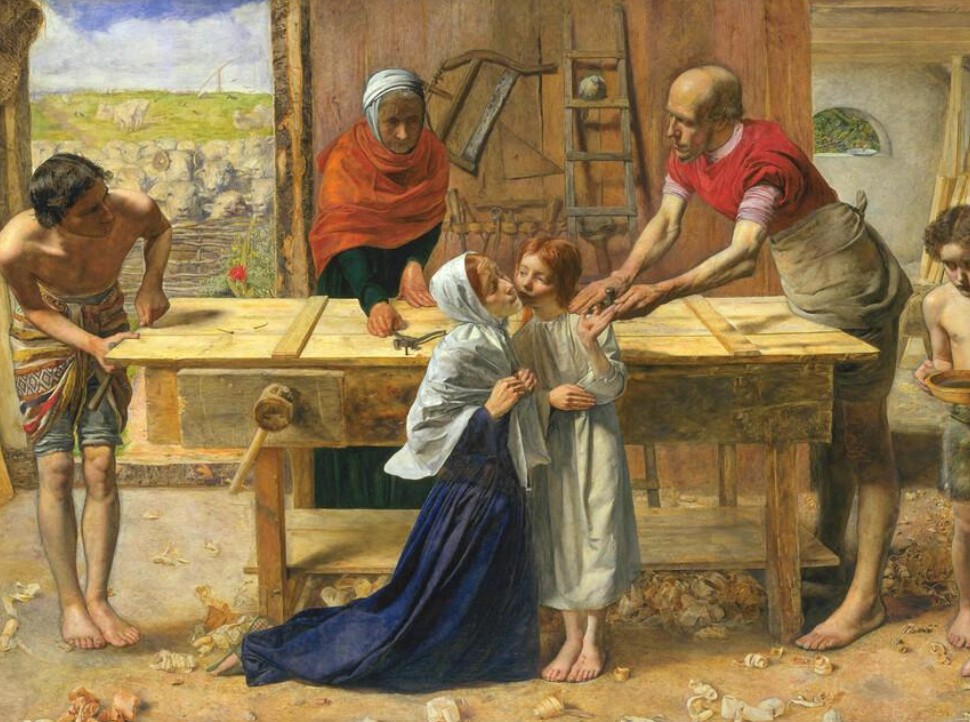
Un’altra opera interessante per avvicinarsi al Natale attraverso la sensibilità preraffaellita è Christ in the House of His Parents, conosciuta anche come The Carpenter’s Shop, dipinta da John Everett Millais tra il 1849 e il 1850.
Oggi conservata alla Tate Britain di Londra, la tela ci conduce nella bottega di Giuseppe, dove troviamo Gesù ancora bambino mentre si trova accanto al banco da lavoro del padre.
Non siamo davanti alla tradizionale rappresentazione della Natività, con la mangiatoia, gli angeli e i pastori. Millais sceglie invece di raccontare un momento della quotidianità della Sacra Famiglia, mostrando un ambiente semplice, fatto di legno, attrezzi e gesti familiari.
Maria, Giuseppe e Gesù sono persone inserite in uno spazio di lavoro concreto. L’artista osserva ogni particolare con una precisione quasi minuziosa, fedele a uno dei principi fondamentali della confraternita: guardare la natura e la realtà senza nasconderne i dettagli.
La scena è attraversata da numerosi simboli che anticipano il destino di Cristo. Il legno, i chiodi e la ferita sulla mano del Bambino richiamano la futura Passione. Il Natale, in questa interpretazione, non è separato dal sacrificio che attende Gesù: la sua nascita contiene già il significato della sua missione.
Quando l’opera venne esposta alla Royal Academy nel 1850, suscitò un enorme scandalo. La rappresentazione così umana e quotidiana della Sacra Famiglia fu giudicata irriverente da molti osservatori. Oggi, invece, proprio questa scelta ci permette di comprendere quanto fosse innovativo lo sguardo di Millais.
Il Natale preraffaellita: bellezza, natura e spiritualità
Per i Preraffaelliti era fondamentale il recupero della pittura medievale e del primo Rinascimento italiano.
Le tavole quattrocentesche, i fondi dorati, le figure eleganti e le composizioni ricche di simboli rappresentavano per loro un riferimento imprescindibile. Non una semplice imitazione degli antichi ma il recuperare quella capacità di raccontare il sacro attraverso immagini cariche di significato.
Nelle opere religiose di Burne-Jones ritroviamo questa eredità nella monumentalità delle figure, nella preziosità degli abiti e nell’atmosfera quasi mistica che avvolge i personaggi. In Millais, invece, la spiritualità si manifesta anche attraverso la concretezza della vita quotidiana e l’attenzione alla natura.
Il risultato è un modo diverso di guardare al Natale. Insomma, una storia da contemplare, nella quale la luce, la bellezza e i piccoli gesti diventano strumenti per raccontare il mistero della nascita di Cristo.
Per il momento il sempre vostro Michelangelo Buonarroti vi saluta dandovi appuntamento ai prossimi post e sui social.
Christmas in Pre-Raphaelite Art: The Nativity, the Magi, and the Poetry of Light in 19th-Century Painting
As depicted by the Pre-Raphaelites, Christmas is defined by light, symbols, vivid colors, and an atmosphere suspended in time. In their paintings, the birth of Christ becomes an opportunity to explore beauty, spirituality, and the deepest emotions of the human soul.
The Pre-Raphaelite Brotherhood, founded in England in 1848, revolutionized the approach to painting. Its artists sought an authentic beauty, drawing inspiration from 15th-century Italian art, nature, literature, and religious tradition. Through subjects rooted in sacred history, we encounter some of the most evocative imagery for understanding the artistic and spiritual significance of Christmas.
Here are a few works that allow us to rediscover this holiday through the eyes of William Holman Hunt, Edward Burne-Jones, John Everett Millais, and other artists associated with the movement.
Edward Burne-Jones and the Star Announcing the Birth of Christ
If any single work captures the full magic of Pre-Raphaelite Christmas, it is undoubtedly The Star of Bethlehem by Edward Burne-Jones.
Created between 1887 and 1891—and now housed in the Birmingham Museum and Art Gallery—it stands as one of the largest watercolors ever produced. Its monumental scale, measuring approximately 2.56 meters in height by 3.87 meters in width, allows the viewer to become completely immersed in the scene of the Adoration of the Magi.
At the center of the composition, we see Mary with the Christ Child, while Joseph keeps watch over them. Before the Holy Family stand the three Magi, who have traveled from afar to pay homage to the infant Jesus and offer their gifts. But it is, above all, the figure of the angel that catches the eye: held in its hands is the luminous star that guided the travelers to Bethlehem.
In this way, Burne-Jones transforms an evangelical episode into an almost fairy-tale-like vision. The figures seem to belong to a world beyond time, with their rich garments, solemn postures, and deep colors. Spirituality is conveyed not merely through the narrative, but through the very beauty of the composition.
The Adoration of the Magi: The Journey Toward the Light
The story behind this major work by Burne-Jones is also linked to his collaboration with William Morris and a rediscovery of ancient medieval decorative techniques.
In 1886, the Rector of Exeter College, Oxford, commissioned a tapestry from Morris for the college chapel. The chosen subject was the Adoration of the Magi, with Burne-Jones responsible for the design of the figures and the overall composition.
The tapestry, produced in the workshops at Merton Abbey, was completed in 1890. Later, the artist developed the same subject into a large-scale watercolor, which would go on to become one of his most celebrated religious works.
The three kings represent different peoples and worlds, brought together by the birth of Christ. Their sumptuous attire, the gifts they bear, and the solemnity of their gestures all contribute to an atmosphere of quiet contemplation and wonder.
John Everett Millais and the Child Jesus in Joseph’s Workshop
Another compelling work through which to approach Christmas—viewed through the lens of Pre-Raphaelite sensibility—is Christ in the House of His Parents, also known as The Carpenter’s Shop, painted by John Everett Millais between 1849 and 1850.
Now housed at the Tate Britain in London, the canvas transports us into Joseph’s workshop, where we find the young Jesus standing beside his father’s workbench.
This is not the traditional depiction of the Nativity, complete with a manger, angels, and shepherds. Instead, Millais chooses to portray a moment from the everyday life of the Holy Family, presenting a simple setting filled with wood, tools, and familiar, domestic actions.
Mary, Joseph, and Jesus are depicted as real people within a tangible workspace. The artist observes every detail with meticulous precision—a testament to one of the core principles of the Pre-Raphaelite Brotherhood: to look at nature and reality without concealing any of their details.
The scene is imbued with numerous symbols that foreshadow Christ’s ultimate destiny. The wood, the nails, and the wound on the Child’s hand all point toward the future Passion. In this interpretation, Christmas is not separate from the sacrifice that awaits Jesus; his very birth already encompasses the meaning of his mission.
When the painting was exhibited at the Royal Academy in 1850, it caused a massive scandal. Many observers deemed this deeply human, everyday portrayal of the Holy Family to be irreverent. Today, however, it is precisely this choice that allows us to appreciate just how innovative Millais’s perspective truly was.
The Pre-Raphaelite Christmas: Beauty, Nature, and Spirituality
For the Pre-Raphaelites, reclaiming the style of medieval and early Italian Renaissance painting was fundamental.
Fifteenth-century panel paintings, gold-leaf backgrounds, elegant figures, and compositions rich in symbolism served as an essential point of reference for them. It was not merely an imitation of the past, but rather a recovery of the ability to narrate the sacred through images imbued with deep meaning.
In the religious works of Burne-Jones, this legacy is reflected in the monumentality of his figures, the exquisite detail of their attire, and the almost mystical atmosphere that surrounds them. In the work of Millais, by contrast, spirituality is expressed through the tangible reality of everyday life and a keen attention to the natural world.
The result is a unique perspective on Christmas—a story to be contemplated, in which light, beauty, and small, simple gestures become the means to convey the mystery of the birth of Christ.
For now, yours truly, Michelangelo Buonarroti, bids you farewell—until the next post, and see you on social media.
Sostienici – Support Us
Se questo blog ti piace e ti appassiona, puoi aiutarci a farlo crescere sempre più sostenendoci in modo concreto condividendo i post, seguendo le pagine social e con un contributo che ci aiuta ad andare avanti con il nostro lavoro di divulgazione. . ENGLISH: If you like and are passionate about this blog, you can help us make it grow more and more by supporting us in a concrete way by sharing posts, following social pages and with a contribution that helps us to move forward with our dissemination work.
10,00 €
Condividi:


Questo sono io



sostienici

Sostienici - Support Us
Se questo blog ti piace e ti appassiona, puoi aiutarci a farlo crescere sempre più sostenendoci in modo concreto condividendo i post, seguendo le pagine social e con un contributo che ci aiuta ad andare avanti con il nostro lavoro di divulgazione. . ENGLISH: If you like and are passionate about this blog, you can help us make it grow more and more by supporting us in a concrete way by sharing posts, following social pages and with a contribution that helps us to move forward with our dissemination work.
€10,00