Ponte Santa Trinita, sparita una conchiglia dal fregio: il Comune di Firenze avvia le verifiche
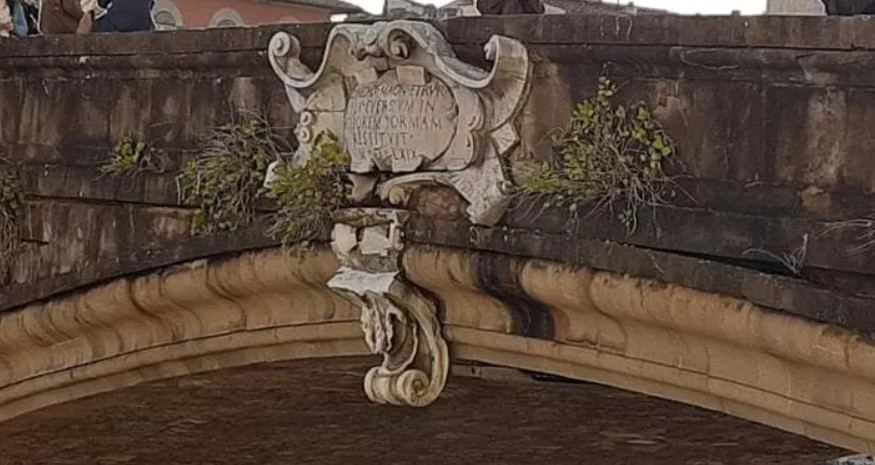
È sparita la conchiglia sul cartiglio che decora Ponte Santa Trinita, rivolto verso Ponte Vecchio.
A notare l’assenza sono stati alcuni passanti, che hanno individuato il particolare mancante sul cartiglio rivolto verso Ponte Vecchio. Un dettaglio apparentemente secondario, ma che non è passato inosservato, soprattutto perché nelle immagini dell’archivio di Google Street View, risalenti a gennaio 2022 e settembre 2024, la conchiglia risulta ancora presente.
Che cosa è successo? Quando si è verificato il distacco? E, soprattutto, ci sono altri elementi decorativi in condizioni precarie?
Ponte Santa Trinita, il Comune annuncia sopralluoghi dopo la scomparsa della conchiglia
La direzione Mobilità e la direzione Fabbrica di Palazzo Vecchio effettueranno sopralluoghi per verificare le condizioni dei cartigli laterali alle spallette del ponte.
I tecnici comunali hanno spiegato che questi elementi decorativi sono stati interessati nel tempo da diversi interventi di stuccatura e che sarà necessario controllarne attentamente lo stato di conservazione, anche per capire se si siano verificati distacchi.
Al momento non è quindi possibile stabilire quando la conchiglia sia scomparsa né se la sua caduta sia riconducibile a un episodio recente o a un progressivo deterioramento dei materiali.
Una possibilità è che il frammento sia precipitato direttamente nell’Arno, ma anche questo aspetto dovrà essere eventualmente verificato.
Gli ornamenti di Ponte Santa Trinita, infatti, sono già comprese nell’elenco dei beni per i quali si stanno cercando finanziamenti destinati al restauro, anche attraverso Florence I Care, il progetto di raccolta fondi per la tutela del patrimonio artistico cittadino.
La storia di Ponte Santa Trinita, dalle origini medievali alla ricostruzione dopo la guerra
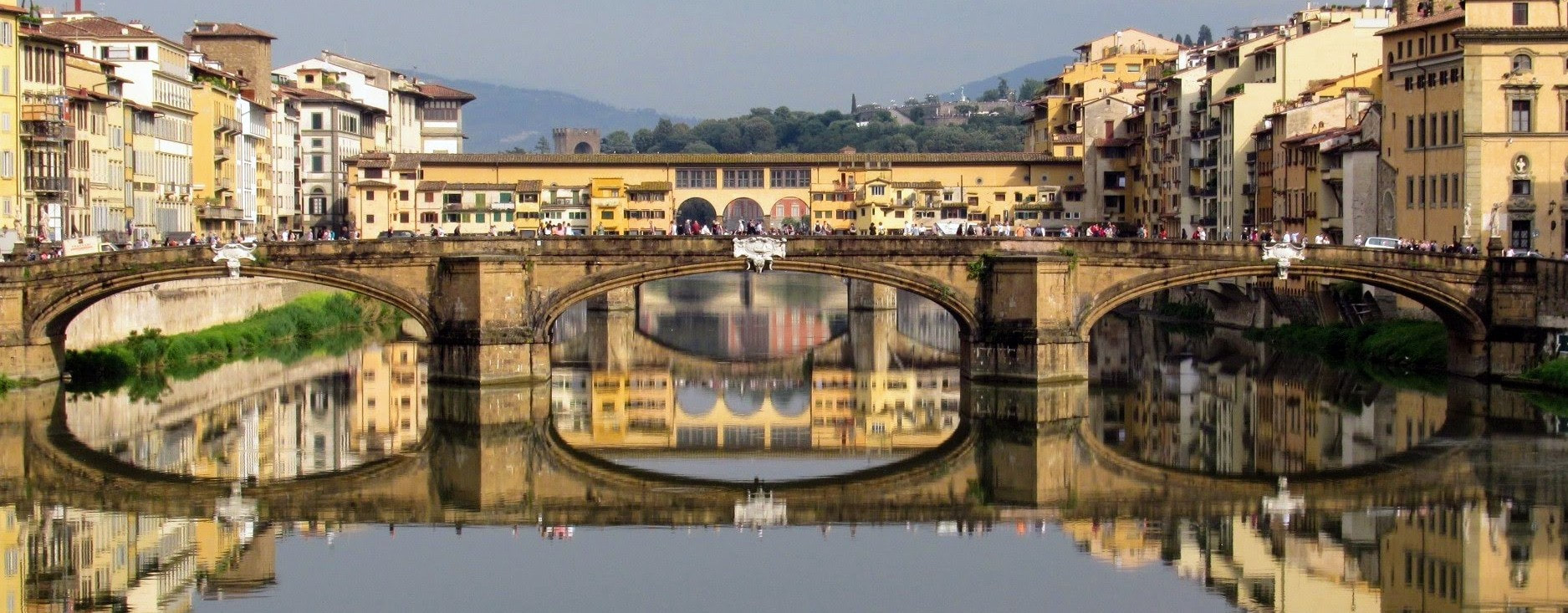
La scomparsa della conchiglia riporta l’attenzione sulla lunga e tormentata storia di Ponte Santa Trinita, un’opera che ha attraversato secoli di vicende fiorentine, sopravvivendo a piene devastanti e distruzioni belliche.
Il ponte venne realizzato per la prima volta nel 1252 per volontà della famiglia Frescobaldi. La struttura originaria, come altre costruzioni che attraversavano il fiume, dovette fare i conti con le violente piene dell’Arno.
Una delle più disastrose arrivò nel 1557, quando il fiume travolse il ponte, rendendo necessaria una nuova costruzione.
Fu il granduca Cosimo I de’ Medici ad affidare il progetto all’architetto Bartolomeo Ammannati, che poté contare anche su miei disegni, secondo quanto tramandato da Giorgio Vasari.
Il risultato fu un’opera di straordinaria eleganza architettonica, caratterizzata da tre arcate ribassate, una soluzione innovativa per l’epoca e destinata a diventare uno degli elementi distintivi del paesaggio urbano fiorentino.
Il ponte venne completato nel 1571. Nel 1608, in occasione delle nozze di Cosimo II de’ Medici, furono collocate alle estremità le quattro celebri statue raffiguranti le Stagioni.
Il cartiglio con la dedica a Cosimo I e le statue delle Stagioni
Tra gli elementi che raccontano la storia del ponte ci sono anche i cartigli celebrativi, con le loro iscrizioni e decorazioni.
Sulla chiave di volta dell’arcata si legge la dedica in latino a Cosimo I, che ricorda il suo intervento dopo la distruzione provocata dal fiume:
«Cosimo de’ Medici, Granduca di Toscana, restaurò in forma migliore il ponte distrutto dalla violenza del fiume». Proprio a questo cartiglio manca la conchiglia in questione.
Non è ancora chiaro se il frammento possa essere recuperato o se sia necessario procedere con un intervento di reintegrazione.
La distruzione del 1944 e la ricostruzione com’era e dov’era
La storia di Ponte Santa Trinita è segnata anche da una delle pagine più dolorose della storia recente di Firenze.
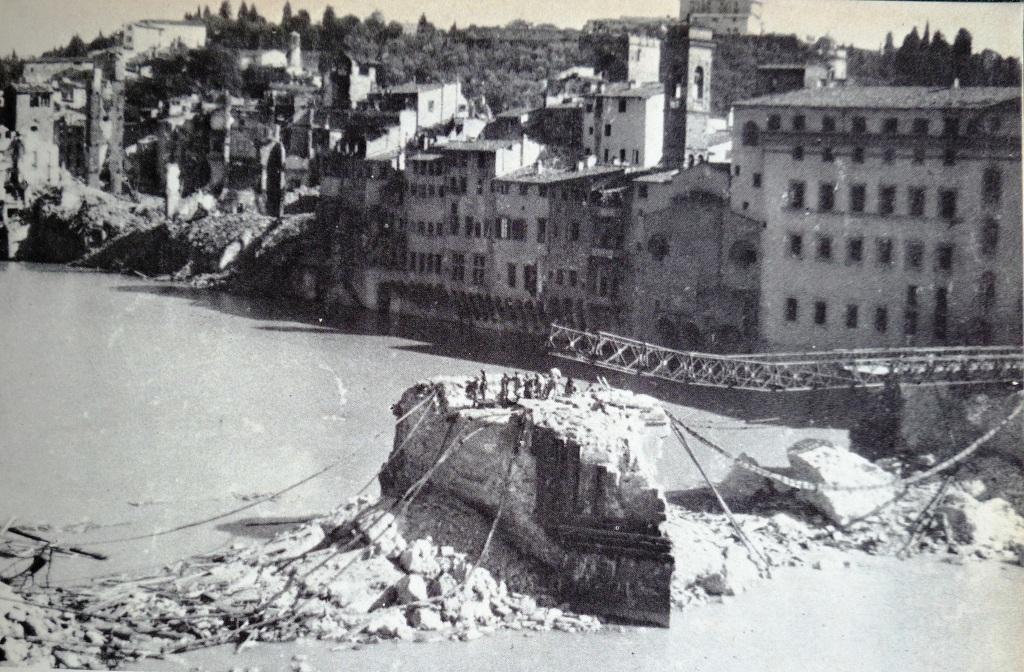
Nell’agosto del 1944, durante la ritirata tedesca, le truppe naziste fecero esplodere le mine collocate sotto i ponti sull’Arno. Ponte Santa Trinita venne distrutto, proprio come quasi tutti gli altri attraversamenti del fiume, mentre il vicino Ponte Vecchio fu risparmiato.
La ricostruzione diventò una questione di identità cittadina, oltre che di architettura.
Si decise di ricostruire il ponte com’era e dov’era, recuperando dal letto dell’Arno quanti più elementi originali fosse possibile. I frammenti vennero ripescati uno a uno e gli scalpellini lavorarono per ricomporre l’opera, restituendo alla città anche numerose parti delle decorazioni e delle statue.
Tra i recuperi più significativi ci fu quello della Primavera, una delle quattro allegorie delle Stagioni, ritrovata senza la testa. Il prezioso frammento sarebbe stato recuperato soltanto successivamente.
Il progetto venne affidato all’architetto Riccardo Gizdulich e il ponte, dopo un lungo e complesso lavoro, fu restituito ai fiorentini il 4 agosto 1957.

Gli ultimi interventi di restauro e la necessità di nuove risorse
Nel 2018 il Comune di Firenze annunciò un intervento di pulitura delle statue e di riqualificazione del monumento. Il progetto venne approvato dalla giunta e sostenuto dall’associazione Noi per Firenze, con un’erogazione in opere del valore di 50mila euro e il coinvolgimento della scuola Lorenzo de’ Medici.
Negli anni successivi, anche gli Angeli del Bello hanno continuato a occuparsi della cura del ponte, intervenendo per la pulizia e la rimozione delle scritte vandaliche.
Ponte Santa Trinita è una delle testimonianze più importanti dell’architettura rinascimentale fiorentina, un’opera nella quale storia, arte e ingegneria si fondono in un equilibrio straordinario.
Adesso saranno i sopralluoghi annunciati dal Comune a chiarire che cosa sia accaduto a quel piccolo elemento decorativo e quali interventi siano necessari.
Per il momento il sempre vostro Michelangelo Buonarroti vi saluta dandovi appuntamento ai prossimi post e sui social.
Ponte Santa Trinita: Shell ornament missing from decorative cartouche; Florence Municipality launches investigation
A shell ornament has gone missing from a decorative cartouche on the Ponte Santa Trinita—specifically on the side facing the Ponte Vecchio.
The absence was noticed by passersby, who spotted the missing detail on the cartouche facing the Ponte Vecchio. While seemingly a minor element, its disappearance did not go unnoticed—not least because the shell is still visible in Google Street View imagery from January 2022 and September 2024.
What happened? When did it detach? And, crucially, are other decorative elements in a precarious state?
Ponte Santa Trinita: Municipality announces site inspections following the loss of the shell ornament
The Mobility Department and the “Fabbrica di Palazzo Vecchio” (the municipal department responsible for the maintenance of historic civic buildings) will conduct on-site inspections to assess the condition of the cartouches located along the bridge’s parapets.
Municipal technicians explained that these decorative elements have undergone various patching and grouting repairs over time. A thorough assessment of their current state of preservation is now required to determine whether other pieces have come loose.
At present, it is impossible to establish when the shell went missing, or whether its detachment was the result of a recent incident or the gradual deterioration of the materials.
It is possible that the fragment fell directly into the Arno River, though this, too, remains to be verified.
The ornaments on the Ponte Santa Trinita are already included on a list of heritage assets for which restoration funding is being sought—notably through “Florence I Care,” a fundraising initiative dedicated to the preservation of the city’s artistic heritage.
The History of Ponte Santa Trinita: From Medieval Origins to Post-War Reconstruction
The disappearance of the shell ornament draws renewed attention to the long and turbulent history of Ponte Santa Trinita—a structure that has weathered centuries of Florentine history, surviving both devastating floods and the destruction of war.
The bridge was first built in 1252, commissioned by the Frescobaldi family. Like other structures spanning the river, the original bridge had to contend with the violent floods of the Arno.
One of the most catastrophic floods occurred in 1557, when the river swept away the bridge, necessitating its reconstruction.
Grand Duke Cosimo I de’ Medici entrusted the project to the architect Bartolomeo Ammannati, who—according to accounts by Giorgio Vasari—also drew upon designs provided by me.
The result was a work of extraordinary architectural elegance, featuring three flattened (elliptical) arches—an innovative solution for the time that would go on to become a defining element of the Florentine cityscape.
The bridge was completed in 1571. In 1608, to mark the wedding of Cosimo II de’ Medici, four famous statues representing the Seasons were placed at the ends of the bridge.
The Inscription Plaque Dedicated to Cosimo I and the Statues of the Seasons
Among the features that recount the bridge’s history are the commemorative plaques, complete with their inscriptions and decorative elements.
On the keystone of the arch, there is a Latin dedication to Cosimo I, referencing his intervention following the destruction caused by the river:
“Cosimo de’ Medici, Grand Duke of Tuscany, restored the bridge—destroyed by the violence of the river—to an even better state.” It is precisely this plaque that is now missing the shell ornament in question. It is not yet clear whether the fragment can be recovered or if a reintegration procedure will be necessary.
The destruction of 1944 and the “as it was, where it was” reconstruction
The history of the Ponte Santa Trinita is also marked by one of the most painful chapters in the recent history of Florence.
In August 1944, during their retreat, Nazi troops detonated mines placed beneath the bridges crossing the Arno. The Ponte Santa Trinita was destroyed—much like almost every other river crossing—while the nearby Ponte Vecchio was spared.
The reconstruction became a matter of civic identity, as well as architecture.
It was decided to rebuild the bridge “as it was, where it was” (com’era e dov’era), recovering as many original elements as possible from the bed of the Arno. The fragments were retrieved one by one, and stonemasons worked to reassemble the structure, restoring many parts of its decorative elements and statues to the city.
Among the most significant recoveries was that of Spring (La Primavera)—one of the four allegories of the Seasons—which was found missing its head. This precious fragment would only be recovered later.
The project was entrusted to architect Riccardo Gizdulich, and following a long and complex undertaking, the bridge was returned to the people of Florence on August 4, 1957.
Recent restoration work and the need for new resources
In 2018, the Municipality of Florence announced a project to clean the statues and restore the monument. The plan was approved by the municipal executive committee and supported by the association “Noi per Firenze” (“Us for Florence”), which provided 50,000 euros’ worth of restoration work, with the involvement of the Lorenzo de’ Medici school.
In the years that followed, the “Angeli del Bello” (“Angels of Beauty”) also continued to look after the bridge, carrying out cleaning operations and removing graffiti.
Ponte Santa Trinita stands as one of the most significant examples of Florentine Renaissance architecture—a work in which history, art, and engineering blend in an extraordinary balance.
Now, the inspections announced by the Municipality will clarify what happened to that small decorative element and determine what kind of intervention is required.
For the time being, yours truly, Michelangelo Buonarroti, bids you farewell—until the next posts and our continued connection on social media.
Sostienici – Support Us
Se questo blog ti piace e ti appassiona, puoi aiutarci a farlo crescere sempre più sostenendoci in modo concreto condividendo i post, seguendo le pagine social e con un contributo che ci aiuta ad andare avanti con il nostro lavoro di divulgazione. . ENGLISH: If you like and are passionate about this blog, you can help us make it grow more and more by supporting us in a concrete way by sharing posts, following social pages and with a contribution that helps us to move forward with our dissemination work.
10,00 €
Condividi:


Questo sono io



sostienici

Sostienici - Support Us
Se questo blog ti piace e ti appassiona, puoi aiutarci a farlo crescere sempre più sostenendoci in modo concreto condividendo i post, seguendo le pagine social e con un contributo che ci aiuta ad andare avanti con il nostro lavoro di divulgazione. . ENGLISH: If you like and are passionate about this blog, you can help us make it grow more and more by supporting us in a concrete way by sharing posts, following social pages and with a contribution that helps us to move forward with our dissemination work.
€10,00