

Dino De Ranieri, cinque generazioni nel marmo: “Così racconto Staglieno attraverso la fotografia”
Dino De Ranieri appartiene alla quinta generazione di una famiglia di scultori di Pietrasanta, una tradizione che ha nel marmo il proprio filo conduttore e che nel corso degli anni lo ha portato a realizzare opere oggi presenti in Italia e in numerosi Paesi del mondo.
Formatosi al Liceo Artistico “Stagio Stagi” di Pietrasanta, De Ranieri ha costruito un percorso personale tra scultura e fotografia, senza mai interrompere il legame con la tradizione familiare.
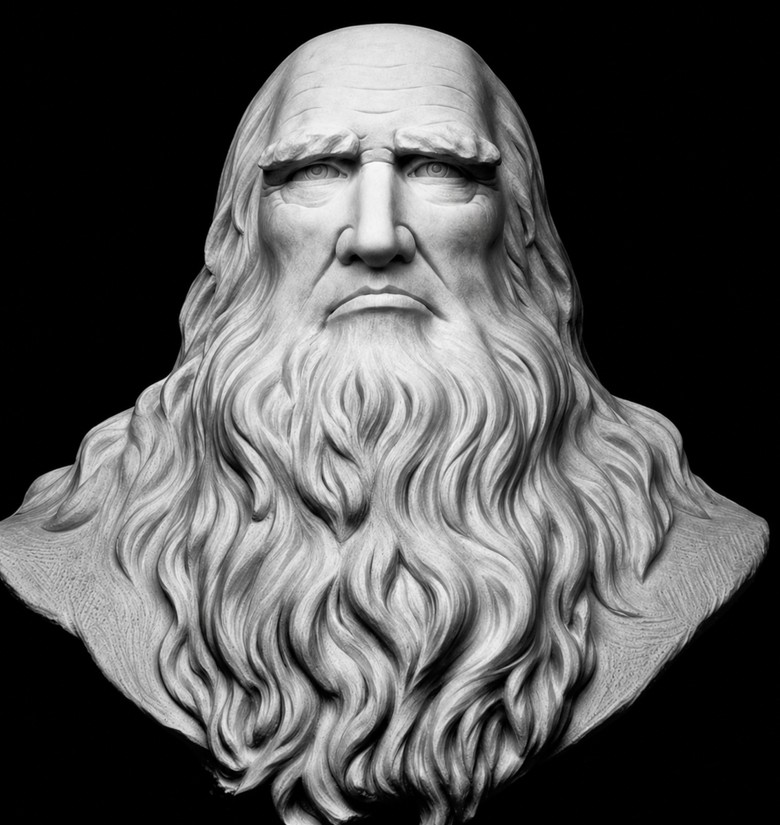
Una parte importante della sua attività è legata alla collaborazione con la Fondazione Romualdo Del Bianco di Firenze, iniziata nel 2007 e cresciuta significativamente nel corso degli anni. Da questa collaborazione sono nati i busti di Leonardo da Vinci, Michelangelo, Galileo Galilei e Dante Alighieri, realizzati in più copie e oggi conservati in università e musei di diversi Paesi. A questi si sono aggiunti il busto di Cesare Beccaria, collocato presso il Consiglio d’Europa a Strasburgo, il busto di Marco Polo, destinato alla Cina, e il più recente ritratto di Gian Lorenzo Bernini, destinato ai Musei Vaticani per il 2027.
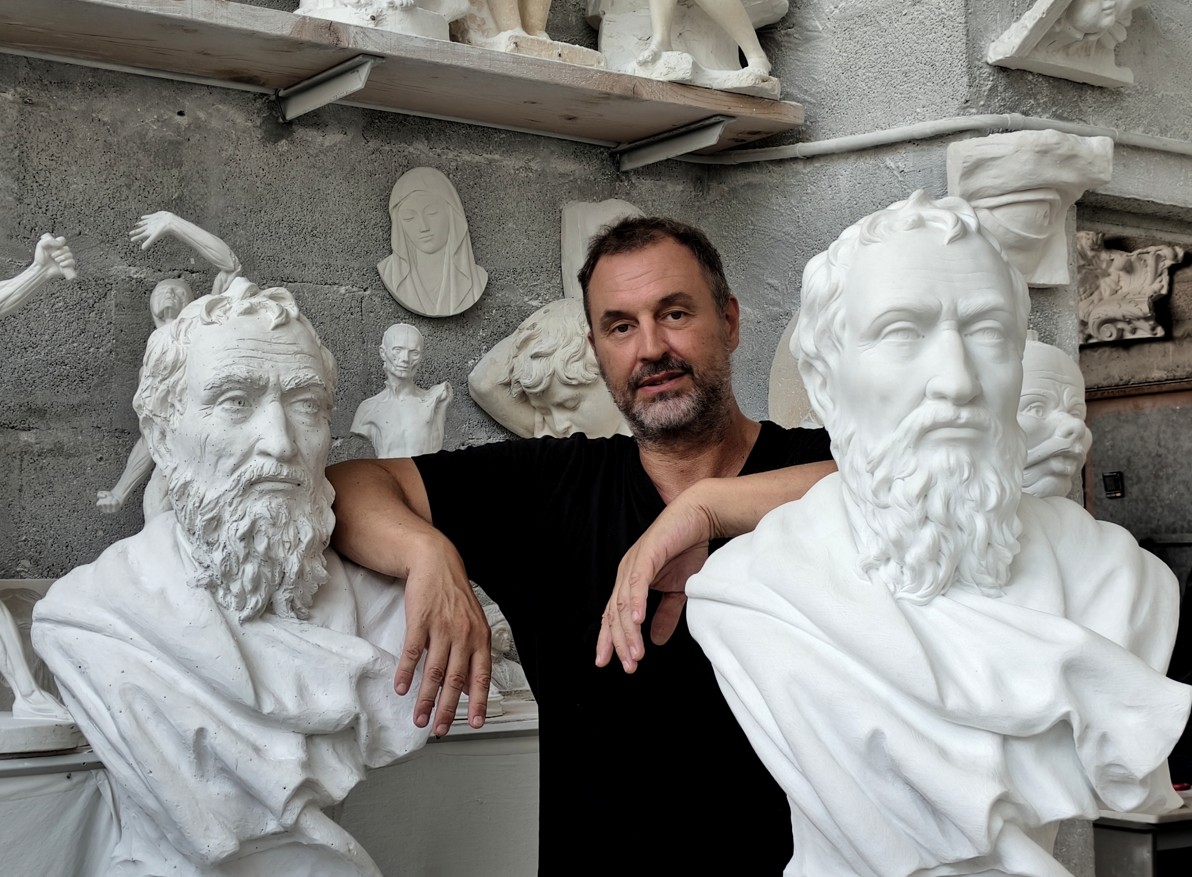
Accanto alla scultura, da quattordici anni De Ranieri porta avanti un’altra ricerca, questa volta attraverso l’obiettivo fotografico: quella sul Cimitero Monumentale di Staglieno a Genova. Un lungo viaggio fatto di immagini, osservazione e ritorni, dal quale sta nascendo un libro fotografico che l’artista vorrebbe realizzare attraverso una campagna di crowdfunding.
In questa intervista Dino De Ranieri racconta il rapporto con la famiglia, il marmo e la fotografia, il lavoro svolto in giro per il mondo e soprattutto la sua lunga esperienza a Staglieno, dove lo sguardo dello scultore incontra quello del fotografo.
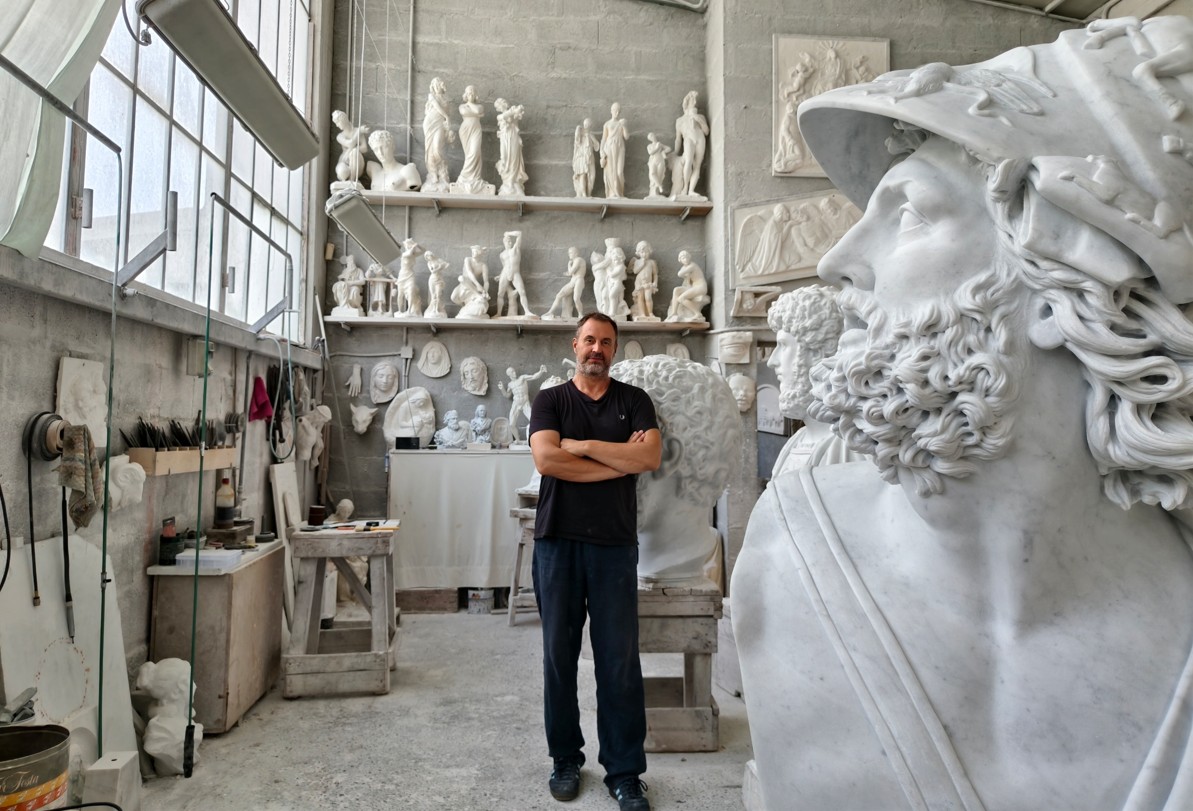
Lei appartiene alla quinta generazione di una famiglia di scultori di Pietrasanta. Che cosa significa crescere in una famiglia in cui la scultura è parte della storia e della quotidianità?
Crescere in una famiglia di scultori significa vivere la scultura come qualcosa di straordinario, ma allo stesso tempo come una presenza naturale e quotidiana. Fin da bambino, grazie a mio padre Sirio, ho respirato l’odore del marmo, il rumore di subbie e martelli e osservato il lavoro in studio come parte della vita di tutti i giorni.
Nel mio caso, appartenere a una famiglia di cinque generazioni di scultori significa sentire il peso di continuare una tradizione e, al tempo stesso, il privilegio di esserne parte.
Come immaginava il suo futuro da bambino? Ha sempre voluto fare lo scultore?
Fin da piccolo sono sempre stato attratto dall’arte, ma sognavo di fare il marinaio. Verso i quattordici anni è nata in me la voglia di imparare un lavoro affascinante, comunicativo, bellissimo, seppur molto faticoso.
Ho voluto imparare a modellare la creta, a smodellare utilizzando anche i compassi e, infine, a rifinire le sculture. In quegli anni ho capito di voler diventare scultore.
Quanto la tradizione della sua famiglia ha influenzato il suo modo di guardare prima e lavorare poi il marmo?
Nel mio caso la famiglia ha avuto un ruolo importante nell’avvicinarmi al marmo e alla scultura, ma il mio percorso è nato da una mia scelta personale, maturata nel tempo.
Assieme alla scultura, fin da giovanissimo ha coltivato una forte passione per la fotografia. Quando ha capito che la macchina fotografica poteva diventare un vero e proprio strumento di ricerca artistica?
Sì, la fotografia è entrata molto presto nella mia vita, quasi in parallelo con la scultura. Ho capito fin da subito che poteva essere un mezzo di ricerca, ma anche di denuncia e di racconto.
Fotografo per raccontare storie.
Ho avuto la fortuna di conoscere grandi maestri della camera oscura, che mi hanno insegnato a sviluppare le pellicole e a stampare fotografie. Tra le persone che vorrei ricordare c’è un caro amico e grande maestro, il fotografo Romano Cagnoni.
Per quanto mi riguarda, la fotografia serve a raccontare la vita e le sue storie, belle o brutte che siano.
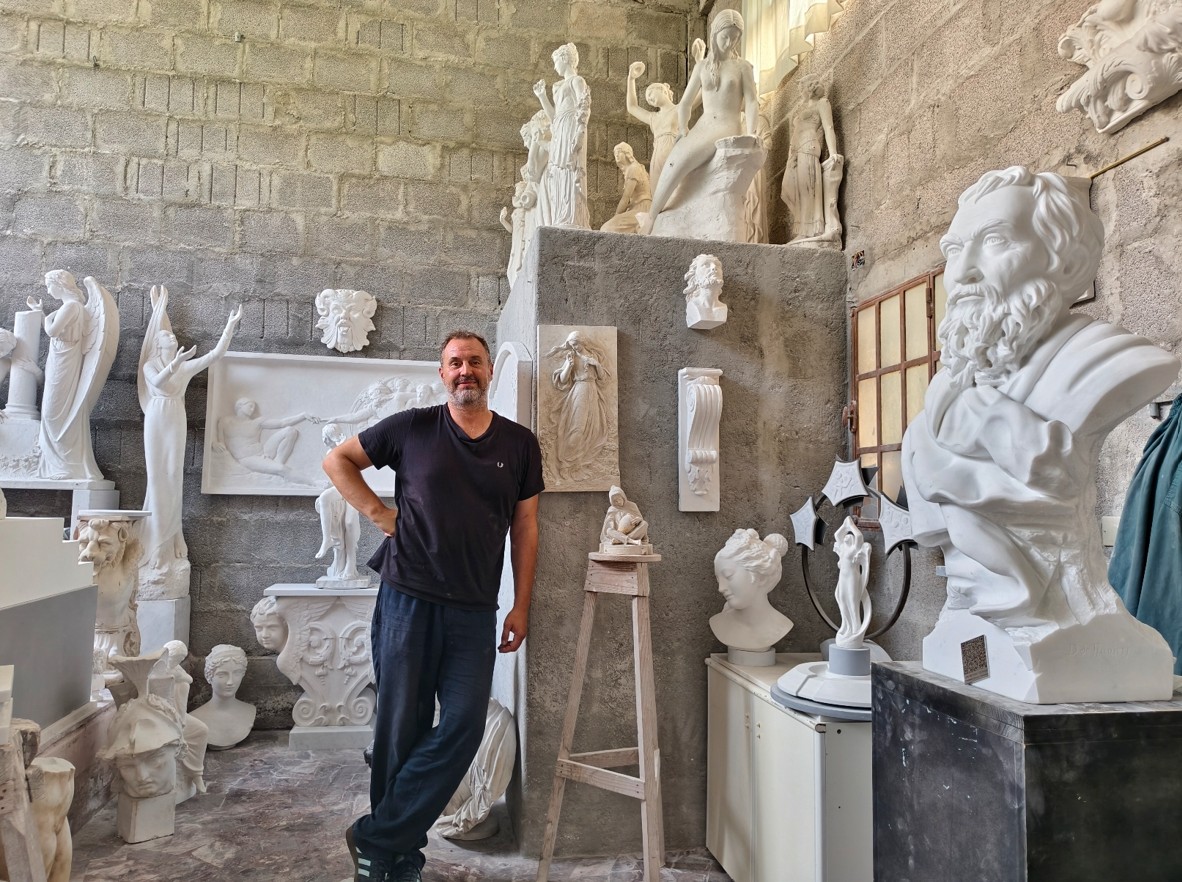
Che rapporto esiste, nel suo lavoro, tra scolpire e fotografare? La fotografia è per lei un modo diverso di confrontarsi con la scultura?
In tutti e due i casi si deve osservare. Sia la scultura che la fotografia ti insegnano a guardare.
La fotografia, per me, non è un modo diverso di confrontarmi con la scultura. Sono due linguaggi differenti, ma li avverto estremamente vicini. In entrambi c’è la necessità di osservare, creare, capire e cercare di raccontare.
Il progetto sul Monumentale di Staglieno nasce ormai quattordici anni fa. Come è avvenuto il primo incontro con questo straordinario cimitero monumentale?
È stato grazie a un caro amico che, parecchi anni fa, mi invitò a visitare Staglieno. Ne rimasi folgorato fin dal primo momento, sia per le sculture che per gli ambienti.
Ho trovato un luogo magico, pieno di arte, storia e fascino, dove le sculture e gli spazi viaggiano in unisono. Da allora ho sentito il bisogno di tornarci e di continuare a fotografarlo.
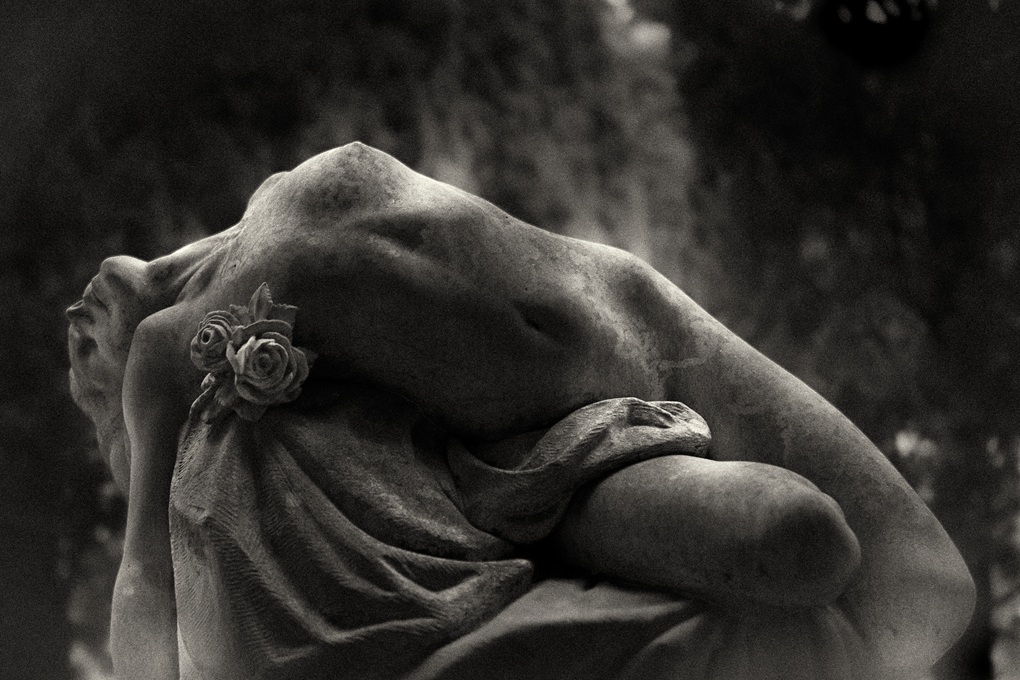
Da scultore, il suo sguardo sulle opere di Staglieno è inevitabilmente diverso da quello di un fotografo che si avvicina per la prima volta a questo patrimonio. Quanto la sua esperienza con la materia condiziona le sue fotografie?
All’inizio ero molto condizionato dal mio sguardo di scultore. Le fotografie che scattavo riguardavano quasi esclusivamente i magnifici particolari, quelli in cui si poteva ammirare la maestria degli scultori, dei pannisti, degli ornatisti e degli scalpellini.
Mi sono reso conto quasi da subito che stava nascendo un lavoro sbagliato. Era un racconto troppo legato al mio modo di vedere la scultura e per Staglieno desideravo altro.
A un certo punto sono riuscito, almeno in parte, a scindere le due cose. Da lì in poi il reportage ha preso una nuova strada.
Il suo obiettivo è trasformare quattordici anni di lavoro in un libro fotografico. Che tipo di libro vorrebbe consegnare al lettore? Un catalogo, un racconto per immagini, un viaggio emotivo attraverso Staglieno?
Un libro fotografico. Vorrei consegnare un buon racconto per immagini e offrire un viaggio emotivo attraverso la straordinaria bellezza del Monumentale di Staglieno, cercando di restituire le emozioni che questo luogo è capace di suscitare.
Ci sono opere, monumenti o dettagli del Monumentale di Staglieno ai quali è particolarmente legato? E c’è uno scatto che considera emblematico dell’intero progetto?
È difficile per me rispondere a questa domanda. Lo dico scherzando, ma mi sentirei di tradire ogni singola scultura e particolare se dovessi sceglierne una.
Amo Staglieno tutto.
La stessa cosa vale per il progetto fotografico. Ho cercato di non creare fotografie emblematiche, ma di costruire un racconto in cui ogni immagine abbia un senso e accompagni la successiva.
Che sia bene o sia male, non riesco a trovare fotografie emblematiche. Spero che sia l’intero progetto, nel suo insieme, a rappresentare Staglieno.
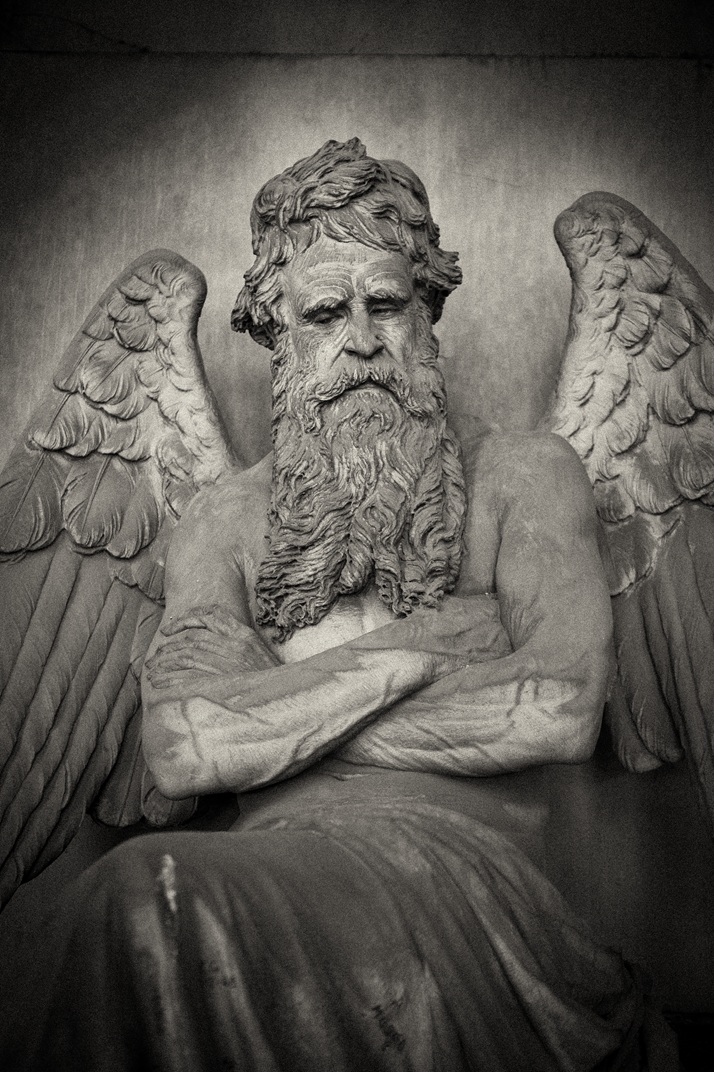
Però sono affezionato a una fotografia ed è quella dell’angelo con le braccia incrociate e lo sguardo leggermente corrucciato.
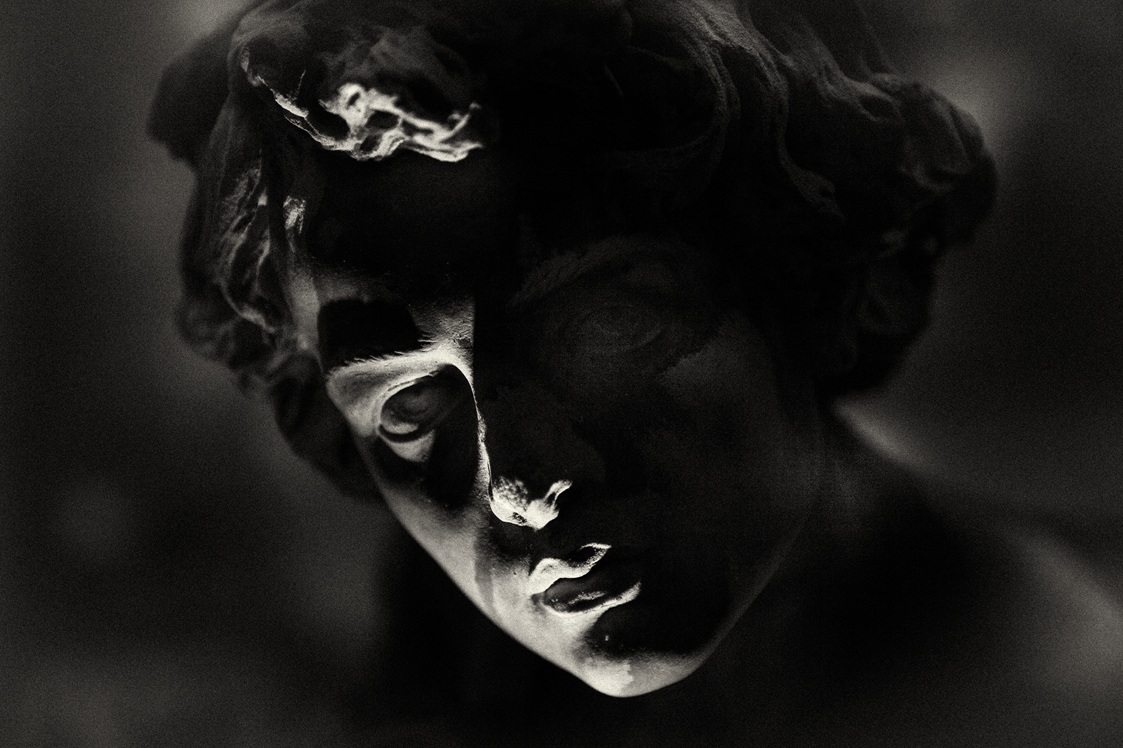
Per realizzare il volume ha scelto di ricorrere al crowdfunding attraverso Kickstarter. Perché ha deciso di coinvolgere direttamente il pubblico nella realizzazione del progetto?
Oggi è veramente difficile riuscire a stampare un libro fotografico. In genere, o sei un fotografo di fama internazionale oppure, se hai la possibilità di investire personalmente una cifra importante, puoi farlo.
Esiste anche la possibilità che un progetto venga pubblicato perché ritenuto straordinario.
Io sono un fotoamatore, non ho fondi personali da investire in un libro di alta qualità e non so se il mio progetto possa essere considerato strabiliante.
Ho scelto quindi il crowdfunding per necessità, ma soprattutto perché credo profondamente in quello che ho fatto e vorrei dare a questo progetto la possibilità di diventare un libro.
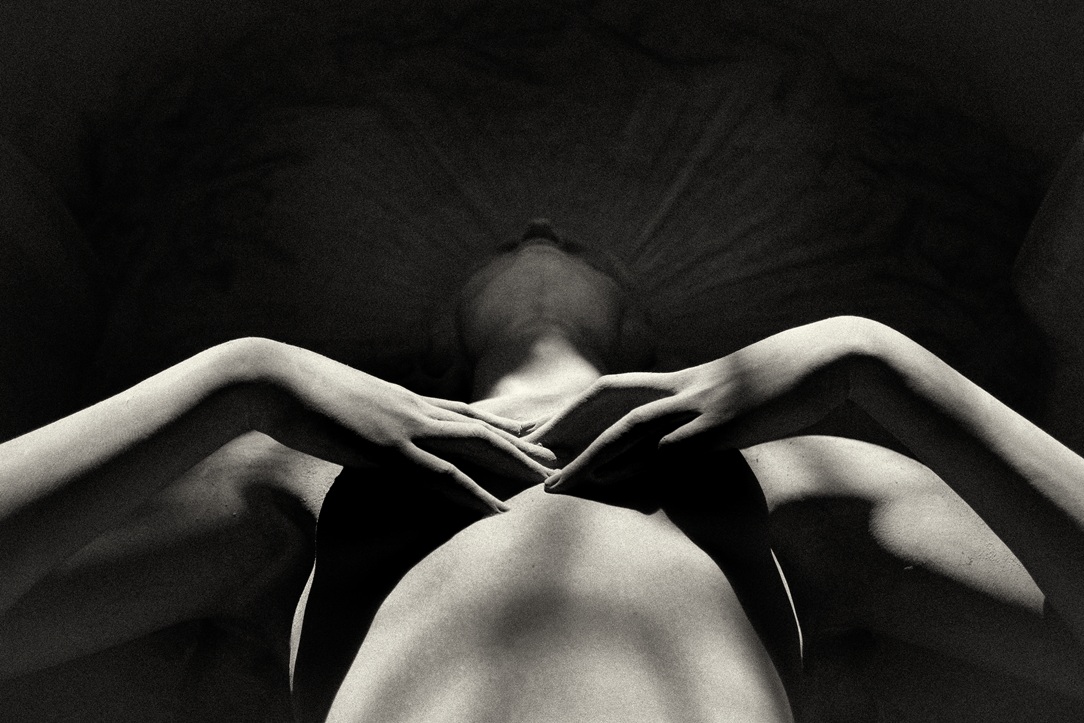
Come contribuire al progetto fotografico dedicato al Cimitero Monumentale di Staglieno, Genova
Se desiderate contribuire all’interessante progetto fotografico dello scultore Dino de Ranieri, potete farlo su Kickstarter cliccando QUA. C’è tempo fino al 28 agosto.
Per il momento il sempre vostro Michelangelo Buonarroti vi saluta dandovi appuntamento ai prossimi post e sui social.
Dino De Ranieri, Five Generations in Marble: “This Is How I Tell Staglieno Through Photography”
Dino De Ranieri belongs to the fifth generation of a family of sculptors from Pietrasanta, a tradition rooted in marble that, over the years, has led him to create works now found in Italy and numerous countries around the world.
Educated at the “Stagio Stagi” Art School in Pietrasanta, De Ranieri has forged a personal path between sculpture and photography, without ever breaking ties with family tradition.
A significant part of his work is linked to his collaboration with the Romualdo Del Bianco Foundation in Florence, which began in 2007 and has grown significantly over the years. This collaboration has resulted in the busts of Leonardo da Vinci, Michelangelo, Galileo Galilei, and Dante Alighieri, many of which are now held in universities and museums around the world. These have been joined by the bust of Cesare Beccaria, located at the Council of Europe in Strasbourg, the bust of Marco Polo, destined for China, and the most recent portrait of Gian Lorenzo Bernini, destined for the Vatican Museums in 2027.
Alongside sculpture, De Ranieri has been pursuing another research project for fourteen years, this time through photography: the Monumental Cemetery of Staglieno in Genoa. A long journey of images, observations, and returns, from which a photographic book is emerging, which the artist would like to publish through a crowdfunding campaign.
In this interview, Dino De Ranieri talks about his relationship with family, marble, and photography, his work around the world, and above all, his long experience in Staglieno, where the sculptor’s gaze meets that of the photographer.
You belong to the fifth generation of a family of sculptors from Pietrasanta. What does it mean to grow up in a family where sculpture is part of history and everyday life?
Growing up in a family of sculptors means experiencing sculpture as something extraordinary, yet at the same time a natural, everyday presence. Since I was a child, thanks to my father, Sirio, I’ve breathed in the smell of marble, the sound of chisels and hammers, and observed the work in the studio as part of everyday life.
In my case, belonging to a family of five generations of sculptors means feeling the burden of continuing a tradition and, at the same time, the privilege of being part of it.
How did you imagine your future as a child? Did you always want to be a sculptor?
Since I was little, I’ve always been drawn to art, but I dreamed of being a sailor. Around the age of fourteen, I developed a desire to learn a fascinating, communicative, and beautiful, yet very demanding, profession.
I wanted to learn how to model clay, how to mold it using compasses, and, finally, how to finish sculptures. It was during those years that I realized I wanted to become a sculptor.
How much did your family tradition influence your way of looking at and then working with marble?
In my case, my family played an important role in my approach to marble and sculpture, but my path was born from a personal choice that matured over time.
Along with sculpture, you’ve cultivated a strong passion for photography since a very young age. When did you realize that the camera could become a true tool for artistic research?
Yes, photography entered my life very early, almost in parallel with sculpture. I immediately understood that it could be a means of research, but also of denunciation and storytelling.
I photograph to tell stories.
I was fortunate to meet great masters of the darkroom, who taught me how to develop film and print photographs. Among the people I’d like to remember is a dear friend and great teacher, photographer Romano Cagnoni.
As far as I’m concerned, photography serves to tell life and its stories, whether good or bad.
What is the relationship between sculpting and photography in your work? Is photography a different way of engaging with sculpture for you?
In both cases, you have to observe. Both sculpture and photography teach you how to look.
For me, photography isn’t just another way of engaging with sculpture. They’re two different languages, but I feel they’re extremely close. In both, there’s a need to observe, create, understand, and try to narrate.
The Staglieno Monumental Cemetery project began fourteen years ago. How did your first encounter with this extraordinary monumental cemetery come about?
It was thanks to a dear friend who, several years ago, invited me to visit Staglieno. I was captivated from the first moment, both by the sculptures and the spaces.
I found a magical place, full of art, history, and charm, where sculptures and spaces exist in unison. Since then, I’ve felt the need to return and continue photographing it.
As a sculptor, your perspective on the works at Staglieno is inevitably different from that of a photographer approaching this heritage for the first time. How much does your experience with the material influence your photographs?
At first, I was very influenced by my sculptural perspective. The photographs I took focused almost exclusively on the magnificent details, those in which one could admire the mastery of the sculptors, the decorators, the decorators, and the stonemasons.
I realized almost immediately that the work I was creating was flawed. It was a story too tied to my own way of seeing sculpture, and for Staglieno, I wanted something else.
At a certain point, I managed, at least partially, to separate the two. From then on, the reportage took a new direction.
Your goal is to transform fourteen years of work into a photography book. What kind of book would you like to offer the reader? A catalog, a visual narrative, an emotional journey through Staglieno?
A photography book. I would like to offer a good visual narrative and an emotional journey through the extraordinary beauty of the Staglieno Monumental Cemetery, attempting to convey the emotions this place is capable of arousing.
Are there any works, monuments, or details of the Staglieno Monumental Cemetery that you are particularly fond of? And is there a shot you consider emblematic of the entire project?
It’s difficult for me to answer this question. I say this jokingly, but I would feel like I was betraying every single sculpture and detail if I had to choose just one.
I love Staglieno in its entirety.
The same goes for the photography project. I tried not to create emblematic photographs, but to construct a narrative in which each image has meaning and accompanies the next.
For better or worse, I can’t find any emblematic photographs. I hope the entire project, taken as a whole, represents Staglieno.
But I’m fond of one photograph, and that’s the one of the angel with crossed arms and a slightly frowning look.
To produce the volume, you chose to crowdfund through Kickstarter. Why did you decide to directly involve the public in the project?
It’s really difficult to get a photography book published these days. Typically, you’re either an internationally renowned photographer or, if you have the means to personally invest a significant amount, you can do so.
There’s also the possibility that a project might be published because it’s considered extraordinary.
I’m an amateur photographer; I don’t have the personal funds to invest in a high-quality book, and I don’t know if my project would be considered amazing.
So I chose crowdfunding out of necessity, but above all because I deeply believe in what I’ve done and would like to give this project the chance to become a book.
How to contribute to the photography project dedicated to the Monumental Cemetery of Staglieno, Genoa
For now, yours truly, Michelangelo Buonarroti, bids farewell and says he’ll see you in future posts and on social media.

Sostienici – Support Us
Se questo blog ti piace e ti appassiona, puoi aiutarci a farlo crescere sempre più sostenendoci in modo concreto condividendo i post, seguendo le pagine social e con un contributo che ci aiuta ad andare avanti con il nostro lavoro di divulgazione. . ENGLISH: If you like and are passionate about this blog, you can help us make it grow more and more by supporting us in a concrete way by sharing posts, following social pages and with a contribution that helps us to move forward with our dissemination work.
10,00 €
-
VISIONI. Milo Manara nel Labirinto: la mostra al Labirinto della Masone
🇮🇹VISIONI. Milo Manara nel Labirinto al Labirinto della Masone dal 3 ottobre 2026 al 6 gennaio 2027: opere, sezioni e tavola inedita… 🇬🇧VISIONS. Milo Manara in the Labyrinth at the Labirinto della Masone from October 3, 2026, to January 6, 2027: works, sections, and an unpublished panel…
-
Opimia di Emilio Franceschi: la vestale romana che nasconde nel marmo una tempesta dell’anima
🇮🇹Opimia di Emilio Franceschi è una straordinaria scultura dell’Ottocento conservata a Capodimonte. La storia della vestale romana tra amore, condanna e dolore. 🇬🇧Emilio Franceschi’s Opimia is an extraordinary 19th-century sculpture housed in Capodimonte. It tells the story of the Roman vestal virgin, caught between love, condemnation, and pain.
-
Goya. Tutte le stampe: un viaggio nella mente inquieta di Francisco Goya
🇮🇹Se volete fare un viaggio nella mente inquieta di Goya, ‘Goya. Tutte le stampe’, fa al caso vostro. Un volume che raccoglie l’intera produzione grafica, con 287 incisioni e litografie riprodotte in grande formato… 🇬🇧If you want to journey into Goya’s restless mind, ‘Goya. All the Prints’ is for you. This volume collects his entire…
Condividi:


Questo sono io




sostienici

Sostienici – Support Us
Se questo blog ti piace e ti appassiona, puoi aiutarci a farlo crescere sempre più sostenendoci in modo concreto condividendo i post, seguendo le pagine social e con un contributo che ci aiuta ad andare avanti con il nostro lavoro di divulgazione. . ENGLISH: If you like and are passionate about this blog, you can help us make it grow more and more by supporting us in a concrete way by sharing posts, following social pages and with a contribution that helps us to move forward with our dissemination work.
€10,00


Davvero più che bravissimo questo scultore, pensa che a Staglieno non sono mai andato. Pur vivendo a Genova e avendo visto centinaia di foto spettacolari l’idea di entrare a fotografare un cimitero mi sembra alquanto lugubre. Poi penso anche a chi ha la propria tomba lì, magari sei lì che fotografi una statua e affianco a te c’è una persona che piange un suo caro. Non sò, mi ha sempre fatto questa impressione, poi per carità, ho visto opere che sarebbero veramente da fotografare 👍👍👍👍👏👏👏👏👏👏
"Mi piace""Mi piace"