

Pierre Puget: le sculture barocche che raccontano dolore, forza e passione
Dalla sofferenza del Milone di Crotone alla tensione drammatica di Perseo e Andromeda, Pierre Puget ha portato nella scultura francese del Seicento un linguaggio fatto di movimento, emozione e straordinario virtuosismo. Fu uno degli interpreti più originali del Barocco europeo.
I suoi personaggi si contorcono, soffrono, combattono, cercano una via di fuga. I muscoli si tendono, i volti raccontano emozioni intense e i panneggi sembrano agitati da un vento improvviso.
Nato a Marsiglia nel 1620 e morto nella stessa città nel 1694, Puget fu scultore, pittore e architetto. La sua formazione e la sua attività lo portarono a lavorare tra Italia e Francia, entrando in contatto con alcuni dei maggiori protagonisti della cultura artistica barocca. La sua produzione risente soprattutto della lezione di Gian Lorenzo Bernini, ma conserva una personalità ben riconoscibile, più tormentata e drammatica.
Nelle sue opere ritroviamo quella ricerca del movimento e quella capacità di coinvolgere emotivamente chi guarda che avevano trasformato la scultura romana del Seicento.
Dalla Marsiglia dei cantieri navali a Firenze e Roma: la formazione di Pierre Puget
La storia artistica di Pierre Puget comincia in un ambiente lontano dalle grandi accademie. Figlio di un muratore, si avvicinò presto al lavoro manuale e alla lavorazione del legno, entrando in contatto con le maestranze impegnate nella decorazione delle navi nei cantieri navali di Marsiglia.
Quell’esperienza gli avrebbe lasciato una conoscenza diretta dei materiali, delle tecniche di lavorazione e delle possibilità espressive della materia. Ancora giovanissimo si trasferì in Italia, dove soggiornò a Firenze e a Roma. Qui entrò nell’ambiente di Pietro da Cortona, uno dei protagonisti del Barocco romano, collaborando anche alla decorazione di Palazzo Pitti.
L’esperienza italiana gli permise di conoscere da vicino la grande tradizione artistica rinascimentale e le nuove soluzioni del Barocco. Tra le influenze più importanti ci fu proprio quella di Bernini, dal quale assimilò la capacità di costruire composizioni dinamiche e di rendere visibili le emozioni attraverso il corpo umano.
Rientrato in Francia, Puget continuò a lavorare tra pittura, architettura e scultura, senza rinunciare a quella libertà espressiva che sarebbe diventata uno dei tratti distintivi della sua produzione.
Gli Atlanti di Tolone: quando la scultura sembra sostenere il peso del mondo
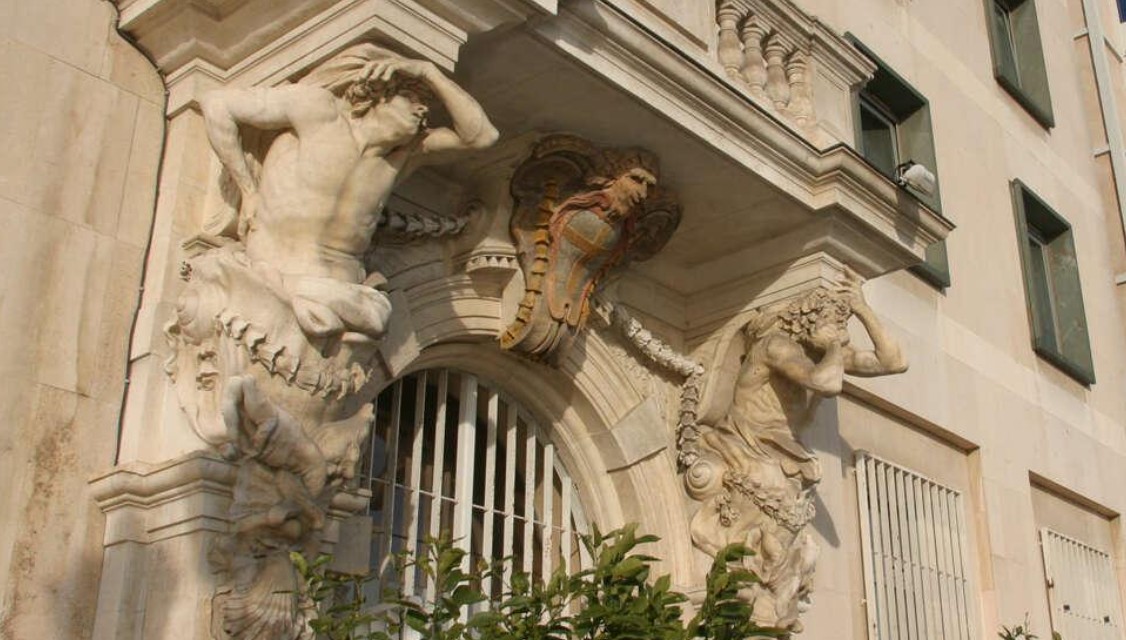
Tra le prime opere importanti di Puget ci sono gli straordinari Atlanti realizzati per la facciata del municipio di Tolone, a metà degli anni Cinquanta del Seicento.
Queste figure maschili monumentali sono rappresentate mentre sostengono il balcone dell’edificio. Non si tratta di semplici elementi decorativi destinati a svolgere una funzione architettonica: i corpi sono protagonisti assoluti della composizione.
I muscoli sono contratti, le schiene si piegano sotto il peso e le anatomie restituiscono uno sforzo quasi palpabile. Puget affronta il tema dell’Atlante, figura mitologica condannata a sostenere il cielo, trasformandolo in una potente dimostrazione delle possibilità espressive della scultura.
È già evidente quella tensione drammatica che ritroveremo nelle sue opere più celebri. Il marmo e la pietra non sono trattati come superfici da decorare, ma diventano strumenti per raccontare una fatica fisica che sembra proseguire oltre i confini della materia.
A Genova incontra il Barocco italiano: San Sebastiano e Alessandro Sauli
Tra il 1661 e il 1668 Puget soggiornò a Genova, città nella quale trovò un ambiente particolarmente favorevole alla sua attività. Dopo la caduta in disgrazia del suo protettore Nicolas Fouquet, il soggiorno italiano si trasformò in una vera opportunità professionale.
La grande aristocrazia genovese era interessata alle novità artistiche e disponeva delle risorse necessarie per commissionare opere importanti. Puget seppe inserirsi in questo contesto, ottenendo incarichi per chiese e ambienti religiosi.
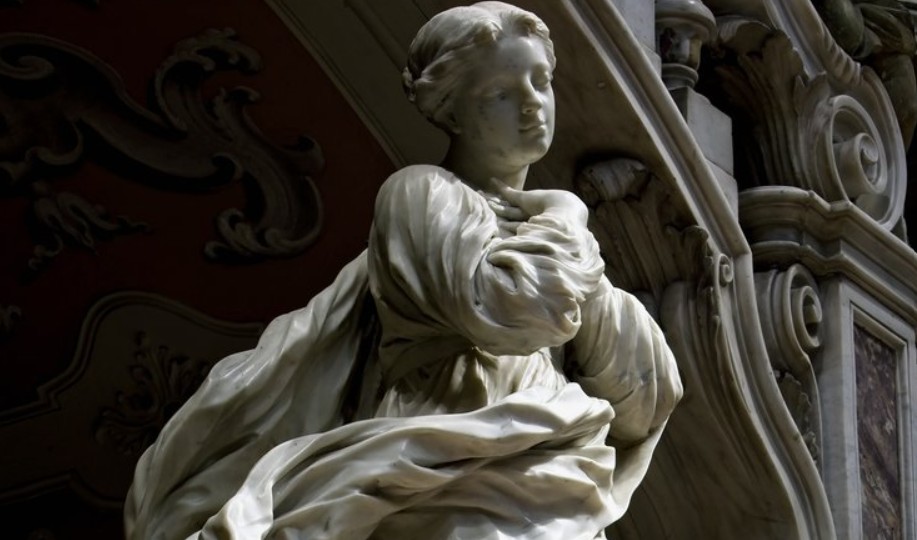
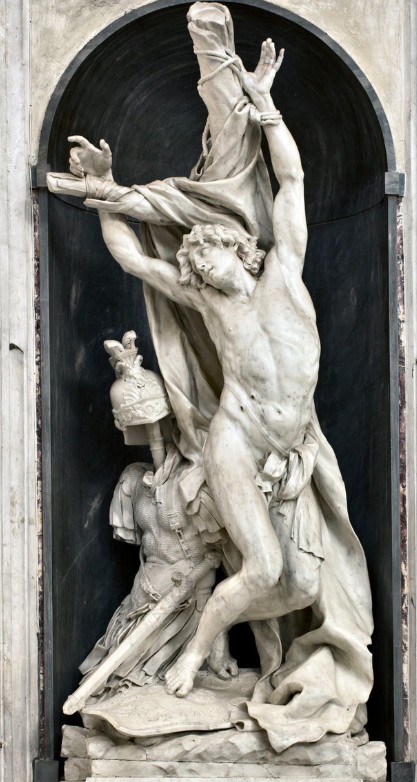
Tra i lavori più significativi realizzati in città ci sono il San Sebastiano e il Beato Alessandro Sauli per la basilica di Santa Maria Assunta di Carignano. Le figure mostrano bene quanto l’artista avesse fatto propria la lezione berniniana, soprattutto nella capacità di trasformare un soggetto religioso in una presenza emotivamente coinvolgente.
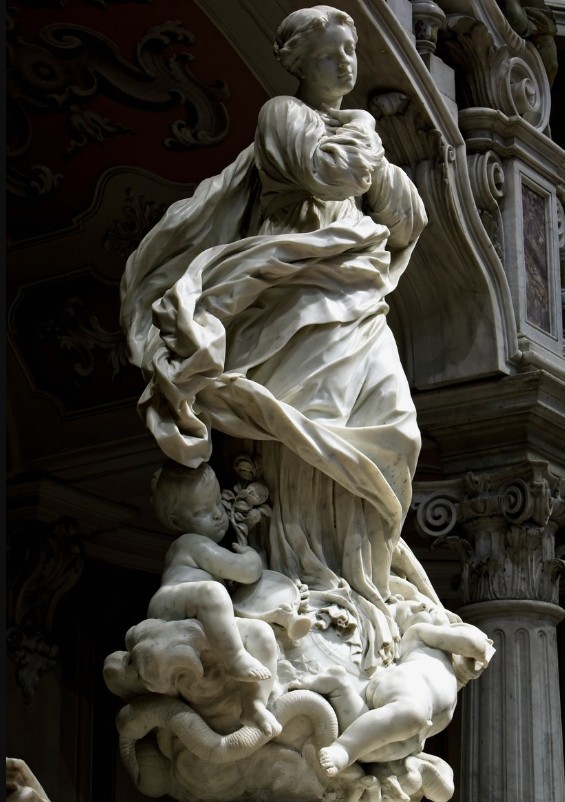
A Genova realizzò anche l’Immacolata Concezione per l’oratorio di San Filippo Neri e lavorò ad altre importanti commissioni. La sua presenza contribuì al rinnovamento della scultura genovese del Seicento, portando in città un linguaggio aggiornato sulle esperienze più innovative del Barocco romano.
Il Milone di Crotone: il capolavoro che trasforma il dolore in marmo
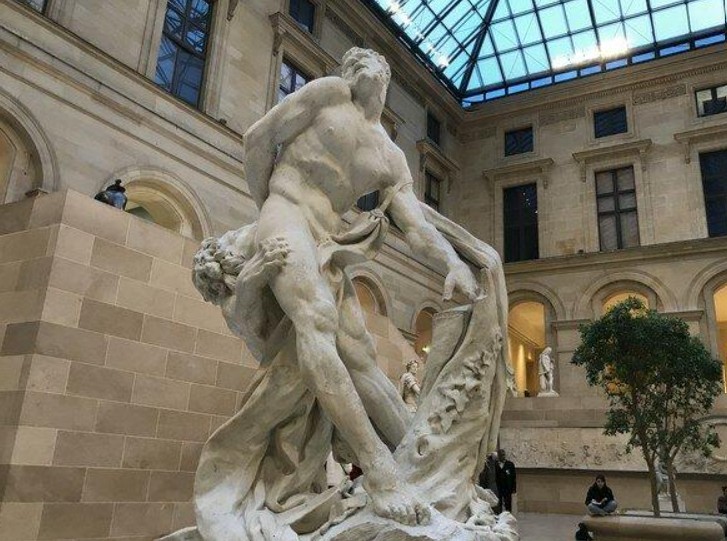
Se c’è un’opera che permette di comprendere immediatamente la personalità artistica di Pierre Puget, è il Milone di Crotone, oggi conservato al Museo del Louvre di Parigi.
Realizzato tra il 1671 e il 1682, il gruppo marmoreo racconta un episodio della vita leggendaria dell’atleta greco Milone di Crotone. Secondo la tradizione, Milone era famoso per la sua forza straordinaria e per le numerose vittorie ottenute nelle competizioni atletiche. Ormai anziano, volle dimostrare di non aver perso la potenza fisica di un tempo e tentò di spaccare con le mani il tronco di un albero.
La prova si trasformò in una trappola. La mano rimase incastrata nel legno e l’uomo non riuscì più a liberarsi. Puget sceglie di rappresentare proprio l’istante in cui Milone, ormai indifeso, viene assalito da un leone.
La composizione è di una violenza straordinaria. Il corpo dell’atleta si torce, il volto si contrae in una smorfia di dolore e le dita cercano disperatamente di liberarsi. Il leone affonda le fauci nella carne, mentre ogni muscolo sembra partecipare alla lotta.
L’artista mostra la sua vulnerabilità, il momento in cui la forza fisica non basta più a salvarlo. Accanto alla figura si trova anche la coppa conquistata nelle gare atletiche, simbolo di una gloria ormai lontana.
Nella versione più diffusa del mito, Milone sarebbe stato divorato dai lupi. Puget preferì sostituirli con un leone, un animale più adatto alla monumentalità e alla forza visiva della composizione.
L’opera fu commissionata da Jean-Baptiste Colbert per i giardini di Versailles. Realizzata utilizzando uno dei grandi blocchi di marmo rimasti nei cantieri navali di Tolone, venne consegnata nel 1683 e collocata in una posizione prestigiosa nei giardini reali. In seguito fu trasferita al Louvre, dove ancora oggi è uno dei capolavori della scultura barocca francese.
La leggenda racconta che la regina Maria Teresa, vedendola, avrebbe esclamato: «Pover’uomo! Come soffre!».
Perseo e Andromeda: il marmo diventa movimento
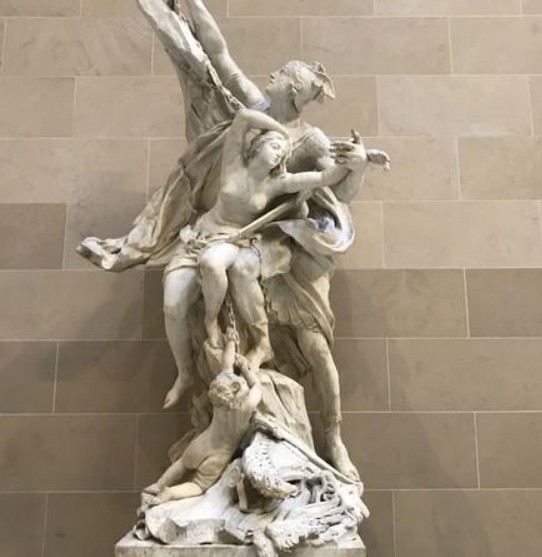
Un’altra opera fondamentale per comprendere il talento di Puget è Perseo e Andromeda, realizzata tra il 1675 e il 1684 e oggi conservata al Louvre.
Il soggetto proviene dalla mitologia greca. Andromeda, figlia di Cefeo e Cassiopea, è stata incatenata a uno scoglio come sacrificio destinato a placare un mostro marino. Perseo interviene per salvarla, affrontando il pericolo e liberandola dalla sua prigionia.
Puget sceglie di rappresentare il momento culminante della vicenda, quando l’eroe si avvicina alla giovane donna e la sottrae al suo destino. Le figure si intrecciano in una composizione complessa, nella quale ogni elemento contribuisce a creare un’impressione di movimento.
Il corpo di Andromeda, ancora legato alla roccia, contrasta con la figura dinamica di Perseo. Il panneggio, le anatomie e la disposizione dei personaggi guidano lo sguardo attraverso il gruppo marmoreo, restituendo tutta la tensione dell’episodio mitologico.
L’opera fu destinata, come il Milone, ai giardini di Versailles.
Alessandro e Diogene: la filosofia diventa una scena teatrale
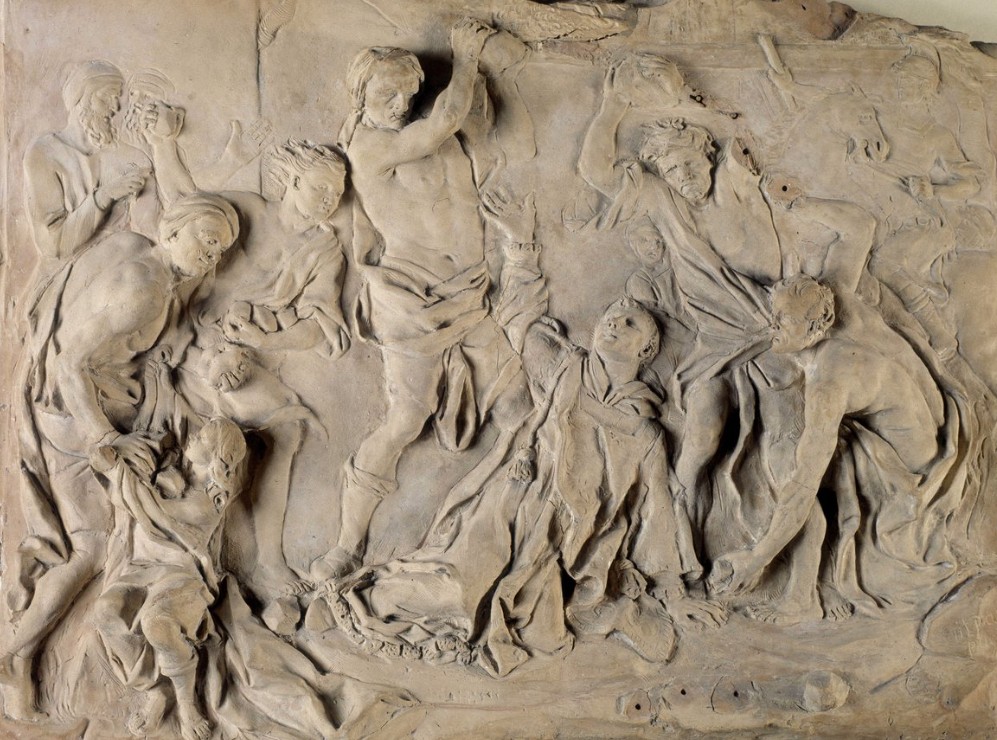
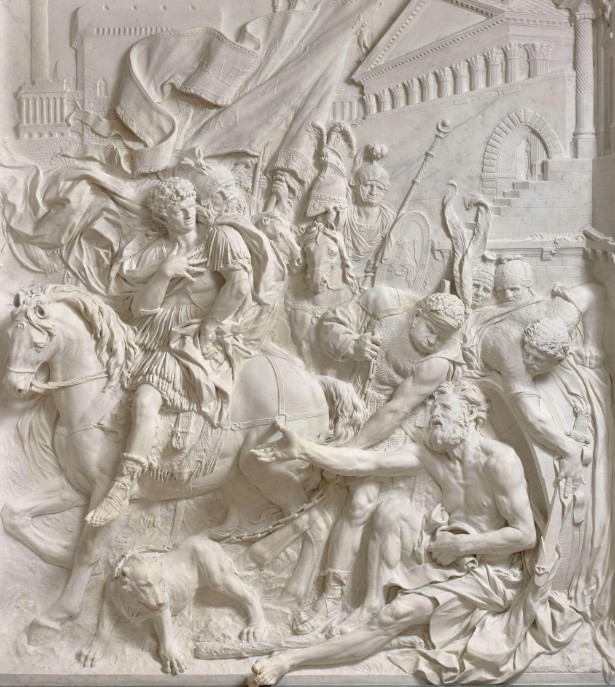
Tra le opere più ambiziose di Pierre Puget c’è anche il grande rilievo marmoreo con Alessandro e Diogene, realizzato tra il 1671 e il 1693 e conservato al Louvre.
Il soggetto riprende un celebre episodio dell’antichità. Alessandro Magno, incuriosito dalla fama del filosofo Diogene, si recò a incontrarlo mentre questi viveva in estrema povertà. Il sovrano gli offrì di esaudire qualsiasi suo desiderio. La risposta del filosofo fu sorprendente: gli chiese semplicemente di spostarsi perché gli stava togliendo il sole.
L’episodio è diventato nei secoli un simbolo dell’indipendenza intellettuale e della distanza tra il potere e la vera libertà. Puget lo trasforma in una composizione ricca di personaggi, gesti e dettagli, nella quale la narrazione sembra quasi svolgersi davanti agli occhi dello spettatore.
Il rilievo dimostra quanto l’artista fosse interessato anche alla scultura narrativa e alla costruzione di scene complesse.
Era destinato agli appartamenti reali di Versailles, ma non venne mai collocato nella sede originariamente prevista. Rimane una delle testimonianze più importanti della maturità artistica di Puget.
Ercole e l’Idra di Lerna: la lotta contro il mostro
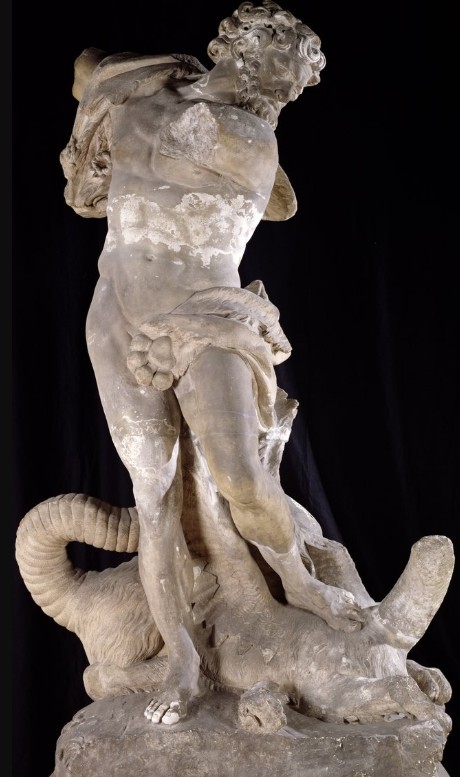
Prima delle grandi commissioni per Versailles, Puget aveva già affrontato un altro soggetto particolarmente adatto alla sua sensibilità: Ercole e l’Idra di Lerna, realizzato nel 1659 per il castello del marchese de Girardin a Vaudreuil e oggi conservato al Musée des Beaux-Arts di Rouen.
La vicenda appartiene alle dodici fatiche di Ercole. L’eroe deve affrontare l’Idra, mostro dalle numerose teste che, secondo il mito, riuscivano a ricrescere dopo essere state tagliate.
È un soggetto che permette a Puget di mettere in evidenza la sua capacità di rappresentare il corpo umano nel pieno dello sforzo. La lotta diventa una prova di forza e di resistenza, nella quale la figura dell’eroe si confronta con una creatura mostruosa.
Pierre Puget, un artista indipendente nel Barocco francese
La carriera di Pierre Puget non fu sempre semplice. Il suo temperamento indipendente e il linguaggio artistico lontano dal classicismo più ufficiale non gli garantirono un percorso lineare negli ambienti della corte francese.
Per lungo tempo rimase distante da Versailles, nonostante le sue capacità e la fama raggiunta. Le commissioni di Colbert gli permisero tuttavia di realizzare alcune delle sue opere più importanti. Il re Luigi XIV, inizialmente perplesso davanti alla forte carica drammatica delle sue sculture, finì per apprezzarne l’originalità.
Puget lavorò anche a progetti architettonici per Marsiglia e continuò a occuparsi di scultura e decorazione navale, mantenendo un rapporto profondo con la sua Provenza.
Morì a Marsiglia il 2 dicembre 1694, lasciando un patrimonio artistico che avrebbe avuto un ruolo importante nella storia della scultura francese e nella diffusione del linguaggio barocco.
Per il momento il sempre vostro Michelangelo Buonarroti vi saluta dandovi appuntamento ai prossimi post e sui social.
Pierre Puget: Baroque Sculptures That Convey Pain, Strength, and Passion
From the suffering of Milo of Croton to the dramatic tension of Perseus and Andromeda, Pierre Puget introduced a language of movement, emotion, and extraordinary virtuosity into 17th-century French sculpture. He stands as one of the most original exponents of the European Baroque.
His figures writhe, suffer, struggle, and seek a way to escape. Muscles tense, faces reveal intense emotions, and drapery appears stirred by a sudden gust of wind.
Born in Marseille in 1620—the city where he would also die in 1694—Puget was a sculptor, painter, and architect. His training and career took him between Italy and France, bringing him into contact with some of the leading figures of Baroque artistic culture. While his work was significantly influenced by the lessons of Gian Lorenzo Bernini, it retains a distinct, highly recognizable personality—one marked by greater torment and drama.
His works embody that same pursuit of movement and the ability to emotionally engage the viewer—qualities that had transformed 17th-century Roman sculpture.
From the shipyards of Marseille to Florence and Rome: The Formative Years of Pierre Puget
Pierre Puget’s artistic journey began in an environment far removed from the great academies. The son of a stonemason, he was introduced early on to manual labor and woodworking, coming into contact with the craftsmen tasked with decorating ships in the Marseille shipyards.
This experience provided him with a direct understanding of materials, technical processes, and the expressive potential of the medium. While still very young, he moved to Italy, spending time in both Florence and Rome. There, he entered the circle of Pietro da Cortona—a key figure in the Roman Baroque—and even collaborated on the decoration of the Pitti Palace. His time in Italy allowed him to gain firsthand knowledge of the great artistic tradition of the Renaissance as well as the innovative approaches of the Baroque period. Among his most significant influences was Gian Lorenzo Bernini, from whom he absorbed the ability to construct dynamic compositions and to manifest emotions through the human form.
Upon returning to France, Puget continued to work across the fields of painting, architecture, and sculpture, never abandoning the expressive freedom that would become a hallmark of his body of work.
The Atlantes of Toulon: when sculpture appears to bear the weight of the world
Among Puget’s first major works are the extraordinary Atlantes created for the façade of the Toulon town hall in the mid-1650s.
These monumental male figures are depicted supporting the building’s balcony. They are far more than mere decorative elements serving an architectural function; the bodies themselves are the absolute protagonists of the composition.
Muscles are taut, backs bend under the strain, and the anatomy conveys an almost palpable sense of exertion. Puget takes the theme of Atlas—the mythological figure condemned to hold up the heavens—and transforms it into a powerful demonstration of the expressive potential of sculpture.
Already present is that dramatic tension that would come to define his most celebrated works. Marble and stone are not treated as surfaces to be decorated; rather, they become tools to articulate a physical struggle that seems to extend beyond the very confines of the material.
Encountering the Italian Baroque in Genoa: Saint Sebastian and Alessandro Sauli
Between 1661 and 1668, Puget resided in Genoa, a city that provided an environment exceptionally well-suited to his creative pursuits. Following the fall from grace of his patron, Nicolas Fouquet, his stay in Italy became a pivotal professional opportunity. The Genoese high aristocracy took an interest in new artistic developments and possessed the resources required to commission significant works. Puget managed to integrate himself into this milieu, securing commissions for churches and religious settings.
Among his most notable works in the city are the Saint Sebastian and the Blessed Alessandro Sauli for the Basilica of Santa Maria Assunta di Carignano. These figures clearly demonstrate how the artist had assimilated the lessons of Bernini—most notably in his ability to transform a religious subject into an emotionally compelling presence.
While in Genoa, he also created the Immaculate Conception for the Oratory of San Filippo Neri and undertook various other major commissions. His presence contributed to the renewal of 17th-century Genoese sculpture, introducing an artistic language informed by the most innovative developments of the Roman Baroque.
Milo of Croton: A Masterpiece That Turns Pain into Marble
If there is one work that offers an immediate insight into the artistic persona of Pierre Puget, it is Milo of Croton, now housed in the Louvre Museum in Paris.
Created between 1671 and 1682, the marble group depicts an episode from the legendary life of the Greek athlete Milo of Croton. According to tradition, Milo was renowned for his extraordinary strength and his numerous victories in athletic competitions. In his later years, wishing to prove that he had not lost his former physical power, he attempted to split a tree trunk with his bare hands.
The feat turned into a trap; his hand became wedged in the wood, leaving him unable to break free. Puget chose to represent the very moment when Milo, now defenseless, is attacked by a lion.
The composition is exceptionally violent. The athlete’s body twists, his face contorts in a grimace of pain, and his fingers struggle desperately to free themselves. The lion sinks its jaws into his flesh, while every muscle in the athlete’s body appears to be engaged in the struggle.
The artist highlights his vulnerability—the moment when physical strength is no longer enough to save him. Beside the figure lies a trophy cup won in athletic contests, a symbol of a glory that has long since faded.
In the most common version of the myth, Milo was devoured by wolves. Puget opted to replace them with a lion—an animal better suited to the monumentality and visual power of the composition.
The work was commissioned by Jean-Baptiste Colbert for the gardens of Versailles. Carved from one of the large marble blocks left over at the shipyards in Toulon, it was completed in 1683 and placed in a prominent spot within the royal gardens. It was later moved to the Louvre, where it remains to this day as one of the masterpieces of French Baroque sculpture.
Legend has it that upon seeing the sculpture, Queen Maria Theresa exclaimed, “Poor man! How he suffers!”.
Perseus and Andromeda: Marble Becomes Movement
Another fundamental work for understanding Puget’s talent is Perseus and Andromeda, created between 1675 and 1684 and now housed in the Louvre.
The subject is drawn from Greek mythology. Andromeda, daughter of Cepheus and Cassiopeia, has been chained to a rock as a sacrifice intended to appease a sea monster. Perseus intervenes to save her, confronting the danger and freeing her from her captivity.
Puget chooses to depict the climactic moment of the story, as the hero approaches the young woman and rescues her from her fate. The figures are intertwined in a complex composition, in which every element contributes to creating an impression of movement.
Andromeda’s body, still bound to the rock, contrasts with the dynamic figure of Perseus. The drapery, the anatomical details, and the arrangement of the characters guide the viewer’s gaze across the marble group, conveying the full tension of the mythological episode.
Like Milo of Croton, this work was intended for the gardens of Versailles.
Alexander and Diogenes: Philosophy Becomes a Theatrical Scene
Among Pierre Puget’s most ambitious works is the large marble relief Alexander and Diogenes, created between 1671 and 1693 and held in the Louvre.
The subject recounts a famous episode from antiquity. Alexander the Great, intrigued by the reputation of the philosopher Diogenes, went to meet him while the latter was living in extreme poverty. The ruler offered to grant any wish the philosopher might have. Diogenes’ response was surprising: he simply asked Alexander to move aside, as he was blocking his sunlight.
Over the centuries, this episode has become a symbol of intellectual independence and the distance between worldly power and true freedom. Puget transforms it into a composition rich in characters, gestures, and details, in which the narrative seems to unfold before the viewer’s very eyes.
The relief demonstrates the extent of the artist’s interest in narrative sculpture and the construction of complex scenes.
It was intended for the royal apartments at Versailles but was never installed in its originally planned location. It remains one of the most significant examples of Puget’s artistic maturity.
Hercules and the Lernaean Hydra: The Fight Against the Monster
Before his major commissions for Versailles, Puget had already explored a subject particularly well-suited to his sensibilities: Hercules and the Lernaean Hydra, created in 1659 for the Marquis de Girardin’s château at Vaudreuil—a work now held by the Musée des Beaux-Arts in Rouen.
The episode is one of the Twelve Labors of Hercules. The hero must confront the Hydra, a multi-headed monster whose heads, according to the myth, would grow back whenever they were severed.
The subject allowed Puget to showcase his skill in depicting the human body under intense physical exertion. The struggle becomes a test of strength and endurance, in which the hero’s figure grapples with a monstrous creature.
Pierre Puget: An Independent Artist in the French Baroque
Pierre Puget’s career was not always straightforward. His independent temperament and an artistic style that diverged from the more official form of Classicism did not ensure him a smooth path within the circles of the French court.
For a long time, he remained at a distance from Versailles, despite his talents and the renown he had achieved. Nevertheless, commissions from Colbert enabled him to create some of his most significant works. King Louis XIV—initially taken aback by the intense dramatic power of his sculptures—eventually came to appreciate their originality.
Puget also worked on architectural projects for Marseille and continued his involvement in sculpture and naval decoration, all while maintaining a deep connection to his native Provence.
He passed away in Marseille on December 2, 1694, leaving behind an artistic legacy that would play a vital role in the history of French sculpture and the spread of the Baroque style.
For now, yours truly, Michelangelo Buonarroti, bids you farewell—until the next posts and over on social media.

Sostienici – Support Us
Se questo blog ti piace e ti appassiona, puoi aiutarci a farlo crescere sempre più sostenendoci in modo concreto condividendo i post, seguendo le pagine social e con un contributo che ci aiuta ad andare avanti con il nostro lavoro di divulgazione. . ENGLISH: If you like and are passionate about this blog, you can help us make it grow more and more by supporting us in a concrete way by sharing posts, following social pages and with a contribution that helps us to move forward with our dissemination work.
10,00 €

Condividi:


Questo sono io





sostienici

Sostienici - Support Us
Se questo blog ti piace e ti appassiona, puoi aiutarci a farlo crescere sempre più sostenendoci in modo concreto condividendo i post, seguendo le pagine social e con un contributo che ci aiuta ad andare avanti con il nostro lavoro di divulgazione. . ENGLISH: If you like and are passionate about this blog, you can help us make it grow more and more by supporting us in a concrete way by sharing posts, following social pages and with a contribution that helps us to move forward with our dissemination work.
€10,00


