
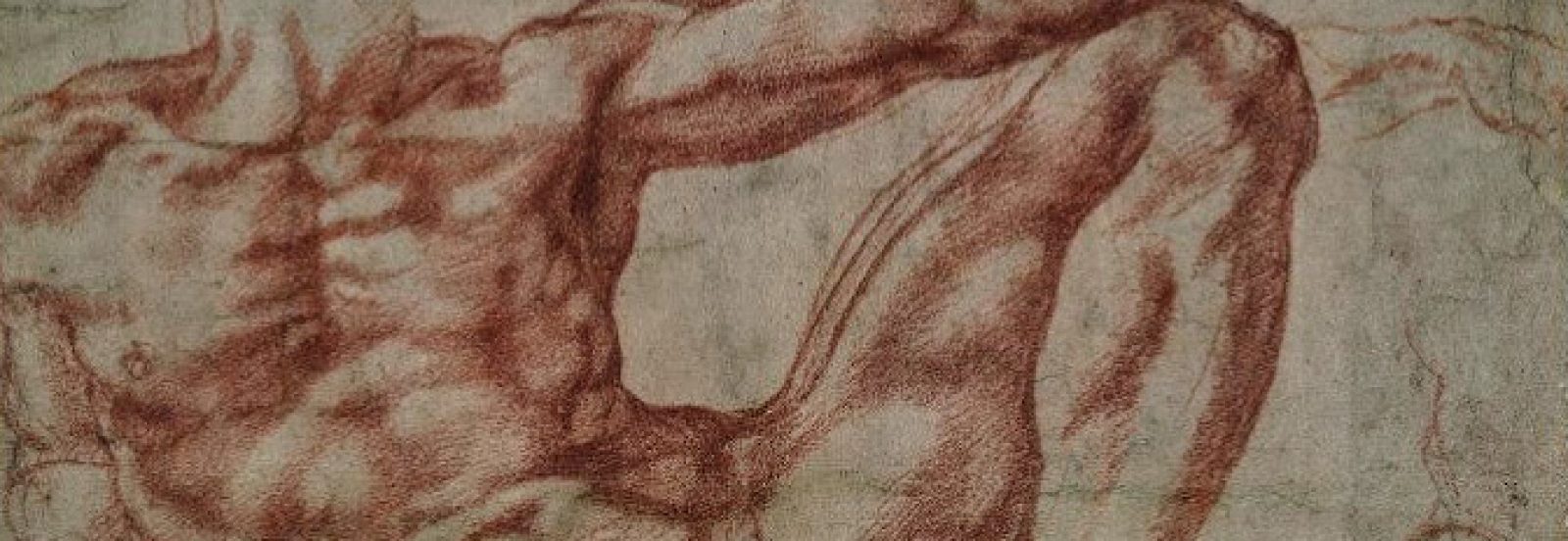
Alluvione di Firenze del 1966: i capolavori d’arte perduti e feriti dall’Arno, 60 anni dopo
Il 4 novembre 1966 Firenze venne sommersa da una delle più devastanti alluvioni della sua storia.
Trentasei le vittime, migliaia le opere d’arte danneggiate, libri e documenti sepolti nel fango. Dal Crocifisso di Cimabue alle formelle del Ghiberti, il patrimonio artistico subì ferite profonde. A salvare ciò che restava arrivarono da tutto il mondo gli Angeli del fango.
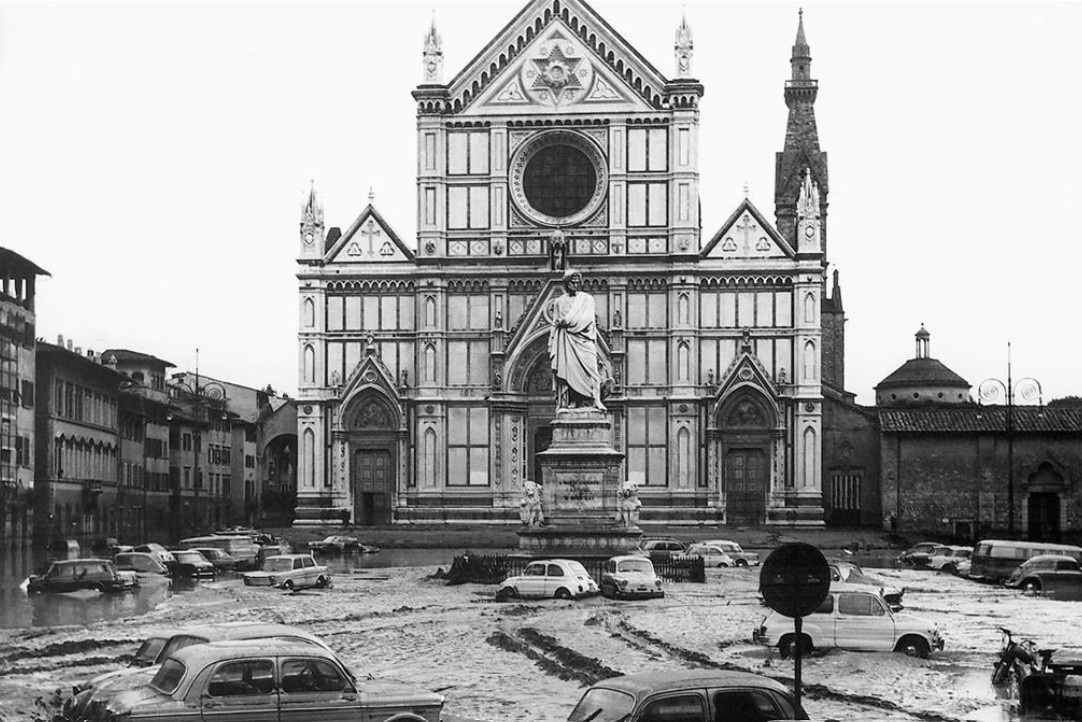
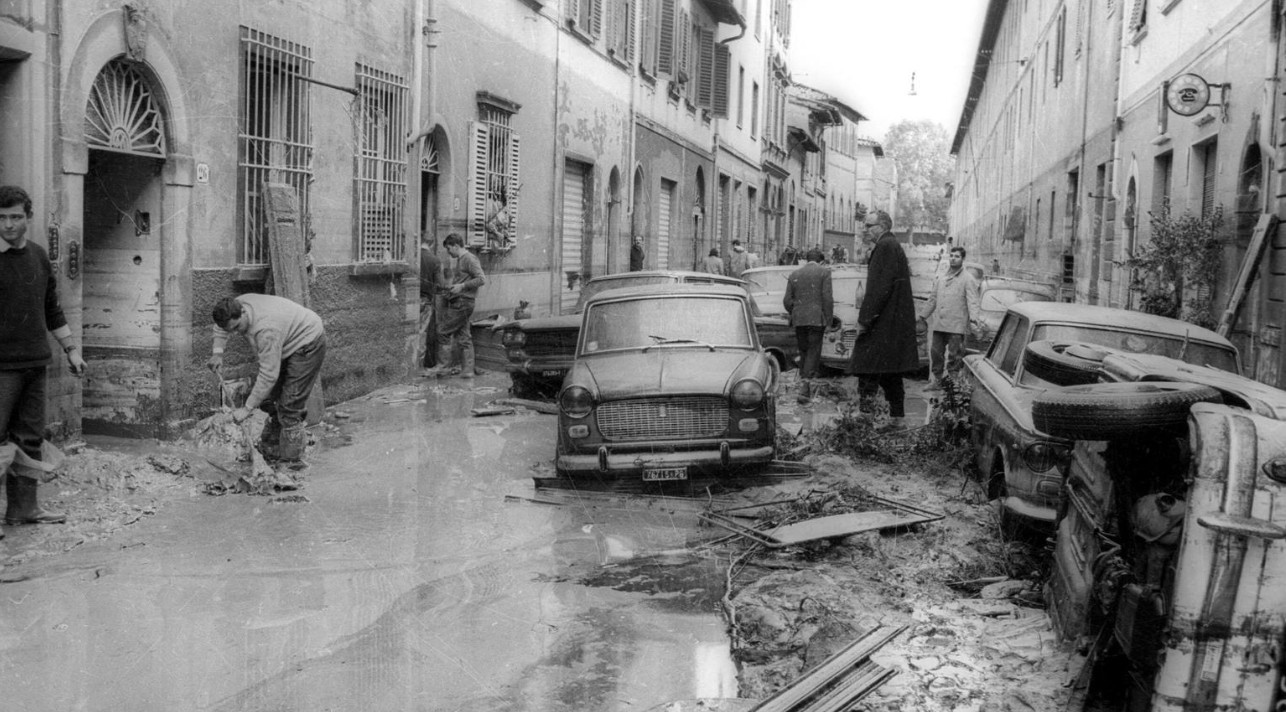
Piazza Santa Croce trasformata in un lago di acqua scura, le automobili trascinate dalla corrente, le strade invase dal fango e, soprattutto, i capolavori dell’arte italiana ricoperti da una melma che sembrava voler cancellare secoli di storia.
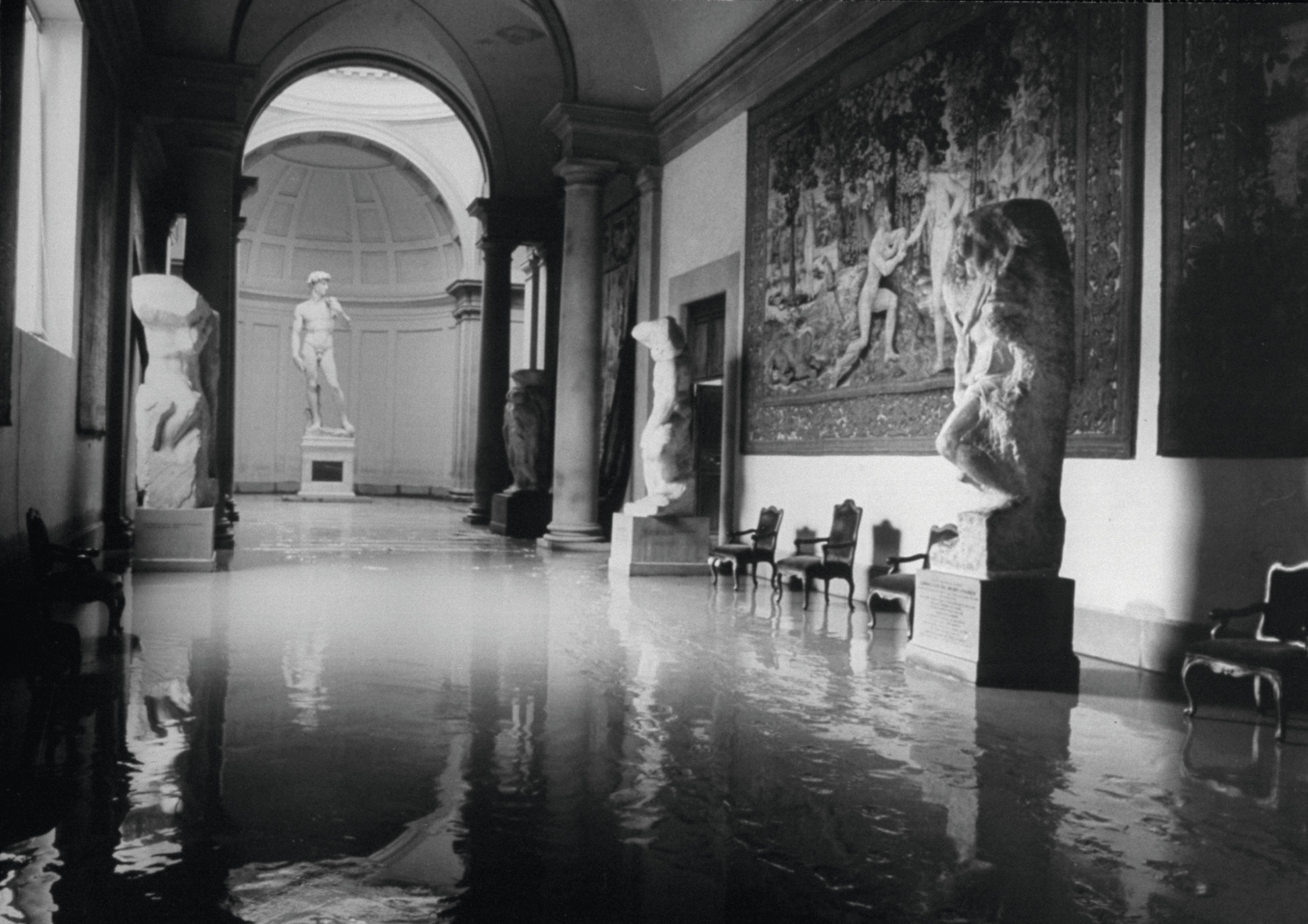
Era il 4 novembre 1966. Sessant’anni fa, proprio nel giorno in cui l’Italia celebrava le Forze Armate, l’Arno si riversò nel cuore di Firenze, travolgendo case, negozi, chiese, biblioteche e musei. Una città che custodiva alcuni dei più importanti tesori artistici del mondo si ritrovò improvvisamente a combattere per salvare la propria memoria.
Il bilancio fu drammatico: 36 persone persero la vita a Firenze e nella provincia. Migliaia di famiglie videro distrutte le proprie abitazioni e attività. Accanto alla tragedia umana si consumò un’altra catastrofe, meno immediatamente visibile eppure destinata a lasciare conseguenze per generazioni: la perdita e il danneggiamento di un patrimonio artistico inestimabile.
Dipinti, sculture, affreschi, tavole medievali, manoscritti e libri antichi finirono sott’acqua. Alcune opere furono recuperate, altre persero per sempre una parte della loro materia originale. Per molte, il restauro sarebbe diventato una sfida scientifica e conservativa senza precedenti.

4 novembre 1966: quando l’Arno sommerse Firenze
La pioggia cadeva incessantemente sulla Toscana dalla fine di ottobre. Nelle ore precedenti l’alluvione, lungo il corso dell’Arno, si registrarono precipitazioni eccezionali: alla vigilia della piena caddero circa 200 millimetri d’acqua in alcune aree del bacino.
Il fiume aveva già cominciato a straripare nell’aretino durante la notte tra il 3 e il 4 novembre. Nelle prime ore del mattino raggiunse Firenze, senza che la popolazione avesse ricevuto un allarme adeguato.
L’acqua invase progressivamente i quartieri di Rovezzano, Gavinana, San Salvi e il centro storico, raggiungendo anche l’Oltrarno, San Frediano e Santa Croce. La rottura della spalletta di piazza Cavalleggeri rese ancora più devastante l’ingresso della piena in alcune zone della città.
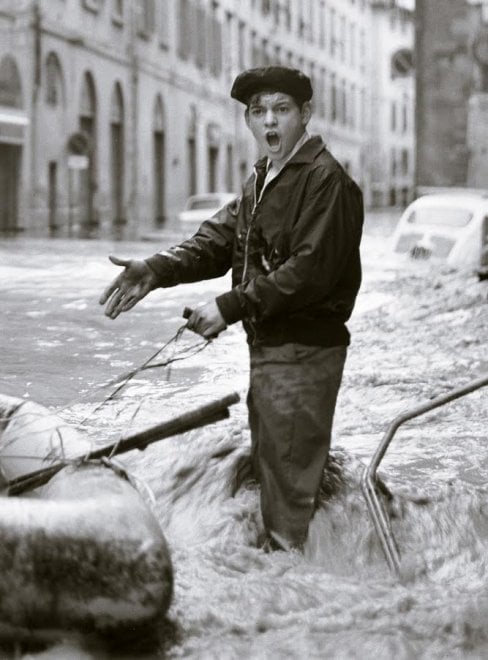
In poche ore arrivarono circa 70 milioni di metri cubi d’acqua. In alcune strade il livello raggiunse i cinque metri. L’Arno trascinava automobili, mobili, tronchi, detriti e nafta fuoriuscita dai serbatoi. Quando l’acqua cominciò a ritirarsi, lasciò dietro di sé uno scenario impressionante.
Firenze era isolata: erano saltate le linee telefoniche e l’elettricità, mentre collegamenti ferroviari e stradali risultavano interrotti.
Fu il sindaco Piero Bargellini, passato alla storia come il sindaco dell’alluvione, a rivolgersi ai cittadini attraverso la radio, chiedendo aiuto e invitando chi possedeva imbarcazioni e mezzi anfibi a raggiungere Palazzo Vecchio per organizzare i soccorsi.
La città aveva bisogno di tutto: cibo, medicinali, vestiti, ma anche di persone disposte a entrare nel fango per recuperare ciò che poteva ancora essere salvato.
Il Crocifisso di Cimabue: il capolavoro che perse gran parte della sua pittura
Se esiste un’opera che più di ogni altra è diventata il simbolo dell’alluvione di Firenze, è il Crocifisso di Cimabue, custodito nella Basilica di Santa Croce.
Realizzato nella seconda metà del XIII secolo, questo straordinario dipinto su tavola rappresenta uno dei passaggi fondamentali della pittura italiana medievale. Il corpo di Cristo, abbandonato sulla croce, mostra una sensibilità espressiva e una ricerca naturalistica che segnano un momento decisivo nella storia della rappresentazione sacra.
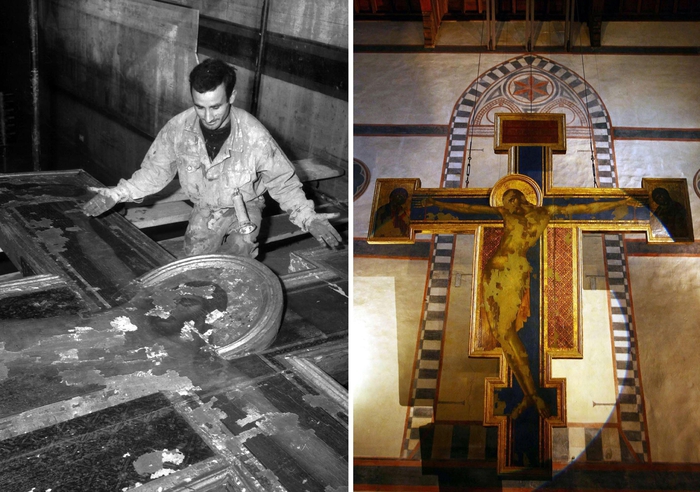
Il 4 novembre 1966 il capolavoro venne investito dall’acqua e dal fango. La struttura lignea assorbì l’umidità, deformandosi e subendo gravi lesioni. La pellicola pittorica, già fragile, si sollevò e si staccò in vaste porzioni.
Le stime parlano della perdita di circa il 60-70 per cento della superficie dipinta. Una ferita enorme, che modificò per sempre l’aspetto dell’opera.
Il Crocifisso fu trasferito alla Limonaia di Palazzo Pitti, dove venne allestito un laboratorio per gli interventi di emergenza. Cominciò così un lungo e complesso percorso di recupero, destinato a diventare uno dei casi più importanti nella storia del restauro contemporaneo.
Il dipinto non avrebbe mai riacquistato integralmente la propria immagine originaria. Le parti di colore perdute non potevano essere semplicemente ricreate: il restauro doveva conservare ciò che rimaneva, rispettando anche le ferite lasciate dall’acqua.
Le formelle del Ghiberti e i tesori del Battistero
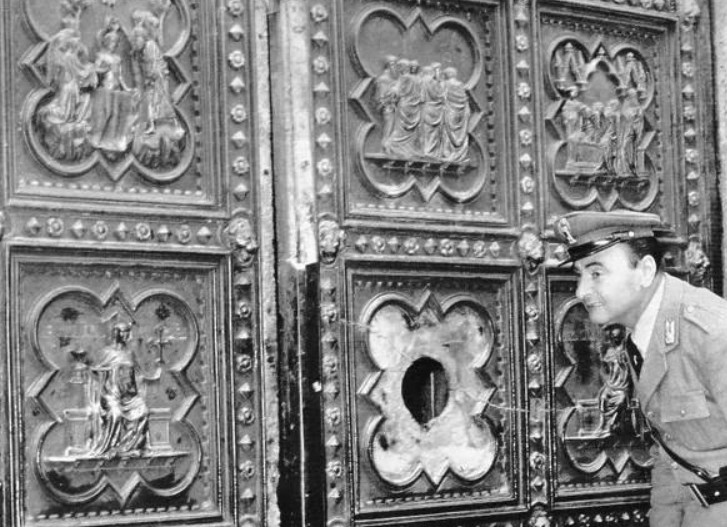
Tra le opere colpite dalla furia dell’acqua ci furono anche le celebri formelle della Porta del Paradiso di Lorenzo Ghiberti, uno dei massimi capolavori del Rinascimento fiorentino.
La porta bronzea del Battistero di San Giovanni, realizzata tra il 1425 e il 1452, racconta attraverso dieci grandi pannelli dorati altrettanti episodi dell’Antico Testamento. Le sue scene, costruite con una straordinaria profondità prospettica, rappresentano una delle conquiste più importanti della scultura rinascimentale.
Durante l’alluvione, la pressione dell’acqua e la violenza della corrente provocarono il distacco di alcune formelle dalla loro sede. Il recupero dei pannelli fu un’operazione delicata e complessa: il bronzo dorato aveva subito danni e aveva bisogno di interventi specialistici.
Anche in questo caso la catastrofe del 1966 dimostrò quanto un’opera apparentemente resistente, realizzata in un materiale durevole come il bronzo, possa essere vulnerabile davanti a un evento naturale di proporzioni eccezionali.
La Porta del Paradiso sarebbe stata successivamente sottoposta a un lungo intervento di restauro. Oggi gli originali sono conservati nel Museo dell’Opera del Duomo, mentre sul Battistero sono collocate copie.
Dipinti, affreschi e sculture: circa 1.200 opere danneggiate
Secondo le stime, furono circa 1.200 le opere d’arte danneggiate dall’alluvione, tra dipinti su tavola, tele, affreschi e sculture. Un numero impressionante, che restituisce soltanto in parte la dimensione della tragedia culturale.
Chiese, conventi e musei si trasformarono in luoghi di emergenza. Le opere venivano recuperate quando possibile, trasportate in ambienti più sicuri e sottoposte a interventi urgenti per impedire che l’umidità, il fango e le muffe completassero il lavoro distruttivo dell’acqua.
A Santa Croce, oltre al Crocifisso di Cimabue, furono messi in pericolo dipinti e arredi di grande valore storico e artistico. Tra le operazioni di salvataggio ci fu anche quella di una pala duecentesca raffigurante San Francesco, trasferita dalla Cappella Bardi ai piani superiori del convento.
La Biblioteca Nazionale e il Gabinetto Vieusseux: milioni di pagine nel fango
Se le immagini dei dipinti coperti di fango fecero il giro del mondo, altrettanto impressionante fu la devastazione delle biblioteche fiorentine.
L’acqua raggiunse la Biblioteca Nazionale Centrale di Firenze, sommergendo circa un terzo dei suoi tre milioni di volumi. Libri antichi, manoscritti, periodici, documenti e materiali preziosi vennero investiti dall’acqua sporca di nafta.
Anche il Gabinetto Vieusseux, ospitato a Palazzo Strozzi, subì danni gravissimi. Circa 250.000 volumi custoditi nei locali sotterranei finirono sott’acqua.
Molti erano testimonianze uniche della storia culturale italiana ed europea: documenti, edizioni rare, carteggi e materiali che non sempre potevano essere sostituiti.
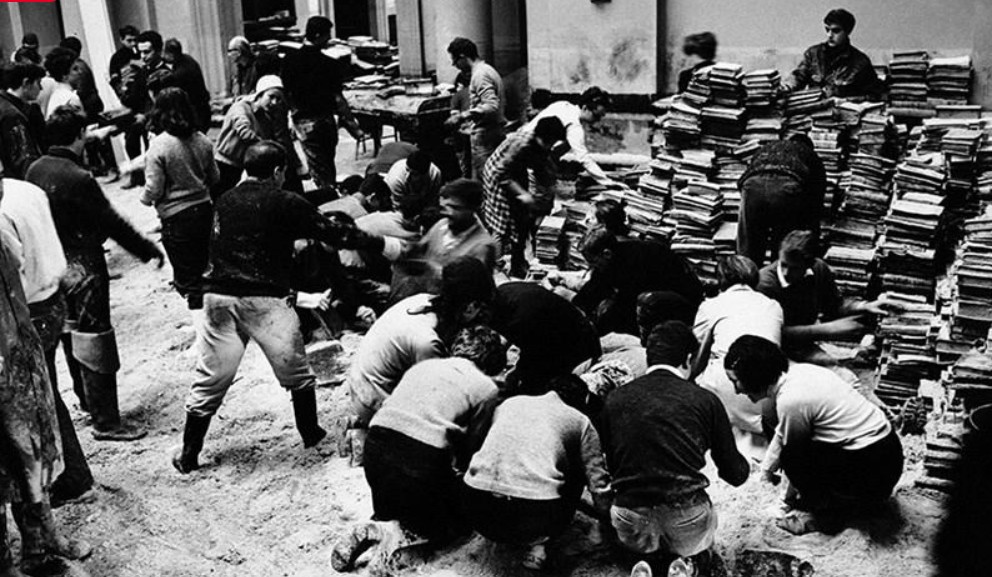
La carta bagnata è particolarmente vulnerabile. Le pagine si incollano, gli inchiostri possono sciogliersi, le muffe proliferano rapidamente e il peso dei volumi aumenta in maniera considerevole. Per salvare quanto possibile bisognava intervenire subito, separando le pagine, pulendo i materiali e organizzando sistemi di asciugatura.
Ogni libro irrimediabilmente compromesso poteva rappresentare una testimonianza culturale sottratta alle generazioni future.
L’alluvione mise così in evidenza una questione che ancora oggi riguarda la tutela del patrimonio: la conservazione non può limitarsi alle opere esposte nei musei, ma deve comprendere anche biblioteche, archivi e depositi, spesso altrettanto preziosi e particolarmente esposti ai rischi ambientali.
Gli Angeli del fango: migliaia di giovani arrivati da tutto il mondo
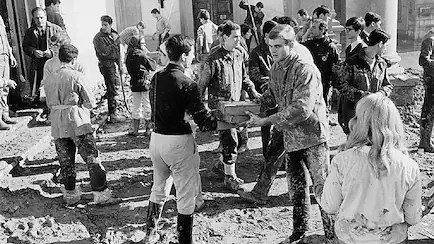
Mentre Firenze cercava di comprendere la portata della distruzione, da ogni parte d’Italia e dall’estero cominciarono ad arrivare migliaia di giovani volontari.
Erano studenti, lavoratori, ragazzi e ragazze che decisero di raggiungere la città per aiutare la popolazione e salvare il patrimonio artistico e librario. Si sporcarono le mani, entrarono negli edifici allagati, recuperarono libri, liberarono le strade dai detriti e trasportarono materiali che altrimenti sarebbero rimasti sepolti nel fango.
Furono chiamati Angeli del fango, espressione attribuita al giornalista Giovanni Grazzini, diventata da allora il nome con cui ricordiamo quella straordinaria mobilitazione internazionale.
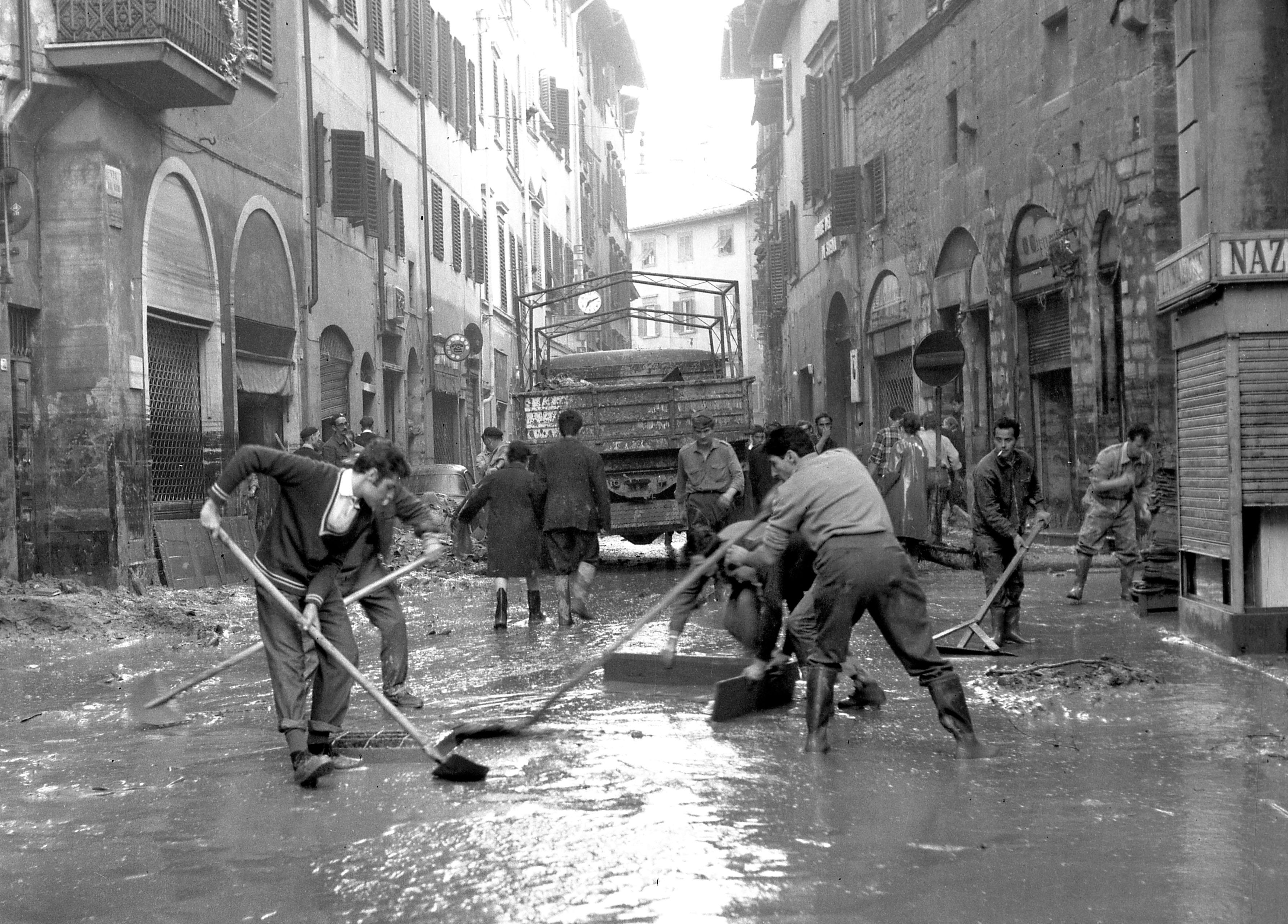
Tra loro ci furono persone che avrebbero poi raggiunto notorietà in ambiti molto diversi, dalla politica alla musica, dalla cultura alla società civile. Si ricordano, tra gli altri, Joan Baez, Ted Kennedy e giovani destinati a diventare protagonisti della vita pubblica europea.
La loro presenza rappresentò qualcosa di più di un aiuto materiale. Firenze, che per secoli aveva custodito capolavori destinati a parlare al mondo intero, ricevette proprio dal mondo una risposta concreta alla propria tragedia.
Particolarmente importante fu il lavoro nelle biblioteche. I volontari recuperarono migliaia di volumi, li separarono, li pulirono e li misero ad asciugare. Molti libri furono salvati grazie a gesti semplici, ripetuti per ore e ore, in condizioni difficili.
Firenze dopo l’alluvione: una ferita che non si è mai rimarginata
Quando l’acqua finalmente si ritirò, Firenze dovette affrontare una ricostruzione materiale e morale. Le abitazioni erano devastate, le attività commerciali distrutte, le strade ricoperte da uno strato di fango e petrolio. Trentasei persone avevano perso la vita e il patrimonio culturale della città aveva subito danni difficilmente quantificabili.
Due giorni dopo l’alluvione, anche il presidente della Repubblica Giuseppe Saragat raggiunse Firenze. La sua visita, accompagnata dalle immagini della jeep rimasta impantanata nel fango di Santa Croce, mostrò al Paese la dimensione di una tragedia che inizialmente non era stata compresa fino in fondo.
Nel 2023, a distanza di 57 anni, è stata ufficialmente identificata anche l’ultima vittima dell’alluvione: Mario Maggi, 44 anni. Un riconoscimento tardivo che ha riportato alla memoria una vicenda umana rimasta per decenni senza una conclusione.
Il disastro contribuì a cambiare profondamente le tecniche e l’organizzazione del restauro in Italia, accelerando la ricerca scientifica sui materiali, sui metodi di consolidamento e sulle procedure da adottare in caso di emergenza. L’Opificio delle Pietre Dure di Firenze sarebbe diventato uno dei principali centri internazionali di riferimento per il restauro.
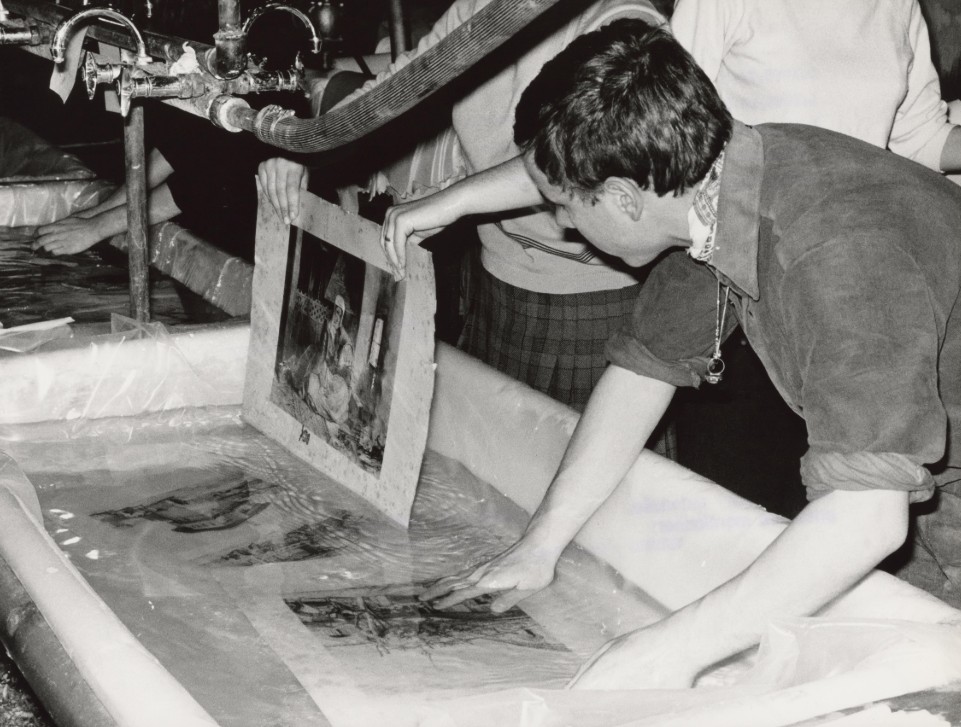
Firenze ha saputo rialzarsi grazie alla competenza dei restauratori, alla generosità dei volontari e alla solidarietà internazionale. Gli Angeli del fango hanno lasciato un segno che va ben oltre il 1966.
Salvare un’opera d’arte non significa soltanto recuperare un dipinto o un libro antico. Significa impedire che una parte della nostra storia scompaia per sempre.
Per il momento il sempre vostro Michelangelo Buonarroti vi saluta dandovi appuntamento ai prossimi post e sui social.

The 1966 Florence Flood: Art Masterpieces Lost or Damaged by the Arno, 60 Years Later
On November 4, 1966, Florence was submerged by one of the most devastating floods in its history.
Thirty-six people lost their lives, thousands of works of art were damaged, and countless books and documents were buried in mud. From Cimabue’s Crucifix to Ghiberti’s panels, the city’s artistic heritage suffered deep wounds. To save what remained, the “Mud Angels”—volunteers from all over the world—arrived to help.
Piazza Santa Croce was transformed into a lake of dark water; cars were swept away by the current; streets were overrun with mud; and, most tragically, masterpieces of Italian art were blanketed in a thick, slimy sludge that seemed intent on erasing centuries of history.
It was November 4, 1966. Sixty years ago—on the very day Italy was celebrating its Armed Forces—the Arno River surged into the heart of Florence, overwhelming homes, shops, churches, libraries, and museums. A city that held some of the world’s most significant artistic treasures suddenly found itself fighting to preserve its own memory.
The toll was catastrophic: 36 people lost their lives in Florence and its surrounding province. Thousands of families saw their homes and livelihoods destroyed. Alongside this human tragedy unfolded another disaster—less immediately apparent, yet destined to have repercussions for generations: the loss and damage of an inestimable artistic heritage.
Paintings, sculptures, frescoes, medieval panel paintings, manuscripts, and ancient books ended up underwater. Some works were recovered, while others lost a portion of their original material forever. For many, the restoration would become an unprecedented scientific and conservation challenge.
November 4, 1966: When the Arno Submerged Florence
Rain had been falling incessantly across Tuscany since the end of October. In the hours leading up to the flood, exceptional rainfall was recorded along the course of the Arno; on the eve of the deluge, some areas of the river basin saw approximately 200 millimeters of rain.
The river had already begun to overflow in the Arezzo area during the night of November 3–4. In the early hours of the morning, it reached Florence—without the population having received any adequate warning.
The water progressively inundated the districts of Rovezzano, Gavinana, and San Salvi, as well as the historic center, eventually reaching the Oltrarno, San Frediano, and Santa Croce areas. The collapse of a retaining wall at Piazza Cavalleggeri made the flood’s entry into certain parts of the city even more devastating.
In just a few hours, some 70 million cubic meters of water surged in. In some streets, the water level reached five meters. The Arno swept along cars, furniture, tree trunks, debris, and fuel oil that had leaked from storage tanks. When the water finally began to recede, it left behind a staggering scene.
Florence was cut off: telephone lines and electricity were down, and both rail and road connections were severed.
It was Mayor Piero Bargellini—who would go down in history as the “flood mayor”—who addressed the citizens via radio, calling for help and urging anyone with boats or amphibious vehicles to head to Palazzo Vecchio to assist in organizing rescue efforts. The city was in need of everything: food, medicine, clothing—as well as people willing to wade into the mud to salvage whatever could still be saved.
Cimabue’s Crucifix: the masterpiece that lost much of its paint
If any single work has become the symbol of the Florence flood, it is Cimabue’s Crucifix, housed in the Basilica of Santa Croce.
Created in the second half of the 13th century, this extraordinary panel painting represents a pivotal moment in medieval Italian art. The body of Christ, slumped upon the cross, displays an expressive sensitivity and a naturalistic approach that mark a decisive turning point in the history of sacred imagery.
On November 4, 1966, the masterpiece was struck by floodwaters and mud. The wooden structure absorbed the moisture, causing it to warp and sustain severe damage. The paint layer—already fragile—lifted and detached in large sections.
Estimates suggest that approximately 60–70 percent of the painted surface was lost—a devastating blow that forever altered the appearance of the work.
The Crucifix was moved to the Limonaia (lemon house) at Palazzo Pitti, where an emergency conservation laboratory was set up. This began a long and complex recovery process, which would go on to become one of the most significant case studies in the history of modern restoration.
The painting could never fully regain its original appearance. The lost areas of paint could not simply be recreated; the restoration had to preserve what remained, while also respecting the scars left by the water.
Ghiberti’s panels and the treasures of the Baptistery
Among the works struck by the fury of the floodwaters were also the celebrated panels of the Gates of Paradise by Lorenzo Ghiberti—one of the greatest masterpieces of the Florentine Renaissance.
The bronze doors of the Baptistery of Saint John, created between 1425 and 1452, depict ten episodes from the Old Testament across as many large, gilded panels. The scenes, constructed with extraordinary perspective depth, represent one of the most significant achievements in Renaissance sculpture.
During the flood, the pressure of the water and the violence of the current caused some of the panels to become detached from their mountings. Recovering them was a delicate and complex operation; the gilded bronze had sustained damage and required specialized intervention.
In this instance, too, the catastrophe of 1966 demonstrated how even a seemingly robust work—crafted from a durable material like bronze—can be vulnerable when faced with a natural event of such exceptional proportions.
The Gates of Paradise would later undergo an extensive restoration process. Today, the originals are housed in the Museo dell’Opera del Duomo, while copies are installed on the Baptistery.
Paintings, frescoes, and sculptures: approximately 1,200 damaged works
It is estimated that around 1,200 works of art—including panel paintings, canvases, frescoes, and sculptures—were damaged by the flood. This staggering figure conveys only a partial sense of the scale of this cultural tragedy.
Churches, convents, and museums were transformed into emergency centers. Whenever possible, artworks were salvaged and transported to safer locations, where they underwent urgent treatment to prevent moisture, mud, and mold from completing the destructive work begun by the water. At Santa Croce, in addition to Cimabue’s Crucifix, paintings and furnishings of great historical and artistic value were also put at risk. Among the rescue efforts was the relocation of a 13th-century altarpiece depicting Saint Francis, which was moved from the Bardi Chapel to the upper floors of the convent.
The National Library and the Gabinetto Vieusseux: millions of pages in the mud
While images of mud-covered paintings traveled around the world, the devastation of Florence’s libraries was equally striking.
The floodwaters reached the National Central Library of Florence, submerging about a third of its three million volumes. Ancient books, manuscripts, periodicals, documents, and other precious materials were engulfed by water contaminated with fuel oil.
The Gabinetto Vieusseux, housed in Palazzo Strozzi, also suffered severe damage; approximately 250,000 volumes kept in its underground rooms ended up underwater.
Many of these items were unique records of Italian and European cultural history—documents, rare editions, correspondence, and other materials that could not always be replaced.
Wet paper is exceptionally vulnerable. Pages stick together, inks can dissolve, mold proliferates rapidly, and the weight of the volumes increases significantly. To save as much as possible, immediate action was required: separating pages, cleaning the materials, and organizing drying processes.
Every book that was damaged beyond repair represented a piece of cultural heritage lost to future generations.
The flood thus highlighted an issue that remains relevant to the protection of cultural heritage today: conservation cannot be limited to works on display in museums; it must also encompass libraries, archives, and storage facilities—all of which are often just as valuable, yet particularly exposed to environmental risks.
The “Mud Angels”: Thousands of Young People Arrive from Across the Globe
As Florence struggled to grasp the full scale of the destruction, thousands of young volunteers began to arrive from all over Italy and abroad.
They were students, workers—young men and women—who chose to travel to the city to assist its people and rescue its artistic and literary heritage. They got their hands dirty, entering flooded buildings to recover books, clearing debris from the streets, and salvaging materials that would otherwise have remained buried in the mud.
They came to be known as the “Mud Angels”—a term attributed to journalist Giovanni Grazzini—which has since become the name by which we remember that extraordinary international mobilization.
Among them were individuals who would later go on to achieve prominence in a wide range of fields, from politics and music to culture and civil society. Notable figures included Joan Baez, Ted Kennedy, and other young people destined to become key players in European public life.
Their presence represented far more than just material aid. Florence—a city that had for centuries safeguarded masterpieces meant to speak to the entire world—received, in turn, a tangible response to its tragedy from that very world.
The work carried out in the libraries was particularly significant. Volunteers recovered thousands of volumes, carefully separating and cleaning them and set them out to dry. Many books were saved thanks to simple actions, repeated for hours on end under difficult conditions.
Florence after the flood: a wound that never fully healed
When the water finally receded, Florence faced the task of both material and moral reconstruction. Homes were devastated, businesses destroyed, and streets covered in a thick layer of mud and oil. Thirty-six people had lost their lives, and the city’s cultural heritage had suffered damage that was difficult to quantify.
Two days after the flood, the President of the Republic, Giuseppe Saragat, arrived in Florence. His visit—captured in images of his jeep stuck in the mud near the Basilica of Santa Croce—revealed to the entire nation the true scale of a tragedy that had not initially been fully grasped.
In 2023, 57 years later, the final victim of the flood was officially identified: 44-year-old Mario Maggi. This belated recognition brought closure to a human story that had remained unresolved for decades.
The disaster helped to profoundly transform the techniques and organization of restoration work in Italy, accelerating scientific research into materials, consolidation methods, and emergency response procedures. The Opificio delle Pietre Dure in Florence would go on to become one of the world’s leading centers for restoration.
Florence managed to get back on its feet thanks to the expertise of conservators, the generosity of volunteers, and international solidarity. The “Mud Angels” left a legacy that extends far beyond 1966.
Saving a work of art means more than just recovering a painting or an ancient book; it means preventing a piece of our history from disappearing forever. For now, yours truly, Michelangelo Buonarroti, bids you farewell—see you in future posts and on social media.

Sostienici – Support Us
Se questo blog ti piace e ti appassiona, puoi aiutarci a farlo crescere sempre più sostenendoci in modo concreto condividendo i post, seguendo le pagine social e con un contributo che ci aiuta ad andare avanti con il nostro lavoro di divulgazione. . ENGLISH: If you like and are passionate about this blog, you can help us make it grow more and more by supporting us in a concrete way by sharing posts, following social pages and with a contribution that helps us to move forward with our dissemination work.
10,00 €

Condividi:


Questo sono io




sostienici

Sostienici - Support Us
Se questo blog ti piace e ti appassiona, puoi aiutarci a farlo crescere sempre più sostenendoci in modo concreto condividendo i post, seguendo le pagine social e con un contributo che ci aiuta ad andare avanti con il nostro lavoro di divulgazione. . ENGLISH: If you like and are passionate about this blog, you can help us make it grow more and more by supporting us in a concrete way by sharing posts, following social pages and with a contribution that helps us to move forward with our dissemination work.
€10,00


