

Oro, incenso e mirra: il significato dei doni dei Re Magi nei dipinti della storia dell’arte
Corone, dagli abiti preziosi, dai cammelli, oro, incenso e mirra: i tre doni che portano al Bambin Gesù. Sono i simboli distintivi dei Re Magi.
Ma perché portano in regalo proprio questi tre oggetti? Che cosa rappresentano davvero? Non sono regali certo abituali da offrire a un neonato. Nella tradizione cristiana ciascuno custodisce un significato preciso, legato alla natura di Cristo e al suo destino.
I pittori hanno dedicato all’Adorazione dei Magi alcune delle loro composizioni più spettacolari, disseminando le scene di particolari che meritano di essere osservati da vicino. Scrigni, coppe preziose, pissidi dorate e piccoli contenitori che raccontano una storia teologica che attraversa i secoli.
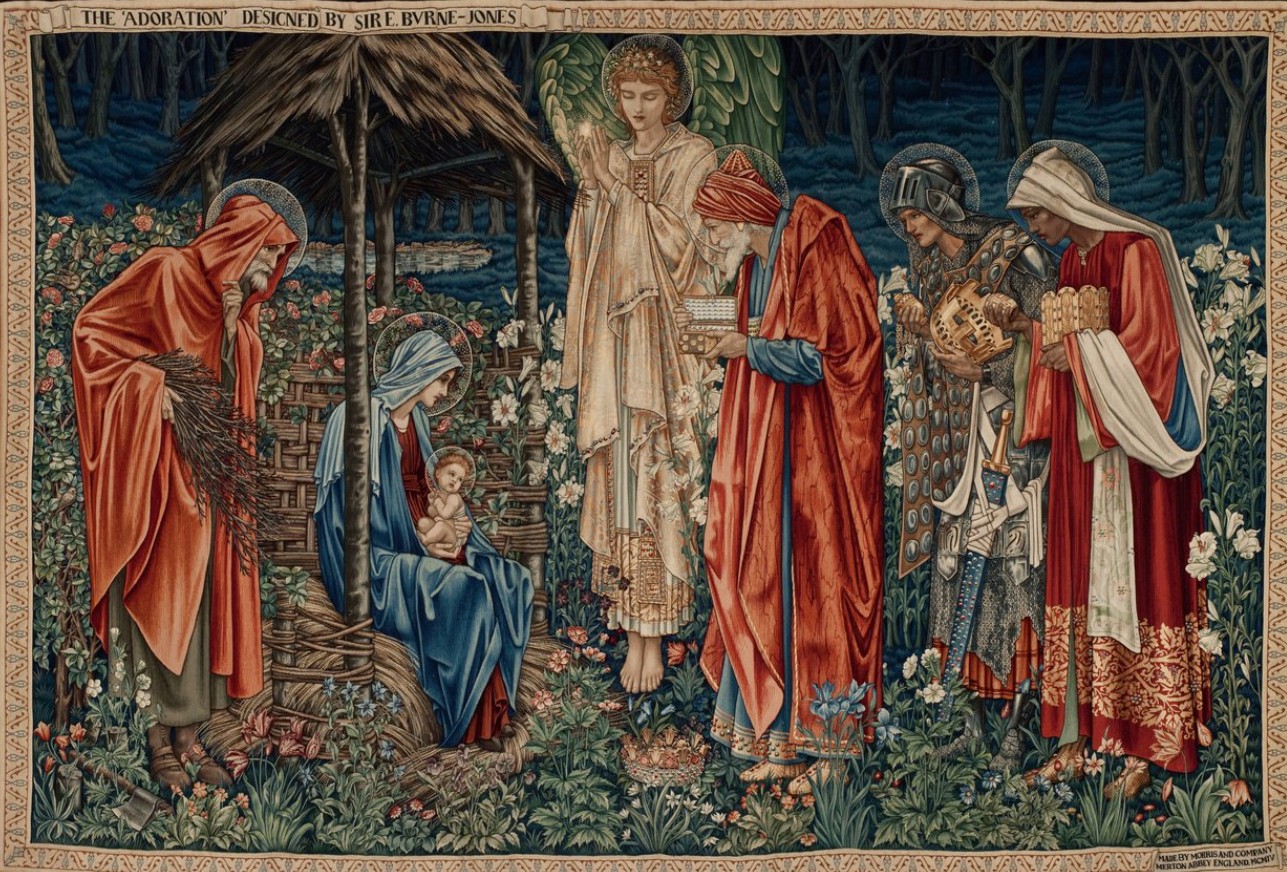
Perché i Re Magi portarono oro, incenso e mirra?
Il racconto evangelico dell’arrivo dei Magi si trova nel secondo capitolo del Vangelo secondo Matteo. L’evangelista racconta che alcuni sapienti provenienti dall’Oriente, dopo aver osservato la comparsa di una stella, arrivarono a Gerusalemme chiedendo dove fosse nato il re dei Giudei.
Dopo aver incontrato Erode, ripresero il cammino e raggiunsero il luogo in cui si trovavano Maria e il Bambino. Qui si inginocchiarono e gli offrirono i loro tesori: oro, incenso e mirra.
Matteo non specifica quanti fossero questi uomini, non li chiama re e non riporta i loro nomi. Il numero tre venne associato ai Magi proprio in relazione ai tre doni, mentre i nomi Gaspare, Melchiorre e Baldassarre si affermarono attraverso la tradizione successiva.
Fu soprattutto la riflessione teologica dei primi secoli cristiani a dare un significato preciso agli oggetti offerti a Gesù. Una delle interpretazioni più importanti è quella di sant’Ireneo, che collegò i tre doni alla regalità, alla divinità e alla futura passione di Cristo.
Da allora questa lettura entrò stabilmente nell’iconografia cristiana e divenne una chiave per interpretare tantissime Adorazioni dei Magi.
L’oro: il dono riservato a un re
L’oro è il primo dei tre doni e quello che più immediatamente richiama l’idea della regalità.
Fin dall’antichità questo metallo prezioso è stato associato al potere, alla ricchezza e all’autorità dei sovrani. Non si ossida facilmente, conserva la propria lucentezza e ha attraversato le civiltà come simbolo di prestigio e incorruttibilità.
Offrire oro a Gesù significava quindi riconoscere in quel Bambino il Re dei re, un sovrano la cui autorità non dipendeva da un trono terreno.
Nelle opere d’arte l’oro viene spesso rappresentato attraverso coppe, pissidi e recipienti elaborati, talvolta decorati con pietre preziose. Gli artisti riproducono minuziosamente i riflessi del metallo, le incisioni e le decorazioni degli oggetti, trasformandoli in piccoli capolavori di oreficeria dipinta.
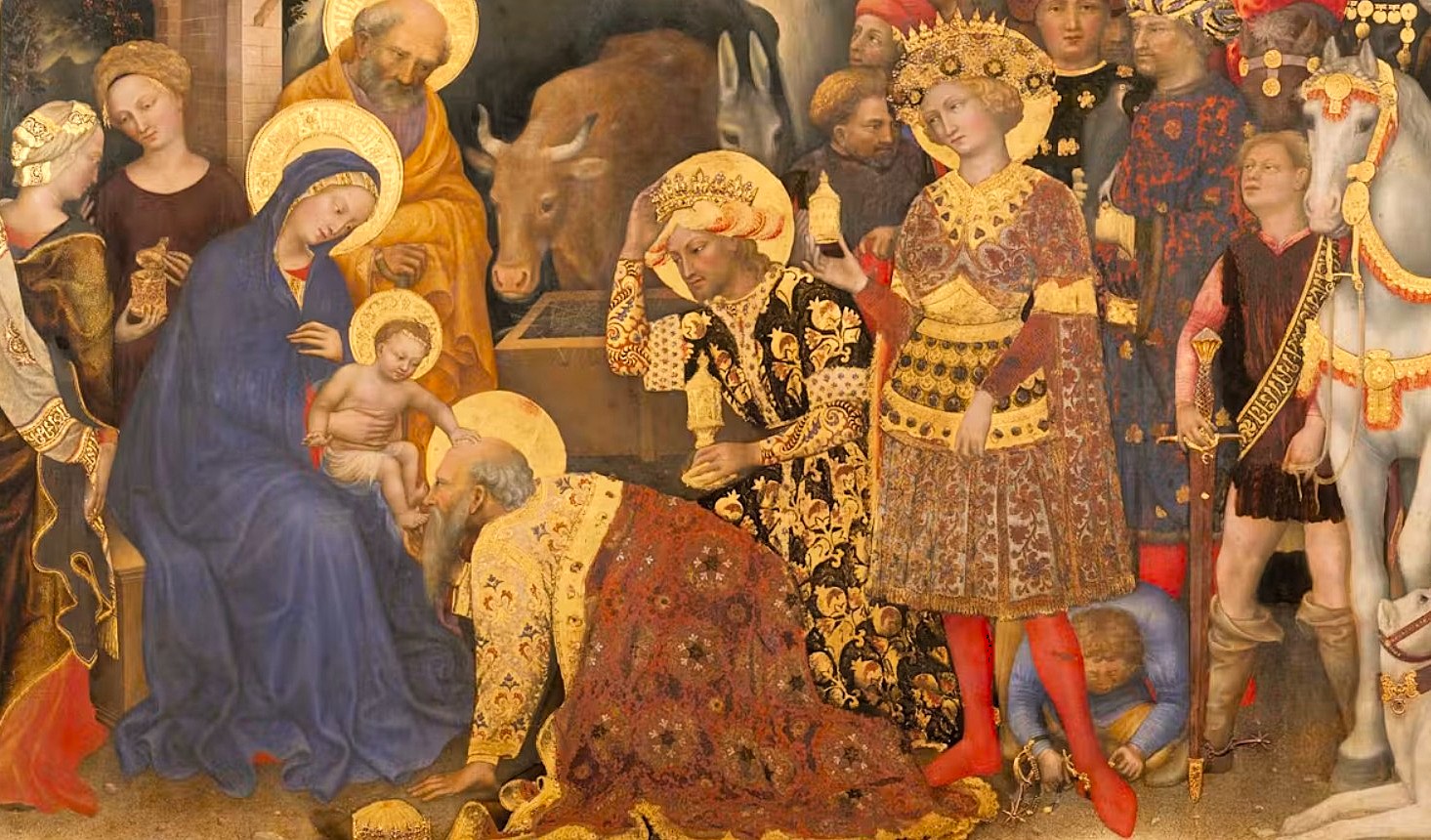
Un esempio straordinario è l’Adorazione dei Magi di Gentile da Fabriano, realizzata nel 1423 e conservata alle Gallerie degli Uffizi di Firenze.
La grande pala, commissionata dal ricchissimo Palla Strozzi per la cappella di famiglia nella chiesa di Santa Trinita, è una delle espressioni più spettacolari del Gotico internazionale.
I Magi arrivano accompagnati da un seguito numerosissimo, con cavalli, animali esotici, servitori e personaggi vestiti con stoffe preziose. Le loro vesti sono ricamate, le corone lavorate con una cura straordinaria e i recipienti offerti al Bambino sembrano veri oggetti di oreficeria.
Un particolare merita attenzione: il vaso portato dal Magio inginocchiato viene aperto da alcune inservienti, quasi a invitare chi osserva il dipinto a interrogarsi sul suo contenuto. Gli studiosi degli Uffizi collegano proprio questo recipiente all’offerta dell’oro.
La ricchezza della materia diventa così un modo per raccontare la grandezza del destinatario del dono.

L’incenso: il profumo della divinità
Il secondo dono è l’incenso, una resina aromatica ricavata da alcune specie di alberi del genere Boswellia.
Una volta bruciato, sprigiona un fumo profumato che sale verso l’alto. Per questo motivo, fin dall’antichità, è stato utilizzato nei riti religiosi e nelle cerimonie sacre come offerta alle divinità.
Nella tradizione cristiana l’incenso rappresenta la divinità di Gesù. Il suo profumo che si diffonde e il fumo che sale verso il cielo diventano immagini della preghiera e della dimensione spirituale.
Non è un caso che ancora oggi venga utilizzato durante le celebrazioni liturgiche cattoliche, soprattutto nelle occasioni solenni.
Anche nella pittura i contenitori destinati all’incenso assumono forme particolari. Possono essere piccoli recipienti preziosi, coppe con coperchi elaborati oppure oggetti che ricordano quelli utilizzati nelle celebrazioni religiose.
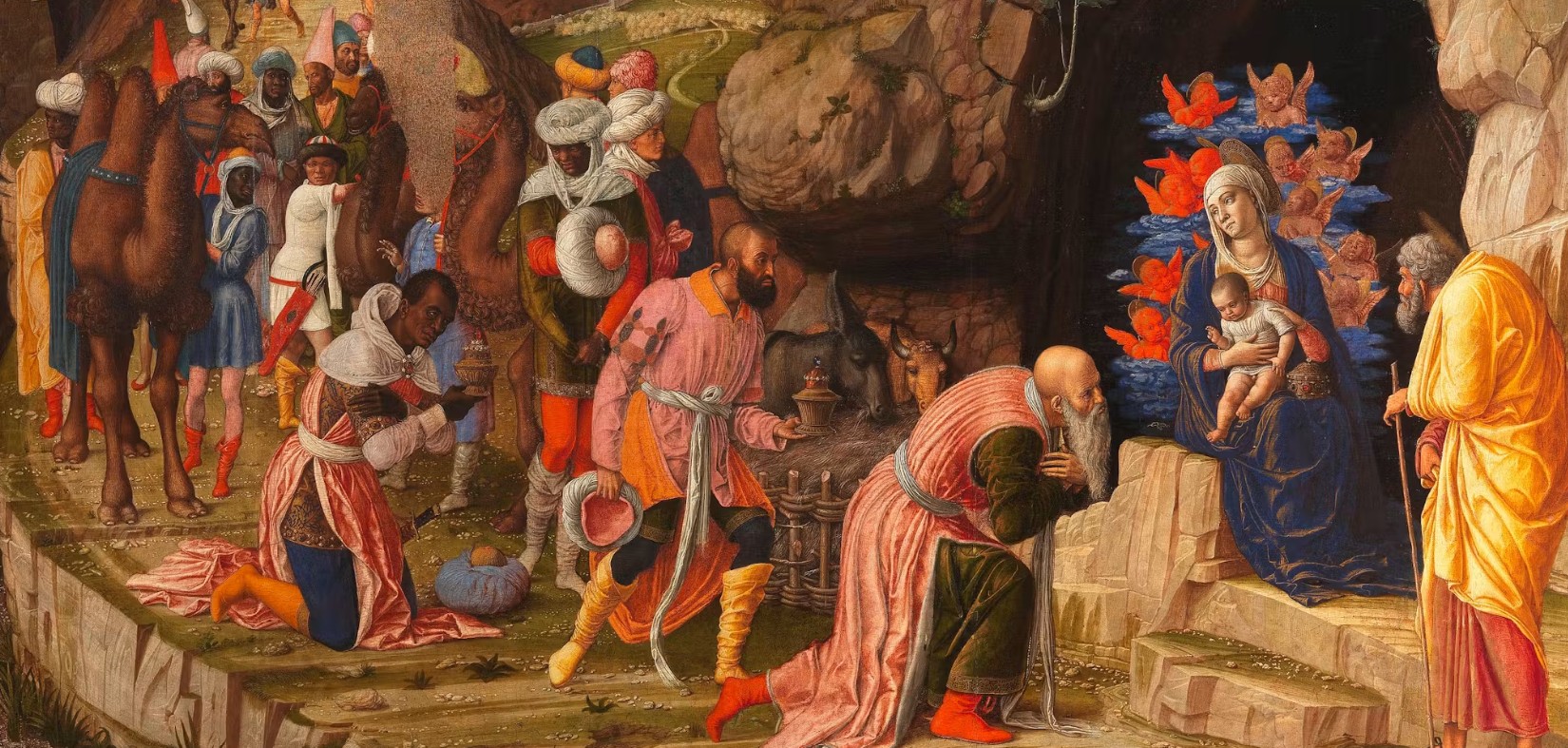
Un’opera interessante per osservare la ricchezza di questi particolari è l’Adorazione dei Magi di Andrea Mantegna, conservata agli Uffizi e databile alla prima metà degli anni Sessanta del Quattrocento.
In questo dipinto i tre Magi sono rappresentati in primo piano, mentre presentano i loro doni alla Vergine e al Bambino. I recipienti sono impreziositi da gemme differenti, dipinte con grande attenzione.
Gli studiosi degli Uffizi hanno proposto di collegare le pietre preziose alla natura simbolica dei tre doni. In particolare, uno zaffiro potrebbe essere associato all’incenso e alla dimensione divina di Cristo.
La mirra: il dono che anticipa la morte di Cristo
Fra i tre doni, la mirra è probabilmente quello che può sorprendere maggiormente. E’ una sostanza preziosa per il suo profumo e soprattutto per il suo legame con la morte.
Si tratta di una resina aromatica ottenuta da alberi del genere Commiphora, utilizzata nell’antichità per preparare profumi, unguenti e sostanze impiegate nei rituali funerari.
La sua presenza fra i doni dei Magi assume quindi un significato particolarmente intenso: la mirra rappresenta l’umanità di Cristo e anticipa la sua sofferenza e la sua morte.
Il Bambino appena nato riceve un dono che sembra già parlare del suo destino.
Questa interpretazione crea un collegamento fra la Natività e la Passione, due momenti che nella storia dell’arte vengono spesso messi in relazione attraverso piccoli elementi simbolici.
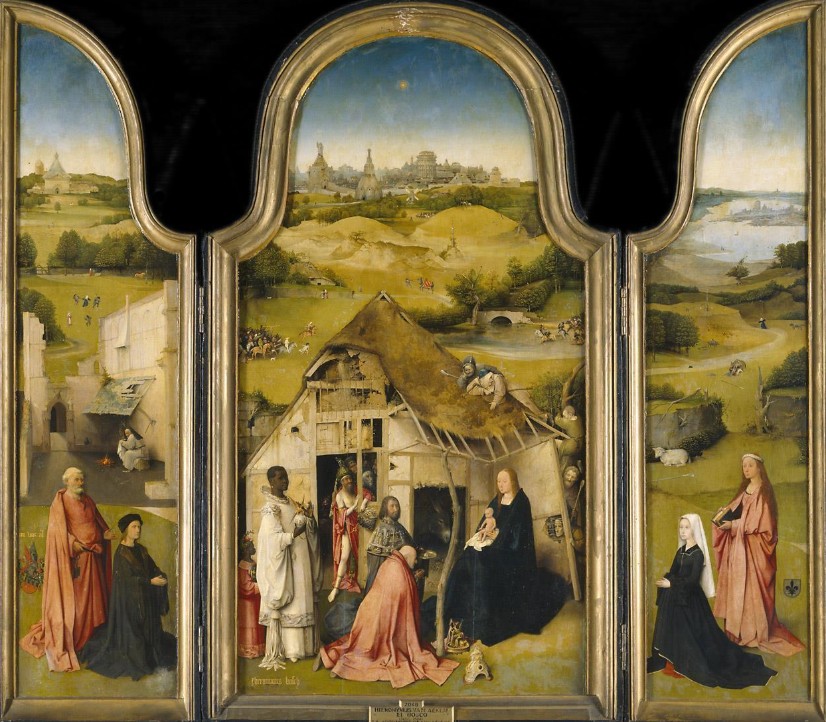
Una delle opere più interessanti da osservare sotto questo aspetto è il Trittico dell’Adorazione dei Magi di Hieronymus Bosch, conservato al Museo del Prado di Madrid e realizzato intorno al 1494.
Al centro della composizione troviamo Maria con Gesù Bambino, davanti a una costruzione che sembra una capanna in rovina. I tre Magi si avvicinano per rendere omaggio al neonato, mentre sullo sfondo si sviluppa un paesaggio ricco di episodi e dettagli.
Bosch costruisce una scena apparentemente tranquilla, ma disseminata di particolari inquietanti e riferimenti simbolici. Le figure, gli abiti, gli oggetti e perfino alcuni personaggi sullo sfondo invitano a una lettura che va oltre la semplice rappresentazione dell’episodio evangelico.
Oro, incenso e mirra: tre doni, un unico messaggio
Osservando le opere, ci si accorge di quanto i tre doni siano importanti per comprendere il significato dell’Adorazione dei Magi.
Sono simboli che racchiudono, in pochissimo spazio, il senso dell’intera vicenda cristiana. L’oro riconosce in Gesù il Re, l’incenso ne celebra la natura divina, la mirra anticipa la sua umanità, la sofferenza e la morte.
Tre sostanze molto diverse fra loro ma unite da un unico messaggio.
Per il momento il sempre vostro Michelangelo Buonarroti vi saluta dandovi appuntamento ai prossimi post e sui social.

Gold, frankincense, and myrrh: the meaning of the Magi’s gifts in art history paintings
Crowns, sumptuous garments, camels, gold, frankincense, and myrrh—the three gifts brought to the Baby Jesus—are the defining symbols of the Magi.
But why did they choose these three specific items as gifts? What do they truly represent? They are certainly not the typical presents one would offer a newborn. In the Christian tradition, each one holds a precise meaning, linked to the nature of Christ and His destiny.
Painters have dedicated some of their most spectacular compositions to the Adoration of the Magi, filling these scenes with details that deserve a closer look. Caskets, precious goblets, gilded pyxes, and small vessels all tell a theological story that has spanned the centuries.
Why did the Magi bring gold, frankincense, and myrrh?
The Gospel account of the arrival of the Magi is found in the second chapter of the Gospel of Matthew. The evangelist recounts that some wise men from the East, having observed the appearance of a star, arrived in Jerusalem and asked where the King of the Jews had been born.
After meeting with Herod, they continued their journey and reached the place where Mary and the Child were. There, they knelt down and offered Him their treasures: gold, frankincense, and myrrh.
Matthew does not specify how many of these men there were, nor does he call them kings or record their names. The number three became associated with the Magi precisely because of the three gifts, while the names Caspar, Melchior, and Balthasar emerged through later tradition. It was, above all, the theological reflection of the early Christian centuries that gave a precise meaning to the gifts offered to Jesus. One of the most significant interpretations comes from Saint Irenaeus, who linked the three gifts to Christ’s kingship, his divinity, and his future passion.
From that time on, this interpretation became a fixture in Christian iconography and served as a key to understanding countless depictions of the Adoration of the Magi.
Gold: The Gift Reserved for a King
Gold is the first of the three gifts and the one most immediately associated with the concept of royalty.
Since ancient times, this precious metal has been linked to the power, wealth, and authority of sovereigns. It does not oxidize easily, retains its luster, and has endured throughout civilizations as a symbol of prestige and incorruptibility.
Offering gold to Jesus, therefore, meant recognizing the Child as the King of Kings—a sovereign whose authority did not depend on an earthly throne.
In works of art, gold is often depicted in the form of chalices, pyxes, and elaborate vessels, sometimes adorned with precious stones. Artists meticulously recreate the metal’s reflections, as well as the engravings and decorations on these objects, transforming them into small, painted masterpieces of the goldsmith’s craft.
An extraordinary example is the Adoration of the Magi by Gentile da Fabriano, created in 1423 and housed in the Uffizi Galleries in Florence.
This large altarpiece, commissioned by the immensely wealthy Palla Strozzi for his family chapel in the church of Santa Trinita, stands as one of the most spectacular expressions of the International Gothic style.
The Magi arrive accompanied by a vast retinue, including horses, exotic animals, servants, and figures dressed in sumptuous fabrics. Their garments are embroidered, their crowns crafted with remarkable care, and the vessels offered to the Child appear as if they were actual pieces of fine metalwork.
One detail is particularly noteworthy: the vessel carried by the kneeling Magus is being opened by attendants—as if to invite the viewer to wonder about its contents. Scholars at the Uffizi identify this specific vessel as the container for the gift of gold. The richness of the material thus becomes a way to convey the greatness of the gift’s recipient.
Incense: The Scent of Divinity
The second gift is incense, an aromatic resin obtained from certain tree species of the genus Boswellia.
When burned, it releases a fragrant smoke that rises upward. For this reason, since ancient times, it has been used in religious rites and sacred ceremonies as an offering to the divine.
In the Christian tradition, incense represents the divinity of Jesus. Its spreading fragrance and the smoke rising toward the heavens serve as symbols of prayer and the spiritual realm.
It is no coincidence that it is still used today during Catholic liturgical celebrations, especially on solemn occasions.
In painting, too, vessels intended for incense often take on distinctive forms—ranging from small, precious containers and lidded cups with elaborate designs to objects modeled after those actually used in religious ceremonies.
An intriguing work for observing the richness of these details is the Adoration of the Magi by Andrea Mantegna, housed in the Uffizi Gallery and dating to the first half of the 1460s.
In this painting, the three Magi are depicted in the foreground, presenting their gifts to the Virgin and the Child. The vessels are embellished with various gemstones, rendered with meticulous attention to detail.
Scholars at the Uffizi have suggested a connection between these precious stones and the symbolic nature of the three gifts. Specifically, a sapphire may be associated with the incense and the divine nature of Christ.
Myrrh: The Gift That Foreshadows the Death of Christ
Of the three gifts, myrrh is perhaps the most surprising. It is a substance prized for its fragrance, but, above all, for its association with death.
It is an aromatic resin obtained from trees of the genus Commiphora, which was used in antiquity to prepare perfumes, ointments, and substances for funerary rituals.
Its inclusion among the gifts of the Magi therefore carries a particularly profound significance: myrrh represents the humanity of Christ and foreshadows His suffering and death.
The newborn Child receives a gift that seems to speak directly of His destiny.
This interpretation establishes a connection between the Nativity and the Passion—two moments that, in the history of art, are frequently linked through subtle symbolic elements.
One of the most compelling works to examine in this light is the Triptych of the Adoration of the Magi by Hieronymus Bosch, housed in the Prado Museum in Madrid and created around 1494.
At the center of the composition, Mary sits with the infant Jesus in front of a structure that resembles a ruined hut. The three Magi approach to pay homage to the newborn, while the background unfolds into a landscape rich with various episodes and details.
Bosch constructs a scene that appears tranquil at first glance, yet it is scattered with unsettling details and symbolic references. The figures, the garments, the objects—and even certain characters in the background—invite an interpretation that transcends a simple depiction of the Gospel narrative.
Gold, frankincense, and myrrh: three gifts, a single message
Looking at these works, one realizes just how significant these three gifts are for understanding the meaning of the Adoration of the Magi.
They are symbols that encapsulate, within a very small space, the essence of the entire Christian narrative. Gold acknowledges Jesus as King; frankincense celebrates His divine nature; myrrh foreshadows His humanity, His suffering, and His death.
Three substances, vastly different from one another, yet united by a single message.
For now, yours truly, Michelangelo Buonarroti, bids you farewell—until the next posts and over on social media.
Sostienici – Support Us
Se questo blog ti piace e ti appassiona, puoi aiutarci a farlo crescere sempre più sostenendoci in modo concreto condividendo i post, seguendo le pagine social e con un contributo che ci aiuta ad andare avanti con il nostro lavoro di divulgazione. . ENGLISH: If you like and are passionate about this blog, you can help us make it grow more and more by supporting us in a concrete way by sharing posts, following social pages and with a contribution that helps us to move forward with our dissemination work.
10,00 €

Condividi:


Questo sono io



sostienici

Sostienici - Support Us
Se questo blog ti piace e ti appassiona, puoi aiutarci a farlo crescere sempre più sostenendoci in modo concreto condividendo i post, seguendo le pagine social e con un contributo che ci aiuta ad andare avanti con il nostro lavoro di divulgazione. . ENGLISH: If you like and are passionate about this blog, you can help us make it grow more and more by supporting us in a concrete way by sharing posts, following social pages and with a contribution that helps us to move forward with our dissemination work.
€10,00


