

Melchiorre Cafà, il genio del Barocco morto a soli trent’anni
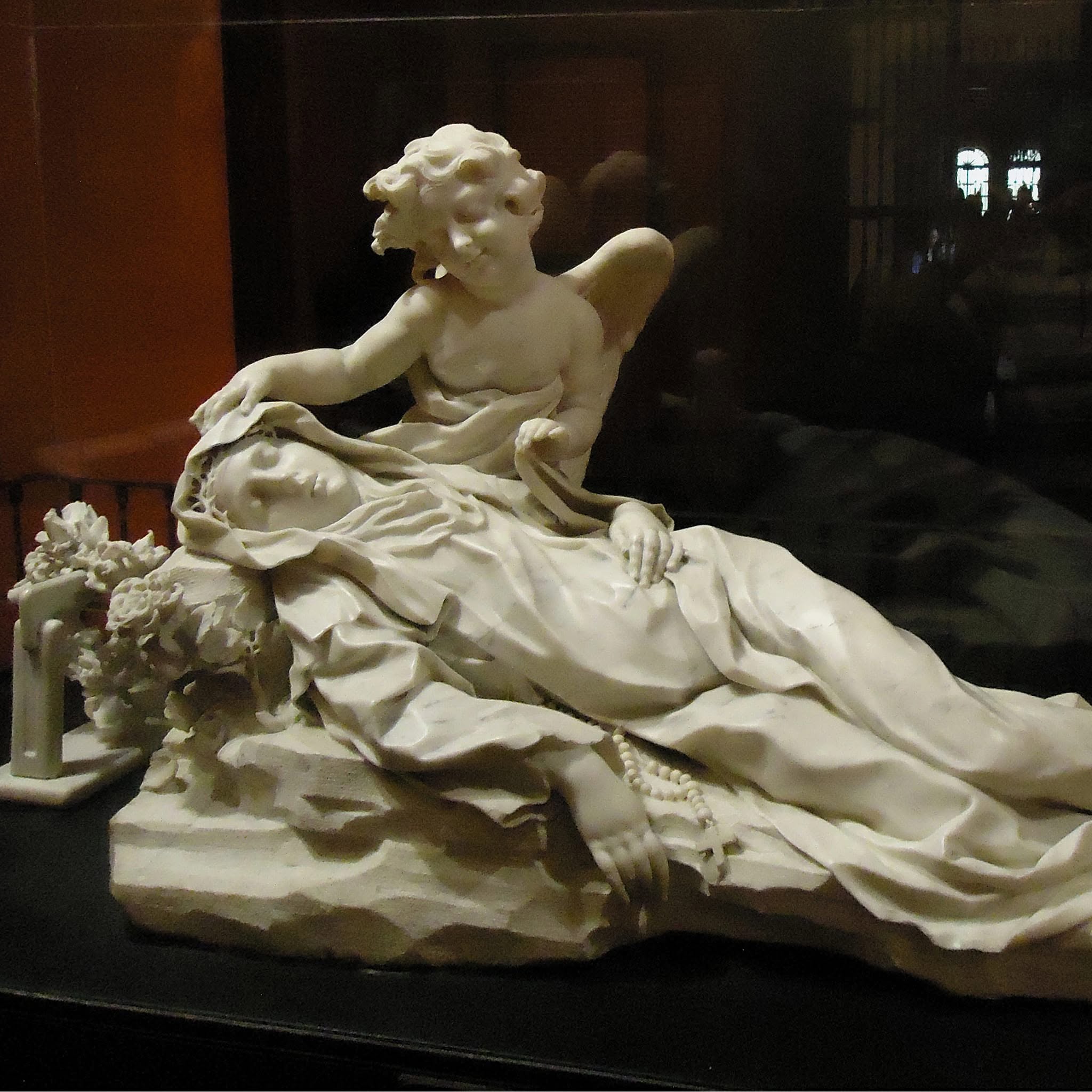
Melchiorre Cafà è uno di quei nomi che meriterebbero un posto molto più importante nella storia della scultura barocca. Arrivato a Roma da Malta quando era ancora giovanissimo, riuscì in pochi anni a conquistare l’attenzione di importanti committenti e a distinguersi in un ambiente dominato da personalità del calibro di Gian Lorenzo Bernini ed Ercole Ferrata.
Aveva un talento straordinario, una sensibilità particolare nel modellare la materia e una capacità quasi pittorica di dare movimento al marmo e alla terracotta. La sua carriera però si interruppe bruscamente nel 1667, quando aveva poco più di trent’anni.
La sua storia è quella di un artista che avrebbe potuto lasciare un’impronta ancora più profonda nel Barocco europeo, ma che il destino strappò troppo presto alla scultura.
Dalle origini maltesi alla Roma di Bernini
Le notizie sulla nascita di Melchiorre Cafà non sono del tutto concordi. La data tradizionalmente accettata è il 1635, anche se alcuni studiosi hanno ipotizzato che fosse nato qualche anno prima, intorno al 1631. La sua città d’origine era probabilmente Vittoriosa, a Malta, dove la famiglia Gafà era conosciuta anche grazie al fratello maggiore Lorenzo, architetto.
Il giovane Melchiorre arrivò a Roma prima del 1660 e iniziò a lavorare nella bottega di Ercole Ferrata, uno degli scultori più importanti della generazione successiva ad Alessandro Algardi. Fu un passaggio decisivo per la sua formazione: Ferrata gli trasmise la conoscenza della scultura romana e gli permise di confrontarsi con i grandi modelli del Seicento.
A conquistarlo fu soprattutto il linguaggio di Bernini.
Cafà studiò quella capacità di trasformare il marmo in qualcosa di vivo, di suggerire il movimento attraverso le pieghe dei panneggi e di rendere visibili emozioni e sentimenti. Progressivamente sviluppò una sensibilità personale, più delicata e raffinata, nella quale il modellato sembra quasi perdere la propria consistenza materiale.
Nel 1662 entrò nell’Accademia di San Luca. Aveva appena iniziato a costruirsi una reputazione autonoma e già riceveva commissioni importanti, tra cui quelle del principe Camillo Pamphilj.
Le opere di Melchiorre Cafà: tre capolavori da conoscere
Santa Rosa da Lima: una santa che sembra respirare
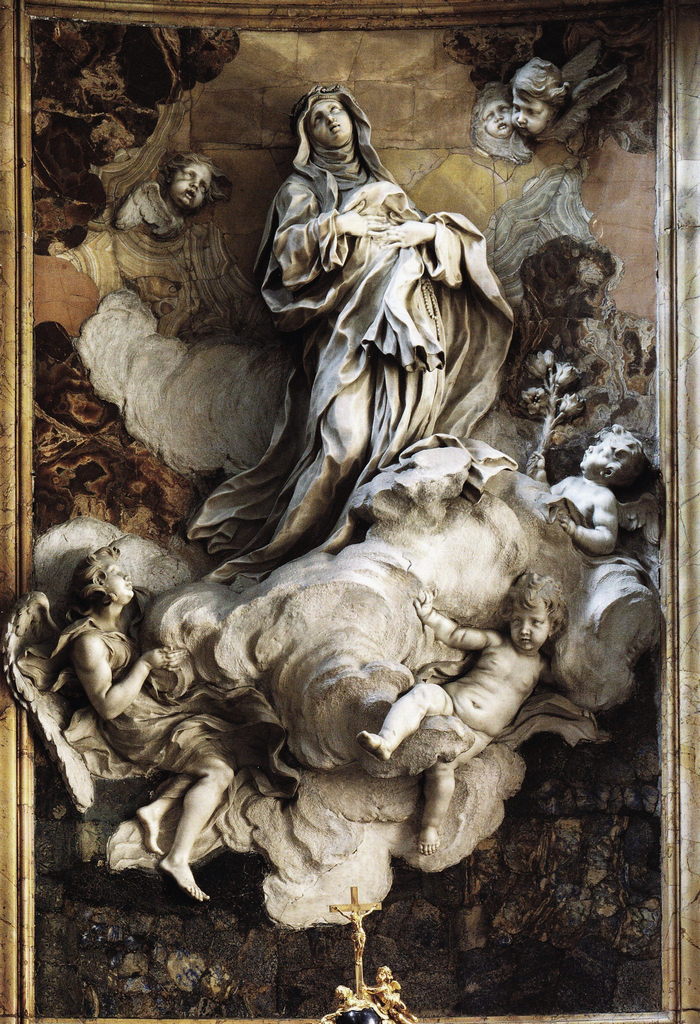
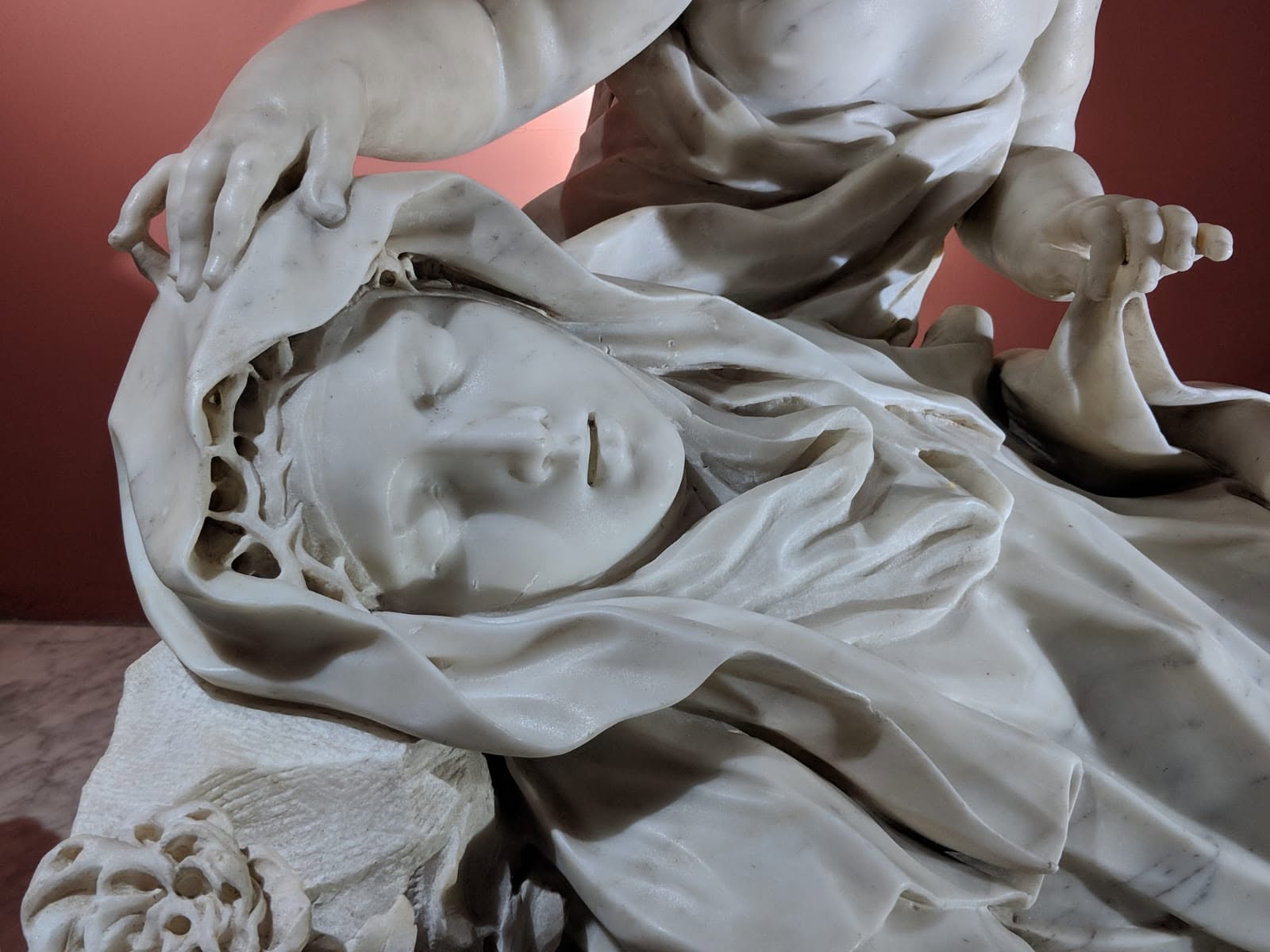
La scultura rappresenta la religiosa domenicana Rosa da Lima, canonizzata nel 1671. Il marmo bianco restituisce una figura di straordinaria eleganza, nella quale la spiritualità non è affidata soltanto all’espressione del volto, ma anche alla postura e al movimento delle vesti.
La commissione aveva un significato religioso e politico importante. L’opera doveva partecipare alle celebrazioni per la beatificazione della santa, avvenuta nel 1668, e fu collocata sull’altare della Cattedra di San Pietro, proprio davanti al monumentale complesso berniniano.
Cafà, però, non poté assistere a quel momento. Morì sette mesi prima della celebrazione.
Dopo le manifestazioni romane, la scultura raggiunse Lima, dove fu destinata alla tomba della santa. Si trattò di un viaggio eccezionale: Fu la prima grande scultura del Barocco romano a essere trasferita così lontano dalla città papale.
L’artista realizzò anche versioni di dimensioni ridotte in bronzo. Una preziosa versione in bronzo dorato e argento è stata acquisita da Heritage Malta.
Il Martirio di Sant’Eustachio: il rilievo che anticipa il tardo Barocco
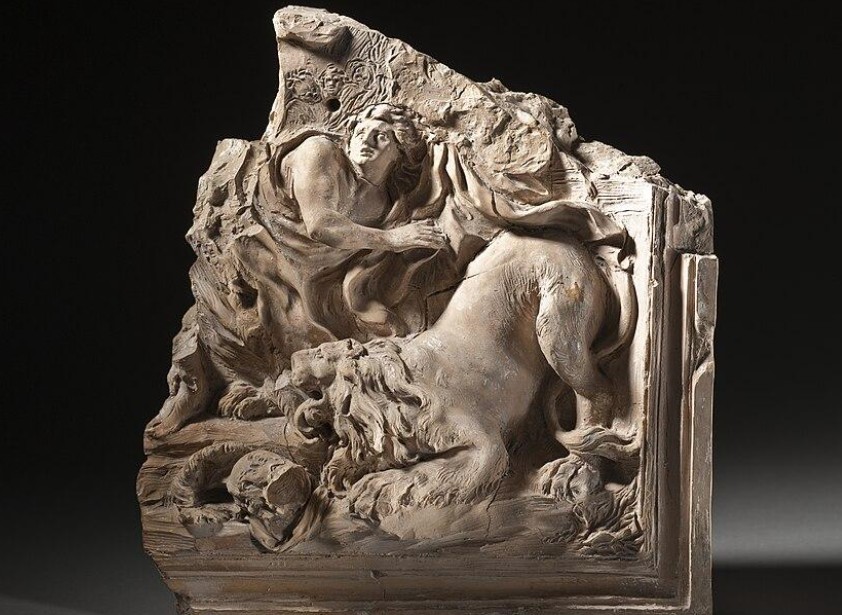
Tra i lavori più interessanti del periodo romano c’è il Martirio di Sant’Eustachio, commissionato nel 1660 dal principe Camillo Pamphilj per la chiesa di Sant’Agnese in Agone, a piazza Navona.
Il progetto prevedeva un grande rilievo marmoreo e offrì allo scultore l’occasione di sperimentare una concezione nuova dello spazio. Le figure non sembrano semplicemente disposte su una superficie: avanzano, arretrano, si sovrappongono e sembrano quasi uscire dal marmo.
Cafà utilizza un modellato movimentato, con profondità differenti e passaggi di luce che rendono la composizione particolarmente dinamica.
Il lavoro, tuttavia, rimase incompiuto alla sua morte. Nel 1667 era stata completata in marmo soltanto la figura del santo, mentre alcune altre parti erano ancora allo stato di abbozzo. Fu Ercole Ferrata, insieme a Giovanni Antonio de Rossi, a portare avanti l’opera, modificandone in parte la concezione iniziale.
La Carità di San Tommaso da Villanova: il marmo incontra la tenerezza
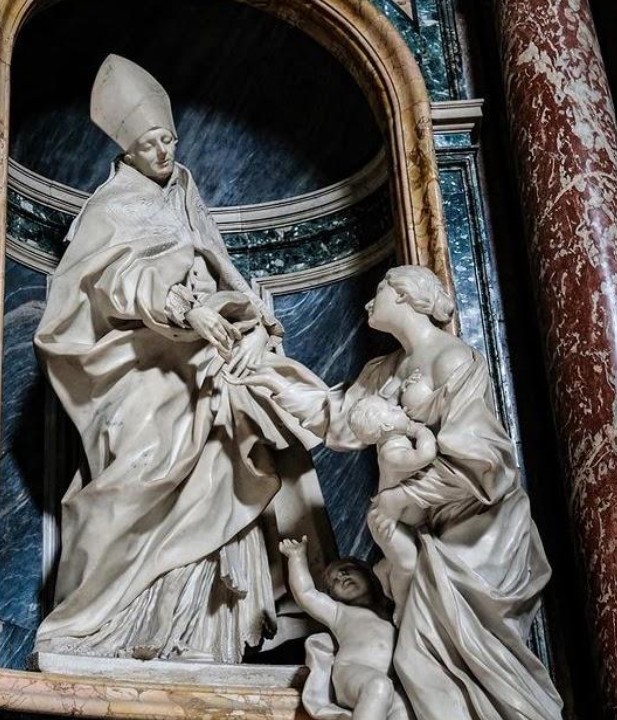
Nella chiesa di Sant’Agostino in Campo Marzio, a Roma, si conserva un’altra opera legata alla breve carriera di Cafà: il gruppo della Carità di San Tommaso da Villanova.
La commissione arrivò nel 1663, ancora una volta nell’ambiente dei Pamphilj. Il soggetto era quello di San Tommaso da Villanova, vescovo agostiniano noto per la sua generosità verso i poveri.
La composizione doveva rappresentare il santo nell’atto di distribuire elemosine, accompagnato dall’allegoria della Carità, riconoscibile anche attraverso la presenza dei bambini.
Cafà aveva iniziato a tradurre il progetto in marmo, ma la morte prematura gli impedì di portarlo a termine. L’opera fu completata da Ercole Ferrata, che intervenne soprattutto sul gruppo allegorico.
È quindi importante distinguere il contributo dei due scultori: il San Tommaso è opera di Cafà, mentre il complesso che oggi possiamo ammirare è frutto anche dell’intervento del suo maestro.
Una morte tragica nella fonderia di San Pietro
La carriera di Melchiorre Cafà si interruppe nel settembre del 1667, in circostanze drammatiche.
Lo scultore stava lavorando nella fonderia di San Pietro ai modelli per il grande altare della concattedrale di San Giovanni a La Valletta, dedicata al Battista. Durante il lavoro, un elemento del modello cedette e lo colpì, provocandogli ferite che si rivelarono fatali.
Morì nella settimana precedente il 10 settembre 1667. Aveva appena trent’anni, o poco più, a seconda della data di nascita che si sceglie di accettare.
La sua scomparsa lasciò numerosi progetti incompiuti e una quantità di modelli e materiali che confluirono in gran parte nella bottega di Ercole Ferrata. Fu proprio il suo maestro a occuparsi del completamento di diverse opere rimaste interrotte.
Nella storia della scultura del Seicento, Melchiorre Cafà occupa una posizione particolare. Non ebbe il tempo di costruire una produzione vasta come quella dei grandi maestri della sua epoca e molte delle sue opere furono completate da altri.
Il Barocco romano perse troppo presto uno dei suoi talenti più raffinati e noi abbiamo perso la possibilità di scoprire fino a dove sarebbe potuto arrivare.
Per il momento il sempre vostro Michelangelo Buonarroti vi saluta dandovi appuntamento ai prossimi post e sui social.

Melchiorre Cafà, the Baroque genius who died at just thirty
Melchiorre Cafà is one of those names that deserves a far more prominent place in the history of Baroque sculpture. Having arrived in Rome from Malta at a very young age, he managed—within just a few years—to capture the attention of major patrons and distinguish himself in an environment dominated by figures of the stature of Gian Lorenzo Bernini and Ercole Ferrata.
He possessed an extraordinary talent, a unique sensitivity for shaping material, and an almost painterly ability to imbue marble and terracotta with movement. His career, however, was cut short abruptly in 1667, when he was just over thirty years old.
His story is that of an artist who could have left an even deeper mark on the European Baroque, but whom fate snatched away from the world of sculpture far too soon.
From his Maltese origins to the Rome of Bernini
Accounts regarding the birth of Melchiorre Cafà are not entirely consistent. The date traditionally accepted is 1635, though some scholars have suggested he may have been born a few years earlier, around 1631. His place of origin was likely Vittoriosa, in Malta, where the Gafà family was well-known—not least due to his older brother, Lorenzo, who was an architect.
The young Melchiorre arrived in Rome before 1660 and began working in the studio of Ercole Ferrata, one of the most significant sculptors of the generation following Alessandro Algardi. This proved to be a decisive phase in his training: Ferrata imparted to him a deep understanding of Roman sculpture and provided him with the opportunity to engage with the great masterpieces of the seventeenth century.
It was, above all, the artistic language of Bernini that captivated him. Cafà explored the ability to transform marble into something living—to suggest movement through the folds of drapery and to make emotions and feelings visible. Over time, he developed a personal sensibility, one more delicate and refined, in which the sculpted form seems to almost lose its material substance.
In 1662, he joined the Accademia di San Luca. Having only just begun to establish an independent reputation, he was already receiving significant commissions, including those from Prince Camillo Pamphilj.
The works of Melchiorre Cafà: three masterpieces to know
Saint Rose of Lima: a saint who seems to breathe
The sculpture depicts the Dominican nun Rose of Lima, who was canonized in 1671. The white marble presents a figure of extraordinary elegance, in which spirituality is conveyed not only through the expression on her face but also through her posture and the movement of her robes.
The commission held great religious and political significance. The work was intended for the celebrations surrounding the saint’s beatification in 1668 and was placed on the altar of the Chair of Saint Peter, directly in front of Bernini’s monumental complex.
Cafà, however, did not live to see that moment; he passed away seven months before the celebration.
Following the events in Rome, the sculpture was transported to Lima, where it was placed at the saint’s tomb. It was an extraordinary journey: this was the first major Roman Baroque sculpture to be moved so far from the Papal city.
The artist also created smaller-scale versions in bronze. A precious version, crafted in gilded bronze and silver, has been acquired by Heritage Malta.
The Martyrdom of Saint Eustace: A Relief That Anticipates the Late Baroque
Among the most compelling works from his Roman period is The Martyrdom of Saint Eustace, commissioned in 1660 by Prince Camillo Pamphilj for the church of Sant’Agnese in Agone, in Piazza Navona.
The project called for a large marble relief, providing the sculptor with an opportunity to experiment with a new conception of space. The figures do not merely appear arranged upon a surface; they move forward and backward, overlap, and seem almost to emerge from the marble itself.
Cafà employs a dynamic style of modeling, utilizing varying depths and shifts in light that render the composition exceptionally vibrant.
The work, however, remained unfinished at the time of his death. By 1667, only the figure of the saint had been completed in marble, while other elements remained in a rough, sketched state. It was Ercole Ferrata, working alongside Giovanni Antonio de Rossi, who carried the project forward, partially altering the original concept.
The Charity of Saint Thomas of Villanova: Marble Meets Tenderness
Housed in the church of Sant’Agostino in Campo Marzio, in Rome, is another work linked to Cafà’s brief career: the sculptural group The Charity of Saint Thomas of Villanova.
The commission arrived in 1663, once again originating from within the circle of the Pamphilj family. The subject is Saint Thomas of Villanova, an Augustinian bishop renowned for his generosity toward the poor.
The composition was intended to depict the saint in the act of distributing alms, accompanied by an allegory of Charity—identifiable, in part, by the presence of children.
Cafà had begun to translate the project in marble, but his premature death prevented him from completing it. The work was finished by Ercole Ferrata, who focused primarily on the allegorical group.
It is therefore important to distinguish between the contributions of the two sculptors: the figure of Saint Thomas is the work of Cafà, while the complex we see today is also the result of his master’s intervention.
A tragic death in the foundry of Saint Peter’s
Melchiorre Cafà’s career came to an end in September 1667 under dramatic circumstances.
The sculptor was working in the foundry of Saint Peter’s on models for the grand altar of the Co-Cathedral of Saint John in Valletta, which is dedicated to the Baptist. While he was at work, a part of the model gave way and struck him, causing injuries that proved fatal.
He died in the week leading up to September 10, 1667. He was just thirty years old—or perhaps a little older, depending on which birth date one chooses to accept.
His passing left behind numerous unfinished projects, as well as a collection of models and materials that largely ended up in the workshop of Ercole Ferrata. It was his master who took on the task of completing several of the works that had been left incomplete.
In the history of seventeenth-century sculpture, Melchiorre Cafà holds a unique position. He did not have the time to build a body of work as extensive as that of the great masters of his era, and many of his pieces were completed by others.
The Roman Baroque lost one of its most refined talents far too soon, and we have lost the chance to discover just how far he might have gone.
For now, yours truly, Michelangelo Buonarroti, bids you farewell—until the next posts and over on social media.

Sostienici – Support Us
Se questo blog ti piace e ti appassiona, puoi aiutarci a farlo crescere sempre più sostenendoci in modo concreto condividendo i post, seguendo le pagine social e con un contributo che ci aiuta ad andare avanti con il nostro lavoro di divulgazione. . ENGLISH: If you like and are passionate about this blog, you can help us make it grow more and more by supporting us in a concrete way by sharing posts, following social pages and with a contribution that helps us to move forward with our dissemination work.
10,00 €

Condividi:


Questo sono io





sostienici

Sostienici - Support Us
Se questo blog ti piace e ti appassiona, puoi aiutarci a farlo crescere sempre più sostenendoci in modo concreto condividendo i post, seguendo le pagine social e con un contributo che ci aiuta ad andare avanti con il nostro lavoro di divulgazione. . ENGLISH: If you like and are passionate about this blog, you can help us make it grow more and more by supporting us in a concrete way by sharing posts, following social pages and with a contribution that helps us to move forward with our dissemination work.
€10,00


