

Saper distinguere il vero dal verosimile
Per quanto possa essere accattivante, non sempre quello che ci si ritrova a osservare, soprattutto in rete, corrisponde alla realtà.
Adesso le immagini create dall’Intelligenza Artificiale sono all’ordine del giorno ma prima del suo arrivo, erano i fotomontaggi a trarre in inganno.
Ve ne parlo perché ha cominciato a girare a tutto spiano e per l’ennesima volta, il fotomontaggio in cui si vedono le sette suore che si scattano un selfie dinanzi al David.

Per quanto l’immagine ci piaccia e ci faccia sorridere, non è reale.
Sono reali le suore, la loro giocosità e il David alle loro spalle ma l’insieme è frutto di un assemblaggio di due foto ben diverse tra di loro.
Basta osservare con un po’ d’attenzione quell’insieme per rendersene conto nell’immediato. Considerate che il David è posizionato al di sopra di un piedistallo molto alto e dunque, in una normale foto, le sue ginocchia si troverebbero a un’altezza superiore rispetto alle persone che gli stanno davanti a quella distanza.
Guardate poi a terra, dietro le gambe delle suore: non c’è traccia del basamento tant’è che il David sembra sospeso in aria.

Ma c’è un’altra cosa ancora più lampante: il selfie stick. Non ne è consentito l’utilizzo all’interno della Galleria dell’Accademia così come non è permesso adoperare questi dispositivo nella maggior parte dei musei.
In realtà le suore sono state fotografate a Piazza San Pietro in Vaticano con alle spalle il colonnato della Basilica di San Pietro.
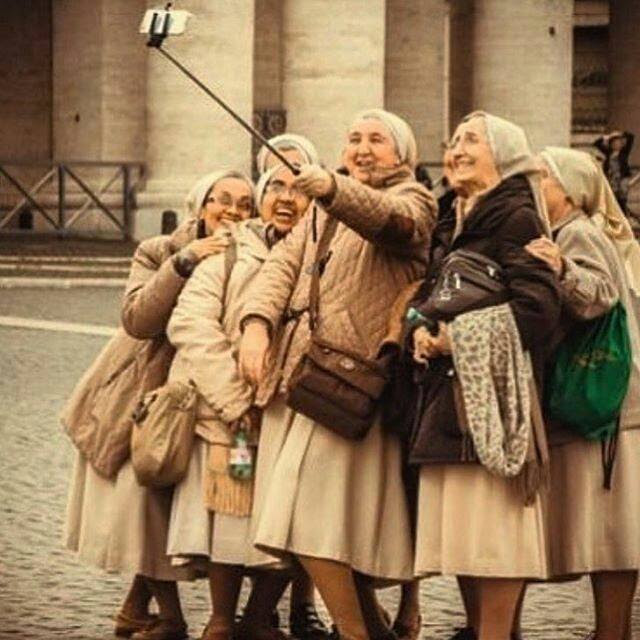
La differenza tra il vero e il verosimile a volte può essere sottile ma un’attenta osservazione aiuta a non cadere in inganno.
Il verosimile ha l’apparenza della verità e di primo acchito può essere ritenuto reale ma racconta una realtà distorta.
Per il momento il sempre vostro Michelangelo Buonarroti vi saluta dandovi appuntamento ai prossimi post e sui social.
© Riproduzione riservata
Knowing how to distinguish the true from the plausible
As captivating as it may be, what we find ourselves observing, especially online, does not always correspond to reality.
Now the images created by Artificial Intelligence are the order of the day but before its arrival, it was the photomontages that were deceiving.
I am telling you about it because the photomontage in which we see the seven nuns taking a selfie in front of the David has started to circulate at full blast and for the umpteenth time.
As much as we like the image and it makes us smile, it is not real. The nuns, their playfulness and the David behind them are real but the whole is the result of an assembly of two very different photos.
You just have to look at that whole with a little attention to realize it immediately. Consider that David is positioned on a very high pedestal and therefore, in a normal photo, his knees would be at a higher height than the people standing in front of him at that distance.
Then look at the ground, behind the nuns’ legs: there is no trace of the David’s base, so much so that it seems suspended in the air.
But there is something else even more obvious: the selfie stick. Its use is not permitted inside the Galleria dell’Accademia, just as it is not permitted to use these devices in most museums.
In reality, the nuns were photographed in St. Peter’s Square in the Vatican with the colonnade of St. Peter’s Basilica behind them.
The difference between the true and the plausible can sometimes be subtle, but careful observation helps to avoid being deceived.
The plausible has the appearance of truth and at first glance can be considered real but it tells a distorted reality.
For the moment, yours ever Michelangelo Buonarroti bids you farewell, making an appointment with you in the next posts and on social media.
© Reproduction reserved

Sostienici – Support Us
Se questo blog ti piace e ti appassiona, puoi aiutarci a farlo crescere sempre più sostenendoci in modo concreto condividendo i post, seguendo le pagine social e con un contributo che ci aiuta ad andare avanti con il nostro lavoro di divulgazione. . ENGLISH: If you like and are passionate about this blog, you can help us make it grow more and more by supporting us in a concrete way by sharing posts, following social pages and with a contribution that helps us to move forward with our dissemination work.
10,00 €
-
Pontormo, il diario segreto del pittore: malattie, pasti e piccoli disegni che raccontano la sua vita
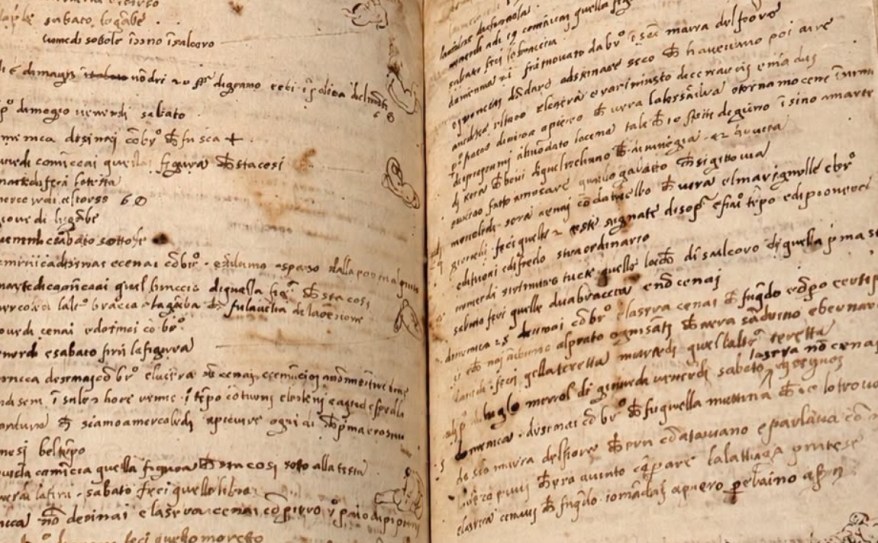
🇮🇹Il diario di Pontormo: malattie, pasti, amicizie e piccoli disegni raccontano la vita privata del pittore e il lavoro perduto a San Lorenzo… 🇬🇧Pontormo’s diary—with its accounts of illnesses, meals, friendships, and small sketches—reveals the painter’s private life and his lost work at San Lorenzo…
-
25 ottobre 1815: le opere rubate da Napoleone tornarono in Italia, ma 248 rimasero in Francia
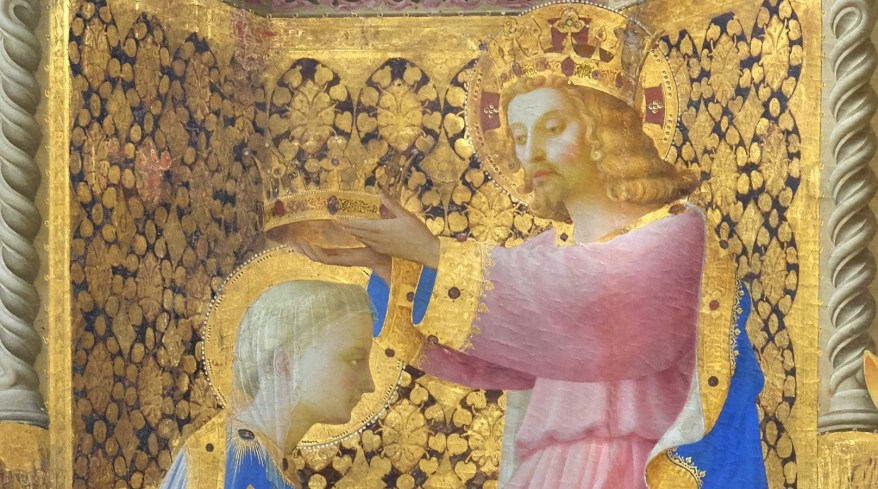
🇮🇹Il 25 ottobre 1815 partì da Parigi un convoglio di 41 carri trainati da circa 200 cavalli, con 249 opere d’arte destinate a tornare in Italia… 🇬🇧On October 25, 1815, a convoy of 41 wagons, pulled by approximately 200 horses, departed from Paris, carrying 249 works of art destined to return to Italy…
-

Più forte della morte
🇮🇹Può l’amore superare la morte? In un madrigale sorprendente, il desiderio di chi amo arriva fino all’Inferno e al Paradiso… 🇬🇧Can love transcend death? In a striking madrigal, the longing for the one I love reaches as far as Hell and Paradise…
Condividi:


Questo sono io




sostienici

Sostienici – Support Us
Se questo blog ti piace e ti appassiona, puoi aiutarci a farlo crescere sempre più sostenendoci in modo concreto condividendo i post, seguendo le pagine social e con un contributo che ci aiuta ad andare avanti con il nostro lavoro di divulgazione. . ENGLISH: If you like and are passionate about this blog, you can help us make it grow more and more by supporting us in a concrete way by sharing posts, following social pages and with a contribution that helps us to move forward with our dissemination work.
€10,00


Ecco, dovremmo essere più accorti, soprattutto per il fatto che non ci si deve abituare a credere a qualsiasi notizia messa in rete per rubare likes… Tutto è da valutare con attenzione se non vogliamo essere presi per i fondelli 🙂
"Mi piace""Mi piace"
Esattamente, meglio dedicare un attimo in più all’osservazione o alla lettura che prendere sempre tutto per vero. Fermarsi a pensare è doveroso :-*
"Mi piace"Piace a 1 persona
🤗
"Mi piace"Piace a 1 persona