
L’Ultima Cena di Andrea del Castagno si svela da vicino: a Firenze cantiere aperto al pubblico
A Firenze, il Cenacolo di Sant’Apollonia riapre al pubblico mentre è in corso il restauro del celebre ciclo di affreschi realizzato da Andrea del Castagno intorno al 1447.
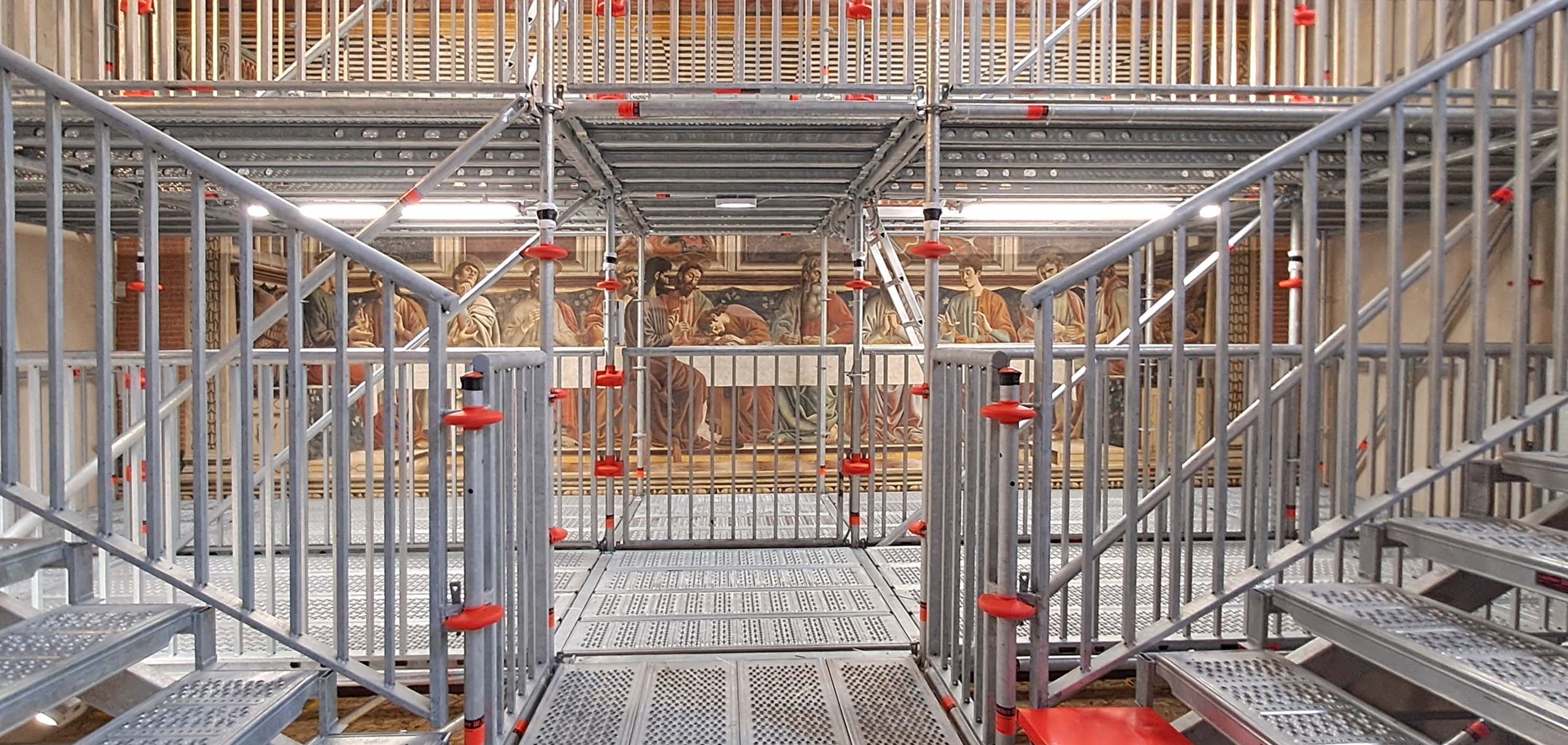
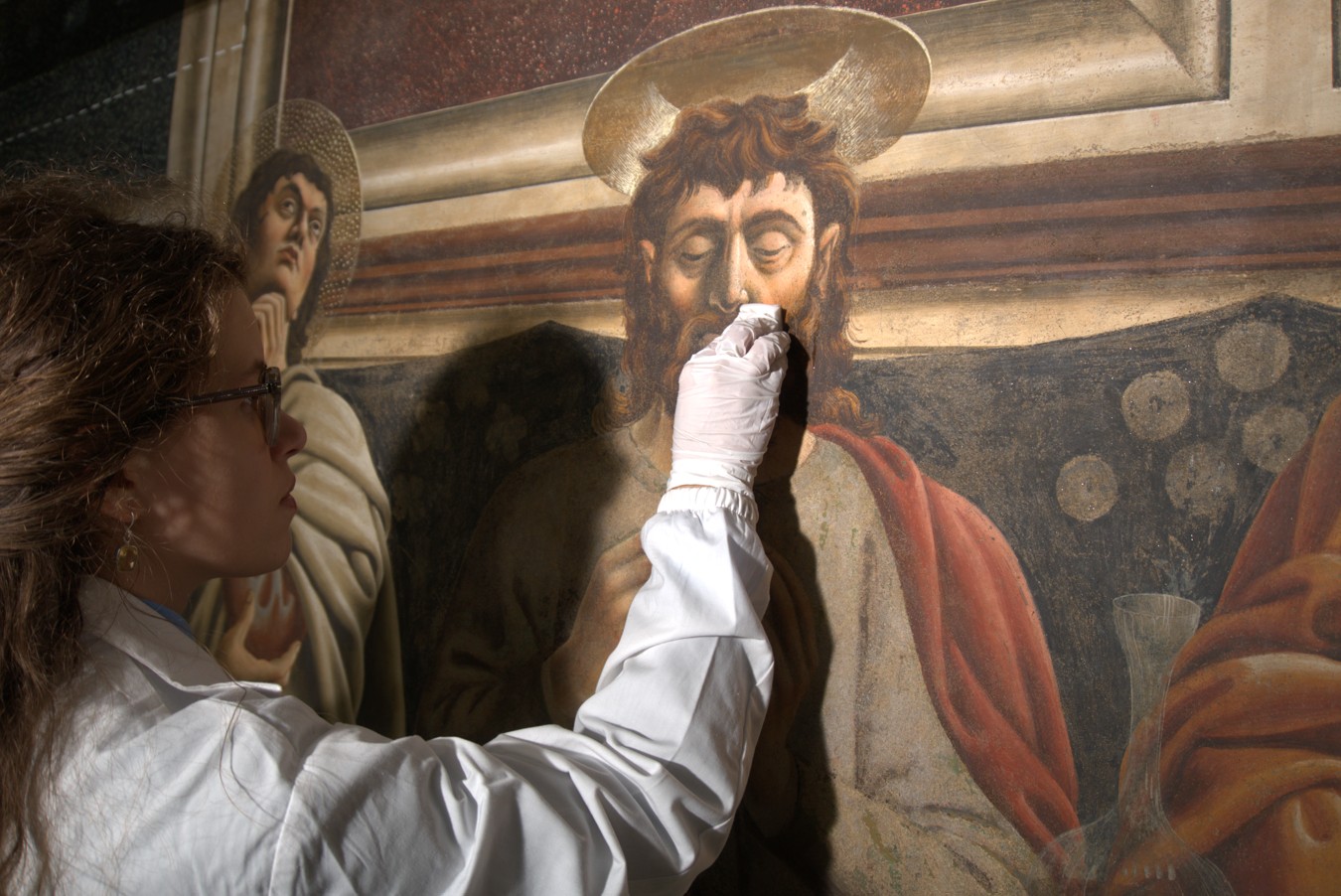
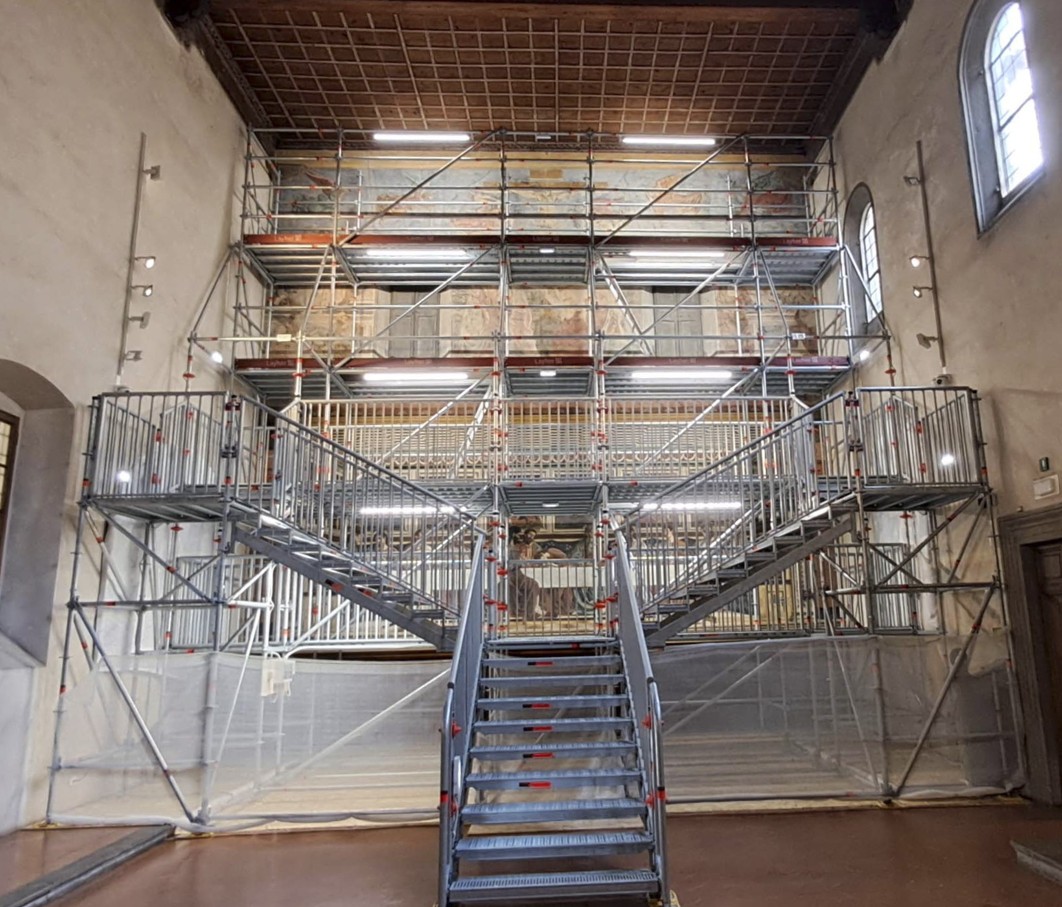
I visitatori avranno modo di salire su un secondo ponteggio, appositamente allestito e distinto da quello utilizzato dai restauratori, per ammirare le pitture da una prospettiva ravvicinata e insolita. Si tratta di un’occasione per entrare idealmente dentro il lavoro di conservazione di un’opera che continua a raccontare molto della straordinaria stagione artistica del Quattrocento.
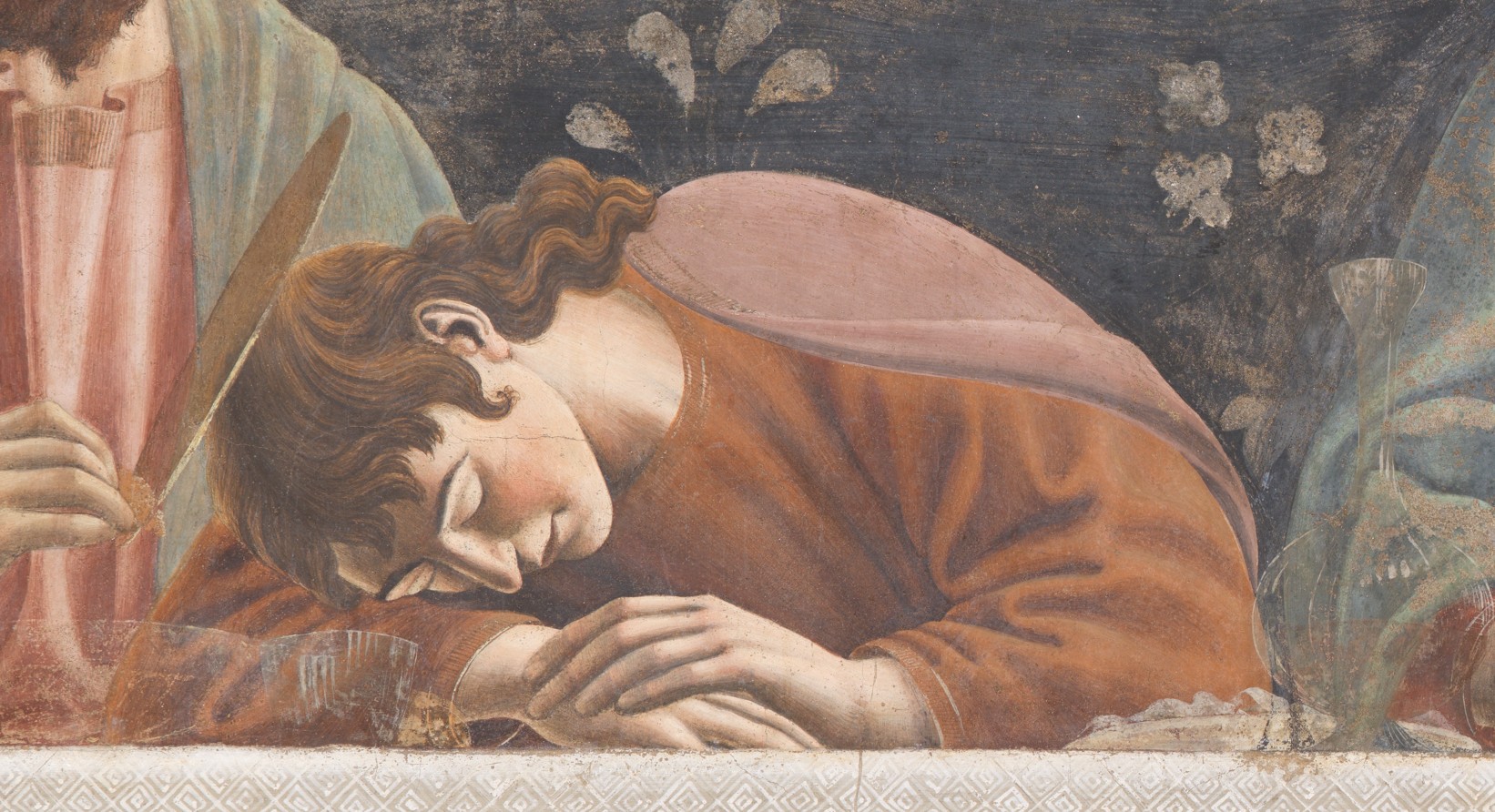
Il restauro diventa un’esperienza di conoscenza aperta anche al pubblico, permettendo di osservare da vicino le superfici dipinte, le scelte tecniche dell’artista e il lavoro degli specialisti impegnati nella salvaguardia di questo patrimonio.
Il Cenacolo di Sant’Apollonia: un capolavoro da osservare a distanza ravvicinata
Il secondo ponteggio è stato predisposto proprio per consentire al pubblico di avvicinarsi alle pitture in condizioni controllate, senza interferire con le operazioni conservative.
Si potranno osservare meglio la qualità della pittura, le caratteristiche delle superfici, i dettagli delle figure e le soluzioni prospettiche elaborate da Andrea del Castagno. Il cantiere sarà quindi uno spazio aperto alla divulgazione, nel quale il pubblico può comprendere non soltanto il valore artistico dell’opera, ma anche quanto siano complesse le operazioni necessarie per conservarla.
Un’esperienza che ricorda, per certi aspetti, quella vissuta ad Arezzo durante le operazioni di spolvero degli affreschi della Leggenda della Vera Croce di Piero della Francesca, nella Cappella Bacci della Basilica di San Francesco. Anche in quell’occasione la vicinanza alle pitture aveva offerto l’opportunità di scoprire particolari normalmente difficili da apprezzare.
Il restauro degli affreschi di Andrea del Castagno: ricerca scientifica e conservazione
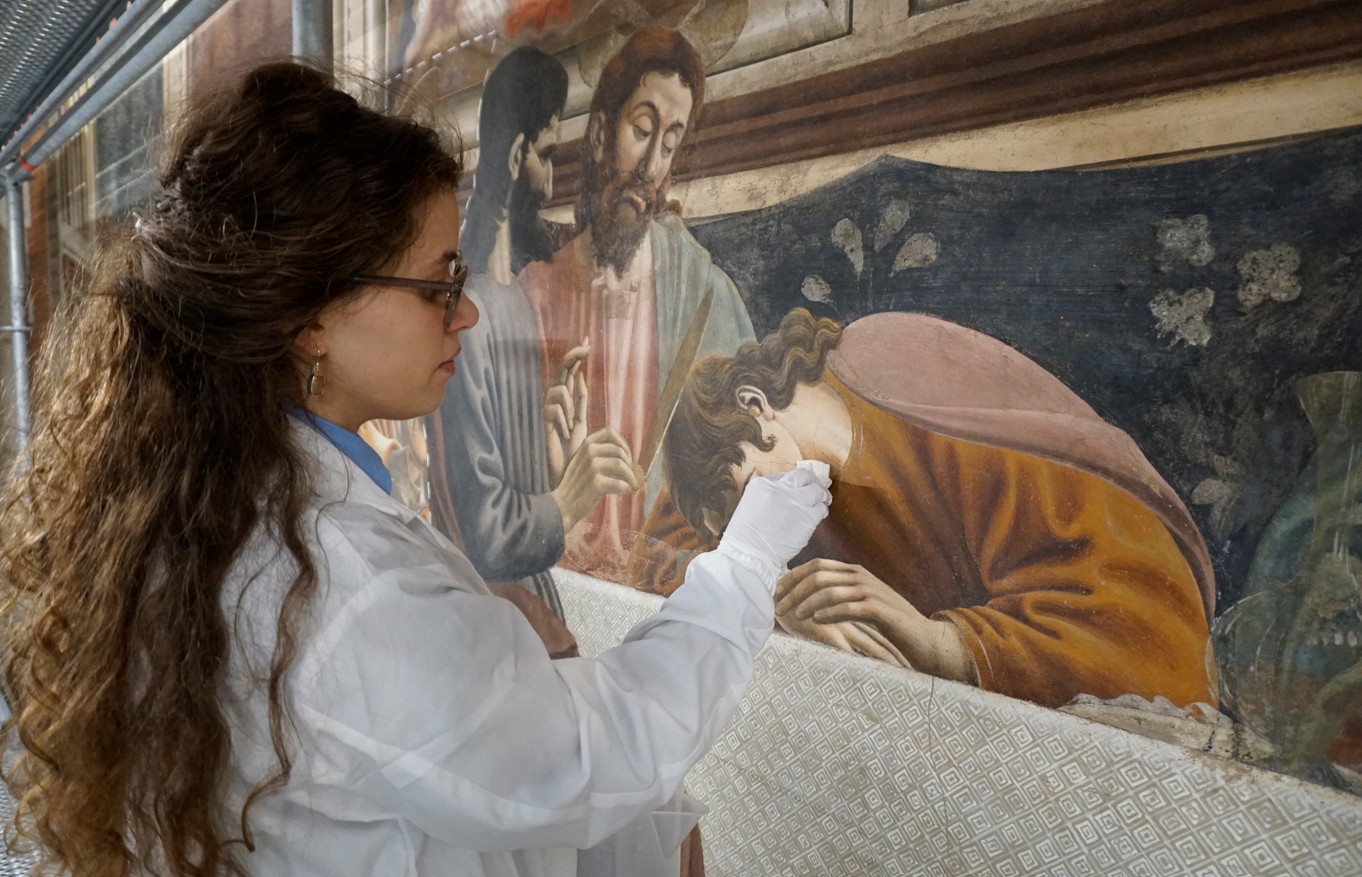
L’intervento attualmente in corso affronta in maniera unitaria la conservazione del ciclo pittorico, tenendo conto delle diverse condizioni delle superfici e della lunga storia conservativa degli affreschi.
L’obiettivo è preservare le pitture e migliorarne la leggibilità, attraverso un progetto che affianca alle operazioni di restauro una campagna di indagini scientifiche sui materiali, sulla tecnica esecutiva e sugli interventi realizzati nel corso dei secoli.
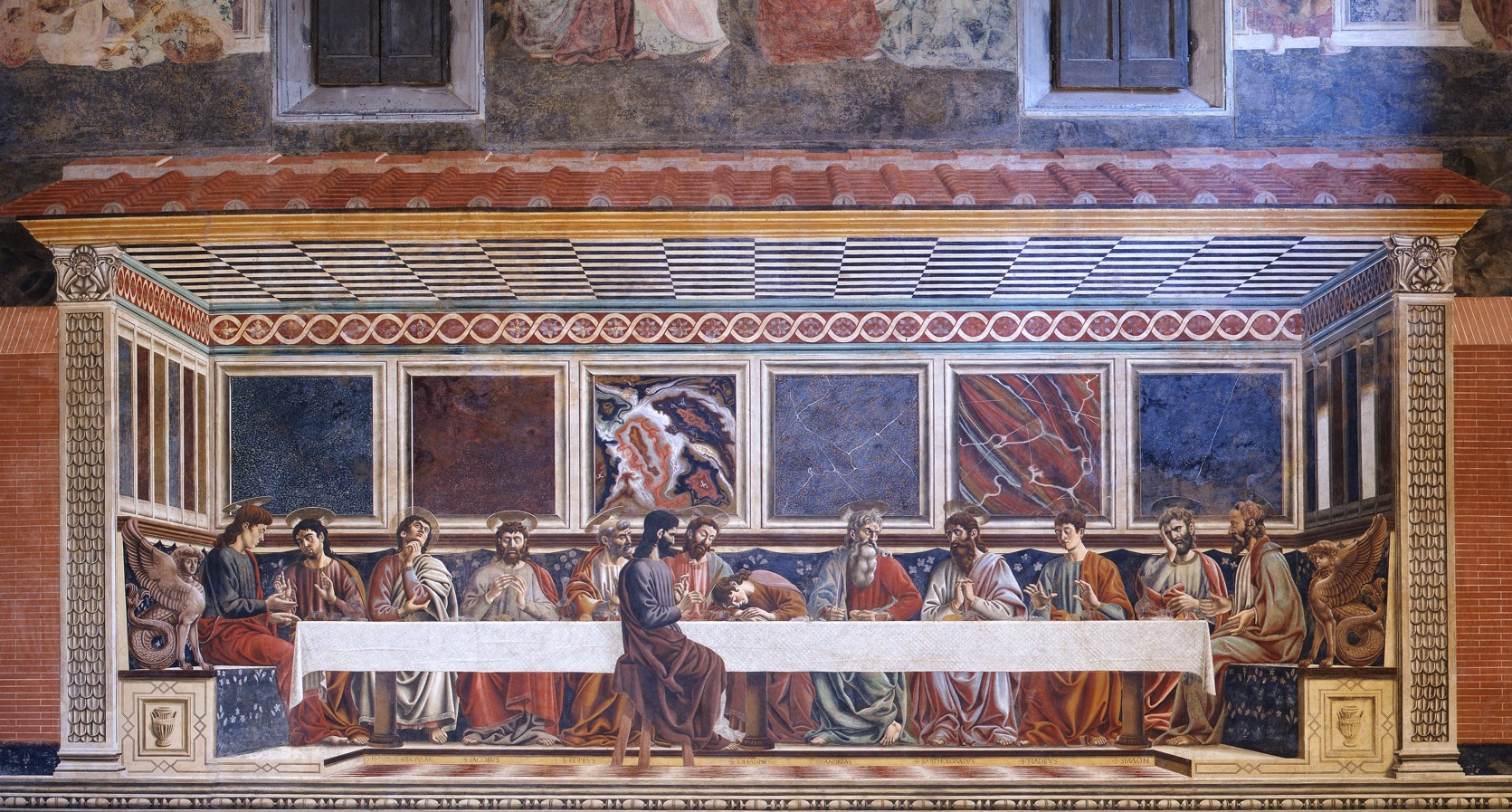
Il progetto è diretto e coordinato dalla Direzione regionale Musei nazionali Toscana del Ministero della Cultura – Museo di San Marco e Cenacoli, con il supporto dell’Opificio delle Pietre Dure, già coinvolto in precedenti interventi, per gli aspetti diagnostici e metodologici.
Partecipano inoltre la Soprintendenza Archeologia, Belle Arti e Paesaggio per la città metropolitana di Firenze e la provincia di Prato e il Consiglio nazionale delle ricerche (CNR), con il contributo e la collaborazione operativa della Fondazione Isabel e Balz Baechi, organizzazione privata senza scopo di lucro impegnata nella conservazione e nel restauro del patrimonio storico-artistico, in particolare pitture murali, stucchi e mosaici.
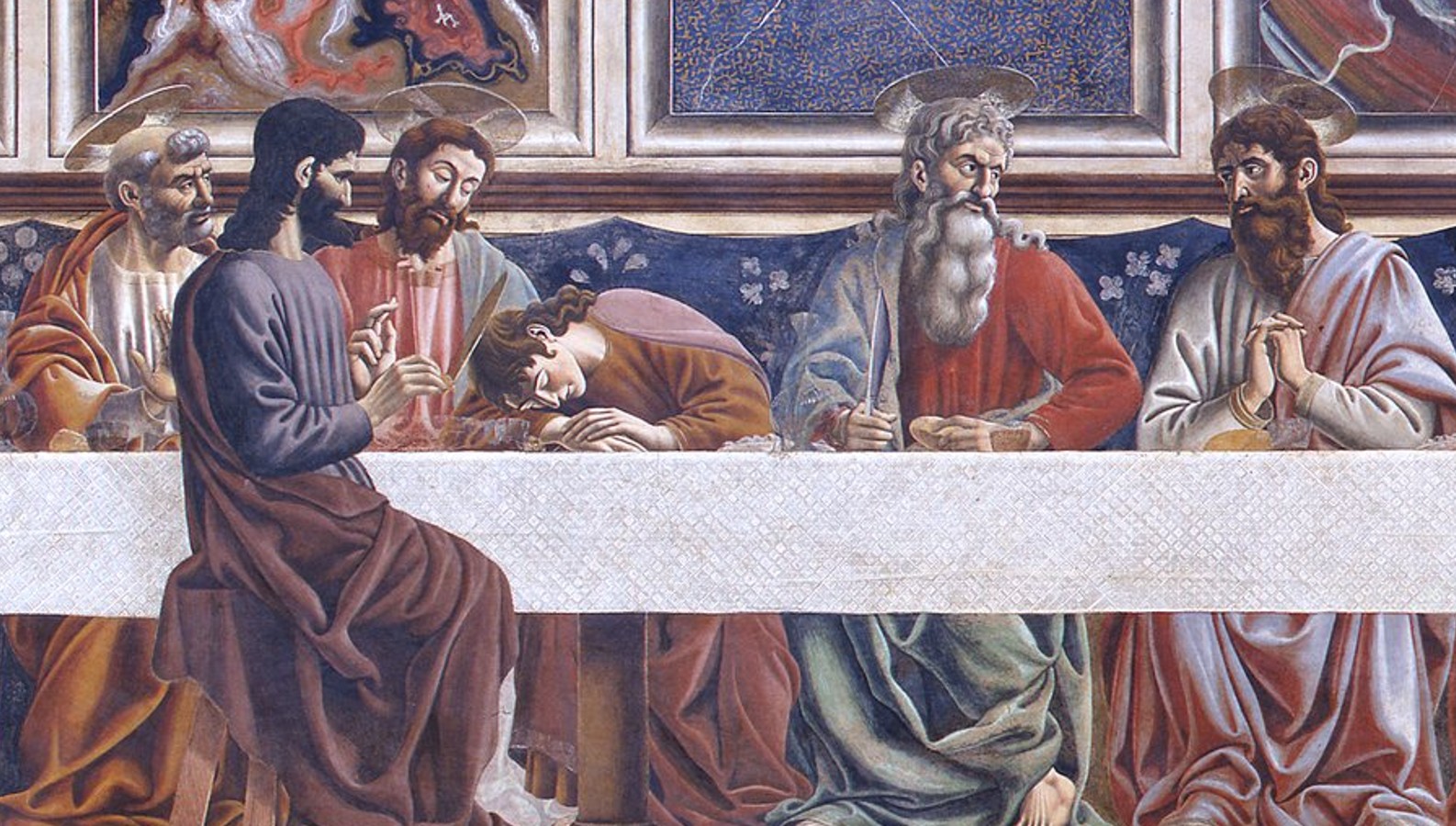
L’Ultima Cena e le tre scene della Passione: il grande progetto pittorico del 1447
Il Cenacolo di Sant’Apollonia si trova nell’antico refettorio del monastero delle benedettine osservanti, fondato nel 1339 e ampliato profondamente durante il Quattrocento.
Qui Andrea del Castagno realizzò, probabilmente tra luglio e dicembre del 1447, uno dei complessi pittorici più significativi della pittura fiorentina del XV secolo.
L’artista organizzò la grande parete di fondo come un unico programma figurativo dedicato alla Passione e alla Resurrezione di Cristo. Nella parte inferiore si trova la monumentale Ultima Cena, mentre sopra di essa si sviluppano tre episodi: al centro la Crocifissione, affiancata a sinistra dalla Resurrezione e a destra dalla Deposizione nel sepolcro.
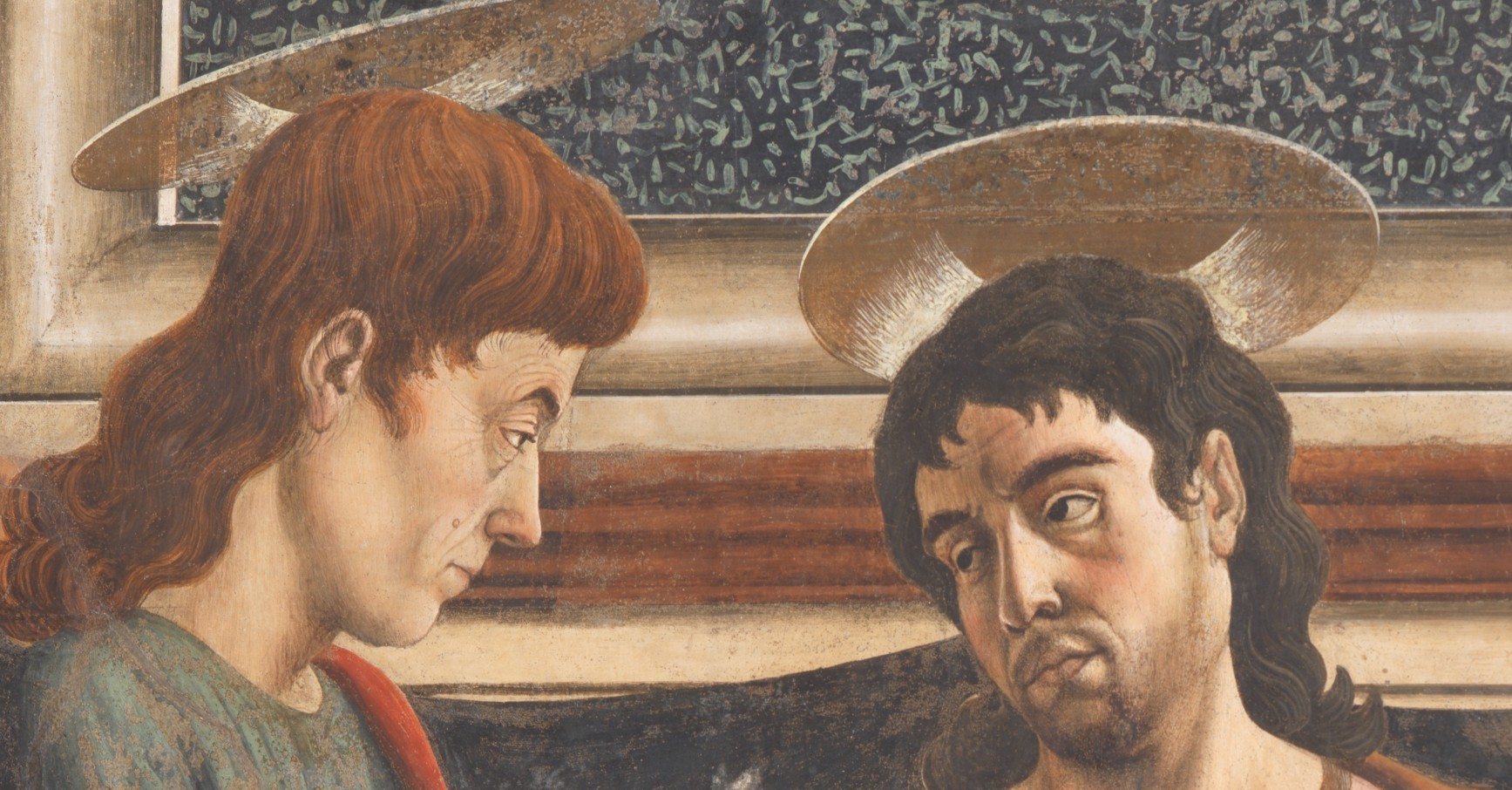
Le scene superiori sono collegate attraverso il paesaggio e la presenza degli angeli in volo, elementi che contribuiscono a creare una composizione unitaria, nella quale lo spazio e la luce accompagnano lo sguardo da un episodio all’altro.
Una delle caratteristiche più interessanti del progetto è proprio il ruolo assegnato all’Ultima Cena. Andrea del Castagno le attribuisce una centralità visiva e narrativa straordinaria, superando la tradizionale subordinazione di questo soggetto rispetto alla Crocifissione nei refettori fiorentini.
La prospettiva illusionistica dell’Ultima Cena: una stanza dipinta che sembra reale
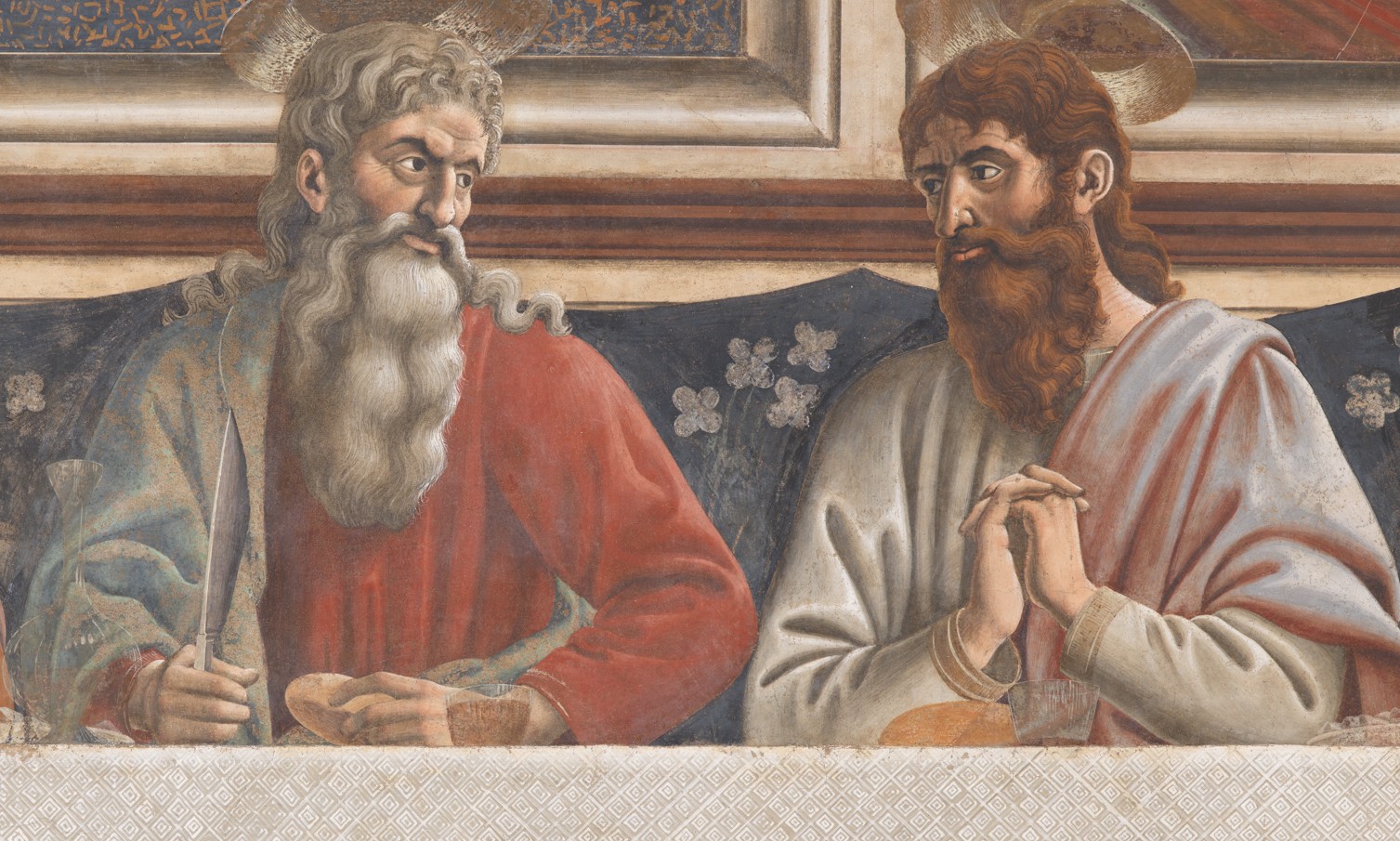
Cristo e gli apostoli sono disposti all’interno di una loggia illusionistica, definita da una rigorosa costruzione prospettica. Il pavimento, il soffitto e le pareti, decorate con specchiature marmoree dipinte, concorrono a creare l’impressione di un ambiente architettonico reale.
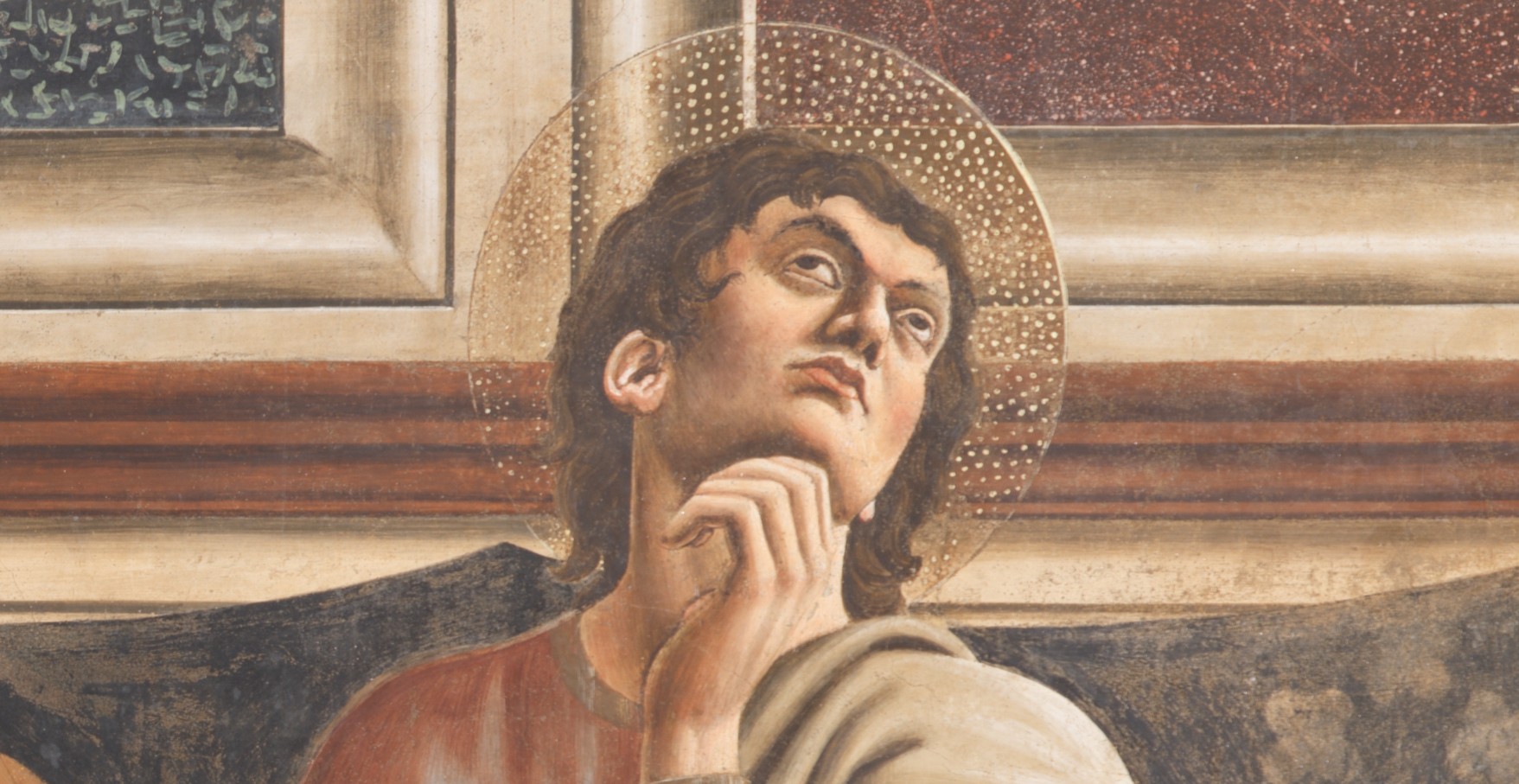
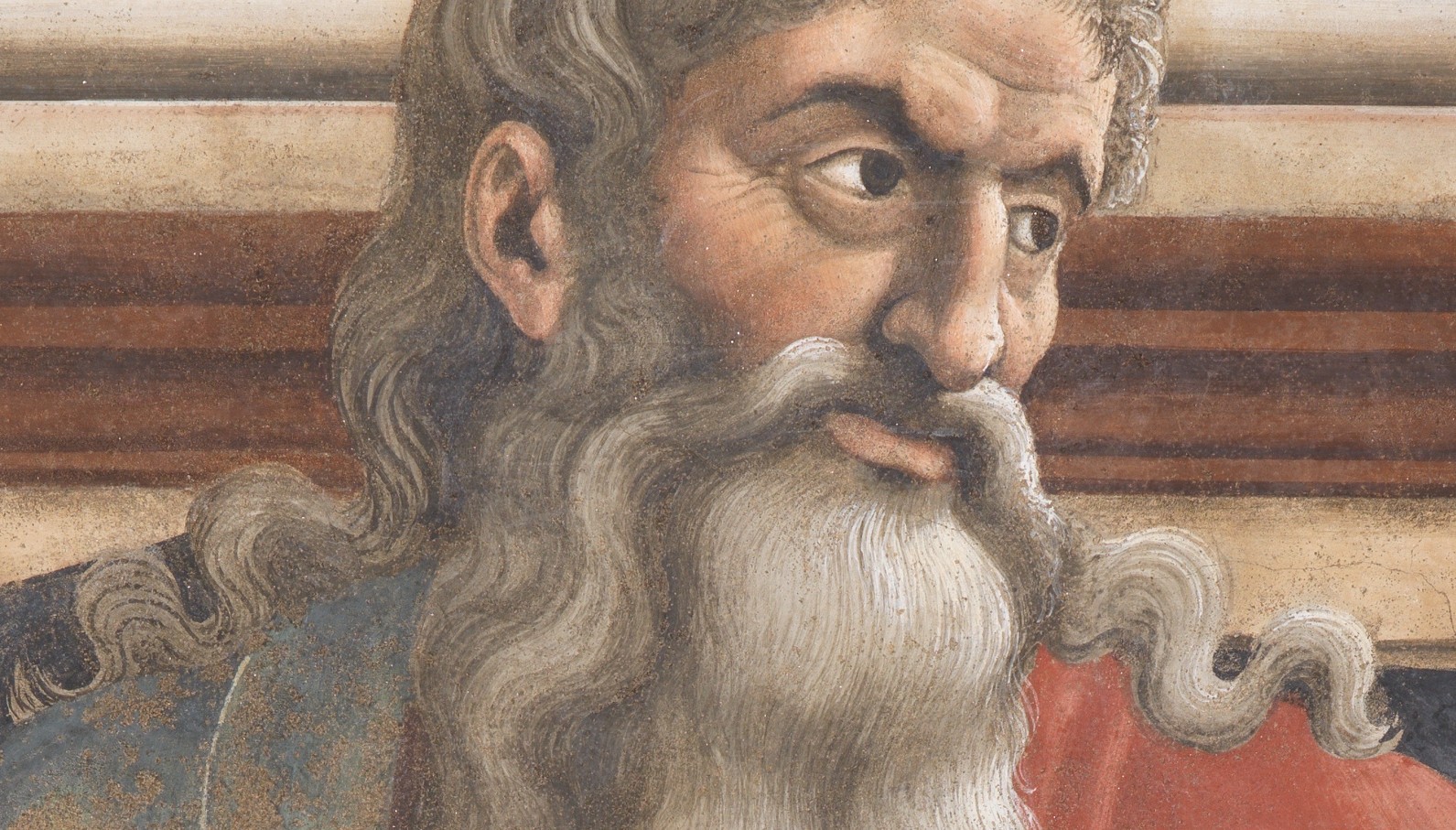
La tavola sembra spingersi verso lo spettatore, mentre gli scorci degli elementi architettonici accentuano la profondità della scena. Le figure, caratterizzate da una forte solidità plastica, hanno una presenza quasi scultorea. I volti, gli atteggiamenti e le espressioni restituiscono una tensione narrativa che rende la composizione particolarmente coinvolgente.
Anche il colore e la luce hanno un ruolo fondamentale. L’ambiente dell’Ultima Cena presenta tonalità più cupe e drammatiche, mentre nelle scene superiori la luminosità cresce progressivamente, fino ad arrivare alla luce chiara dell’alba nella Resurrezione.
È una scelta che accompagna il significato del racconto, passando dalla drammaticità della Passione alla promessa della salvezza.
Perché il Cenacolo di Sant’Apollonia rimase sconosciuto per secoli
Per molto tempo gli affreschi rimasero praticamente sconosciuti al di fuori della comunità monastica.
La clausura del monastero impediva infatti l’accesso al refettorio e, di conseguenza, anche la possibilità per artisti, studiosi e visitatori di conoscere il grande ciclo pittorico.
Un’assenza significativa si ritrova persino nelle Vite di Giorgio Vasari, che nella biografia dedicata ad Andrea del Castagno non menzionò questi affreschi.
La situazione cambiò nell’Ottocento, quando la soppressione del monastero e l’allontanamento delle monache resero possibile la riscoperta delle pitture. La loro importanza fu tale che le Regie Gallerie promossero la creazione di un museo dedicato all’artista.
Il Cenacolo venne inaugurato il 1° aprile 1891, entrando a far parte dei luoghi museali fiorentini dedicati alla tradizione dei refettori dipinti.
Le sinopie di Andrea del Castagno e la storia degli interventi conservativi
La storia del Cenacolo è strettamente legata anche alle vicende conservative che hanno modificato, nel tempo, l’aspetto originario della decorazione.
Mentre l’Ultima Cena si trova ancora nella sua collocazione originale, sul supporto murario, le tre scene superiori furono distaccate nel 1953 per ragioni conservative e trasferite su supporti secondari.
Durante queste operazioni vennero scoperte le sinopie, ovvero i disegni preparatori realizzati dall’artista prima della stesura definitiva degli affreschi. Anche queste furono successivamente distaccate, nel 1961, e oggi sono esposte sulla parete opposta del refettorio.
Testimonianze particolarmente preziose, perché consentono di comprendere meglio il processo creativo di Andrea del Castagno, le modalità con cui progettava le composizioni e il modo in cui trasferiva le proprie idee sulla superficie muraria.
Nel Cenacolo si conservano inoltre altre opere legate all’attività dell’artista: la lunetta con il Cristo in pietà e la relativa sinopia, una Crocifissione proveniente dal chiostro del convento di Santa Maria degli Angeli e la sinopia della Visione di San Girolamo tra le sante Paola ed Eustochio, realizzata per la Basilica della Santissima Annunziata.
Sulla parete adiacente al chiostro si trova anche un Crocifisso ligneo policromo attribuito a Raffaello da Montelupo, proveniente dalla chiesa di Sant’Apollonia.
Un’occasione per riscoprire Andrea del Castagno
La riapertura del Cenacolo di Sant’Apollonia durante il restauro offre una possibilità rara: non limitarsi ad ammirare un capolavoro del Rinascimento fiorentino, ma avvicinarsi alla sua storia materiale, alla tecnica con cui è stato realizzato e alle cure necessarie per consegnarlo alle generazioni future.
Vedere da vicino l’Ultima Cena significa poter osservare dettagli che normalmente si perdono nella distanza, ma anche comprendere quanto lavoro, studio e conoscenza siano necessari per conservare un’opera di questa importanza.
Il restauro non nasconde il capolavoro dietro le quinte, ma diventa un’occasione per raccontarlo e renderlo ancora più vicino al pubblico.
Modalità di visita al museo
- Dal 30 ottobre 2026
Ingresso al Cenacolo senza visita sui ponteggi – 3,00 euro.
da lunedì a sabato, 1° e 3° domenica del mese: 8.30-13.50. Chiuso il lunedì dopo la domenica di apertura
Gratuito fino a 18 anni e prima domenica del mese per tutti. Ridotto 2 euro da 18 a 25 anni e altre gratuità e riduzioni di legge.
Modalità di visita sul ponteggio
- Da domenica 15 novembre 2026 al 26 giugno 2027
da lunedì a sabato, 1° e 3° domenica del mese: 8.30-13.50. Chiuso il lunedì dopo la domenica di apertura. Durata 30 minuti
8,00 euro per i singoli, prenotazione consigliata fino ad esaurimento dei posti disponibili - 8,00 euro per i gruppi con prenotazione obbligatoria fino a un massimo di 10 persone, inclusa la guida telefonando al numero 055-354135
Riduzioni per minori e giovani fino a 25 anni: 4,00 euro - Da sabato 21 novembre 2026 al 26 giugno 2027
tutti i sabati e 1^ e 3^ domenica del mese, ore 10.00 e 11.30, durata 60 minuti
Visita guidata al museo e sul ponteggio a cura dei servizi educativi – 10,00 euro: esclusivamente con prenotazione obbligatoria, per gruppi di massimo 10 persone, durata circa 45 minuti.
Riduzioni per minori e giovani fino a 25 anni: 6,00 euro
Avvertenze: La visita sui ponteggi è possibile solo a partire dai 7 anni, è obbligatorio indossare il casco e tenere i bambini sotto i 10 anni per mano, non è accessibile per persone con difficoltà motorie.
Per prenotare la visita, Cliccate QUA.
Per il momento il sempre vostro Michelangelo Buonarroti vi saluta dandovi appuntamento ai prossimi post e sui social.

Andrea del Castagno’s Last Supper revealed up close: a restoration site open to the public in Florence
In Florence, the Cenacolo di Sant’Apollonia (Last Supper of Saint Apollonia) has reopened to the public while restoration work is underway on the famous cycle of frescoes created by Andrea del Castagno around 1447.
Visitors have the opportunity to ascend a secondary scaffolding—set up specifically for this purpose and separate from the one used by the conservators—to admire the paintings from an unusually close perspective. It offers a chance to step, in a sense, inside the conservation process of a work that continues to reveal a great deal about the extraordinary artistic era of the 15th century.
The restoration becomes an educational experience, open to the public, allowing for a close-up look at the painted surfaces, the artist’s technical choices, and the work of the specialists dedicated to safeguarding this heritage.
The Cenacolo di Sant’Apollonia: a masterpiece to be viewed at close range
The secondary scaffolding was installed precisely to allow the public to approach the paintings under controlled conditions, without interfering with the conservation work.
Visitors can gain a better appreciation for the quality of the painting, the characteristics of the surfaces, the details of the figures, and the perspective techniques devised by Andrea del Castagno. The restoration site thus becomes a space for public outreach, where visitors can understand not only the artistic value of the work but also the complexity of the operations required to preserve it.
In some respects, this experience is reminiscent of the one in Arezzo during the cleaning (dust removal) of the Legend of the True Cross frescoes by Piero della Francesca, located in the Bacci Chapel of the Basilica of San Francesco. On that occasion, too, being in such close proximity to the paintings offered the chance to discover details that are otherwise difficult to discern. The Restoration of Andrea del Castagno’s Frescoes: Scientific Research and Conservation
The project currently underway addresses the conservation of the pictorial cycle in a unified manner, taking into account the varying conditions of the surfaces and the long history of conservation efforts the frescoes have undergone.
The objective is to preserve the paintings and enhance their legibility through a project that combines restoration work with a comprehensive campaign of scientific investigation into the materials, the execution techniques, and the interventions carried out over the centuries.
The project is directed and coordinated by the Regional Directorate of National Museums in Tuscany (Ministry of Culture) – Museum of San Marco and the Refectories (Cenacoli), with support from the Opificio delle Pietre Dure—which has been involved in previous interventions—regarding diagnostic and methodological aspects.
Also participating are the Superintendency of Archaeology, Fine Arts and Landscape for the Metropolitan City of Florence and the Province of Prato, and the National Research Council (CNR). The project further benefits from the contribution and operational collaboration of the Isabel and Balz Baechi Foundation, a private, non-profit organization dedicated to the conservation and restoration of historical and artistic heritage, with a particular focus on wall paintings, stucco, and mosaics.
The Last Supper and the Three Scenes of the Passion: The Grand Pictorial Project of 1447
The Cenacolo di Sant’Apollonia (Last Supper of Sant’Apollonia) is located in the former refectory of a Benedictine convent, which was founded in 1339 and significantly expanded during the 15th century.
It was here that Andrea del Castagno created—likely between July and December 1447—one of the most significant pictorial cycles in 15th-century Florentine art.
The artist conceived the large end wall as a unified figurative program dedicated to the Passion and Resurrection of Christ. The lower section features a monumental Last Supper, while above it are three distinct episodes: the Crucifixion in the center, flanked by the Resurrection on the left and the Entombment on the right.
The upper scenes are linked by a continuous landscape and the presence of angels in flight—elements that help forge a cohesive composition, in which space and light guide the viewer’s gaze from one episode to the next.
One of the most compelling aspects of this project is the role assigned to the Last Supper. Andrea del Castagno grants it extraordinary visual and narrative centrality, moving beyond the traditional subordination of this subject to the Crucifixion—a common convention in Florentine refectories of the time.
The Illusionistic Perspective of the Last Supper: A Painted Room That Appears Real
Christ and the Apostles are set within an illusionistic loggia, defined by a rigorous use of perspective. The floor, ceiling, and walls—adorned with painted marble paneling—work together to create the impression of a genuine architectural space.
The table appears to project toward the viewer, while the foreshortened architectural elements further enhance the depth of the scene. The figures, characterized by a strong, three-dimensional solidity, possess an almost sculptural presence. Their faces, postures, and expressions convey a narrative tension that makes the composition particularly compelling.
Color and light also play a fundamental role. The setting of the Last Supper features darker, more dramatic tones, while in the scenes above, the brightness increases progressively, culminating in the clear light of dawn in the Resurrection.
This choice mirrors the meaning of the narrative, transitioning from the drama of the Passion to the promise of salvation.
Why the Last Supper at Sant’Apollonia remained unknown for centuries
For a long time, the frescoes remained virtually unknown outside the monastic community.
The cloistered nature of the monastery prevented access to the refectory, thereby denying artists, scholars, and visitors the opportunity to see this grand cycle of paintings.
A notable omission occurs even in Giorgio Vasari’s Lives of the Artists; in his biography of Andrea del Castagno, he makes no mention of these frescoes.
The situation changed in the 19th century, when the suppression of the monastery and the departure of the nuns allowed for the rediscovery of the paintings. Their significance was such that the Royal Galleries (Regie Gallerie) spearheaded the creation of a museum dedicated to the artist.
The Cenacolo (Last Supper) site was inaugurated on April 1, 1891, becoming part of the network of Florentine museums dedicated to the tradition of painted refectories.
The sinopie (preparatory drawings) by Andrea del Castagno and the history of conservation efforts
The history of the Cenacolo (Last Supper) is closely linked to the conservation interventions that have, over time, altered the original appearance of the decoration.
While the Last Supper remains in its original location—on the wall itself—the three scenes above it were detached in 1953 for conservation purposes and transferred onto secondary supports.
During these operations, the sinopie—the preparatory drawings created by the artist before the final execution of the frescoes—were uncovered. These, too, were subsequently detached in 1961 and are now displayed on the opposite wall of the refectory.
These works are particularly valuable, as they offer insight into Andrea del Castagno’s creative process, his method for planning compositions, and how he transferred his ideas onto the wall surface.
The Cenacolo also houses other works associated with the artist: a lunette depicting Christ in Pity (along with its corresponding sinopia), a Crucifixion from the cloister of the convent of Santa Maria degli Angeli, and the sinopia for the Vision of Saint Jerome between Saints Paula and Eustochium, originally created for the Basilica of the Santissima Annunziata.
On the wall adjacent to the cloister, there is also a polychrome wooden crucifix attributed to Raffaello da Montelupo, which came from the church of Sant’Apollonia.
An opportunity to rediscover Andrea del Castagno
The reopening of the Cenacolo of Sant’Apollonia—even while restoration work is underway—offers a rare opportunity: it allows visitors not only to admire a masterpiece of the Florentine Renaissance but also to engage with its material history, the techniques used in its creation, and the care required to preserve it for future generations. Seeing The Last Supper up close means being able to observe details that are usually lost at a distance, while also gaining an understanding of the immense amount of work, study, and expertise required to preserve a work of such significance.
Rather than hiding the masterpiece behind the scenes, the restoration process becomes an opportunity to share its story and bring it even closer to the public.
Museum Visit Information
From October 30, 2026
Admission to the Cenacolo (Last Supper) without access to the scaffolding – 3.00 euros.
Monday to Saturday, and the 1st and 3rd Sunday of the month: 8:30 AM – 1:50 PM. Closed on the Monday following an open Sunday.
Free for visitors under 18 and for everyone on the first Sunday of the month. Reduced rate of 2 euros for visitors aged 18 to 25; other statutory free admissions and discounts also apply.
Visits via Scaffolding
From Sunday, November 15, 2026, to June 26, 2027
Monday to Saturday, and the 1st and 3rd Sunday of the month: 8:30 AM – 1:50 PM. Closed on the Monday following an open Sunday. Duration: 30 minutes.
8.00 euros for individuals; booking is recommended (subject to availability).
8.00 euros for groups (maximum 10 people, including the guide); booking is mandatory—please call 055-354135.
Reduced rate for minors and young people up to 25 years old: 4.00 euros.
From Saturday, November 21, 2026, to June 26, 2027
Every Saturday, and the 1st and 3rd Sunday of the month, at 10:00 AM and 11:30 AM; duration: 60 minutes.
Guided tour of the museum and scaffolding (conducted by the educational services team) – 10.00 euros: requires mandatory booking; for groups of up to 10 people; duration: approximately 45 minutes. Reduced rates for minors and young people up to 25 years of age: 6.00 euros
Important notes: Access to the scaffolding is permitted only for those aged 7 and older. Wearing a hard hat is mandatory, and children under 10 must be held by the hand. The area is not accessible to individuals with mobility impairments.
To book your visit, click HERE.
For now, yours truly, Michelangelo Buonarroti, bids you farewell—see you in future posts and on social media

Sostienici – Support Us
Se questo blog ti piace e ti appassiona, puoi aiutarci a farlo crescere sempre più sostenendoci in modo concreto condividendo i post, seguendo le pagine social e con un contributo che ci aiuta ad andare avanti con il nostro lavoro di divulgazione. . ENGLISH: If you like and are passionate about this blog, you can help us make it grow more and more by supporting us in a concrete way by sharing posts, following social pages and with a contribution that helps us to move forward with our dissemination work.
10,00 €

Condividi:


Questo sono io



sostienici

Sostienici - Support Us
Se questo blog ti piace e ti appassiona, puoi aiutarci a farlo crescere sempre più sostenendoci in modo concreto condividendo i post, seguendo le pagine social e con un contributo che ci aiuta ad andare avanti con il nostro lavoro di divulgazione. . ENGLISH: If you like and are passionate about this blog, you can help us make it grow more and more by supporting us in a concrete way by sharing posts, following social pages and with a contribution that helps us to move forward with our dissemination work.
€10,00


