
La Scultura del giorno: Ercole e Nesso con le integrazioni del Caccini
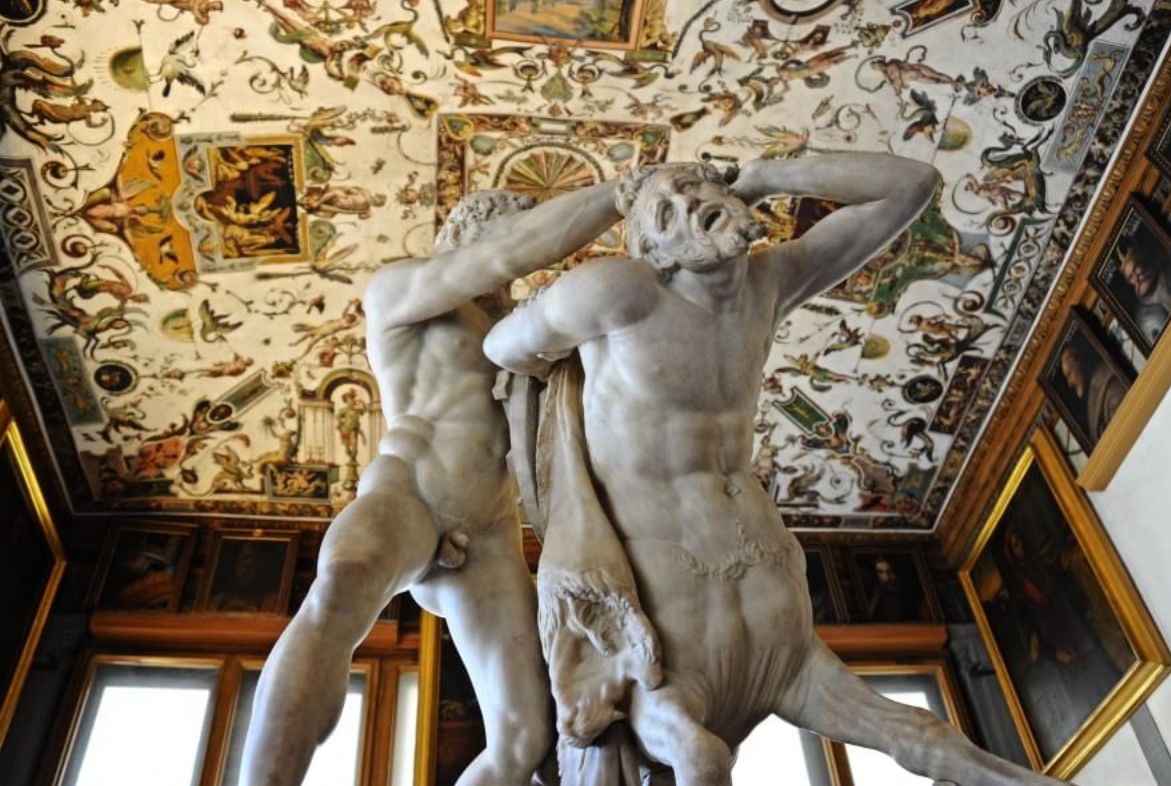
La scultura di cui voglio parlarvi oggi è l’Ercole e Nesso, l’opera romana restaurata in modo importante dal Caccini nel Cinquecento che accoglie i visitatori all’ingresso della Galleria degli Uffizi.
Ora dovete sapere che quest’opera di epoca romana era stata talmente martoriata dallo scorrere del tempo che giunse al periodo rinascimentale in modo frammentario. Era rimasto solo il torso del centauro e la base.
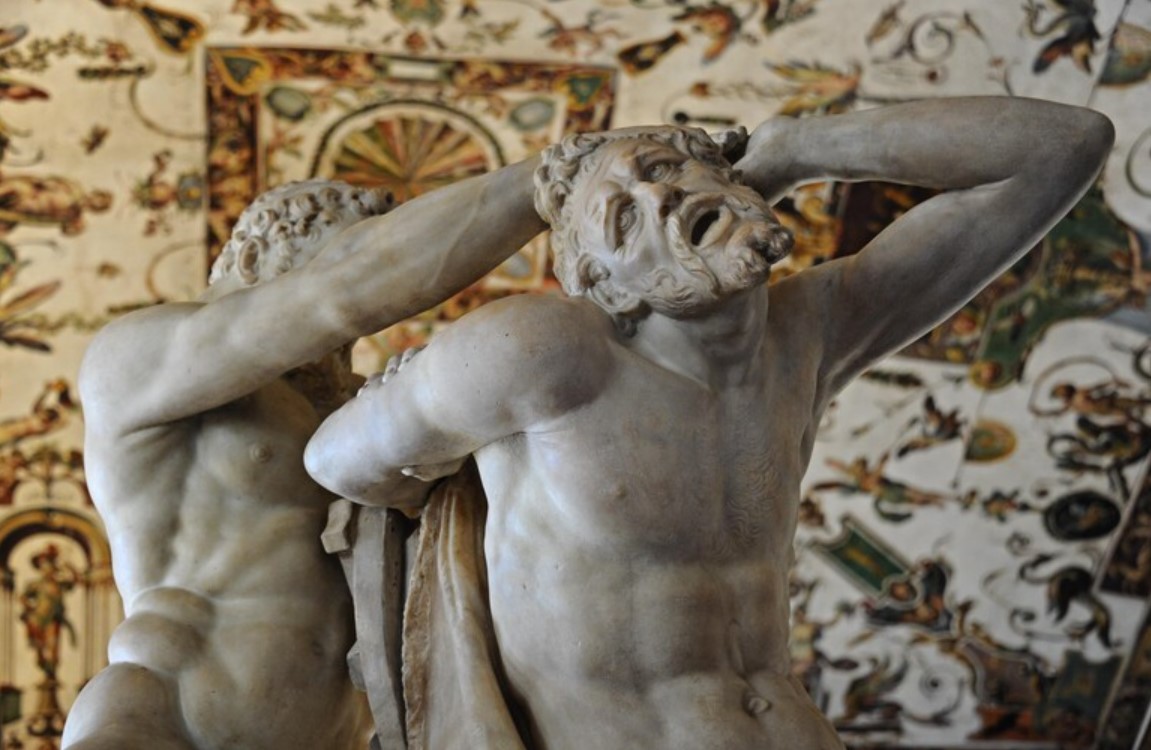
Fu lo scultore Giovanni Battista Caccini a realizzare le stupefacenti integrazioni, riuscendo a fondere in modo eccellente lo stile antico alla maniera moderna.
Caccini con la sua inventiva e il suo smisurato talento riuscì a ricostruire totalmente l’opera, partendo dai pochi frammenti che aveva a disposizione.
La scultura, dopo l’intervento del Caccini fu collocata laddove la vedete oggi per accogliere i numerosi visitatori, alla testata del primo corridoio degli Uffizi.
Ma qual è la storia del mito di Ercole e Nesso?
Ercole in compagnia della moglie Deianira si trovò dinnanzi al fiume Eveno e, dovendo guadarlo, chiese al centauro Nesso aiuto visto che era solito traghettare i viaggiatori da una sponda all’altra.
Il centauro però approfittò di quella circostanza di difficoltà per rapire la donna. Ercole si vendicò uccidendo il centauro ma lasciò che la consorte prendesse da Nesso una veste incantata che dopo diverse vicissitudini porterà tutti e due verso la morte.
Il recente restauro
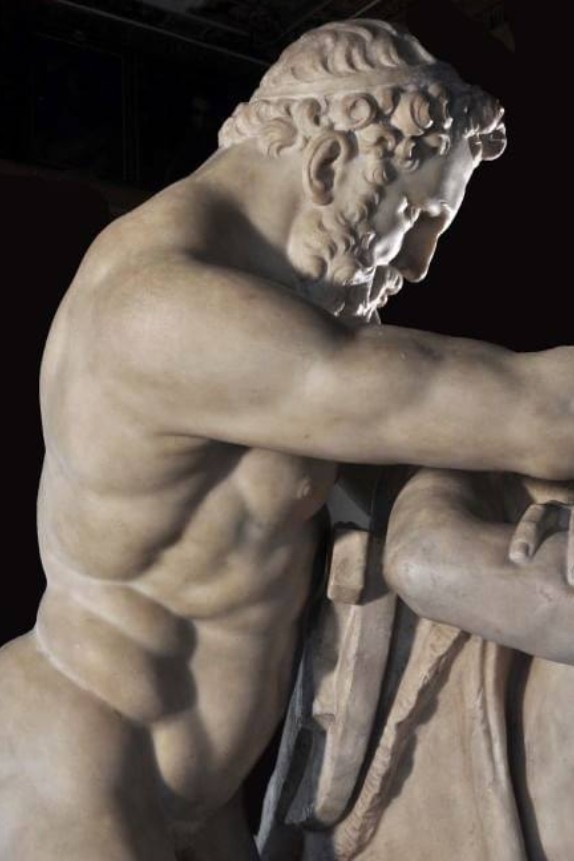
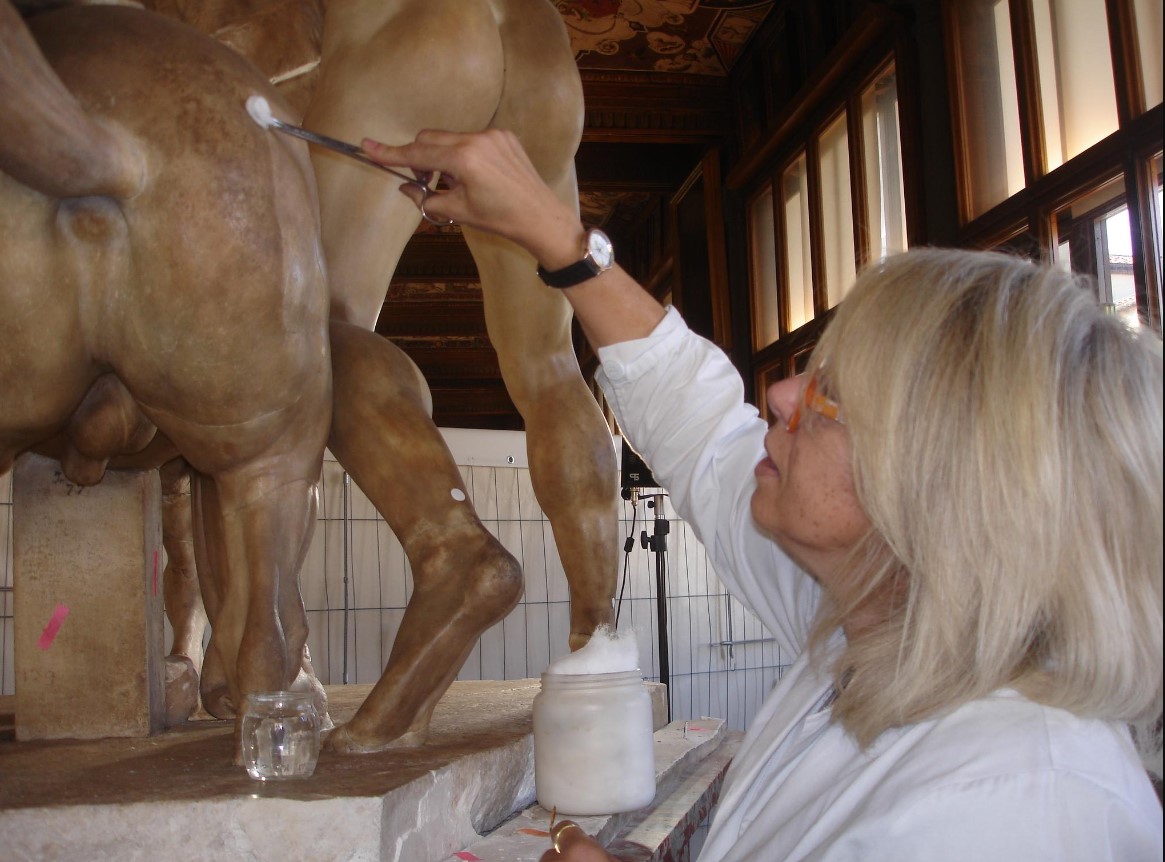
L’opera Ercole e Nesso con le integrazioni del Caccini è stata sottoposta a un importante intervento conservativo nel 2015, eseguito da Paola Rosa e finanziato dall’associazione Friends of the Uffizi Gallery.
Durante il restauro è stato possibile identificare con certezza tutte le integrazioni che ebbe l’opera e comprendere che in origine il centauro era in una posizione meno schiacciata rispetto a quella pensata dal Caccini. Inoltre è stato evidenziato che rielaborò a il piede di Ercole.
Inoltre le indagini petrografiche hanno condotte da Spampinato hanno rivelato che i marmi antichi provengono dall’Asia mentre quelli adoperati dal Caccini arrivarono da Carrara.
Per il momento il vostro Michelangelo Buonarroti vi saluta dandovi appuntamento ai prossimi post e sui social.
Sculpture of the day: Hercules and Nessus with additions by Caccini
The sculpture I want to talk to you about today is Hercules and Nessus, the Roman work significantly restored by Caccini in the sixteenth century which welcomes visitors at the entrance to the Uffizi Gallery.
Now you must know that this work from the Roman era had been so battered by the passage of time that it reached the Renaissance period in a fragmented way. Only the centaur’s torso and base remained. It was the sculptor Giovanni Battista Caccini who created the astonishing additions, managing to blend the ancient style with the modern way in an excellent way.
Caccini, with his inventiveness and immense talent, managed to completely reconstruct the work, starting from the few fragments he had available.
After Caccini’s intervention, the sculpture was placed where you see it today to welcome the numerous visitors, at the head of the first corridor of the Uffizi.
But what is the history of the myth of Hercules and Nessus?
Hercules in the company of his wife found himself in front of a river to ford and asked the centaur Nessus for his help. The centaur, however, took advantage of that difficult circumstance to kidnap the woman. Hercules took revenge by killing the centaur but let his wife take an enchanted robe from Nessus which after several vicissitudes will lead both of them to their deaths.
The recent restoration
The work Hercules and Nessus with Caccini’s additions was subjected to an important conservative intervention in 2015, carried out by Paola Rosa and financed by the Friends of the Uffizi Gallery association. During the restoration it was possible to identify with certainty all the additions that the work had and to understand that the centaur was originally in a less squashed position than that thought by Caccini. It has also been highlighted that he reworked the foot of Hercules.
Furthermore, the petrographic investigations conducted by Spampinato revealed that the ancient marbles come from Asia while those used by Caccini arrived from Carrara.
For the moment, your Michelangelo Buonarroti greets you and will meet you in future posts and on social media.

Sostienici – Support Us
Se questo blog ti piace e ti appassiona, puoi aiutarci a farlo crescere sempre più sostenendoci in modo concreto condividendo i post, seguendo le pagine social e con un contributo che ci aiuta ad andare avanti con il nostro lavoro di divulgazione. . ENGLISH: If you like and are passionate about this blog, you can help us make it grow more and more by supporting us in a concrete way by sharing posts, following social pages and with a contribution that helps us to move forward with our dissemination work.
8,00 €
-
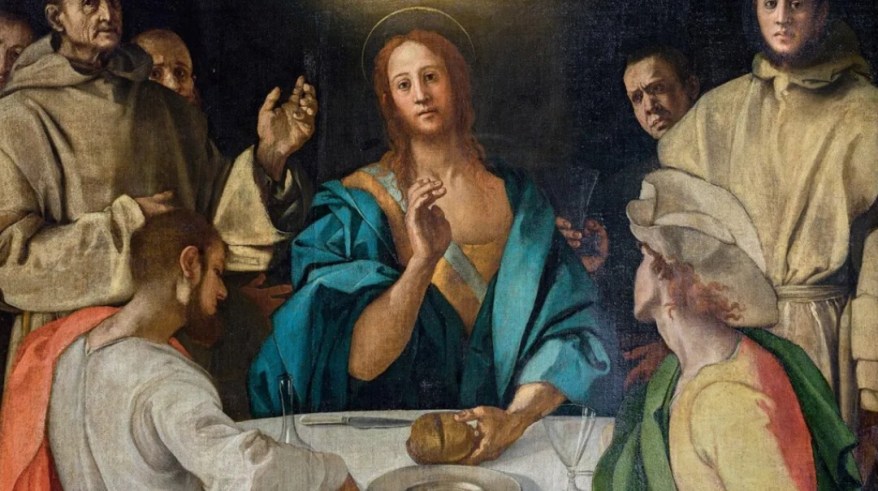
Cena in Emmaus di Pontormo: il pane, il gatto e il cane alle Scuderie del Quirinale
La Cena in Emmaus di Pontormo nasconde dettagli sorprendenti: il significato del pane, i simboli e il mistero della Resurrezione. Scopri il capolavoro del 1525 in mostra alle Scuderie del Quirinale a Roma… 🇬🇧Pontormo’s *Supper at Emmaus* conceals surprising details: the significance of the bread, various symbols, and the mystery of the Resurrection. Discover this…
-
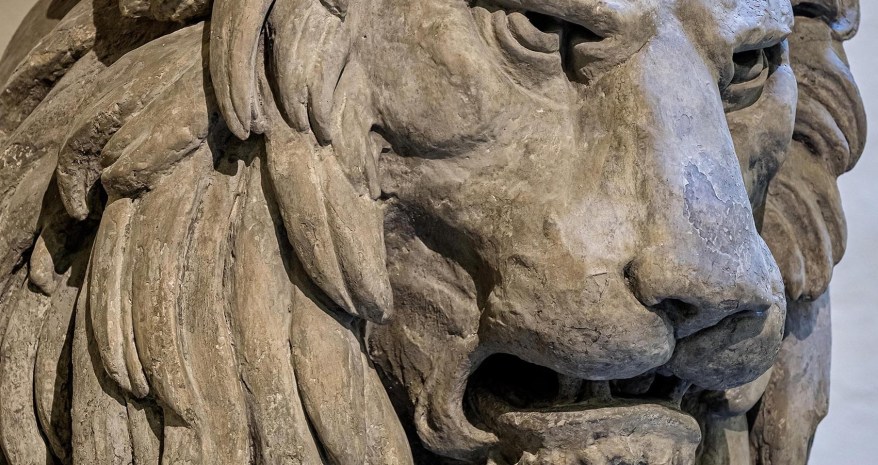
Palazzo Vecchio, il restauro svela la vera natura dei quattro leoni e il mistero della fontana greca
🇮🇹Restaurato il Cortile della Dogana di Palazzo Vecchio a Firenze: i quattro leoni sono calchi, una fontana conserva un’iscrizione greca da studiare e tornano a funzionare entrambe le fontane… 🇬🇧The Cortile della Dogana (Customs Courtyard) at Palazzo Vecchio in Florence has been restored: the four lions are casts, one fountain features a Greek inscription that…
-
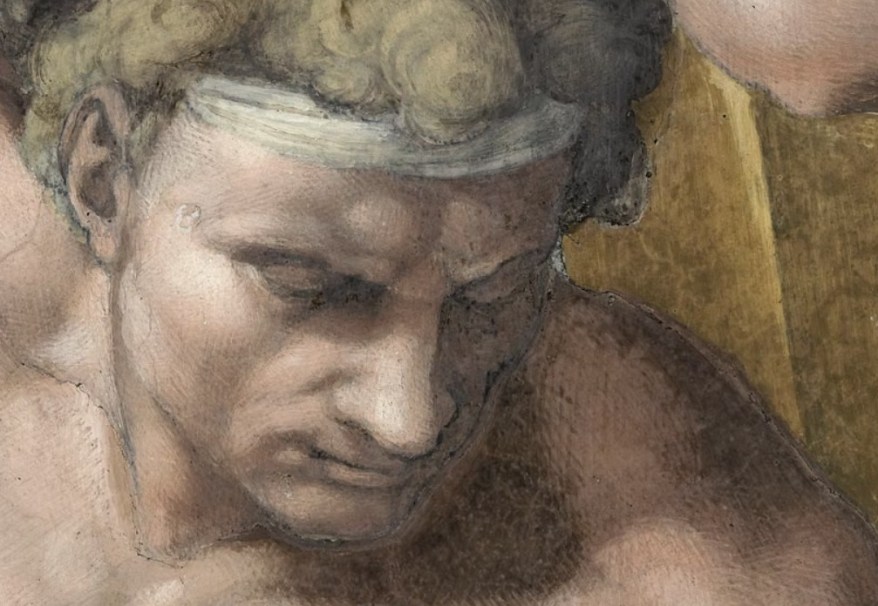
Disma, il buon ladrone nel Giudizio Universale: la misericordia e la giustizia divina
Nel Giudizio Universale della Cappella Sistina ci sono particolari che rischiano di passare inosservati, anche a chi ha avuto la fortuna di alzare gli occhi verso la mia grande parete. Tra i corpi che si sollevano, gli angeli che suonano le trombe e le anime che cercano di raggiungere il cielo, ci sono figure che…
Condividi:


Questo sono io




sostienici

Sostienici – Support Us
Se questo blog ti piace e ti appassiona, puoi aiutarci a farlo crescere sempre più sostenendoci in modo concreto condividendo i post, seguendo le pagine social e con un contributo che ci aiuta ad andare avanti con il nostro lavoro di divulgazione. . ENGLISH: If you like and are passionate about this blog, you can help us make it grow more and more by supporting us in a concrete way by sharing posts, following social pages and with a contribution that helps us to move forward with our dissemination work.
€10,00


