
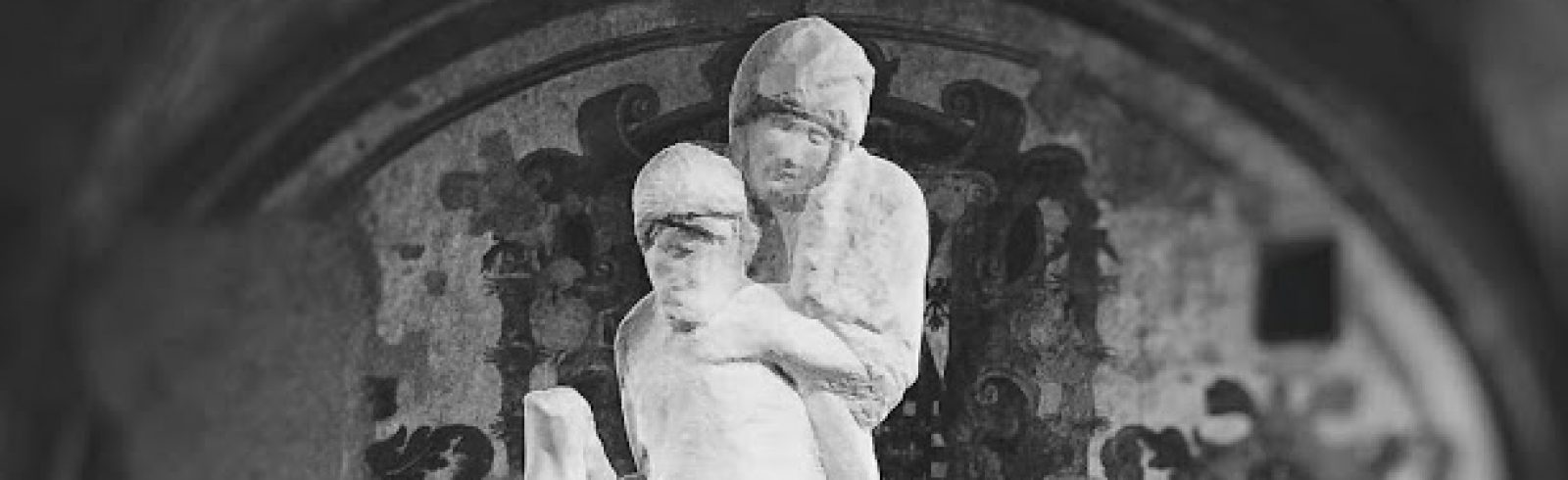
La Cacciata dei mercanti dal Tempio: quel disegno che forse nasconde un progetto incompiuto
Al British Museum è custodito un mio studio per la Cacciata dei mercanti dal Tempio. Lo realizzai studiando le pose dei vari personaggi che si muovono sulla scena ma ancora oggi non è dato sapere con certezza a quale opera fosse destinato.
Quando disegnavo, non sempre sapevo fin dall’inizio se e quando di quei volti, visi e corpi ne avrei avuto bisogno per qualche opera. C’erano figure che mi convincevano, altre meno, cambiavo posizioni, volti, tornavi sui busti e provavo a dare più vigore ai movimenti.
Chi guarda l’opera conclusa non fa caso a quanto lavoro c’è dietro ma grazie al cielo non diedi in pasto alle fiamme tutti i miei disegni e ancora oggi è possibile vedere il processo creativo che sta dietro le quinte, quello che non si vede ma che tiene in piedi tutto, o quasi.
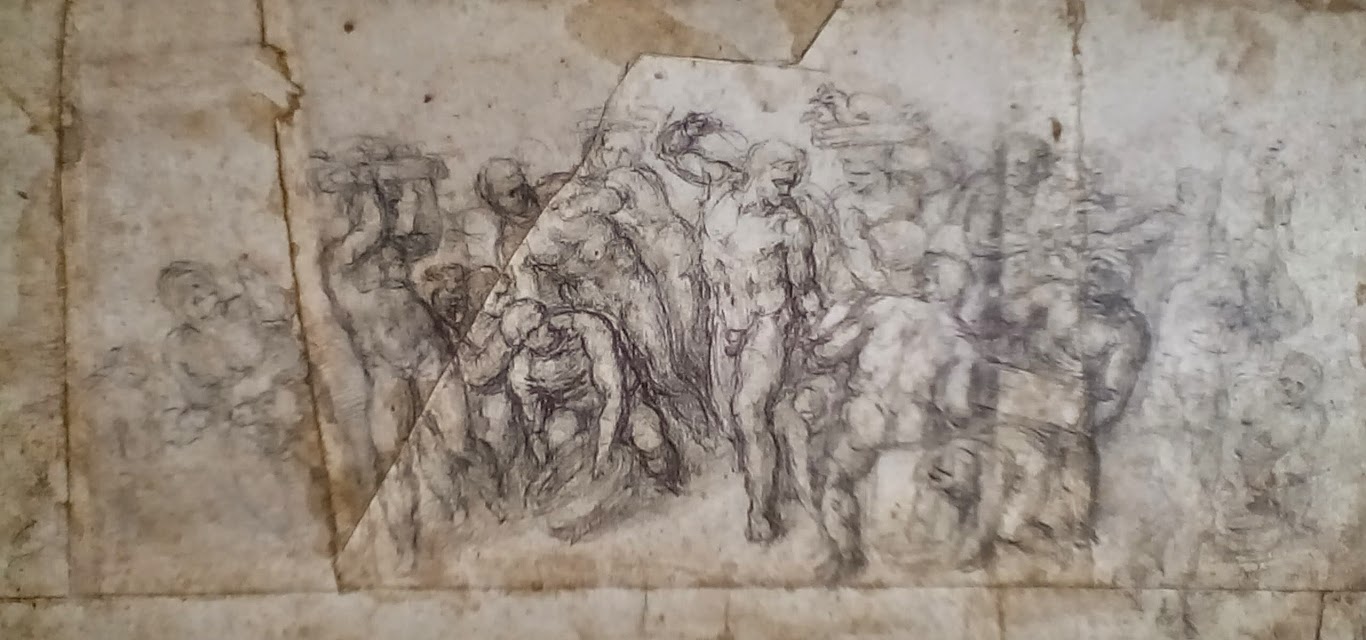
Lo studio per la Cacciata dei mercanti dal Tempio, conservato al British Museum di Londra, ha una composizione molto simile alle due composizioni che poi affrescai nella Cappella Paolina, la cappella parva del papa.
Se vi soffermate sulla figura di Cristo, capirete nell’immediato l’importanza della scena tracciata su carta.
La storia è quella raccontata dai Vangeli: Cristo entra nel Tempio di Gerusalemme e trova venditori e cambiavalute intenti a commerciare. Decide allora di scacciarli, opponendosi a chi ha trasformato un luogo sacro in un mercato.
Per un pittore, è un episodio che offre parecchie possibilità. Ci sono i movimenti concitati dei mercanti, il gesto deciso di Cristo, la confusione di chi viene sorpreso e cerca di sottrarsi all’azione. Tutto deve trovare posto nella composizione, senza che il racconto diventi una semplice accozzaglia di figure.
Quel gesto di Cristo vi ricorda qualcosa?
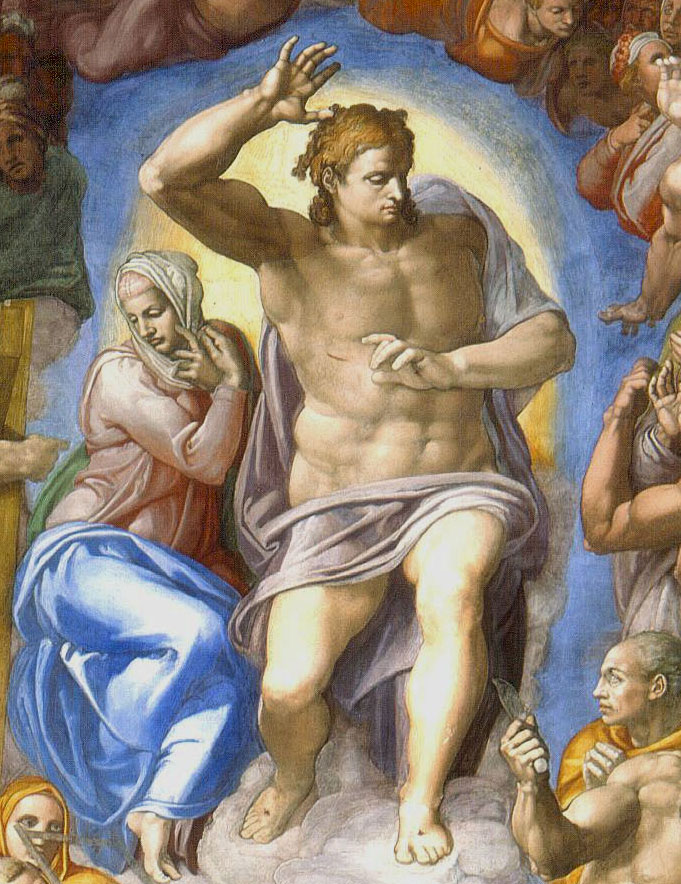
Guardate il braccio destro di Cristo. È sollevato con decisione, in un gesto che non ha nulla di pacato. C’è una forza che attraversa tutta la figura e che ricorda il Cristo Giudice del Giudizio Universale.
Ovviamente le due composizioni sono diverse, nate per raccontare per immagini episodi biblici differenti. Nel modo di usare il corpo per dare forza a un gesto però, qualche somiglianza c’è eccome.
Il mio Cristo non indica i mercanti dalla soglia della porta. La sua presenza è dirompente e la gestualità del corpo racconta più di tante parole scritte o raccontate.
Poi ci sono anche tutte le altre figure che reagiscono a ciò che sta accadendo. Una composizione simile non funziona se ogni personaggio sembra stare per conto proprio. I movimenti devono essere legati fra loro, altrimenti la scena si scompone e perde efficacia.
E se avessi voluto dipingere questa scena nella Cappella Paolina?
È la domanda che gli studiosi si pongono da tempo.
Charles de Tolnay avanzò un’ipotesi interessante: i disegni potrebbero essere stati preparati per una lunetta sopra la porta d’ingresso della Cappella Paolina, in Vaticano. La composizione ha infatti un andamento curvo, una caratteristica che potrebbe adattarsi bene a quello spazio.
Da questa ipotesi deriva anche la proposta di datare il gruppo di disegni intorno al 1550. È una ricostruzione plausibile, non una verità dimostrata. Il fatto che i disegni siano sopravvissuti senza che sia possibile collegarli con sicurezza a un affresco compiuto lascia ancora qualche interrogativo.
Può darsi che fossero destinati a un progetto poi abbandonato, oppure che la loro funzione fosse diversa da quella immaginata dagli studiosi. Al momento, non possiamo chiudere la questione.
El Greco conosceva questo disegno
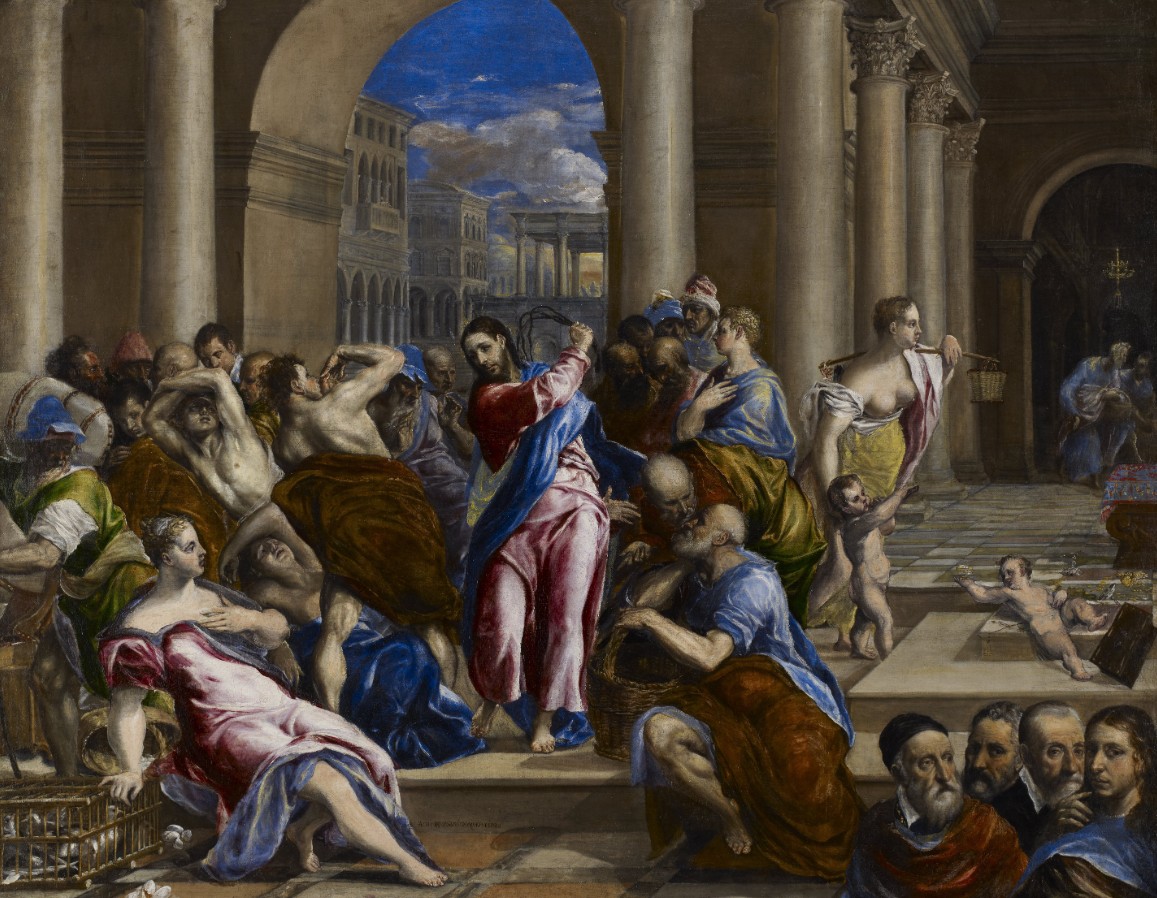
Alla National Gallery di Londra si conserva una Cacciata dei mercanti dal Tempio dipinta da El Greco. Se mettete a confronto la sua composizione con i miei studi, noterete alcune affinità, soprattutto nel modo in cui Cristo domina la scena e nel ruolo del gesto del braccio.
Probabilmente El Greco conosceva il mio disegno visto il dipinto che poi realizzò. Le mie invenzioni, del resto, potevano circolare anche attraverso il lavoro di altri pittori. Marcello Venusti, per esempio, realizzò opere basate su miei disegni. Le composizioni passavano da una mano all’altra e potevano essere riprese, adattate e trasformate.
El Greco potrebbe dunque aver conosciuto un modello legato alla mia ricerca, direttamente oppure attraverso altre opere. Non sappiamo esattamente come siano andate le cose, ma il confronto fra i due dipinti resta davvero interessante.
Per il momento il sempre vostro Michelangelo Buonarroti vi saluta dandovi appuntamento ai prossimi post e sui social.

The Expulsion of the Merchants from the Temple: A Drawing That May Conceal an Unfinished Project
The British Museum houses a study of mine for The Expulsion of the Merchants from the Temple. I created it while exploring the poses of the various figures moving across the scene, though to this day, it remains uncertain for which specific work it was intended.
When I drew, I did not always know from the outset whether—or when—I might need these faces, features, or bodies for a particular project. Some figures satisfied me, others less so; I would alter positions and expressions, revisit the torsos, and strive to imbue the movements with greater vigor.
Those who view a finished work rarely consider the immense labor that lies behind it. Fortunately, I did not consign all my drawings to the flames; even now, one can glimpse the creative process unfolding behind the scenes—the unseen foundation that sustains the entire work, or nearly all of it.
The study for The Expulsion of the Merchants from the Temple, held at the British Museum in London, bears a compositional resemblance to two scenes I later executed as frescoes in the Pauline Chapel—the Pope’s private chapel.
If you focus your attention on the figure of Christ, you will immediately grasp the significance of the scene captured on paper.
The narrative is that recounted in the Gospels: Christ enters the Temple in Jerusalem and discovers
Merchants and money changers conducting their trade. He resolves to drive them out, taking a stand against those who have transformed a sacred space into a marketplace.
For a painter, this episode offers a wealth of possibilities: the frantic movements of the merchants, the resolute gesture of Christ, and the disarray of those caught off guard as they attempt to escape. Every element must find its place within the composition, ensuring the narrative does not devolve into a mere jumble of figures. Does this gesture by Christ remind you of anything?
Look at Christ’s right arm. It is raised decisively, in a gesture that is anything but calm. A sense of power courses through the entire figure, reminiscent of Christ as Judge in the Last Judgment.
Naturally, the two compositions are different, created to depict distinct biblical episodes. Yet, in the way the body is used to lend force to a gesture, there is certainly a resemblance.
My Christ does not merely point toward the merchants from the threshold of the doorway. His presence is disruptive, and the language of his body conveys more than any written or spoken words could.
Then there are all the other figures, reacting to what is unfolding. A composition like this cannot function if each character appears isolated; their movements must be interconnected—otherwise, the scene falls apart and loses its impact.
And what if I had intended to paint this scene in the Pauline Chapel?
This is a question scholars have long pondered.
Charles de Tolnay proposed an intriguing hypothesis: the drawings might have been prepared for a lunette above the entrance to the Pauline Chapel in the Vatican. The composition follows a curved line—a feature that would suit such a space quite well.
From this hypothesis stems the suggestion that the group of drawings dates to around 1550. It is a plausible reconstruction, though not a proven fact. The very fact that these drawings have survived without being definitively linked to a completed fresco leaves several questions unanswered.
It is possible they were intended for a project that was later abandoned, or perhaps they served a purpose different from what scholars have imagined. For now, the matter remains unresolved. El Greco knew this drawing
The National Gallery in London houses a Cleansing of the Temple painted by El Greco. If you compare its composition with my own studies, you will notice certain affinities—especially in the way Christ dominates the scene and in the role played by the gesture of his arm.
Given the painting he eventually produced, it is likely that El Greco was familiar with my drawing. After all, my inventions could circulate through the work of other painters as well; Marcello Venusti, for instance, created pieces based on my designs. Compositions would pass from one hand to another, where they could be adopted, adapted, and transformed.
El Greco may therefore have encountered a model linked to my work—either directly or by way of other pieces. We do not know exactly how it came about, but the comparison between the two works remains truly compelling.
For now, yours truly, Michelangelo Buonarroti, bids you farewell—until the next posts and over on social media.
Sostienici – Support Us
Se questo blog ti piace e ti appassiona, puoi aiutarci a farlo crescere sempre più sostenendoci in modo concreto condividendo i post, seguendo le pagine social e con un contributo che ci aiuta ad andare avanti con il nostro lavoro di divulgazione. . ENGLISH: If you like and are passionate about this blog, you can help us make it grow more and more by supporting us in a concrete way by sharing posts, following social pages and with a contribution that helps us to move forward with our dissemination work.
10,00 €

Condividi:


Questo sono io



sostienici

Sostienici - Support Us
Se questo blog ti piace e ti appassiona, puoi aiutarci a farlo crescere sempre più sostenendoci in modo concreto condividendo i post, seguendo le pagine social e con un contributo che ci aiuta ad andare avanti con il nostro lavoro di divulgazione. . ENGLISH: If you like and are passionate about this blog, you can help us make it grow more and more by supporting us in a concrete way by sharing posts, following social pages and with a contribution that helps us to move forward with our dissemination work.
€10,00


