

Lo sguardo di San Francesco che emerge dal buio: il dipinto di Annibale Carracci
Un volto scavato, gli occhi rivolti verso l’alto e un fondo scuro che sembra inghiottire ogni cosa intorno. Annibale Carracci, nella tela conservata al Museo e Real Bosco di Capodimonte, racconta la spiritualità di San Francesco senza bisogno di grandi scene o gesti teatrali. Basta uno sguardo per entrare nel cuore del dipinto.
Il San Francesco di Annibale Carracci è un’immagine raccolta, quasi silenziosa, eppure capace di trasmettere un’emozione che arriva dritta a chi la osserva.
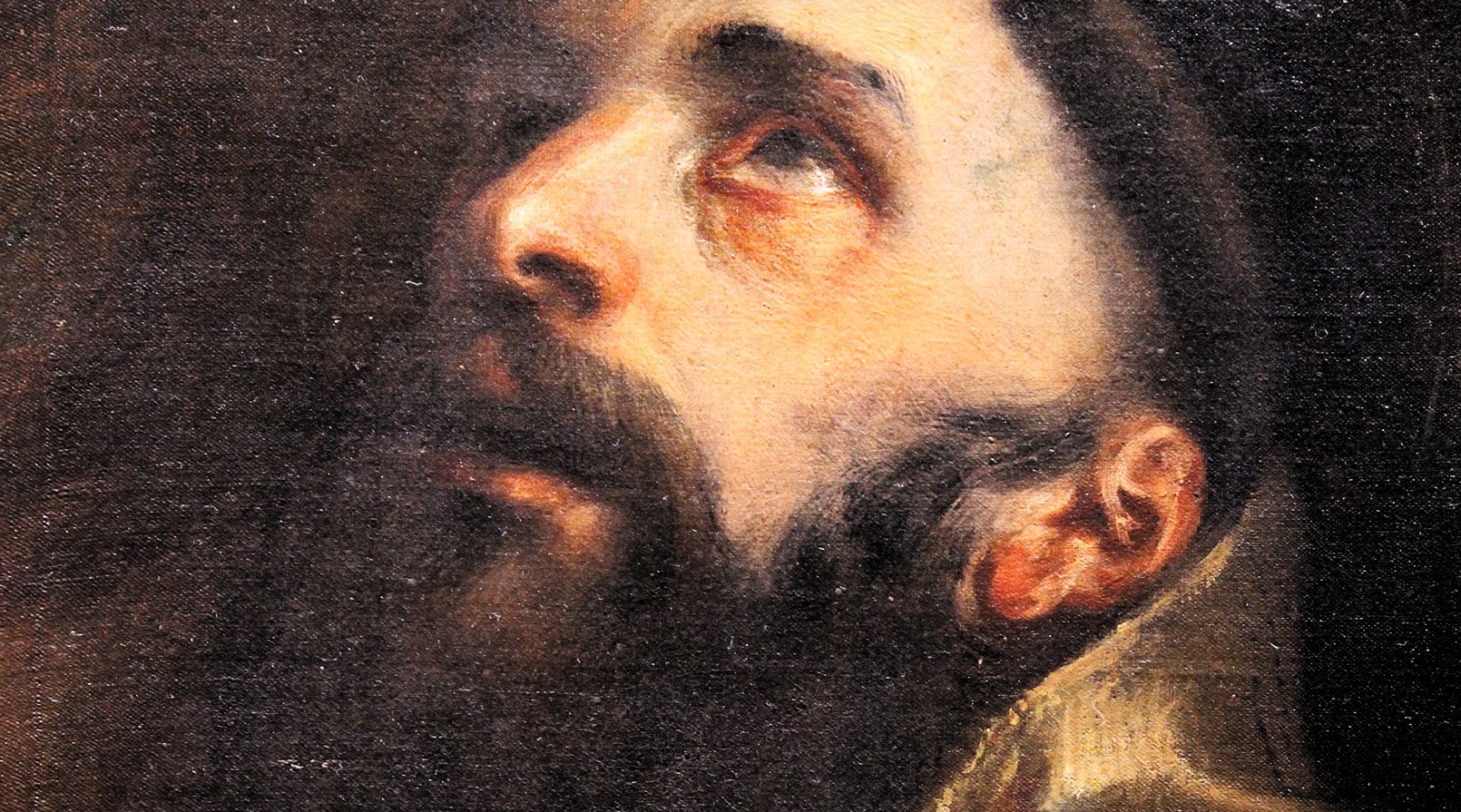
Il Santo è raffigurato a mezzo busto, con il volto inclinato e gli occhi rivolti verso l’alto. La barba scura incornicia i lineamenti, mentre la luce scivola sulla fronte, sul naso e sulle mani, lasciando che tutto il resto si perda nell’ombra. Non ci sono paesaggi, architetture o altri dettagli a distrarre lo sguardo. Carracci si concentra sull’uomo e sulla sua esperienza spirituale.
San Francesco ci viene mostrato in un momento intimo mentre sembra dialogare silenziosamente con il divino, al di là di ciò che gli occhi possono vedere.
Lo sguardo di San Francesco
La prima cosa che colpisce osservando questa tela è lo sguardo del santo. Gli occhi lucidi sono rivolti verso l’alto, ma non hanno nulla di artificioso. Il volto sembra attraversato da una tensione autentica, fatta di desiderio, preghiera e abbandono.
È uno sguardo che lascia aperta una domanda: a che cosa sta pensando Francesco? Sta pregando, meditando sulla Passione di Cristo oppure vivendo uno di quei momenti in cui la fede diventa un’esperienza così intensa da assorbire ogni altro pensiero?
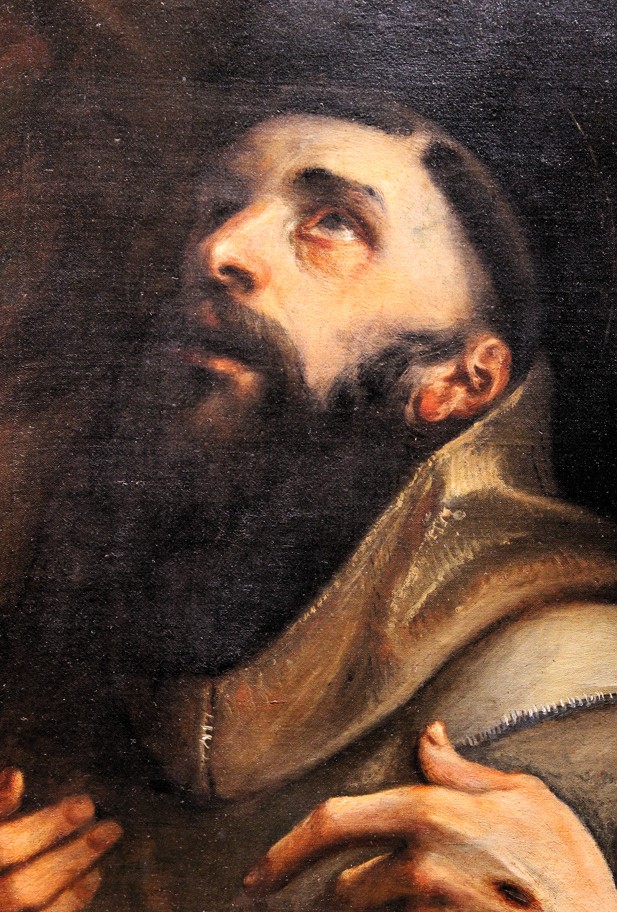
Il dipinto non offre una risposta definitiva. Carracci non ha bisogno di spiegare tutto. Lascia che sia chi guarda a entrare in relazione con il santo, a interrogarsi sulla sua espressione e a trovare, in quel volto, qualcosa di personale.
Il saio, con il suo tessuto ruvido e le tonalità terrose, riporta invece Francesco alla sua dimensione umana. Non è un personaggio distante, avvolto in una luce irreale. È un uomo che ha scelto la povertà e che sembra trovare proprio nella rinuncia alle cose materiali la strada per avvicinarsi a Dio.
Annibale Carracci, il pittore che riportò la realtà al centro della pittura
Per capire la forza di questo San Francesco bisogna fare un passo indietro e guardare al momento in cui Annibale Carracci lo dipinse.
Nato a Bologna nel 1560, Annibale fu uno dei protagonisti del rinnovamento della pittura italiana alla fine del Cinquecento. Insieme al fratello Agostino e al cugino Ludovico, cercò una strada diversa dagli artifici del Manierismo, tornando a osservare con attenzione la natura, i volti delle persone e i sentimenti che si nascondono dietro un’espressione.
Nel 1582 i Carracci fondarono a Bologna l’Accademia dei Desiderosi, successivamente conosciuta come Accademia degli Incamminati. Il loro obiettivo era recuperare lo studio dal vero e la lezione dei grandi maestri del Rinascimento, senza rinunciare alla ricerca di un linguaggio nuovo.
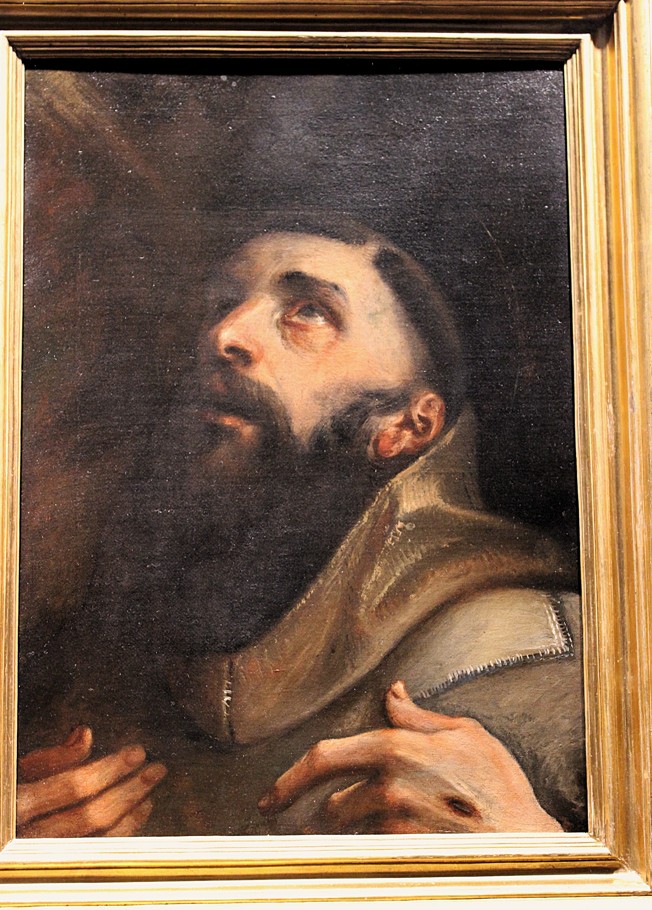
In questo dipinto, databile tra il 1585 e il 1590, si riconosce già quella sensibilità che avrebbe reso la pittura di Annibale tanto importante per gli sviluppi successivi dell’arte italiana.
Il pittore affida tutto alla presenza del santo, alla qualità della luce e alla capacità di rendere credibile un sentimento religioso. Il volto non è idealizzato fino a diventare irraggiungibile: ha una consistenza umana, quasi fosse quello di qualcuno incontrato per strada, e proprio per questo la sua espressione riesce a coinvolgerci.
Per il momento il sempre vostro Michelangelo Buonarroti vi saluta dandovi appuntamento ai prossimi post e sui social.
The Gaze of Saint Francis Emerging from the Darkness: A Painting by Annibale Carracci
A gaunt face, eyes turned upward, and a dark background that seems to swallow everything around it. In this canvas—housed at the Museo e Real Bosco di Capodimonte—Annibale Carracci captures the spirituality of Saint Francis without the need for grand scenes or theatrical gestures. A single glance is enough to reach the heart of the painting.
Annibale Carracci’s Saint Francis is an intimate, almost silent image, yet it conveys an emotion that resonates deeply with the viewer.
The Saint is depicted in a half-length portrait, his face tilted and his eyes cast upward. A dark beard frames his features, while light glides across his forehead, nose, and hands, allowing everything else to fade into the shadows. There are no landscapes, architectural elements, or other details to distract the eye; Carracci focuses entirely on the man and his spiritual experience.
Saint Francis is shown in an intimate moment, appearing to engage in a silent dialogue with the divine—reaching beyond what the physical eye can see.
The Gaze of Saint Francis
The first thing that strikes the viewer is the Saint’s gaze. His glistening eyes are turned upward, yet there is nothing artificial about them. His face seems imbued with an authentic tension—a blend of longing, prayer, and total surrender.
It is a gaze that leaves a question hanging: what is Francis thinking about? Is he praying, meditating on the Passion of Christ, or perhaps experiencing one of those moments where faith becomes so intense that it consumes every other thought?
The painting offers no definitive answer. Carracci does not feel the need to explain everything. It is left to the viewer to engage with the saint, to ponder his expression, and to discover something personal within that face.
The habit, with its coarse fabric and earthy tones, brings Francis back to his human dimension. He is not a distant figure, enveloped in an ethereal, unreal light; rather, he is a man who chose poverty—finding, in the very renunciation of material things, a path toward drawing closer to God.
Annibale Carracci: The painter who restored reality to the heart of painting
To grasp the power of this Saint Francis, one must step back and consider the moment in which Annibale Carracci painted it.
Born in Bologna in 1560, Annibale was a key figure in the renewal of Italian painting at the end of the 16th century. Together with his brother Agostino and his cousin Ludovico, he sought an alternative to the artifice of Mannerism, returning to a careful observation of nature, the human face, and the emotions hidden behind an expression.
In 1582, the Carracci family founded the Accademia dei Desiderosi in Bologna—later known as the Accademia degli Incamminati. Their goal was to revive the practice of studying from life and to draw upon the lessons of the great Renaissance masters, all while pursuing a new artistic language.
In this painting, which dates to between 1585 and 1590, one can already discern the sensibility that would make Annibale’s work so pivotal to the subsequent evolution of Italian art.
The painter places the entire weight of the work on the presence of the saint, the quality of the light, and the ability to render a religious sentiment entirely credible. The face is not idealized to the point of becoming unattainable; it possesses a human quality—as if it belonged to someone you might encounter on the street—and it is precisely for this reason that its expression manages to engage us.
For now, yours truly, Michelangelo Buonarroti, bids you farewell—until the next posts and over on social media.
Sostienici – Support Us
Se questo blog ti piace e ti appassiona, puoi aiutarci a farlo crescere sempre più sostenendoci in modo concreto condividendo i post, seguendo le pagine social e con un contributo che ci aiuta ad andare avanti con il nostro lavoro di divulgazione. . ENGLISH: If you like and are passionate about this blog, you can help us make it grow more and more by supporting us in a concrete way by sharing posts, following social pages and with a contribution that helps us to move forward with our dissemination work.
10,00 €

Condividi:


Questo sono io



sostienici

Sostienici - Support Us
Se questo blog ti piace e ti appassiona, puoi aiutarci a farlo crescere sempre più sostenendoci in modo concreto condividendo i post, seguendo le pagine social e con un contributo che ci aiuta ad andare avanti con il nostro lavoro di divulgazione. . ENGLISH: If you like and are passionate about this blog, you can help us make it grow more and more by supporting us in a concrete way by sharing posts, following social pages and with a contribution that helps us to move forward with our dissemination work.
€10,00


