
Cento tesori archeologici tornano in Turchia dopo decenni: ritrovati anche i bronzi degli imperatori romani
Cento reperti archeologici tornano nella terra dalla quale erano stati sottratti. Alcuni hanno più di quattromila anni, altri raccontano la storia dell’antica Roma. Per molti di loro il viaggio lontano dal luogo d’origine era cominciato decenni fa, tra scavi clandestini, traffici illeciti e passaggi attraverso collezioni private e musei internazionali.
Il 2 novembre 2026, ai Musei Archeologici di Istanbul, la Turchia ha presentato ufficialmente cento beni culturali recuperati dagli Stati Uniti. Una restituzione importante, accompagnata dall’inaugurazione della mostra ‘No Escape: Boubon‘, dedicata a una delle vicende più significative degli ultimi anni nella lotta al traffico internazionale di antichità: quella dei preziosi bronzi provenienti dall’antica città di Boubon.
A presentare i reperti è stato il ministro della Cultura e del Turismo turco Mehmet Nuri Ersoy, insieme a Matthew Bogdanos, vice procuratore distrettuale di Manhattan, che ha seguito numerose indagini sul traffico illecito di opere d’arte e antichità.
Il lavoro condotto dalle autorità turche e statunitensi punta a ricostruire la storia dei reperti, individuare la loro provenienza e restituire loro il contesto culturale al quale appartengono.
Quarant’anni? No, oltre quattromila: i tesori dell’Età del Bronzo di Horoztepe
Tra i cento reperti restituiti, un gruppo particolarmente significativo proviene da Horoztepe, località archeologica nella provincia di Tokat, nell’Anatolia settentrionale.
Si tratta di quaranta oggetti databili tra il 2300 e il 2000 a.C., dunque appartenenti all’Età del Bronzo Antico. Sono strumenti musicali utilizzati in contesti cerimoniali, armi e recipienti metallici che testimoniano l’elevata qualità raggiunta dalla lavorazione dei metalli nelle antiche comunità anatoliche.
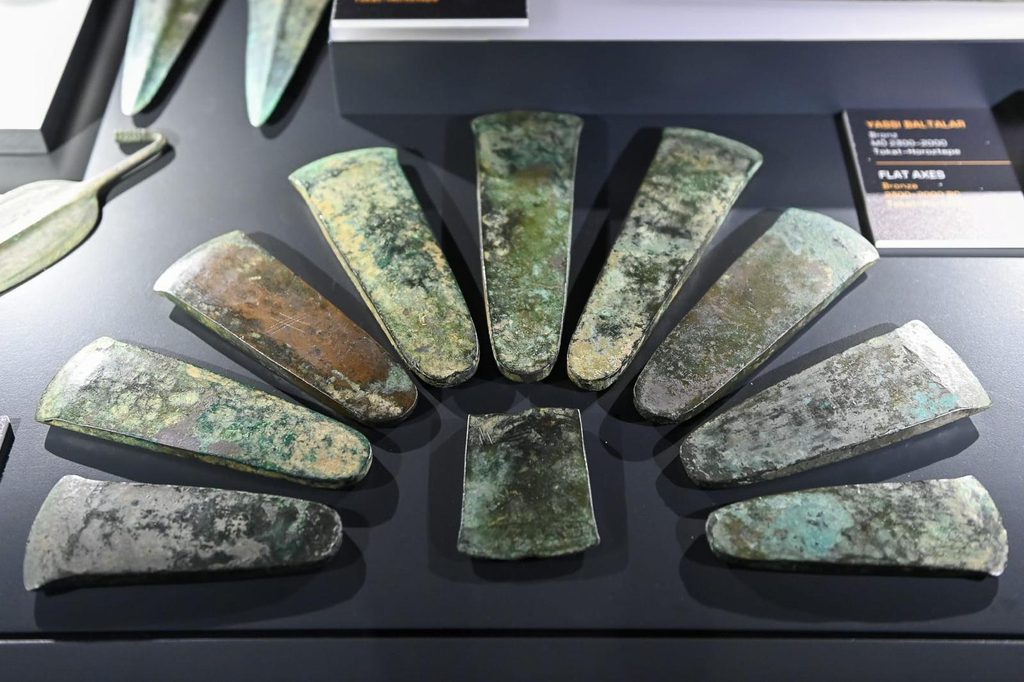
La loro storia è legata agli scavi clandestini effettuati nel 1953. Per ricostruirne la provenienza sono stati fondamentali gli studi dell’archeologo Tahsin Özgüç, i documenti relativi agli scavi e il confronto tra le caratteristiche formali e tecniche degli oggetti.
Quasi settant’anni dopo la loro dispersione, le indagini hanno permesso di ricostruire il percorso dei manufatti e sostenere la richiesta di restituzione.
Sono testimonianze preziose di una civiltà nella quale la lavorazione dei metalli aveva già raggiunto livelli notevoli di raffinatezza.
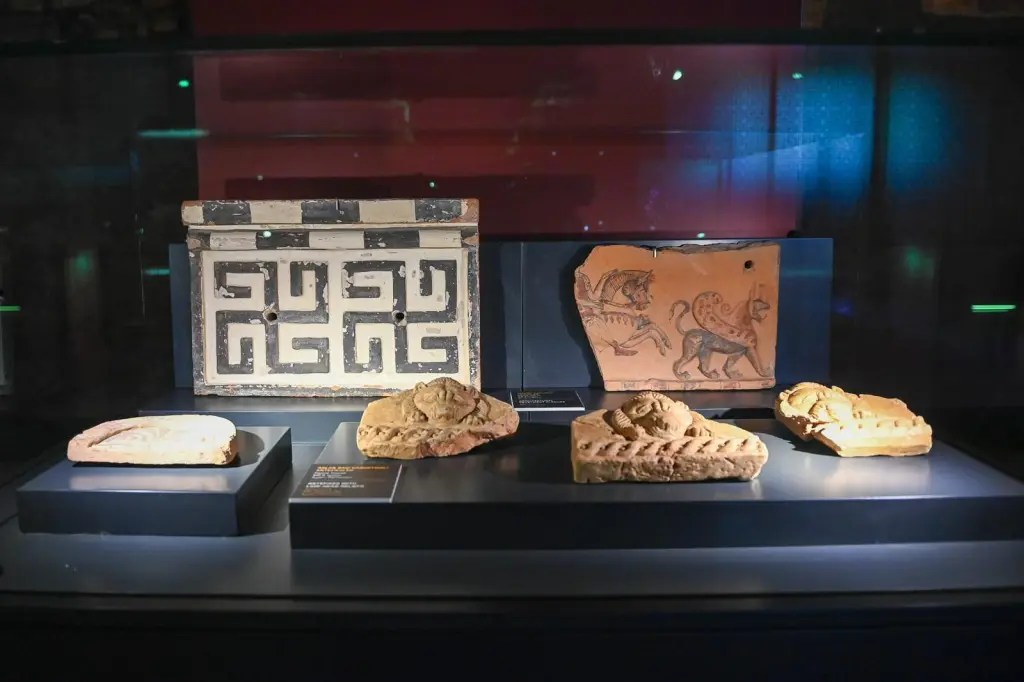
Le 44 decorazioni in terracotta restituite dal Getty Museum
Un altro nucleo importante della restituzione è costituito da 44 elementi architettonici in terracotta provenienti da Düver, nella provincia di Burdur.
Realizzati nel VI secolo a.C., durante il periodo arcaico, questi manufatti erano utilizzati per decorare e rivestire gli edifici. Le loro forme e i motivi decorativi offrono informazioni importanti sull’architettura e sul gusto artistico dell’Anatolia antica.
I reperti sono stati restituiti dal J. Paul Getty Museum di Los Angeles e il loro rientro si inserisce in un percorso di recupero iniziato negli anni precedenti.
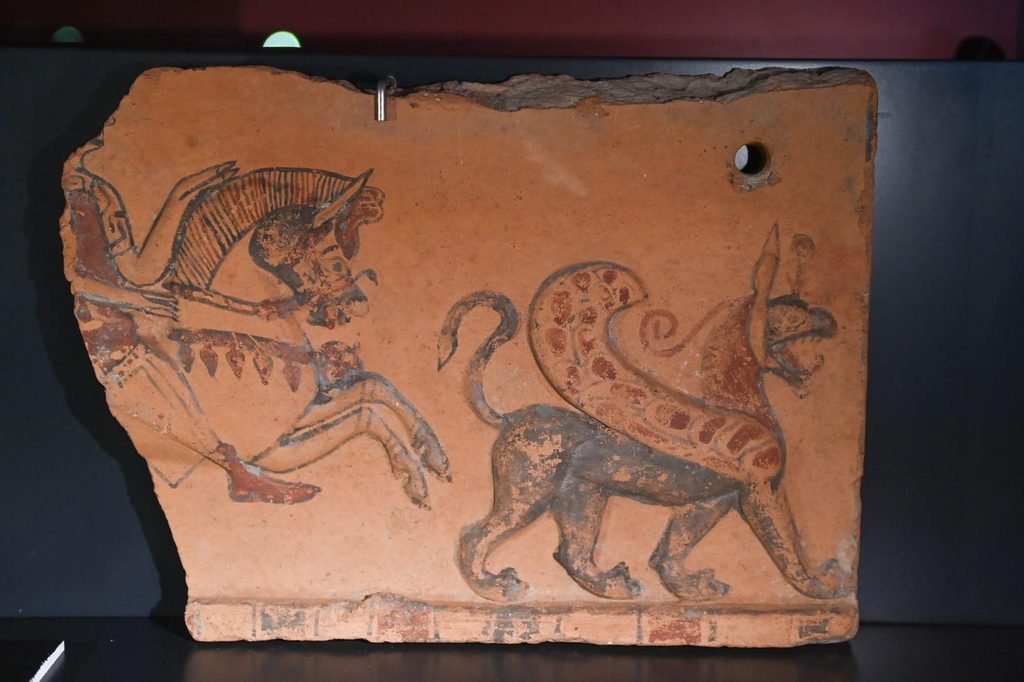
Già nel 2022, infatti, altri materiali provenienti da Düver erano tornati in Turchia dagli Stati Uniti. A questi si sono aggiunti ulteriori recuperi dalla Danimarca nel 2024 e dal Virginia Museum of Fine Arts nel 2025.
L’obiettivo è riunire progressivamente i diversi elementi, ricomponendo un insieme archeologico che nel tempo era stato disperso tra istituzioni e collezioni differenti.
Un ritratto proveniente da Afrodisia e una traccia nascosta negli archivi
Tra i reperti restituiti c’è anche un ritratto proveniente dall’antica città di Afrodisia, uno dei centri più importanti dell’Asia Minore romana, celebre per le sue scuole di scultura e per la qualità dei suoi marmi.
In questo caso, a fare la differenza è stato un documento apparentemente secondario: un verbale del 1976 redatto da un magistrato, nel quale si segnalava che dal sito erano stati sottratti altri reperti oltre a quelli già individuati e documentati.
Una traccia d’archivio che, confrontata con i dati archeologici e la storia collezionistica del ritratto, ha contribuito a sostenere la richiesta di restituzione.
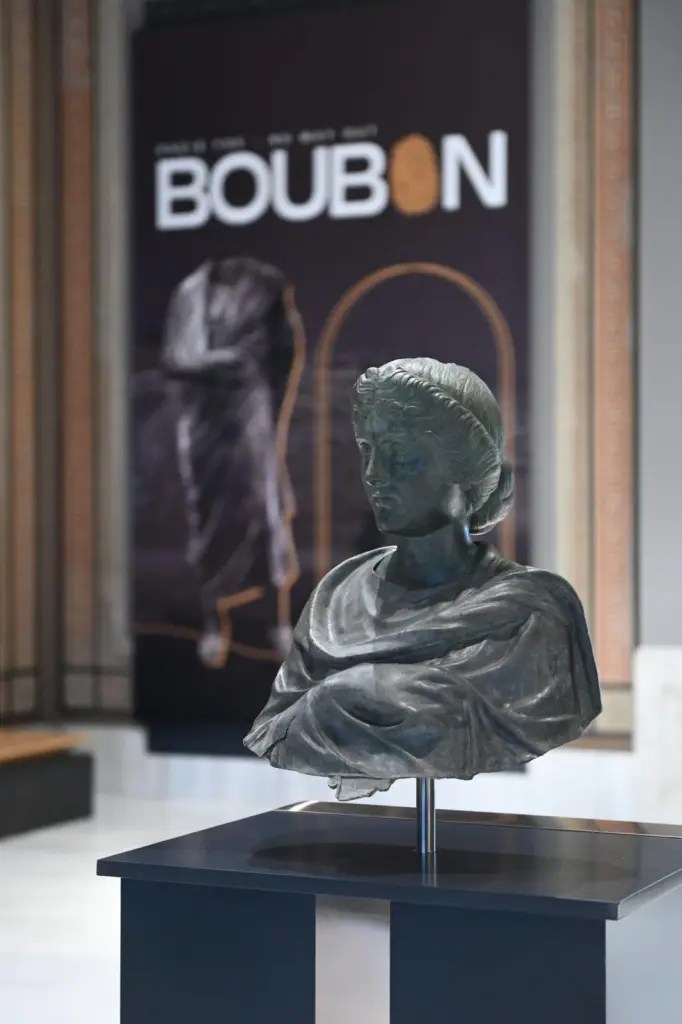
Il gruppo dei cento comprende anche maschere teatrali e statuette raffiguranti divinità femminili. Oggetti diversi per epoca e funzione, ma accomunati da una storia di dispersione e da un lungo lavoro necessario per ricostruirne le origini.
No Escape: Boubon, la mostra che riunisce i bronzi degli imperatori romani
La seconda grande novità presentata a Istanbul è la mostra ‘No Escape: Boubon‘, inaugurata il 2 novembre e dedicata ai bronzi provenienti dall’antica città di Boubon, nell’attuale provincia turca di Burdur.
È una vicenda che sembra uscita da un romanzo investigativo, ma che riguarda una delle testimonianze più importanti della ritrattistica imperiale romana.
Nell’antica Boubon sorgeva il Sebasteion, un santuario dedicato al culto degli imperatori romani e della famiglia imperiale. Qui erano collocate importanti sculture bronzee che celebravano i sovrani di Roma.
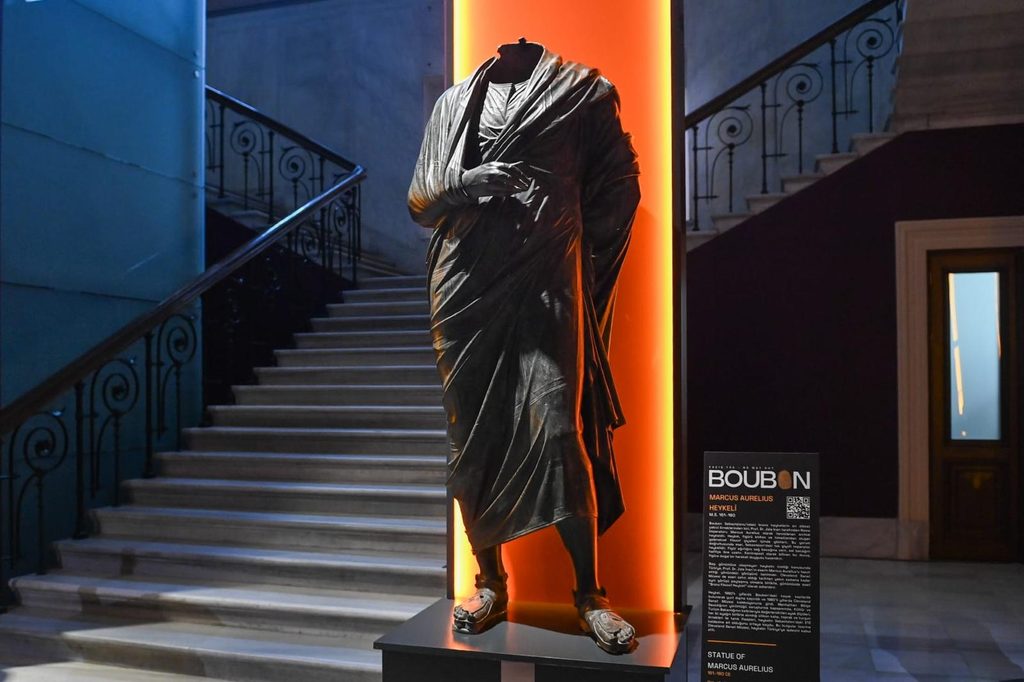
Negli anni Sessanta del Novecento, il sito fu interessato da scavi clandestini. Le sculture vennero trafugate, smembrate e portate fuori dalla Turchia. Nel corso degli anni, teste, busti e altre parti finirono in Paesi diversi, entrando in collezioni pubbliche e private.
La dispersione rese particolarmente complicato ricostruire l’aspetto originario delle opere e dimostrare la loro provenienza.
La mostra di Istanbul racconta proprio questo percorso e riporta l’attenzione su un patrimonio che per troppo tempo è rimasto lontano dal luogo al quale apparteneva.
Da Lucio Vero a Marco Aurelio: gli imperatori tornano insieme
Tra i protagonisti della mostra figurano i bronzi associati a Lucio Vero, Settimio Severo, Caracalla e Marco Aurelio.
Sono testimonianze di eccezionale valore, soprattutto se si considera quanto poco sia sopravvissuto della grande statuaria bronzea dell’antichità. A differenza del marmo, il bronzo poteva essere facilmente rifuso e trasformato in nuovi oggetti: una sorte che ha cancellato una parte enorme della produzione scultorea romana.
Le opere di Boubon rappresentano quindi un patrimonio particolarmente prezioso per comprendere come venivano raffigurati gli imperatori e quale ruolo avessero le immagini del potere nei luoghi pubblici e religiosi.
A rendere possibile la ricostruzione della loro storia è stato anche il lavoro dell’archeologa Jale İnan, che per anni ha studiato le sculture, le iscrizioni e le testimonianze relative al sito.
Le sue ricerche hanno costituito una base scientifica fondamentale per collegare i reperti conservati all’estero con l’antico santuario.
A queste indagini si sono aggiunte le testimonianze degli abitanti di İbecik, fotografie storiche e registri museali. Anche i racconti di chi aveva assistito agli scavi clandestini si sono rivelati importanti per ricostruire la vicenda.
Particolarmente interessante è il caso di Marco Aurelio. Gli studiosi hanno confrontato le impronte dei piedi della scultura con gli incavi presenti sul piedistallo, riscontrando una corrispondenza che ha contribuito a confermare il collegamento con Boubon.
Le analisi scientifiche non si sono fermate qui: anche lo studio del terreno e degli isotopi del piombo ha fornito ulteriori elementi utili per sostenere la provenienza delle opere.
A Boubon riprendono gli scavi archeologici
Mentre a Istanbul i reperti raccontano la loro storia al pubblico, nell’antica Boubon è ripresa anche l’attività archeologica.
Gli scavi, riavviati nel 2023 sotto il coordinamento del Museo Archeologico di Burdur, rappresentano un ulteriore passaggio nella conoscenza del sito e nella ricostruzione del suo patrimonio.
Le restituzioni sono il risultato della collaborazione tra le autorità turche, la Procura distrettuale di Manhattan e l’unità investigativa statunitense Homeland Security Investigations (HSI).
Un lavoro nel quale si sono intrecciati archeologia, documentazione storica, indagini giudiziarie e cooperazione internazionale.
Il significato di questa operazione va ben oltre il numero dei reperti recuperati. Ogni oggetto restituito porta con sé una storia, ma soprattutto permette di ricostruire un pezzo di passato che sembrava perduto.
Per il momento il sempre vostro Michelangelo Buonarroti vi saluta dandovi appuntamento ai prossimi post e sui social.

One hundred archaeological treasures return to Turkey after decades—including bronzes of Roman emperors
One hundred archaeological artifacts have returned to the land from which they were taken. Some are over four thousand years old, while others tell the story of ancient Rome. For many of them, the journey away from their place of origin began decades ago, involving clandestine excavations, illicit trafficking, and passage through private collections and international museums.
On November 2, 2026, at the Istanbul Archaeological Museums, Turkey officially unveiled one hundred cultural artifacts recovered from the United States. This significant repatriation coincides with the opening of the exhibition “No Escape: Boubon,” which focuses on one of the most notable cases in recent years regarding the fight against the international trafficking of antiquities: the recovery of precious bronzes from the ancient city of Boubon.
The artifacts were presented by Turkey’s Minister of Culture and Tourism, Mehmet Nuri Ersoy, alongside Matthew Bogdanos, an Assistant District Attorney in Manhattan who has led numerous investigations into the illicit trafficking of art and antiquities.
The collaborative effort between Turkish and American authorities aims to reconstruct the history of these artifacts, determine their provenance, and restore them to the cultural context to which they belong.
Forty years? No—over four thousand: the Bronze Age treasures of Horoztepe
Among the one hundred returned artifacts, a particularly significant group originates from Horoztepe, an archaeological site in the province of Tokat, in northern Anatolia.
These forty objects date back to between 2300 and 2000 BCE, placing them firmly in the Early Bronze Age. These include musical instruments used in ceremonial contexts, as well as weapons and metal vessels, all of which attest to the high level of craftsmanship achieved in metalworking by ancient Anatolian communities.
Their history is linked to illicit excavations carried out in 1953. Reconstructing their provenance relied heavily on research by archaeologist Tahsin Özgüç, documentation concerning the excavations, and a comparative analysis of the formal and technical characteristics of the objects.
Nearly seventy years after they were scattered, investigations have made it possible to trace the journey of these artifacts and support the request for their repatriation.
They serve as invaluable evidence of a civilization in which metalworking had already reached a remarkable degree of sophistication.
The 44 terracotta decorations returned by the Getty Museum
Another significant component of this repatriation consists of 44 architectural terracotta elements originating from Düver, in the province of Burdur.
Created in the 6th century BC, during the Archaic period, these artifacts were used to decorate and clad buildings. Their forms and decorative motifs provide important insights into the architecture and artistic sensibilities of ancient Anatolia.
The items were returned by the J. Paul Getty Museum in Los Angeles; their homecoming is part of an ongoing recovery effort that began in previous years.
In fact, other materials from Düver had already returned to Turkey from the United States in 2022. These were followed by further recoveries from Denmark in 2024 and from the Virginia Museum of Fine Arts in 2025.
The goal is to gradually reunite these various elements, reconstructing an archaeological assemblage that had, over time, become dispersed across different institutions and collections.
A portrait from Aphrodisias and a clue hidden in the archives
Among the repatriated artifacts is a portrait from the ancient city of Aphrodisias—one of the most significant centers in Roman Asia Minor, renowned for its schools of sculpture and the quality of its marble.
In this instance, a seemingly minor document proved decisive: a 1976 report drawn up by a magistrate, which noted that additional artifacts—beyond those already identified and documented—had been removed from the site.
This archival trace, when cross-referenced with archaeological data and the provenance history of the portrait, helped substantiate the request for its return.
The group of one hundred items also includes theatrical masks and statuettes depicting female deities. While these objects vary in terms of their era and original function, they share a common history of having been scattered, requiring extensive research to reconstruct their origins.
‘No Escape: Boubon’: An exhibition reuniting the bronzes of Roman emperors
The second major development unveiled in Istanbul is the exhibition ‘No Escape: Boubon,’ which opened on November 2. It focuses on bronzes originating from the ancient city of Boubon, located in what is now the Turkish province of Burdur.
The story reads like something out of a detective novel, yet it concerns one of the most important collections of Roman imperial portraiture.
In ancient Boubon stood the Sebasteion, a sanctuary dedicated to the cult of the Roman emperors and the imperial family. Important bronze sculptures celebrating the rulers of Rome were once housed here.
In the 1960s, the site fell victim to illicit excavations. The sculptures were stolen, broken apart, and taken out of Turkey. Over the years, heads, busts, and other fragments ended up in various countries, entering both public and private collections.
This dispersal made it exceptionally difficult to reconstruct the original appearance of the works or to prove their provenance.
The exhibition in Istanbul recounts this very journey, drawing renewed attention to a heritage that has remained far from its rightful home for too long.
From Lucius Verus to Marcus Aurelius: the emperors are reunited
Among the highlights of the exhibition are bronze sculptures associated with Lucius Verus, Septimius Severus, Caracalla, and Marcus Aurelius.
These pieces are of exceptional value, especially considering how little remains of the grand bronze statuary of antiquity. Unlike marble, bronze could easily be melted down and recast into new objects—a fate that wiped out a vast portion of Roman sculptural production.
The works from Boubon therefore represent an invaluable resource for understanding how emperors were depicted and the role that images of power played in public and religious spaces.
The reconstruction of their history was also made possible by the work of archaeologist Jale İnan, who spent years studying the sculptures, inscriptions, and other evidence related to the site.
Her research provided a crucial scientific foundation for linking the artifacts held abroad back to the ancient sanctuary.
These investigations were further supported by accounts from the residents of İbecik, as well as historical photographs and museum records. Accounts from those who witnessed the clandestine excavations also proved significant in reconstructing the sequence of events.
The case of the Marcus Aurelius statue is particularly interesting. Scholars compared the footprints on the sculpture with the indentations on the pedestal; the match helped confirm its connection to Boubon.
Scientific analysis went even further: the study of the soil and lead isotopes provided additional evidence to support the origin of these artifacts.
Archaeological excavations resume at Boubon
While the artifacts share their stories with the public in Istanbul, archaeological work has also resumed at the ancient site of Boubon.
The excavations, which restarted in 2023 under the coordination of the Burdur Archaeological Museum, represent a further step toward understanding the site and reconstructing its heritage.
These repatriations are the result of collaboration between Turkish authorities, the Manhattan District Attorney’s Office, and the U.S. investigative unit, Homeland Security Investigations (HSI).
It was an effort that wove together archaeology, historical documentation, judicial investigations, and international cooperation.
The significance of this operation extends far beyond the number of artifacts recovered. Each returned object carries its own story—and, more importantly, allows us to reconstruct a piece of the past that once seemed lost.
For now, yours truly, Michelangelo Buonarroti, bids you farewell—until the next post, or see you on social media.

Sostienici – Support Us
Se questo blog ti piace e ti appassiona, puoi aiutarci a farlo crescere sempre più sostenendoci in modo concreto condividendo i post, seguendo le pagine social e con un contributo che ci aiuta ad andare avanti con il nostro lavoro di divulgazione. . ENGLISH: If you like and are passionate about this blog, you can help us make it grow more and more by supporting us in a concrete way by sharing posts, following social pages and with a contribution that helps us to move forward with our dissemination work.
10,00 €

Condividi:


Questo sono io





sostienici

Sostienici - Support Us
Se questo blog ti piace e ti appassiona, puoi aiutarci a farlo crescere sempre più sostenendoci in modo concreto condividendo i post, seguendo le pagine social e con un contributo che ci aiuta ad andare avanti con il nostro lavoro di divulgazione. . ENGLISH: If you like and are passionate about this blog, you can help us make it grow more and more by supporting us in a concrete way by sharing posts, following social pages and with a contribution that helps us to move forward with our dissemination work.
€10,00


