
Nel Giudizio Universale ho nascosto un secondo autoritratto? Il volto misterioso da cercare
Nel mio Giudizio Universale c’è un volto che forse non avete mai visto prima o perlomeno che non avete mai guardato con attenzione.
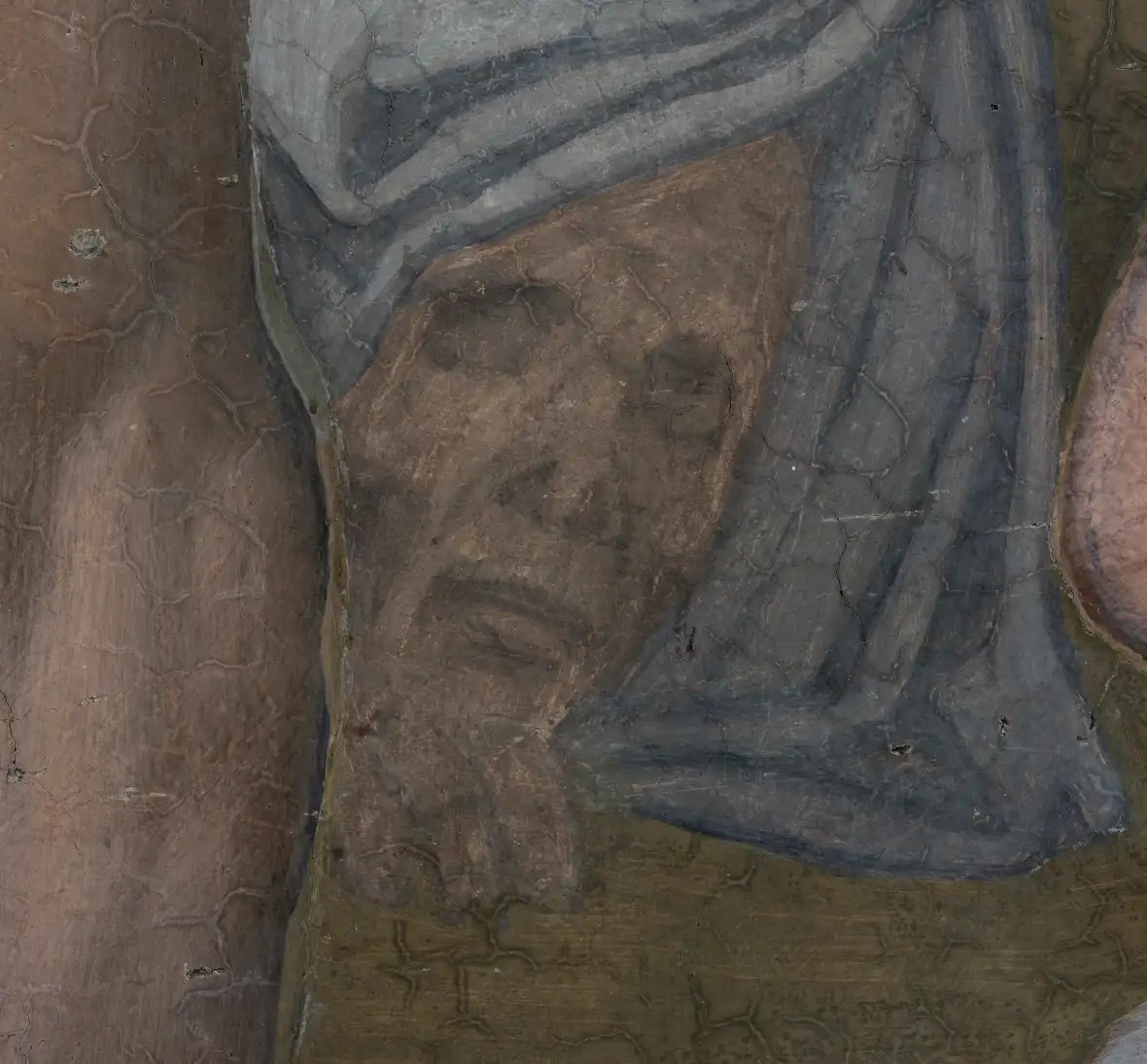
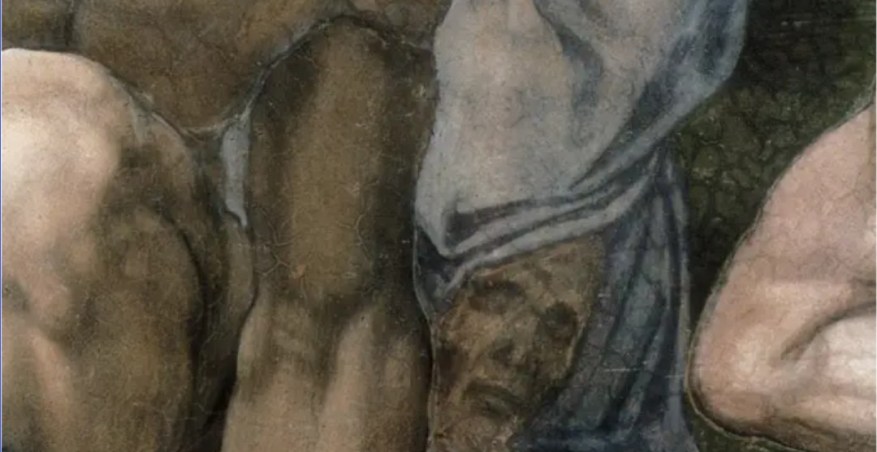
È assai piccolo se paragonato alle monumentali dimensioni dell’affresco e lo dipinsi tra le pieghe di una veste. Guarda direttamente chi gli sta davanti come e avesse la necessità di stabilire un contatto con chi, secoli dopo, notandolo, si sarebbe fermato almeno un attimo dinanzi a lui.
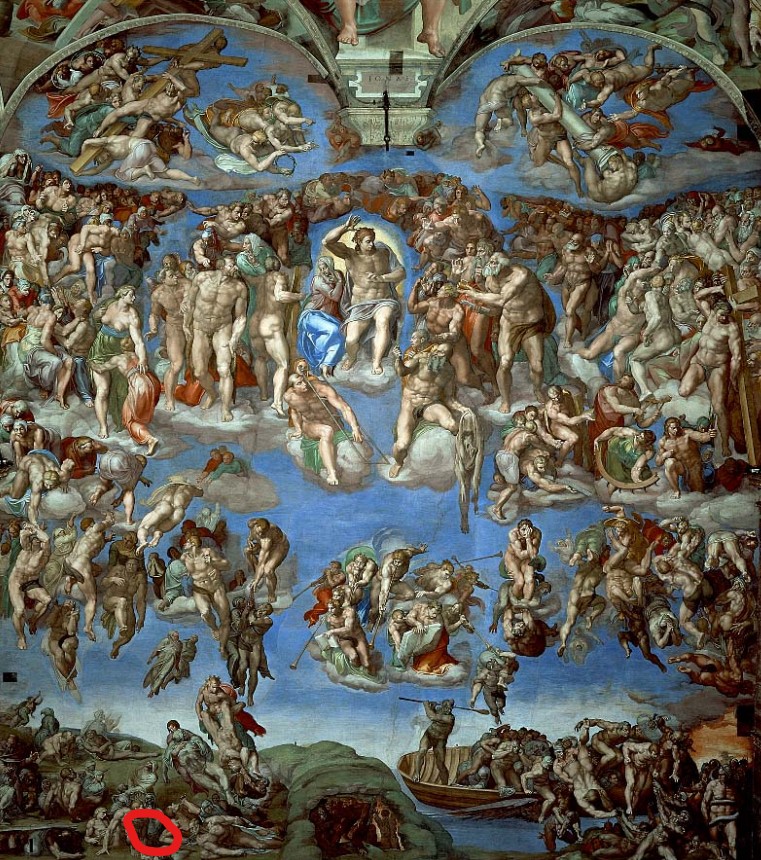
Non l’ho collocato in una posizione di primo piano, né volli renderlo immediatamente riconoscibile. L’ho affidato a una striscia di stoffa indossata da una figura allegorica della morte, nella parte inferiore sinistra dell’affresco, proprio nella zona in cui i corpi dei defunti si sollevano dalla terra per affrontare il loro destino eterno.
Potrebbe essere mio quel viso?
Il mio volto nascosto tra i morti che risorgono
Le recenti operazioni di manutenzione straordinaria del Giudizio Universale, nella Cappella Sistina, hanno permesso di osservare meglio particolari a distanza ravvicinata.
A parlarne è stato Fabrizio Biferali, curatore del Dipartimento per l’Arte dei secoli XV e XVI dei Musei Vaticani, che ha avuto modo di studiare da vicino l’affresco durante l’intervento, dopo aver seguito anche il montaggio dell’impalcatura.
Il volto era già stato visto e notato in precedenza. Su quello non c’è dubbio. Secondo l’interpretazione proposta da Biferali, potrebbe trattarsi di un mio cripto-autoritratto, un’immagine lasciata tra le figure della resurrezione.
Ma perché avrei deciso di rappresentarmi proprio lì? La risposta potrebbe trovarsi in un episodio che mi riguarda molto da vicino.

La caduta dai ponteggi
Nel 1541, mentre lavoravo al Giudizio Universale, subii un incidente durante l’esecuzione dell’affresco. Caddi dai ponteggi e riportai una frattura a una gamba, un infortunio che mi costrinse a interrompere il lavoro per alcuni mesi.
Non fu certo una cosa da poco. Dipingere una parete di quelle dimensioni, lavorando per anni a quell’altezza, richiedeva uno sforzo fisico enorme. Il corpo era sottoposto a fatiche continue e ogni movimento comportava rischi.
La parte inferiore dell’affresco, quella dedicata alla resurrezione dei morti, fu quella che realizzai per ultima.
Biferali ha avanzato un’ipotesi: potrei aver inserito il mio volto proprio fra i morti che tornano alla vita perché, dopo quell’incidente, mi sentivo anch’io rinato. Una sorta di rinascita personale, coincidente con la conclusione di cinque anni di lavoro.
Chissà.
Per il momento il sempre vostro Michelangelo Buonarroti vi saluta dandovi appuntamento ai prossimi post e sui social.
Did I hide a second self-portrait in the Last Judgment? The mysterious face to look for
In my Last Judgment, there is a face that perhaps you have never seen before—or at least, one you have never looked at closely.
It is quite small compared to the monumental scale of the fresco, and I painted it nestled within the folds of a garment. It gazes directly at whoever stands before it, as if compelled to establish a connection with someone who, centuries later, might notice it and pause, if only for a moment.
I did not place it in a prominent position, nor did I intend for it to be immediately recognizable. I tucked it into a strip of fabric worn by an allegorical figure of Death, located in the lower-left section of the fresco—the very area where the bodies of the deceased rise from the earth to face their eternal destiny.
Could that face be mine?
My face, hidden among the rising dead
Recent major maintenance work on the Last Judgment in the Sistine Chapel has allowed for a closer, more detailed examination of the fresco.
Fabrizio Biferali, a curator in the Department of 15th and 16th-Century Art at the Vatican Museums, discussed this; he had the opportunity to study the fresco at close range during the restoration, having also overseen the installation of the scaffolding.
The face had been noticed before—there is no doubt about that. According to the interpretation proposed by Biferali, it could be a “crypto-self-portrait”—an image I left among the figures of the resurrection.
But why would I have chosen to depict myself right there? The answer may lie in an episode that concerns me very personally.
A Fall from the Scaffolding
In 1541, while I was working on The Last Judgment, I had an accident. I fell from the scaffolding and fractured my leg—an injury that forced me to halt my work for several months.
It was no minor matter. Painting a wall of such dimensions, while working at that height for years, demanded an enormous physical effort. My body was subjected to constant strain, and every movement carried risks.
The lower section of the fresco—the part depicting the resurrection of the dead—was the last portion I completed.
Biferali has put forward a theory: perhaps I included my own face among the dead returning to life because, following that accident, I felt as though I, too, had been reborn. A kind of personal rebirth, coinciding with the conclusion of five years of labor.
Who knows?
For now, yours truly, Michelangelo Buonarroti, bids you farewell—until the next posts and our continued connection on social media.

Sostienici – Support Us
Se questo blog ti piace e ti appassiona, puoi aiutarci a farlo crescere sempre più sostenendoci in modo concreto condividendo i post, seguendo le pagine social e con un contributo che ci aiuta ad andare avanti con il nostro lavoro di divulgazione. . ENGLISH: If you like and are passionate about this blog, you can help us make it grow more and more by supporting us in a concrete way by sharing posts, following social pages and with a contribution that helps us to move forward with our dissemination work.
10,00 €
Articoli
Condividi:


Questo sono io





sostienici

Sostienici – Support Us
Se questo blog ti piace e ti appassiona, puoi aiutarci a farlo crescere sempre più sostenendoci in modo concreto condividendo i post, seguendo le pagine social e con un contributo che ci aiuta ad andare avanti con il nostro lavoro di divulgazione. . ENGLISH: If you like and are passionate about this blog, you can help us make it grow more and more by supporting us in a concrete way by sharing posts, following social pages and with a contribution that helps us to move forward with our dissemination work.
€10,00


