

Il pane nei dipinti: storie, simboli e significati nascosti
Presente nelle scene religiose, nelle rappresentazioni della vita quotidiana e nelle nature morte, il pane ha accompagnato i pittori per secoli. Appoggiato sul tavolo o tenuto tra le mani può rappresentare il corpo di Cristo, il nutrimento, la condivisione, la fatica del lavoro e persino la condizione economica di un’intera società.
In alcuni dipinti diventa il protagonista silenzioso della composizione mentre in altri bisogna cercarlo con attenzione, magari vicino alle mani di un personaggio o tra gli oggetti disposti su una tovaglia.
Ho scelto sette opere, realizzate in epoche differenti, per raccontare come un semplice pezzo di pane possa trasformarsi in qualcosa di molto più grande.
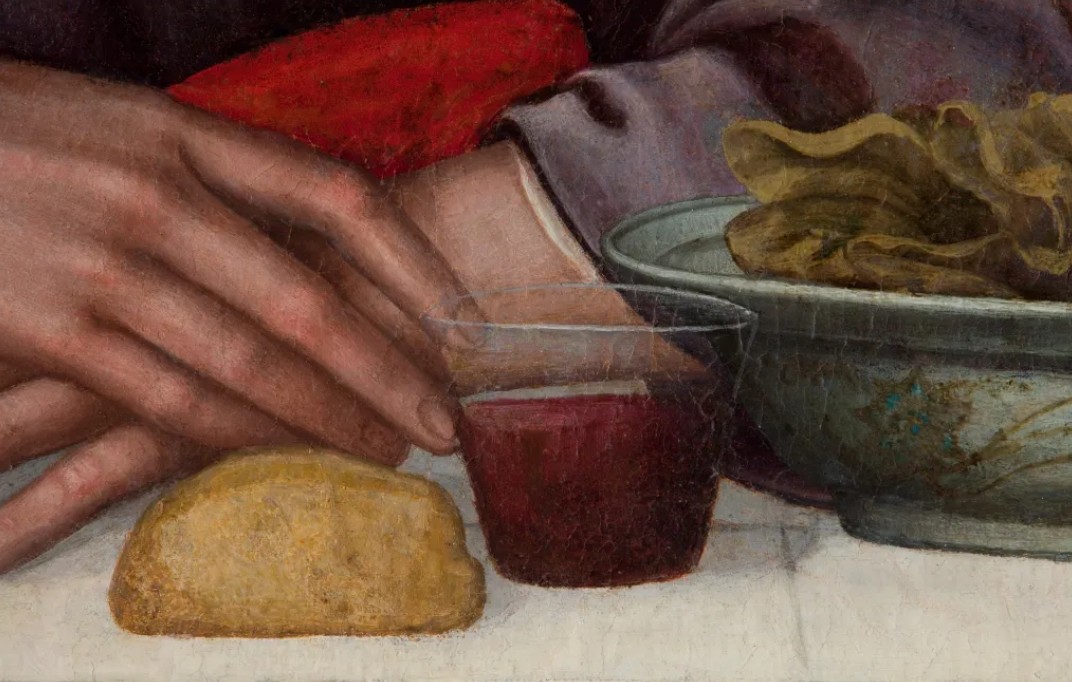
Leonardo da Vinci e il pane nell’Ultima Cena
È impossibile parlare del pane nella pittura senza partire dal celeberrimo Cenacolo di Leonardo.
Sulla lunga tavola attorno alla quale sono seduti Cristo e i dodici apostoli compaiono pani, piatti, bicchieri e altri alimenti appartenenti uno degli episodi fondamentali della tradizione cristiana.
Durante l’Ultima Cena, Gesù spezza il pane e lo offre ai discepoli, istituendo il sacramento dell’Eucaristia. Il pane diventa così il simbolo del suo corpo, mentre il vino richiama il suo sangue.
Leonardo sceglie di rappresentare il momento in cui Cristo annuncia che uno dei presenti lo tradirà. Gli apostoli reagiscono con gesti ed espressioni differenti, dando vita a una straordinaria rappresentazione dei moti dell’animo.
Il pane, in questa scena, assume un significato che va ben oltre la sua presenza sulla tavola: è legato al sacrificio, alla comunione e alla promessa di una presenza che continuerà anche dopo la morte.
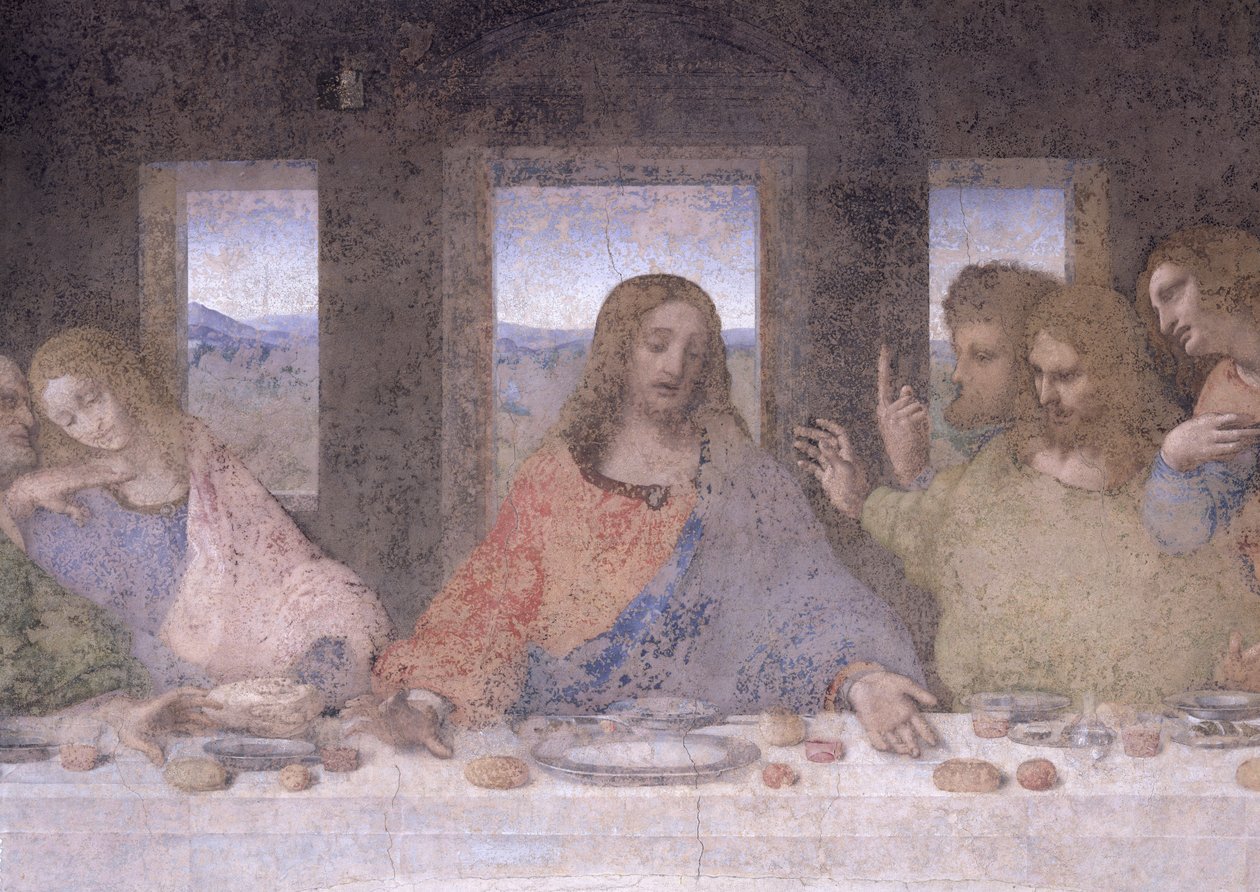
Caravaggio: il pane che rivela una presenza divina
Davanti a questa tela di Caravaggio il pane diventa il protagonista di un momento straordinario.
La scena racconta l’episodio evangelico dei discepoli di Emmaus. Dopo la morte di Cristo, due uomini si mettono in cammino e incontrano uno sconosciuto che non riescono a riconoscere. Lo invitano a condividere il pasto e soltanto quando l’uomo benedice e spezza il pane comprendono di trovarsi davanti a Gesù risorto.
Caravaggio sceglie proprio quell’istante. Cristo è seduto al centro della composizione e tiene una mano sul pane. I due discepoli reagiscono con gesti improvvisi: uno spalanca le braccia, l’altro sembra sul punto di alzarsi dalla sedia. L’oste, invece, osserva senza comprendere davvero quello che sta accadendo.
La luce illumina il tavolo, i volti e gli alimenti, rendendo incredibilmente concreta una scena che parla di un miracolo.
Il pane è il segno attraverso il quale i discepoli riconoscono il loro maestro.
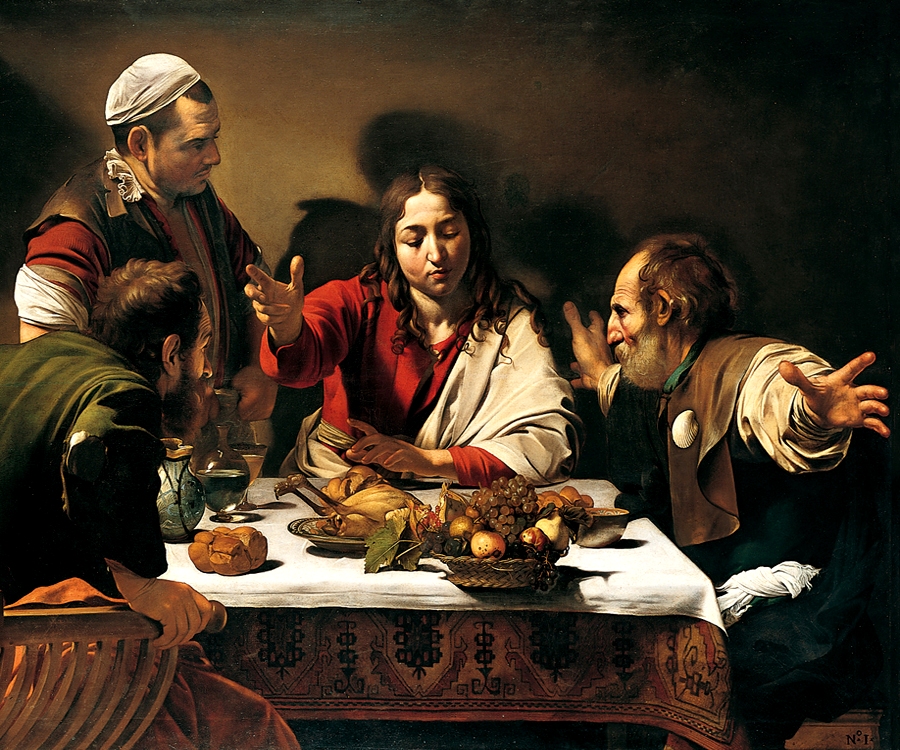
Tintoretto: il pane e il riconoscimento di Cristo
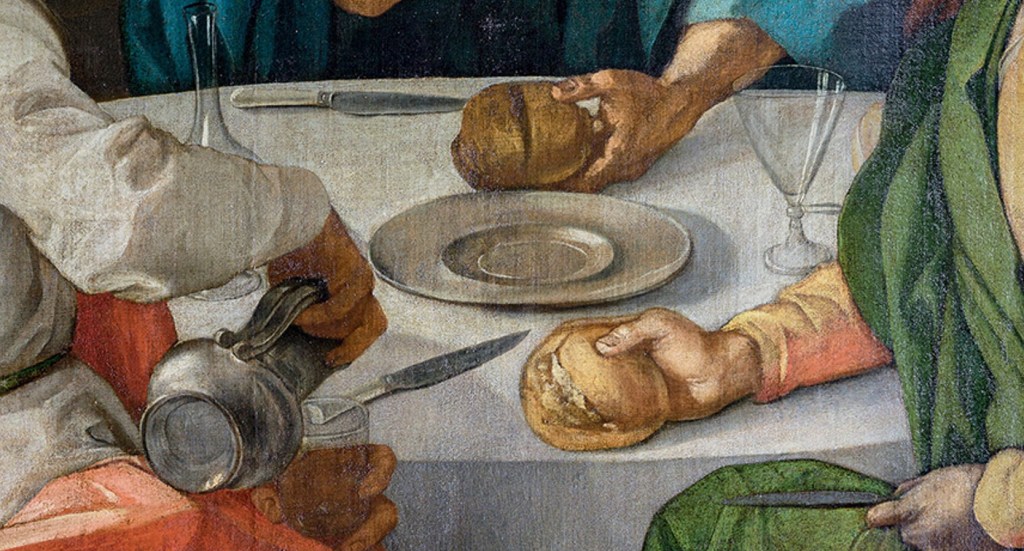
Anche Tintoretto affronta il tema dell’incontro di Emmaus, scegliendo di concentrarsi sul momento in cui i discepoli riconoscono Cristo.
Il pane benedetto è il centro simbolico dell’episodio. È attraverso quel gesto familiare, compiuto durante un pasto apparentemente ordinario, che si manifesta qualcosa di straordinario.
La particolarità di questa rappresentazione è il modo in cui Tintoretto costruisce la scena, facendo convivere la dimensione quotidiana della cena con quella soprannaturale della rivelazione.
Il gesto di spezzare il pane richiama direttamente l’Eucaristia e la memoria dell’Ultima Cena.
È interessante confrontare questa composizione con quella di Caravaggio: due artisti, due sensibilità differenti e lo stesso alimento scelto per raccontare un momento decisivo della fede cristiana.
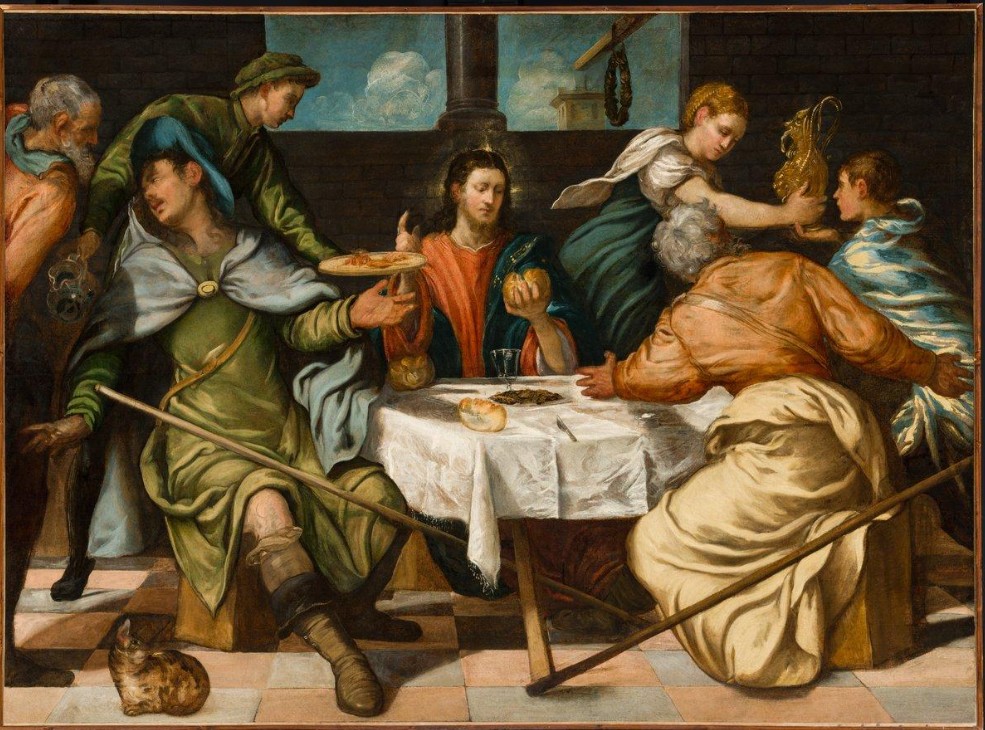
Jacopo Bassano: il pane, il vino e il simbolo della resurrezione
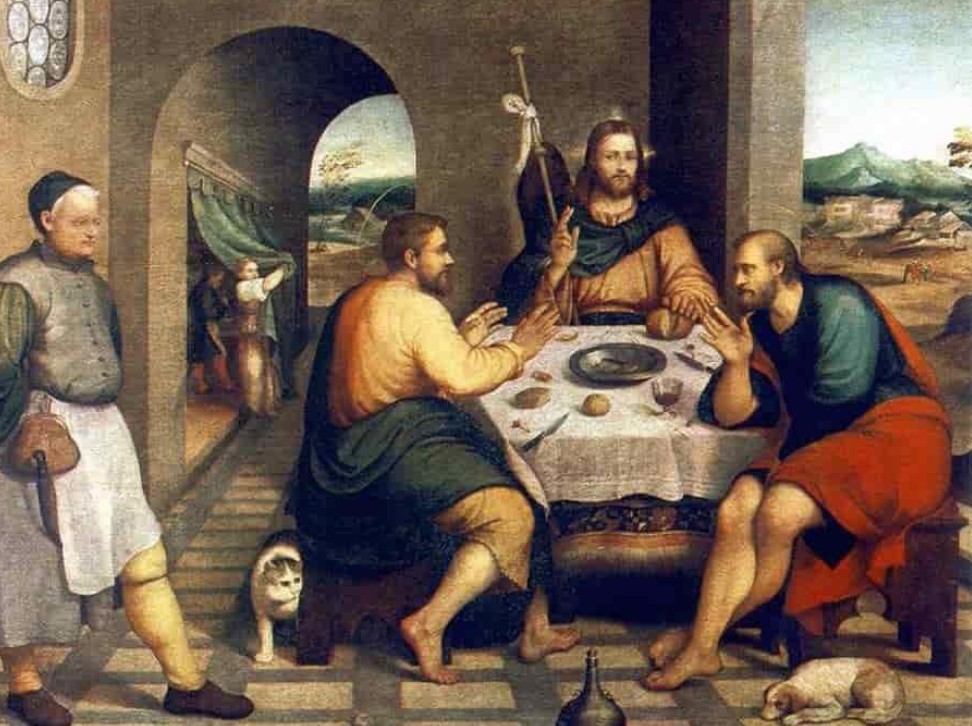
Un’altra interpretazione particolarmente interessante è quella di Jacopo Bassano. Anche qui troviamo Cristo che benedice e spezza il pane davanti ai discepoli. Ma sulla tavola compare un insieme di alimenti che merita di essere osservato con attenzione: pane, vino e uova.
Il pane e il vino rimandano al sacramento eucaristico, mentre le uova, nella tradizione simbolica cristiana, possono evocare la resurrezione e la vita che rinasce.
Bassano costruisce una scena nella quale il mistero religioso convive con elementi della vita quotidiana. L’oste, il giovane servitore e persino gli animali appartengono a un mondo concreto, quasi domestico, che contrasta con la rivelazione divina.
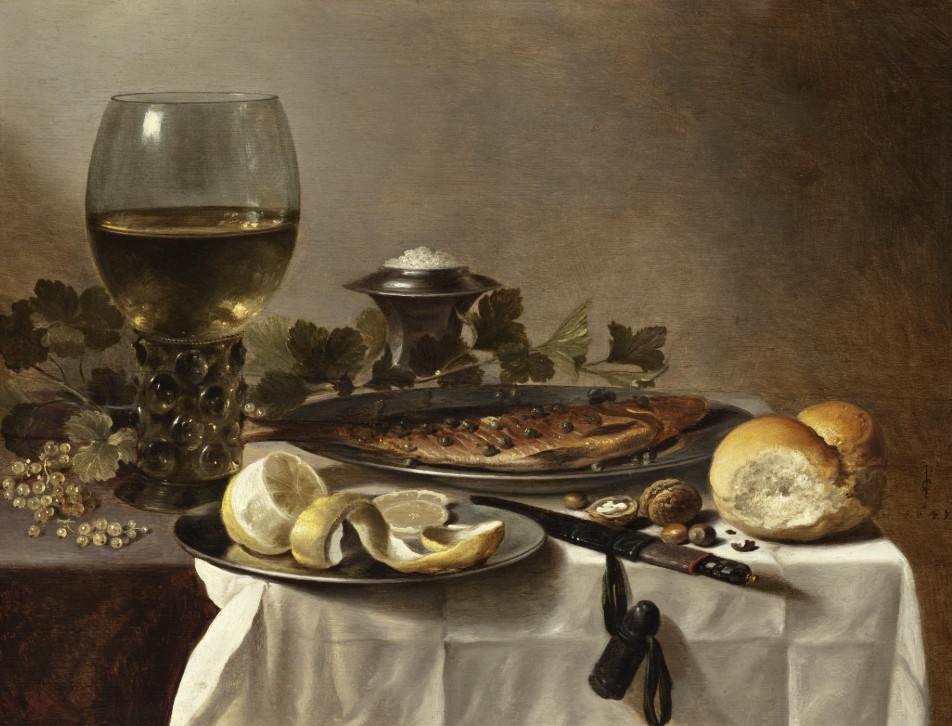
Pieter Claesz: quando il pane diventa protagonista di una natura morta
Pieter Claesz, Natura morta con aringa, vino e pane, 1647, Los Angeles County Museum of Art.
Lasciamo per un momento le scene religiose e spostiamoci nella pittura olandese del Seicento.
Qui il pane assume un ruolo differente. Non accompagna un episodio biblico ma diventa parte di una rappresentazione della tavola e delle abitudini alimentari.
Nella natura morta di Pieter Claesz troviamo un’aringa, un pane appena preparato, frutta secca, vino e altri oggetti disposti con grande attenzione.
L’artista osserva ogni superficie: la crosta del pane, il metallo dei piatti, il vetro dei bicchieri e la consistenza degli alimenti. Queste composizioni ci permettono anche di avvicinarci alla vita materiale del Seicento. L’aringa, per esempio, era un alimento importante nell’economia e nell’alimentazione olandese.
Il pane è il cibo di tutti i giorni, il commercio, le abitudini e il rapporto di una società con ciò che porta in tavola.
Luis Meléndez: la bellezza di un pane appena sfornato
Se c’è un pittore capace di farci quasi percepire la consistenza degli alimenti attraverso una tela, è Luis Meléndez.
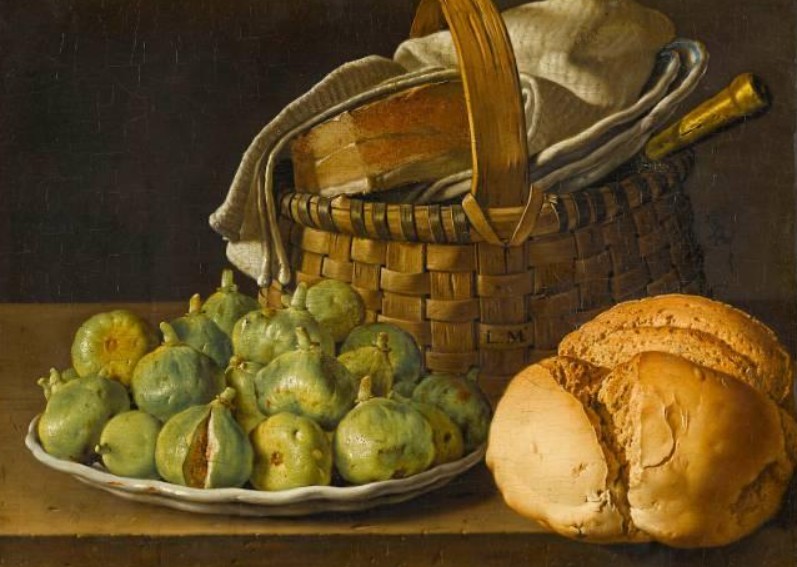
Nelle sue nature morte il pane non viene idealizzato: conserva la propria forma irregolare, la crosta ruvida e le piccole imperfezioni che lo rendono riconoscibile.
In questa composizione una pagnotta dalla superficie dorata è accostata a un piatto di fichi, a una bottiglia scura e ad alcuni recipienti. Non ci sono personaggi, gesti teatrali o episodi religiosi. Tutta l’attenzione è concentrata sugli oggetti.
Meléndez dimostra una straordinaria capacità di osservazione, restituendo attraverso la pittura la differenza tra le superfici e i materiali. La crosta del pane sembra quasi poter essere sfiorata.
La sua vicenda personale aggiunge un ulteriore elemento di interesse: nonostante la sua abilità, il pittore trascorse gran parte della vita in condizioni economiche difficili.
Questa tela è conservata alla National Gallery of Art di Washington.
Paul Cézanne: pane e uova diventano un esercizio di pittura
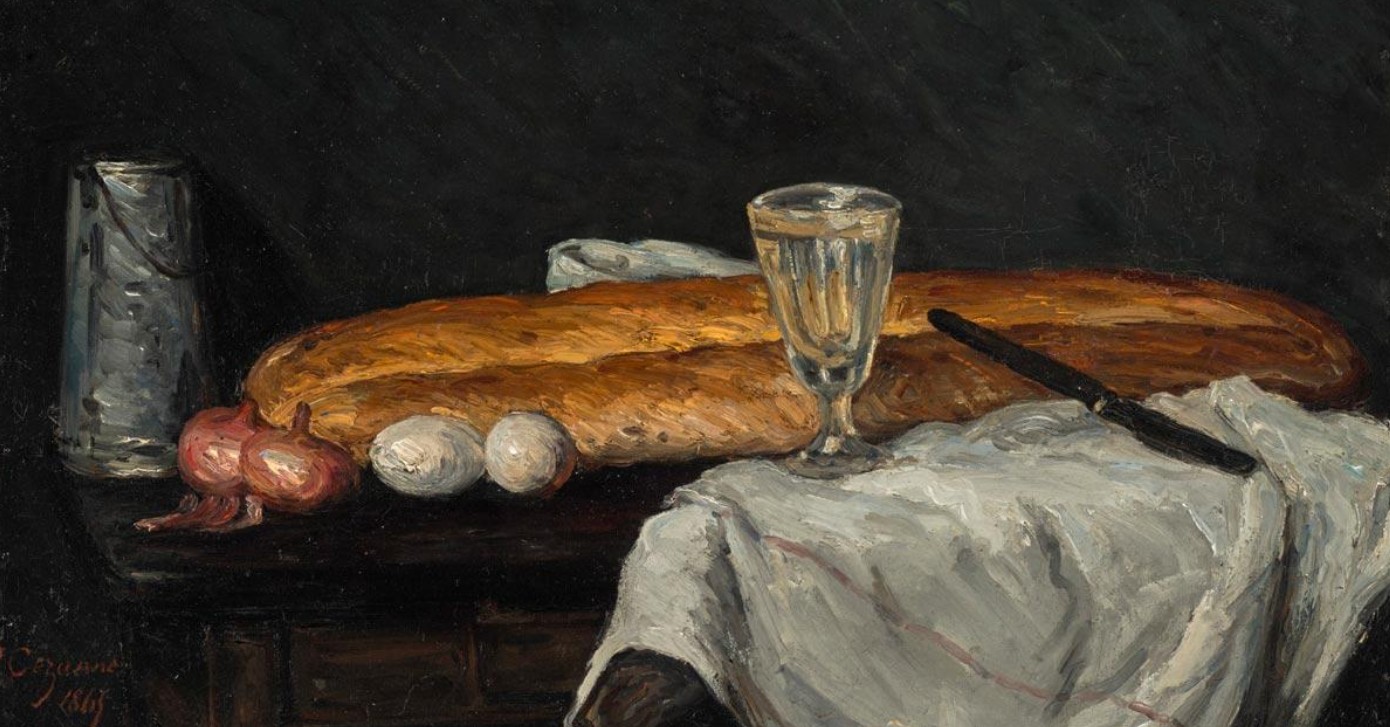
Anche Paul Cézanne dedica una composizione al pane, accostandolo alle uova in una natura morta realizzata nel 1865.
A prima vista potrebbe sembrare un soggetto semplice, quasi domestico. Eppure è proprio attraverso questi elementi ordinari che l’artista sperimenta il rapporto tra forme, volumi, luce e colore.
La tavola diventa uno spazio nel quale osservare come gli oggetti occupano il piano, come le superfici reagiscono alla luce e come i colori contribuiscono a costruire la profondità.
Nel 2022, durante un esame conservativo, il Cincinnati Art Museum scoprì attraverso una radiografia che sotto la natura morta si nascondeva un’altra composizione: un ritratto dipinto in precedenza dallo stesso Cézanne, forse un autoritratto.
Sotto una semplice tavola con pane e uova si celava dunque un’altra opera.
Perché il pane ha avuto così tanta importanza nella storia dell’arte?
Il pane cambia significato a seconda del contesto nel quale viene rappresentato.
Nella pittura religiosa è soprattutto un simbolo di fede, sacrificio e comunione. Nelle scene di genere racconta la vita delle persone, le loro abitudini e le condizioni sociali. Nelle nature morte diventa invece un’occasione per dimostrare la capacità del pittore di riprodurre materiali, colori e consistenze.
Il pane è un alimento essenziale, qualcosa che accomuna persone appartenenti a epoche, culture e condizioni economiche differenti.
Per il momento il sempre vostro Michelangelo Buonarroti vi saluta dandovi appuntamento ai prossimi post e sui social.

Bread in Paintings: Stories, Symbols, and Hidden Meanings
Present in religious scenes, depictions of daily life, and still lifes, bread has accompanied painters for centuries. Whether resting on a table or held in someone’s hands, it can represent the body of Christ, nourishment, the act of sharing, the toil of labor, or even the economic status of an entire society.
In some paintings, it becomes the silent protagonist of the composition, while in others, one must look closely to find it—perhaps near a figure’s hands or among the objects arranged on a tablecloth.
I have selected seven works from different eras to illustrate how a simple piece of bread can transform into something far greater.
Leonardo da Vinci and the Bread in The Last Supper
It is impossible to discuss bread in painting without beginning with Leonardo’s world-famous Last Supper.
On the long table around which Christ and the twelve apostles are seated, one finds loaves of bread, plates, glasses, and other food items—elements belonging to one of the foundational episodes of the Christian tradition.
During the Last Supper, Jesus breaks bread and offers it to his disciples, instituting the sacrament of the Eucharist. The bread thus becomes a symbol of his body, while the wine represents his blood.
Leonardo chooses to depict the moment when Christ announces that one of those present will betray him. The apostles react with various gestures and expressions, creating an extraordinary portrayal of the movements of the human soul.
In this scene, the bread takes on a significance that extends well beyond its physical presence on the table: it is linked to sacrifice, communion, and the promise of a presence that will endure even after death.
Caravaggio: The Bread That Reveals a Divine Presence
In this canvas by Caravaggio, bread becomes the protagonist of an extraordinary moment.
The scene depicts the Gospel account of the disciples at Emmaus. Following the death of Christ, two men are traveling when they encounter a stranger whom they fail to recognize. They invite him to share a meal, and it is only when the man blesses and breaks the bread that they realize they are in the presence of the risen Jesus.
Caravaggio chooses this very instant. Christ sits at the center of the composition, one hand resting upon the bread. The two disciples react with sudden, sharp gestures: one flings his arms wide, while the other appears on the verge of rising from his chair. The innkeeper, meanwhile, looks on—unaware of the true significance of what is unfolding.
Light illuminates the table, the faces, and the food, lending an incredible, tangible reality to a scene that speaks of a miracle.
The bread serves as the sign through which the disciples recognize their Master.
Tintoretto: Bread and the Recognition of Christ
Tintoretto also explores the encounter at Emmaus, focusing on the moment the disciples recognize Christ.
The blessed bread acts as the symbolic center of the episode. It is through this familiar gesture—performed during an ostensibly ordinary meal—that something extraordinary is revealed.
What makes this depiction unique is the way Tintoretto constructs the scene, allowing the everyday nature of the supper to coexist with the supernatural dimension of the revelation. The act of breaking bread directly evokes the Eucharist and the memory of the Last Supper.
It is interesting to compare this composition with that of Caravaggio: two artists, two different sensibilities, and the same food chosen to depict a decisive moment in the Christian faith.
Jacopo Bassano: bread, wine, and the symbol of the Resurrection
Another particularly compelling interpretation is that of Jacopo Bassano. Here, too, we see Christ blessing and breaking bread before his disciples. Yet, on the table, there appears a collection of food items that warrants close observation: bread, wine, and eggs.
Bread and wine point toward the Eucharistic sacrament, while eggs—within the Christian symbolic tradition—can evoke the Resurrection and the rebirth of life.
Bassano constructs a scene in which religious mystery coexists with elements of everyday life. The innkeeper, the young servant, and even the animals belong to a concrete, almost domestic world that stands in contrast to the divine revelation.
Pieter Claesz: when bread becomes the protagonist of a still life
Let us step away from religious scenes for a moment and turn to seventeenth-century Dutch painting.
Here, bread takes on a different role. It no longer accompanies a biblical episode; instead, it becomes part of a representation of the table and dietary habits.
In the still life by Pieter Claesz, we find a herring, a freshly prepared loaf of bread, dried fruit, wine, and other objects arranged with great care.
The artist observes every surface: the crust of the bread, the metal of the plates, the glass of the vessels, and the texture of the food. Such compositions also offer us a glimpse into the material life of the seventeenth century. The herring, for instance, was an important staple in the Dutch economy and diet.
Bread represents everyday food, commerce, customs, and a society’s relationship with what it places on the table.
Luis Meléndez: the beauty of a freshly baked loaf
If there is any painter capable of making us almost sense the texture of food through a canvas, it is Luis Meléndez.
In his still lifes, bread is not idealized; it retains its irregular shape, rough crust, and the small imperfections that make it instantly recognizable.
In this composition, a loaf with a golden-brown surface is placed alongside a plate of figs, a dark bottle, and several other containers. There are no figures, theatrical gestures, or religious narratives—all attention is focused entirely on the objects.
Meléndez demonstrates an extraordinary power of observation, capturing the distinct qualities of various surfaces and materials through his painting. The crust of the bread looks as though one could almost reach out and touch it.
His personal history adds another layer of interest: despite his immense skill, the painter spent much of his life in difficult financial circumstances.
This canvas is held at the National Gallery of Art in Washington.
Paul Cézanne: Bread and Eggs Become a Painting Exercise
Paul Cézanne also dedicated a composition to bread, pairing it with eggs in a still life created in 1865.
At first glance, it might seem like a simple, almost domestic subject. Yet, it is precisely through these ordinary elements that the artist experiments with the relationship between forms, volumes, light, and color.
The tabletop becomes a space in which to observe how objects occupy a surface, how that surface reacts to light, and how colors contribute to constructing depth.
In 2022, during a conservation assessment, the Cincinnati Art Museum discovered—via an X-ray—that another composition lay hidden beneath the still life: a portrait previously painted by Cézanne himself, possibly a self-portrait.
Thus, another work was concealed beneath a simple arrangement of bread and eggs.
Why has bread held such significance throughout the history of art?
The meaning of bread shifts depending on the context in which it is depicted.
In religious painting, it serves primarily as a symbol of faith, sacrifice, and communion. In genre scenes, it speaks to people’s lives, their habits, and their social conditions. In still lifes, it becomes an opportunity for the painter to demonstrate their skill in rendering materials, colors, and textures.
Bread is a fundamental food—a common thread connecting people across different eras, cultures, and economic circumstances.
For now, yours truly, Michelangelo Buonarroti, bids you farewell—until the next post, and see you on social media.
Sostienici – Support Us
Se questo blog ti piace e ti appassiona, puoi aiutarci a farlo crescere sempre più sostenendoci in modo concreto condividendo i post, seguendo le pagine social e con un contributo che ci aiuta ad andare avanti con il nostro lavoro di divulgazione. . ENGLISH: If you like and are passionate about this blog, you can help us make it grow more and more by supporting us in a concrete way by sharing posts, following social pages and with a contribution that helps us to move forward with our dissemination work.
10,00 €

Condividi:


Questo sono io



sostienici
Sostienici - Support Us
Se questo blog ti piace e ti appassiona, puoi aiutarci a farlo crescere sempre più sostenendoci in modo concreto condividendo i post, seguendo le pagine social e con un contributo che ci aiuta ad andare avanti con il nostro lavoro di divulgazione. . ENGLISH: If you like and are passionate about this blog, you can help us make it grow more and more by supporting us in a concrete way by sharing posts, following social pages and with a contribution that helps us to move forward with our dissemination work.
€10,00


