
Francesco Hayez e la Vergine: quando la pittura romantica incontra la fede
La Vergine Maria, nel contesto artistico, è uno di quei soggetti che attraversa i secoli senza perdere la propria forza evocativa. Dipinta, scolpita e reinterpretata da generazioni di artisti, ha assunto nel corso del tempo volti, atteggiamenti e significati diversi, diventando uno dei temi più riconoscibili della storia dell’arte occidentale.
Francesco Hayez, uno dei protagonisti assoluti della pittura romantica italiana, volle confrontarsi con questo importante tema. La sua Vergine, datata 1840, ci riporta a un momento particolarmente interessante della carriera dell’artista, quando la sua ricerca pittorica si muoveva tra la grande tradizione italiana e una sensibilità nuova, attenta alla dimensione emotiva e alla forza dei soggetti rappresentati.
Francesco Hayez, tra Romanticismo e tradizione religiosa
Nato a Venezia nel 1791, Hayez è considerato il principale interprete del Romanticismo storico italiano. La sua pittura ha attraversato alcuni dei momenti più significativi dell’Ottocento, passando dai grandi episodi della storia medievale e moderna ai ritratti, dalle composizioni di carattere letterario alle immagini di soggetto religioso.
La sua formazione affonda le radici nella grande tradizione veneziana, soprattutto nella sensibilità per il colore e nella capacità di costruire atmosfere attraverso la luce. A questa eredità Hayez aggiunse l’attenzione alla psicologia dei personaggi, elemento che diventerà uno dei tratti distintivi della sua produzione.
Il 1840 è un anno particolarmente significativo. In quel periodo l’artista stava lavorando a importanti commissioni storiche e affinando una ricerca cromatica sempre più raffinata. Proprio in quegli anni prendeva forma anche Malinconia, una delle sue opere più celebri, oggi conservata alla Pinacoteca di Brera, nella quale la tradizione pittorica veneta dialoga con la sensibilità romantica.
La Vergine, un soggetto senza tempo
La rappresentazione della Madonna appartiene a una tradizione iconografica lunghissima. Nel corso dei secoli gli artisti hanno cercato di restituire non soltanto l’immagine della madre di Cristo, ma anche il significato spirituale e umano della sua figura.
Nel XIX secolo, quando il Romanticismo attribuiva grande importanza alla dimensione interiore, alla fede e alla partecipazione emotiva, il tema religioso continuava a offrire possibilità espressive importanti.
In quest’opera Hayez affronta il dolore di Maria attraverso una composizione articolata e una tavolozza fredda, nella quale la luce contribuisce a creare un’atmosfera di intensa spiritualità.
Una Vergine raccolta nel silenzio
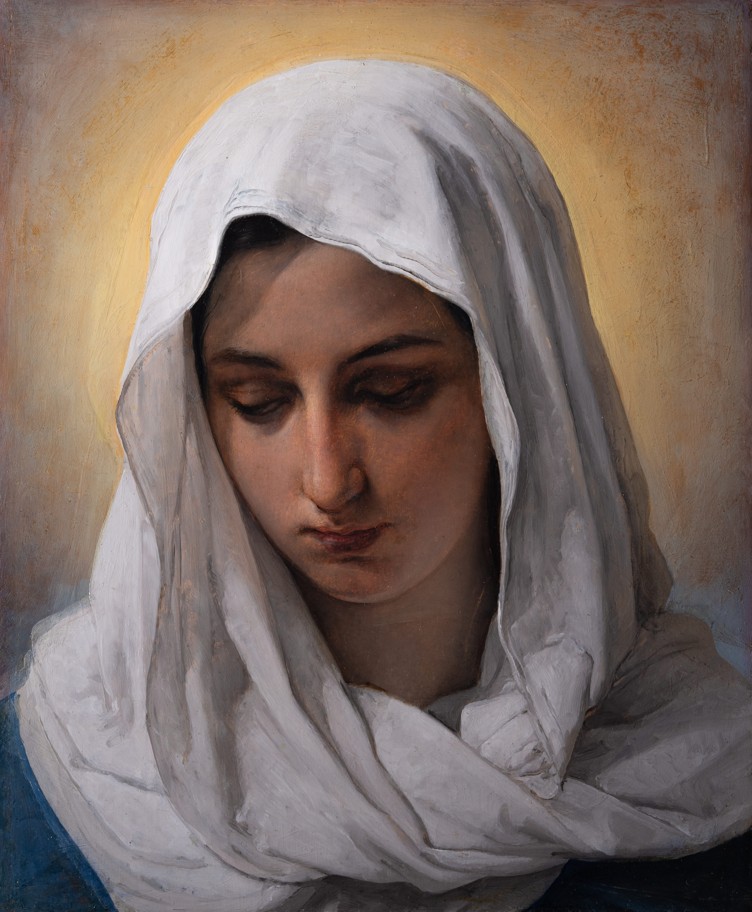
La composizione è costruita intorno al volto, leggermente inclinato in avanti. Maria tiene gli occhi abbassati e le labbra appena serrate. Il suo atteggiamento suggerisce una preghiera intima, ma anche una tristezza trattenuta, che non ha bisogno di manifestarsi attraverso gesti plateali.
Il bianco del velo è uno degli elementi più importanti del dipinto. Hayez ne studia le pieghe con grande attenzione, alternando zone luminose e ombre grigie, così da restituire la consistenza del tessuto e il modo in cui avvolge il viso. Sotto il manto si intravede l’abito azzurro, mentre alle spalle della figura compare un’aureola luminosa, appena suggerita dalla luce dorata del fondo.
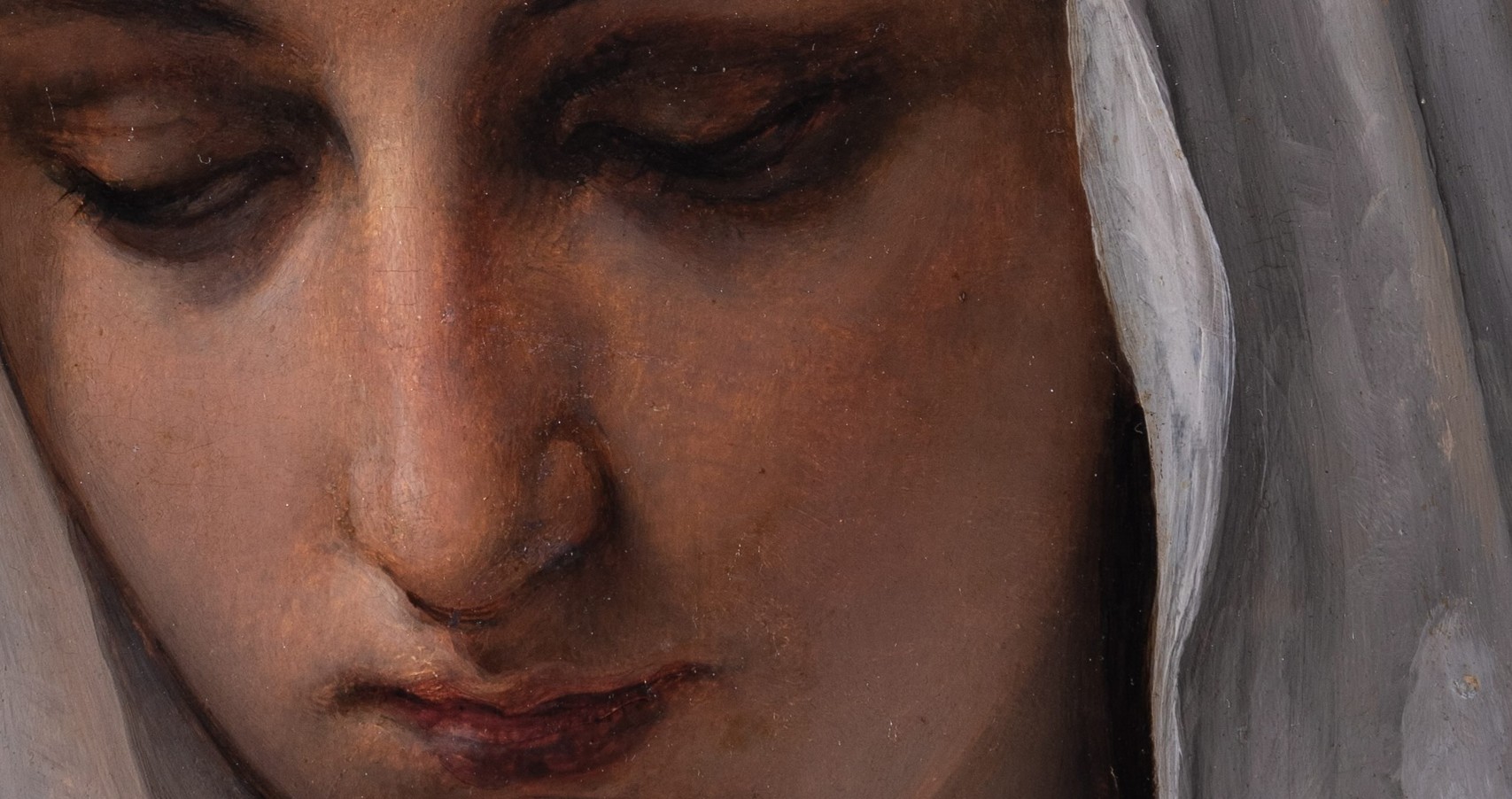
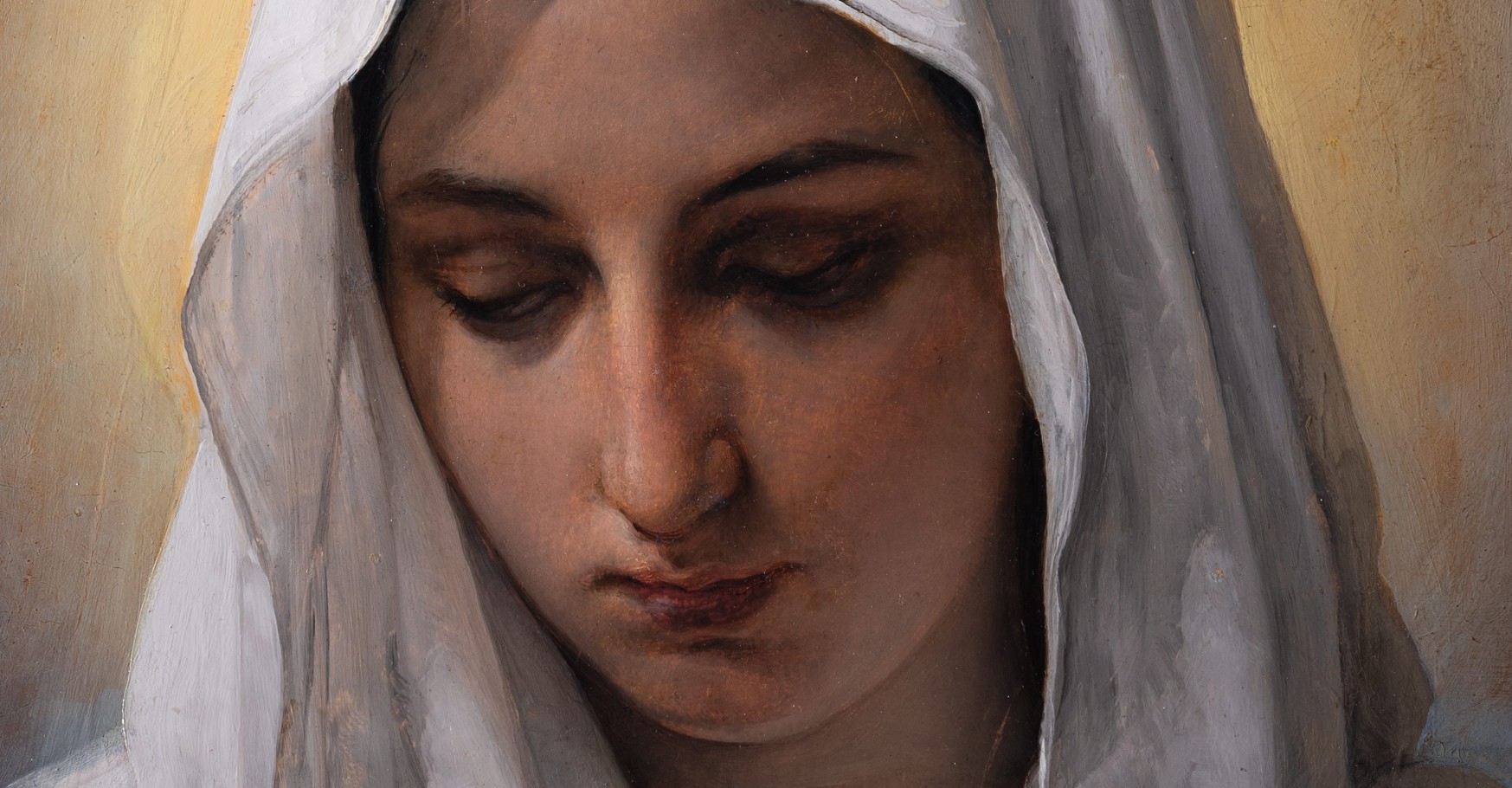
L’incarnato è trattato con particolare sensibilità: le ombre intorno agli occhi, il rossore delle guance e la morbidezza della bocca contribuiscono a rendere Maria una presenza umana, vicina, capace di suscitare partecipazione.
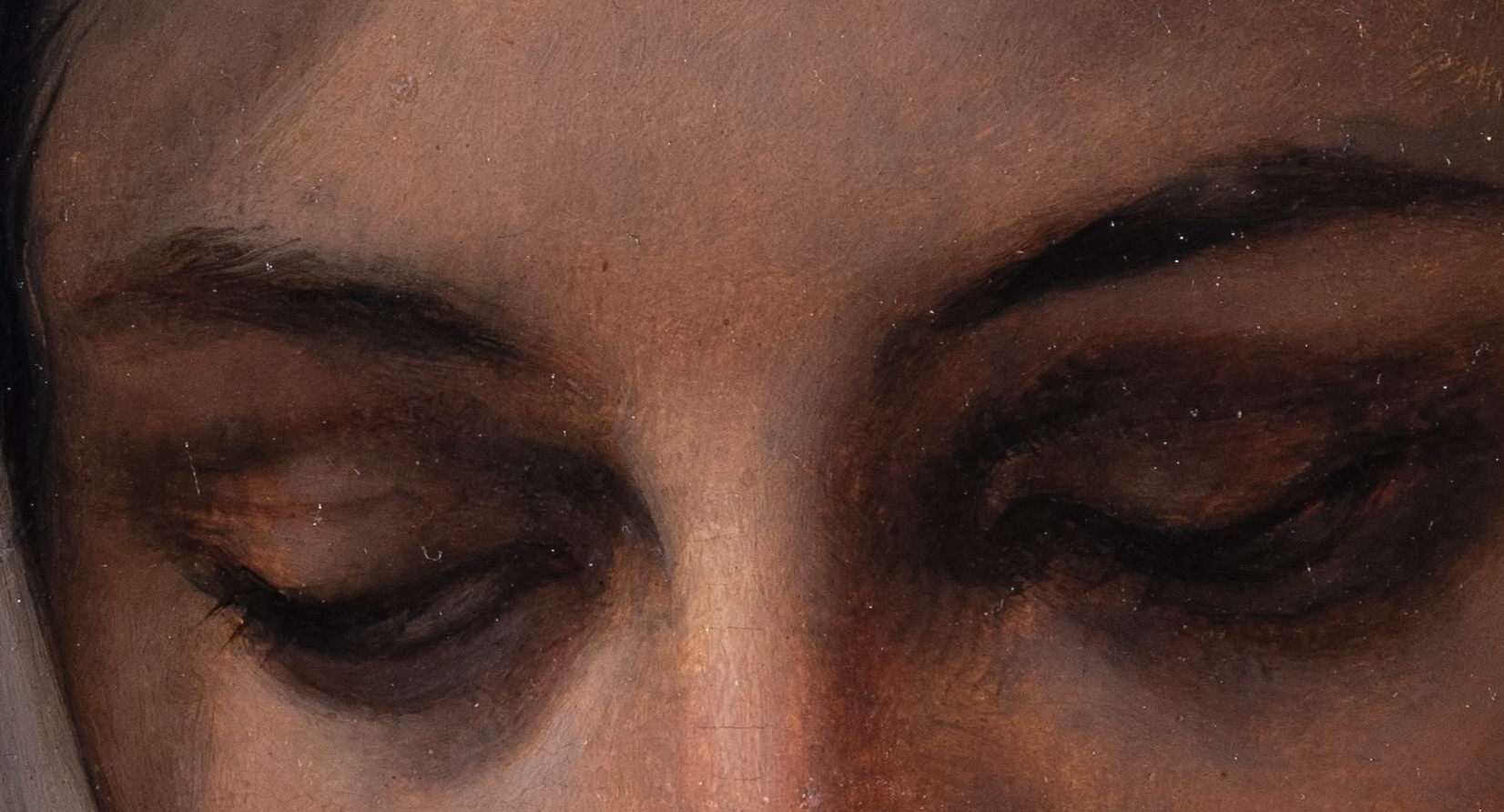
Non è una Madonna trionfante, né una figura immersa in una complessa scena sacra ma una donna raccolta nei propri pensieri, isolata in uno spazio quasi privo di riferimenti narrativi.
Per il momento il sempre vostro Michelangelo Buonarroti vi saluta dandovi appuntamento ai prossimi post e sui social.

Francesco Hayez and the Virgin: When Romantic Painting Meets Faith
In the realm of art, the Virgin Mary is a subject that has endured through the centuries without ever losing its evocative power. Depicted, sculpted, and reinterpreted by generations of artists, she has taken on various guises, postures, and meanings over time, becoming one of the most recognizable themes in the history of Western art.
Francesco Hayez, a preeminent figure in Italian Romantic painting, chose to engage with this significant subject. His Virgin, dated 1840, points to a particularly compelling moment in the artist’s career—a time when his artistic exploration bridged the great Italian tradition and a new, emerging sensibility, one deeply attuned to the emotional dimension and the inherent power of his subjects.
Francesco Hayez: Between Romanticism and Religious Tradition
Born in Venice in 1791, Hayez is regarded as the foremost exponent of Italian historical Romanticism. His body of work spans some of the most pivotal moments of the 19th century, encompassing grand episodes from medieval and modern history, portraits, literary-inspired compositions, and religious imagery.
His artistic foundation is rooted in the great Venetian tradition—most notably in his keen sensitivity to color and his mastery in crafting atmosphere through the use of light. To this heritage, Hayez added a profound focus on the psychology of his figures, a hallmark that would become a defining characteristic of his work.
The year 1840 was particularly significant. During this period, the artist was engaged in major historical commissions while refining an increasingly sophisticated approach to color. It was also around this time that he created Melancholy (Malinconia)—one of his most celebrated works, now housed in the Pinacoteca di Brera—in which the Venetian pictorial tradition enters into a dialogue with a Romantic sensibility.
The Virgin: A Timeless Subject
The depiction of the Madonna belongs to a long-standing iconographic tradition. Over the centuries, artists have sought to convey not only the image of the Mother of Christ but also the spiritual and human significance of her figure.
In the 19th century—a period when Romanticism placed great emphasis on the inner life, faith, and emotional engagement—religious themes continued to offer significant expressive possibilities.
In this work, Hayez addresses Mary’s sorrow through a carefully structured composition and a cool color palette, in which light helps to create an atmosphere of profound spirituality.
A Virgin Lost in Silence
The composition is centered on her face, which is tilted slightly forward. Mary’s eyes are cast downward, her lips pressed together. Her demeanor suggests both intimate prayer and a restrained sadness—one that requires no dramatic gestures to be expressed.
The white veil is one of the painting’s most striking elements. Hayez studies its folds with great precision, alternating between bright highlights and gray shadows to capture the texture of the fabric as it drapes around her face. Beneath the mantle, a glimpse of a blue garment is visible, while a luminous halo—suggested by the golden light in the background—appears behind her.
Her complexion is rendered with remarkable sensitivity: the shadows around her eyes, the faint flush on her cheeks, and the softness of her lips make Mary a human, relatable presence—one that invites the viewer to share in her experience.
This is not a triumphant Madonna, nor is she part of an elaborate sacred scene; rather, she is a woman absorbed in her own thoughts, isolated within a space almost entirely devoid of narrative detail.
For now, your ever-faithful Michelangelo Buonarroti bids you farewell—until the next post, and see you on social media.

Sostienici – Support Us
Se questo blog ti piace e ti appassiona, puoi aiutarci a farlo crescere sempre più sostenendoci in modo concreto condividendo i post, seguendo le pagine social e con un contributo che ci aiuta ad andare avanti con il nostro lavoro di divulgazione. . ENGLISH: If you like and are passionate about this blog, you can help us make it grow more and more by supporting us in a concrete way by sharing posts, following social pages and with a contribution that helps us to move forward with our dissemination work.
10,00 €

Condividi:


Questo sono io





sostienici

Sostienici - Support Us
Se questo blog ti piace e ti appassiona, puoi aiutarci a farlo crescere sempre più sostenendoci in modo concreto condividendo i post, seguendo le pagine social e con un contributo che ci aiuta ad andare avanti con il nostro lavoro di divulgazione. . ENGLISH: If you like and are passionate about this blog, you can help us make it grow more and more by supporting us in a concrete way by sharing posts, following social pages and with a contribution that helps us to move forward with our dissemination work.
€10,00


