
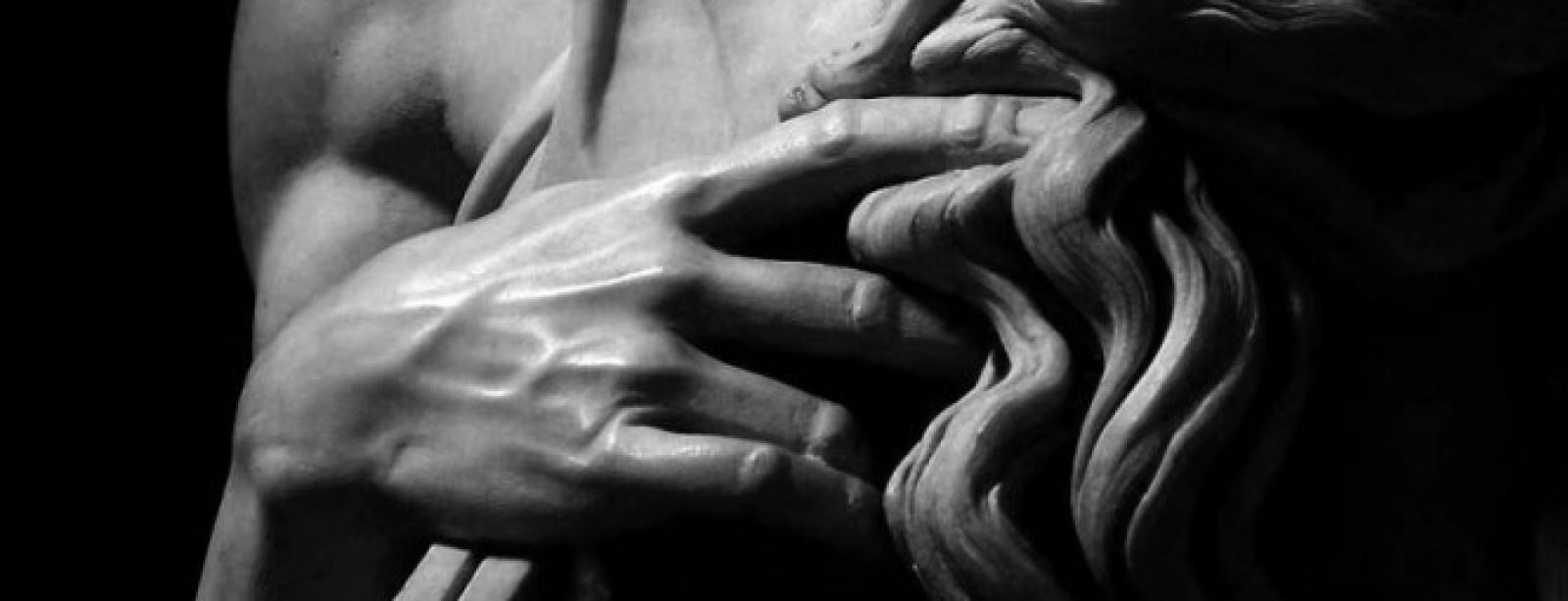
La Cappella Sistina prima di me: il 15 agosto 1483 la consacrazione alla Vergine
Il 15 agosto 1483 la Cappella Sistina veniva consacrata alla Vergine Assunta da papa Sisto IV della Rovere. Prima che io vi dipingessi la volta e, molti anni dopo, il Giudizio Universale, quelle pareti avevano già conosciuto alcuni dei più grandi artisti del Rinascimento. Io stesso, quando arrivai, mi trovai davanti a una storia già cominciata.
Il 15 agosto 1483 nasceva la Cappella Sistina
Era il 15 agosto del 1483 quando papa Sisto IV consacrò solennemente la nuova cappella alla Vergine Assunta in Cielo.
Non era nato dal nulla quell’edificio. Là dove oggi vedete la Cappella Sistina esisteva già una struttura più antica, ma Sisto IV della Rovere volle trasformarla completamente. Desiderava un luogo grandioso, degno della liturgia papale e capace di celebrare la potenza della Chiesa.
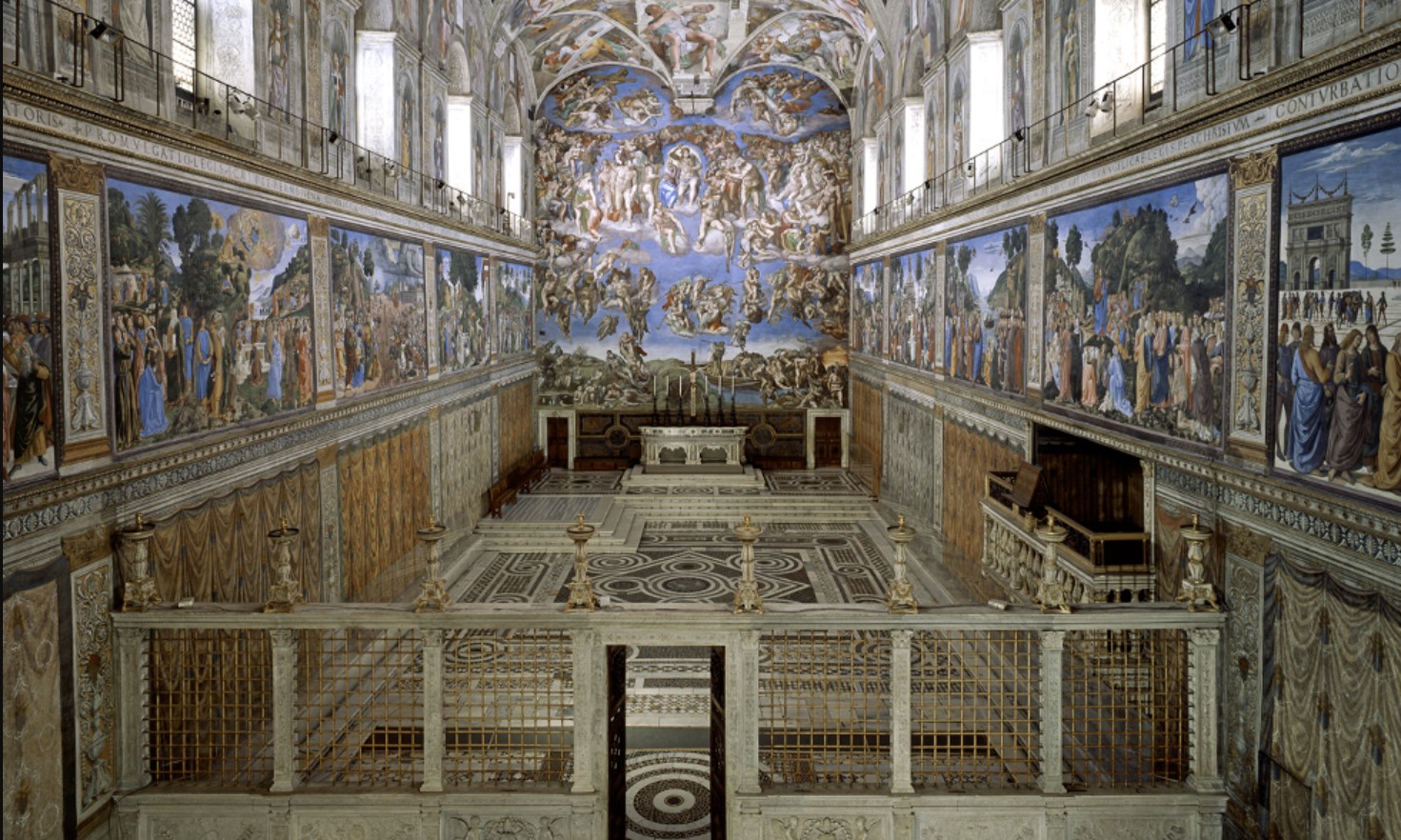
La nuova cappella fu progettata da Baccio Pontelli e la sua costruzione venne avviata nel 1475, per essere completata nel 1481. Le sue proporzioni erano tutt’altro che casuali: il pontefice volle che ricordassero esattamente quelle del Tempio di Salomone a Gerusalemme, così come vengono descritte nell’Antico Testamento. 40,93 metri di lunghezza, 13,41 di larghezza per 20,70 di altezza.
Perugino e i grandi maestri del Quattrocento
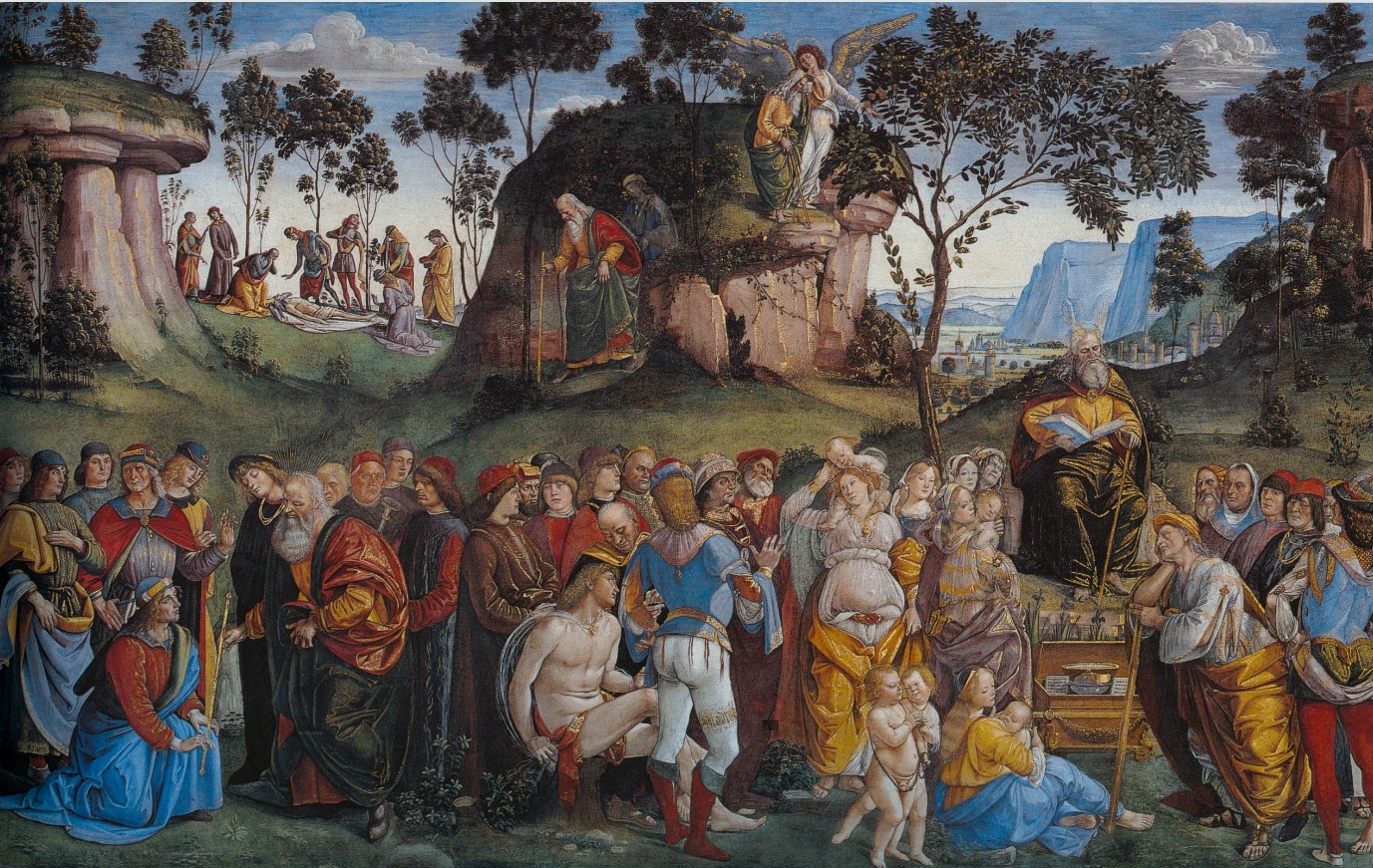
Sisto IV chiamò a Roma alcuni dei più importanti pittori del suo tempo. Perugino, Botticelli, Ghirlandaio, Signorelli, Pinturicchio, Bartolomeo della Gatta e i loro collaboratori decorarono le pareti con le storie di Mosè e di Cristo. Una storia che ebbe inizio con una scomunica, quella che il 1 giugno del 1478 Sisto IV fece a Lorenzo il Magnifico.
Io sarei arrivato soltanto molti anni dopo.
La volta, prima del mio intervento, aveva un aspetto completamente diverso. Piermatteo d’Amelia aveva dipinto un cielo blu, simile a un firmamento di lapislazzuli punteggiato di stelle dorate.
E sulla parete dell’altare si trovava un’immagine che aveva un significato particolare proprio per quel giorno del 15 agosto: l’Assunta in Cielo di Perugino.
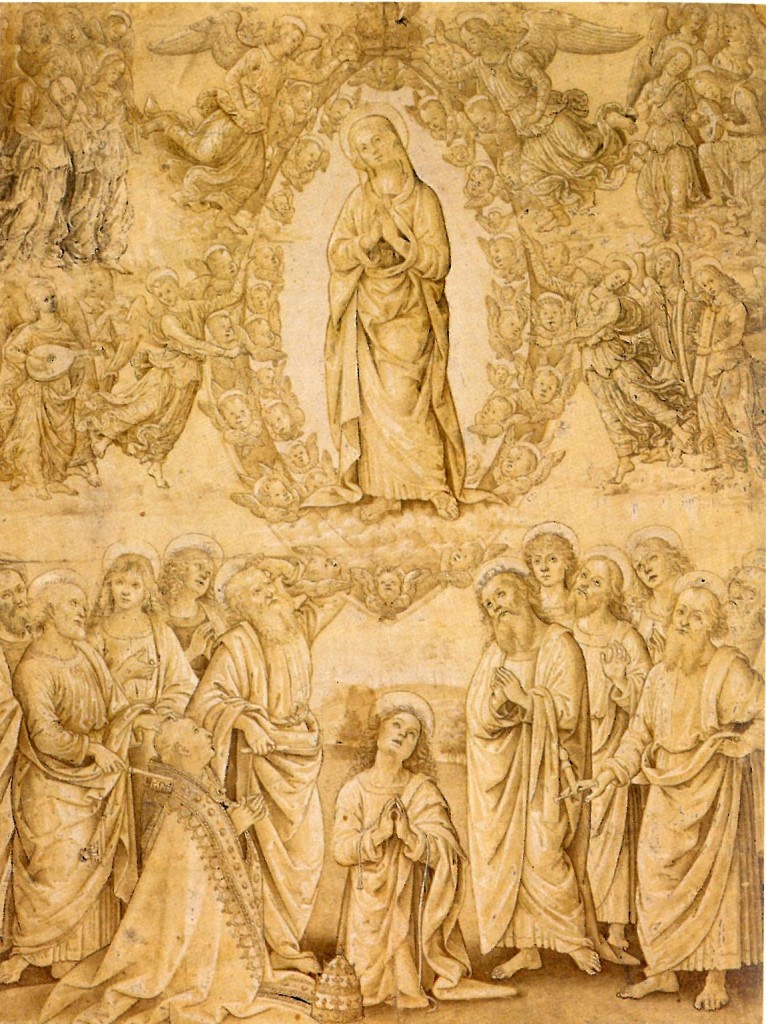
L’Assunta di Perugino che oggi non potete più vedere
Quell’affresco non è arrivato fino ai vostri giorni. Quando mi fu commissionato il Giudizio Universale, dovetti intervenire proprio su quella parete.
Quando arrivai però non c’era affatto uno spazio vuoto. Perugino aveva realizzato una grande composizione con la Vergine assunta in cielo dentro una mandorla luminosa, circondata da angeli e cherubini. Ai suoi piedi erano raccolti i dodici Apostoli.
E c’era anche papa Sisto IV, inginocchiato in primo piano, con la tiara deposta a terra.
Quell’immagine doveva rappresentare perfettamente il significato della consacrazione della cappella alla Vergine Assunta. Oggi possiamo ricostruirne l’aspetto grazie a un disegno attribuito a un artista della bottega del Perugino, conservato a Vienna.
Perugino e Pinturicchio: un’opera a quattro mani?
Non è escluso che a quella grande decorazione avesse lavorato anche Pinturicchio, allora giovane artista vicino al Perugino.
Le differenze stilistiche tra la parte superiore e quella inferiore dell’affresco hanno infatti alimentato l’ipotesi di un intervento a più mani. Il Perugino avrebbe realizzato la parte inferiore, mentre Pinturicchio potrebbe essere intervenuto nella zona superiore.
Il Giudizio Universale e la distruzione degli affreschi
Dovetti coprire quelle opere per fare spazio al mio Giudizio Universale. Non fu una decisione presa per capriccio.
La parete dell’altare era ormai destinata ad accogliere una rappresentazione completamente nuova, un’immagine che avrebbe raccontato la fine dei tempi, la resurrezione dei morti e il destino eterno delle anime. Secondo quanto racconta Vasari, gli affreschi precedenti furono scalpellati via.
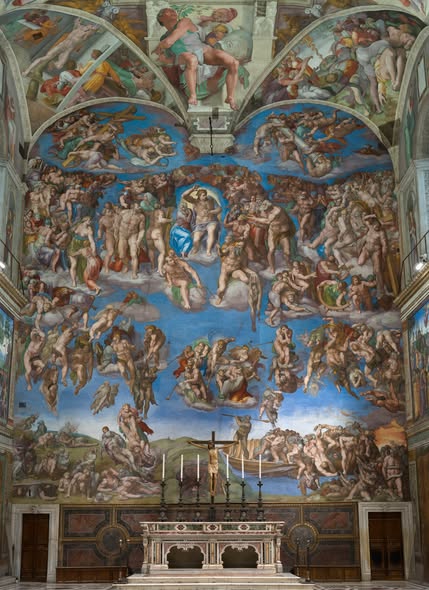
Ma esiste anche un’altra possibilità che nel corso del tempo ha alimentato discussioni e interrogativi: alcune tracce delle decorazioni potrebbero essere state nascoste dalla nuova struttura della parete inclinata che feci realizzare in mattoni ben cotti per poi affrescare il Giudizio.
Quel che è certo è che l’Assunta di Perugino, insieme alle altre scene quattrocentesche sempre del Perugino e a due mie lunette, non sono più visibli.
Dalla consacrazione del 1483 ai miei affreschi nella Cappella Sistina
Il 15 agosto 1483 segnò dunque l’inizio della vita della Cappella Sistina come uno dei luoghi più importanti della cristianità. Io sarei tornato a Roma molti anni dopo, chiamato da papa Giulio II della Rovere, nipote di Sisto IV, per affrontare una delle imprese più difficili della mia vita: la decorazione della volta.
E quando poi Clemente VII de’ Medici mi affidò la parete dell’altare, la commissione venne confermata dopo la sua morte da Paolo III Farnese. Fu allora che nacque il mio Giudizio Universale.
Per il momento il sempre vostro Michelangelo Buonarroti vi saluta dandovi appuntamento ai prossimi post e sui social.
The Sistine Chapel before me: the consecration to the Virgin on August 15, 1483
On August 15, 1483, the Sistine Chapel was consecrated to the Virgin of the Assumption by Pope Sixtus IV della Rovere. Before I painted the ceiling and, many years later, the Last Judgment, those walls had already seen some of the greatest artists of the Renaissance. When I arrived, I found myself standing before a story that had already begun.
The Sistine Chapel was born on August 15, 1483
It was on August 15, 1483, that Pope Sixtus IV solemnly consecrated the new chapel to the Virgin of the Assumption into Heaven.
That building didn’t arise from nothing. Where you see the Sistine Chapel today, an older structure already existed, but Sixtus IV della Rovere wanted to completely transform it. He wanted a grandiose place, worthy of papal liturgy and capable of celebrating the power of the Church.
The new chapel was designed by Baccio Pontelli, and construction began in 1475, completing in 1481. Its proportions were far from random: the pontiff wanted them to exactly resemble those of Solomon’s Temple in Jerusalem, as described in the Old Testament. It is 40.93 meters long, 13.41 meters wide, and 20.70 meters high.
Perugino and the Great Masters of the Fifteenth Century
Sixtus IV called some of the most important painters of his time to Rome. Perugino, Botticelli, Ghirlandaio, Signorelli, Pinturicchio, Bartolomeo della Gatta, and their collaborators decorated the walls with the stories of Moses and Christ. A story that began with an excommunication, the one Sixtus IV imposed on Lorenzo the Magnificent on June 1, 1478.
I would arrive only many years later.
The vault, before my intervention, had a completely different appearance. Piermatteo d’Amelia had painted a blue sky, like a lapis lazuli firmament dotted with golden stars.
And on the altar wall was an image that had a special meaning for that day, August 15th: Perugino’s Assumption into Heaven.
Perugino’s Assumption, which you can no longer see today
That fresco hasn’t survived to this day. When I was commissioned to paint the Last Judgment, I had to work on that very wall.
When I arrived, however, there was no empty space at all. Perugino had created a large composition with the Virgin assumed into Heaven within a luminous mandorla, surrounded by angels and cherubs. At her feet were gathered the Twelve Apostles.
And there was also Pope Sixtus IV, kneeling in the foreground, his tiara resting on the ground.
That image was meant to perfectly represent the meaning of the chapel’s consecration to the Virgin of the Assumption. Today we can reconstruct its appearance thanks to a drawing attributed to an artist from Perugino’s workshop, preserved in Vienna.
Perugino and Pinturicchio: a joint effort?
It is possible that Pinturicchio, then a young artist close to Perugino, also worked on that large-scale decoration.
The stylistic differences between the upper and lower sections of the fresco have fueled the hypothesis of a multi-handed intervention. Perugino painted the lower section, while Pinturicchio may have worked on the upper section.
The Last Judgment and the Destruction of the Frescoes
I had to cover those works to make room for my Last Judgment. It was not a capricious decision.
The altar wall was now destined to house a completely new representation, an image that would narrate the end of time, the resurrection of the dead, and the eternal destiny of souls. According to Vasari, the previous frescoes were chiseled away.
But there is also another possibility that has fueled discussions and questions over time: some traces of the decorations may have been hidden by the new structure of the sloping wall I had built in well-fired bricks before frescoing the Last Judgment.
What is certain is that Perugino’s Assumption, along with other fifteenth-century scenes also by Perugino and two of my lunettes, are no longer visible.
From the 1483 Consecration to My Sistine Chapel
August 15, 1483, therefore, marked the beginning of the Sistine Chapel’s life as one of the most important places in Christianity. I would return to Rome many years later, summoned by Pope Julius II della Rovere, nephew of Sixtus IV, to undertake one of the most difficult undertakings of my life: the decoration of the vault.
And when Clement VII de’ Medici later entrusted me with the altar wall, the commission was confirmed after his death by Paul III Farnese. It was then that my Last Judgment was born.
For now, yours truly, Michelangelo Buonarroti, bids farewell and invites you to join him in future posts and on social media.

Sostienici – Support Us
Se questo blog ti piace e ti appassiona, puoi aiutarci a farlo crescere sempre più sostenendoci in modo concreto condividendo i post, seguendo le pagine social e con un contributo che ci aiuta ad andare avanti con il nostro lavoro di divulgazione. . ENGLISH: If you like and are passionate about this blog, you can help us make it grow more and more by supporting us in a concrete way by sharing posts, following social pages and with a contribution that helps us to move forward with our dissemination work.
10,00 €
-
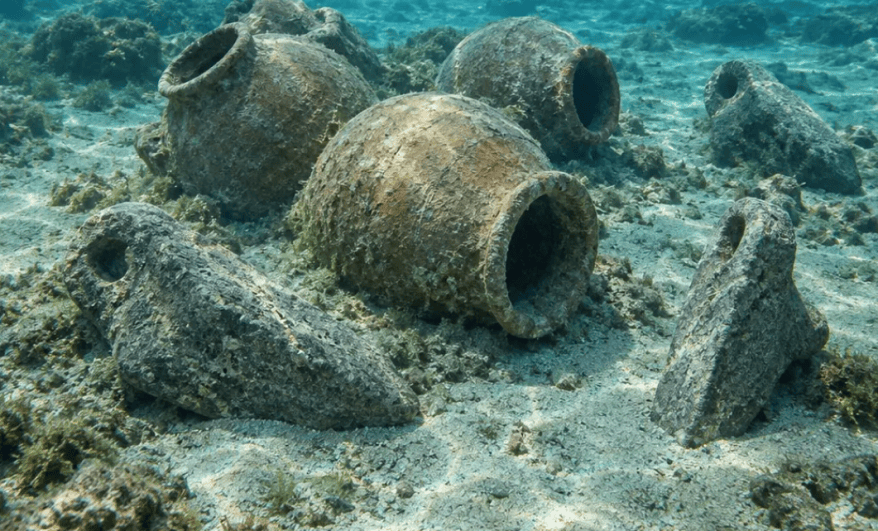
Kekova, Turchia: trovato un relitto di quasi 5.000 anni fa
🇮🇹Al largo di Kekova, in Turchia, un relitto che potrebbe risalire a 4.700 anni fa riporta l’attenzione sugli antichi commerci del Mediterraneo… 🇬🇧Off the coast of Kekova, in Türkiye, a shipwreck that may date back 4,700 years is drawing renewed attention to ancient Mediterranean trade…
-
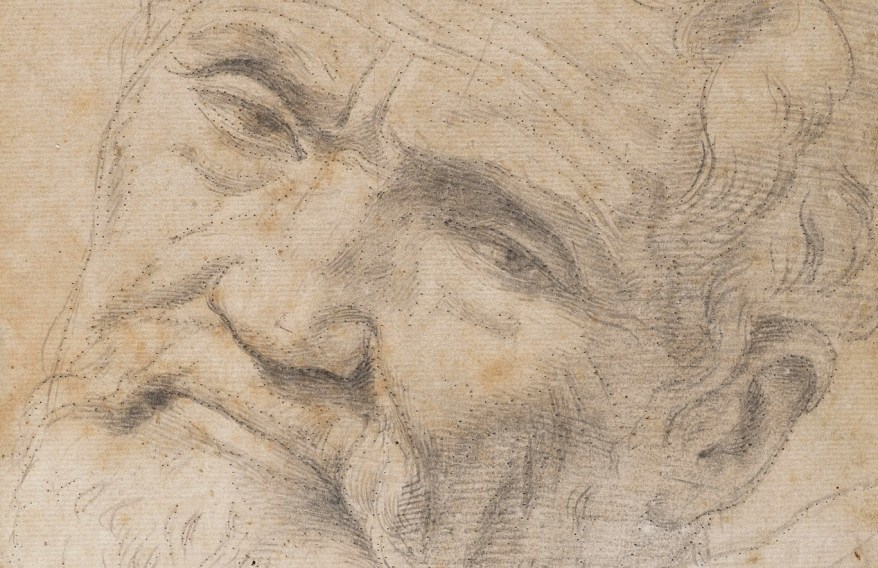
Se l’inferno fosse con te, sarebbe dolce
🇮🇹Vi racconto un mio madrigale sull’amore impossibile, la bellezza crudele e il desiderio di condividere con chi amo persino l’Inferno… 🇬🇧Let me share with you a madrigal of mine about impossible love, cruel beauty, and the desire to share even Hell with the one I love…
-
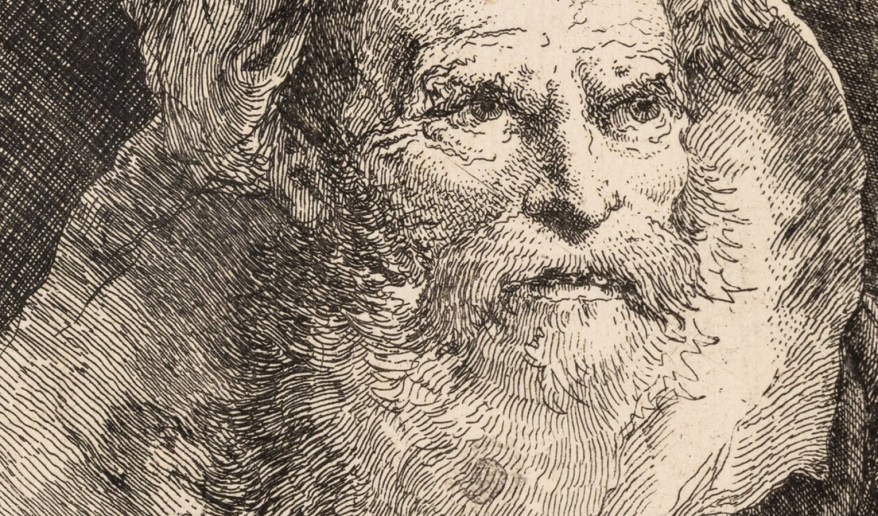
Tiepolo, 62 opere svelano il mondo segreto di padre e figlio: la mostra ai Musei Reali di Torino
🇮🇹Giambattista e Giandomenico Tiepolo in mostra a Torino: 62 disegni e incisioni, Pulcinella, opere inedite e visioni misteriose da oggi 15 ottobre 2026… 🇬🇧Giambattista and Giandomenico Tiepolo on display in Turin: 62 drawings and engravings, Pulcinella, previously unseen works, and mysterious visions—starting today, October 15, 2026…
Condividi:


Questo sono io




sostienici

Sostienici – Support Us
Se questo blog ti piace e ti appassiona, puoi aiutarci a farlo crescere sempre più sostenendoci in modo concreto condividendo i post, seguendo le pagine social e con un contributo che ci aiuta ad andare avanti con il nostro lavoro di divulgazione. . ENGLISH: If you like and are passionate about this blog, you can help us make it grow more and more by supporting us in a concrete way by sharing posts, following social pages and with a contribution that helps us to move forward with our dissemination work.
€10,00


