
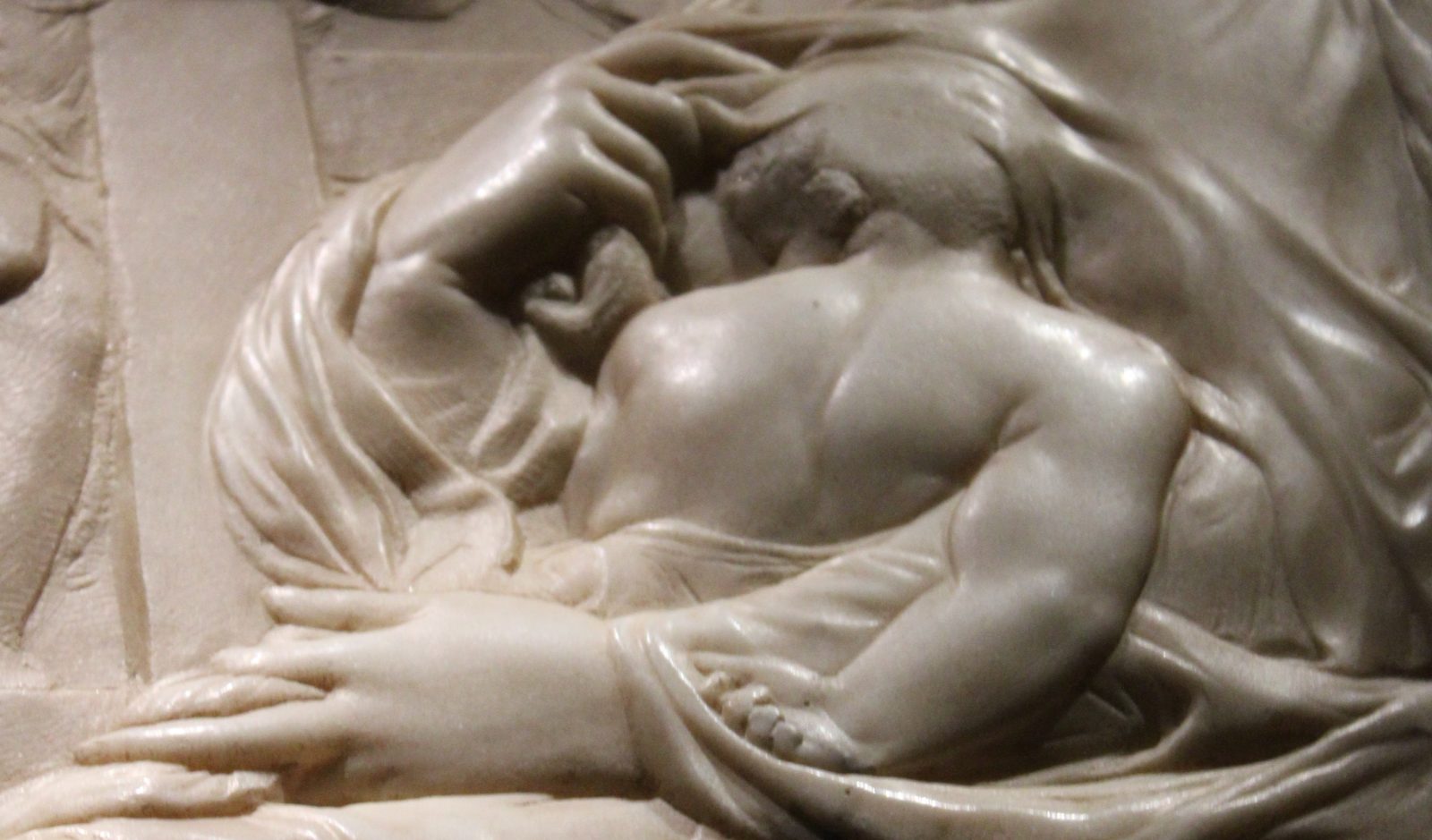
Il mio funerale, più spettacolare di quello di un re: cosa accadde il 14 luglio 1564
Dovetti aspettare cinque mesi dopo la mia morte per avere il funerale a Firenze ma, a dirla tutta, l’attesa valse la pena.
Era il 14 luglio 1564 quando Firenze decise di salutarmi con esequie tanto grandiose che, se avessi potuto alzarmi dalla bara per un istante, probabilmente avrei borbottato che stavano davvero esagerando. Eppure, conoscendo i Medici, non avrei dovuto sorprendermi.

Fu Cosimo I de’ Medici a volere una cerimonia che nessun sovrano avrebbe potuto invidiare. Non era riuscito a convincermi a tornare a Firenze da vivo, ma da morto si dimostrò decisamente più persuasivo. E poi alla fine dei conti, ormai non potevo presentare più alcuna rimostranza: questa fu la sua fortuna.
Come tornai a Firenze: nascosto come una balla di grano
Lasciai questo mondo il 18 febbraio 1564, nella mia casa di Macel de’ Corvi, a Roma, circondato dagli amici più fedeli e dai miei collaboratori. Il giorno seguente fui tumulato nella Basilica dei Santi Apostoli. Papa Pio IV avrebbe voluto che quello fosse il mio riposo eterno, ma il destino aveva altri progetti.
O forse dovrei dire che li aveva Cosimo I.
Il mio ritorno in Toscana fu quasi un romanzo d’avventura. Mio nipote Lionardo arrivò a Roma, raccolse le mie carte, la mia cassa di denaro e organizzò un autentico colpo di mano.

Il 7 marzo il mio corpo venne sistemato in una cassa rivestita di piombo e accuratamente nascosto dentro una balla da trasporto. Agli occhi di chi osservava sembravo una qualsiasi mercanzia: una settantina di chili di grano, nulla di più.
Lo raccontò anche il mio caro amico Giorgio Vasari, scrivendo che Lionardo aveva fatto uscire il mio corpo da Roma “come fussi alcuna mercanzia”. Non è il modo più poetico per descrivere uno dei più grandi artisti del Rinascimento, ma bisogna riconoscere che fu estremamente efficace.
Se oggi riposo a Firenze, parte del merito va anche al corriere Simone da Berna. Non capita tutti i giorni di trasportare un Michelangelo come me senza nemmeno saperlo.

Il mio ingresso a Firenze fu più elegante che in tutta la mia vita
Arrivai a Firenze la sera del 10 marzo 1564. Per l’occasione indossavo un ampio cappello di seta nera, un mantello damascato dello stesso colore e persino un paio di stivali con speroni lucenti.
Vi confesso che in tutta la mia esistenza non ero mai stato vestito con tanta eleganza.
Ad aspettarmi trovai quasi tutta l’Accademia del Disegno: Vasari, Ammannati, Benvenuto Cellini, Agnolo Bronzino e molti altri. Era una strana sensazione essere accolto da così tanti amici senza poterli ringraziare di persona.
Il 14 luglio 1564 Firenze mise in scena un funerale mai visto prima
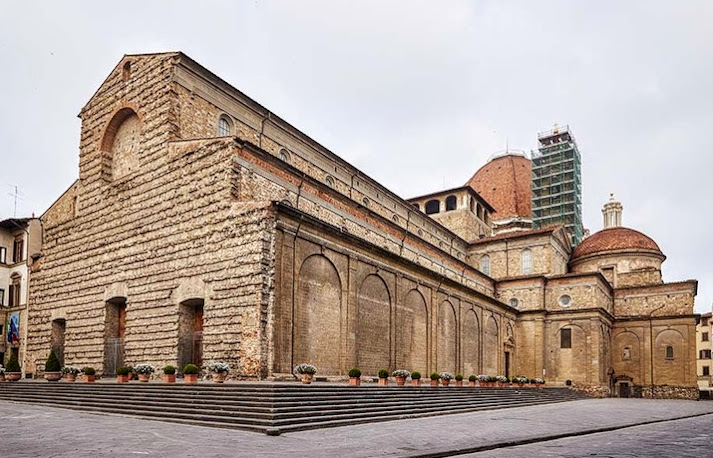
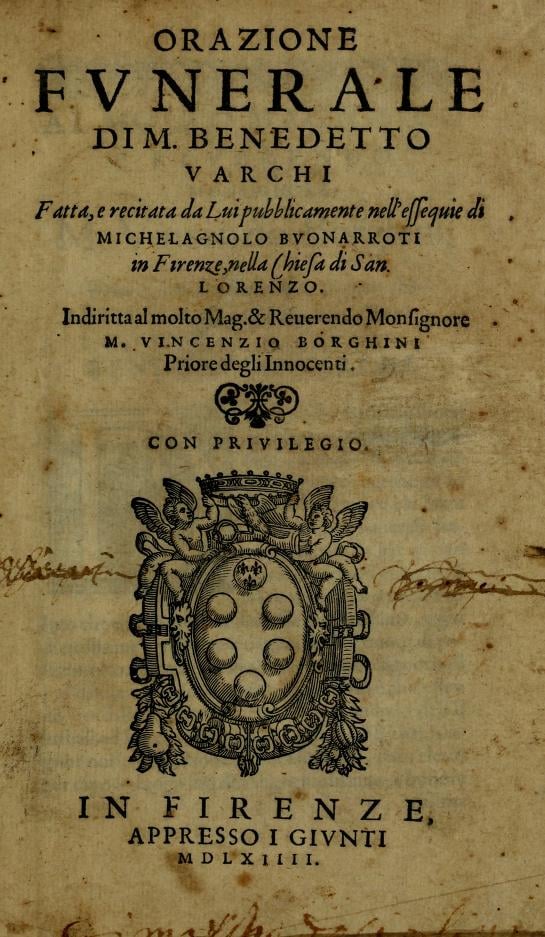
Le esequie solenni si celebrarono il 14 luglio 1564 nella Basilica di San Lorenzo.
Non fu un semplice funerale. Fu uno spettacolo pensato per stupire, commuovere e celebrare la grandezza dell’arte ma soprattutto quella di Cosimo I de’ medici.
Al centro della navata venne innalzato un enorme catafalco dalla forma piramidale, una macchina scenografica che oggi definireste quasi barocca, anche se il Barocco, ufficialmente, doveva ancora nascere.
Attorno alla struttura ondeggiavano le fiamme delle torce e il profumo dell’incenso avvolgeva ogni cosa, mentre la luce tremolante trasformava l’intera basilica in una rappresentazione teatrale della morte.
In cima dominava la Fama, modellata in terracotta ma dipinta così abilmente da sembrare marmo. Era raffigurata con le ali spiegate mentre suonava una tromba a tre campane, quasi a voler annunciare che il mio nome avrebbe continuato a viaggiare ben oltre la mia esistenza terrena.
Un catafalco che anticipava il gusto del Barocco
Quella straordinaria architettura effimera era qualcosa che Firenze non aveva mai visto.
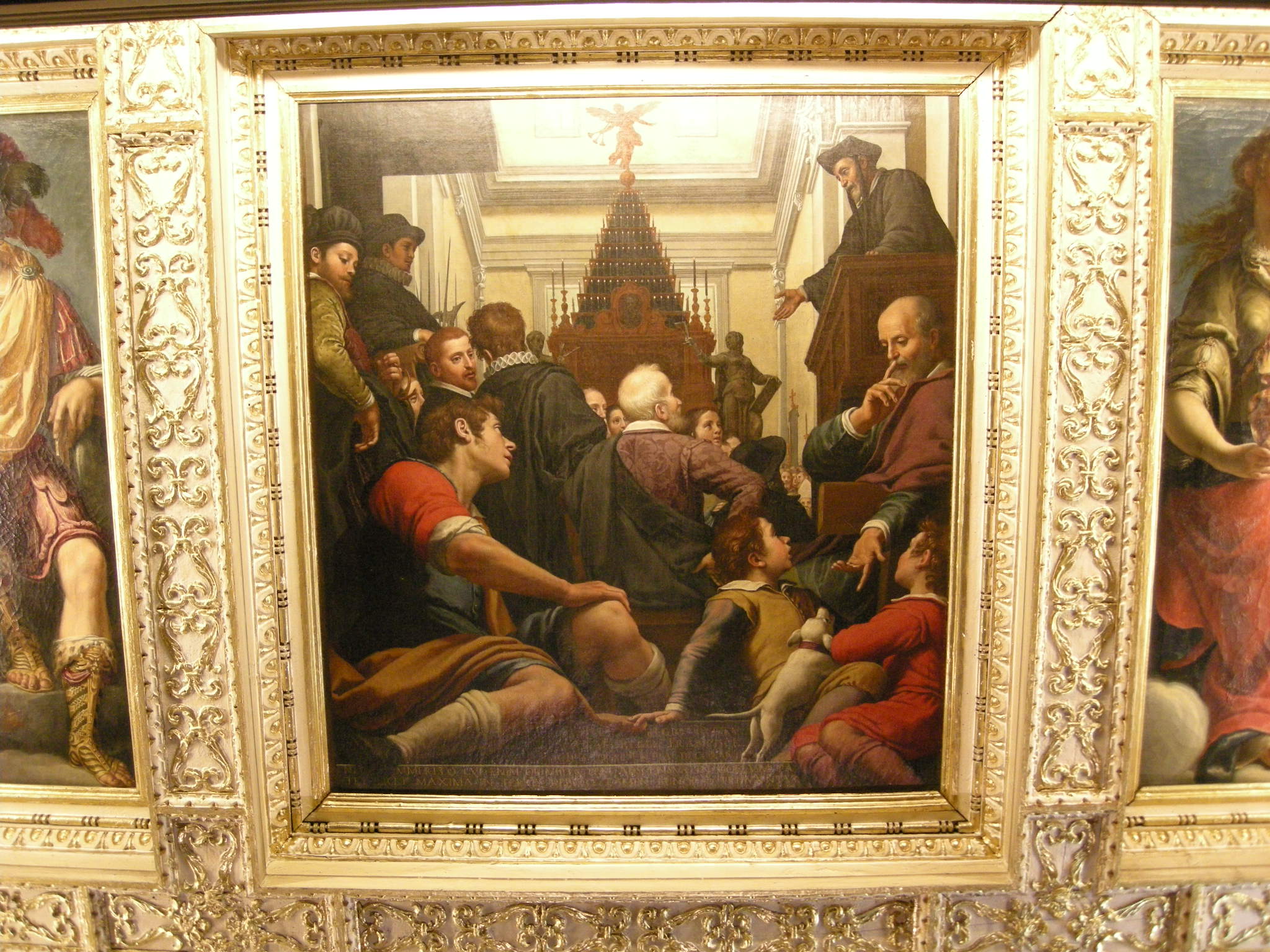
Tra una colonna e l’altra della basilica erano stati appesi grandi drappi neri, intervallati da scheletri e decorazioni funebri. Le decine di torce creavano un continuo gioco di luci e ombre che rendeva tutto ancora più solenne e drammatico.
Oggi gli storici dell’arte riconoscono in quell’allestimento una sorprendente anticipazione della spettacolarità barocca. L’effetto emotivo sul pubblico era parte integrante della cerimonia, proprio come sarebbe accaduto qualche decennio più tardi nelle grandi scenografie del Seicento.
Accanto al catafalco trovavano posto anche le allegorie della Pittura e della Scultura, insieme ai fiumi Arno e Tevere. Un modo elegante per ricordare le due città che avevano segnato la mia vita: Firenze, dove nacqui come artista, e Roma, dove scolpii, dipinsi e consumai quasi tutte le mie energie.
Dopo cinque secoli quella Fama continua ancora a suonare la sua tromba
Ripensandoci, non avrei mai immaginato che il mio ultimo viaggio sarebbe stato il più avventuroso di tutti.
Fui nascosto come una balla di grano, riportato nella mia città quasi di contrabbando e infine celebrato con una magnificenza che nemmeno i principi del mio tempo potevano vantare.
Cosimo I aveva capito che gli artisti non governano gli Stati, è vero, ma hanno uno strano vizio. Continuano a parlare ai vivi anche quando sono morti.
E, a giudicare dal fatto che dopo oltre quattro secoli state ancora leggendo la mia storia, direi che quella tromba della Fama non ha mai smesso davvero di suonare.
Per il momento il sempre vostro Michelangelo Buonarroti vi saluta dandovi appuntamento ai prossimi post e sui social.
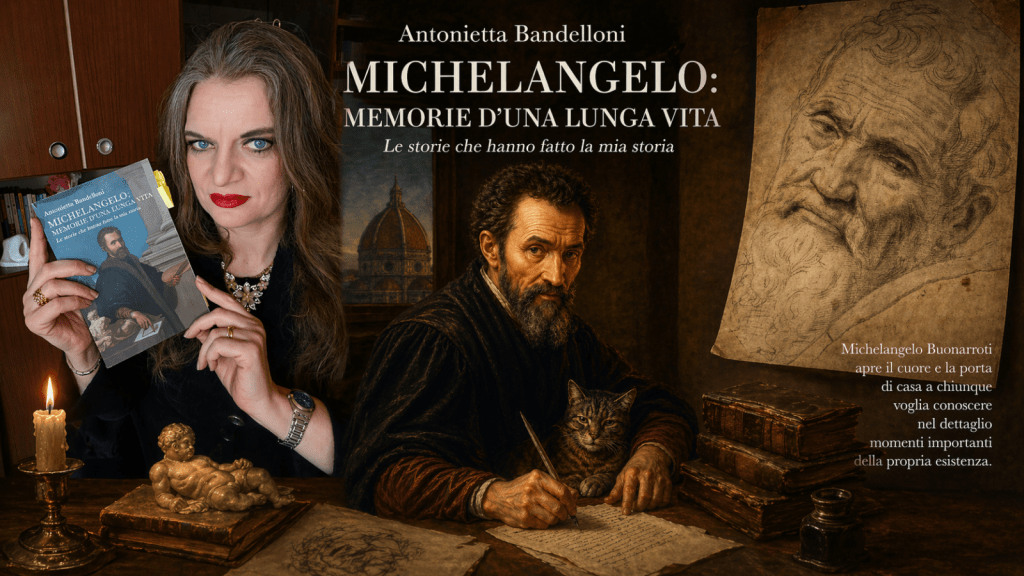
My Funeral, More Spectacular Than a King’s: What Happened on July 14, 1564
I had to wait five months after my death for my funeral in Florence, but truth be told, the wait was worth it.
It was July 14, 1564, when Florence decided to bid me farewell with a funeral so grandiose that, if I could have stood up from my coffin for a moment, I probably would have muttered that they were really exaggerating. Yet, knowing the Medici, I shouldn’t have been surprised.
It was Cosimo I de’ Medici who wanted a ceremony no ruler could envy. He hadn’t managed to convince me to return to Florence while alive, but in death he proved decidedly more persuasive. And then, in the end, I could no longer raise any complaints: that was his good fortune.
How I Returned to Florence: Hidden Like a Bale of Wheat
I left this world on February 18, 1564, in my home in Macel de’ Corvi, Rome, surrounded by my most faithful friends and collaborators. The following day, I was buried in the Basilica of the Holy Apostles. Pope Pius IV wanted that to be my eternal rest, but fate had other plans.
Or perhaps I should say that Cosimo I did.
My return to Tuscany was almost an adventure novel. My nephew Lionardo arrived in Rome, gathered my papers and my chest of money, and staged a veritable coup.
On March 7, my body was placed in a lead-lined coffin and carefully hidden inside a shipping bale. To those who observed it, I looked like any other merchandise: about seventy kilos of wheat, nothing more.
My dear friend Giorgio Vasari also recounted this, writing that Lionardo had smuggled my body out of Rome “as if it were any merchandise.” It’s not the most poetic way to describe one of the greatest artists of the Renaissance, but it must be acknowledged that he was extremely effective.
If I rest in Florence today, part of the credit goes to the courier Simone da Berna. It’s not every day that you transport a Michelangelo like me without even knowing it.
My entry into Florence was more elegant than in my entire life
I arrived in Florence on the evening of March 10, 1564. For the occasion, I wore a wide black silk hat, a damask cloak of the same color, and even a pair of boots with shiny spurs.
I confess that in my entire life, I had never been so elegantly dressed.
Almost the entire Accademia del Disegno was waiting for me: Vasari, Ammannati, Benvenuto Cellini, Agnolo Bronzino, and many others. It was a strange feeling to be welcomed by so many friends without being able to thank them in person.
On July 14, 1564, Florence staged a funeral unlike any other
The solemn funeral was held on July 14, 1564, in the Basilica of San Lorenzo.
It was not a simple funeral. It was a spectacle designed to amaze, move, and celebrate the greatness of art, but above all that of Cosimo I de’ Medici.
At the center of the nave, an enormous pyramid-shaped catafalque was erected, a scenographic device that today you would call almost Baroque, even though the Baroque, officially, had yet to be born.
The flames of torches billowed around the structure, and the scent of incense enveloped everything, while the flickering light transformed the entire basilica into a theatrical representation of death.
At the top, Fame dominated, modeled in terracotta but painted so skillfully that it resembled marble. She was depicted with outstretched wings while playing a three-bell trumpet, as if to announce that my name would continue to travel far beyond my earthly existence.
A catafalque that anticipated the Baroque style
That extraordinary, ephemeral architecture was something Florence had never seen before.
Large black drapes had been hung between the columns of the basilica, interspersed with skeletons and funerary decorations. The dozens of torches created a continuous play of light and shadow that made everything even more solemn and dramatic.
Today, art historians recognize in that setting a striking foreshadowing of Baroque spectacularity. The emotional effect on the audience was an integral part of the ceremony, just as it would be a few decades later in the great scenography of the 17th century.
Alongside the catafalque were also the allegories of Painting and Sculpture, along with the Arno and Tiber rivers. An elegant way to remember the two cities that had shaped my life: Florence, where I was born as an artist, and Rome, where I sculpted, painted, and spent almost all my energy.
After five centuries, that Fame still continues to sound its trumpet
Looking back, I never imagined that my last journey would be the most adventurous of all.
I was hidden like a bale of wheat, brought back to my city almost smuggled, and finally celebrated with a magnificence that not even the princes of my time could boast.
Cosimo I understood that artists do not govern states, it’s true, but they have a strange vice. They continue to speak to the living even after they are dead.
And, judging by the fact that after more than four centuries you are still reading my story, I’d say that that trumpet of Fame has never truly stopped sounding.
For now, yours truly, Michelangelo Buonarroti bids you farewell, saying he’ll see you in future posts and on social media.

Sostienici – Support Us
Se questo blog ti piace e ti appassiona, puoi aiutarci a farlo crescere sempre più sostenendoci in modo concreto condividendo i post, seguendo le pagine social e con un contributo che ci aiuta ad andare avanti con il nostro lavoro di divulgazione. . ENGLISH: If you like and are passionate about this blog, you can help us make it grow more and more by supporting us in a concrete way by sharing posts, following social pages and with a contribution that helps us to move forward with our dissemination work.
10,00 €

Condividi:


Questo sono io




sostienici

Sostienici – Support Us
Se questo blog ti piace e ti appassiona, puoi aiutarci a farlo crescere sempre più sostenendoci in modo concreto condividendo i post, seguendo le pagine social e con un contributo che ci aiuta ad andare avanti con il nostro lavoro di divulgazione. . ENGLISH: If you like and are passionate about this blog, you can help us make it grow more and more by supporting us in a concrete way by sharing posts, following social pages and with a contribution that helps us to move forward with our dissemination work.
€10,00


