
Egitto, scoperta straordinaria nel Delta del Nilo: 560 ushabti, mummie e ceramiche di Rodi riscrivono la storia
Una nuova e straordinaria scoperta archeologica in Egitto promette di arricchire le conoscenze sulla civiltà faraonica e sui suoi rapporti con il Mediterraneo. Nella necropoli di Tell Quesna, nella provincia di Menoufia, circa cento chilometri a nord del Cairo, gli archeologi hanno riportato alla luce una tomba del Periodo Tardo contenente mummie, centinaia di statuette ushabti, preziosi amuleti e reperti che testimoniano gli intensi scambi commerciali con il mondo greco.
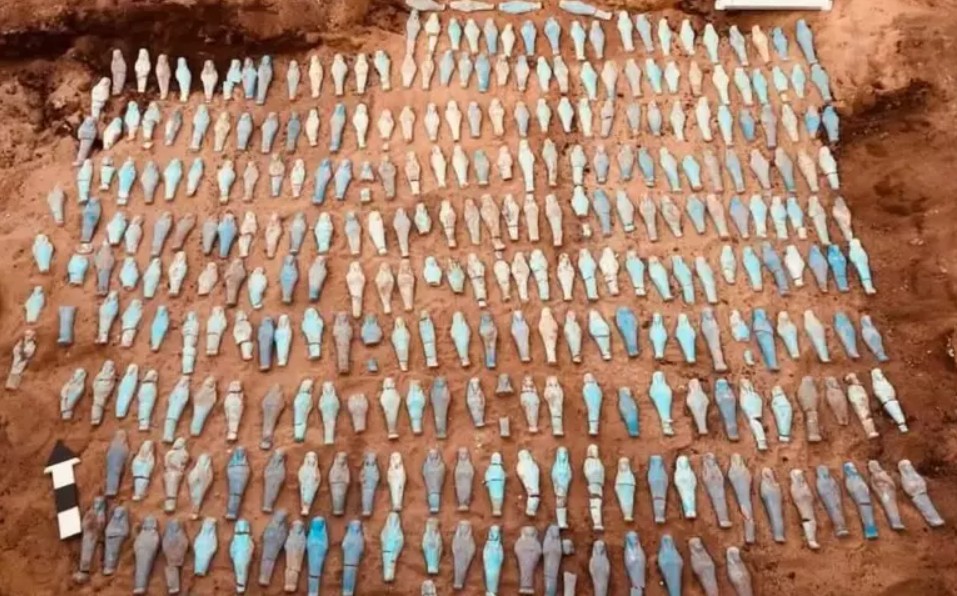
Tra i ritrovamenti più sorprendenti figurano ben 560 ushabti, le celebri statuette funerarie destinate ad accompagnare il defunto nell’aldilà, insieme a ceramiche provenienti dall’isola di Rodi che confermano il ruolo strategico del Delta del Nilo nelle rotte commerciali del Mediterraneo antico.
Una tomba perfettamente conservata svela i segreti del Tardo Regno
La nuova scoperta è avvenuta all’interno della necropoli di Tell Quesna, considerata uno dei più importanti complessi funerari privati dell’area centrale del Delta del Nilo. Il ministro del Turismo e delle Antichità, Sherif Fathy, ha ricordato come questo sito rappresenti un punto di riferimento fondamentale per comprendere la storia delle sepolture nell’Egitto settentrionale.
Secondo il segretario generale del Consiglio Supremo delle Antichità, Hisham El-Leithy, il complesso funerario presenta una struttura architettonica particolarmente ben conservata. Una sala principale conduce infatti a diverse camere attraverso ingressi con volte ancora riconoscibili, elemento che ha consentito agli archeologi di ricostruire con notevole precisione l’aspetto originario dell’intera tomba.
Le 560 statuette ushabti: gli “operai dell’aldilà” dell’antico Egitto
Il reperto più spettacolare è rappresentato dalle 560 statuette ushabti rinvenute in una delle camere funerarie. Modellate con l’aspetto di piccole mummie, queste figure avevano un ruolo fondamentale nella religione dell’antico Egitto.
Secondo le credenze riportate nel Libro dei Morti, gli ushabti avrebbero preso il posto del defunto qualora, nell’aldilà, gli fosse stato richiesto di svolgere lavori agricoli o altre attività al servizio delle divinità. Per questo motivo sono spesso definiti gli “operai dell’aldilà”. Molti degli esemplari scoperti conservano iscrizioni tratte proprio dal Libro dei Morti, mentre altri si distinguono per forme e dimensioni differenti, offrendo agli studiosi nuovi elementi per approfondire la cultura funeraria del Periodo Tardo.
Amuleti, Occhio di Horus e Nodo di Iside: il corredo funerario racconta la fede degli antichi Egizi
Accanto alle mummie è emersa una ricca collezione di amuleti in pietre semipreziose, destinati a garantire protezione al defunto durante il viaggio nell’oltretomba.
Tra gli oggetti più significativi figurano l’Occhio di Horus, simbolo di protezione e guarigione, il Nodo di Iside, legato alla rinascita e alla forza della dea, oltre al caratteristico amuleto a forma di dito e a numerose raffigurazioni delle principali divinità egizie. L’insieme del corredo testimonia quanto fosse centrale, nella religione faraonica, la preparazione del viaggio verso la vita eterna.
Ceramiche di Rodi confermano gli intensi commerci nel Mediterraneo
Uno degli aspetti più interessanti della scoperta riguarda il ritrovamento di reperti provenienti dall’isola di Rodi. Gli archeologi hanno infatti individuato ceramiche importate dalla celebre isola greca, tra cui il frammento del manico di un vaso che conserva ancora il nome del suo produttore.
Si tratta di una testimonianza diretta dei rapporti commerciali tra l’Egitto e il Mediterraneo durante il Periodo Tardo e quello Greco-Romano, tra il VI secolo a.C. e l’epoca della conquista di Alessandro Magno. Questi reperti confermano come il Delta del Nilo fosse inserito in una vasta rete di scambi economici e culturali che coinvolgeva numerosi porti del Mediterraneo orientale.
Piatti collocati sulle mummie: un rituale funerario ancora da interpretare
Tra le scoperte più enigmatiche figurano alcuni piatti in ceramica deposti direttamente sui corpi dei defunti. La direttrice della missione archeologica, Nermin El-Morsi, ha spiegato che uno dei recipienti era stato sistemato sotto le braccia incrociate di una mummia, mentre un altro si trovava tra le cosce dello stesso individuo.
Alcuni di questi vasi conservavano residui di materiali che potrebbero essere stati impiegati durante la mummificazione oppure nelle cerimonie religiose che accompagnavano la sepoltura. Si tratta di pratiche funerarie finora poco documentate, che saranno ora oggetto di approfonditi studi scientifici.
Perle in maiolica e lucerne completano un corredo funerario eccezionale
Gli scavi hanno restituito anche una ricca collezione di manufatti che arricchiscono ulteriormente il corredo funerario. Sono emerse grandi quantità di perle in maiolica blu e verde, probabilmente appartenenti a una rete funeraria che ricopriva una delle mummie, insieme a piatti, ciotole, due lucerne e un vaso contenente residui di sostanze probabilmente utilizzate durante i rituali di imbalsamazione.
L’ottimo stato di conservazione di questi reperti consentirà nuove analisi archeometriche e chimiche, che potrebbero offrire informazioni preziose sulle tecniche di mummificazione e sulle pratiche rituali adottate nel Delta del Nilo durante il Tardo Periodo.
Tell Quesna continua a sorprendere gli archeologi
Scoperta nel 1991, la necropoli di Tell Quesna è oggi considerata uno dei siti archeologici più importanti dell’Egitto settentrionale per lo studio dell’evoluzione delle pratiche funerarie. Le numerose sepolture appartenenti a epoche differenti permettono infatti di ricostruire i cambiamenti delle credenze religiose, dei rituali e delle tecniche di sepoltura nel corso dei secoli.
L’ultima campagna di scavo conferma ancora una volta l’enorme valore scientifico di questo sito. Le 560 statuette ushabti, gli amuleti, le ceramiche provenienti da Rodi e gli insoliti rituali documentati all’interno della tomba aggiungono nuovi tasselli alla conoscenza della civiltà egizia e dei suoi rapporti con il Mediterraneo, dimostrando come il Delta del Nilo fosse un crocevia di culture, commerci e tradizioni religiose molto più dinamico di quanto si immaginasse.
Per il momento il sempre vostro Michelangelo Buonarroti vi saluta dandovi appuntamento ai prossimi post e sui social.
Egypt, extraordinary discovery in the Nile Delta: 560 ushabtis, mummies, and ceramics from Rhodes rewrite history
A new and extraordinary archaeological discovery in Egypt promises to enrich our knowledge of the Pharaonic civilization and its relationship with the Mediterranean. In the necropolis of Tell Quesna, in the province of Menoufia, about one hundred kilometers north of Cairo, archaeologists have unearthed a Late Period tomb containing mummies, hundreds of ushabti statuettes, precious amulets, and artifacts that testify to intense trade with the Greek world.
Among the most surprising finds are 560 ushabtis, the famous funerary statuettes intended to accompany the deceased into the afterlife, along with ceramics from the island of Rhodes, confirming the strategic role of the Nile Delta in the trade routes of the ancient Mediterranean.
A perfectly preserved tomb reveals the secrets of the Late Kingdom
The new discovery was made within the necropolis of Tell Quesna, considered one of the most important private funerary complexes in the central Nile Delta. Minister of Tourism and Antiquities Sherif Fathy noted that this site represents a fundamental point of reference for understanding the history of burials in northern Egypt.
According to Hisham El-Leithy, Secretary General of the Supreme Council of Antiquities, the funerary complex features a particularly well-preserved architectural structure. A main hall leads to several chambers through entrances with still recognizable vaults, a feature that allowed archaeologists to reconstruct the original appearance of the entire tomb with remarkable precision.
The 560 ushabti statuettes: the “workers of the afterlife” of ancient Egypt
The most spectacular find is the 560 ushabti statuettes discovered in one of the burial chambers. Modeled as small mummies, these figures played a fundamental role in ancient Egyptian religion.
According to the beliefs recorded in the Book of the Dead, ushabtis would take the place of the deceased if, in the afterlife, they were required to perform agricultural work or other tasks in the service of the deities. For this reason, they are often referred to as the “workers of the afterlife.” Many of the discovered specimens preserve inscriptions taken from the Book of the Dead, while others are distinguished by their different shapes and sizes, offering scholars new insights into the funerary culture of the Late Period.
Amulets, the Eye of Horus, and the Knot of Isis: Funeral objects reveal the faith of the ancient Egyptians
Alongside the mummies, a rich collection of semi-precious stone amulets has emerged, intended to guarantee protection to the deceased during their journey to the afterlife.
Among the most significant objects are the Eye of Horus, a symbol of protection and healing; the Knot of Isis, linked to rebirth and the goddess’s strength; the characteristic finger-shaped amulet; and numerous depictions of the principal Egyptian deities. The entire collection demonstrates how central preparation for the journey to eternal life was to the pharaonic religion.
Ceramics from Rhodes confirm intense trade in the Mediterranean
One of the most interesting aspects of the discovery concerns the discovery of artifacts from the island of Rhodes. Archaeologists have identified ceramics imported from the famous Greek island, including a fragment of a vase handle that still bears the name of its maker.
This provides direct evidence of trade between Egypt and the Mediterranean during the Late and Greco-Roman periods, between the 6th century BC and the time of Alexander the Great’s conquest. These finds confirm that the Nile Delta was part of a vast network of economic and cultural exchanges that involved numerous ports in the eastern Mediterranean.
Plates placed on mummies: a funerary ritual yet to be interpreted
Among the most enigmatic discoveries are some ceramic plates placed directly on the bodies of the deceased. The director of the archaeological mission, Nermin El-Morsi, explained that one of the vessels had been placed under the crossed arms of a mummy, while another was placed between the same individual’s thighs.
Some of these vessels preserved residues of materials that may have been used during mummification or in the religious ceremonies accompanying the burial. These funerary practices, previously poorly documented, will now be the subject of in-depth scientific studies.
Majolica beads and lamps complete an exceptional funerary collection
The excavations also uncovered a rich collection of artifacts that further enrich the funerary collection. Large quantities of blue and green majolica beads were discovered, likely belonging to a funerary net that covered one of the mummies, along with plates, bowls, two lamps, and a vase containing residues of substances likely used during embalming rituals.
The excellent state of preservation of these finds will allow for new archaeometric and chemical analyses, which could provide valuable information on the mummification techniques and ritual practices adopted in the Nile Delta during the Late Period.
Tell Quesna continues to amaze archaeologists
Discovered in 1991, the Tell Quesna necropolis is now considered one of the most important archaeological sites in northern Egypt for studying the evolution of funerary practices. The numerous burials from different periods allow us to reconstruct the changes in religious beliefs, rituals, and burial techniques over the centuries.
The latest excavation campaign once again confirms the enormous scientific value of this site. The 560 ushabti statuettes, amulets, ceramics from Rhodes, and the unusual rituals documented inside the tomb add new insights into Egyptian civilization and its relationship with the Mediterranean, demonstrating how the Nile Delta was a much more dynamic crossroads of cultures, trade, and religious traditions than previously imagined.
For now, yours truly, Michelangelo Buonarroti bids you farewell and invites you to join him in future posts and on social media.

Sostienici – Support Us
Se questo blog ti piace e ti appassiona, puoi aiutarci a farlo crescere sempre più sostenendoci in modo concreto condividendo i post, seguendo le pagine social e con un contributo che ci aiuta ad andare avanti con il nostro lavoro di divulgazione. . ENGLISH: If you like and are passionate about this blog, you can help us make it grow more and more by supporting us in a concrete way by sharing posts, following social pages and with a contribution that helps us to move forward with our dissemination work.
10,00 €
Condividi:


Questo sono io




sostienici

Sostienici – Support Us
Se questo blog ti piace e ti appassiona, puoi aiutarci a farlo crescere sempre più sostenendoci in modo concreto condividendo i post, seguendo le pagine social e con un contributo che ci aiuta ad andare avanti con il nostro lavoro di divulgazione. . ENGLISH: If you like and are passionate about this blog, you can help us make it grow more and more by supporting us in a concrete way by sharing posts, following social pages and with a contribution that helps us to move forward with our dissemination work.
€10,00


Molto interessante questo post 👌👌👌👍👍👏👏👏👏👏📖📖
"Mi piace"Piace a 1 persona