
Musei Vaticani: la serie di arazzi disegnati dagli allievi di Raffaello
Tra i capolavori forse meno noti dei Musei Vaticani è possibile ammirare la monumentale serie di arazzi che racconta alcuni dei momenti più importanti della Vita di Cristo.
È la Serie della Scuola Nuova, detta anche Serie della Vita di Cristo: un ciclo straordinario originariamente composto da dodici arazzi, dei quali oggi ne sono esposti otto.
Realizzati tra il 1524 e il 1531, questi capolavori rappresentano una delle più alte espressioni dell’arte tessile rinascimentale. A renderli unici è la collaborazione tra la bottega di Raffaello, che ne fornì i cartoni attraverso i suoi allievi, e la più prestigiosa manifattura di arazzi dell’epoca: quella di Pieter Van Aelst a Bruxelles.
Pieter Van Aelst, il maestro che trasformò Bruxelles nella capitale europea degli arazzi
Dietro questi straordinari tessuti si cela una delle figure più importanti dell’arte fiamminga del XVI secolo. Pieter Van Aelst (circa 1450-1532/33) era il più celebre arazziere della sua epoca e dirigeva una delle officine più rinomate d’Europa.
La sua bottega di Bruxelles era un vero e proprio centro di eccellenza internazionale. Qui lavoravano decine di artigiani altamente specializzati: cartonisti, tintori, filatori e tessitori collaboravano per trasformare i disegni dei più grandi artisti del Rinascimento in opere monumentali intrecciate con lana, seta, fili d’oro e d’argento.
Ogni arazzo richiedeva anni di lavoro. I maestri tessitori operavano sul rovescio del tessuto, seguendo il cartone preparatorio posto dietro il telaio e procedendo filo dopo filo con una precisione impressionante. Bastava un piccolo errore nella scelta del colore o nella direzione della trama per compromettere l’intera composizione.
La fama della manifattura di Van Aelst raggiunse tutte le principali corti europee. Re, imperatori e pontefici si contendevano le sue creazioni, considerate tra gli oggetti artistici più preziosi del tempo.
Il legame con Raffaello e la fiducia dei papi
La fortuna della bottega cambiò definitivamente quando Papa Leone X affidò a Pieter Van Aelst la realizzazione degli straordinari Arazzi della Cappella Sistina, tessuti sui celebri cartoni di Raffaello dedicati agli Atti degli Apostoli.
Fu un’impresa senza precedenti. Van Aelst riuscì a tradurre sulla trama tutta la raffinatezza della pittura raffaellesca, ottenendo effetti di luce, profondità e volume che sembravano impossibili da raggiungere con un telaio.
Il successo fu tale che l’artigiano fiammingo venne riconosciuto come il “tappezziere del papa”, diventando il principale punto di riferimento della corte pontificia per le grandi commissioni tessili.
Quando, dopo la morte di Raffaello nel 1520, si decise di realizzare una nuova serie dedicata alla Vita di Cristo, la scelta cadde nuovamente sulla prestigiosa manifattura di Bruxelles. I cartoni vennero preparati dagli allievi del maestro urbinate, che conservarono l’equilibrio compositivo, l’eleganza delle figure e la monumentalità tipiche della sua arte.
Gli episodi dell’Infanzia di Cristo
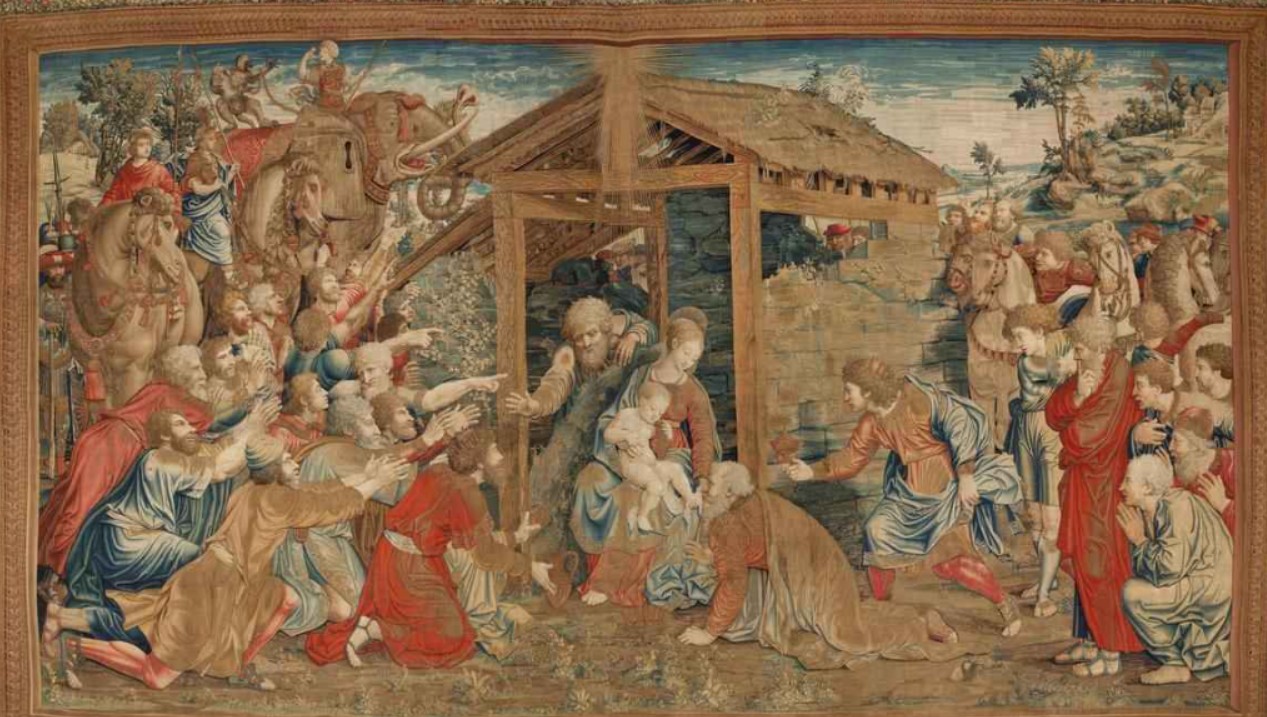
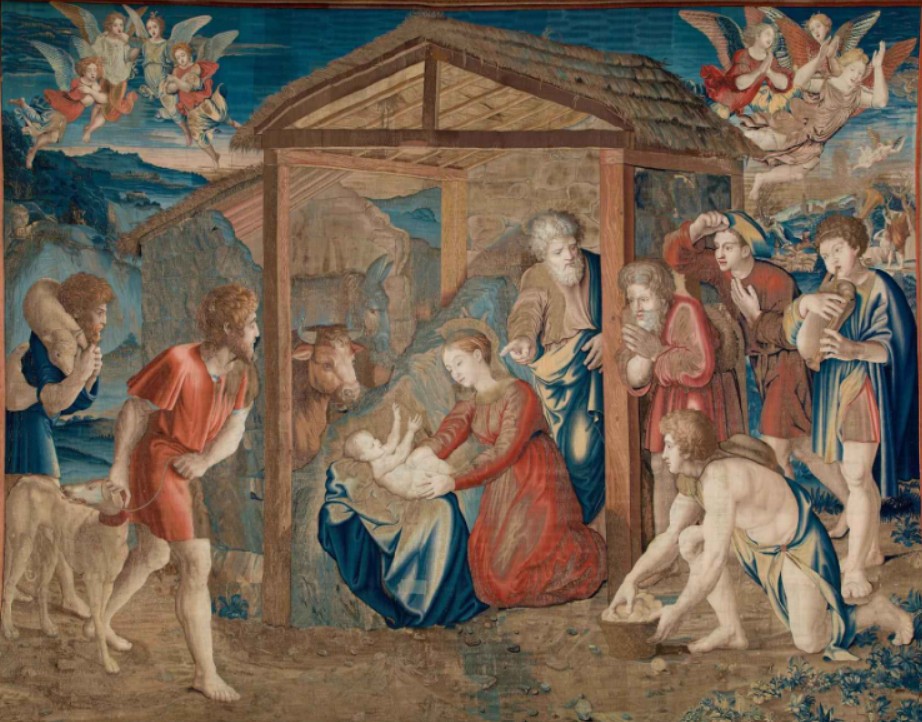
Il primo nucleo della serie è dedicato all’Infanzia di Cristo e comprende sei arazzi raffiguranti l’Adorazione dei Pastori, l’Adorazione dei Magi, la Presentazione al Tempio e la spettacolare Strage degli Innocenti, sviluppata in tre diversi panni per raccontarne l’intera drammaticità.
Le scene sono costruite con un linguaggio pienamente rinascimentale: architetture classiche, scorci prospettici, paesaggi lontani e una moltitudine di personaggi animano ogni composizione con una ricchezza narrativa straordinaria.
Dalla Resurrezione alla Pentecoste
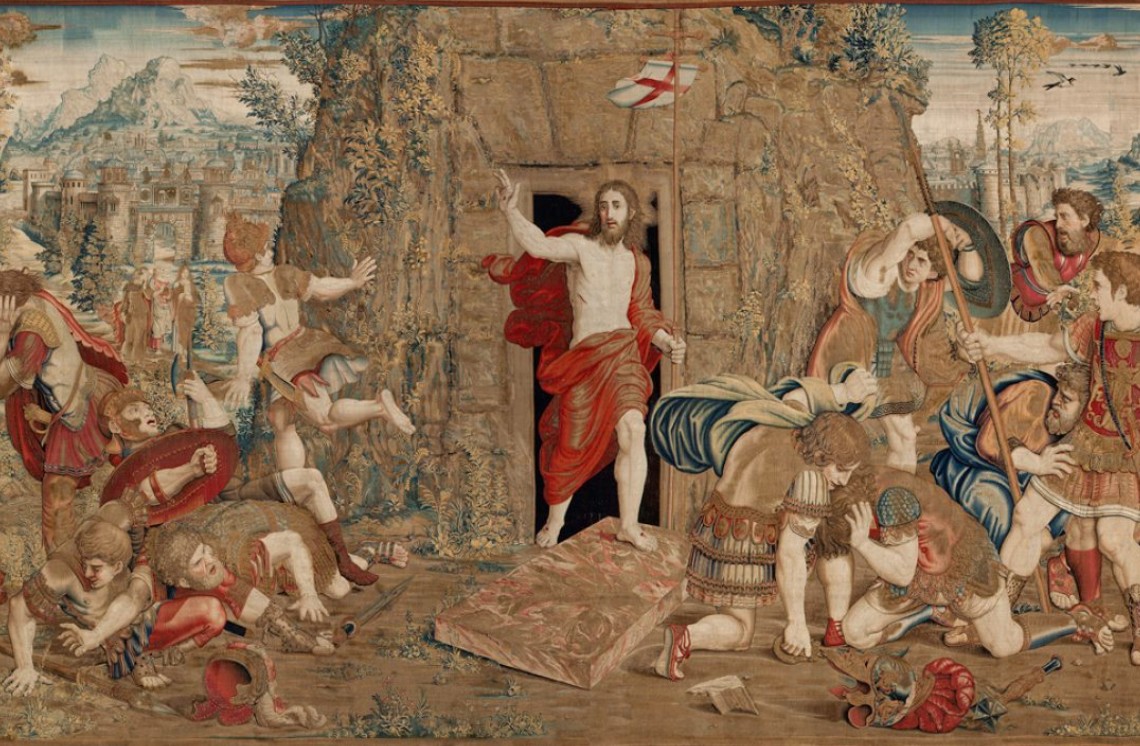
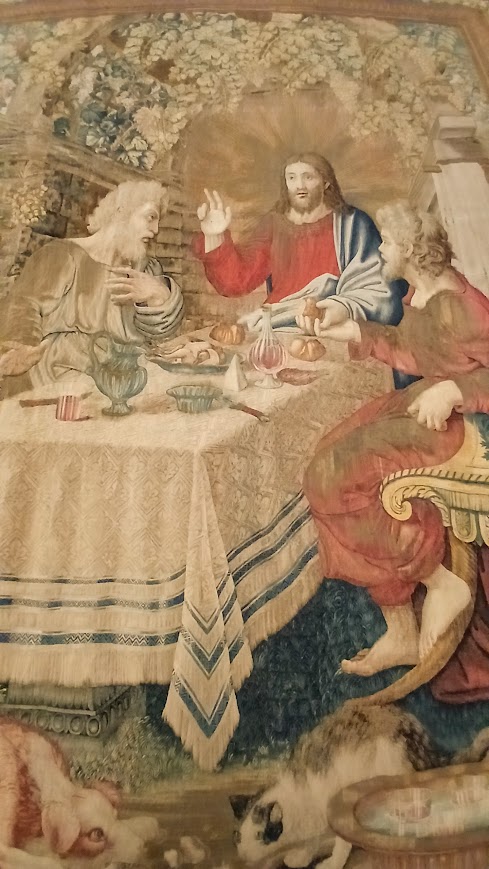
Il secondo gruppo racconta gli episodi successivi alla Crocifissione: la Resurrezione, la Discesa di Cristo al Limbo – oggi perduta –, il Noli me tangere, la Cena in Emmaus, l’Ascensione e la Pentecoste.
Qui il linguaggio figurativo si fa ancora più solenne. Le figure acquistano monumentalità, i panneggi sembrano scolpiti e gli effetti luminosi ottenuti con l’intreccio dei fili metallici conferiscono alle scene una sorprendente profondità.
Arazzi destinati alle grandi cerimonie pontificie
La Serie della Vita di Cristo non decorava stabilmente le sale pontificie. Gli arazzi venivano esposti soltanto durante i concistori, seguendo il calendario liturgico.
Gli episodi dell’Infanzia di Cristo impreziosivano le celebrazioni del Natale, mentre il ciclo dedicato alla Resurrezione veniva allestito nel periodo pasquale. La loro comparsa trasformava gli ambienti del Palazzo Apostolico in scenografie solenni, capaci di comunicare il messaggio evangelico attraverso immagini di straordinario impatto.
Il valore immenso degli arazzi nel Rinascimento
Nel Cinquecento un arazzo rappresentava uno dei beni più costosi che un sovrano o un pontefice potesse possedere. Il suo valore superava spesso quello di un dipinto, perché richiedeva enormi quantità di materiali preziosi e migliaia di ore di lavoro.
Le opere uscite dalla bottega di Pieter Van Aelst erano considerate il massimo livello raggiungibile dall’arte tessile europea. Ancora oggi colpiscono per la qualità della tessitura, la ricchezza cromatica e la capacità di riprodurre fedelmente il linguaggio pittorico della scuola di Raffaello.
Ammirare questa serie ai Musei Vaticani significa riscoprire un capitolo fondamentale del Rinascimento: quello in cui il genio dei grandi pittori e la maestria dei tessitori fiamminghi si unirono per creare opere uniche.
Per il momento il sempre vostro Michelangelo Buonarroti vi saluta dandovi appuntamento ai prossimi post e sui social.
Vatican Museums: The Series of Tapestries Designed by Raphael’s Students
Among the perhaps lesser-known masterpieces in the Vatican Museums, you can admire the monumental series of tapestries that depict some of the most important moments in the Life of Christ.
This is the Scuola Nuova Series, also known as the Series of the Life of Christ: an extraordinary cycle originally composed of twelve tapestries, eight of which are now on display.
Created between 1524 and 1531, these masterpieces represent one of the highest expressions of Renaissance textile art. What makes them unique is the collaboration between Raphael’s workshop, which provided the cartoons through his students, and the most prestigious tapestry factory of the time: Pieter Van Aelst in Brussels.
Pieter Van Aelst, the master who transformed Brussels into the European tapestry capital
Behind these extraordinary textiles lies one of the most important figures in 16th-century Flemish art. Pieter Van Aelst (c. 1450–1532/33) was the most famous tapestry weaver of his time and ran one of the most renowned workshops in Europe.
His Brussels workshop was a true center of international excellence. Dozens of highly specialized artisans worked here: cartoonists, dyers, spinners, and weavers collaborated to transform the designs of the greatest Renaissance artists into monumental works woven with wool, silk, gold, and silver threads.
Each tapestry required years of work. The master weavers worked on the reverse side of the fabric, following the preparatory cartoon placed behind the loom and proceeding thread by thread with impressive precision. A single error in the choice of color or the direction of the weave could compromise the entire composition.
The fame of Van Aelst’s work reached all the major European courts. Kings, emperors, and popes competed for his creations, considered among the most precious artistic objects of the time.
The Connection with Raphael and the Popes’ Trust
The workshop’s fortunes changed definitively when Pope Leo X entrusted Pieter Van Aelst with the creation of the extraordinary Sistine Chapel Tapestries, woven from Raphael’s famous cartoons dedicated to the Acts of the Apostles.
It was an unprecedented undertaking. Van Aelst succeeded in translating all the refinement of Raphaelesque painting into the weave, achieving effects of light, depth, and volume that seemed impossible to achieve with a loom.
The success was such that the Flemish craftsman became recognized as the “upholsterer of the Pope,” becoming the papal court’s main point of contact for major textile commissions.
When, after Raphael’s death in 1520, it was decided to create a new series dedicated to the Life of Christ, the choice again fell on the prestigious Brussels factory. The cartoons were prepared by the Urbino master’s students, who preserved the compositional balance, the elegance of the figures, and the monumentality typical of his art.
Episodes from the Childhood of Christ
The first group of tapestries is dedicated to the Childhood of Christ and includes six tapestries depicting the Adoration of the Shepherds, the Adoration of the Magi, the Presentation in the Temple, and the spectacular Massacre of the Innocents, developed in three different draperies to convey the full drama.
The scenes are constructed in a fully Renaissance style: classical architecture, perspective views, distant landscapes, and a multitude of characters enliven each composition with extraordinary narrative richness.
From the Resurrection to Pentecost
The second group recounts the episodes following the Crucifixion: the Resurrection, Christ’s Descent into Limbo—now lost—, the Noli me tangere, the Supper at Emmaus, the Ascension, and Pentecost.
Here, the figurative language becomes even more solemn. The figures take on monumentality, the draperies appear sculpted, and the lighting effects created by intertwining metal threads lend the scenes a surprising depth.
Tapestries for Great Papal Ceremonies
The Life of Christ series did not permanently decorate the papal halls. The tapestries were displayed only during consistories, following the liturgical calendar.
The episodes from the Infancy of Christ enriched Christmas celebrations, while the cycle dedicated to the Resurrection was displayed during the Easter season. Their appearance transformed the rooms of the Apostolic Palace into solemn settings, capable of communicating the Gospel message through images of extraordinary impact.
The Immense Value of Tapestries in the Renaissance
In the 16th century, a tapestry was one of the most expensive possessions a sovereign or pontiff could own. Its value often exceeded that of a painting, as it required enormous quantities of precious materials and thousands of hours of work.
The works from Pieter Van Aelst’s workshop were considered the pinnacle of European textile art. Even today, they are striking for their weaving quality, rich colors, and faithful reproduction of the pictorial language of Raphael’s school.
Admiring this series at the Vatican Museums means rediscovering a fundamental chapter of the Renaissance: the one in which the genius of great painters and the mastery of Flemish weavers combined to create unique works.
For now, yours truly, Michelangelo Buonarroti bids you farewell and looks forward to seeing you in future posts and on social media.

Sostienici – Support Us
Se questo blog ti piace e ti appassiona, puoi aiutarci a farlo crescere sempre più sostenendoci in modo concreto condividendo i post, seguendo le pagine social e con un contributo che ci aiuta ad andare avanti con il nostro lavoro di divulgazione. . ENGLISH: If you like and are passionate about this blog, you can help us make it grow more and more by supporting us in a concrete way by sharing posts, following social pages and with a contribution that helps us to move forward with our dissemination work.
10,00 €
Articoli

Condividi:


Questo sono io




sostienici

Sostienici – Support Us
Se questo blog ti piace e ti appassiona, puoi aiutarci a farlo crescere sempre più sostenendoci in modo concreto condividendo i post, seguendo le pagine social e con un contributo che ci aiuta ad andare avanti con il nostro lavoro di divulgazione. . ENGLISH: If you like and are passionate about this blog, you can help us make it grow more and more by supporting us in a concrete way by sharing posts, following social pages and with a contribution that helps us to move forward with our dissemination work.
€10,00


