

14 luglio 1902, Venezia si fermò: il crollo del Campanile di San Marco raccontato dalle cronache
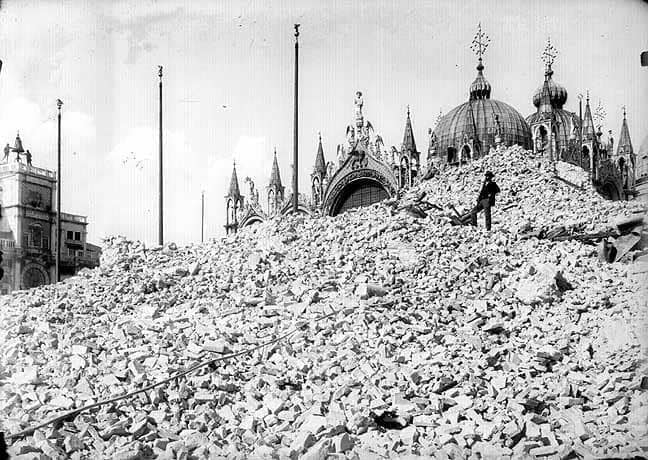
Il 14 luglio 1902 è una data che Venezia non può dimenticare. In quella mattina d’estate il Campanile di San Marco, uno dei monumenti più celebri d’Italia e simbolo della Serenissima, crollò improvvisamente davanti agli occhi increduli di cittadini e visitatori, trasformandosi in pochi istanti in un enorme cumulo di macerie.
Le cronache dell’epoca riportano che il crollo avvenne tra le 9:47 e le 9:52 del mattino. Nessuno dimenticò il boato che accompagnò la caduta della torre.
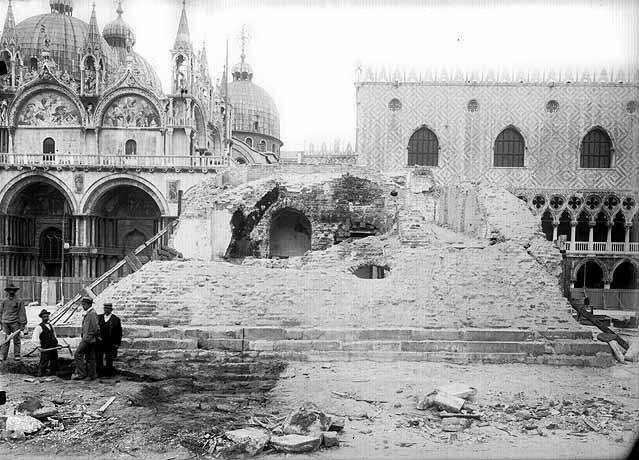
Piazza San Marco venne avvolta da una fitta nube di polvere che oscurò ogni cosa, mentre il terreno tremò sotto i piedi dei presenti. In pochi secondi il campanile si ridusse a un cumulo di macerie alto circa venti metri.
La storia del Campanile di San Marco, simbolo della Serenissima
Prima del crollo, il Campanile di San Marco aveva attraversato quasi mille anni di storia. Le sue origini risalgono al IX secolo, quando venne realizzata una prima torre destinata anche a fungere da punto di avvistamento per le navi che entravano nella laguna.
Tra il XII e il XVI secolo l’edificio assunse progressivamente l’aspetto che lo rese celebre in tutto il mondo, con la caratteristica cuspide piramidale e la statua dorata dell’Arcangelo Gabriele sulla sommità.
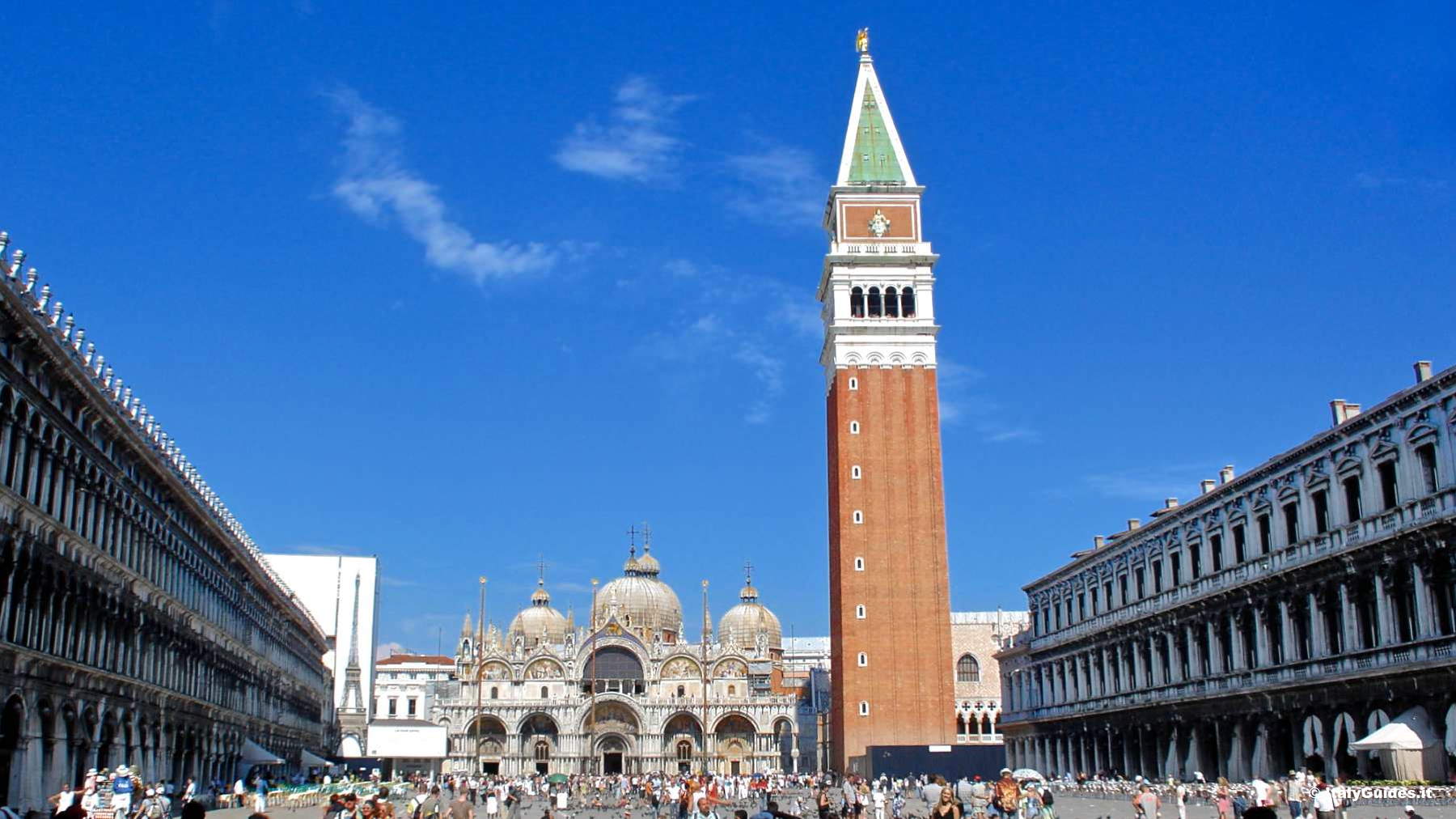
Con i suoi quasi 99 metri di altezza, il campanile era il punto di riferimento della città e uno degli elementi più riconoscibili dello skyline veneziano. Per secoli aveva resistito a terremoti, incendi e numerosi fulmini, diventando un simbolo dell’identità di Venezia.
Perché crollò il Campanile di San Marco nel 1902
A provocarne la rovina non furono però gli eventi naturali, bensì alcuni interventi eseguiti negli anni precedenti. Lavori effettuati alla base della struttura, giudicati già allora particolarmente azzardati, finirono per comprometterne la stabilità. Col passare del tempo comparve una profonda crepa sopra il portale principale, destinata ad allungarsi quasi fino alla cima della torre.
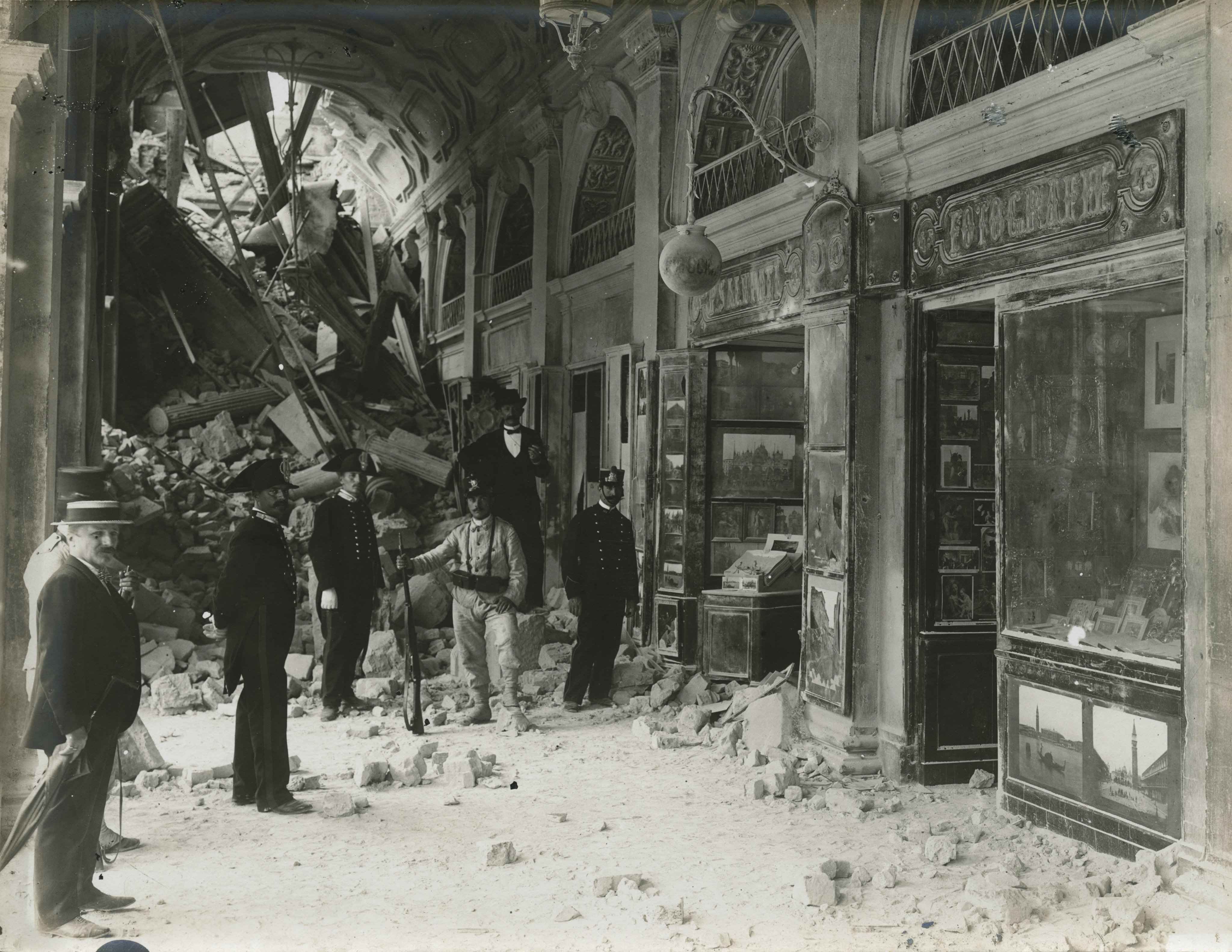
Nelle ore precedenti al disastro la situazione peggiorò rapidamente. Le autorità decisero così di sgomberare Piazza San Marco e le botteghe situate sotto le Procuratie Nuove, evitando una tragedia ben più grave.
Un crollo senza vittime: la leggenda del gatto del custode
Quando il Campanile di San Marco collassò, il tempestivo sgombero della piazza si rivelò decisivo. Il crollo non provocò né morti né feriti, un fatto considerato quasi miracoloso vista la quantità di persone che ogni giorno attraversava il cuore di Venezia.
Secondo una celebre tradizione popolare, l’unica vittima sarebbe stato il gatto del custode del campanile, rimasto sotto le macerie. Un episodio entrato nella memoria collettiva e ancora oggi raccontato insieme alla storia del monumento.
La ricostruzione del Campanile di San Marco: “com’era e dov’era”
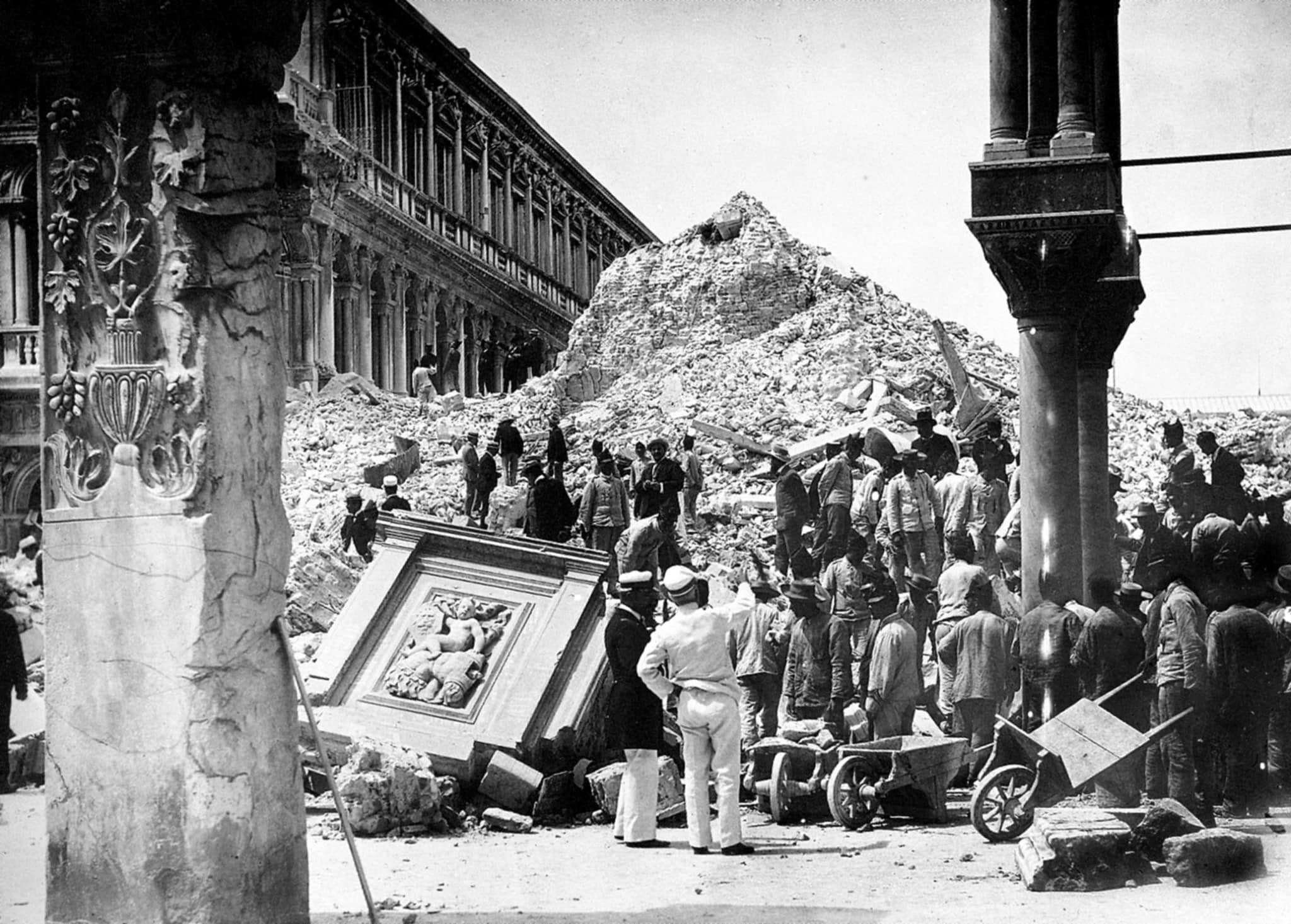
La risposta della città fu immediata. Già la sera del 14 luglio 1902 il Consiglio Comunale deliberò la ricostruzione del campanile adottando il principio destinato a diventare famoso in tutto il mondo: “com’era e dov’era”. Una scelta che rappresentò un punto di svolta nella tutela del patrimonio storico e artistico italiano.
Anche la splendida Loggetta del Sansovino, situata ai piedi della torre, venne ricostruita recuperando il maggior numero possibile di materiali originali estratti dalle macerie, pur rendendosi necessarie numerose integrazioni.
Il nuovo Campanile inaugurato nel 1912
Il progetto fu affidato all’architetto Luca Beltrami, che diresse una ricostruzione estremamente fedele all’originale. I lavori si conclusero il 6 marzo 1912 e il nuovo Campanile di San Marco venne inaugurato il 25 aprile dello stesso anno, giorno dedicato al patrono della città.
È proprio quello che ancora oggi domina Piazza San Marco e che milioni di turisti fotografano ogni anno, ignari del fatto che la torre originale scomparve nel tragico crollo del 14 luglio 1902.
Per il momento il sempre vostro Michelangelo Buonarroti vi saluta dandovi appuntamento ai prossimi post e sui social.
July 14, 1902, Venice Stopped: The Collapse of St. Mark’s Campanile as Told in the News
July 14, 1902, is a date Venice will never forget. On that summer morning, St. Mark’s Campanile, one of Italy’s most famous monuments and a symbol of the Serenissima, suddenly collapsed before the incredulous eyes of residents and visitors, transforming in moments into a huge pile of rubble.
Contemporary reports report that the collapse occurred between 9:47 and 9:52 in the morning. No one will forget the roar that accompanied the tower’s collapse.
St. Mark’s Square was enveloped in a thick cloud of dust that obscured everything, while the ground shook beneath the feet of those onlookers. In a matter of seconds, the bell tower was reduced to a pile of rubble about twenty meters high.
The History of St. Mark’s Campanile, Symbol of the Serenissima
Before its collapse, St. Mark’s Campanile had spanned nearly a thousand years. Its origins date back to the 9th century, when a first tower was built, also intended to serve as a lookout for ships entering the lagoon.
Between the 12th and 16th centuries, the building gradually took on the appearance that made it famous throughout the world, with its characteristic pyramidal spire and the golden statue of the Archangel Gabriel atop.
Standing nearly 99 meters tall, the campanile was the city’s landmark and one of the most recognizable features of the Venetian skyline. For centuries, it had withstood earthquakes, fires, and numerous lightning strikes, becoming a symbol of Venice’s identity.
Why St. Mark’s Campanile Collapsed in 1902
However, its ruin was not caused by natural events, but rather by interventions carried out in previous years. Work carried out at the base of the structure, already deemed particularly risky at the time, ultimately compromised its stability. Over time, a deep crack appeared above the main portal, which would eventually extend almost to the top of the tower.
In the hours leading up to the disaster, the situation rapidly worsened. Authorities thus decided to evacuate Piazza San Marco and the shops located beneath the Procuratie Nuove, preventing a much more serious tragedy.
A Collapse Without Victims: The Legend of the Caretaker’s Cat
When St. Mark’s Campanile collapsed, the timely evacuation of the square proved crucial. The collapse caused no deaths or injuries, a fact considered almost miraculous given the number of people who passed through the heart of Venice every day.
According to a famous folk tradition, the only victim was the bell tower caretaker’s cat, which remained under the rubble. An episode that has entered into collective memory and is still told today alongside the history of the monument.
The Reconstruction of St. Mark’s Bell Tower: “As It Was and Where It Was”
The city’s response was immediate. On the evening of July 14, 1902, the City Council approved the reconstruction of the bell tower, adopting the principle that would become famous throughout the world: “As It Was and Where It Was.” This decision represented a turning point in the protection of Italy’s historical and artistic heritage.
The splendid Sansovino Loggetta, located at the foot of the tower, was also rebuilt, recovering as many original materials as possible from the rubble, although numerous additions were necessary.
The New Bell Tower Inaugurated in 1912
The project was entrusted to architect Luca Beltrami, who oversaw a reconstruction extremely faithful to the original. Work was completed on March 6, 1912, and the new St. Mark’s Bell Tower was inaugurated on April 25 of the same year, the day dedicated to the city’s patron saint.
It’s precisely the one that still dominates St. Mark’s Square today and that millions of tourists photograph every year, unaware that the original tower disappeared in the tragic collapse of July 14, 1902.
For now, yours truly, Michelangelo Buonarroti bids you farewell and invites you to see him in future posts and on social media.

Sostienici – Support Us
Se questo blog ti piace e ti appassiona, puoi aiutarci a farlo crescere sempre più sostenendoci in modo concreto condividendo i post, seguendo le pagine social e con un contributo che ci aiuta ad andare avanti con il nostro lavoro di divulgazione. . ENGLISH: If you like and are passionate about this blog, you can help us make it grow more and more by supporting us in a concrete way by sharing posts, following social pages and with a contribution that helps us to move forward with our dissemination work.
10,00 €




Condividi:


Questo sono io





sostienici

Sostienici – Support Us
Se questo blog ti piace e ti appassiona, puoi aiutarci a farlo crescere sempre più sostenendoci in modo concreto condividendo i post, seguendo le pagine social e con un contributo che ci aiuta ad andare avanti con il nostro lavoro di divulgazione. . ENGLISH: If you like and are passionate about this blog, you can help us make it grow more and more by supporting us in a concrete way by sharing posts, following social pages and with a contribution that helps us to move forward with our dissemination work.
€10,00


