
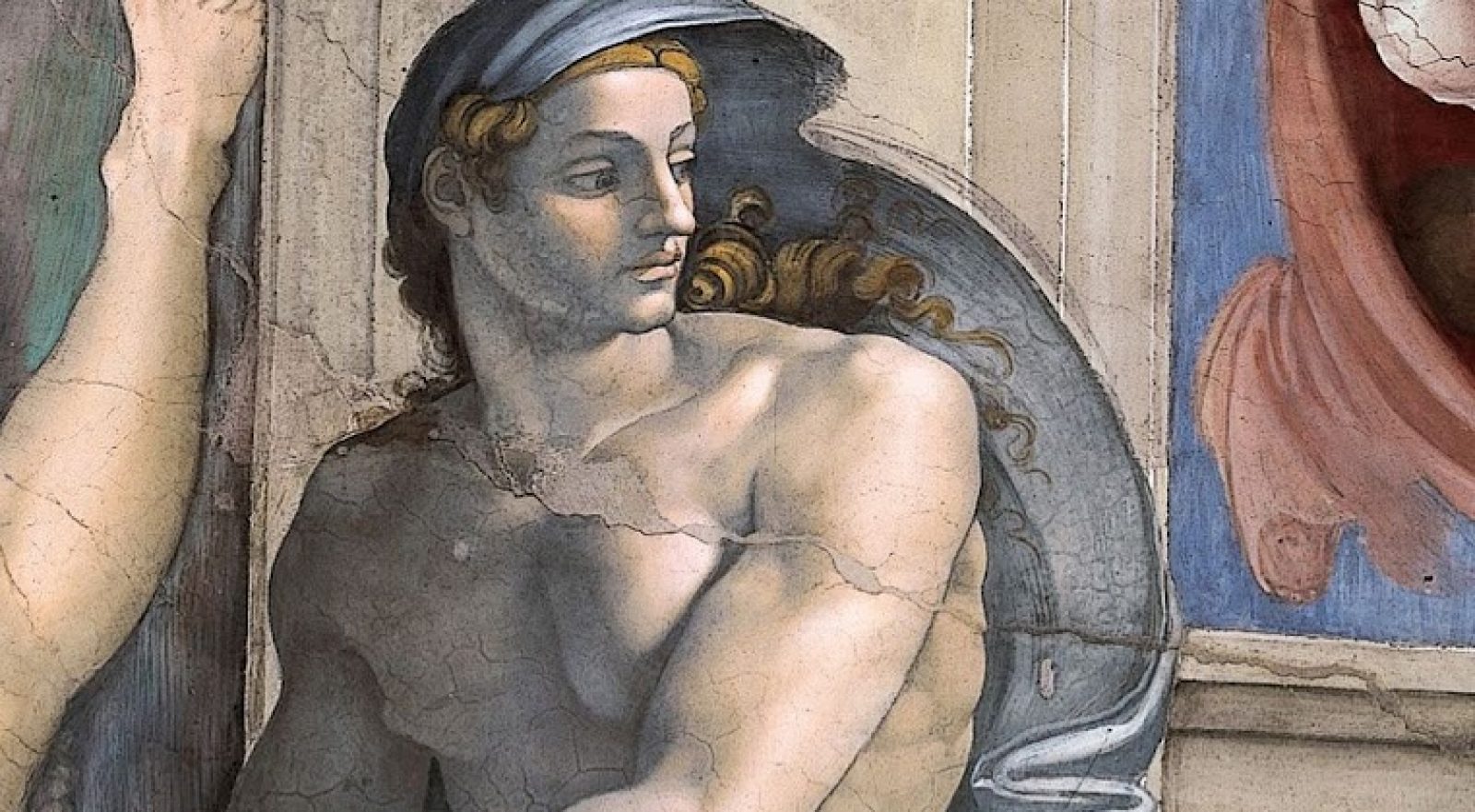
L’inquietante affresco con i versi che ricordano la fine dell’uomo
Non vi narro adesso del marmo che scolpii, né della volta della Sistina che spalanca il cielo sopra le teste. Vi parlo della morte. Di quella presenza silenziosa che mi seguì più d’ogni papa, più d’ogni scalpello, più della gloria stessa.
Dopo il 1534, quando Roma e la mia anima erano già mutate per sempre, volli dipingere entro la mia casa di Macel de’ Corvi un’immagine che fosse monito continuo ai miei occhi. Non per i forestieri e nemmeno per stupire gli ospiti. Ma per me.
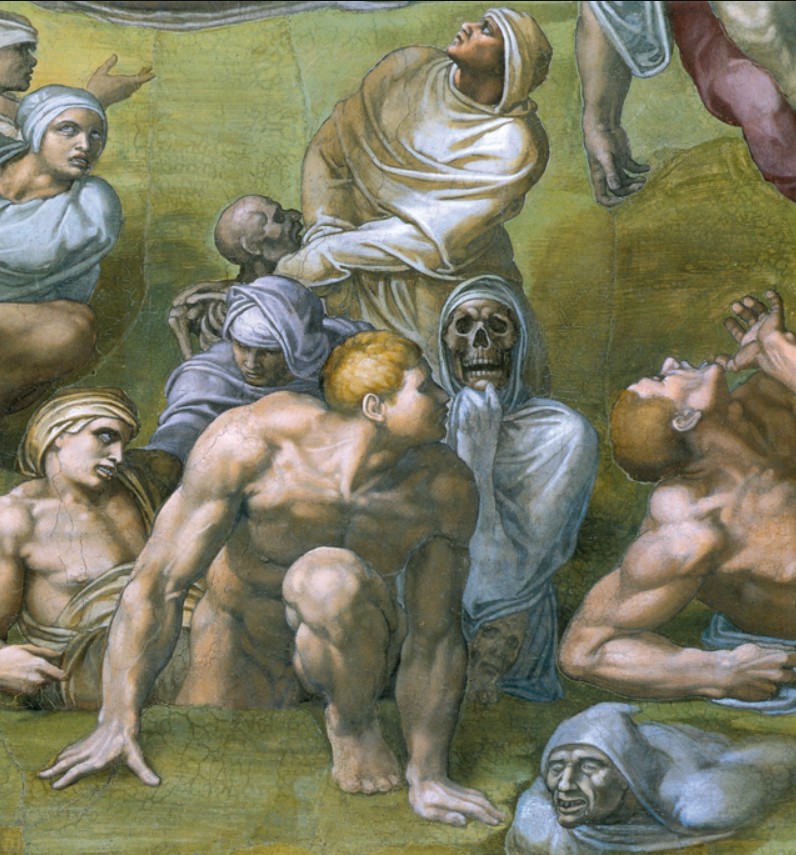
Sopra una parete interna dipinsi a monocromo uno scheletro. Portava sulle spalle una cassa da morto.
Non v’era allegoria più sentita.
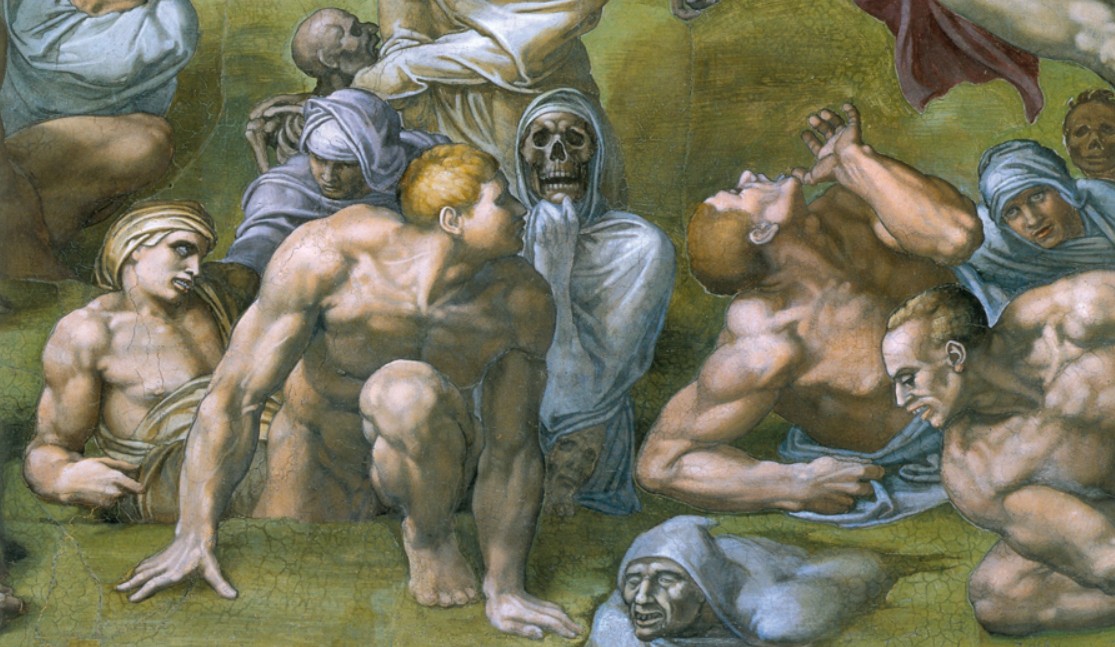
Ogni giorno, passando innanzi a quella figura, ricordavo a me stesso che tutta la fatica degli uomini, l sudore degli artisti, l’ambizione dei principi, la superbia dei potenti, finisce rinchiusa nello stesso oscuro legno.
Molti credono che gli artisti vivano di bellezza.
Io vi dico che chi crea davvero vive soprattutto nel pensiero della fine.
Mentre il mondo ammirava le opere mie, sentivo sempre più vicino il peso della caducità umana.
Per questo sotto quell’immagine scrissi una terzina che oggi ancora sopravvive, sebbene il dipinto sia andato perduto.
Io dico a voi c’al mondo avete dato
l’anima e ’l corpo e lo spirto ’nsïeme:
in questa cassa oscura è ’l vostro lato.
Questi versi non nacquero per poesia ma per un’esigenza impellente.
Voi che consumate la vita correndo dietro al nome, al denaro, al favore degli uomini, ricordate: tutto ciò che siete finirà entro una cassa oscura. Là riposerà il vostro fianco, il vostro lato e con esso ogni superbia.
La testimonianza di quel dipinto venne tramandata da Bernardo Buontalenti e più tardi messa per iscritto dal mio pronipote, Michelangelo Buonarroti il Giovane. Ma l’opera svanì. Forse distrutta dal tempo, forse cancellata dagli uomini. Eppure il suo messaggio rimane più vivo di molte pietre.
Perché l’arte non serve soltanto a celebrare la vita. Serve anche a ricordare la morte.
Per il momento il sempre vostro Michelangelo Buonarroti vi saluta dandovi appuntamento ai prossimi post e sui social.
The disturbing fresco with verses that recall the end of man
I won’t tell you now about the marble I sculpted, nor about the Sistine Chapel vault that opens the sky above our heads. I’ll tell you about death. About that silent presence that followed me more than any pope, more than any chisel, more than glory itself.
After 1534, when Rome and my soul had already changed forever, I wanted to paint an image inside my house in Macel de’ Corvi that would be a constant warning to my eyes. Not for strangers, nor even to amaze my guests. But for myself.
On an interior wall, I painted a monochrome skeleton. He carried a coffin on his shoulders.
There was no allegory more heartfelt.
Every day, passing before that figure, I reminded myself that all the toil of men, the sweat of artists, the ambition of princes, the pride of the powerful, ends up locked away in that same dark wood.
Many believe that artists live by beauty.
I tell you that those who truly create live above all in the thought of the end.
As the world admired my works, I felt the weight of human transience ever closer.
That’s why I wrote a tercet under that image that still survives today, although the painting has been lost.
Io dico a voi c’al mondo avete dato
l’anima e ’l corpo e lo spirto ’nsïeme:
in questa cassa oscura è ’l vostro lato.
These verses were not born out of poetry but from a pressing need.
You who waste your life chasing after name, money, the favor of men, remember: everything you are will end up in a dark coffin. There will rest your side, your other side, and with it all your pride.
The testimony of that painting was passed down by Bernardo Buontalenti and later written down by my great-grandson, Michelangelo Buonarroti the Younger. But the work vanished. Perhaps destroyed by time, perhaps erased by men. Yet its message remains more alive than many stones.
Because art doesn’t just celebrate life. It also serves to remember death.
For now, your ever-loving Michelangelo Buonarroti bids you farewell, inviting you to see him in future posts and on social media.

Sostienici – Support Us
Se questo blog ti piace e ti appassiona, puoi aiutarci a farlo crescere sempre più sostenendoci in modo concreto condividendo i post, seguendo le pagine social e con un contributo che ci aiuta ad andare avanti con il nostro lavoro di divulgazione. . ENGLISH: If you like and are passionate about this blog, you can help us make it grow more and more by supporting us in a concrete way by sharing posts, following social pages and with a contribution that helps us to move forward with our dissemination work.
10,00 €
Articoli
Condividi:


Questo sono io




sostienici

Sostienici – Support Us
Se questo blog ti piace e ti appassiona, puoi aiutarci a farlo crescere sempre più sostenendoci in modo concreto condividendo i post, seguendo le pagine social e con un contributo che ci aiuta ad andare avanti con il nostro lavoro di divulgazione. . ENGLISH: If you like and are passionate about this blog, you can help us make it grow more and more by supporting us in a concrete way by sharing posts, following social pages and with a contribution that helps us to move forward with our dissemination work.
€10,00


Davvero un sacrilegio che il dipinto sia andato perso nel tempo, credo che quell'”urgenza” dovrebbe esser ammirata e “assorbita” oggi piu di ieri, or che I veri valori della vita sono così calpestati e denigrati…
"Mi piace"Piace a 1 persona
sarebbe bello vederlo oggi
"Mi piace"Piace a 1 persona
Come mai è stato perso?
Mi sarebbe piaciuto vederlo, ma come sia possibile che non ci sia un documento, una ristampa che possa testimoniare la sua presenza e comunque oggi abbiamo il Web che conserva tutto , prima non c’ era tecnologia e quindi è plausibile che non ci sia nulla. 🙋🏻
"Mi piace"Piace a 1 persona
Non è dato sapere né come né quando ma purtroppo non c’è più traccia
"Mi piace"Piace a 1 persona