
Intervista Leeah Joo: l’artista che dipinge tessuti così perfetti da ingannare lo sguardo
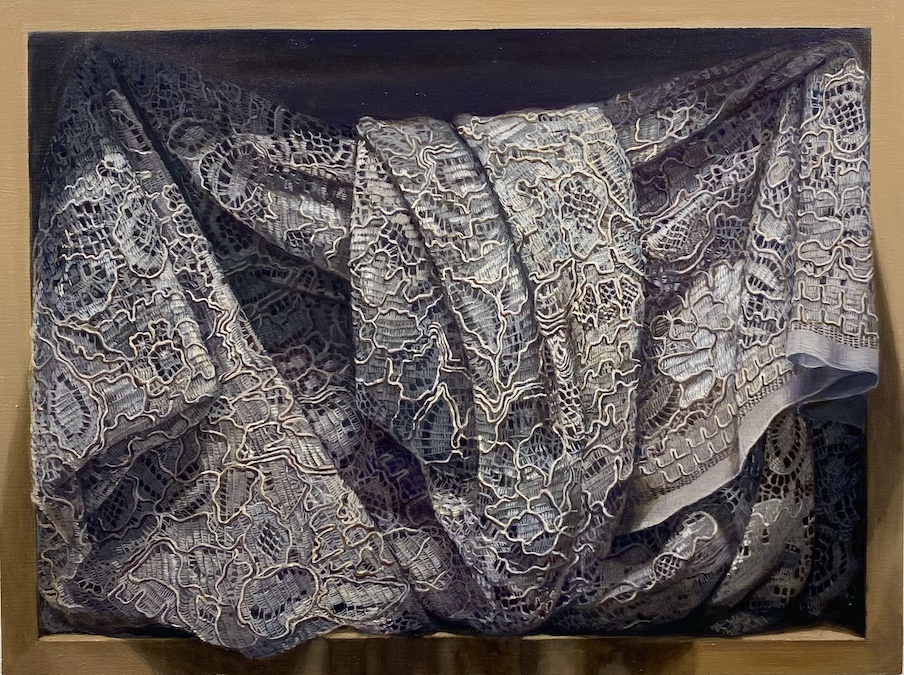
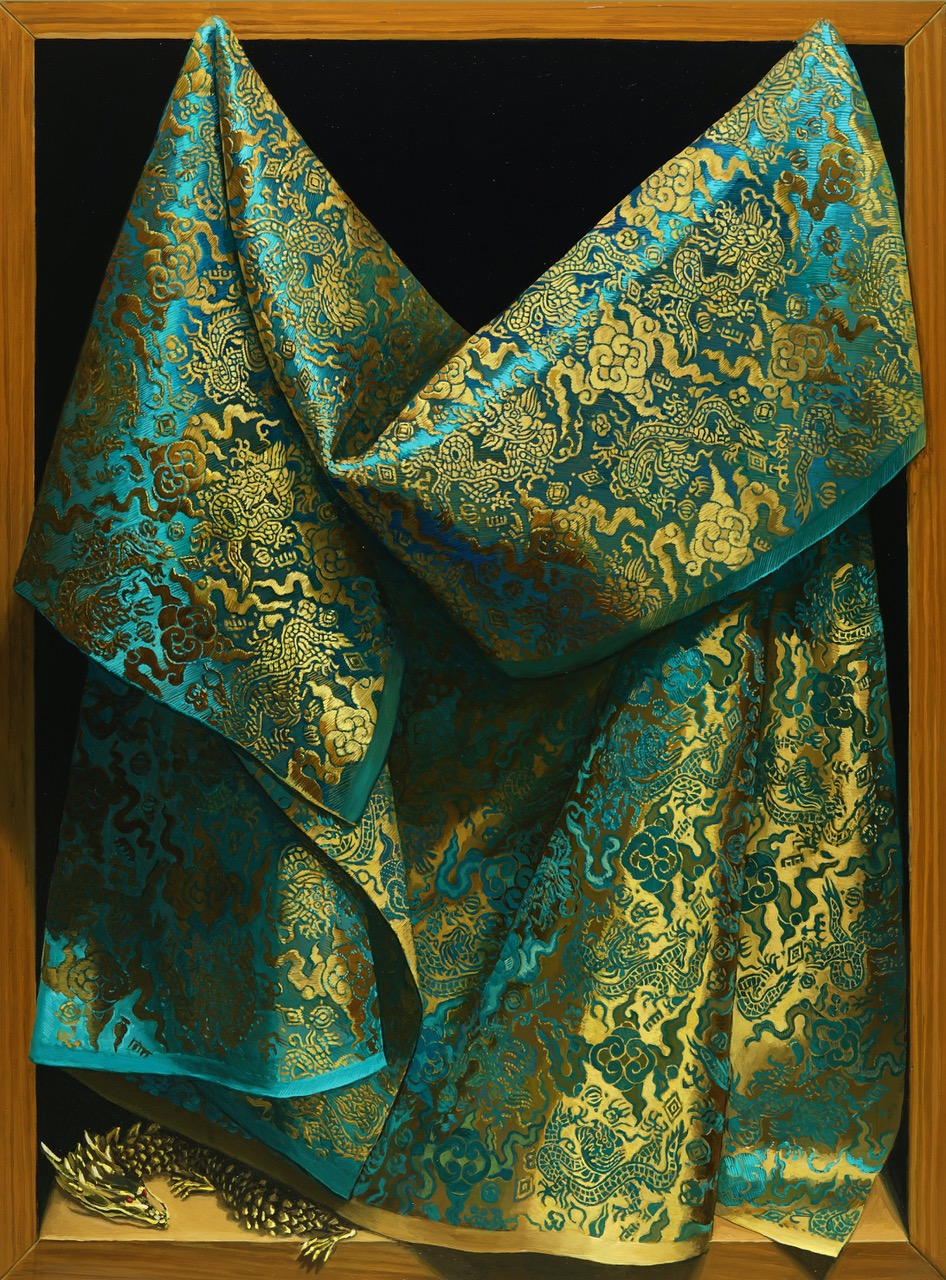
Guardare i dipinti di Leeah Joo significa entrare in una terza dimensione, tra realtà e illusione. I suoi tessuti dipinti, sete, velluti, pizzi e drappeggi, possiedono una presenza così tangibile da sembrare pronti a muoversi sotto la luce, da poter essere sfiorati con le dita o indossati da un momento all’altro.
Ogni piega parla di sé, ogni trama custodisce cultura, identità e osservazione minuziosa del mondo.
Pittrice coreano-americana residente in Connecticut, Leeah Joo nasce a Seoul nel 1971 in una famiglia profondamente legata all’arte: il padre scultore e la madre illustratrice alimentano sin dall’infanzia il suo sguardo sensibile verso la forma, il segno e la materia.
A dieci anni si trasferisce con la famiglia a Indianapolis, negli Stati Uniti, esperienza che segnerà profondamente la sua ricerca artistica, sospesa tra memoria orientale e sensibilità occidentale.
Nel corso della sua carriera, le sue opere sono state esposte in numerose mostre negli Stati Uniti e in Corea del Sud, ricevendo importanti riconoscimenti da istituzioni come la Pollock-Krasner Foundation, la George Sugarman Foundation e la Connecticut Commission on Arts. Dal 1996 Leeah Joo affianca alla pratica artistica anche l’insegnamento. .
Ho avuto il piacere di intervistare questa artista conversando con lei sul rapporto quasi ossessivo con il tessuto, il valore dell’osservazione dal vero, l’influenza delle proprie radici coreane e la continua ricerca di autenticità che attraversa tutta la sua pittura.
La prima impressione che si ha guardando i tuoi dipinti è quella di tessuti veri. Quando è iniziata questa esplorazione del tessuto come soggetto pittorico?
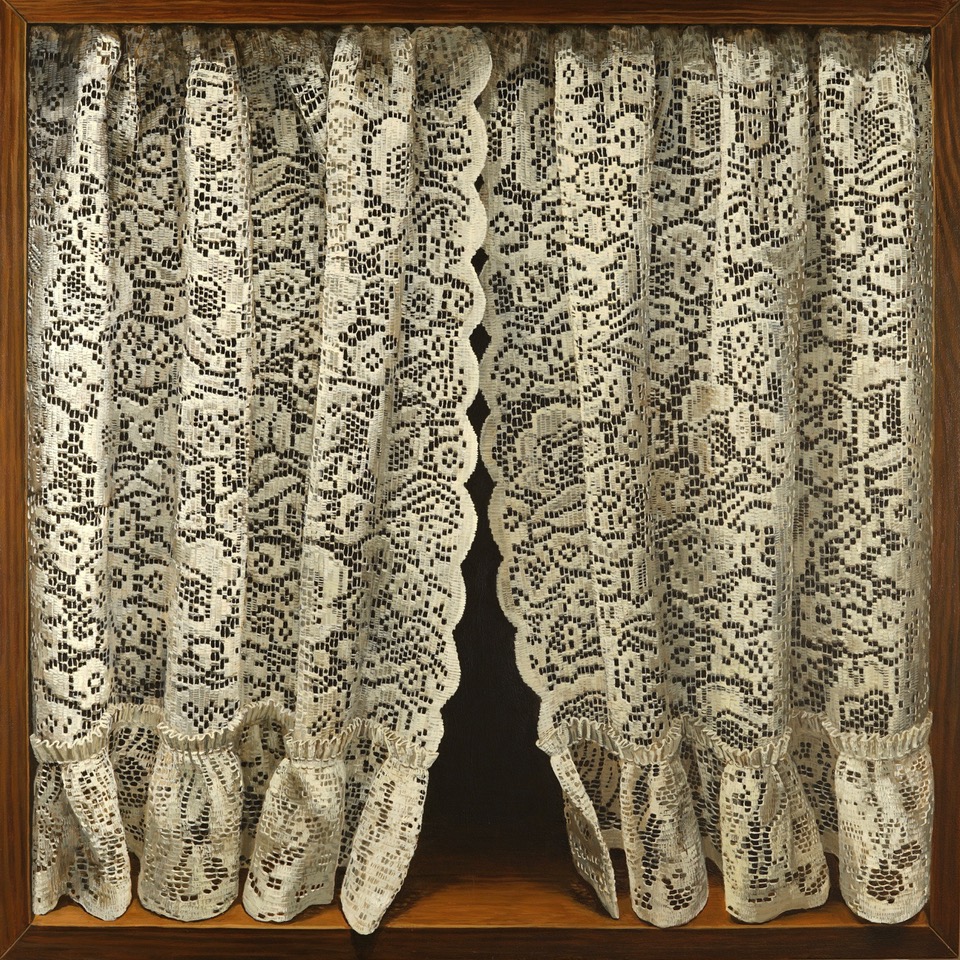
Intorno al 2000, mi sono immersa nella pittura di finestre, di ciò che si vede fuori dalla finestra di giorno e dei riflessi sul vetro di notte. Le tende di vari stili hanno avuto un ruolo importante in questa serie: femminili, classiche o moderne ed eleganti. Lentamente ho iniziato a interessarmi di più alle tende che alle scene sui vetri delle finestre. Amavo come i diversi disegni del tessuto raffigurassero le personalità; si può immaginare il tipo di persona che vive dietro una certa tenda. Da allora, il tessuto è stato il mio fulcro per diverse serie.
Il livello di dettaglio nei tuoi dipinti è impressionante. Quanto tempo impieghi in media per creare un’opera?
Dipende dalla complessità del tessuto. Lavoro dal vero, quindi richiede una concentrazione mirata per non perdersi. Un piccolo dipinto di 30-40 cm richiede alcune settimane di lavoro, 3-4 ore al giorno. Per dipingere un quadro di grandi dimensioni, intorno ai 100 cm, impiego alcuni mesi. Scherzo con i miei amici pittori dicendo che vorrei che i miei quadri avessero più zone vuote o sfondi dove non succede molto.
Qual è la fase più complessa del processo: il disegno preparatorio, la costruzione della luce, la resa delle texture o dei colori?
Sicuramente la parte più difficile è decidere come drappeggiare il tessuto con la giusta illuminazione per creare una natura morta dinamica da cui dipingere. Non faccio disegni preparatori: disegno direttamente con il colore sul pannello o sulla tela. Dipingere dal vero con la precisione che desidero richiede un occhio allenato, una buona capacità di osservazione e di misurazione. E più complesso è il disegno sul tessuto, più impegnativo è fare tutto a vista, ma questa è la parte più gratificante del mio processo.
Inoltre, ultimamente negli Stati Uniti ci sono meno negozi di tessuti perché tutto viene venduto online. Acquisto la maggior parte dei miei tessuti online e, a volte, quando ricevo un tessuto, non si comporta come me lo aspettavo. Quindi, trovare il tessuto perfetto è una sfida costante.
Quanto hanno influenzato i tuoi genitori, uno scultore e un illustratore, la tua sensibilità artistica?
Hanno avuto una profonda influenza sulla mia vita di artista, soprattutto quando ero giovane. Mia madre era un’eccezionale disegnatrice. Mio padre era molto espressivo, con un tocco deciso.
Sebbene mostrassi talento fin da piccolo, non si lasciavano impressionare facilmente e mi incoraggiavano alla tenacia e alla perseveranza. Da che ho memoria, frequentavamo gallerie, musei e studi di amici artisti. Questo mi ha fatto credere che fare arte sia una professione nobile e volevo farne parte.
Ci sono motivi, colori o tradizioni coreane che continuano a riaffiorare nelle tue opere contemporanee?
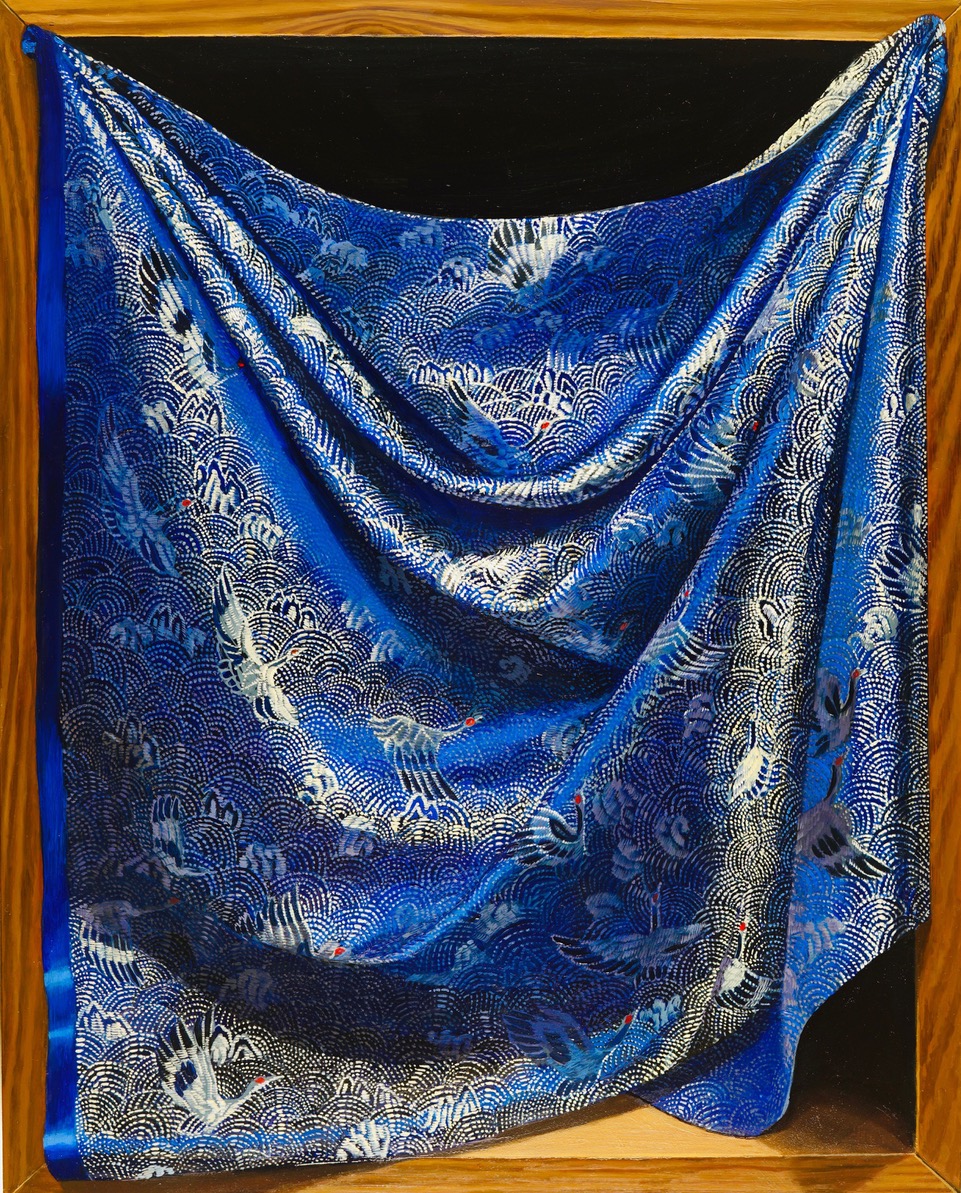
Assolutamente sì, motivi e narrazioni coreane ricorrenti compaiono e scompaiono a ondate nelle mie opere. Con la recente serie “Parrhasius”, continuo a cercare tessuti con disegni che evocano racconti popolari e mitologia coreana. Uno dei miei motivi ricorrenti preferiti sono le gru e la fiaba della gru moglie, con insegnamenti sulla fiducia e le promesse.
Ripensandoci, qual è il tuo artista preferito?
Caravaggio è il mio pittore preferito. Da giovane la maggior parte dei miei lavori era figurativa, con un focus narrativo. Ancora oggi prediligo il chiaroscuro e l’illuminazione barocca delle sue opere.
In particolare, sono sempre stata affascinata dallo sfondo nero puro dei suoi lavori e da come noi, come pubblico, percepiamo questo nero del nulla: è all’esterno o all’interno di una casa? È completamente fittizio; il vuoto nero non cerca di essere un luogo reale, ma esiste solo affinché i suoi personaggi possano apparire.
Nella mia serie attuale, lascio lo sfondo dietro il tessuto dipinto di nero invece di dipingere la parete di fondo: è il mio piccolo omaggio al mio amore per Caravaggio.
Qual è il consiglio più importante che offri ai giovani pittori in cerca della propria voce artistica?
Abbi fiducia nella tua sensibilità naturale: è ciò che ti rende unico — il tuo background, la tua famiglia, il tuo stile naturale nel disegno o nella pittura. Non cercare di imitare Ingres se sei un Giacometti naturale.
E resta sempre affamato: affamato di qualcosa di più, di una versione migliore di ciò che stai facendo. Quando sono sazio, so che è ora di andare in pensione.
C’è qualcosa che i tuoi studenti ti hanno insegnato nel corso degli anni?
Ho imparato tantissime cose dai miei studenti, ma la più importante — che mi viene ricordata ogni giorno in classe — è di avere chutzpah (in yiddish: audacia). Quella capacità che tutti avevamo in gioventù di sognare in grande, commettere grandi errori, distruggere un quadro, rimanere aperti e vulnerabili.
Con l’età sembra che io abbia meno di queste qualità, ed è per questo che mi piace lavorare con i miei studenti.
Ringrazio Leeah Joo per la sua cortesia e disponibilità.
Per il momento il sempre vostro Michelangelo Buonarroti vi saluta dandovi appuntamento ai prossimi post e sui social.
Interview with Leeah Joo: the artist who paints fabrics so perfect they deceive the eye
Looking at Leeah Joo’s paintings is like entering a third dimension, somewhere between reality and illusion. Her painted fabrics—silk, velvet, lace, and drapes—possess such a tangible presence that they seem ready to move under the light, to be touched by the fingers or worn at any moment.
Every fold speaks volumes, every texture enshrines culture, identity, and a meticulous observation of the world.
A Korean-American painter living in Connecticut, Leeah Joo was born in Seoul in 1971 into a family deeply rooted in art: her father, a sculptor, and her mother, an illustrator, nurtured her sensitive eye for form, sign, and material from an early age. At the age of ten, she moved with her family to Indianapolis, USA, an experience that would profoundly impact her artistic research, suspended between Eastern memories and Western sensibilities.
Throughout her career, her works have been exhibited in numerous shows in the United States and South Korea, receiving important recognition from institutions such as the Pollock-Krasner Foundation, the George Sugarman Foundation, and the Connecticut Commission on the Arts. Since 1996, Leeah Joo has combined her artistic practice with teaching.
I had the pleasure of interviewing this artist, discussing her almost obsessive relationship with fabric, the value of observing life, the influence of her Korean roots, and the constant search for authenticity that permeates all of her painting.
On the Origin of Fabric as a Subject
The first impression one gets when viewing your paintings is of real fabrics. When did this exploration of fabric as a pictorial subject begin?
Around 2000, I was immersed in painting windows — what you can see out of the window during the day and reflections on the glass at night. Curtains of various styles were a big part of this series: feminine, old-fashioned, or modern and sleek. Slowly, I became more interested in the curtains than the scenes on the window glass. I loved how different designs of fabric depicted personalities; one can imagine the type of person living behind a certain curtain. Since then, fabric has become the focus of several different series.
On Technique and Time
The level of detail in your paintings is impressive. How long does it take, on average, to create a work?
It depends on the complexity of the fabric. I work from observation, so it requires focused concentration not to get lost. A small painting (30–40 cm) takes a few weeks, working on it for 3–4 hours a day. A larger painting, around 100 cm, takes a few months.
I joke with painter friends that I wish my paintings had more areas of nothingness or background where not much is happening.
On Process and Challenges
What is the most complex phase of the process: the preparatory drawing, the construction of light, the rendering of textures, or colors?
Definitely the hardest part is deciding how to drape the fabric with the right lighting in order to create the most dynamic still life to paint from.
I don’t make preparatory drawings. I draw directly with paint on the panel or canvas. Painting from observation with the level of accuracy I desire requires a trained eye, good sighting, and precise measuring. The more complex the design on the fabric, the more challenging it becomes to do everything by sight — but this is also the most rewarding part of my process.
Recently in the U.S., there are fewer fabric stores because everything is sold online. I buy most of my fabrics online, and sometimes when I receive them they don’t behave as I had imagined. Finding the perfect fabric is therefore a constant challenge.
On Family Influence
How much have your parents — a sculptor and an illustrator — influenced your artistic sensibility?
They had a profound influence on my life as an artist, especially when I was young. My mother was an exceptional draftsman, while my father painted with a very expressive and robust touch.
Although I exhibited artistic skills early on, they were not easily impressed and instead encouraged tenacity and perseverance. Ever since I can remember, we frequented galleries, museums, and friends’ studios. This allowed me to believe that making art is a noble profession, and I wanted to be part of it.
On Korean Identity and Symbolism
Are there any Korean motifs, colors, or traditions that continue to surface in your contemporary work?
Absolutely. Korean motifs and narratives come and go in waves throughout my work. With the recent Parrhasius series, I continue to search for fabrics whose designs conjure Korean folktales and mythology.
One of my favorite recurring motifs is the crane, inspired by the folktale of the crane wife, with its lessons about trust and promises.
On Artistic Inspirations
Looking back, who is your favorite artist?
Caravaggio is my favorite painter. When I was younger, most of my work was figurative and narrative-driven. Even now, I still favor the chiaroscuro and Baroque lighting of his work.
In particular, I have always been fascinated by the pure black background in his paintings. We, as viewers, accept this blackness of nothingness — but is it outside or inside a house? It is completely fictitious. The black void tells us it is not trying to represent a real location; it exists solely so that his characters can appear.
In my current series, I leave the space behind the fabric painted black instead of depicting the back wall. It is my small homage to my love for Caravaggio.
On Finding an Artistic Voice
What is the most important advice you offer young painters seeking their own artistic voice?
Trust your natural sensibilities — they are what make you unique: your background, your family, your natural hand, your style in drawing or painting.
Don’t try to be like Ingres when you are naturally a Giacometti.
And always stay hungry — hungry for more, for a better version of the current work. When I feel satiated, I know it is time to retire.
On Teaching and Learning
Is there anything your students have taught you over the years?
I have learned many things from my students, but the most important lesson I am reminded of every day in class is to have chutzpah — audacity.
It is something we all possess in our youth: the courage to dream big, make big mistakes, destroy a painting, stay open, and remain vulnerable. As I grow older, I seem to have less of these qualities, which is why I enjoy working with my students so much.
I thank Leeah Joo for her kindness and availability.
For now, yours truly, Michelangelo Buonarroti, bids farewell and looks forward to seeing you in future posts and on social media.

Sostienici – Support Us
Se questo blog ti piace e ti appassiona, puoi aiutarci a farlo crescere sempre più sostenendoci in modo concreto condividendo i post, seguendo le pagine social e con un contributo che ci aiuta ad andare avanti con il nostro lavoro di divulgazione. . ENGLISH: If you like and are passionate about this blog, you can help us make it grow more and more by supporting us in a concrete way by sharing posts, following social pages and with a contribution that helps us to move forward with our dissemination work.
10,00 €
Articoli
Condividi:


Questo sono io




sostienici

Sostienici – Support Us
Se questo blog ti piace e ti appassiona, puoi aiutarci a farlo crescere sempre più sostenendoci in modo concreto condividendo i post, seguendo le pagine social e con un contributo che ci aiuta ad andare avanti con il nostro lavoro di divulgazione. . ENGLISH: If you like and are passionate about this blog, you can help us make it grow more and more by supporting us in a concrete way by sharing posts, following social pages and with a contribution that helps us to move forward with our dissemination work.
€10,00


E’ davvero pazzesco questo artista!!! Incredibile, se non avessi scritto che erano quadri avrei pensato a delle fotografie di tessuti! Mai visto nulla di simile prima d’ora! Ottimo post 👏👏👏👏👏👏👏👏👏👏👏👏👏👏👏👏👏👏👏👏👏👏👏👏👏👏👏👏👏
"Mi piace"Piace a 1 persona
Grazie. Di solito non amo l’iperrealismo ma questa artista secondo me va oltre. Nei suoi tessuti si intrecciano storie e culture di verse che vale la pena far conoscere
"Mi piace"Piace a 1 persona
Mi ricordano la perfezione di alcuni abiti dipinti dal Bronzino. Bello che si torni alla pittura vera.
"Mi piace"Piace a 1 persona