

Altro che mela: nella Cappella Sistina dipinsi un fico
Guardate con attenzione il Peccato Originale della Cappella Sistina. C’è un dettaglio che quasi tutti conoscono, ma che pochi si fermano davvero a osservare: l’albero non è un melo. È un fico.
Quando affrescai la volta della Cappella Sistina, sapevo bene che ogni figura, ogni gesto e ogni dettaglio avrebbero potuto essere osservati per secoli. Nulla, nei miei dipinti, era lasciato completamente al caso.
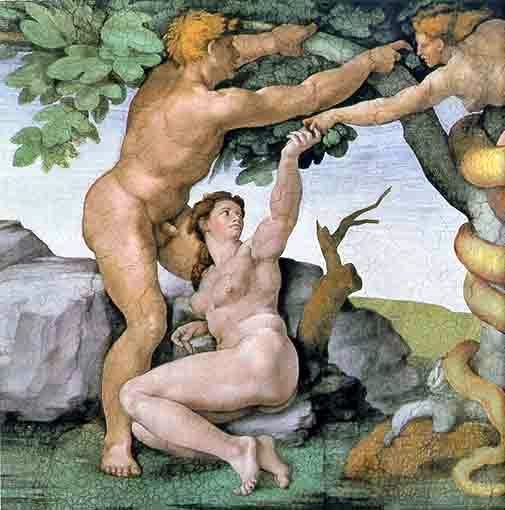
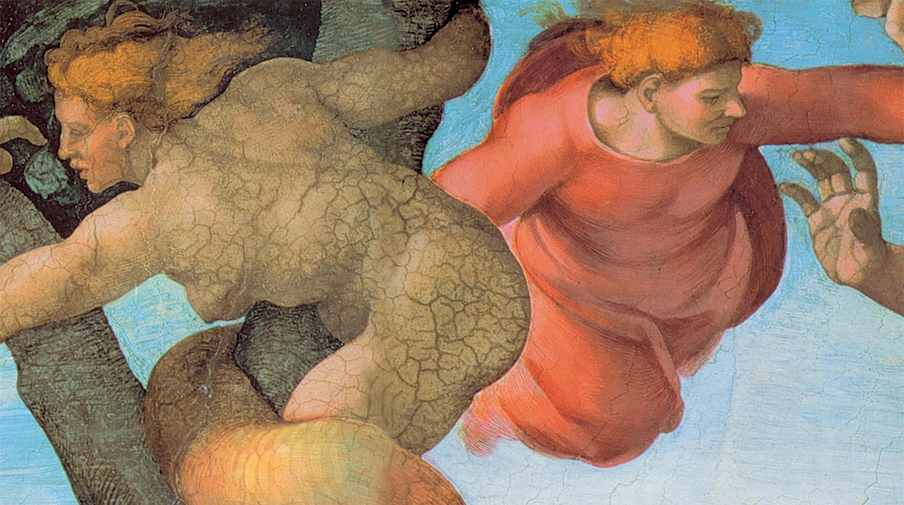
Guardate il riquadro con attenzione. Adamo ed Eva sono accanto all’albero della conoscenza del bene e del male. Il serpente si avvolge intorno al tronco e, cosa ancora più singolare, il suo volto ha sembianze femminili. E poi c’è quel fico.
Perché proprio un fico?
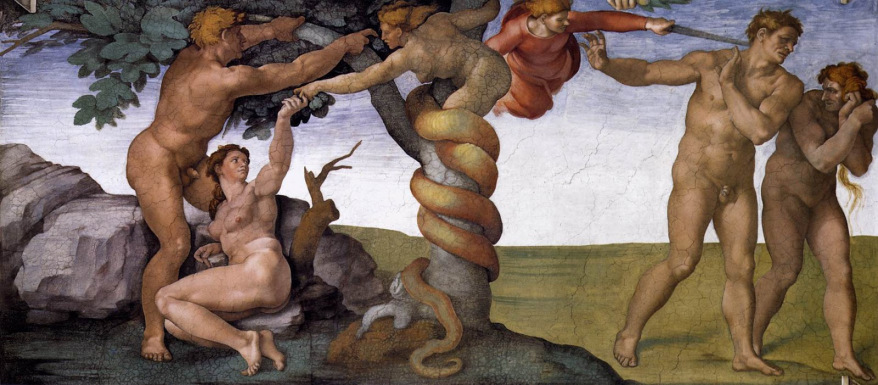
Il frutto del peccato nella Genesi non era una mela
Partiamo dall’inizio. Nel racconto della Genesi, il frutto dell’albero della conoscenza del bene e del male non viene identificato con una mela. Il testo biblico parla semplicemente del frutto dell’albero proibito.
La mela come frutto del peccato è diventata invece una tradizione iconografica e culturale molto potente nei secoli successivi. Io, però, nella volta della Sistina scelsi un’altra strada.
Dipinsi un fico. Quella scelta non era affatto casuale.
Il fico possedeva infatti una lunga tradizione simbolica nell’arte e nella cultura occidentale. Le sue foglie sono immediatamente riconoscibili e hanno una presenza visiva completamente diversa da quelle di un melo. Non solo.
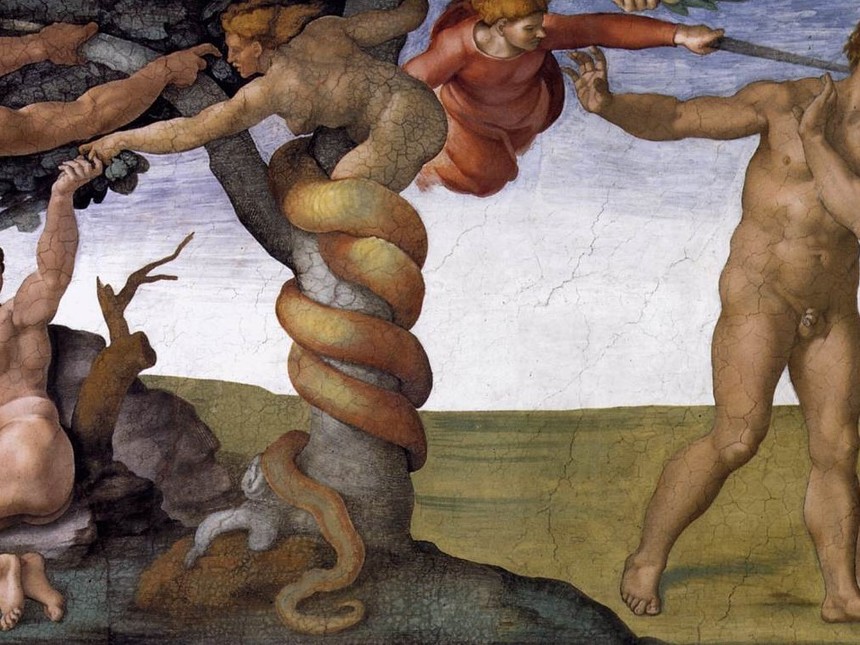
Perché scelsi proprio un fico nella Cappella Sistina?
Il fico aveva e ha tutt’oggi, nei vostri tempi, importanti significati simbolici legati alla sessualità, alla fertilità e al corpo femminile.
Accanto al fico troviamo un serpente dalle sembianze femminili. Non è casuale ma qualcosa di attentamente studiato.
La scena racconta la caduta di Adamo ed Eva, ma può essere letta anche attraverso il tema della tentazione, del desiderio e della trasgressione. Non bisogna però dimenticare che l’iconografia del Peccato Originale era già ricchissima quando lavorai alla Sistina.
Non fui certo il primo artista a mettere Adamo ed Eva davanti a un fico.
Masolino e il fico della Cappella Brancacci
Prima di me lo aveva fatto Masolino da Panicale nella Cappella Brancacci a Firenze. Anche nella sua rappresentazione del Peccato Originale troviamo Adamo ed Eva davanti a un albero di fico, con un serpente caratterizzato da una testa femminile.
Conoscevo bene quella decorazione. Da giovane avevo studiato e copiato i lavori degli artisti che mi avevano preceduto. Copiare non significava semplicemente imitare: era un modo per imparare, comprendere le forme, studiare i gesti e affinare la mano.
Il lavoro di Masolino apparteneva alla mia memoria visiva.
Quando dipinsi la volta della Sistina, avevo alle spalle una lunga tradizione artistica dalla quale avevo imparato moltissimo. Il fico poteva diventare anche un modo per confrontarmi con quella tradizione.
Il fico e le allusioni al femminile
Come vi ho acennato prima, il fico, con i suoi frutti e le sue forme, è stato spesso associato nei secoli alla sessualità e alla fertilità.
Nell’arte medievale e rinascimentale il corpo, il desiderio e il peccato erano spesso raccontati attraverso simboli che oggi possono sfuggire a un osservatore distratto. Per questo, nella scena della Sistina, il fico diventa parte di un sistema di allusioni molto più ampio.
Adamo ed Eva, il serpente femminile, il frutto proibito e la nudità dei progenitori costruiscono insieme una scena nella quale il tema della tentazione assume una forza particolare.
Anche Lorenzetti aveva raccontato il peccato attraverso il desiderio
Molto prima di me, nel Trecento, Ambrogio Lorenzetti aveva affrontato il tema del Peccato Originale nell’affresco conservato nell’Eremo di Montesiepi, presso Chiusdino.
L’opera, realizzata fra il 1334 e il 1340, presenta un’Eva dalla forte caratterizzazione sensuale. E in quella scena compare anche una frase che non lascia molto spazio alle interpretazioni: «fei peccato per passione».
Il peccato viene dunque collegato esplicitamente alla passione.
Non è difficile comprendere quanto fosse ampia, nella tradizione artistica, la possibilità di interpretare la caduta di Adamo ed Eva non soltanto come disobbedienza a Dio, ma anche come metafora della tentazione e del desiderio.
Il serpente della Sistina e il volto femminile
Guardate il serpente. Non ha semplicemente un corpo sinuoso che si avvolge all’albero: la sua testa presenta sembianze femminili.
È una scelta che ha attirato l’attenzione di generazioni di studiosi e visitatori. La figura femminile del serpente rafforza la complessità della scena e rende ancora più evidente il rapporto fra tentazione e peccato.
Ma attenzione: non significa che si debba ridurre l’intero affresco a una semplice allegoria erotica.
Stavo raccontando per immagini uno dei momenti fondamentali della storia biblica dell’umanità e lo facevo attraverso il linguaggio dell’arte rinascimentale, dove corpo, gesto, bellezza, movimento e simbolo potevano convivere nello stesso spazio.
La mela che non c’è
Perché nella Cappella Sistina dunque non dipinsi una mela? Perché non ero obbligato a farlo.
La Genesi non identifica quel frutto con una mela e la tradizione iconografica offriva anche altre possibilità.
Il fico possedeva una lunga storia simbolica, era già presente nella tradizione figurativa del Peccato Originale e si prestava perfettamente a una scena nella quale il tema della tentazione aveva un ruolo centrale.
Per me, dunque, quel fico non era un dettaglio decorativo qualsiasi ma parte del racconto.
Per il momento il sempre vostro Michelangelo Buonarroti vi saluta dandovi appuntamento ai prossimi post e sui social.
Forget the apple: I painted a fig tree in the Sistine Chapel
Look closely at the Original Sin scene in the Sistine Chapel. There is a detail that almost everyone knows about, yet few truly stop to observe: the tree is not an apple tree. It is a fig tree.
When I frescoed the ceiling of the Sistine Chapel, I was well aware that every figure, every gesture, and every detail might be scrutinized for centuries. Nothing in my paintings was left entirely to chance.
Look closely at the panel. Adam and Eve stand beside the Tree of the Knowledge of Good and Evil. The serpent coils around the trunk and—even more remarkably—its face bears feminine features. And then, there is that fig tree.
Why a fig tree, specifically?
The fruit of sin in Genesis was not an apple
Let us start at the beginning. In the Genesis account, the fruit of the Tree of the Knowledge of Good and Evil is not identified as an apple. The biblical text speaks simply of the fruit of the forbidden tree.
The apple, however, became the established fruit of sin through a powerful iconographic and cultural tradition in the centuries that followed. Yet, on the Sistine ceiling, I chose a different path.
I painted a fig tree. That choice was by no means accidental.
The fig tree held a long-standing symbolic tradition in Western art and culture. Its leaves are instantly recognizable and possess a visual presence entirely distinct from that of apple leaves. And there is more.
Why did I choose a fig tree for the Sistine Chapel?
The fig tree held—and still holds, in your own time—significant symbolic meanings linked to sexuality, fertility, and the female body.
Beside the fig tree, we find a serpent with feminine features. This was no accident, but a carefully considered choice. The scene depicts the Fall of Adam and Eve, but it can also be interpreted through the themes of temptation, desire, and transgression. However, one must not forget that the iconography of Original Sin was already incredibly rich by the time I worked on the Sistine Chapel.
I was certainly not the first artist to place Adam and Eve before a fig tree.
Masolino and the fig tree in the Brancacci Chapel
Before me, Masolino da Panicale had done so in the Brancacci Chapel in Florence. In his depiction of Original Sin, too, we find Adam and Eve standing before a fig tree, accompanied by a serpent with a female head.
I knew that work well. As a young man, I had studied and copied the works of the artists who came before me. Copying did not simply mean imitation; it was a way to learn, to understand forms, to study gestures, and to refine my hand.
Masolino’s work was part of my visual memory.
When I painted the Sistine ceiling, I drew upon a long artistic tradition from which I had learned a great deal. The fig tree could also serve as a means of engaging with that tradition.
The fig tree and feminine allusions
As I mentioned earlier, the fig tree—with its fruit and its shapes—has long been associated with sexuality and fertility.
In medieval and Renaissance art, the body, desire, and sin were often conveyed through symbols that might escape the casual observer today. Thus, in the Sistine scene, the fig tree becomes part of a much broader system of allusions.
Adam and Eve, the female-headed serpent, the forbidden fruit, and the nudity of our first parents combine to create a scene in which the theme of temptation takes on particular power. Lorenzetti, too, depicted sin through the lens of desire
Long before my time—back in the fourteenth century—Ambrogio Lorenzetti addressed the theme of Original Sin in a fresco housed at the Hermitage of Montesiepi, near Chiusdino.
Created between 1334 and 1340, the work features an Eve with a distinctly sensual character. The scene also includes a phrase that leaves little room for interpretation: “she sinned out of passion.”
Sin is thus explicitly linked to passion.
It is easy to see how widely the Fall of Adam and Eve could be interpreted within the artistic tradition—not merely as disobedience to God, but also as a metaphor for temptation and desire.
The Sistine serpent and the female face
Look at the serpent. It does not simply have a sinuous body coiled around the tree; its head bears female features.
This choice has drawn the attention of generations of scholars and visitors alike. The serpent’s female form deepens the scene’s complexity and makes the connection between temptation and sin even more apparent.
But a word of caution: this does not mean the entire fresco should be reduced to a mere erotic allegory.
I was using imagery to tell the story of one of the pivotal moments in the biblical history of humanity, doing so through the language of Renaissance art—where body, gesture, beauty, movement, and symbolism could coexist in the same space.
The apple that isn’t there
So, why didn’t I paint an apple in the Sistine Chapel? Because I was not obliged to do so.
Genesis does not identify that fruit as an apple, and iconographic tradition offered other possibilities as well.
The fig tree possessed a long symbolic history; it was already present in the visual tradition of the Original Sin and lent itself perfectly to a scene where the theme of temptation played a central role.
For me, then, that fig tree was not merely a decorative detail, but part of the narrative.
For now, yours truly, Michelangelo Buonarroti, bids you farewell and looks forward to seeing you in future posts and on social media.

Sostienici – Support Us
Se questo blog ti piace e ti appassiona, puoi aiutarci a farlo crescere sempre più sostenendoci in modo concreto condividendo i post, seguendo le pagine social e con un contributo che ci aiuta ad andare avanti con il nostro lavoro di divulgazione. . ENGLISH: If you like and are passionate about this blog, you can help us make it grow more and more by supporting us in a concrete way by sharing posts, following social pages and with a contribution that helps us to move forward with our dissemination work.
10,00 €
-

21 ottobre 1556: muore Pietro Aretino, il ‘flagello dei principi’ che attaccò il mio Giudizio Universale
🇮🇹Il 21 ottobre 1556 moriva Pietro Aretino, poeta e polemista rinascimentale. Dopo aver chiesto invano un mio disegno, si scagliò contro il Giudizio Universale… 🇬🇧On October 21, 1556, Pietro Aretino—a Renaissance poet and polemicist—died. After having asked me in vain for a drawing, he lashed out against The Last Judgment…
-
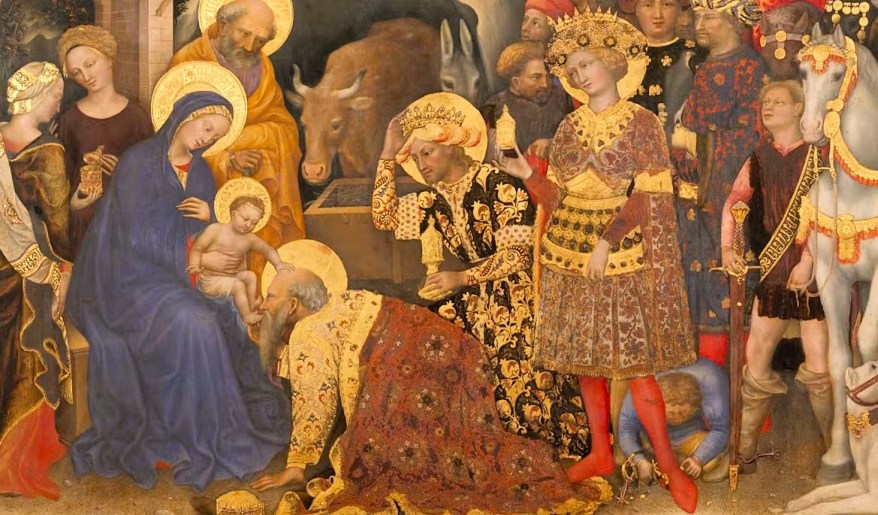
L’Adorazione dei Magi di Gentile da Fabriano: il Natale più ricco e spettacolare del Rinascimento
🇮🇹Oro, mantelli ricamati e un corteo di sovrani: scopri l’Adorazione dei Magi di Gentile da Fabriano, capolavoro del 1423 agli Uffizi… 🇬🇧Gold, embroidered cloaks, and a procession of sovereigns: discover the Adoration of the Magi by Gentile da Fabriano, a 1423 masterpiece housed at the Uffizi…
-
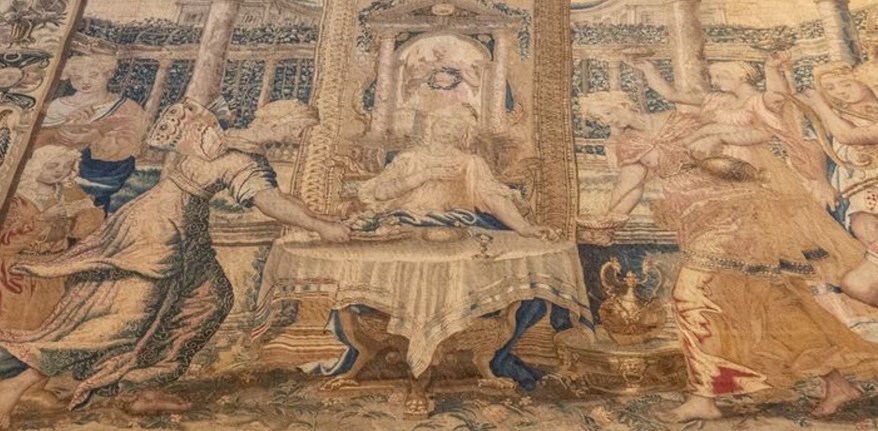
Dopo un secolo lontano dal pubblico, il Banchetto di Psiche torna a vivere: al via il restauro
🇮🇹Al via a Firenze il restauro del Banchetto di Psiche, l’arazzo seicentesco del Bargello rimasto nei depositi per un secolo. L’intervento durerà 30 mesi… 🇬🇧Restoration work has begun in Florence on *The Banquet of Psyche*, a 17th-century tapestry from the Bargello that had remained in storage for a century. The project will last 30 months…
Condividi:


Questo sono io




sostienici

Sostienici – Support Us
Se questo blog ti piace e ti appassiona, puoi aiutarci a farlo crescere sempre più sostenendoci in modo concreto condividendo i post, seguendo le pagine social e con un contributo che ci aiuta ad andare avanti con il nostro lavoro di divulgazione. . ENGLISH: If you like and are passionate about this blog, you can help us make it grow more and more by supporting us in a concrete way by sharing posts, following social pages and with a contribution that helps us to move forward with our dissemination work.
€10,00


